
Reviewed · CYCLING TOURS
Best of Munich Electric Bike Tour
A ride like this makes Munich feel small, fast, and fun. This half-day electric bike tour strings together some of the city’s top architecture and beer-culture stops with a guide doing the heavy lifting. The e-bike also takes the edge off the effort so you can actually enjoy the sights instead of arriving sweaty and fried.
My two favorite parts are the way the guide builds context at each stop, not just photos, and the smart pacing with lots of quick stops that still feel organized. My one caution: you’re biking in a city center with a group that can include non-e-bikes, so if you’re nervous on roads or with mixed riders, you’ll want to plan for careful, attentive riding.
In This Review
- Key highlights worth circling first
- Electric bike comfort and a smart route, the best pairing in Munich
- Price and logistics you should actually think about
- Starting at Karlsplatz, then getting your bearings fast on two wheels
- Wittelsbacherbrunnen and the neoclassical rhythm of central Munich
- Königsplatz to the Pinakothen, old masters to modern art in one ride
- Führerbau to peace symbolism: reading Munich through tense history
- Residenz Munich and Hofgarten: royal power, then a breather
- State buildings to the English Garden, then beer at the Chinesischen Turm
- Eisbachwelle and the Angel of Peace viewpoints
- Maximilianeum, the Deutsches Museum, and Viktualienmarkt as your closing act
- Ohel Jakob Synagogue and ending with a wider Munich picture
- Guide impact: why names like Rob, Canaan, Karl, and Susanna matter
- Riding considerations: how the e-bike changes the experience
- Beer and food choices that fit the schedule
- Should you book this Best of Munich Electric Bike Tour?
- FAQ
- How long is the Best of Munich Electric Bike Tour?
- Where does the tour start?
- What is included in the price?
- Are food or drinks included?
- What language is the tour offered in?
- What is the cancellation policy?
Key highlights worth circling first
- Electric bike help keeps the ride easy and makes frequent stops more enjoyable
- History plus beer culture in one route, with the option to add a classic beer hall pour for extra cost
- Big museum exterior hits like Alte Pinakothek and Pinakothek der Moderne without losing your whole day
- Munich’s garden and river energy at Englischer Garten, plus the famous Eisbachwelle wave viewpoint
- Guide style matters, and multiple guides are praised for clear explanations and keeping the group together
- Max of 20 people, so it stays small enough to manage while still being social
Electric bike comfort and a smart route, the best pairing in Munich
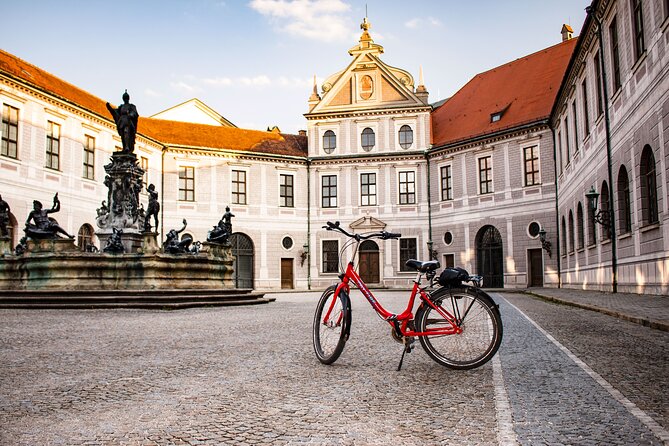
This tour is built for people who want the main threads of Munich, but hate the usual problem: too much walking, too many detours, and not enough time to understand what you’re actually looking at. The e-bike makes a big difference because it turns the ride into something you can keep your head up for. You’ll spend more energy watching façades and squares, and less energy wondering where to go next.
At $71.90 per person for about 4 hours, the value comes from what’s included. You get a live guide, plus the electric bike and helmet. Food and drinks cost extra, but the tour itself covers the hard part: route planning and the story behind the places.
One more reason this works for many visitors is the kind of balance it aims for. You get art and monumental buildings, then you break rhythm with gardens and beer stops. That mix helps you avoid the museum-only fatigue that can happen when sightseeing turns into a checklist.
More Bike Tours in Munich
- Munich 3-Hour Guided Bike Tour
★ 4.5 · 1,731 reviews - Classic Mike’s Bike Tour daily @ 11.30 incl Beer Garden & Surfers
★ 5.0 · 1,246 reviews - Neuschwanstein Castle by Bus Incl. Bike Ride or Hohenschwangau
★ 5.0 · 607 reviews
Price and logistics you should actually think about
Here’s the practical truth: the tour is priced like a guided experience, not like a transit ticket. You’re paying for guide time, biking equipment, and a structured loop that compresses a lot into one morning or afternoon.
It also helps that you’re starting right in central Munich at Karlsplatz 4, 80335 München, and the tour ends back at the same meeting point. That loop style is ideal when you’re short on time and don’t want to figure out how to stitch together buses, trams, and walking.
A detail worth knowing: the group can be up to 20 travelers, and it may include a mix of riders on e-bikes and non-e-bikes. That usually means you’ll ride more slowly than you would solo, and you’ll want to follow the guide’s instructions closely, especially at busy intersections and when the group regroups after each stop.
Starting at Karlsplatz, then getting your bearings fast on two wheels
Your day begins at Karlsplatz 4, and you’re in the center of Munich from the first pedal. The meeting point being near public transportation is a quiet win, because it makes it easier to build a day around your tour time without stressing about getting across town.
Once you’re geared up with the bike and helmet, you’ll roll out with a guide who controls the tempo. In the feedback, guides are repeatedly praised for pacing and for keeping the group together, even when conditions are not perfect. That matters on an e-bike tour because the biggest risk is not the bike itself. It’s losing sight of the group or drifting out of line.
You can also take comfort in how the ride is described: it’s designed to suit most people. Munich is fairly flat overall, and the e-bike option helps even if you’re not sure how much energy you’ll have after travel days.
Wittelsbacherbrunnen and the neoclassical rhythm of central Munich
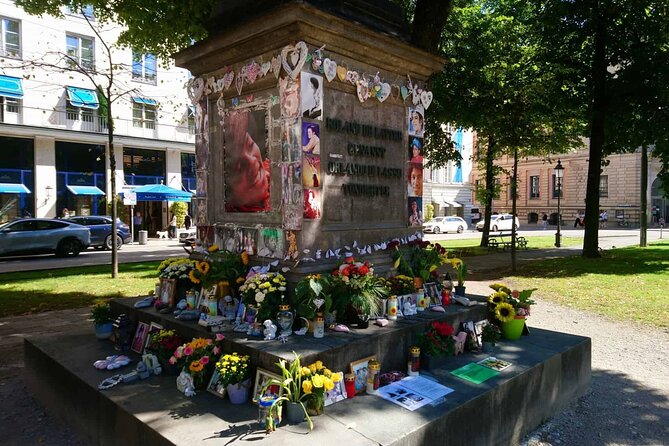
The tour opens with a dramatic anchor at Wittelsbacherbrunnen, a monumental fountain built in the 1893 to 1895 period. It sits at the transition between Lenbachplatz and Maximiliansplatz, and it’s not just decorative. The fountain is described as an allegory for the primal forces of water, and that kind of meaning is exactly the sort of detail a good guide can make stick.
From there you move into square after square, including Karolinenplatz and Königsplatz, and the architecture theme becomes clear fast. Karolinenplatz honors Queen Caroline of Bavaria and also symbolizes the early 19th-century relationship between Bavaria and France. Königsplatz then gives you a classic neoclassical stage with the Propyläen Gate and two museum buildings facing each other: the Glyptothek and the Staatliche Antikensammlungen.
These stops are short, but that’s the point. You’re not expected to live in every square. You’re meant to get the overall visual map of Munich’s layers, so later you can return to whichever corners pull you in.
Same city, a different way to spend the afternoon:
- From Munich: Neuschwanstein & Linderhof Castle Full-Day Trip
★ 4.6 · 14,646 reviews - Neuschwanstein & Linderhof Castle-Fairytale Day Tour from Munich
★ 4.5 · 7,275 reviews - Munich: Third Reich & WWII Walking Tour
★ 4.6 · 6,181 reviews - Dachau Concentration Camp Memorial Site Tour from Munich by Train
★ 4.5 · 5,637 reviews
Königsplatz to the Pinakothen, old masters to modern art in one ride
Next comes Kunstareal, the area that’s basically Munich’s gallery and museum quarter. The standout here is how the tour pairs two museum worlds without demanding that you commit to long indoor time.
At Alte Pinakothek, you’re looking at one of the oldest galleries in the world and home to a major collection of Old Master paintings. The stop is brief, but it’s enough to let you register the museum’s scale and importance, especially if you’ve only seen the name in passing.
Then you jump to Pinakothek der Moderne, which combines multiple collections into one building: modern and contemporary art, works on paper, design and applied arts, and more. Even if you don’t go inside, you’ll likely feel the difference between how old art traditions and modern art spaces present themselves. The value here is orientation. You’re learning where Munich’s art gravity sits.
If you’re an art lover, this kind of quick “place recognition” is extremely useful. You’ll know which museum you actually want to tackle on a separate day, when you have time to go slower.
Führerbau to peace symbolism: reading Munich through tense history
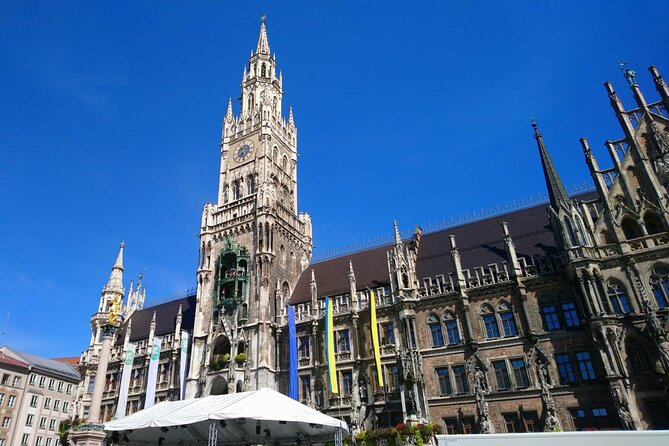
One of the most important stops is at Führerbau, the Führer building on Arcisstrasse 12. It was built between 1933 and 1937 during the Nazi period and used extensively by Adolf Hitler. Unlike many other sites from that era, the structure still stands, and today it houses the University of Music and Performing Arts Munich.
That is a heavy subject, and it’s also an honest one. A good guide’s job here is not to sensationalize. It’s to help you understand how cities reuse buildings and how meanings shift over time.
From there, the tour moves toward memorial architecture with Siegestor. This three-arched gate was originally dedicated to the glory of the Bavarian army. After restoration following World War II, it’s now framed as a reminder to peace, with the statue of Bavaria and a lion-quadriga on top.
Then you reach Odeonsplatz, a large square tied to early 19th-century development. The square is also associated with the 1923 Beer Hall Putsch, including a fatal gun battle that ended the march. Even with a short stop, you’ll come away understanding that Munich’s central squares are not just pretty. They’re also where major national stories played out.
Residenz Munich and Hofgarten: royal power, then a breather
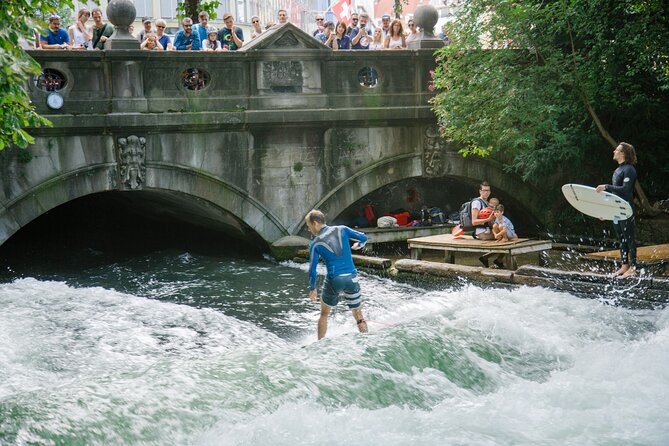
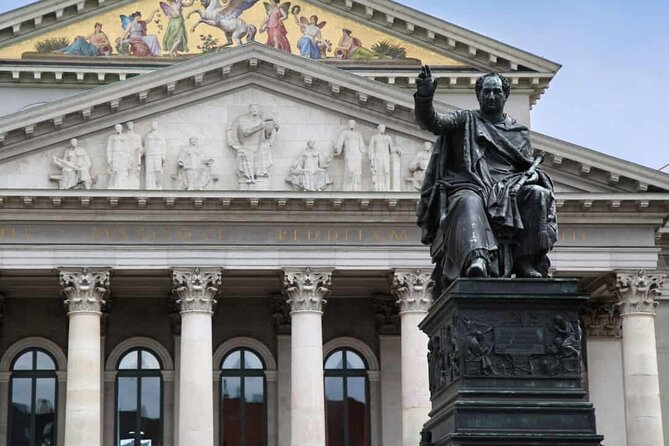
After the heavier context, the tour shifts into a calmer, more graceful mode with Residenz München. This was the former royal palace of the Wittelsbach monarchs and is described as the largest city palace in Germany. Today it’s open to visitors for its architecture, room decorations, and displays of royal collections.
Even if you don’t enter on this tour, the Residenz stop gives you a sense of scale. The building dominates the feel of the area, and it helps you connect what you’re seeing with Munich’s older identity as a seat of power.
Next is the Hofgarten, built between 1613 and 1617 in an Italian Renaissance garden style. In the center you’ll find a pavilion for the goddess Diana, built in 1615. This is one of the best “reset” stops in the ride because it gives your body a break and lets your eyes rest on greenery and structure.
State buildings to the English Garden, then beer at the Chinesischen Turm
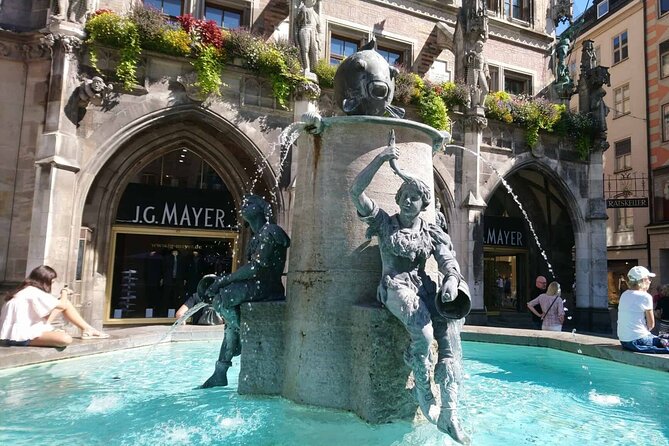
The tour continues to Bayerische Staatskanzlei, the building housing the chancellery offices staff. It was erected from 1989 to 1993 around the central dome of a former Bavarian Army Museum building. That earlier museum was built in 1905, later damaged in World War II, and demolished with the site transformed into new government space.
This stop is small in time but meaningful in context. It shows how Munich replaced old militarized uses with modern civic ones, and it’s part of that larger story you see all over the city.
Then it’s full-on nature scale at Englischer Garten, one of the world’s largest urban public parks. The tour data gives the size as 3.7 km² and 370 ha, and that’s the kind of number that sounds abstract until you’re near it. The name refers to the English garden style popular in the mid-18th to early-19th century.
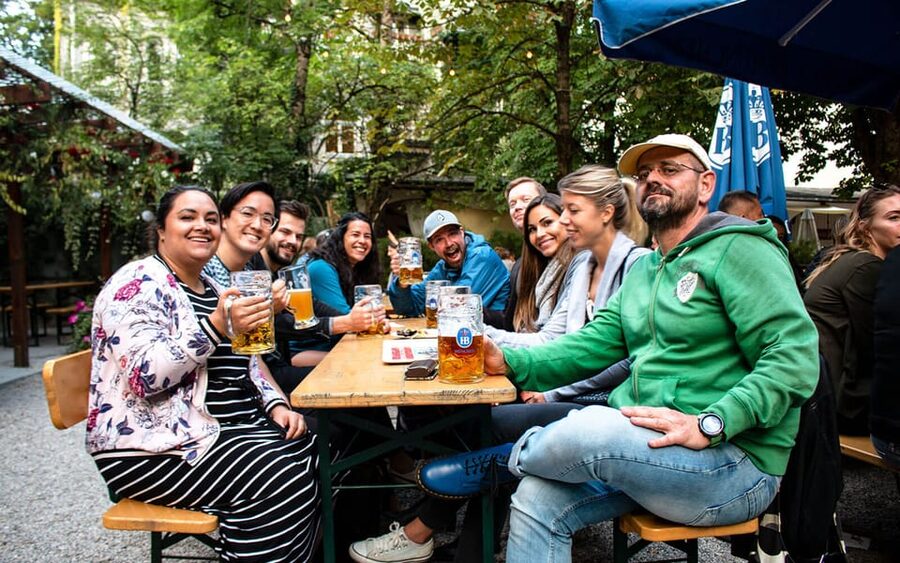
After that you roll into a classic Munich reward: Biergarten am Chinesischen Turm. This is a major beer garden with 7000 seating places, described as the second largest after Hirschgarten. It sells Hofbräu beer and the stop is long enough at 40 minutes to actually enjoy the vibe, not just stand near it.
One note for your planning: the tour highlights also mention a chance to sample traditional German beer at a legendary beer hall for an extra expense. That’s separate from your basic beer garden time, so if you want both, budget a bit and make sure you’re not trying to do it all with one tank of energy.
Eisbachwelle and the Angel of Peace viewpoints
Next comes a Munich-only kind of spectacle: Eisbachwelle. The river forms a standing wave about a meter high, and it’s known as a popular river surfing spot. The water is described as cold and sometimes shallow, sometimes only around 40 cm deep, which means the surfing is for experienced people.
Even if you never plan to surf, it’s a fun stop because it shows Munich’s playful relationship with the river. You’ll get the spectacle without needing any participation.
After that, you head to Friedensengel, the Angel of Peace in the Maximilian Park. There’s an observation deck reached by two staircases leading up to a viewpoint. You’ll see a 38-meter column crowned with a six-meter statue of the Angel of Peace, described as a replica of the Nike of Paeonius.
This is the sort of stop that changes how you view the route. It gives you that “okay, I get the city now” feeling because you’re looking out from a designed vantage.
Maximilianeum, the Deutsches Museum, and Viktualienmarkt as your closing act
You then reach the Maximilianeum, a palatial building originally linked to a gifted students’ foundation but since 1949 used for the Bavarian State Parliament. It’s a quick stop, but it fits the tour’s larger theme of power structures, old to new.
From there, it’s the Deutsches Museum, described as the world’s largest museum of science and technology with about 125,000 exhibits and around 1.5 million visitors per year. You likely won’t tour inside in just five minutes, but this is still a useful stop. It shows where Munich’s science identity sits, and it can help you decide if a separate museum day is worth it for you.
Then you finish the city-flavor loop at Viktualienmarkt, which evolved from an original farmers’ market into a gourmet market with around 140 stalls and shops. The stops are short, but markets work best when you use them for a sensory reset. You can decide what you want later for a picnic, a snack, or a simple meal after the ride.
At this stage, your brain is already full, so keeping Viktualienmarkt as a closing flavor stop rather than a big meal commitment is a smart choice. You leave with options, not obligations.
Ohel Jakob Synagogue and ending with a wider Munich picture
The last named stop is Ohel Jakob Synagogue at Sankt-Jakobs-Platz. It’s the new main synagogue for Munich’s Jewish community and was built between 2004 and 2006. The synagogue was inaugurated on 9 November 2006, tied to the 68th anniversary of Kristallnacht.
Even with a short stop, this gives you a perspective that goes beyond the typical “royal Bavaria” postcard. You see Munich as a living city with multiple communities and a modern chapter that acknowledges the past.
After the final stop, the tour ends back at the meeting point, Karlsplatz 4, so you can roll into the rest of your day without needing a complicated plan.
Guide impact: why names like Rob, Canaan, Karl, and Susanna matter
This tour’s success really depends on the guide’s delivery, and the feedback shows that again and again. Rob is praised for good explanations, and Canaan gets standout mentions for being fun and funny while sharing serious history. Karl is highlighted for answering questions and making the experience feel like walking with an old friend.
Other guide names you’ll see in the feedback include Susanna, who’s described as managing the ride in cold weather, and Mark, noted for super insightful history knowledge even in rain. Dan is mentioned for safety and for making specific food recommendations like a meatball sandwich that one person called the best they had.
Even without picking the same guide, the theme is clear: you get the most out of this tour when someone can connect the dots between architecture, political moments, and everyday life. The better the guide, the less it feels like you’re racing past landmarks.
Riding considerations: how the e-bike changes the experience
Here’s how I’d think about the riding part. Munich is fairly flat, and many people will find the route manageable even without an e-bike. Still, the e-bike upgrade helps most when you’re not fully fresh, when it’s cold, or when you want to keep your attention on details instead of effort.
The pace is designed around stop-and-look moments, and the route includes frequent short breaks. That pattern is great for photos and for soaking in context, but it does mean you should be ready to mount and dismount without rushing.
Rain shows up in real life, and in colder conditions, you’ll appreciate that e-bikes help keep your energy up so you don’t feel drained by the end. If you want a smoother experience, dress for weather and wear shoes that handle wet sidewalks.
One more thing to keep in mind: with up to 20 people, and the possibility of non-e-bikes mixed in, stay alert and follow the guide’s regrouping instructions. The tour is designed for safety, but your job is simply to ride predictably.
Beer and food choices that fit the schedule
Food and drink are not included, which is normal for a tour that includes a mix of markets, gardens, and major city stops. The benefit is that you’re not forced into a single restaurant. You can decide what fits your taste and budget.
There is also an optional beer-hall tasting mentioned in the highlights for an extra expense. Separately, you also get time at the large beer garden at the Chinesischen Turm, which is a built-in chance to sample local beer where the setting is part of the appeal.
A good approach is to treat the beer stops like a bonus, not a requirement. If you want to keep things balanced, you can do a small pour in the beer garden and save the bigger beer hall idea for a later night, when you’re ready for a longer sit-down meal.
Should you book this Best of Munich Electric Bike Tour?
Book it if you want a first-timer friendly overview that mixes architecture, art landmarks, parks, and beer culture in one half-day. It’s a strong choice for history buffs because the route touches on major building eras, and for beer aficionados because Munich’s beer-garden tradition is built into the ride.
You should think twice if you want deep museum time or long indoor visits. Many major stops are quick, which means you’ll learn where to go, not finish every museum in one go. Also, if you strongly dislike riding in groups on city roads, you’ll want to choose your comfort level carefully given the group size and the possibility of mixed bikes.
If you’re planning Munich for a short stay, I’d call this one of the best ways to get your bearings fast while still feeling like you saw the real city, not just the easy highlights.
FAQ
How long is the Best of Munich Electric Bike Tour?
The tour lasts about 4 hours.
Where does the tour start?
The meeting point is Karlsplatz 4, 80335 München, Germany, and the tour ends back at the same meeting point.
What is included in the price?
It includes a live guide and an electric bike plus a helmet. You also get a mobile ticket.
Are food or drinks included?
No. Cost of any food or drinks is not included.
What language is the tour offered in?
The tour is offered in English.
What is the cancellation policy?
You can cancel for a full refund if you cancel at least 24 hours in advance. Free cancellation applies up to 24 hours before the experience start time, and changes inside that window are not accepted.
More E-Bikes in Munich
- Best of Munich Electric Bike Tour
★ 4.7 · 23 reviews - Munich Electric Bike Rentals
★ 4.4 · 4 reviews - Best of Berlin E-Bike Tour
★ 5.0 · 77 reviews - Berlin: E-Bike Tour of the Berlin Wall and Mitte Highlights
★ 4.7 · 60 reviews
Newest Munich reviews on the site
- Wright Europe Vacations – Private Escorted Auto Tours★ 5.0 · 35 reviews
- Walking Tour on Resistance to Nazism in Munich★ 5.0 · 8 reviews
- Winter Tour to Neuschwanstein Castle from Munich★ 4.5 · 122 reviews
- Viktualienmarkt tasting tour★ 5.0 · 86 reviews
- Munich Walking Quiz: Explore and Discover the City’s Highlights★ 5.0 · 7 reviews
- Private Transfer from Munich to Salzburg with 2 hours for sightseeing★ 4.5 · 13 reviews
- From Munich: Neuschwanstein Castle and Linderhof Private Tour★ 5.0 · 13 reviews
- Munich Viktualienmarkt and Beyond Small-Group Food Tasting Tour★ 5.0 · 247 reviews
Cycling Tours, compared.
Sights and Highlights Bike Tour with a Local Guide
Read our review →
Classic Mike’s Bike Tour daily @ 11.30 incl Beer Garden & Surfers
Read our review →
Browse the lists this tour appears in