
Reviewed · WALKING TOURS
Walking tour Nuremberg
Golden city vibes, minus the guesswork. This 2.5-hour Nuremberg walking tour is a smart way to see the old town on foot, with stops that connect medieval legends to the city’s later turning points. You’ll move through Gothic landmarks, major squares, and the famous castle area, all guided in English.
I especially like the local perspective you get from a guide born and raised in Nuremberg, and the no-map navigation style that keeps the walk flowing. It also helps that the route targets big visual anchors, Der Schöne Brunnen, St. Sebaldus Church, Hauptmarkt, and Kaiserburg, so you’re not wandering in circles.
One thing to keep in mind is the castle hill. Several parts involve up and down on cobblestones, so if mobility is limited, you’ll want comfortable shoes and a flexible pace.
In This Review
- Key highlights at a glance
- Meeting at Schöner Brunnen and letting the guide steer
- Der Schöne Brunnen and Hauptmarkt: fountains, squares, and quick legend fixes
- St. Sebaldus Church: religion, the Reformation, and musicians in one stop
- Up to Kaiserburg Nuremberg: the castle hill and the city’s “triple” power
- Albrecht Dürer House: why one artist can explain an era
- Tiergartnertorturm and the look of defense
- Weissgerbergasse: craftsmen’s street and the scars of WWII
- Altstadt wandering: castle gardens, St. Lorenz, and side corners that stick
- How long is it, and what should you wear
- Value at $3.63: paying for a guide, not a ticket wall
- Who should book this Nuremberg walking tour
- FAQ
- Where does the walking tour start?
- What time does the tour begin?
- How long is the Nuremberg walking tour?
- Is the tour offered in English?
- How many people are in the group?
- Are there admission fees for the stops?
- Can I cancel for a refund?
- Should you book this Nuremberg walking tour?
Key highlights at a glance
- Schöner Brunnen to Kaiserburg, guided from stop to stop so you spend energy looking up, not checking directions
- English tour with a Nuremberg native who can explain why places mattered, not just what they look like
- Major landmarks plus smaller corners like the castle gardens and the executioner’s house area in the old town
- WWII and reconstruction context, handled with care and grounded in what you can actually see
- Free-to-enter stops for most sights, so you are mostly paying for the guide and storytelling
- Small group feel (max 50) which makes it easier to hear the story at each pause
Meeting at Schöner Brunnen and letting the guide steer
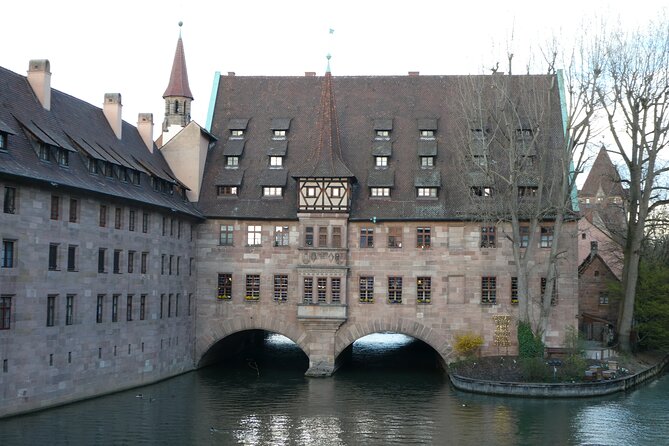
The tour starts at the Schöner Brunnen area in the old town, near Hauptmarkt, and it loops back to the same point at the end. Start time is 11:30 am, and the walk is listed at about 2 hours 30 minutes. You’ll have a mobile ticket, so you are not digging for paper once you’re in the city.
What you’re really buying here is momentum. Instead of pulling out a map at every turn, the guide does the navigation for you, and that matters in Nuremberg because the old town is full of twists, stairs, and small streets where it is easy to lose your bearings. A guide can also make the walk feel like one story, not eight separate sightseeing errands.
Also, this is built for an easy first pass through the city. The route is paced with frequent short stops, and the group size caps at 50, which keeps the experience from turning into a loud parade.
More Walking Tours in Nuremberg
- Nuremberg: Old Town Guided Walking Tour
★ 4.6 · 2,416 reviews - Nuremberg: Walking Tour of Former Nazi Party Rally Grounds
★ 4.7 · 1,665 reviews - Nuremberg Old Town and Nazi Party Rally Grounds Walking Tour in English
★ 4.5 · 504 reviews
Der Schöne Brunnen and Hauptmarkt: fountains, squares, and quick legend fixes
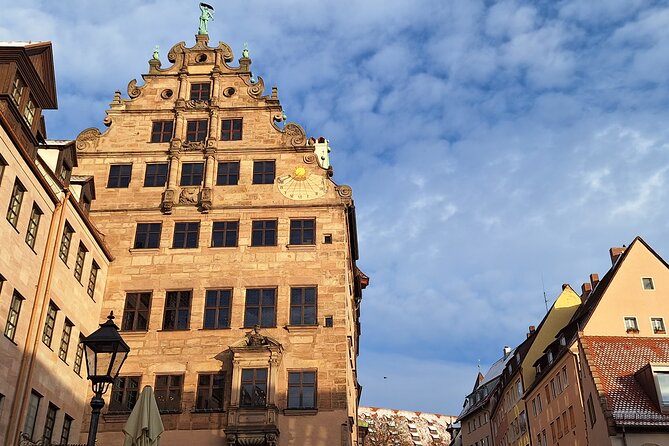
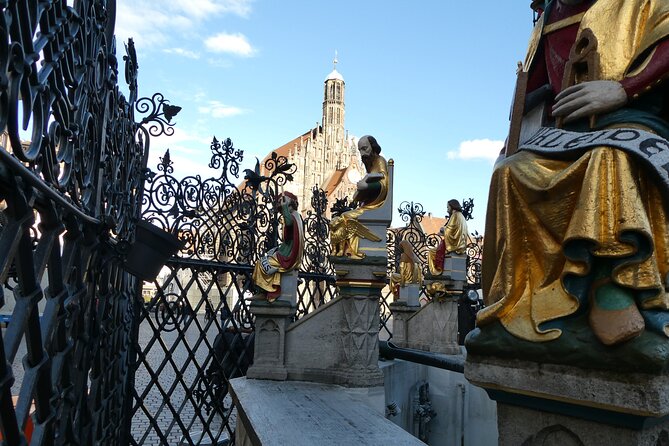
Your first big “wow” moment is Der Schöne Brunnen. This fountain dates to the late 14th century and is described as a Gothic masterpiece, plus it’s tied to Nuremberg’s most famous legend. Even if you only catch part of the story, the fountain works as a perfect reference point for understanding why the city’s medieval identity sticks so hard in Nuremberg’s street layout.
Then you head into the main square area at Hauptmarkt. This is the central old-town hub, where key sights cluster together: the Frauenkirche, the Schöne Brunnen connection again from the square context, and the Männleinslaufen tradition. You do not need to memorize a walking plan here, because the guide keeps steering you between viewpoints and explains what to notice as you look around.
A practical tip: bring your phone and be ready to stop fast. Squares like Hauptmarkt reward timing, because it is where you can usually get both architecture shots and a sense of how the streets funnel into the market area.
St. Sebaldus Church: religion, the Reformation, and musicians in one stop
St. Sebaldus Church is Nuremberg’s most important church, and it is not just presented as a pretty shell. You’ll get a Romanesque-Gothic look at how the city’s religious life evolved, including the Reformation. The stop also connects to culture, with the guide explaining Nuremberg’s best-known musicians.
This is one of those stops where guidance pays off. Churches can look similar at a glance across Central Europe, but a local guide helps you see what is unique about this one and why it mattered to the people who lived around it. If you want context you can carry into later museum visits or church stops on your own, this is a good place to front-load it.
One caution: church interiors can involve slow walking and standing for explanations. If you know you get restless, plan to move at your own speed while still staying with the group rhythm.
Up to Kaiserburg Nuremberg: the castle hill and the city’s “triple” power
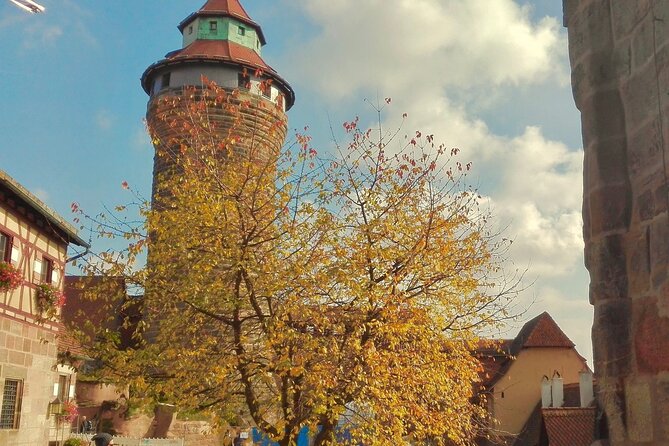
Next comes the landmark: Kaiserburg Nuremberg, the imperial castle complex. It’s described as a “triple castle,” made up of the Imperial Castle, the Burggrafenburg, and the imperial city buildings. This stop is where your walk turns into skyline time, because Nuremberg’s old town reads differently once you’re up near the castle area.
Expect a climb. More than one guide-led experience notes that the walk up is not long, but it can be strenuous, especially if your legs are not happy on cobblestone. The good news is that the tour is structured so you do not just suffer through. Guides often build in pauses so people can catch their breath, take photos, or grab a drink once they arrive.
At the castle area, the key value is interpretation. Kaiserburg is not only a postcard, it’s a way to understand how power worked in different layers of the city, and how Nuremberg’s status tied to the wider Holy Roman Empire world. If you want the simplest mental model for the city, this stop gives it to you.
Same city, a different way to spend the afternoon:
- Nuremberg: City Tour with the Bimmelbahn Train
★ 4.4 · 2,475 reviews - Nuremberg: Tunnels and Secret Passages in the City Wall Tour
★ 4.8 · 2,334 reviews - Nuremberg: Medieval Dungeons Guided Tour
★ 4.8 · 2,214 reviews - Medieval Tour in Nuremberg in Spanish
★ 5.0 · 1,374 reviews
Albrecht Dürer House: why one artist can explain an era
The Albrecht Dürer House is a medieval house built around 1420. It got its current appearance through modernization after 1500, linked to Bernhard Walther, and from 1509 to 1528, it served as Albrecht Dürer’s home and workplace.
This stop does two helpful things for you. First, it turns “great artist” into lived-in details, because a house tells you how work happened, not just what the finished art looked like. Second, it shows how Nuremberg connected artistry to the city’s broader economic and cultural power during its Golden Age era.
If you are curious about why Nuremberg produced major names, you’ll likely appreciate how this stop anchors the idea in a real building with real dates.
Tiergartnertorturm and the look of defense
Next is Tiergartnertorturm, a defensive tower from the 14th century that towers over one of Nuremberg’s most beautiful squares. This stop is short, but it changes how you read the old streets. When you know a tower like this existed to control movement and defend the city, you start noticing street bends, sightlines, and how open areas were shaped around fortification logic.
Even if you only take a quick look, the tower works as a “why” stop, linking the medieval city’s layout to safety and control.
Weissgerbergasse: craftsmen’s street and the scars of WWII
Weissgerbergasse is the craftsmen’s street, and it’s one of the most memorable parts of the walk because it connects work life to city form. Here you learn about the destruction and reconstruction of the old town during World War II. That context matters, because Nuremberg’s medieval core did not survive unchanged.
This is where the tone of the guide really counts. More than one guide approach highlighted sensitivity around darker topics, including WWII and Nazi history, because this city has visible reminders and also real emotional weight. If you want to learn without turning the subject into shock value, this tour aims for a careful pace.
Practical note: because this street is designed around craft life and narrow passageways, it can feel tight. Keep your phone ready, but also watch your footing if the ground is uneven.
Altstadt wandering: castle gardens, St. Lorenz, and side corners that stick
The final stretch is the old-town Altstadt experience, designed as an entertaining mix of history, legends, and useful recommendations for the rest of your stay. Along the way, you’ll visit major anchors like the imperial castle area and churches including St. Sebald and St. Lorenz. You’ll also be steered toward hidden corners, including the castle gardens and the executioner’s house area.
This part is great for two reasons. One, it helps you build a mental map beyond the headline sights. Two, it often turns into practical planning, because local guides can point you toward where to spend your next hours in a way that feels natural for Nuremberg, not like a copy-paste itinerary.
A neat extra some guides provided was a Google Map QR code pointing to locations they recommend. If you get something like that, it can save you time later by turning the walk into a customized follow-up plan.
How long is it, and what should you wear
The tour runs about 2 hours 30 minutes, with short stops that keep things moving but not exhausting in a straight line. The route includes hills, and multiple comments from people who did the walk note steep stretches near the castle and cobblestone surfaces.
So here’s my plain advice: wear comfortable shoes with grip, and expect to walk uphill at least once in a meaningful way. If you need to move slower, plan to take brief pauses rather than trying to “power through” steep grades. Guides typically understand different walking speeds and may slow down to keep everyone hearing the explanations.
Also, this is an English tour, and it’s designed for most travelers. The main limit is not your age or fitness on paper. It’s whether you’re okay with uneven old-city walking.
Value at $3.63: paying for a guide, not a ticket wall
The price is $3.63 per person, which is unusually low compared with many paid walking tours. What makes the value make sense is that the listed stops are free to enter at the time of the tour, so you are paying mainly for interpretation and routing, not for a stack of museum admissions.
For me, the best way to think about this tour is as a “city orientation plus story” package. You get key landmarks, yes, but also a narrative thread that connects the medieval peak, the religious and cultural world, and then the WWII-era disruption and reconstruction. That kind of context makes your future self-guided strolls smarter, because you understand what you’re looking at.
The other value lever is the guide’s delivery. Named locals like Daniella and Andreas (among others) are mentioned as providing friendly, detailed explanations, with humor that does not erase serious moments. That combination is rare, and it’s a big reason people give this tour such high marks.
Who should book this Nuremberg walking tour
Book it if you want:
- A first-time overview of the old town anchored by the big sights
- Storytelling that links medieval legends and later history without rushing
- A guide who can make Nuremberg feel like it has a voice, not just a collection of monuments
- Practical local recommendations for what to do next after the walk
You might skip it if you:
- Hate walking uphill on cobblestones and cannot adjust your pace
- Only want purely visual sightseeing and would rather read background elsewhere
FAQ
Where does the walking tour start?
The tour starts at Schöner Brunnen / Hauptmarkt, 90403 Nürnberg, Germany.
What time does the tour begin?
The start time is 11:30 am.
How long is the Nuremberg walking tour?
It runs about 2 hours 30 minutes (approx.).
Is the tour offered in English?
Yes, the tour is offered in English, with an English-speaking guide.
How many people are in the group?
The tour has a maximum of 50 travelers.
Are there admission fees for the stops?
The stops listed in the tour are marked as admission ticket free.
Can I cancel for a refund?
Free cancellation is available. You can cancel up to 24 hours in advance for a full refund.
Should you book this Nuremberg walking tour?
If you want a guided route through Nuremberg’s old town that actually explains what you’re seeing, this is an easy yes. The route is built around the city’s most important anchors, including Kaiserburg and St. Sebaldus, and it adds the kind of WWII reconstruction context that helps the place make sense today. Just plan for cobblestones and at least one meaningful hill, and you’ll leave with a clear sense of where to go next.
Newest Nuremberg reviews on the site
- Nuremberg World War II★ 4.5 · 89 reviews
- Third Reich, Nazi Propaganda, Nuremberg Trials Private Tour★ 5.0 · 10 reviews
- Camp Zeppelin Tour in Spanish★ 5.0 · 39 reviews
- Tour to Rothenburg ob der Tauber from Nuremberg in Spanish★ 5.0 · 51 reviews
- Private transfer from Nuremberg to Munich with 2h for sightseeing★ 5.0 · 4 reviews
- Nuremberg Private Walking Tour: Old Town and Nazi Rally Grounds★ 5.0 · 92 reviews
- Tour at the Former Nazi Party Rally Grounds (english)★ 4.5 · 18 reviews
- Private audio book city rally in Nuremberg’s old town★ 4.0 · 6 reviews
Walking Tours, compared.


Berlin’s Best: 2 Hour Walking Tour Third Reich and the Cold War
Read our review →
Third Reich Berlin: Hitler and WWII Walking Tour
Read our review →Browse the lists this tour appears in