
Reviewed · WALKING TOURS
Walking Through Dresden’s Past with Dr. Fraser Macdonald
Dresden’s story starts on the Elbe. This walk with Dr. Fraser Macdonald strings together how the city grew, changed faiths, and rebuilt after major upheaval, using the streets, churches, and bridges you can still see today in about 2 hours.
I love two things most. First, the route balances big-name monuments like the Frauenkirche with quieter medieval sites that you would likely miss on your own. Second, Fraser’s delivery is built for listening, not just staring, with tight storytelling that connects architecture to real people and events.
One possible drawback: many stops are look-from-the-street moments, with optional paid entrances if you want to go inside, climb, or add a museum visit. Add in the fact that the tour needs good weather, and you’ll want comfortable shoes and a flexible plan.
In This Review
- Key things to know before you go
- Dr. Fraser Macdonald and the 2-hour pace that works
- Köpckestraße on the Elbe, where Dresden begins
- Museum for Saxische Volkskunst, monastery to hunting lodge
- Dreikoenigskirche at Haus der Kirche, history without the tower
- Augustus Bridge and the Altstadt shift, medieval Dresden on foot
- Frauenkirche, Holy Cross Church, and Sophienkirche themes you can actually follow
- Frauenkirche Dresden, 700 years of change
- Holy Cross Church, a Reformation witness
- Denkraum Sophienkirche, monastery to the lost Sophienkirche
- Dresden Castle, from small city to Electors and Kings
- Price and what you get for your $60.34
- Logistics that matter: where you meet, how you move, and where you stop
- Who this walk is best for
- Should you book this Dresden past-walk?
- FAQ
- How long is the Walking Through Dresden’s Past tour?
- Is the tour offered in English?
- Do we enter the churches and museums during the tour?
- What entrance fees should I expect to pay separately?
- Where do you meet and where does the tour end?
- What is the maximum group size?
- Are service animals allowed?
- What happens if the weather is bad, or I need to cancel?
Key things to know before you go
- Small group (max 30) keeps the pace human, with time for questions and quick chats.
- Street-level history means you learn while you walk, not trapped in a single spot.
- Mix of Neustadt and Altstadt gives you more of Dresden in two hours than a standard highlights loop.
- Church stops without pressure: you can enjoy views outside, then choose any paid interiors or tower climbs.
- A clear end point at Theaterplatz makes it easy to keep exploring right after the tour.
Dr. Fraser Macdonald and the 2-hour pace that works
This is the kind of tour that helps first-time visitors get their bearings fast, without turning your day into a museum sprint. At about 2 hours, you cover enough ground to understand Dresden’s shape, but you still keep time to wander on your own after.
The big quality here is the guide. Dr. Fraser Macdonald brings an anthropological, people-first way of explaining the city, so history doesn’t feel like a list of dates. In the reviews, you can see how his approach blends architecture, culture, and the push-and-pull of politics and religion in a way that feels organized and watchable, even when the topics get heavy.
The walk is also described as manageable, with people estimating it’s around a mile long. So think of it as a brisk stroll with stops, not a long hike.
More Walking Tours in Dresden
- Dresden: City & Semperoper Guided Walking Tour
★ 4.8 · 2,307 reviews - Dresden: Guided City Walk
★ 4.6 · 2,075 reviews - Dresden: Complete Walking Tour with Frauenkirche Visit
★ 4.8 · 700 reviews
Köpckestraße on the Elbe, where Dresden begins
The tour starts on the banks of the Elbe at Köpckestraße. This opening matters because Dresden’s story is not just about what was built later, it’s about why this location became a permanent home in the first place.
At this stop, you pause to consider things like early settlement patterns, the language and culture of the people who lived here, and the painful reality of displacement that followed. It’s a strong start because it sets a human baseline before the route shifts toward churches and royal buildings.
Practical note: this is your first orientation moment, so if you’re prone to getting lost in your first hour, pay attention here. The rest of the tour makes more sense once you know where you are on the river-to-city axis.
Museum for Saxische Volkskunst, monastery to hunting lodge
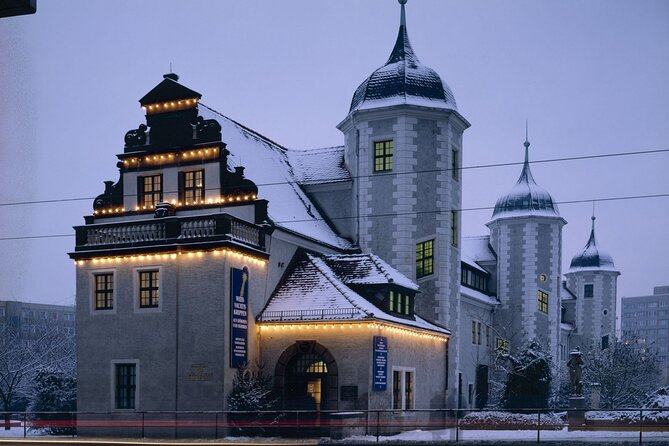
Next comes the Museum für Sächsische Volkskunst mit Puppentheatersammlung area. You do not enter as part of the guided portion, but you get the building’s backstory and why it sits where it sits.
The timeline is the hook: it began as a wealthy Augustinian monastery in the 15th century, then after Luther’s Reformation, the site was demolished and repurposed as a royal hunting lodge in the 16th century. That single sequence shows how religion, power, and daily life were tightly linked in Dresden.
Admission for the museum is not included. The tour treats it as an optional add-on, so you can decide on the spot whether you want to spend extra time going in. If you enjoy museum context, budget for it. If you prefer to keep moving and saving your money for later visits, you can still get the core story from the exterior stop.
Dreikoenigskirche at Haus der Kirche, history without the tower
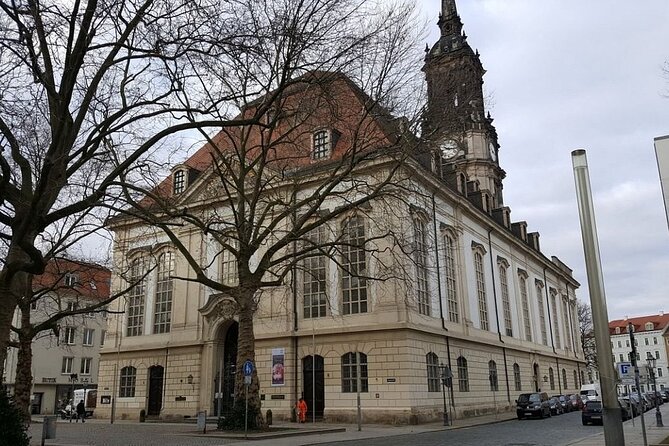
At Haus der Kirche – Dreikoenigskirche, the tour focuses on a crucial site in former Altendresden. Again, you do not go inside or climb the tower as part of the main experience, but you get the unseen history of the place going back to the early 15th century.
This is a good stop if you like hearing what a building meant before it looked the way it does today. Churches are especially good for this because they often keep changing hands, beliefs, and architectural styles across centuries. You get that framing here, without forcing a paid ticket unless you choose to add it.
If you want more, the tower climb has a separate fee. So your decision is simple:
- Want photos and a bigger view? Consider the climb.
- Want more time for exploring around the area? Skip it and keep your momentum.
Same city, a different way to spend the afternoon:
- Dresden: Semperoper Tickets and Guided Tour
★ 4.7 · 12,102 reviews - Dresden: The Original Night Watchman Tour in Lantern Light
★ 4.6 · 6,653 reviews - Dresden: Semperoper and Old Town Tour
★ 4.8 · 5,735 reviews - Dresden: River Sightseeing Boat Cruise
★ 4.3 · 5,323 reviews
Augustus Bridge and the Altstadt shift, medieval Dresden on foot
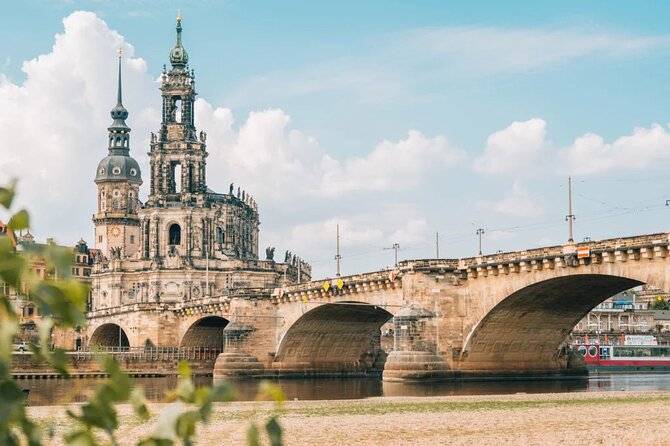
After Altendresden, you cross the famous Augustus Bridge to enter the Altstadt. This is one of those transitions that feels like more than logistics. It’s a built-in “now I see the other side” moment.
You continue exploring the deeper medieval layers of Dresden here, which is what keeps the tour from being just a sequence of church facades. The bridge stop also helps you understand how neighborhoods connect, so later, when you’re walking on your own, the city feels less like separate postcards.
If you like taking photos, this bridge segment is where you’ll likely want to slow down for a minute. Just remember the tour is designed as a steady walk, so don’t wander too far ahead of the group.
Frauenkirche, Holy Cross Church, and Sophienkirche themes you can actually follow
This middle stretch is where the tour becomes emotionally and visually memorable, because it connects several religious landmarks into a coherent story.
Frauenkirche Dresden, 700 years of change
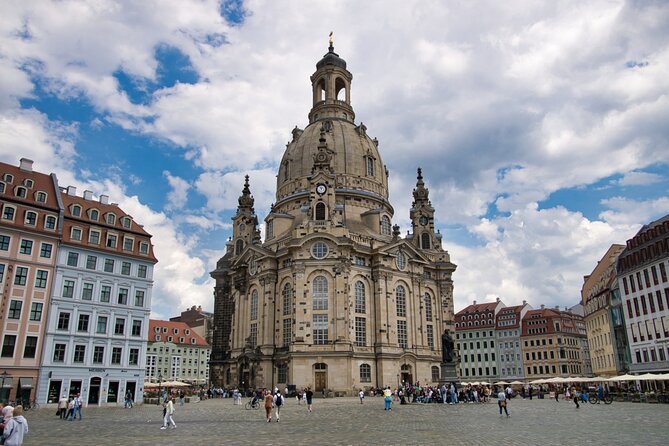
At the Frauenkirche Dresden stop, you learn about its long timeline, including the fact that it has a 700-year history reaching back to earlier periods before it was constructed in the Baroque era. The guide also explains the structural and religious changes it witnessed over time.
One smart thing about this stop: you’re not required to pay to get value. The guided portion focuses on what you can see and what the changes mean. If you want to go inside later, that’s your choice.
Holy Cross Church, a Reformation witness
At Holy Cross Church, the focus is how the church was originally built in the 13th century, destroyed multiple times, and still played witness to key moments connected with the Reformation.
This is a stop that works especially well if you like learning the “why this matters” behind a landmark. Instead of treating it like a single era monument, you get the sense of continuity, disruption, and rebuilding.
Denkraum Sophienkirche, monastery to the lost Sophienkirche
Finally comes Denkraum Sophienkirche. Here you hear the story of the first Franciscan monastery in Dresden, originally constructed in the 13th century. Then the narrative moves through its demise and later resurrection as the iconic yet sadly lost Sophienkirche.
Even without going inside, the framing makes the place feel like a window onto changing political and religious currents. If you’ve ever wondered why Dresden can feel both grand and wounded at the same time, this stop helps explain that mood without turning it into a lecture.
Dresden Castle, from small city to Electors and Kings
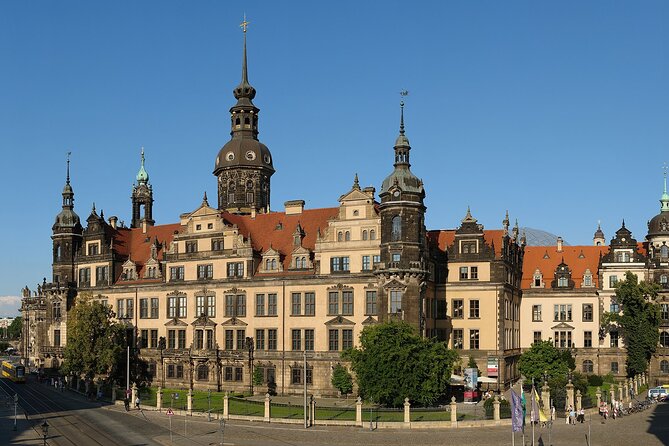
The tour ends at Dresden Castle at the Residenzschloss, where you examine how Dresden grew from something smaller and less important into a major player in the Holy Roman Empire.
You focus on the idea of the castle as a royal residence built to house the Electors and Kings of Saxony. The guide’s explanations here are about transformation: how a city’s status rises, and what that does to its buildings and power center.
As with other major sites, you do not enter the castle as part of the included tour. The entrance fee to the royal palace is separate, so if you want to go deeper, you can. If you don’t, you still leave with a clear understanding of why the castle matters.
Price and what you get for your $60.34
At $60.34 per person for a roughly 2-hour guided walk in English, the value is in the structure, not in a long list of included admissions. The tour includes the professional guide and a thoughtfully paced route.
A key part of the value calculation: multiple stops are exterior-based, with optional paid entrances for anyone who wants more depth at that specific location. From the tour details:
- Dreikönigskirche options can add around €5 (tower climb).
- Residenzschloss entry is €14.
- The Saxische Volkskunst museum has an optional €5 entrance.
- Haus der Kirche – Dreikoenigskirche also notes an entrance fee of €5 per person.
So, for most people, the base price buys the storyline and the walking route. Any extra museum or tower time is up to you. If you budget only for what you truly want to see inside, you stay in control of costs.
Reviews also point to a bonus you don’t see on a website: the guide’s personality and humor, plus his willingness to answer questions. People describe feeling like they got an intermediate understanding of Dresden’s history and architecture, including how changes across different eras show up in buildings you can still spot today.
Logistics that matter: where you meet, how you move, and where you stop
You meet at the Golden Rider at Neustädter Markt 14, 01097 Dresden. You finish at Theaterplatz, 01067 Dresden, where it’s easy to keep going toward big sights like the Zwinger and Semperoper, or to hop on a tram.
The tour uses a mobile ticket, and it’s offered in English. It’s also limited to a maximum of 30 travelers, which is one reason the pace feels relaxed rather than rushed.
Another practical point: service animals are allowed, and the meeting area is near public transportation. So you can plan your day without needing a car or long transfers.
Who this walk is best for
This tour is a strong fit if you:
- Want a first-timer introduction that mixes famous landmarks with less obvious corners.
- Like history explained through architecture and place, not just a slideshow.
- Are short on time and want a 2-hour overview that leaves room to wander afterward.
It’s also ideal if you enjoy questioning the big moments in Dresden’s past. In reviews, people specifically bring up WWII-related topics and the way the city reflects periods including the GDR era and reunification through its architecture. That kind of context is exactly what helps you make sense of what you’re seeing during the rest of your trip.
If your idea of a great tour is multiple fully ticketed museum entries with lots of indoor time, you might find the exterior-heavy format less satisfying. But if you want a guided pathway through Dresden’s main layers, this works well.
Should you book this Dresden past-walk?
Book it if you want a clear, human-scale story of Dresden, told while you walk, with options to go inside only when it genuinely interests you. It’s especially worth it at the start of your trip, because it helps you understand where everything sits and why it looks the way it does.
Skip it if you only want museum interiors, or if your travel style is slow and wandering without a structured route. Also consider weather. Since the experience requires good weather, check forecasts and plan for flexibility.
Bottom line: for $60.34 you get a well-paced, English-language history walk guided by Dr. Fraser Macdonald, with optional paid add-ons instead of a forced museum budget. That mix is a smart way to see Dresden in a short time without losing the meaning behind the sights.
FAQ
How long is the Walking Through Dresden’s Past tour?
It runs for about 2 hours. There are several short stops, so you’ll be walking and pausing throughout rather than spending long stretches in one location.
Is the tour offered in English?
Yes. The tour is offered in English, and you receive a mobile ticket.
Do we enter the churches and museums during the tour?
Not as part of the guided portion. Several stops are explained from outside, and you can enter on your own at the locations where optional access is available.
What entrance fees should I expect to pay separately?
Entrance fees are not included for some sites. The details provided list separate costs such as about €5 for the Dreikoenigskirche tower option, €14 for Residenzschloss, and about €5 for the Volkskunst museum, depending on which optional entries you choose.
Where do you meet and where does the tour end?
You meet at the Golden Rider on Neustädter Markt 14, Dresden. The tour ends on Theaterplatz, Dresden.
What is the maximum group size?
The tour has a maximum of 30 travelers.
Are service animals allowed?
Yes, service animals are allowed.
What happens if the weather is bad, or I need to cancel?
The tour requires good weather. If it’s canceled due to poor weather, you’ll be offered another date or a full refund. You can also cancel for a full refund up to 24 hours in advance.
Newest Dresden reviews on the site
- Winterland Tour to Bohemian and Saxon Switzerland from Dresden★ 5.0 · 22 reviews
- Walking Tour of Historic Dresden with a Christmas Touch. Small group tour.★ 4.5 · 9 reviews
- The Best of Bohemian and Saxon Switzerland Day Trip from Dresden★ 5.0 · 68 reviews
- Sightseeing tour by ConferenceBike★ 5.0 · 14 reviews
- Tickets Dresden Transport Museum★ 4.0 · 23 reviews
- Top Full-Day Adventure: Bohemian & Saxon Switzerland from Dresden★ 5.0 · 68 reviews
- 1.5 hours Segway Elbe Mini Tour★ 5.0 · 66 reviews
- Escape game in Dresden’s old town 90 minutes★ 5.0 · 8 reviews
Walking Tours, compared.


Berlin’s Best: 2 Hour Walking Tour Third Reich and the Cold War
Read our review →
Third Reich Berlin: Hitler and WWII Walking Tour
Read our review →Browse the lists this tour appears in