
Reviewed · CITY TOURS
Dresden: Guided City Walk
Dresden changes fast when you walk with a guide. This Dresden walk is one of the easiest ways to connect Middle Ages, Renaissance energy, and Baroque splendor to the city’s modern controversies, ending with the emotional power of the Frauenkirche. I love how the guide stitches scenes together into a story, not a pile of facts, and I also love the focus on the big-photo sites like Semperoper and the Baroque Zwinger. The main drawback to plan around is simple, the tour is German-only, so language comfort matters.
You get a tight 90-minute route through Dresden’s most famous old-town highlights, with frequent stops at prime viewpoints and practical guidance on where to eat and what to do afterward. It also includes a visit to the Nymphenbad in the Zwinger, which is the kind of detail that makes a short tour feel special, not generic.
In This Review
- The Best Bits, In Plain Sight
- Why This Walking Tour Makes Dresden Feel Coherent
- Starting at Dresden Information, Then Letting the City Lead
- Stallhof: Where Court Life Meets Architectural Drama
- Fürstenzug, the Procession of Princes, and How to Read a Giant Mural
- Brühl’s Terrace: One of the Best Scenic Walks Without a Ticket Detour
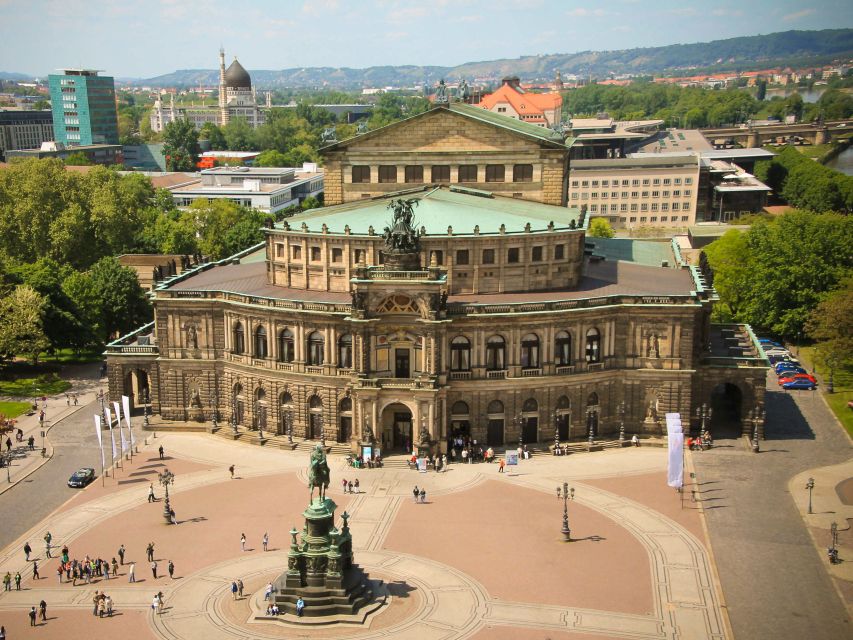
- Semperoper: Baroque Grandeur With Real-World Purpose
- Zwinger: A Baroque Complex That Feels Like a Stage Set
- Dresden Castle and Residenz Area: Power, Rebuilt Meaning, and City Memory
- Augustus Bridge and Taschenbergpalais: Moving From Icons to the City’s Edges
- Finishing at Frauenkirche: Why This Ending Lands
- Price and Value: What $15 Buys You in Real Terms
- Who This Tour Fits Best (and Who Might Want Something Different)
- Tips to Get More From the Walk
- Should You Book This Dresden Guided City Walk?
- FAQ
- What is the duration of the Dresden Guided City Walk?
- How much does the Dresden Guided City Walk cost?
- Where is the meeting point?
- Is the tour guided, and what language is it in?
- What major sights does the walk include?
- Does the tour include a visit inside the Zwinger?
- Is the tour accessible for wheelchair users?
- Can I cancel and get a full refund?
The Best Bits, In Plain Sight
- Neumarkt start + Neat direction: You begin at the Dresden Information area, then move through the core sights on foot without wasting time.
- Frauenkirche focus at the end: The route is set up so you finish where the story turns most emotional.
- Baroque showpieces you can actually see: Semperoper, Zwinger, Stallhof, and the Residenz area get real context, not just name tags.
- Fürstenzug explained: The Procession of Princes is a visual highlight, and your guide helps you read what you’re looking at.
- Nymphenbad stop at the Zwinger: You’ll get a chance to spot the playful mystery inside one of Dresden’s signature Baroque complexes.
Why This Walking Tour Makes Dresden Feel Coherent
Dresden can feel like it has too many layers, old town, big rebuilds, Baroque masterpieces, and modern city life all sitting side by side. This tour helps you make sense of that mix by using a clear walking line and a narrated timeline. You’re not just seeing buildings, you’re learning why they look the way they do, and what the city has fought over and repaired.
The strongest part is the guide’s storytelling. You’ll hear about dark Middle Ages moments, the confidence of the Renaissance, and then the Baroque era when Dresden flexed its cultural power. You’ll also get background on the Peaceful Revolution of 1989, including what it may have felt like for people living under former East and West Germany. It’s the kind of context that makes you notice details you’d otherwise skip.
This is also a very practical tour. It’s only 90 minutes, so it works even if you have jet lag, limited time, or a long day of sightseeing. The downside is you’ll be on your feet for a while, so if you want lots of lingering time at a single monument, plan to go back later.
More Walking Tours in Dresden
- Dresden: City & Semperoper Guided Walking Tour
★ 4.8 · 2,307 reviews - Dresden: Complete Walking Tour with Frauenkirche Visit
★ 4.8 · 700 reviews - Dresden: Walking Tour with a Night Watchman and Meal
★ 4.4 · 487 reviews
Starting at Dresden Information, Then Letting the City Lead
You meet at the Untergeschoss of the QF Passage, in the seating area of Dresden Information. That location matters because it puts you right where Dresden’s old-town sightseeing starts making sense. From there, you move on foot into the historic core, keeping the pace steady and the route easy to follow.
I like tours that don’t require guesswork. This one follows a logical path through central Dresden, so you’re not constantly checking maps or re-routing around one-way streets. Even better, your guide makes those early steps count by setting expectations for what you’ll see and what to pay attention to.
Stallhof: Where Court Life Meets Architectural Drama
The first major stop is Stallhof, a courtyard area tied to the Dresden Residenz complex. What makes this stop worth your time is that courtyards are where you start noticing the city’s “rules.” Building scale, sightlines, and symmetry start to click, and you can better understand why Dresden’s later Baroque architecture hits so hard.
Your guide’s job here is to help you see the shift from medieval thinking toward Renaissance and Baroque ambition. Even if you only catch a few details at first, the narration sets you up to recognize patterns later at Semperoper and the Zwinger.
Photo tip: look for how the space frames the surrounding façades. Courtyards are often the best place to take photos that show more than one building at once.
Fürstenzug, the Procession of Princes, and How to Read a Giant Mural
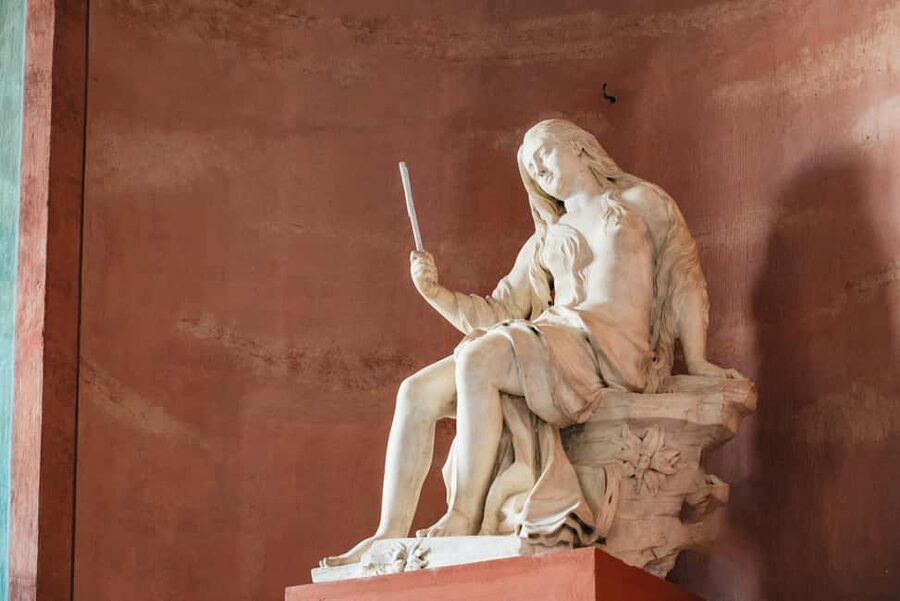
Next you hit Fürstenzug, the famous Procession of Princes. It’s easy to treat it like a photo stop, but the guide approach changes it. Instead of just admiring the artwork, you’ll learn how to connect what you see to the story Dresden wanted to tell about power, lineage, and identity.
What I like about this kind of stop is that it’s fun even when you’re not a museum person. The figures and scenes reward your attention, and your guide helps you slow down just enough to notice what stands out.
If you care about details, this is also a relief. Big monuments can feel overwhelming. Fürstenzug gives you a more manageable focus: look, understand, then look again with better eyes.
Same city, a different way to spend the afternoon:
- Dresden: Semperoper Tickets and Guided Tour
★ 4.7 · 12,102 reviews - Dresden: The Original Night Watchman Tour in Lantern Light
★ 4.6 · 6,653 reviews - Dresden: Semperoper and Old Town Tour
★ 4.8 · 5,735 reviews - Dresden: River Sightseeing Boat Cruise
★ 4.3 · 5,323 reviews
Brühl’s Terrace: One of the Best Scenic Walks Without a Ticket Detour
Brühl’s Terrace is where the city opens up for you. You’re still in the old-town rhythm, but you get a broader view and a chance to breathe between monuments. It’s also a natural place for Baroque architecture to look even more dramatic, because the setting gives you depth and direction.
Your guide uses the stop to connect architecture to how Dresden sees itself. That includes how different eras left fingerprints on the city, and why some changes feel celebrated while others feel controversial.
Practical note: because terraces can be exposed, bring sunglasses or a hat if you’re doing this on a bright day. The walk moves, so pack for quick outdoor comfort.
Semperoper: Baroque Grandeur With Real-World Purpose
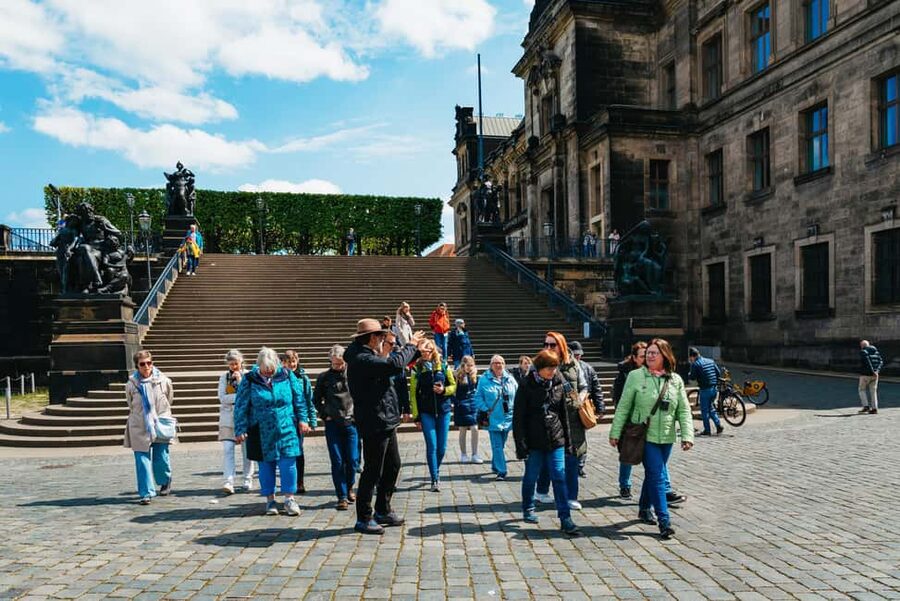
Semperoper is one of those buildings you already recognize if you’ve seen even a few Dresden photos. The tour makes it more than an exterior check. You’ll get development context so the opera house becomes part of the city’s evolution, not just a pretty façade.
I also appreciate how the guide keeps the pacing. This is the middle of a short walking tour, so the narration needs to stay crisp. Semperoper works because it’s a centerpiece with enough presence to hold your attention without needing long stops.
Photo tip: get your angle early. Depending on your position, you can photograph the building with more of the surrounding square, which looks better than a tight close-up.
Zwinger: A Baroque Complex That Feels Like a Stage Set
Then you move into the Baroque Zwinger. This is where the tour’s Baroque emphasis really earns its keep. The Zwinger is a complex of buildings and courtyards that feels designed for viewing, not just passing by.
Your guide helps you understand the development of the city through places like this, showing how Dresden’s power and creativity played out in stone and ornament. You’ll also get the “why” behind the look, which is a huge value in a 90-minute format.
And yes, you get a visit to the Nymphenbad, a stop that’s specifically included. The Nymphenbad adds a fun contrast to the more formal grandeur around it. It’s a detail-filled area, and it gives you something to talk about later when you’re sorting photos.
Dresden Castle and Residenz Area: Power, Rebuilt Meaning, and City Memory
After the Zwinger, you continue toward Dresden Castle and the broader Residenz area. This is the part of the route where the city’s layered past starts to feel more personal. Castles and court complexes are where politics shows up in architecture, and your guide uses that to explain how Dresden developed over time.
One of the most important themes you’ll hear is how the city’s modern story connects to older structures. This is where the Peaceful Revolution of 1989 context matters, because it helps you understand Dresden not as a static postcard, but as a place with recent history still shaping daily life.
If you’re the type who gets tired of names, this section helps you slow down anyway. You’re surrounded by scale. Your guide gives you a handle for what that scale meant.
Augustus Bridge and Taschenbergpalais: Moving From Icons to the City’s Edges
As you head onward, you’ll pass by Augustus Bridge and Taschenbergpalais. These stops are a nice change of pace after the major complexes. They help you connect the “tourist highlights” with how the city actually moves and connects across areas of significance.
This is also where controversial modern development comes up in the narrative. Dresden isn’t only Baroque and rebuild-on-repeat. It has modern choices that spark debate, and the guide’s perspective gives you a framework for thinking about those differences as you walk.
Photo tip: bridges and façades are about angles. If you want fewer people in photos, wait for a quick lull, because the route is in the center of town.
Finishing at Frauenkirche: Why This Ending Lands
You end near Frauenkirche, finishing on An der Frauenkirche, 01067 Dresden. If you’ve ever visited a rebuilt monument, you know the power isn’t only in the architecture. It’s in what the building represents and what the city chose to repair.
This is also where the tour’s broad timeline snaps into focus. You’ve heard about medieval darkness, Renaissance confidence, and Baroque grandeur. You’ve also heard about the political shift around 1989. Finishing at Frauenkirche makes the emotions of those stories feel grounded, not abstract.
I like this ending because it’s useful afterward. Once you finish, you can decide what to do next with a clearer sense of the city: museum time, a longer stroll, or just sitting down and re-reading your photos with better context.
Price and Value: What $15 Buys You in Real Terms
The price is $15 per person for a 90-minute guided walking tour. For that money, you’re buying three things that are hard to replicate on your own: an experienced licensed guide, a structured route through multiple major sights, and help knowing what to look at.
You also get a stop that isn’t always obvious in self-guided routes, the Nymphenbad in the Zwinger. Plus, you get skip-the-ticket-line included, which matters most when you want to keep momentum rather than waiting around.
Would it be possible to do the sights alone? Sure. But in a short window, the guide gives you more meaning per minute. That’s where the value shows.
Who This Tour Fits Best (and Who Might Want Something Different)
This is a great match if you want a fast, organized orientation to Dresden. It’s ideal for first-timers who feel overwhelmed by the city’s layers. It’s also a good choice if you like architecture but want more than labels, you want the city’s development explained in a way you can remember.
It may be less ideal if you need English or if you don’t feel comfortable with German. Since the tour is German-only, you’ll either understand well right away, or you’ll spend the walk trying to guess. Also, because it’s 90 minutes with multiple major stops, it might not be your pick if you prefer long museum time and quiet pacing.
Wheelchair accessible is listed, which makes it easier to plan if mobility is a concern. Still, a walking route means you’ll want to check with yourself about how much time you can spend outdoors and moving between points.
Tips to Get More From the Walk
Keep your expectations aligned with the format. This is a guided city walk, not a slow museum day. You’ll move, you’ll look, you’ll learn, and you’ll get enough to steer your next steps.
Bring a phone with offline maps, just in case. You’ll have a set path, but it’s reassuring to know where you are. Also, wear shoes you trust. Dresden’s old-town streets can be uneven in places, and you’ll want stable footing for photo stops.
Finally, listen for the “why” threads the guide repeats across different stops. That’s what ties together Middle Ages, Renaissance energy, and Baroque splendor with the later story around 1989. Once you catch those threads, the city starts to make sense fast.
Should You Book This Dresden Guided City Walk?
Book it if you want a tight, high-impact introduction to Dresden’s most important sights, especially if you’re interested in how the city moved from medieval times through Renaissance and Baroque, then into modern political memory. The included Nymphenbad visit and the guide’s ability to connect architecture to story are strong reasons to choose this over a simple self-guided route.
Skip it only if German is a deal-breaker for you, or if you want lots of free time at one monument. For everyone else, this is a smart way to spend 90 minutes, see the headline buildings, and leave with a clearer sense of Dresden than you would get from photos alone.
FAQ
What is the duration of the Dresden Guided City Walk?
The tour lasts 90 minutes.
How much does the Dresden Guided City Walk cost?
The price is $15 per person.
Where is the meeting point?
Go to the Untergeschoss of the QF Passage. The meeting point is in the seating area of the Dresden Information.
Is the tour guided, and what language is it in?
Yes, it includes a live guided tour. The tour is in German only.
What major sights does the walk include?
You’ll see highlights such as Frauenkirche, Semperoper, the Zwinger, and Taschenbergpalais, along with stops like Stallhof, Brühl’s Terrace, and Fürstenzug.
Does the tour include a visit inside the Zwinger?
Yes, it includes a visit to the Nymphenbad in the Zwinger.
Is the tour accessible for wheelchair users?
Yes, wheelchair accessibility is listed.
Can I cancel and get a full refund?
Free cancellation is available up to 24 hours in advance for a full refund.
Newest Dresden reviews on the site
- Historical tour of the old town including a Saxon dinner★ 4.7 · 23 reviews
- Climb the mountains together with goats★ 4.8 · 8 reviews
- Frozen Mysteries: Catch Cobra & Savor Soft Ice in Dresden★ 5.0 · 3 reviews
- From Prague: Day trip to Dresden★ 4.3 · 4 reviews
- From Dresden: Bohemian & Saxon Switzerland Day Trip★ 4.8 · 64 reviews
- Dresden: Express Walk with a Local in 60 minutes★ 4.3 · 3 reviews
- Discover Germany’s most exciting photo illusion world!★ 4.7 · 26 reviews
- Dresden with a touch of Xmas: English small group tour★ 4.7 · 41 reviews
City Tours, compared.

1-Hour City Tour by Boat with Guaranteed Seating
Read our review →
City History Canal Sightseeing Tour on a Motorboat
Read our review →

Browse the lists this tour appears in