
Reviewed · HISTORICAL TOURS
Munich: Private Walking Tour of the Historical City Center
Munich feels like a living museum when you walk it with someone who can connect the dots. This private walking tour takes you through the city center on foot, tying together landmark sights with the stories behind them, from a WWII plot to the meaning of the Rathaus-Glockenspiel. You also get the option to add the Residenz Museum, so you can shift from street history to palace history without changing tours.
What I like most is the way the route works as a true circuit, starting right in Marienplatz and moving through major squares and churches where the city’s identity took shape. I also love that you focus on details most casual walks miss, like the legend around the Frauenkirche and the local context behind Munich beer culture and Hofbräuhaus.
One thing to consider: since this is a short, walking-heavy tour meant for small groups, you’ll want a guide who speaks clearly and keeps the pace. One past guest noted the guide was hard to hear in a small group, so if you’re sensitive to low voice or you need clearer audio, choose your time slot and meeting plan carefully.
In This Review
- Key takeaways before you go
- Why a private 3-hour walk works well in Munich
- Meeting at Marienplatz, then getting oriented fast
- Rathaus-Glockenspiel and the town halls: more than a show
- St. Peter and the origins story you can actually picture
- Frauenkirche double towers and the devil’s footprint legend
- Munich and WWII: the stories that still shape the streets
- Odeonsplatz and the Beer-Hall-Putsch setting
- Hofbräuhaus and beer gardens: why age matters here
- Viktualienmarkt: the central market where the city eats
- Optional Residenz Museum for when you want palace-scale context
- Price and what you get for $288 per group
- Who this tour is best for
- A few smart tips to make the most of your 3-hour walk
- Should you book this Munich private walking tour?
- FAQ
- How long is the Munich private walking tour?
- Where do we meet the guide?
- Is the Residenz Museum visit included?
- What language is the live guide available in?
- Are entrance fees included for museums or attractions?
- Is the tour wheelchair accessible?
- What is the cancellation policy?
Key takeaways before you go
- Marienplatz start at the fish fountain so you’re oriented fast in Munich’s main square.
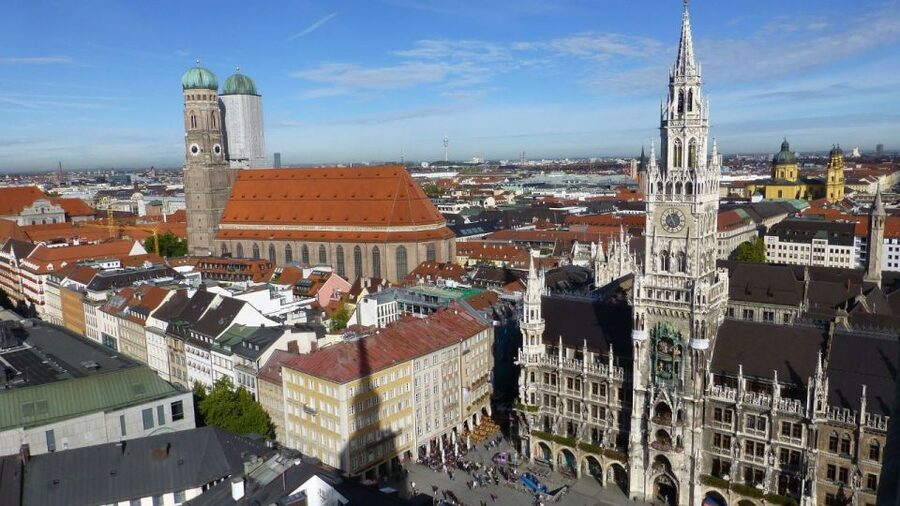
- Rathaus-Glockenspiel explained with the meaning behind the famous clock tower.
- WWII stories with real names like Georg Elser and the Eva Braun connection.
- Beer culture stops that point you to long-running traditions, including Hofbräuhaus and beer gardens near the center.
- Optional Residenz Museum for deeper palace-and-power context without adding a full day.
- Old-town landmarks on foot including St. Peter, Frauenkirche, and the twin town halls area.
Why a private 3-hour walk works well in Munich
Munich’s center is dense. That’s great when you want atmosphere, but it’s frustrating when you’re trying to do it yourself and keep missing the “why” behind what you see. A private walk solves that. You get one guide, a set route, and just enough time to build a mental map without turning your day into a sprint.
The sweet spot here is the time. At about 3 hours, you can cover major squares, churches, and key streets while still having the energy to enjoy your next stop afterward. If you cram too much into Munich, you end up taking photos instead of understanding the place. This tour is built to avoid that trap.
Another practical win is the group size. The tour is private for up to 15 people, and the price is set per group. That means it can be cost-effective for families, friend groups, or anyone traveling with kids who do better with a direct route and someone to answer questions.
More History Tours in Munich
- Munich: Guided Tour of the historic Town Hall on Marienplatz
★ 4.8 · 63 reviews - Munich Craft Beer & Cultural Tour With Snack
★ 5.0 · 46 reviews - Munich History Tour: Private & Personalized with a Local Guide
★ 4.5 · 33 reviews
Meeting at Marienplatz, then getting oriented fast
You start at the fish fountain in front of the Town Hall, Marienplatz 8, 80331 München. This matters more than it sounds. Marienplatz is the center of gravity in Munich, and you’re meeting right in the middle of everything, not on some far-off side street.
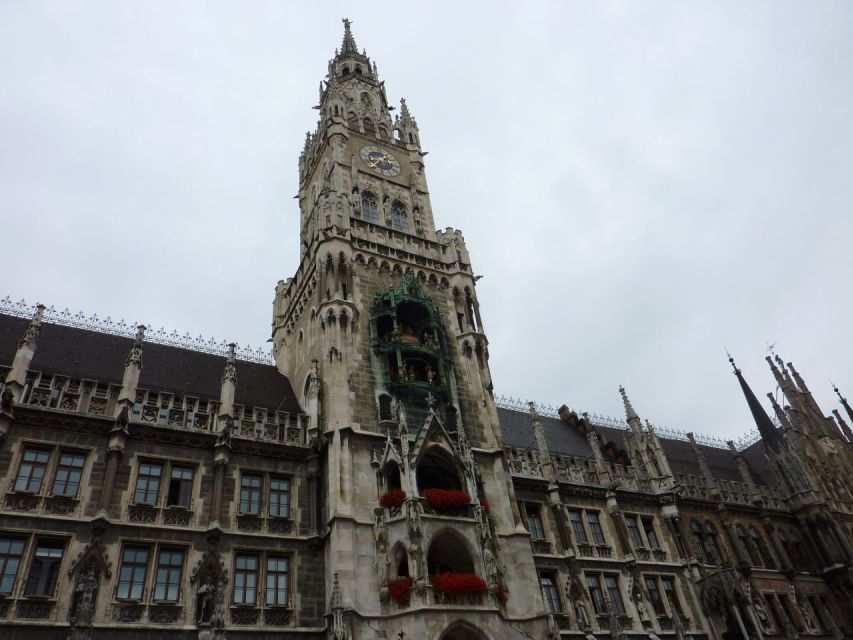
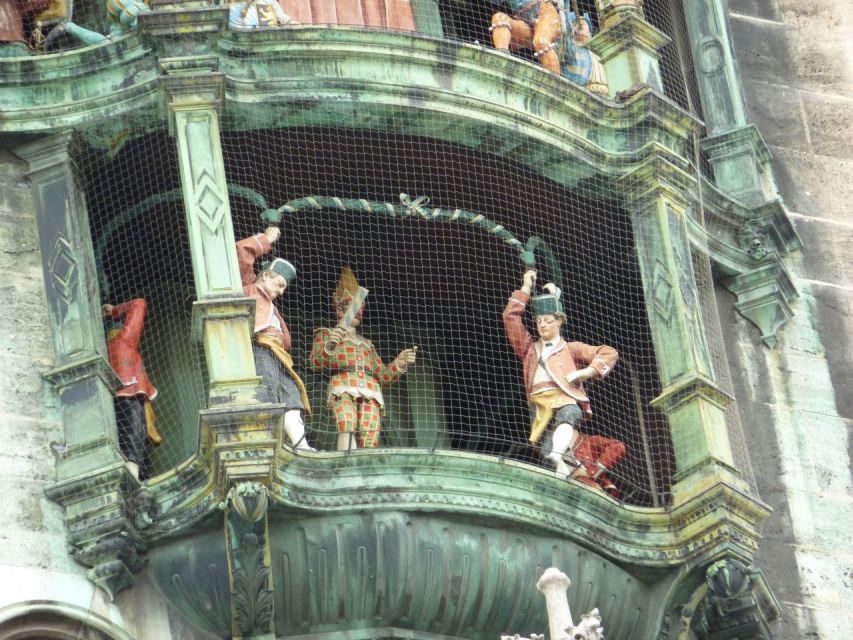
From there, the first payoff is immediacy. You’re staring at the Old and New Town Hall area and about to learn what the famous clock display means. The Rathaus-Glockenspiel is one of those things you can watch, but still not understand. This tour aims to fix that by explaining what you’re looking at and why it belongs here.
If you want to make the most of the meeting point, arrive a few minutes early, then take 60 seconds just to look around. Notice how the squares pull you toward the church spires and how pedestrian streets feed back into Marienplatz. The guide’s stories then feel tied to real space instead of random facts.
Rathaus-Glockenspiel and the town halls: more than a show
Munich’s town halls are not just pretty buildings. They’re part of how the city governed itself and displayed power. On this walk, you get a guided look at the Old and the New Town Hall area and then the famous clock tower.
The key detail is the meaning behind the clock display. This is the difference between a tourist glance and understanding what the city built to be seen. The Glockenspiel is often described in terms of music and figures, but the guide’s job is to connect it to civic tradition and local identity.
You’ll also hear about the nearby landmark naming, including why Mary’s Column gives its name to the central square. Small details like that help you navigate the city later. Once you understand the local naming logic and what the main civic buildings represent, Munich becomes easier to explore on your own after the tour.
St. Peter and the origins story you can actually picture
Next comes the religious side of Munich, with a stop tied to the city’s beginnings. You’ll learn how monks helped give rise to the city at the oldest Catholic church of the city, St. Peter.
This is one of those stops where the guide’s storytelling can turn stones into context. Instead of treating the church like a photo backdrop, you start to see it as a marker of how the city formed and who had influence early on. That’s especially useful in Munich, because the center is packed with layers, and it’s easy to feel like everything is equally old.
If you’re not the type who always wants church stops, this one still works because it’s anchored to the origin narrative. And even if you just want the basics, you’ll at least walk away with a clearer sense of what “old Munich” looked like before it became the cityscape you know now.
More Walking Tours in Munich
- Munich: Third Reich & WWII Walking Tour
★ 4.6 · 6,181 reviews - Third Reich Walking Tour Munich
★ 4.5 · 4,291 reviews - Munich: Old Town & Viktualienmarkt City Walk in German
★ 4.7 · 2,304 reviews - Munich: Night Watchman Walking Tour
★ 4.7 · 2,092 reviews
Frauenkirche double towers and the devil’s footprint legend
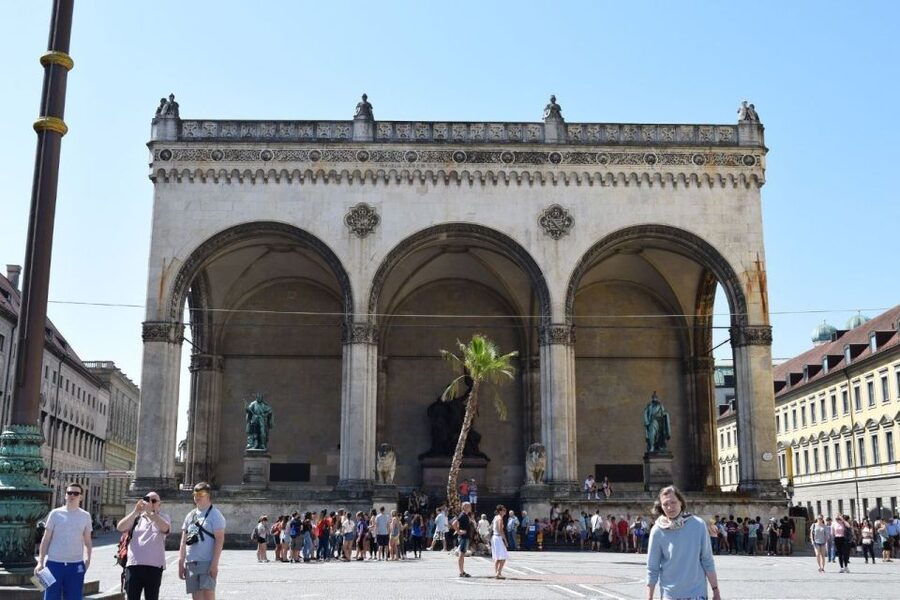
One of the most iconic visuals in Munich is the cathedral Frauenkirche, including the view of its double towers. Getting a good look at them during a walking tour is a win because you’re not just seeing the building, you’re moving through the angle that makes the towers feel dramatic.
Then the tour adds the legend: the devil’s footprint, and the story surrounding it. This is the kind of folklore that can sound silly if it’s not explained. With a guide, it becomes a window into how people in the past explained what they feared and how they talked about sacred spaces.
Practical note: churches can be busy. Even without an extended entry planned here, you’ll still want to dress appropriately and keep moving at a respectful pace.
Munich and WWII: the stories that still shape the streets
A major part of this tour is the WWII connection, including how the war was almost stopped and the daring attempt linked to Georg Elser. You’ll also hear the hometown tie-in for Eva Braun, who later became the wife of Hitler.
These are heavy topics, but the value of putting them into a walking route is that they’re not confined to a classroom. When you hear about events from the period and then look around at the squares and streets where they unfolded, the city feels less like a backdrop and more like a participant in real history.
What I appreciate most here is balance through specificity. The tour doesn’t just say WWII happened. It gives you names and actions, which makes the story easier to hold onto later. If you’ve ever left a history museum feeling like everything blurred together, this approach tends to stick because it’s anchored to actual locations you walk past.
Odeonsplatz and the Beer-Hall-Putsch setting
Then you shift to Odeonsplatz, where the guide brings in the Beer-Hall-Putsch, including the march to the center of Munich led by Adolf Hitler during the Nazi’s first attempt to seize power.
This section works because it pairs a dramatic political event with a recognizable urban setting. You get the chance to understand why this kind of movement would matter, not just what happened, but how public space supports public power.
It’s also a useful counterpoint. Munich is known for beer, but this tour points out that beer halls and politics were never totally separate in the city’s past. When you connect culture and history like this, you get a fuller sense of why Munich became what it became.
Hofbräuhaus and beer gardens: why age matters here
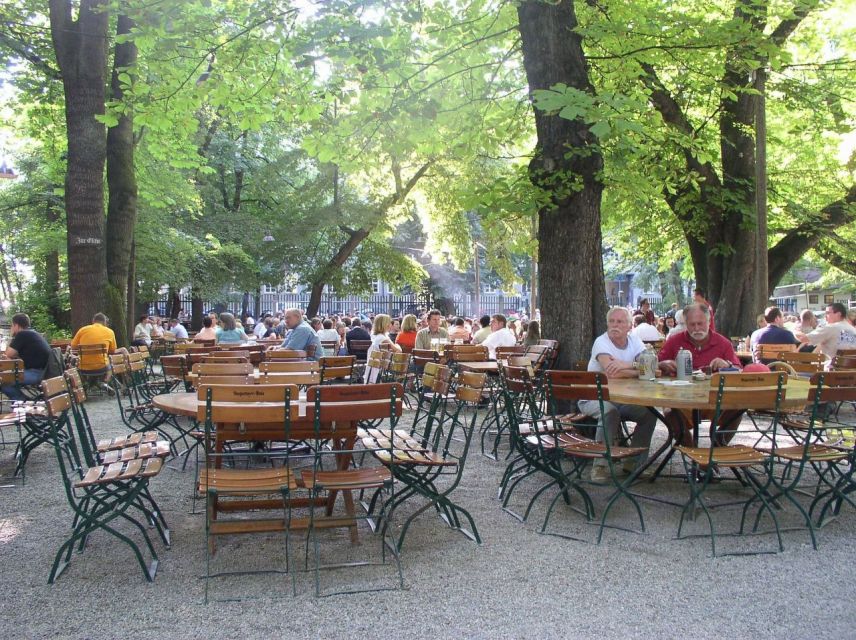
The walk doesn’t treat beer culture as a punchline or a generic food stop. It gives you context, including Hofbräuhaus, the royal brewery established in 1589. That age changes how you think about today’s beer halls. It’s not a modern trend. It’s a long-running local institution.
You’ll also see some of the famous beer gardens in Munich, described as established nearly 450 years ago. That detail helps you frame what you’re seeing as continuity, not just atmosphere for tourists.
If you plan to drink later, I’d treat this part as orientation. Learn where the traditions began, then decide what kind of beer-garden vibe you want for your evening. The tour gets you the background so your choices feel personal, not random.
Viktualienmarkt: the central market where the city eats
The tour wraps through Viktualienmarkt, a public food market that offers local delicatessen and fresh produce. Market time is a smart ending move because it’s practical. You see what locals actually buy and how food culture shows up in the everyday life of the city.
You’ll also pass one of the most central beer gardens, so the final stretch ties back to Munich’s signature theme. By the time you leave the tour, you know both the historic and the current version of the city’s social life.
This is a good place to do a quick stop on your own afterward too. Even if you don’t eat a full meal, you can grab something small and keep walking. The guide’s route gives you the confidence to wander without feeling lost.
Optional Residenz Museum for when you want palace-scale context
If you choose the option that includes the Residenz Museum, you’ll get a deeper look at power and court culture. This is the right add-on if you want a change of pace from street-level history to interior history.
The value is that it complements the rest of the walk. The civic and religious landmarks explain the city’s foundations. The WWII stories explain the modern rupture. The Residenz Museum option then connects the dots to governance and elite life that helped shape what later became Munich’s public face.
One caution: museum time is never perfectly predictable. If you’re sensitive to schedule pressure, check your plan for the rest of your day so you do not feel rushed.
Price and what you get for $288 per group
At $288 per group up to 15 people, the pricing makes the most sense when you think of it as paying for a guide and a private route, not paying per person like a typical bus tour.
Here’s the math in plain terms. If you fill the max group size, the per-person cost drops sharply. Even for smaller groups, private walking tours can feel reasonable in Munich where self-guided walking might cost less but also costs you context and time.
What justifies the price for me is the guided storytelling tied to named events and landmarks, plus the option for the Residenz Museum. If you’re the type who wants to understand what you’re looking at, a good guide is worth paying for. If you just want a casual stroll, you might find yourself wishing you’d spent that money elsewhere.
Who this tour is best for
This is a strong match if you:
- Want a one-guide, walk-and-learn experience in the city center.
- Like history that connects directly to visible places, not just indoor reading.
- Prefer a route that covers both civic landmarks and cultural stops like markets and beer gardens.
- Are curious about WWII stories involving Georg Elser and the Eva Braun connection.
It’s less ideal if you:
- Need a slow pace with lots of sitting breaks.
- Are hard of hearing and depend on clear projection. One account notes the guide was hard to understand due to quiet speech, which is a reminder to pick a time when you can hear well.
A few smart tips to make the most of your 3-hour walk
- Wear comfortable shoes. The tour is built on walking through central Munich.
- Bring a light layer. Weather shifts in Bavaria can change how enjoyable outdoor parts feel.
- If you’re tempted by the Residenz Museum option, decide early. It changes the feel of the day from streets to interiors.
- Use the first 15 minutes to get your bearings at Marienplatz. Once that mental map clicks, the rest of the tour lands better.
Should you book this Munich private walking tour?
Book it if you want Munich’s center explained through stories tied to real places, especially if WWII history, civic landmarks, and beer culture are things you genuinely enjoy. The private setup and the landmark-focused route are the big advantages, and the optional Residenz Museum gives you flexibility.
I’d skip or reconsider if you only want casual views without background, or if hearing clear narration is critical for you. In that case, plan for a time when noise is lower and you can hear well.
If you like to travel with your questions ready and you want a guide to turn “important-looking buildings” into understandable Munich, this tour is a solid value for your first visit to the city.
FAQ
How long is the Munich private walking tour?
It runs for 3 hours.
Where do we meet the guide?
You meet at the fish fountain in front of the Town Hall at Marienplatz 8, 80331 München.
Is the Residenz Museum visit included?
It depends on the option you choose. The tour includes an optional guided visit to the Residenz Museum.
What language is the live guide available in?
The guide is available in English and German.
Are entrance fees included for museums or attractions?
Entrance fees are not included.
Is the tour wheelchair accessible?
The tour is not suitable for wheelchair users.
What is the cancellation policy?
You can cancel up to 24 hours in advance for a full refund.
More Historical Tours in Munich
- Munich and Nazi History Combination Day Tour Small Group
★ 5.0 · 32 reviews - Munich: Nazi History 2-Hour Small Group Walking Tour
★ 5.0 · 30 reviews - Private Sound-of-Music and Historic Salzburg Tour from Munich
★ 5.0 · 28 reviews - Munich: Historical Walking Tour on the Rise of Hitler
★ 5.0 · 13 reviews
Newest Munich reviews on the site
- South Tyrolean specialties and wine tasting★ 5.0 · 5 reviews
- Size Matters Beer Tour Munich★ 4.6 · 105 reviews
- Short & sweet: Tasting the Viktualienmarkt★ 4.8 · 37 reviews
- Schwabing: Insider Tour! Neighborhood, Revolt, Secrets in Munich’s Cult District★ 4.9 · 28 reviews
- From Munich: Royal Fairytale Tour★ 4.9 · 56 reviews
- Munich: Romantic Wine Experience for Two at Viktualienmarkt★ 4.2 · 14 reviews
- Munich: Resistance against Hitler – Historical Walking Tour★ 5.0 · 5 reviews
- Residence of Munich private tour with skip the line ticket★ 5.0 · 4 reviews
Historical Tours, compared.
City History Canal Sightseeing Tour on a Motorboat
Read our review →
Browse the lists this tour appears in