
Reviewed · MUNICH TOURS
Schwabing: Insider Tour! Neighborhood, Revolt, Secrets in Munich’s Cult District
Munich has plenty of sights. Schwabing gives you stories.
This insider-style walk through Altschwabing is built around time shifts, from village calm to artist bohemia to cabaret and the famous party stretch. You also get practical street-level context, not just names.
I especially like two things. First, the local guide Schwabinger Max brings on-the-spot details that make the neighborhood feel lived-in, not museum-quiet. Second, you get a welcome drink at the Deubl Glas Cube and use historical photos for direct on-street comparisons.
One consideration: it’s an outdoor, on-foot tour in all weather. Bring comfortable shoes and weatherproof clothing, because the best stories will still happen on wet pavement.
In This Review
- Key points you’ll care about
- Altschwabing’s creative pulse, without the tourist script
- Meeting at Münchner Freiheit: the Deubl Glas Cube start
- Time travel on foot: village calm to cabaret stronghold to party mile
- The artist-bohemia phase
- The village past
- Cabaret stronghold
- Later party mile
- The bohemia warning: romance is fun, but don’t get played
- Following the party legends: Schwabinger 7, Crash, and Drugstore
- Romantic farms near Munich’s most famous mile: a softer ending
- Schwabinger Max and the photo comparisons that make it stick
- Price and value: why $27 feels fair
- Practical fit: who this walk is for
- A few logistics that can make or break your comfort
- Should you book this Schwabing insider tour?
Key points you’ll care about
- Max is a true Schwabing native, and his anecdotes connect people to places fast.
- The Deubl Glas Cube welcome drink is an easy start, beer, soft drink, coffee, or tea.
- Historical photos for on-site comparisons help you see how Schwabing changed over time.
- You follow the party legends tied to spots like Schwabinger 7, Crash, and Drugstore.
- The tour moves through eras: creative bohemia, village past, cabaret stronghold, then party mile.
- It includes calmer scenery too, with romantic farms not far from Munich’s most famous mile.
Altschwabing’s creative pulse, without the tourist script
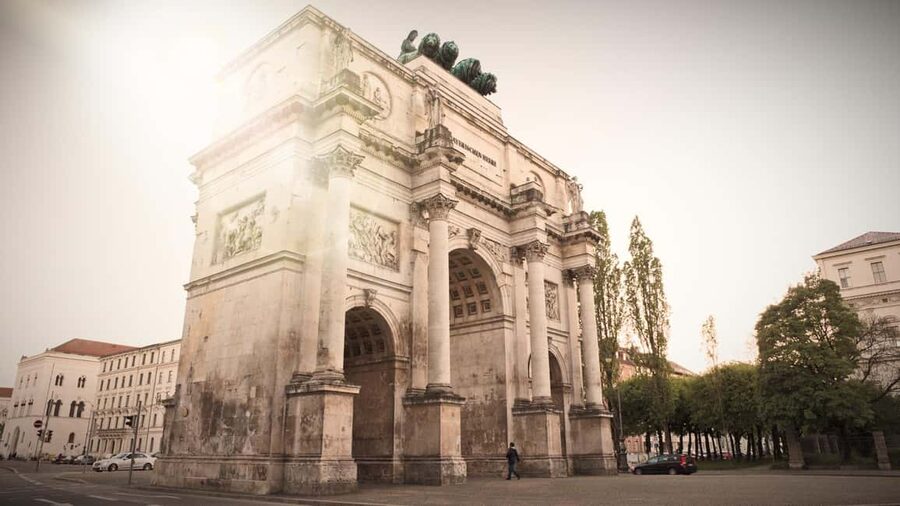
Schwabing, specifically Altschwabing, is where Munich’s imagination used to show up in real life. The tour’s whole idea is that you stop seeing it as just another neighborhood and start seeing it as a stage: painters, poets, and free spirits helped shape the area, then the vibe shifted again through cabaret and later nightlife.
What makes this feel different is that you are not treated like a passive observer. You walk, look, and listen for meaning. The guide points out how the same streets can carry different moods depending on the era you focus on.
And yes, there’s a wink to the bohemian myth too. The tour leans into the reality that free spirits can come with ego, drama, and sometimes delusion. The fun part is you get to recognize the difference between romance and reality, instead of swallowing the legend whole.
A few more Munich walks and trips to compare
- From Munich: Neuschwanstein & Linderhof Castle Full-Day Trip
★ 4.6 · 14,646 reviews - Neuschwanstein & Linderhof Castle-Fairytale Day Tour from Munich
★ 4.5 · 7,275 reviews - Munich: Third Reich & WWII Walking Tour
★ 4.6 · 6,181 reviews
Meeting at Münchner Freiheit: the Deubl Glas Cube start
Your tour begins at Münchner Freiheit, meeting in front of the 24h kiosk by the Deubl Glas Cube at the bus stop. The guide wears a yellow shoulder bag, so you can spot them quickly and get moving without hunting.
This start matters more than you might think. It puts you right in the district’s modern rhythm before the walk carries you backward in time. You’re not dropped into history cold. You ease into it.
And you get a small included win right away: a welcome drink at the Deubl Glas Cube. Options include beer, soft drink, coffee, and tea. It’s a simple touch, but it sets a friendly tone, especially if you’re meeting right after travel, or if the weather is doing its worst.
Time travel on foot: village calm to cabaret stronghold to party mile
The core of the experience is moving through time as you walk through Altschwabing’s streets. The tour frames Schwabing as a place that kept reinventing itself.
Here’s how the eras usually land in a tour like this, and what to watch for as you go:
The artist-bohemia phase
You’ll spend time on the early creative idea of Schwabing, when painters, poets, and free spirits made the neighborhood a natural meeting point for big ideas. I like this section because it explains why the district has that specific creative reputation in the first place.
Practical tip for this part: keep your eyes up and around. The guide’s points tend to connect the stories to what you can actually see in the streetscape, not just abstract background.
Same city, a different way to spend the afternoon:
- Dachau Concentration Camp Memorial Site Tour from Munich by Train
★ 4.5 · 5,637 reviews - Neuschwanstein Castle Tour from Munich
★ 4.5 · 5,117 reviews - Third Reich Walking Tour Munich
★ 4.5 · 4,291 reviews - Munich Hop-On Hop-Off Tour: 1-Day or 2-Day Ticket
★ 4.3 · 4,161 reviews
The village past
Then the tone shifts back toward the history when Schwabing was more tranquil and community-like. This is where the walking becomes especially useful. Even without a single monument screaming at you, the neighborhood layout and atmosphere start to make sense.
A small drawback here can be that if you want strictly chronological dates and major events, you might find the focus more on vibe and character. The trade-off is that you learn how to read the place like a local.
Cabaret stronghold
Next comes the cabaret era. This is where Schwabing’s humor, performance, and social commentary become part of the story. You’re not just learning that cabaret existed. You’re learning why it fit the neighborhood’s personality.
If you enjoy cultural history that feels personal, this section tends to hit well.
Later party mile
Finally, the tour turns toward the later party stretch. That includes following the legendary scene tied to venues and nightlife names such as Schwabinger 7, Crash, and Drugstore.
Expect this portion to feel more energetic, partly because the subject matter is nightlife, and partly because the walk is connecting legends to real urban corners.
The bohemia warning: romance is fun, but don’t get played
The tour’s highlights mention the delusional states of the bohemian up close, and that wording is clever. It’s not just cultural name-dropping. It’s a mindset lesson: people in creative scenes can believe their own stories, sometimes to a ridiculous degree.
You’ll likely hear anecdotes that play with this contrast. The guide’s goal is not to kill the romance of Schwabing. It’s to keep you from turning every eccentric story into a postcard. When you walk away understanding the human side of the scene, the whole neighborhood feels more real.
I think this is one of the most satisfying parts of the tour because it trains your brain to notice things you might otherwise miss. You start asking: What’s the story behind the attitude? Who benefits from the myth? Why does it survive?
Following the party legends: Schwabinger 7, Crash, and Drugstore
Those three names in the tour highlight list are your trail markers. You’re not just hearing that nightlife happened. You’re being shown how the scene became part of Schwabing’s identity.
A helpful way to approach this section is to let it be slightly theatrical in your imagination. Think of the neighborhood as an audience, not a backdrop. That’s how guides often make these names come alive, and it’s also how you’ll get more meaning out of ordinary corners.
If you’re visiting Munich for a short stay and you want local culture without doing a full club crawl, this is the practical middle ground. You get the history of the nightlife and the street-level texture, without waiting until midnight.
Romantic farms near Munich’s most famous mile: a softer ending
The tour also includes a quieter contrast: romantic farms not far from Munich’s most famous mile. The phrase is romantic on purpose, and the scheduling works because it gives your brain a breather after the cabaret and party talk.
This part is valuable even if you’re not a farm person. It breaks the pattern of only thinking of Schwabing as an inner-city scene. It also reminds you Munich’s culture is not only about big theaters and famous boulevards. There’s always a calmer edge nearby.
If you’re the type who enjoys seeing different sides of the same city, you’ll appreciate this shift.
Schwabinger Max and the photo comparisons that make it stick
The biggest stand-out from the guide-related feedback is consistency: Max clearly knows the neighborhood, he tells stories with personality, and he backs it up with visual aids.
One review-style detail that really matters for you: Max uses old images and cards, and there are historical photos for direct on-site comparison. That’s how you turn a walking tour from listening into learning.
Here’s what that means for your experience:
- You see a street, then you see what it used to look like.
- You stop guessing and start understanding how the district shifted through the decades.
- You get a stronger sense of time, not just names and eras.
The other thing that stands out is how effortlessly Max handles questions. In practical terms, that means if you ask about something you saw nearby, or about why a certain corner became famous, you’re more likely to get a straight answer instead of a rehearsed one.
And because the tour continues in rain or shine, those photo comparisons and anecdotes help keep momentum when visibility drops.
Price and value: why $27 feels fair
At around $27 per person for a 1.5 to 3 hour walk, this sits in the category of value tours. You’re paying for a local guide, secrets of the neighborhood, and more than just verbal storytelling.
What you’re getting for your money:
- A native Schwabing guide, Schwabinger Max
- Secrets and on-street context beyond the obvious sights
- An included welcome drink at Deubl Glas Cube (beer, soft drink, coffee, or tea)
- Historical photos for direct on-site comparison
The value math is easiest when you compare it to what you’d pay for a drink and a standard self-guided stroll. Here, you get both, plus someone who can explain what you’re looking at as you walk.
Also, the duration range matters. If you can only spare 90 minutes, you’ll likely still get the heart of the story. If you can give closer to three hours, you get more time for the full sweep through eras.
Practical fit: who this walk is for
This tour is for people who like city culture that feels human. You’ll probably enjoy it most if you:
- want more than a photo-op walk
- enjoy neighborhood stories tied to nightlife, performance, and creative life
- like guides who bring specific details, not just broad statements
It is also not for every age group. It’s not suitable for children under 12, which is a useful boundary to know in advance.
One more fit note: it’s German. Some content may be shown in original language. If you don’t read much German, the tour may still work through the guide’s spoken explanations, but your enjoyment will depend on how comfortable you are with German.
A few logistics that can make or break your comfort
This is an outdoor, on-foot tour in all weather. Plan for wet streets and limited cover if rain hits. Comfortable shoes matter a lot here.
Bring weatherproof clothing, and consider bringing a light rain layer even if the forecast looks mild. The tour’s stories keep going, so your comfort has to.
If you’re sensitive to loud nightlife references or heavy cultural talk, this is still generally a walking cultural tour. The party legends are part of the story, not a requirement that you go out at night.
Should you book this Schwabing insider tour?
If you want a Munich neighborhood experience with personality, logic, and real street context, I’d book it. The guide quality is the key: Max’s local knowledge, the old photos for comparison, and the way the tour connects eras from bohemia to cabaret to party mile make the walk feel worth your time, not just another tick on a list.
Skip it if you want mostly museum-style facts, fixed indoor stops, or child-friendly sightseeing. Also skip it if you hate being outside in variable weather, because this tour is a walk in all conditions.
If you’re curious about the darker, funnier, and more complicated side of Schwabing, you’re exactly the kind of traveler this tour was built for.
Newest Munich reviews on the site
- South Tyrolean specialties and wine tasting★ 5.0 · 5 reviews
- Size Matters Beer Tour Munich★ 4.6 · 105 reviews
- Short & sweet: Tasting the Viktualienmarkt★ 4.8 · 37 reviews
- From Munich: Royal Fairytale Tour★ 4.9 · 56 reviews
- Munich: Romantic Wine Experience for Two at Viktualienmarkt★ 4.2 · 14 reviews
- Munich: Resistance against Hitler – Historical Walking Tour★ 5.0 · 5 reviews
- Residence of Munich private tour with skip the line ticket★ 5.0 · 4 reviews
- Munich: Raven Black Witches and Executioners Walking Tour★ 4.7 · 298 reviews
Munich Tours, compared.

Neuschwanstein & Linderhof Castle Full-Day Trip
Read our review →
Neuschwanstein & Linderhof Castle-Fairytale Day Tour from Munich
Read our review →
Dachau Concentration Camp Memorial Site Tour from Munich by Train
Read our review →
Munich Hop-On Hop-Off Tour: 1-Day or 2-Day Ticket
Read our review →
Browse the lists this tour appears in