
Reviewed · WALKING TOURS
Hamburg: Guided Walking Tour in Danish
Hamburg clicks fast on this Danish tour. In two hours you trace the city from the port’s roots to modern landmarks, and I love the licensed guide in Danish and the way the walk ties big sights to real stories. A heads-up though, it runs rain or shine, and you should plan on a fair amount of standing and walking.
The route is strong because it hits Hamburg’s identity in order: medieval growth, wartime scars, the trading power of the Speicherstadt, then the showpiece architecture of HafenCity. Finish at the Elbphilharmonie area so you can keep looking around after the tour wraps.
If you need step-free routes or have hearing or visual needs, this specific tour is listed as not suitable, so you will want to choose another format.
In This Review
- Key highlights worth planning for
- Meeting at Jungfernstieg, then straight into Hamburg’s story
- Townhall, Deichstraße, and Patriotic Society of 1765
- St. Nikolai Memorial and Laeiszhof: wartime memory on the walk
- Speicherstadt: the world’s largest warehouse district
- HafenCity and Elbphilharmonie: modern Hamburg in plain sight
- Price and value for a Danish, licensed guide
- Who should book this tour, and who should skip it
- Final verdict: should you book Hamburg in Danish?
- FAQ
- What language is the tour conducted in?
- How long is the walking tour?
- Where do I meet the guide?
- Where does the tour end?
- Does the tour run rain or shine?
- Is food included in the tour price?
- What should I bring?
- Is the tour suitable for young children or mobility needs?
Key highlights worth planning for
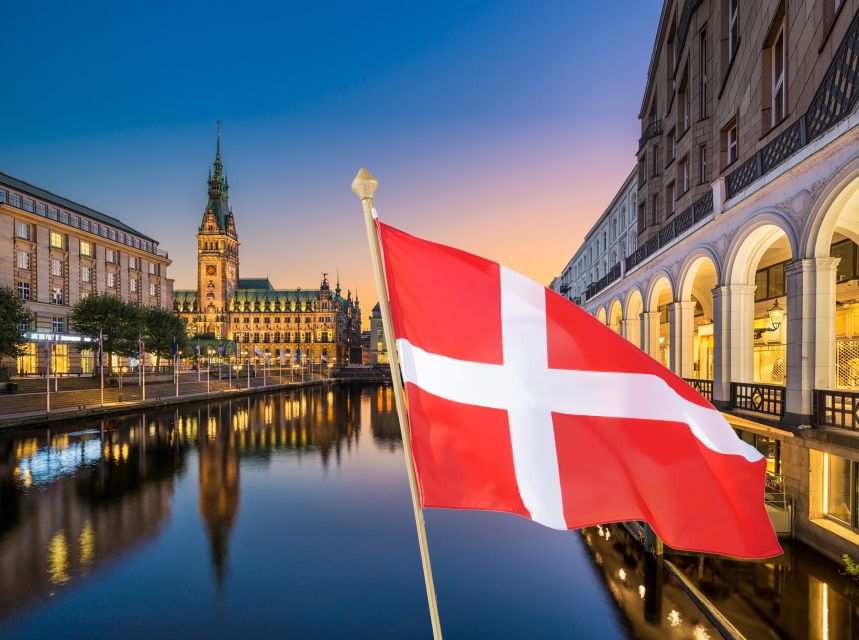
• Danish narration from a licensed guide with history and culture explained clearly
• Townhall, St. Nikolai Memorial, Speicherstadt, and Elbphilharmonie all in one tight loop
• Focus on how Hamburg grew, including why fire mattered and how today’s Old Town feels surprisingly new
• A strong mix of medieval trade, WWII memory, and modern port reinvention
• The tour ends near Elbphilharmonie Plaza, giving you extra time to linger on your own
Meeting at Jungfernstieg, then straight into Hamburg’s story
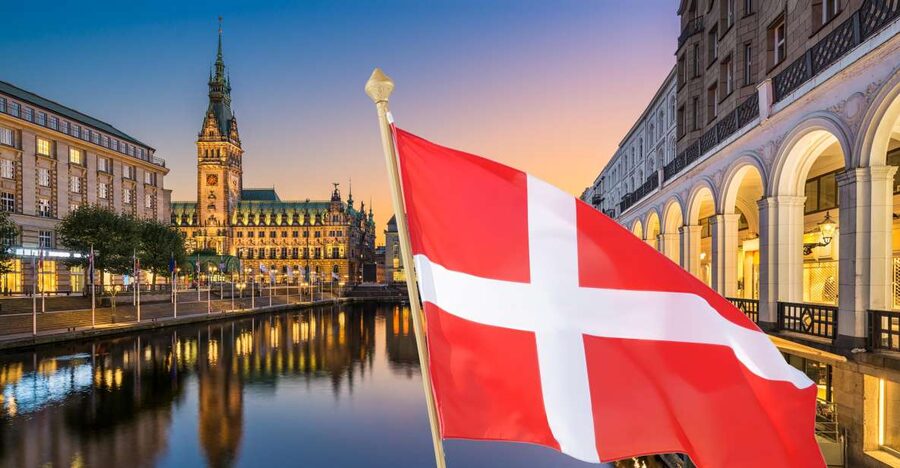
You start at the Swatch shop at the corner of Jungfernstieg and Alsterarkaden. This is a convenient starting point because you are already in the heart of the city, near water and right where visitors naturally orient themselves. It also helps the tour flow, since the rest of the walk keeps moving through the central sights without big detours.
The tour is designed for a 2-hour window, so the guide is not just listing what you see. You get historical visual aids along the way, which is especially helpful for understanding how a port city can evolve so much over centuries. Hamburg is often described as a place built by trade, shipping, and industry, and here you get the human reasons behind that. The story starts with a Saxon marketplace and then grows into Hamburg’s role with the Hanseatic League in the Middle Ages, plus its modern status as one of the world’s largest ports.
I like the fact that this tour treats history as something you can feel while walking. You will notice that some parts of what looks old are actually newer than you might assume, and the guide explains why that matters for how you read the city today.
More Walking Tours in Hamburg
- Hamburg: Guided Walking Tour for Magic Fans
★ 4.8 · 1,992 reviews - Reeperbahn Walking Tour with St. Pauli Local
★ 4.8 · 577 reviews - Hamburg: Speicherstadt Walking Tour with Coffee Tasting
★ 4.6 · 360 reviews
Townhall, Deichstraße, and Patriotic Society of 1765
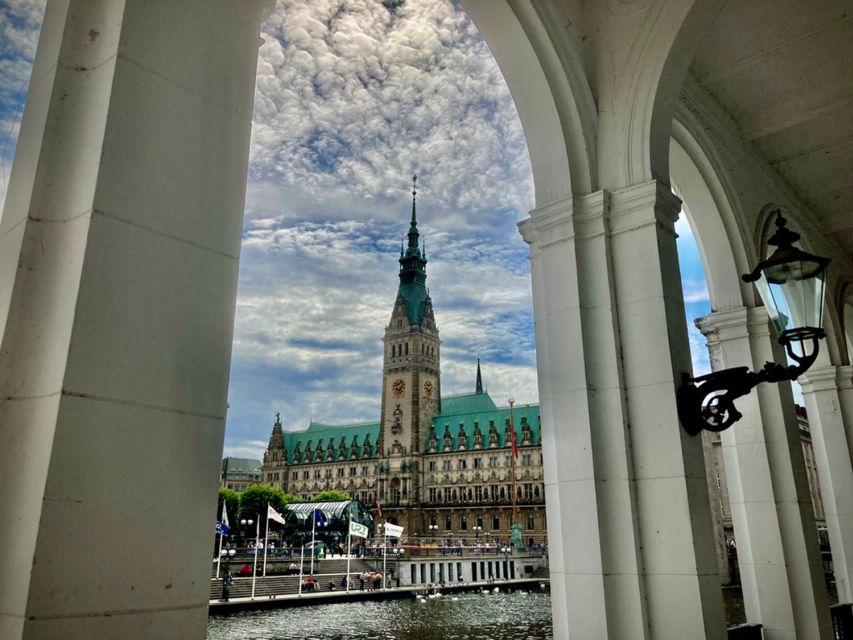
The tour spends time at Hamburg’s Townhall, with about 20 minutes there. This is a smart anchor because it sets the tone for what kind of city Hamburg became: a place with power, civic identity, and long-term ambitions. You are not just taking photos of a landmark, you are learning how the city’s growth shaped its public face.
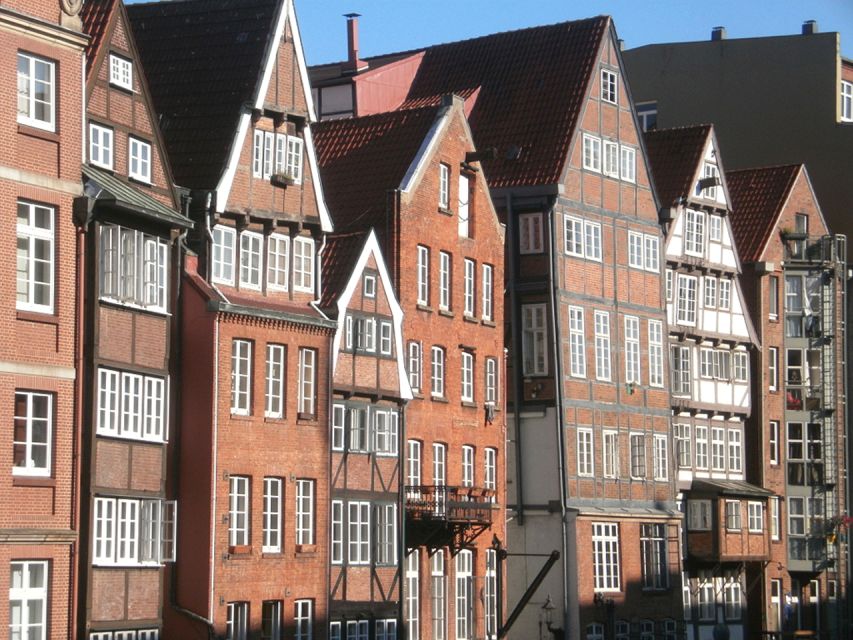
Next comes Deichstraße, around 15 minutes. The guide uses this stretch to explain how Hamburg developed over time, and you start hearing the repeated theme that fire played a major role in the city’s development. That detail matters more than you might think. Port cities were constantly dealing with building materials, density, and disaster risk, and Hamburg’s story includes how people responded and adapted.
Then you stop at the Patriotic Society of 1765 for about 10 minutes. Even if you only know the name in passing, this kind of stop gives you a sense of how civic and cultural groups fit into a working port city. It is also a good reminder that Hamburg’s identity is not only about ships. It is also about the people organizing themselves around community and public life.
If you are visiting with a short window, this opening sequence is one of the best uses of time. It gets you from overview level to something concrete quickly.
St. Nikolai Memorial and Laeiszhof: wartime memory on the walk
One of the most meaningful stops is the St. Nikolai Memorial, about 15 minutes. The church you see here was bombed by Allied forces during Operation Gomorrah in 1943. Today the ruined St. Nikolai Church holds a WWII memorial and museum. That is heavy subject matter, but it is handled in a way that helps you understand what you are looking at.
What I appreciate is the balance. Hamburg is easy to enjoy as architecture and canal-side views, but this stop forces the city’s modern identity into the frame. The guide’s context helps you avoid the common trap of treating memorials like just another sight.
After that, you visit Laeiszhof for about 15 minutes. The tour does not treat this as random wandering. Laeiszhof is part of the story chain that keeps connecting the old city fabric to what Hamburg became later. The guide also uses historical visual aids here, so you are not relying only on what you can spot on the street.
A practical note: because this part of the walk has real emotional weight, I recommend pacing yourself. Even though the tour is active, you can take a quiet moment at the memorial area rather than rushing through for photos.
Speicherstadt: the world’s largest warehouse district
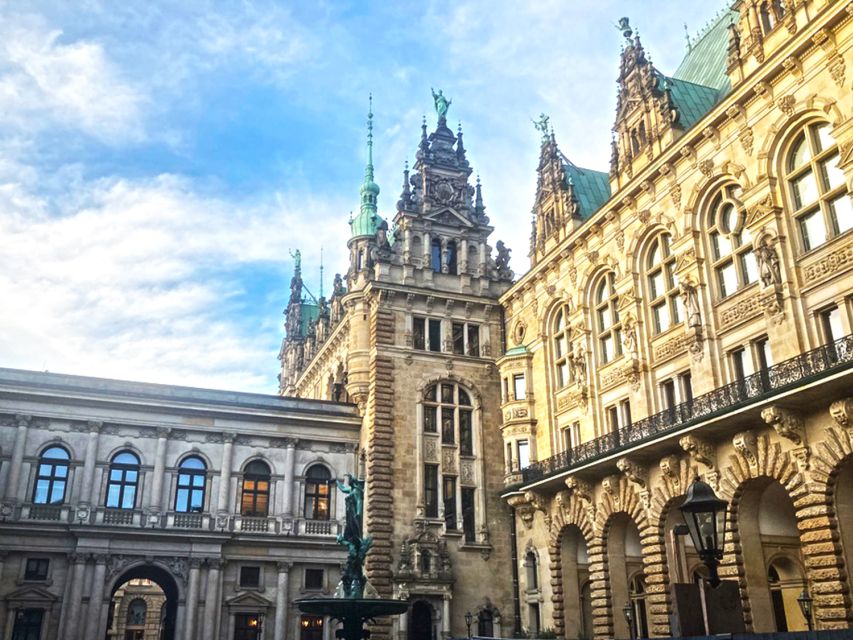
The Speicherstadt stop is around 15 minutes. This is where the tour shifts gears into the “how Hamburg made its money” side of the city. You walk through the Speicherstadt, described here as the world’s largest warehouse district, and that instantly explains why Hamburg rose so high in global trade networks.
For me, this segment is valuable because it turns a visual place into a functional one. Warehouses sound dry, but in a port city they are the engine of storage, sorting, and shipping. When the guide connects that to Hamburg’s development over centuries, the district stops being just a pretty historic area. It becomes part of the economic logic of the city.
Speicherstadt also works well in a 2-hour tour because it is a distinct “chapter.” You go from civic and wartime context into a clearly defined trade district, then onward to modern HafenCity architecture.
If you enjoy photography, this stop is the kind where you can take your time with the surroundings. The tour pace will still keep moving, but you will likely want to look back at what you missed after the guide moves on.
Same city, a different way to spend the afternoon:
- Hamburg: Sex and Crime in St. Pauli Tour for Ages 18 +
★ 4.7 · 17,793 reviews - Hamburg: 1.5-Hour Harbor and Speicherstadt Day Cruise
★ 4.6 · 14,200 reviews - Hamburg: 90-Minute Evening Lights Harbor Cruise
★ 4.5 · 7,728 reviews - Hamburg: 2-Hour XXL Port of Hamburg Cruise Tour
★ 4.7 · 6,979 reviews
HafenCity and Elbphilharmonie: modern Hamburg in plain sight
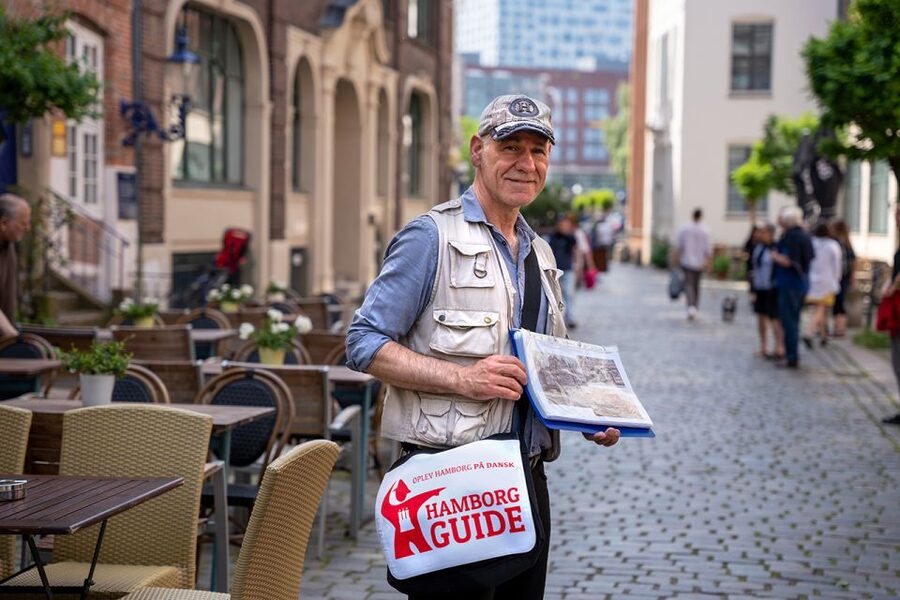
After the Speicherstadt, you head to HafenCity for about 15 minutes. This is Hamburg’s residential and business district, and the guide uses it to show how the port’s story keeps evolving. HafenCity is not just a place to pass through, it is a sign that Hamburg reinvents itself instead of only preserving the past.
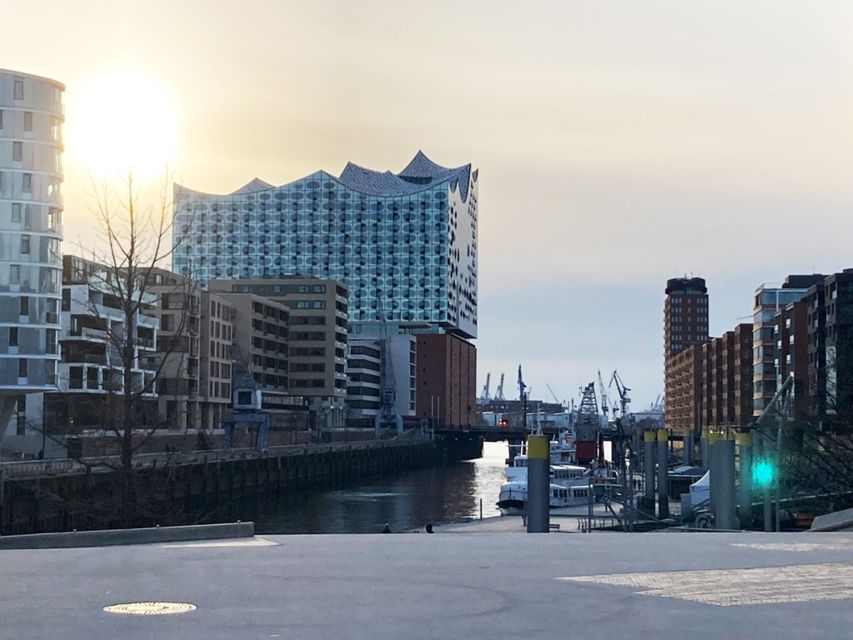
Then the tour reaches the Elbphilharmonie area for about 15 minutes. The Elbphilharmonie is highlighted as a grand concert hall in HafenCity, and the way the tour ends here is a big plus. The guide wraps up at Platz d. Deutschen Einheit, and you also get a built-in chance to explore Elbphilharmonie Plaza and the public viewing platform on your own.
That last part is smart for two reasons. First, you get the guide’s explanation while you are still oriented. Second, once the tour ends, you can linger without feeling like you are holding up the group. If you want views, this is the moment to take them slowly.
I also like the symbolism of the ending. After learning about Saxon markets, Hanseatic power, civic life, and wartime history, you end at one of Hamburg’s most modern cultural statements. It helps you see the city as a continuous story instead of separate attractions.
Price and value for a Danish, licensed guide
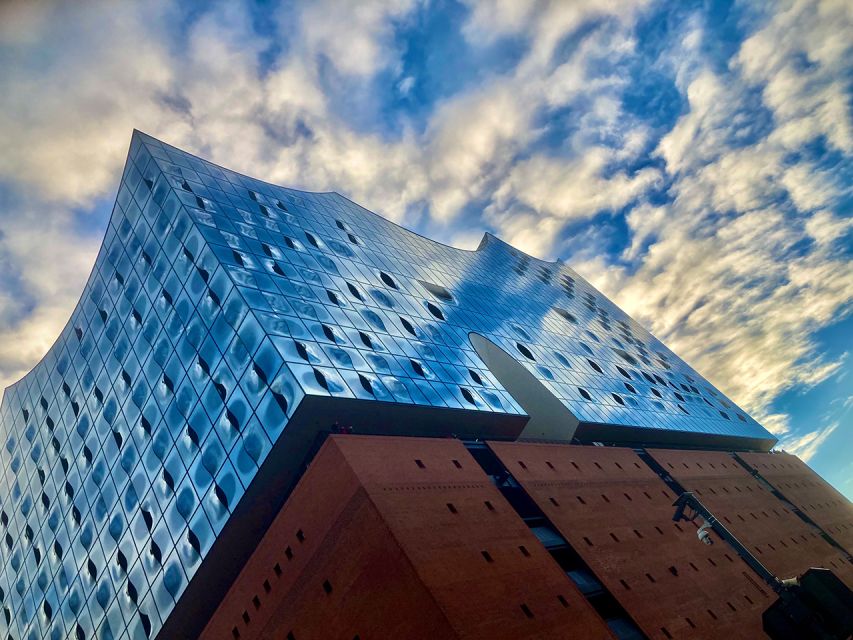
The price is listed as $280 per group, up to 30 people, for a 2-hour walking tour. That pricing structure matters. If you have a full group close to the max, the cost per person can be quite reasonable. If your party is small, you are effectively paying a larger share of the group price.
A quick way to think about value is to compare what you get versus what you would do alone:
- A licensed guide leading the walk
- A structured route that connects multiple major districts
- Historical visual aids that support the explanations
- A Danish-speaking guide, which is not always easy to find for this type of focused city loop
Not included: food and drinks. That is normal for a walking tour, but it means you should plan your snack and meal timing around the 2-hour window.
This is also a tour where group size can change the feel. With up to 30 people, you should expect a standard group pace rather than a whisper-quiet private tour. The upside is that you still get a guide who keeps the story moving and coherent.
One more value signal: the tour shows a 5 out of 5 rating across 11 reviews. The Danish reviews specifically praise how smoothly the guide presents the history and culture.
Who should book this tour, and who should skip it
This tour is a great fit if you want to get beyond surface facts and actually understand why Hamburg looks the way it does. You will like it if you enjoy walking city centers, learning through guided context, and seeing how the old port world connects to modern rebuilding.
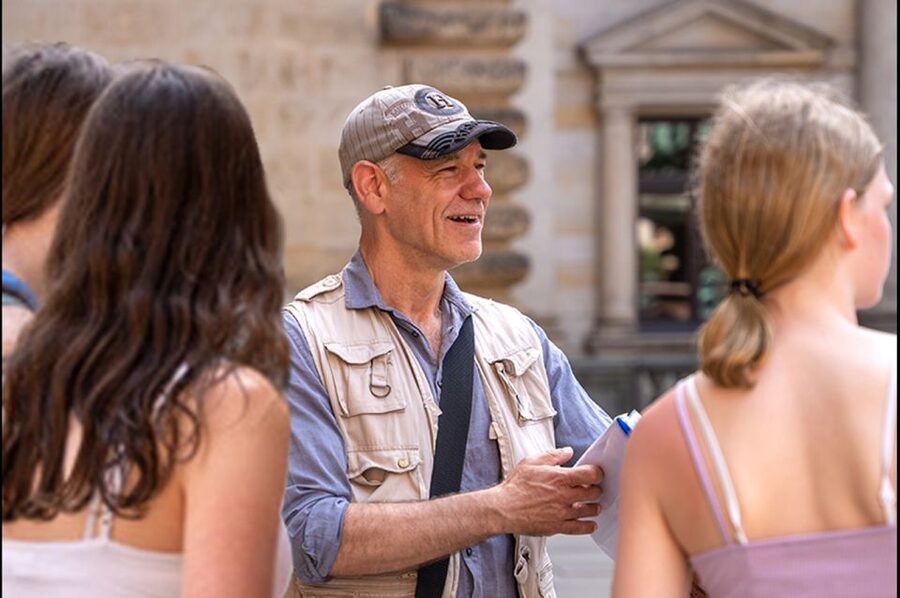
It is especially good for Danish speakers or anyone who wants Danish narration for authenticity and comfort. In the reviews, the guide Christian Meyer-Pedersen stands out for being easy to listen to and for delivering history and culture with serious knowledge, in a warm, organized way.
Skip this one if:
- You have mobility impairments or use a wheelchair, since it is listed as not suitable
- You have significant visual or hearing impairments, since it is listed as not suitable
- You are traveling with children under 6, since it is listed as not suitable
For most people, the biggest real challenge is practical, not academic. Wear comfortable shoes and dress for weather, since the tour runs rain or shine.
Final verdict: should you book Hamburg in Danish?
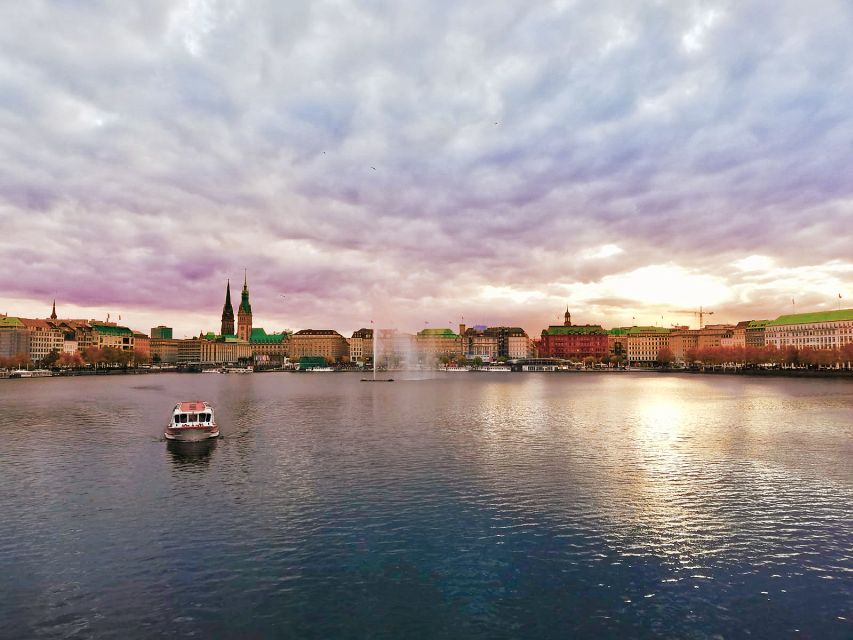
I think you should book this tour if you want a 2-hour, high-impact overview that takes you from Hamburg’s civic center to the memorial history, then into Speicherstadt, HafenCity, and the Elbphilharmonie viewing area. It is the kind of walk that helps you understand what you will see later when you wander on your own.
You should reconsider if you need accessibility accommodations that this tour does not list as suitable. And if you hate walking in cold or wet conditions, plan your clothing carefully, because the schedule keeps going.
If you are open to Danish-language guidance and you want your time in Hamburg to feel structured instead of chaotic, this is a solid choice. With a licensed guide and a route that covers the city’s major chapters, it is an efficient way to leave Hamburg feeling like you actually grasped the city, not just photographed it.
FAQ
What language is the tour conducted in?
The tour is conducted in Danish, led by a live licensed guide.
How long is the walking tour?
The walking tour lasts about 2 hours.
Where do I meet the guide?
Meet the guide in front of the Swatch Shop at the corner of Jungfernstieg and Alsterarkaden.
Where does the tour end?
The tour finishes at Platz d. Deutschen Einheit, 20457 Hamburg, Germany. You also get an opportunity to explore the Elbphilharmonie Plaza and public viewing platform on your own after the tour ends.
Does the tour run rain or shine?
Yes, it takes place rain or shine, so dress accordingly.
Is food included in the tour price?
No. Food and drinks are not included.
What should I bring?
Bring comfortable shoes and comfortable clothes, and have cash.
Is the tour suitable for young children or mobility needs?
It is not suitable for children under 6 years and it is not suitable for people with mobility impairments, wheelchair users, visually impaired people, or hearing-impaired people.
Newest Hamburg reviews on the site
- Hamburg: Interactive Crime Theater Tour in German★ 4.7 · 319 reviews
- Harbor Tour with Live moderation in German★ 3.8 · 4 reviews
- Hamburg: Walking Tour for School Groups★ 4.8 · 10 reviews
- Hamburg: Westfield, Speicherstadt & Elbphilharmonie Tour★ 4.5 · 86 reviews
- Hamburg: Twilight cruise★ 3.7 · 15 reviews
- Hamburg: St. Pauli District and Beer Tour★ 4.7 · 84 reviews
- Hamburg Traditional Food Tour: Full Meal and Drinks★ 5.0 · 3 reviews
- Hamburg: Tour of Blankenese on the Banks of the Elbe★ 4.5 · 14 reviews
Walking Tours, compared.

Berlin’s Best: 2 Hour Walking Tour Third Reich and the Cold War
Read our review →
Third Reich Berlin: Hitler and WWII Walking Tour
Read our review →Browse the lists this tour appears in