
Reviewed · THIRD REICH & COLD WAR TOURS
World War 2 Hamburg Private Guided Tour
WWII in Hamburg hits you fast. This private guided walk connects the dots across decades, not just the war years. You cover former bunkers, execution-related sites, Jewish community history in Grindel, and Nazi-era propaganda, with time to ask questions as you go.
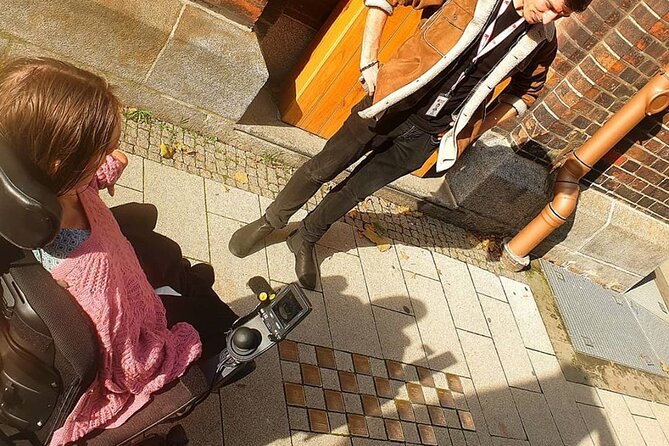
What I love most is the way the tour stays human and specific, stop by stop, instead of turning into a textbook. I also like that it’s genuinely private, so you can move at your pace and keep the questions coming, whether you’re traveling as a couple or a multi-generation group. Evan and Sarah are two guide names I’ve seen praised for tailoring the flow to the group.
One consideration: you will walk through places tied to deportations, executions, and racial persecution, so if you want a light sightseeing day, this is not that.
In This Review
- Key highlights to look for
- Entering the story at Laeiszhalle and Sievekingplatz
- Bunkers and moral shock at Feldstraße and Planten un Blomen
- Memorial culture at Kriegerdenkmal and the Turmbar bunker
- Grindel: Jewish Hamburg, Kristallnacht, and surviving institutions
- A decoy city center at Jungfernstieg and power at Rathausmarkt
- Afrikahaus and St. Nikolai: colonialism, war victims, and reconciliation
- Price and value for a private group tour
- Should you book this Hamburg WWII private guided tour?
- FAQ
- What language is the WWII Hamburg private tour offered in?
- How long is the Hamburg World War 2 private guided tour?
- Is the tour private, and how many people can be in a group?
- Where does the tour start and end?
- Are tickets included for all stops?
- What is the cancellation policy?
Key highlights to look for
- Private guidance for questions on the spot, not a rush from one plaque to the next
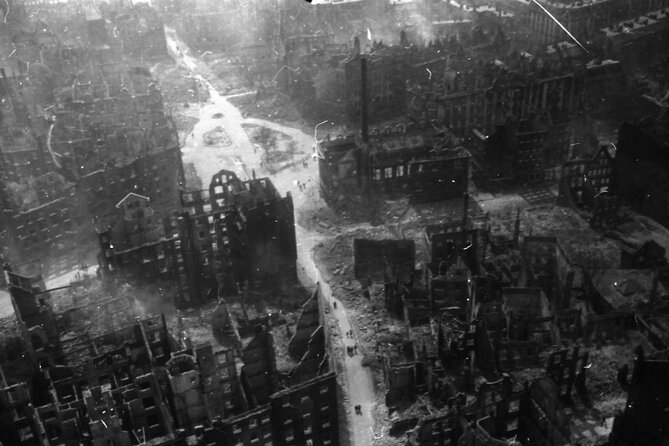
- WWI to Nazi-era context, including hyperinflation and the rise of antisemitism
- Bunkers and repurposed spaces, like the Feldstraße bunker now turned into a skyline garden
- Grindel and Jewish Hamburg, including the Born Synagogue, book burnings, and Kristallnacht
- Memorial culture in modern Hamburg, from Rathausmarkt to St. Nikolai’s tower view (ticket extra)
Entering the story at Laeiszhalle and Sievekingplatz
This tour starts by placing you in the years before bombs. That matters. Hamburg’s WWII story did not appear out of thin air in 1939. You get the setup first, which helps everything you see later click into place.
At Laeiszhalle, you begin with the interwar period, including WWI’s lesser-known aftermath in the region, the hyperinflation of the 1920s, antisemitism’s rise, and how the Treaty of Versailles shaped resentment and politics. If you’ve ever wondered why propaganda had such a grip, this first stop gives you the emotional fuel behind it.
Next is Sievekingplatz, where you focus on how Hamburg’s judicial and political systems were handled in the 1930s, and what happened when those systems started serving the wrong goals. It’s a practical way to understand power: laws, courts, and political structures are not abstract. They become tools that can harm people at scale.
Tip: wear shoes that work for city sidewalks and changing street surfaces. This is not a sit-on-a-bench kind of day.
More wartime and Cold War history walks in Hamburg:
- Hamburg: St. Pauli Green Bunker Tour in German
★ 4.6 · 538 reviews - Hamburg: St. Pauli’s “Green Bunker” Tour – above the rooftops of Hamburg
★ 3.8 · 30 reviews - Berlin: Third Reich and Cold War 2 Hour Walking Tour
★ 4.9 · 6,830 reviews
Bunkers and moral shock at Feldstraße and Planten un Blomen
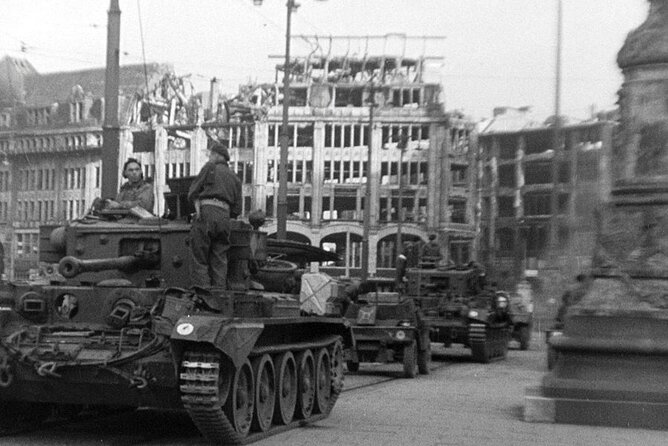
Then the war stops being theory. You start seeing physical reminders that were built for real violence, and later repurposed into something new, which makes the contrast hard to ignore.
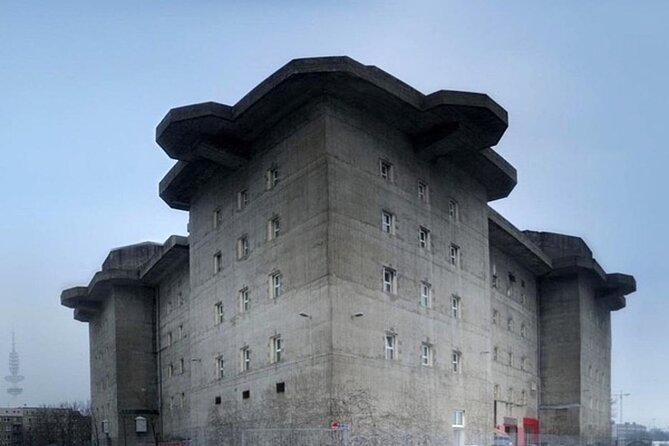
Feldstraße is marked today by one of the largest WW2-era bunkers in Hamburg, now being repurposed as a skyline garden. Standing near it gives you a strange mix of feelings. On one hand, it’s a place for views and calm. On the other, it’s part of a system meant to protect people during terror and destruction. That kind of contradiction is one reason I like this tour style: it doesn’t hide the uncomfortable layers.
A short walk later you reach Planten un Blomen, now one of Hamburg’s scenic highlights. Here’s the part you should mentally prepare for: the beautiful park connects to a much darker past, including executions during WWII, propaganda projects, a human zoo, and a displaced persons camp. The lesson is simple and heavy. A pretty place can still have violent roots.
If you tend to process by talking things out, this is where the private format pays off. You can ask what specific terms mean, or why a park was used for those purposes. And you can take a moment if the subject matter gets emotionally intense.
Memorial culture at Kriegerdenkmal and the Turmbar bunker
Hamburg doesn’t treat remembrance as one-size-fits-all. It spreads it across locations, layers, and periods. You see that at Kriegerdenkmal am Dammtordamm, where five different war memorials shape not only the view but also today’s culture of memory. Instead of one monument for everything, you get multiple statements from different eras. That gives you a more realistic sense of how societies remember, argue, and adjust over time.
Next is Turmbar, which can look like a water tower at first glance. Up close, it turns into a reminder that Hamburg built over 2,000 bunkers during WWII. That’s an eye-opener: it’s not a few shelters here and there. It was massive infrastructure, tied to the expectation of bombardment and the reality of sustained violence.
This section is valuable because it trains your eye. When you look at the modern city, you start noticing what’s been repurposed, what’s still visible, and what has been quietly rebuilt around the past. That’s the difference between reading about WWII and actually walking through the city shaped by it.
One practical point: these stops are listed with short time windows, so your guide’s pace matters. On a private tour, you can slow down at the parts that hit hardest and skim less if you need to.
Grindel: Jewish Hamburg, Kristallnacht, and surviving institutions
This is the emotional center of the day for many people. Grindel was once home to a vibrant Jewish community, and the tour explains how the area became what it was, who lived there, and what happened during the war. Then it connects it to what you can still see today.
You also cover events and cultural destruction, including where deported Jewish persons from Hamburg were taken, Kristallnacht in 1938, and the book burnings of 1933. Those are names you’ve heard. Here, you see how they relate to real neighborhoods and institutions, not just headlines.
The guide also points you to surviving landmarks such as the Born Synagogue and the Talmud Torah School. Even if you don’t go inside, the point is clear: community life was not an idea. It had classrooms, buildings, routines, and networks, which makes what was targeted feel more personal.
If you’re traveling with family, this stop is often the one that holds attention. In the kind of group I’ve seen recommended for this tour, a multi-generation party appreciated how the guide paced questions and explained terms without talking down. Sarah has been specifically praised for teaching in a clear, memorable way, including the larger Nazi trick of manipulating public narratives to fool others.
A few more Hamburg walks and trips to compare
- Hamburg: Sex and Crime in St. Pauli Tour for Ages 18 +
★ 4.7 · 17,793 reviews - Hamburg: 1.5-Hour Harbor and Speicherstadt Day Cruise
★ 4.6 · 14,200 reviews - Hamburg: 90-Minute Evening Lights Harbor Cruise
★ 4.5 · 7,728 reviews - Hamburg: 2-Hour XXL Port of Hamburg Cruise Tour
★ 4.7 · 6,979 reviews
A decoy city center at Jungfernstieg and power at Rathausmarkt
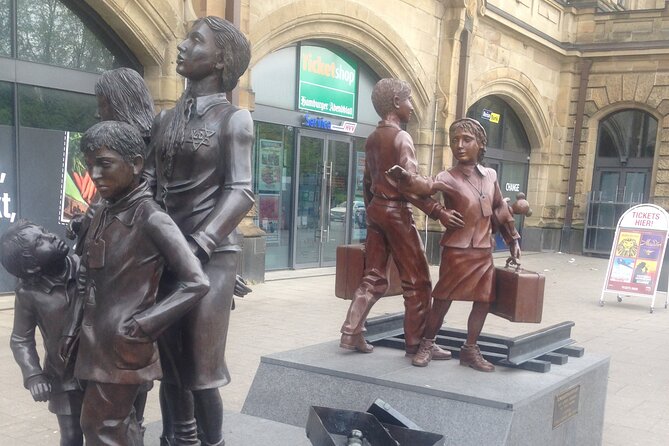
After Grindel, the tour shifts to how the Nazis tried to control space and perception.
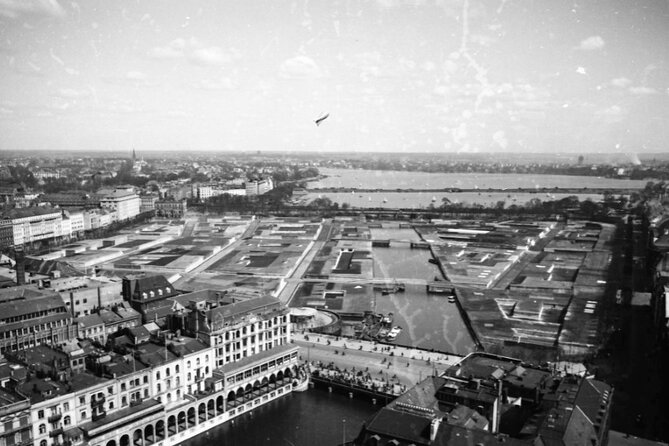
At Jungfernstieg, you learn about Hamburg’s attempt to create a decoy city center to avoid bombings. The idea is grimly clever: if you can mislead pilots and planners, you might redirect destruction. It’s a reminder that wartime violence was also psychological and logistical. People were trying to outthink machines, while civilians were left paying the cost.
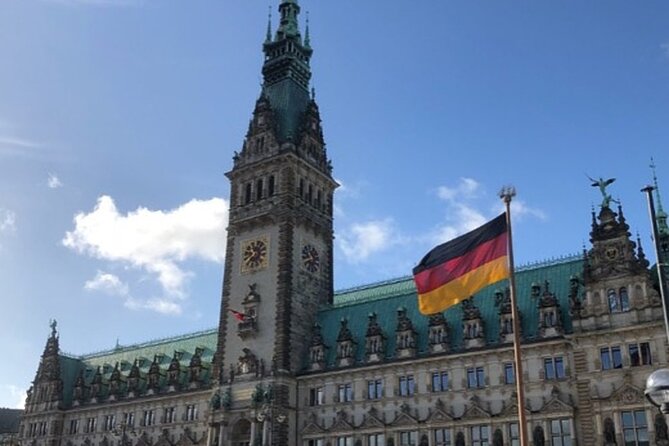
Then you go to Rathausmarkt, where the Town Hall symbolized and still symbolizes power. Here you see how Nazi influence used the square and how memory is now layered into the public space. You also encounter memorials tied to political opposition, the 1933 book burnings, and WWI propaganda from Nazi Germany.
This stop is worth it because it connects propaganda to architecture and ceremony. It’s not only what people said. It’s where they said it, and who watched. Once you get that, the rest of your city walk feels more legible.
If you want photos, this is one of the best areas for them, but pause first. The context makes the images mean more.
Afrikahaus and St. Nikolai: colonialism, war victims, and reconciliation
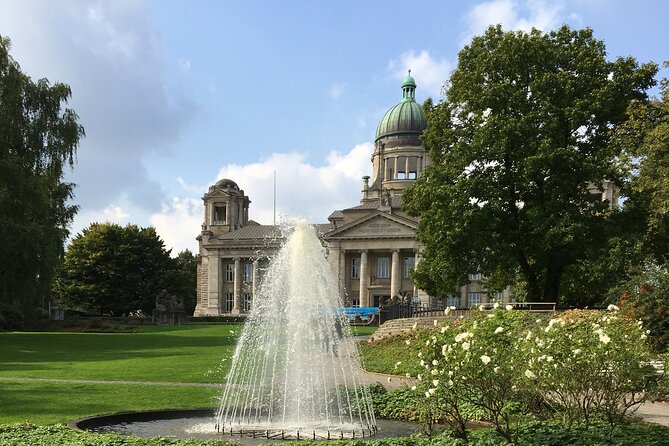
A really strong moment is Afrikahaus, a leftover from the German colonial period. Colonial history is often treated like a separate topic, but the tour shows why it matters for understanding racial segregation and genocide during WWII Germany. You’re given a direct link from earlier racial thinking to later state violence.
Then comes St. Nikolai Memorial, a church that serves as a memorial to war victims and the rule of terror. The church itself is the remains of the former church bombed along with much of Hamburg in 1943. Inside and around the site, you’ll see memorials related to the bombing of Hamburg, victims from the Neuengamme concentration camp, and post-war reconciliation between Germany and the UK.
There’s also a museum and a tower with an elevator for views of the city, but the museum admission is not included. If you do want the view, plan extra time for the elevator and the exhibit pacing inside.
This final stretch works well because it doesn’t end at destruction. It points toward how remembrance and reconciliation are handled after the war. That may not feel satisfying in a neat way, but it’s honest. History doesn’t wrap up cleanly.
Price and value for a private group tour
This tour costs $714.85 per group, for up to 15 people, in English, for about 5 hours. That pricing model is often the difference between a meaningful guided experience and just walking around on your own. If you travel as a family or a small group and fill most of the seats, the per-person cost drops quickly.
Even if your group is small, the private part still has value. You get a navigator who keeps you oriented so you don’t waste time guessing streets, and you can ask questions throughout without feeling like you’re slowing anyone else down. The tour’s stop plan also includes locations with free entry, which helps keep the day from becoming a stack of extra tickets.
Practical stuff you should know: you’ll receive a mobile ticket, the tour is near public transportation, and it lists a moderate physical fitness level. The tour also allows service animals. Your start is at Denkmal für die Gefallenen beider Weltkriege, Schleusenbrücke 1, 20354 Hamburg, and the tour ends at Hamburg BUNKER, Feldstraße 66, 20359 Hamburg. If you want, you can request a drop-off at a location of your choosing.
As for guides, the strongest feedback I’ve seen centers on clarity, question-friendly pacing, and tailoring. That’s exactly what you want for heavy topics.
Should you book this Hamburg WWII private guided tour?
If you’re serious about understanding WWII’s causes and local impact, book it. This is not a generic war tour. It connects economic instability and political collapse, propaganda tactics, neighborhood-level Jewish life, and the way memorial culture lives on in today’s Hamburg.
It’s also a great choice if you hate feeling lost. The private format keeps the day smooth. And if you like learning with dialogue, you’ll value the chance to stop and ask why things happened, not only what happened.
Skip it only if you’re trying to keep things light or you’re traveling with someone who gets overwhelmed easily by topics like executions, deportations, and genocide. If that’s your situation, consider matching the day with shorter visits and breaks, because this tour covers a lot of ground emotionally, even when the walking time at each stop is short.
Bottom line: for $714.85 per group, you’re paying for a focused route, a private guide, and a narrative that makes Hamburg’s WWII story make sense in the real places where it unfolded. If that’s what you want, this is a strong pick.
FAQ
What language is the WWII Hamburg private tour offered in?
The tour is offered in English.
How long is the Hamburg World War 2 private guided tour?
It runs for about 5 hours.
Is the tour private, and how many people can be in a group?
Yes, it is private, and the group size can be up to 15 people.
Where does the tour start and end?
It starts at Denkmal für die Gefallenen beider Weltkriege, Schleusenbrücke 1, 20354 Hamburg. It ends at Hamburg BUNKER, Feldstraße 66, 20359 Hamburg. Drop-off can be requested at another location.
Are tickets included for all stops?
Most stops list admission as free. St. Nikolai Memorial includes a museum and tower, but admission for that is not included.
What is the cancellation policy?
You can cancel for free up to 24 hours in advance for a full refund. If you cancel less than 24 hours before the start time, the amount paid is not refunded.
Newest Hamburg reviews on the site
- Ticket for the Emigration Museum BallinStadt Hamburg★ 4.0 · 57 reviews
- Winter Alster tour★ 4.0 · 12 reviews
- UNESCO World Heritage – Speicherstadt and Kontorhaus district★ 4.5 · 12 reviews
- Hamburg Private Food Tours with a Local: 100% Personalized★ 5.0 · 3 reviews
- The Beatles on St. Pauli★ 5.0 · 3 reviews
- hamburg Experienced differently with wish rental bike relaxed enjoy★ 5.0 · 5 reviews
- Private Romantic Urban & Street Photoshoot★ 5.0 · 69 reviews
- Hamburg: 2-hour harbor cruise★ 4.0 · 180 reviews
Third Reich & Cold War Tours, compared.

Berlin’s Best: 2 Hour Walking Tour Third Reich and the Cold War
Read our review →
Third Reich Berlin: Hitler and WWII Walking Tour
Read our review →
Skip-the-Line: Berlin Wall Museum at Checkpoint Charlie
Read our review →
Browse the lists this tour appears in