
Reviewed · WALKING TOURS
Füssen: Private Guided Walking Tour
Füssen feels made for slow strolling. This private walking tour guides you through a walled town where High Castle and the Roman roots of Füssen explain why the region became so important.
I especially like how the route mixes big-picture Bavarian power plays with street-level details you can actually see, from cobbled lanes to a turquoise river running through the town center. You also get the benefit of a guide who is with your group only, so questions and on-the-spot adjustments are part of the experience.
One possible drawback: it is a walking tour through older streets, so it is not a good fit if you have mobility issues or use a wheelchair. Comfortable shoes matter, because you’ll be on stone surfaces for the full 90 minutes.
In This Review
- What Makes This Füssen Walking Tour Worth Your Time
- Where the Tour Starts: Schrannenplatz and Getting Oriented Fast
- Füssen on Foot: Cobblestones, Town Wall, and Old Streets That Still Work
- Roman Roots of Füssen: The Early Layer That Explains the Later One
- High Castle: Prince-Bishops, Architecture, and a Treaty With Real Consequences
- St. Mang’s Benedictine Monastery: A 9th-Century Story You Can Feel
- Magnus of Füssen and the Treaty of Füssen: How Belief and Power Interlock
- Romantic Road Connections: Why Füssen Preps You for the Big Castles
- Price and Logistics: Is $310 Per Group Good Value?
- What the 90 Minutes Feels Like in Real Life
- Who Should Book This Füssen Tour (And Who Might Not)
- Should You Book It? My Practical Take
- FAQ
- Where does the Füssen private guided walking tour start?
- How long is the tour?
- Is this a private tour?
- What languages are available?
- Are entrance fees included?
- Is the tour suitable for wheelchair users or mobility impairments?
- Can I pay later or get a refund if plans change?
- What should I bring?
What Makes This Füssen Walking Tour Worth Your Time
Roman to medieval in one compact route: You’ll connect the town’s early roots to the prince-bishop era without feeling like you’re reading a textbook.
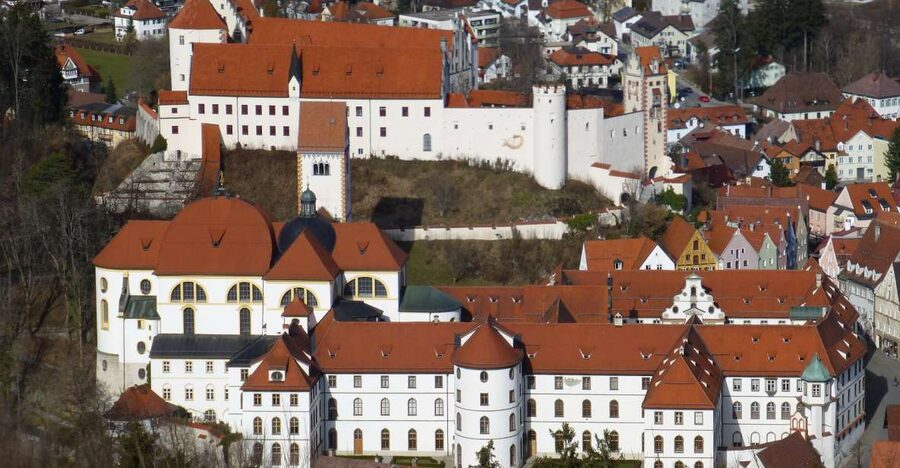
High Castle with political context: It’s not just architecture, you’ll tie it to the treaty that curbed imperial ambitions.
St. Mang’s monastery and the patron saint: The tour traces the 9th-century story and how Magnus of Füssen shaped local identity.
Treaty of Füssen and the Romantic Road links: You’ll understand why this town shows up in the bigger Bavarian story.
A private guide you can ask things of: English and German, plus possible customizing on the spot.
Where the Tour Starts: Schrannenplatz and Getting Oriented Fast
The meeting point is Schrannenplatz, Schrannengasse 10, 87629 Füssen. Plan to arrive a few minutes early so you can get your bearings before the walking begins. This matters because Füssen is small enough to explore on your own, but it’s also old enough that directions and names can be confusing if you’re not anchored to a simple route.
From the first minutes, your guide’s job is to make the town legible. You’ll start with the vibe of the place, the old wall lines, the cobblestone charm, and that striking turquoise river that cuts through the center. The goal is not to rush you from photo stop to photo stop. It’s to show you what to look for and why those details matter.
You’re also learning a key theme that runs through the whole tour: Füssen isn’t famous only because it sits near Neuschwanstein. It has its own political, religious, and cultural history. Once you understand that, the rest of the region makes more sense, whether you’re heading to castles later or just wandering for lunch.
More walking tours in Fussen:
- Füssen: Old Town Guided Walking Tour in German
★ 4.8 · 127 reviews - Discover Berlin Half-Day Walking Tour
★ 5.0 · 9,624 reviews - Berlin: Third Reich and Cold War 2 Hour Walking Tour
★ 4.9 · 6,830 reviews
Füssen on Foot: Cobblestones, Town Wall, and Old Streets That Still Work
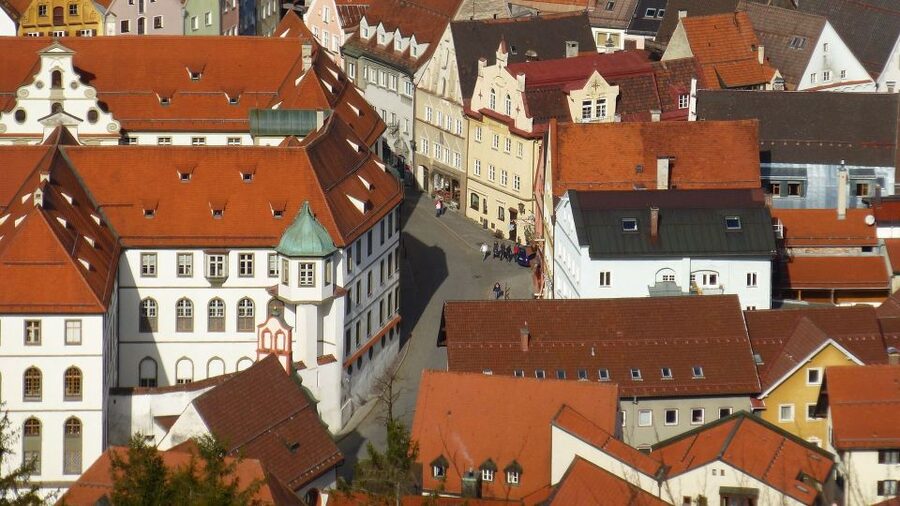
Walking is the right format here. Füssen’s “romantic walled town” feel comes from the way the lanes, walls, and buildings compress space. When you’re on foot, you can notice the layers: older street patterns, church shapes, and the rhythm of shopfronts that still feel tied to the medieval core.
Your guide will point you toward the medieval alleys and town wall, plus the baroque churches and museums you’ll see along the way. That combination is useful. If you only had the castle side of Füssen, you’d miss the religious and civic backbone that kept the town moving.
Also, this is exactly the kind of town where small visual clues help you remember things later. You’ll hear about historical links as you’re literally standing in the places they connect to. That makes it easier to plan what to do next, especially if you’re pairing this with Neuschwanstein.
Practical note: the tour is not designed for wheelchairs or people with mobility impairments. Even if you can handle short distances, the stone surfaces and uneven streets can be a deal-breaker. If that’s you, consider another format or a less walking-heavy plan.
Roman Roots of Füssen: The Early Layer That Explains the Later One
One of the highlights is discovering the ancient Roman roots of Füssen. On paper, that can sound like a quick fact. On the street, it becomes a way to understand continuity. Roman presence is often the start of a pattern: roads, settlement choices, and strategic positioning that later rulers inherit and reshape.
Your guide will use this Roman layer to set up what follows. Füssen becomes more than a pretty stop. It starts to look like a place where different eras kept showing up because the geography made sense. That’s the underlying value of this tour. You’re not only learning what happened, you’re learning why the town kept mattering.
If you’re the type of traveler who enjoys connecting eras, this is a satisfying part of the route. It gives you a baseline. Later, when you hear about prince-bishops and treaties, you’re not starting from zero.
High Castle: Prince-Bishops, Architecture, and a Treaty With Real Consequences
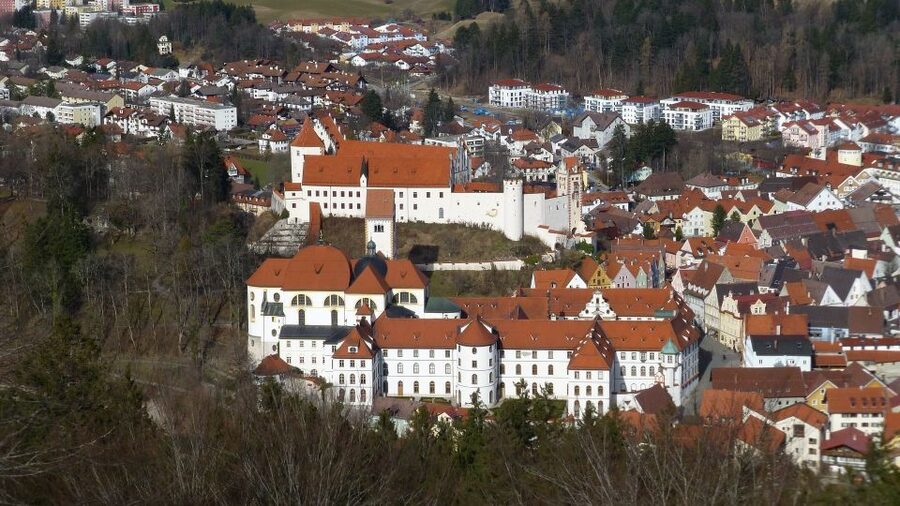
The star of the tour is the High Castle, the former summer residence of the prince-bishops of Augsburg. You’re not just being shown a building. You’ll learn how this place fit into the power structure of its time, which makes the architecture easier to read.
From there, the story gets political. The tour includes the idea that a treaty ended imperial ambitions. Even if you only catch the broad meaning, it matters because it explains why leaders built, ruled, and negotiated where they did. Castles are never only for romance. They’re also tools for authority.
Here’s what I think you’ll appreciate: the High Castle piece acts like a “main chapter” that organizes everything else you’ll see in town. When you later notice churches, institutions, and local saints, it’s easier to understand how religion and governance overlapped.
You should also expect that some sights may require an entrance ticket since entrance fees are not included. That affects value. If you want to go inside everything your guide points out, plan for those extra costs ahead of time. If you primarily want the orientation and context, you’ll still get a lot from the exterior and the route narrative.
A few more Fussen walks and trips to compare
- Neuschwanstein Castle Skip-the-Line Ticket with Audio Guide
★ 4.4 · 1,388 reviews - Füssen: Neuschwanstein Castle Express Ticket and Audio Guide
★ 3.9 · 788 reviews - From Hohenschwangau: Tour to Neuschwanstein Castle
★ 4.7 · 693 reviews - Neuschwanstein Castle Ticket With Audio Guided Tour
★ 3.5 · 473 reviews
St. Mang’s Benedictine Monastery: A 9th-Century Story You Can Feel
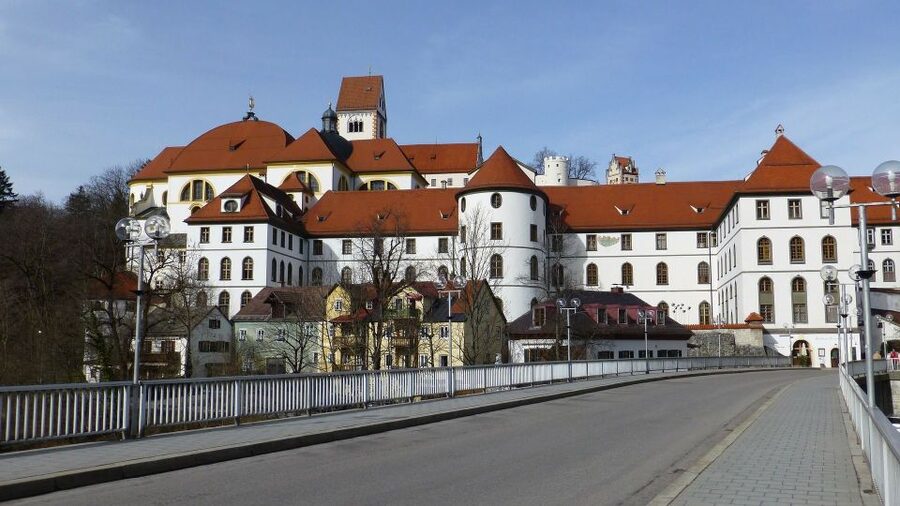
St. Mang’s is one of those places that rewards slowing down, even during a walking tour. This experience includes discovering the 9th-century history of St. Mang’s Benedictine monastery in Füssen.
That time frame is important. A 9th-century religious institution isn’t just old, it’s foundational. It helps explain why so much of Füssen’s identity stayed consistent across centuries, even as political power shifted.
Your guide will connect this monastery era to local spiritual tradition, including the town’s patron saint, Magnus of Füssen. This is a clever way to structure the stop because saints are not just names on a plaque. They show you what communities chose to remember and celebrate.
If you’re planning a Neuschwanstein day soon after, this monastery stop gives you emotional context. You’ll understand the region’s Bavarian devotion and the way faith shaped daily life, not only castle-building.
Magnus of Füssen and the Treaty of Füssen: How Belief and Power Interlock
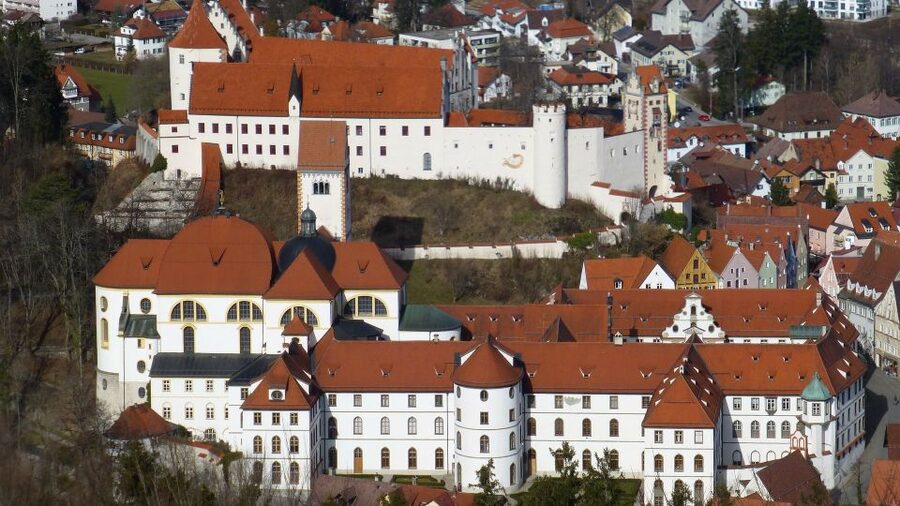
Two of the key themes are the legacy of Magnus of Füssen and the Treaty of Füssen. Together, they tell you something useful about the region: religious identity and political bargaining often moved side by side.
Magnus helps you understand local patronage, which is one reason Füssen feels like a place with a memory. The town is proud of its roots. The patron saint becomes a shortcut to understanding what the community valued.
The Treaty of Füssen pulls you into the political stakes of the era. The tour frames it as part of a story that ended imperial ambitions. Even if you don’t need the full historical diagram, you’ll come away with a clearer sense that Füssen was not a backwater. It was part of bigger negotiations.
This is also where the guide’s role matters most. A well-timed explanation turns dry names into meaning. One review praised how the guide’s explanation made the history feel interesting and well arranged. Another noted that the guide was thoughtful with rain, bringing umbrellas when weather shifted. That’s the kind of practical, human touch that keeps the tour from feeling like a lecture.
Romantic Road Connections: Why Füssen Preps You for the Big Castles
Füssen is the nearest town to the famous Neuschwanstein castle, and that is a major reason the town gets on people’s itineraries. But the tour does something smarter than just point you toward Neuschwanstein.
It includes tracing the steps of history with the Treaty of Füssen and the Romantic Road. The Romantic Road is more than a route name. It’s a theme of travel through places that shaped regional identity, especially in the way people remember architecture, religion, and rulers.
When you understand this, Neuschwanstein shifts from being a standalone “wow” to being one chapter in a bigger Bavarian story. That makes your day trips feel more coherent. You’re not just chasing views, you’re reading the landscape and the buildings like clues.
You’ll also see the general streetscape that makes Füssen attractive for a pre-castle stroll: pastel-toned shops, museum stops, baroque churches, and the cobbled lanes that look old without being abandoned. That’s a real advantage. It means you can enjoy Füssen even if your castle day runs long or you just want a calm evening.
Price and Logistics: Is $310 Per Group Good Value?
The price is $310 per group, up to 15 people, for 90 minutes. That pricing format is typical of private guiding, but the “per group” structure is what makes it potentially good value.
Here’s the quick math to help you decide, assuming you fill the group:
- If you have 2 people, it’s about $155 per person.
- If you have 6 people, it’s about $52 per person.
- If you have 10 people, it’s about $31 per person.
- If you max at 15, it’s about $21 per person.
So the value depends on your group size and how much you’ll use the guide. This tour is strongest when you want context. If you just want someone to walk beside you for general pointers, you could probably get by with self-guided routes. But if you want the treaty connections, the monastery context, and the “what am I looking at” explanations, the private setup makes sense.
Also, this is private group and the guide stays with your group only. That matters in small towns where questions can be common, and it’s easier for a guide to tailor the pace when they are not managing a larger mixed group.
One more value factor: the tour includes possible customizing on the spot. If you’re squeezing Neuschwanstein into a tight schedule, you can ask your guide to adjust how you spend time in the right areas.
Entrance fees are not included, so if your priorities include going inside multiple places, budget for additional ticket costs.
What the 90 Minutes Feels Like in Real Life
Ninety minutes is short enough to keep energy high, long enough for a real narrative. You’re not going to see everything in Füssen, but you will leave with a map in your head. That’s the key benefit of a focused walking tour in a compact town.
The itinerary approach makes sense: it starts with orientation, then builds through major “anchors” like High Castle, St. Mang’s, and the local saint and treaty stories. By the end, you’re meant to feel ready to explore on your own, either immediately or after a Neuschwanstein visit.
One review mentioned that this kind of tour is ideal to understand the history of town and the region before touring Neuschwanstein. I agree with that strategy. If you go to the castle first without context, you may get the visuals but miss the connective tissue. If you do it the other way around, your questions will come faster and your photos will have meaning behind them.
Another review noted the guide was able to accommodate time constraints and even start early. That’s not something you should assume, but it’s encouraging if your schedule is tight. And in rainy weather, a guide bringing umbrellas is a small thing that can change the whole experience.
Who Should Book This Füssen Tour (And Who Might Not)
This tour is a good match if you:
- Want history and architecture explained while you walk the town streets
- Appreciate connections like the Treaty of Füssen and the Romantic Road
- Are planning a Neuschwanstein visit and want a strong warm-up
- Prefer a guide who is with your group only, with language options in English or German
You might reconsider if:
- You need wheelchair-friendly routes, since it is not suitable for wheelchair users
- You want a long museum or inside-only experience, because entrance fees are separate and the time is limited
- You expect a very detailed, academic level lecture style every minute. One lower rating pointed to a lack of information when it rained, so it may be smart to come ready to ask questions rather than hope everything will be spontaneous.
Should You Book It? My Practical Take
Book it if you want Füssen to make sense quickly, with High Castle, St. Mang’s, and the local saint and treaty stories tied together in one easy walk. The $310 per group price becomes more attractive as your party size grows, and the private format helps you get answers instead of just hearing facts.
Don’t book it if walking on older streets would be tough for you, or if your ideal tour is mostly inside buildings with minimal time outdoors.
If you do book, wear comfortable shoes and show up ready to ask questions. This kind of guided history is at its best when you interact, not when you just listen. And if you’re also doing Neuschwanstein soon, this is one of the smarter ways to spend your first hours in Füssen.
FAQ
Where does the Füssen private guided walking tour start?
It meets at Schrannenplatz, Schrannengasse 10, 87629 Füssen, Germany.
How long is the tour?
The tour runs for 90 minutes.
Is this a private tour?
Yes. It’s a private group with a local guide who will be with your group only.
What languages are available?
The live guide offers English and German.
Are entrance fees included?
No. Entrance fees are not included.
Is the tour suitable for wheelchair users or mobility impairments?
No. It is not suitable for people with mobility impairments or for wheelchair users.
Can I pay later or get a refund if plans change?
You can reserve now and pay later. Free cancellation is available up to 24 hours in advance for a full refund.
What should I bring?
Bring comfortable shoes for walking on old streets and cobblestones.
Newest Fussen reviews on the site
- Half day tour from Fuessen – Neuschwanstein&Linderhof castle★ 4.5 · 5 reviews
- Füssen to Neuschwanstein Castle – Guided Scenic Tour★ 4.9 · 86 reviews
- Füssen: Bike Hire and Neuschwanstein Castle Skip-the-Line★ 4.3 · 133 reviews
- Füssen: Old Town Guided Walking Tour in German★ 4.8 · 127 reviews
- Füssen: E-Bike or Mountain Bike Rental★ 4.1 · 10 reviews
- From Zurich: Neuschwanstein Castle Private Tour with Lunch★ 5.0 · 7 reviews
- Day trip: Munich>Neuschwanstein>Linderhof>Ettal>Oberammergau★ 5.0 · 4 reviews
- Neuschwanstein Castle Tour with Skip the Line from Hohenschwangau★ 5.0 · 323 reviews
Walking Tours, compared.


Berlin’s Best: 2 Hour Walking Tour Third Reich and the Cold War
Read our review →
Third Reich Berlin: Hitler and WWII Walking Tour
Read our review →Browse the lists this tour appears in