
Reviewed · WALKING TOURS
Frankfurt: Private or Shared Walking Tour
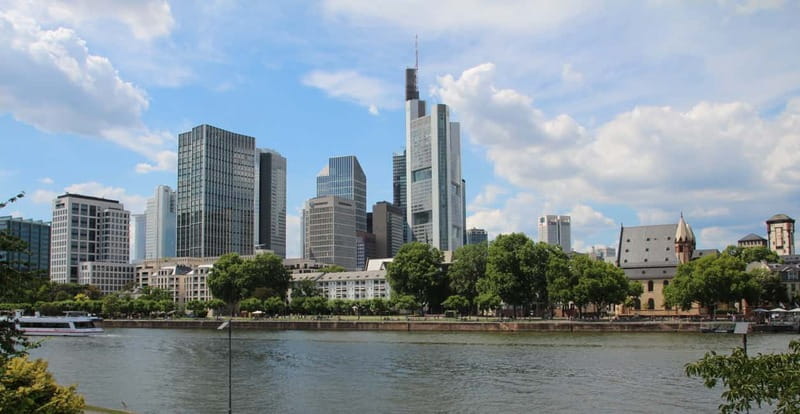
Frankfurt has a habit of changing mid-sentence. This 1.5-hour walking tour strings together the Altstadt’s key landmarks and the modern skyline contrast, so you see how the city rebuilt itself. You start at the lively Römerberg area, cross historic ground, and finish with a clearer picture of Frankfurt’s turning points.
I especially like two things. First, you get a tight route that pairs icons like Eiserner Steg and Paulskirche with the bigger story of destruction and renovation. Second, the guide factor is strong, including praise for guide Sanel on delivering history with depth and good group energy.
One consideration: it’s only 1.5 hours, so don’t expect long museum-style stops or lots of extra detours. You’ll walk, look, and learn, not linger.
In This Review
- Key points at a glance
- Frankfurt Altstadt at walking speed, old stones and new steel
- Meeting at Römerberg: Justitia-Brunnen is the smart start
- Eiserner Steg (1868) and the story of 2008 to 2009 renovations
- Römer and Paulskirche: the 1st German national assembly site
- Neue Altstadt: the newest old town project in Frankfurt
- WWII destruction, then renovation: learning what you can actually see
- How the guide style shapes the whole 1.5 hours
- Shared vs private: matching pace, questions, and comfort
- Price and value: why around $17 makes sense for this route
- Who should book this walking tour of Frankfurt?
- Should you book the Frankfurt private or shared walking tour?
- FAQ
- Where is the meeting point for the Frankfurt walking tour?
- How long is the tour?
- Is the tour shared or private?
- What language is the live tour guide?
- What are the main sights covered on the walk?
- Does the tour include Eiserner Steg?
- What is the connection to the 1st German national assembly?
- How much does the tour cost?
- Is free cancellation available?
- Can I reserve without paying immediately?
Key points at a glance
- Start at Justitia-Brunnen on Römerberg, a smart way to orient yourself fast
- Eiserner Steg (built 1868) sets the tone right away, with renovation context for 2008 to 2009
- Paulskirche and Römer connect the walk to the 1st German national assembly site
- Neue Altstadt shows what Frankfurt is building now, not just what it built long ago
- WWII destruction and rebuilding is explained in an easy, visible way as you move
- Shared or private group options, so you can match the pacing to your travel style
Frankfurt Altstadt at walking speed, old stones and new steel
This tour is designed for people who want meaning, not just postcards. You’ll walk through the Altstadt and hear how specific places fit into big events, then you’ll compare that with the city’s modern era look. It’s an efficient way to understand why Frankfurt feels like it does today.
I like the structure: you begin with a landmark that is easy to spot, then you move step-by-step through story points. You’re not stuck in a classroom tone. Instead, you get the kind of practical context that helps you read what you’re seeing.
Frankfurt also has an interesting rhythm. As you pass older squares and civic buildings, you’ll naturally notice what survived, what was altered, and what was rethought later. Even without stopping for long periods, you’ll come away with a mental map.
And yes, 1.5 hours is a real constraint. But it’s also a benefit. If you’re doing a busy day, this is a “fit it in” tour that still hits the major highlights.
More Walking Tours in Frankfurt
- Frankfurt Highlights English Walking Tour
★ 5.0 · 1,203 reviews - Frankfurt on Foot Daily Walking Tour in English
★ 4.9 · 323 reviews - Frankfurt: Private Walking Tour with a Local
★ 4.4 · 83 reviews
Meeting at Römerberg: Justitia-Brunnen is the smart start
Your guide meets you at Justitia-Brunnen at Römerberg. That matters more than it sounds. Römerberg is a central reference point, so you’re not fumbling for a random street corner before the walking even begins.
From there, you head toward the first big stop: the historic footbridge, Eiserner Steg. This gives the tour a clean arc right away. You’re not wandering first, you’re traveling with a purpose.
If you like tours that help you get your bearings quickly, this one is built that way. The meeting point is iconic enough that even if you arrive a bit early, you can still orient yourself to the area and then lock into the route once the guide arrives.
It also sets you up for the story of rebuilding. Bridges, public squares, and civic architecture tend to show change clearly, especially in a city like Frankfurt where the visible layers of time are part of the personality.
Eiserner Steg (1868) and the story of 2008 to 2009 renovations
One of the tour’s early strengths is how it uses a single structure to talk about multiple eras. You’ll visit the iron footbridge of Eiserner Steg, built in 1868, and you’ll hear what happened to many grand buildings during WWII. Then you’ll get context on major renovation work carried out in 2008 to 2009.
Why this works for you: bridges are easy to understand in motion. You’re not just looking at a photo. You’re walking through the environment where the bridge functions. That makes the history feel more physical and less abstract.
It also gives the tour its theme: continuity and change. Frankfurt isn’t treated as either an old city or a modern one. The guide helps you see the thread running through both.
One practical tip, based on what makes walking tours enjoyable in general: wear shoes that can handle slightly uneven old-town surfaces. You’ll be on your feet for the full 1.5 hours, and your comfort will shape how much you absorb.
Römer and Paulskirche: the 1st German national assembly site
The tour spends real time on the civic heart of Frankfurt. You’ll explore the historic Römer and Paulskirche, where the 1st German national assembly took place.
This is the section that turns your walk into more than a sightseeing loop. Instead of treating historic buildings as scenery, the guide ties them to a political turning point. That gives you a reason to care about details like the buildings’ presence, their role in public life, and why these places still matter.
Paulskirche is especially central to that storyline. It’s one of those locations where the architecture and the history feel connected. The guide’s job here is to help you connect the dots so you don’t leave thinking, That was interesting, but what does it mean?
I also like that the tour keeps moving. You’re not trapped in one spot trying to read every plaque. You get guided “you are here” context and then the route carries you forward.
Same city, a different way to spend the afternoon:
- Frankfurt: River Main Sightseeing Cruise with Commentary
★ 4.3 · 5,127 reviews - Frankfurt: Hop-On, Hop-Off Grand or Express Bus Ticket
★ 3.9 · 2,088 reviews - Frankfurt: 1-Hour Panorama Boat Cruise on the river Main
★ 4.4 · 1,822 reviews - From Frankfurt: Rhine Valley Day Trip
★ 4.4 · 1,317 reviews
Neue Altstadt: the newest old town project in Frankfurt
A standout part of the walk is the Neue Altstadt, Frankfurt’s new old town project. This is where the tour shifts from what the city used to be to what it chose to recreate or reshape.
Why I think this part is valuable: it forces you to think about how cities remember. Reconstruction can be emotional and controversial, but even if you don’t take a side, you can still learn how and why projects like this happen. The guide will give you useful information about the attraction as you move through it.
You’ll come away with a better sense of how the city is using design and planning to tell its story. That’s not just “cool architecture.” It’s also a living urban strategy.
This is also a great contrast moment. You’ve spent time near older landmarks and WWII context, and now you’re seeing a modern decision about the look and feel of older Frankfurt. It helps you understand that the past in a city like this is not frozen. It is curated, rebuilt, and sometimes reinterpreted.
WWII destruction, then renovation: learning what you can actually see
Frankfurt’s 20th-century story is part of the tour without turning into an overly heavy lecture. As you stroll, the guide explains how many grand buildings were destroyed during WWII, and how later renovations changed what visitors see today.
For you, this is the “aha” that makes walking tours worth it. When you’re shown the connections between events and buildings, the city stops looking like a random collection of sights. You start recognizing layers.
It also helps that the route includes places where change is visible in the overall city fabric. You’re not relying on theory alone. The contrasts happen right in front of you as you move through the Altstadt and toward the modern comparison the tour promises.
Another point: the guide provides useful information about every attraction along the way. That keeps the walk from becoming a blur. Even if you’re not a history buff, the phrasing is usually what helps, not the amount of facts.
And based on real world experiences shared by previous participants, the guides tend to keep the tone friendly and engaging, even when the weather is not cooperative.
How the guide style shapes the whole 1.5 hours
In a short tour, the guide has outsized impact. You need clear pacing. You need the main stories. And you need the ability to adjust if your group is slower, faster, curious, or tired.
This is where reviews point to a major strength. People praised guides for being flexible with timing on private tours, staying on track even when the weather turned rainy, and giving deep, thoughtful insights. One review specifically called out guide Sanel for a very good, deep perspective on Frankfurt’s history. Another highlighted a guide who was emphatic and tuned in to a multi-generation group, from 8 to 87, while keeping things fun.
So what does that mean for you? It means you should expect more than a checklist of stops. You’ll get explanations you can carry with you into the rest of your day in Frankfurt.
If you’re traveling with family or friends with mixed interests, this guide-led approach usually works well. It also tends to help if you want to ask quick questions as you walk, because that conversational rhythm makes the facts stick.
Shared vs private: matching pace, questions, and comfort
You can choose between a shared group tour or a private group. With a shared tour, you’ll still get guided commentary, but the pacing has to work for the group. With private, the guide can adapt more easily.
A private option can be a smart move if you want:
- more time for questions
- flexibility in pace
- a more tailored focus on what you care about most
A shared option can be perfect if you want to keep costs down while still learning something real. At 1.5 hours, you’re not committing to half a day, so even if your group energy is not your style, the time limit helps.
I also think this tour fits well for first-time visitors. You’ll get a concentrated orientation around the Altstadt landmarks and the “new old” story in Neue Altstadt, plus the political highlight tied to the 1st German national assembly.
Price and value: why around $17 makes sense for this route
At about $17 per person for a 1.5-hour guided walk, the value depends on what you’d otherwise do with that time. If you’re the kind of traveler who reads signs and moves on, a self-guided walk might feel cheaper. But if you want context you can’t easily find on your own in a short time, this price starts to look fair.
The tour’s value comes from three things:
- Coverage of major landmarks in a tight loop, including Römer and Paulskirche
- Meaningful explanations, especially WWII destruction and the link to later renovation
- A specific contrast, old-town walking followed by modern era comparison, plus Neue Altstadt
It’s not a full-day “everything Frankfurt” pass. It’s a focused hit, which is exactly why it works at this price point. You’re paying for guided interpretation and a route that saves you time.
If you’re traveling in a group, the private option can also be a good deal compared to stacking multiple individual guides for a short window. If you’re solo, shared is often the practical choice.
Who should book this walking tour of Frankfurt?
This tour is ideal if you:
- want a first or second visit orientation to Frankfurt
- like your history tied to real places you can point at
- enjoy short walking tours that still tell a connected story
- prefer learning from a live guide rather than apps
It may be less ideal if you:
- want long stays at monuments or museums
- hate walking in wet weather and can’t handle uneven old streets
- are looking for highly specialized topics beyond Altstadt, WWII context, and the Neue Altstadt project
If you’re traveling with kids, the main advantage is that it’s short and guided. You’ll still need patience for walking, but the pacing keeps the tour from dragging.
If you’re a culture-minded traveler who also likes architecture, the old-meets-new structure gives you plenty to think about without taking over your whole day.
Should you book the Frankfurt private or shared walking tour?
Book it if you want a smart, efficient introduction to Frankfurt’s core highlights, especially the Altstadt landmarks, the 1st German national assembly site at Paulskirche and Römer, and the Neue Altstadt project. The time-to-insight ratio is the selling point, and the guide experience seems to be consistently strong.
Skip it if your schedule needs a lot of open time for wandering on your own, or if you’re specifically hunting for museum tickets and long indoor stops. This is a walking tour, so your best payoff comes from being ready to move and listen.
If you fit the sweet spot, you’ll leave with a clearer mental map of Frankfurt, and you’ll understand why the city looks the way it does.
FAQ
Where is the meeting point for the Frankfurt walking tour?
You meet your guide at the Justitia-Brunnen statue at Römerberg.
How long is the tour?
The duration is 1.5 hours.
Is the tour shared or private?
It can be either a shared walking tour or a private group, depending on the option you select.
What language is the live tour guide?
The live tour guide language is German.
What are the main sights covered on the walk?
You’ll see highlights around Frankfurt’s Altstadt, including the Römer and Paulskirche area, plus the Neue Altstadt project. The tour also includes context tied to the 1st German national assembly.
Does the tour include Eiserner Steg?
Yes. The tour route includes the iron footbridge of Eiserner Steg, built in 1868.
What is the connection to the 1st German national assembly?
The tour highlights the location at Römer and Paulskirche, where the 1st German national assembly took place.
How much does the tour cost?
The price is $17 per person.
Is free cancellation available?
Yes, you can cancel up to 24 hours in advance for a full refund.
Can I reserve without paying immediately?
Yes. The option is reserve now and pay later, so you can book and pay nothing today.
Newest Frankfurt reviews on the site
- Hohenzollern Castle: Full-Day Tour from Frankfurt★ 4.3 · 11 reviews
- From Frankfurt: Day Tour to Heidelberg with Local Guide★ 4.8 · 250 reviews
- Heidelberg and Rhine Combination Tour from Frankfurt★ 4.1 · 33 reviews
- Frankfurt: Guided walk between palm trees and skyline★ 4.8 · 9 reviews
- From Frankfurt: Heidelberg & Baden-Baden Full-Day Tour★ 4.9 · 23 reviews
- From Frankfurt: Heidelberg and Rothenburg Guided Day Trip★ 5.0 · 14 reviews
- Frankfurt: Walking tour between St. Paul’s Church, Main & Old Town flair in German★ 5.0 · 46 reviews
- Frankfurt: Walking Tour – discover the city with VR glasses★ 4.4 · 23 reviews
Walking Tours, compared.


Berlin’s Best: 2 Hour Walking Tour Third Reich and the Cold War
Read our review →
Third Reich Berlin: Hitler and WWII Walking Tour
Read our review →Browse the lists this tour appears in