
Reviewed · WALKING TOURS
Frankfurt on Foot Daily Walking Tour in English
Frankfurt clicks into place on foot. In just 3 hours, you get an organized walk through Frankfurt’s historic core and the places that explain how the city changed in the 20th century. It’s guided only in English, and the route is packed with “read the street, understand the story” stops like Römerplatz and the Jewish memorial sites.
I especially like the way you get a clear overview fast. You’re not just seeing famous landmarks, you’re learning why each one matters, including the hard parts of WWII memory like the Nazi book burning and the Stolper Steine street memorials. The second thing I love is the practical pacing: there are WC breaks and a snack break built in, so you are not fighting the logistics while you try to absorb history.
One consideration: some stops are day dependent. For example, you see Alt Nikolai Church exterior only on Sundays, the Kaiserdom exteriors on Sundays and religious holidays, and certain sites like the Karmeliter Cloister wall paintings and the Klein Markt Halle market are not always available on holidays.
In This Review
- Key points to know before you go
- Why this 3-hour walk is a smart start in Frankfurt
- Getting to the meeting point by Römerberg
- Römer and Römerplatz, where Frankfurt’s civic power shows up
- Altstadt rebuild and the New Alt Stadt story of damage and return
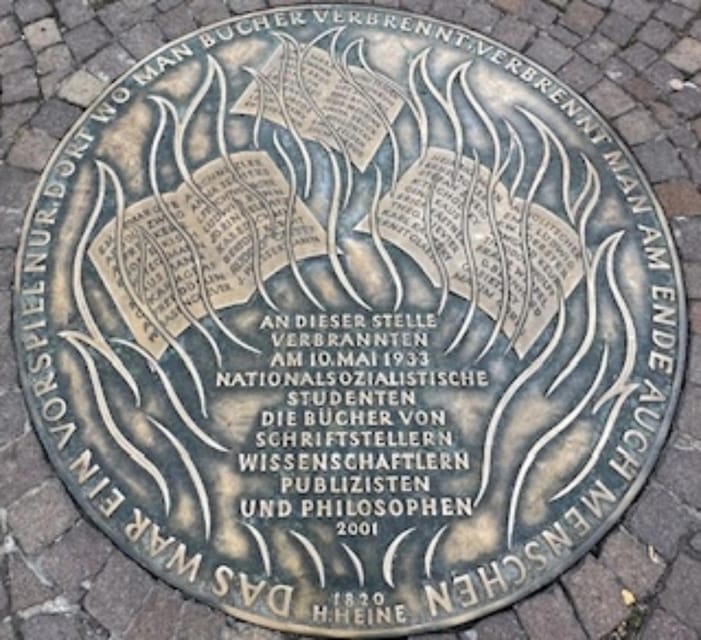
- The Book Burning Memorial, public ideology made visible
- Alt Nikolai Church exterior and House Wertheim’s rare survival
- Eisener Steg for skyline views and a river that drives the city
- St. Bartholomew Kaiserdom, imperial elections and what you can see from outside
- Karmeliter Cloister and Jörge Ratgeb’s wall paintings
- Stolper Steine and the Holocaust memorial wall in one emotional hour
- Jewish quarter edges, ghetto wall and the old cemetery view
- Klein Markt Halle and the snack break, where food becomes part of the walk
- Guide quality is the real value add here
- Price and value: what your $35 actually buys
- Pacing, weather, and who should pick this tour
- Should you book Frankfurt on Foot Daily Walking Tour?
- FAQ
- What time does the Frankfurt on Foot walking tour start?
- Where is the meeting point?
- How long is the tour?
- Is the tour offered in English?
- Are there breaks during the tour?
- Are there any admission fees for the stops?
- What should I bring?
- Is the tour wheelchair accessible?
- Are children allowed, and do they pay?
- Does it run year-round?
- What is the price?
Key points to know before you go
- English-only guidance that makes the stories easy to follow.
- Free entries at the sights you visit, so your $35 goes to guide time, not tickets.
- A strong focus on 20th-century memory, including WWII and Jewish remembrance.
- Street-level memorials like Stolper Steine and the Holocaust memorial wall with Anne, Margot, and Edith Frank.
- Main river views from Eisener Steg, great for skyline photos.
- Built-in breaks (WC plus a snack stop) to keep the walk comfortable.
Why this 3-hour walk is a smart start in Frankfurt
This tour is built for the “first day jitters” problem. You arrive in Frankfurt with questions like, What is the old center? Where did the city lose what it used to be? Why do memorials appear in normal streets?
You get answers with a smooth route and stops that connect time periods. You start in the old civic heart, then move through rebuilt areas, and eventually to sites tied to Nazi persecution and Holocaust remembrance. By the time you reach the river, you understand the city layout enough to explore on your own afterward.
Because there is no transportation used, it also feels like you’re actually reading the city. You notice patterns: where the Main shapes development, where rebuilding changed street character, and where remembrance is meant to be seen close-up.
More Walking Tours in Frankfurt
- Frankfurt Highlights English Walking Tour
★ 5.0 · 1,203 reviews - Frankfurt: Private or Shared Walking Tour
★ 4.5 · 158 reviews - Frankfurt: Private Walking Tour with a Local
★ 4.4 · 83 reviews
Getting to the meeting point by Römerberg
You meet right in the old-town area, across from the Tourist Info on the Römerberg. Look for the guide sign Frankfurt on Foot walking tours, in front of the Binding Schirn Pub on the street.
The tour runs 365 days a year, and it starts at 10:00. If you’re trying to plan a tight itinerary, pick this early in the day, since it helps you orient yourself for museums, shopping streets, and river walks later.
Tip: wear comfortable shoes. Even on “easy walking,” cobblestones and old streets add up, especially if you’re coming from a train station or hotel with lots of stairs.
Römer and Römerplatz, where Frankfurt’s civic power shows up
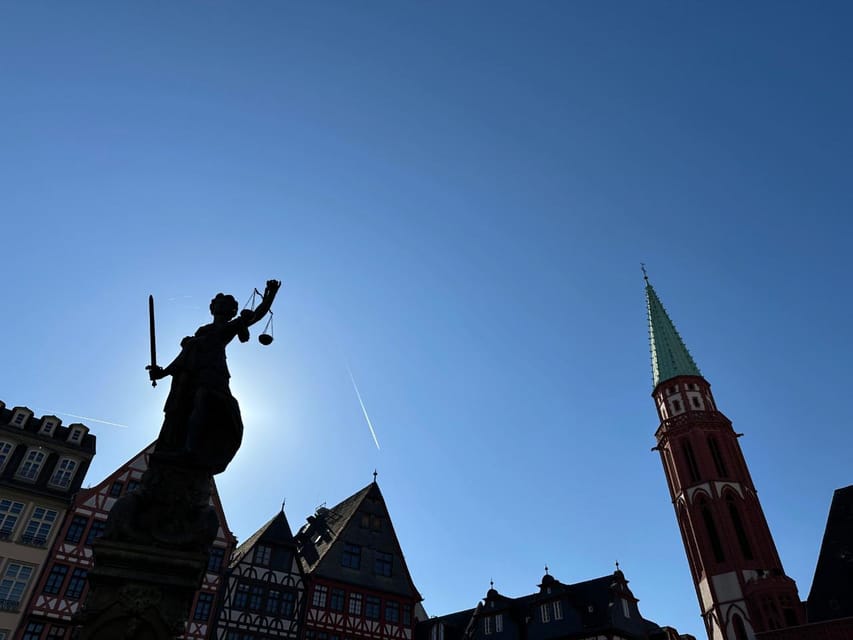
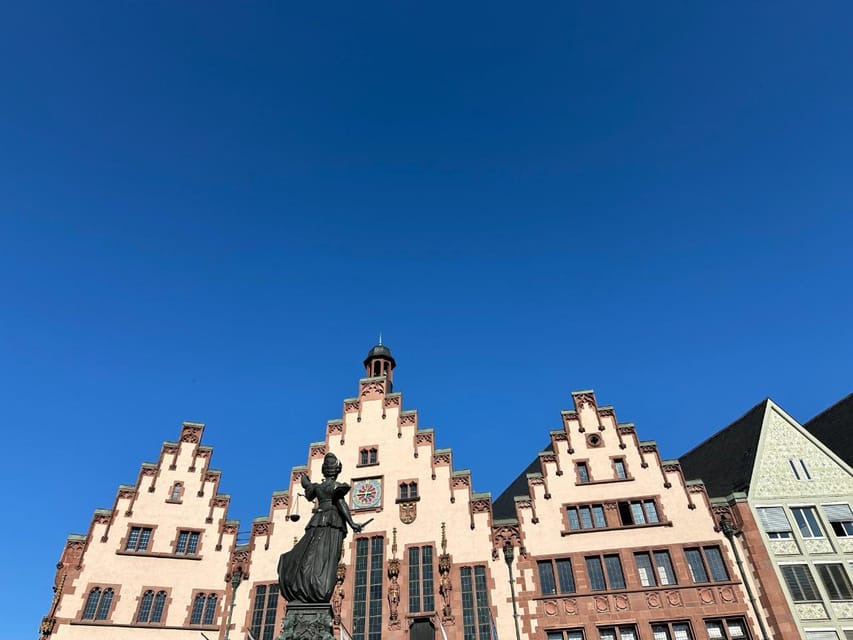
The walk begins at Römerplatz and the Römer area, tied to Frankfurt’s city hall since 1405. This is one of those places where you can stand in modern flow and still feel the weight of old civic authority.
Why it matters: Frankfurt has always been a city of administration and trade. Römerplatz is where that identity becomes visible in stone and layout, not just in a textbook. It also gives you a strong “anchor point” for the rest of the day, since you can mentally map the walk from here.
You also get useful photo stops early. It’s easier to start taking pictures once you know what you’re aiming for, rather than wandering and guessing later.
Altstadt rebuild and the New Alt Stadt story of damage and return
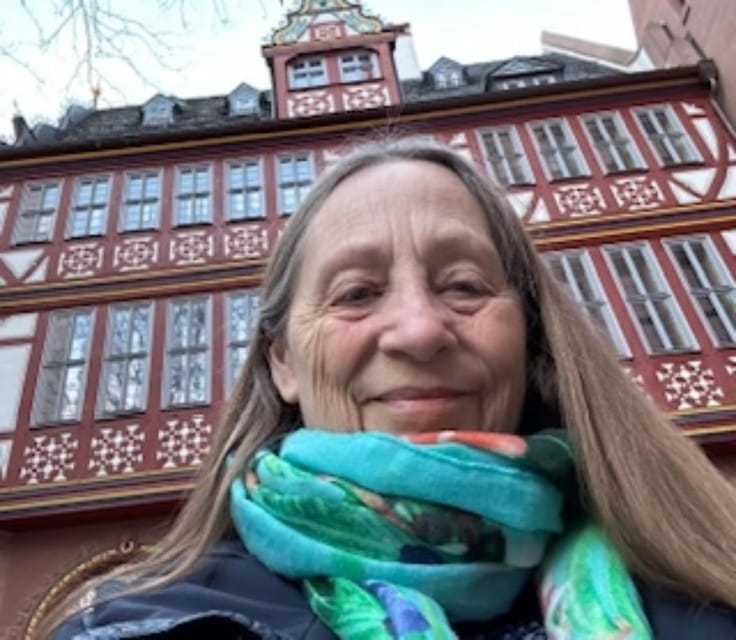
One of the most important parts of Frankfurt’s tour is the rebuilt Old Town, often called the New Alt Stadt. This is where the city’s WWII story stops being abstract and becomes visible in reconstruction choices, street rhythm, and how the rebuilt skyline presents itself.
Why this stop is worth your attention: rebuilding is not just architecture. It’s a message about identity, memory, and what the city chose to restore. You learn how and why areas were rebuilt, which changes how you read the buildings around you even if you pass them again later.
This section is also a good moment to ask questions. A good English guide will connect the rebuilding to what you see elsewhere in Germany and why postwar cities handled history in different ways.
Same city, a different way to spend the afternoon:
- Frankfurt: River Main Sightseeing Cruise with Commentary
★ 4.3 · 5,127 reviews - Frankfurt: Hop-On, Hop-Off Grand or Express Bus Ticket
★ 3.9 · 2,088 reviews - Frankfurt: 1-Hour Panorama Boat Cruise on the river Main
★ 4.4 · 1,822 reviews - From Frankfurt: Rhine Valley Day Trip
★ 4.4 · 1,317 reviews
The Book Burning Memorial, public ideology made visible
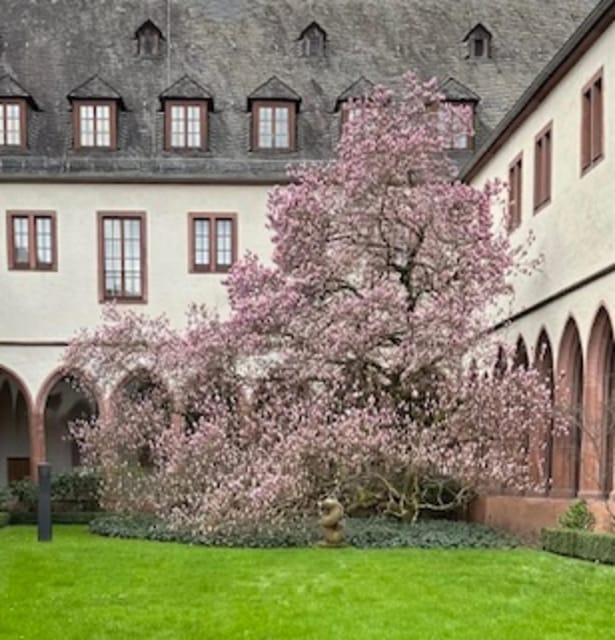
Next up is the Book Burning Memorial, the site linked to Nazi book burnings. It’s a small, direct location, but it carries an enormous message about power, censorship, and what regimes fear.
What I like about covering this on a guided walk is context. Without it, you might see a memorial and move on. With the guide’s explanation, you understand why Frankfurt, a major city, became a stage for this kind of intimidation.
The tone here matters. A well-run tour keeps it factual and respectful, which you’ll appreciate since later stops get even more personal.
Alt Nikolai Church exterior and House Wertheim’s rare survival
You’ll pass by Alt Nikolai Church, a Gothic church built in 1290. On some days, you only see the exterior, especially Sundays, so don’t plan on interior time here.
Then comes House Wertheim, described as the inner city’s only original half-timbered house left at the end of World War II. That “only” detail is exactly why this stop lands. It’s a survivor, a physical remnant of a prewar city fabric that didn’t fully carry forward.
Why these two stops work together: one is a long-standing religious landmark, and the other is a small domestic-scale survival. Together they show continuity and loss in the same walking hour.
Eisener Steg for skyline views and a river that drives the city
Eisener Steg is a pedestrian bridge over the Main river, and it’s one of those spots where Frankfurt looks like a postcard. You get skyline views, plus the long line of museums along the riverbanks.
This stop is more than photos. It’s where the city’s geography clicks. Frankfurt sits at a crossing point of movement, and the Main isn’t scenery. It’s part of how Frankfurt developed and why so many key sites cluster nearby.
If the weather is good, linger. If not, still make the stop, because it’s one of the cleanest ways to reset your brain in the middle of the tour.
St. Bartholomew Kaiserdom, imperial elections and what you can see from outside
St. Bartholomew is better known as the Kaiserdom, and it’s tied to Coronations and Elections of the Holy Roman Emperor for centuries. Even when you only view it from outside, the guide can explain why this church functioned like a political stage, not just a religious building.
Just note the day rule: exteriors only on Sundays and religious holidays. If you’re the kind of person who loves peeking inside, you might feel a little itch here. The fix is simple. Do your main interior visits on a different day and use this tour to understand the site’s role.
This is also a strong “history-to-present” moment, since imperial Frankfurt helps explain why the city stayed relevant for so long.
Karmeliter Cloister and Jörge Ratgeb’s wall paintings
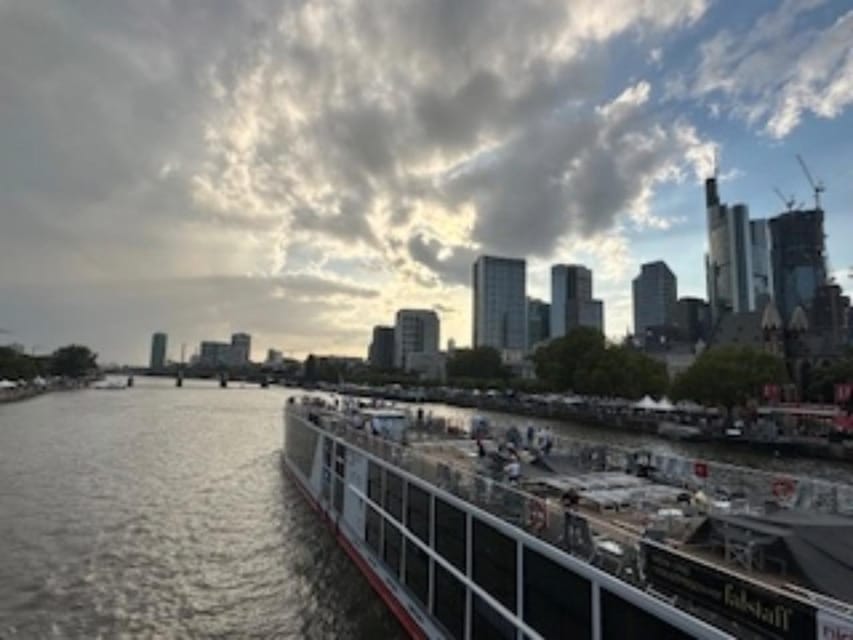
One standout stop is the Karmeliter Cloister and its Jörge Ratgeb wall paintings, described as the largest religious wall paintings north of the Alps, painted in the early 1500s.
There’s an important limitation: these paintings are not shown on some holidays. So if you’re visiting on a major holiday, treat it as a possible highlight rather than a guarantee.
Still, even the lead-up is useful. Medieval art here is not just decoration. It tells you how religious storytelling looked at the time, and why murals mattered in public space.
Stolper Steine and the Holocaust memorial wall in one emotional hour
This tour takes you into street-level remembrance with Stolper Steine, the German name for “stumbling stones.” It’s a very personal way of remembering victims lost under the Nazi regime. You’re not looking at a distant museum exhibit. You’re seeing names connected to ground-level life.
Then comes the Jewish Holocaust Memorial Wall, chosen by the city to honor about 12,000 Jewish citizens of Frankfurt killed in the Shoa. The wall includes names of Anne, Margot, and Edith Frank, which makes the story feel immediate instead of distant.
A good guide keeps this section honest without making it sensational. What you should look for is how your guide explains the purpose of remembrance and how the city chose these locations.
If you want a practical tip, take your time here. This is not the part of the walk to rush through while you think about your next stop.
Jewish quarter edges, ghetto wall and the old cemetery view
You’ll also see parts of the Medieval Jewish Cemetery from the outside. It’s described as one of the oldest and largest Jewish cemeteries in Germany, which you can sense from its scale and age even without going inside.
After that, there’s the Jewish Ghetto Wall, once part of city defenses in 1180, later turned into one of the walls surrounding the Medieval Jewish ghetto. That timeline is a key learning point. It shows how defensive architecture can become confinement architecture over time.
Why this section is valuable: it gives you a longer view of the city. You’re not only learning about WWII. You’re seeing that discrimination and community boundaries existed long before the 20th century, and the city’s streets are full of traces of that.
Klein Markt Halle and the snack break, where food becomes part of the walk
The tour includes a snack break, and Klein Markt Halle is a favorite stop when it’s open. Klein Markt Halle is a produce hall with fruits, vegetables, chocolate, pastries, cheeses, breads, meats, and fish, plus other delicacies.
Two practical notes. First, the hall is not visited on Sundays and holidays, so don’t expect it to be part of every day. Second, the snack stop can be time-limited, so if you want a longer food pause, plan to return another day.
When you combine history with market smells and quick bites, it helps the emotional weight of memorial stops land, then lift. That balance is part of what makes the tour feel complete.
Guide quality is the real value add here
At $35 for about 3 hours, you’re paying for a lot of guided meaning. And based on the guides who have led this walk, the common thread is clarity plus pace control.
Names you might encounter include Justin, Phillip, Jennifer H., Ann, Jean, Jo, Hans, and Hannes. In different ways, they’re praised for staying engaging, answering questions, and keeping the tour moving without turning it into a sprint.
One small detail I really like: some guides use photos showing what things looked like before and after WWII. That helps you “see” rebuilding and loss in a way that a description alone can’t.
Price and value: what your $35 actually buys
$35 per person for a 3-hour walking tour is a fair price for a couple reasons.
First, many stops are free to enter, so your money supports the guide and your time instead of stretching your budget across ticket lines. Second, the route covers a lot of high-impact locations in one go, including civic landmarks, bridges and views, and memorial sites tied to Nazi persecution and Jewish history.
Also, because the tour runs 365 days a year, it’s a dependable option if your Frankfurt schedule is tight.
If you’re on a first visit and you want the biggest “orientation per hour” payoff, this is one of those tours that can save you time later. You’ll likely know where to go next without guessing.
Pacing, weather, and who should pick this tour
The walk is described as easy, and it’s set up with breaks. You’ll do a solid amount of walking, and cobblestones mean you should use shoes with grip.
Rain or shine, the tour still runs. If it’s wet, the old streets can get slippery, so bring an umbrella and keep your footing steady. The guides manage the timing, and that matters when weather changes fast.
This tour is especially well-suited for:
- First-time visitors who want a structured overview fast
- People who want to understand WWII and Jewish history in a city-specific way
- Anyone who likes thoughtful commentary more than just photo stops
- Families with kids 12 and under, since children 12 and under are free, and the walk should be manageable for them if they’re okay with about 7 km
Should you book Frankfurt on Foot Daily Walking Tour?
Yes, if you want the best use of your first half day in Frankfurt. This tour gives you a strong overview of the old center, the river setting, and the WWII and Holocaust remembrance sites in a way that helps you connect the dots.
Skip it or consider a different plan if your priorities are mostly interior visits. Several key places are exterior only on certain days, and some highlights like the Karmeliter Cloister wall paintings and Klein Markt Halle are not available on all holidays.
If you do book, go in with comfortable shoes, a bit of patience for emotional sites, and an appetite for questions. You’ll leave with a clearer sense of where Frankfurt fits in German history, and you’ll be better equipped to explore the city on your own the rest of your trip.
FAQ
What time does the Frankfurt on Foot walking tour start?
The tour starts at 10:00.
Where is the meeting point?
You meet directly across from the Tourist Info on the Römerberg, in front of the Binding Schirn Pub, on the street. The guide will have a sign that says Frankfurt on Foot Walking Tours.
How long is the tour?
The tour lasts 3 hours.
Is the tour offered in English?
Yes, the tour is only in English.
Are there breaks during the tour?
Yes. There are WC breaks, and a snack break is included.
Are there any admission fees for the stops?
No. All entries are free.
What should I bring?
Wear comfortable shoes.
Is the tour wheelchair accessible?
Yes, the tour is wheelchair accessible, and it is described as stroller friendly as well.
Are children allowed, and do they pay?
Children 12 and under are free and welcome to join, as long as they can manage walking about 7 km.
Does it run year-round?
Yes, the tour takes place 365 days a year.
What is the price?
The price is $35 per person.
Newest Frankfurt reviews on the site
- Hohenzollern Castle: Full-Day Tour from Frankfurt★ 4.3 · 11 reviews
- From Frankfurt: Day Tour to Heidelberg with Local Guide★ 4.8 · 250 reviews
- Heidelberg and Rhine Combination Tour from Frankfurt★ 4.1 · 33 reviews
- Frankfurt: Guided walk between palm trees and skyline★ 4.8 · 9 reviews
- From Frankfurt: Heidelberg & Baden-Baden Full-Day Tour★ 4.9 · 23 reviews
- From Frankfurt: Heidelberg and Rothenburg Guided Day Trip★ 5.0 · 14 reviews
- Frankfurt: Walking tour between St. Paul’s Church, Main & Old Town flair in German★ 5.0 · 46 reviews
- Frankfurt: Walking Tour – discover the city with VR glasses★ 4.4 · 23 reviews
Walking Tours, compared.


Berlin’s Best: 2 Hour Walking Tour Third Reich and the Cold War
Read our review →
Third Reich Berlin: Hitler and WWII Walking Tour
Read our review →Browse the lists this tour appears in