
Reviewed · WALKING TOURS
Dresden Small Group Walking Tour
Dresden feels like a story you can walk. This 2 hours 15 minutes small-group tour strings together the city’s top baroque sights with clear context, from the Reformation to the rebuilding after World War II. You’ll see major landmarks up close, mostly from the outside, and you’ll get the how and why behind what you’re looking at.
I especially like two things: the tight, well-paced route and the guide-led narrative that helps everything click, including the Saxony angle. I’ve also noticed that guides like Nicola or Nicolas tend to keep the walk funny and engaging, not just lecture-style.
One drawback to plan for: this can feel like a pay-what-you-wish setup in practice. The booking price you pay covers a reservation and the guide, but you may still feel an end-of-tour tipping push, and that part will not suit everyone.
In This Review
- Key highlights to expect on this Dresden walk
- How this Dresden small-group walk helps you see the city fast
- Price and what you really get for $35.89 per person
- Getting started at Neumarkt, then walking in a clean loop
- Stop 1: Martin Luther Statue, the Reformation starting point
- Stop 2: Frauenkirche Dresden, baroque beauty with World War II memory
- Stop 3: Neumarkt, Dresden’s rebuilt square in full daily use
- Stop 4: Fürstenzug, the porcelain mural that’s hard to believe
- Stop 5: Dresden Castle (Royal Palace), royal power in stone and symmetry
- Stop 6: Old Market Square (Altmarkt), the city’s older public heart
- Stop 7: Brühlsche Terrasse, the Balcony of Europe views over the Elbe
- Stop 8: Katholische Hofkirche, the Baroque cathedral and the Silbermann organ
- Stop 9: Semper Opera House (Semperoper), Dresden’s cultural signature
- Stop 10: Dresden Zwinger, baroque palace gardens and major art collections nearby
- What makes the guide style work on this tour
- Who this Dresden tour suits best
- How to plan your day around a 2 hours 15 minutes walking tour
- Should you book this Dresden Small Group Walking Tour?
- FAQ
- How long is the Dresden Small Group Walking Tour?
- What’s included in the tour price, and what’s not?
- Do we enter any paid attractions during the walk?
- Where do we meet, and where does the tour end?
- What language is the tour offered in?
- Is it a small group?
- What should I do about weather?
- Can I cancel for a full refund?
Key highlights to expect on this Dresden walk
- A “great hits” route through Neumarkt, the Elbe views at Brühlsche Terrasse, and the Zwinger area in about 2 hours
- Fürstenzug on the route, the huge porcelain mural over 100 meters long, tied to the House of Wettin
- World War II context without getting lost, including how Dresden rebuilds shaped what you see today
- Baroque architecture focus, from Frauenkirche’s dome to the Hofkirche and Semperoper
- No paid-entrance pressure, since the group does not enter ticketed attractions
- Small-group feel with a cap of 35 people and an English-speaking local guide
How this Dresden small-group walk helps you see the city fast
If Dresden is new to you, this tour works because it’s designed to build understanding in real time. You start at Neumarkt and finish near the Zwinger, so your feet move through the historic center without the long detours that can waste a half-day.
You also get a clear story arc. The walk connects religious history (Martin Luther and the Reformation), baroque power and culture (princes, churches, opera, palace architecture), and then the modern turning point, especially the destruction and rebuilding after World War II. That matters because Dresden can look “pretty” at first glance, but the meanings are layered. A guide helps you read those layers quickly.
One more smart thing: the tour runs in all weather, so you can plan a day in Dresden without crossing your fingers about sunshine. Just dress for the conditions and keep a light rain layer handy.
More Walking Tours in Dresden
- Dresden: City & Semperoper Guided Walking Tour
★ 4.8 · 2,307 reviews - Dresden: Guided City Walk
★ 4.6 · 2,075 reviews - Dresden: Complete Walking Tour with Frauenkirche Visit
★ 4.8 · 700 reviews
Price and what you really get for $35.89 per person
At about $35.89 per person for a 2 hours 15 minutes walk, the value comes from two parts. First, you’re paying for an English-speaking local expert guide. Second, the format includes a structured narrative, so you don’t just hop between pretty buildings.
But there’s a nuance you should know up front. The tour description notes that booking it joins a general pay-what-you-wish style tour, meaning your amount covers reservation fees and the guide’s payment. Still, at the end, the guide may talk about rewarding them. If you strongly prefer a fixed, pay-once structure with no tipping conversation, keep that in mind before you book.
The good news: you also avoid expensive entry costs during the walk. The stops are marked admission free, and the group won’t enter any paid attractions. So your budget stays predictable.
Getting started at Neumarkt, then walking in a clean loop
The meeting point is the Martin Luther Statue at Neumarkt, 01067 Dresden. Tours start at 11:00 am, and the tour ends near Dresden Zwinger at Sophienstraße, 01067 Dresden.
Why this layout is handy: Neumarkt is a strong “hub” area. You get into the heart of the city right away, then finish close to one of Dresden’s biggest baroque complexes. If you want to keep going after the tour, you’re not stuck far from your next stop.
The group size is capped at 35 people, which usually helps you stay oriented and hear the guide. One practical tip from how tours like this tend to run: arrive a few minutes early, because finding the group at the statue area can take a minute, especially if multiple tours are starting around the same time.
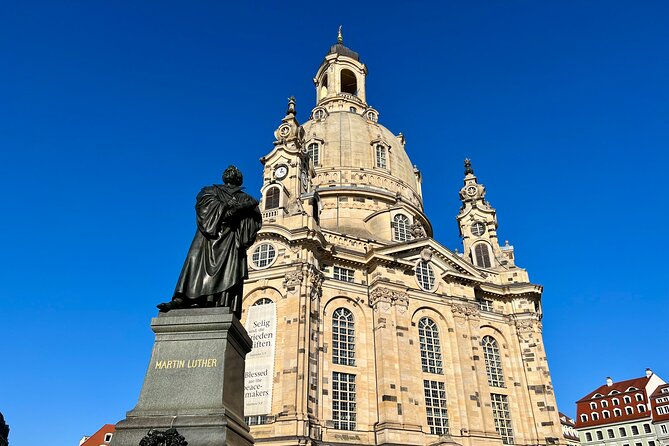
Stop 1: Martin Luther Statue, the Reformation starting point
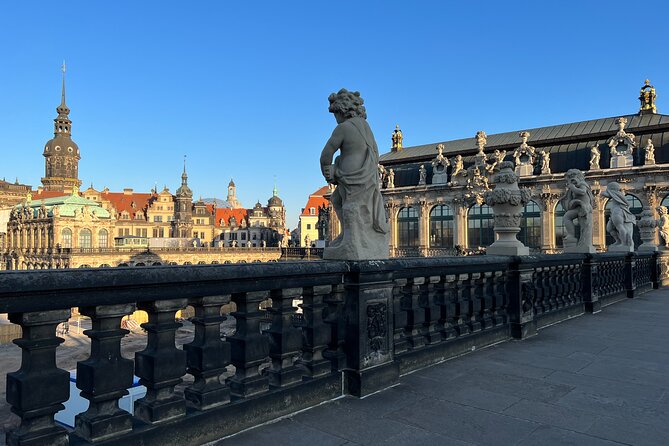
Your first stop is the Martin Luther Statue. It’s not just a “look at a statue” moment. The guide’s framing sets up a major theme: how Protestant reform changed religion across Germany, and how that shift became part of Dresden’s cultural identity.
You might find this opening useful even if you know very little history. The statue acts like a mental bookmark. Later, when you see Dresden’s churches and reconstructed sites, you’ll understand why certain religious architecture and city planning choices feel tied to bigger historical currents.
Possible drawback: since this is the start, you’ll likely be standing and listening for a brief stretch before you start moving. If you’re sensitive to waiting, just use that time to get your bearings and take a quick photo before the group moves on.
Same city, a different way to spend the afternoon:
- Dresden: Semperoper Tickets and Guided Tour
★ 4.7 · 12,102 reviews - Dresden: The Original Night Watchman Tour in Lantern Light
★ 4.6 · 6,653 reviews - Dresden: Semperoper and Old Town Tour
★ 4.8 · 5,735 reviews - Dresden: River Sightseeing Boat Cruise
★ 4.3 · 5,323 reviews
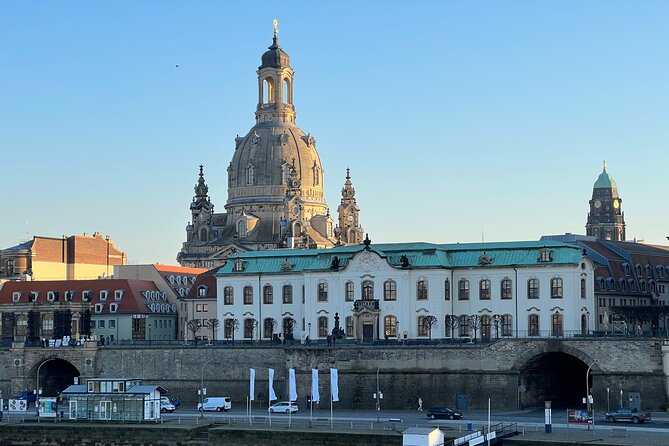
Stop 2: Frauenkirche Dresden, baroque beauty with World War II memory
Next up is Frauenkirche Dresden. It’s one of those buildings that looks impressive from every angle, but the real value of this stop is the story behind the domed silhouette.
You’ll learn how the church was originally built in the 18th century, then destroyed during World War II. The big takeaway is its reconstruction, which the tour frames as a symbol of reconciliation and resilience for Dresden.
This is where the tour earns your time. Many people only see a stunning dome. A guide helps you see how reconstruction changed what the building represents today. It’s a church, yes, but it’s also a visible promise about what a city chooses to rebuild.
What to watch for: the guide may point out exterior details tied to baroque design and the rebuilt structure. If the weather is clear, the domed profile against the sky makes it an easy stop to get satisfying photos.
Stop 3: Neumarkt, Dresden’s rebuilt square in full daily use
Then you’re at Neumarkt, a historic square that was heavily damaged in the war and rebuilt afterward. Today it functions as a lively square area lined with restored baroque buildings, plus shops and cafés.
This stop is useful because it shows you Dresden’s “today” layer. Instead of treating the city like a museum, you see how people actually live and shop there. The guide helps connect that normal daily life back to the rebuilt urban plan.
Small consideration: because it’s in active public space, you’ll share the sidewalk with other pedestrians. Keep your camera ready, but also listen, because the explanation is what turns the square into more than a backdrop.
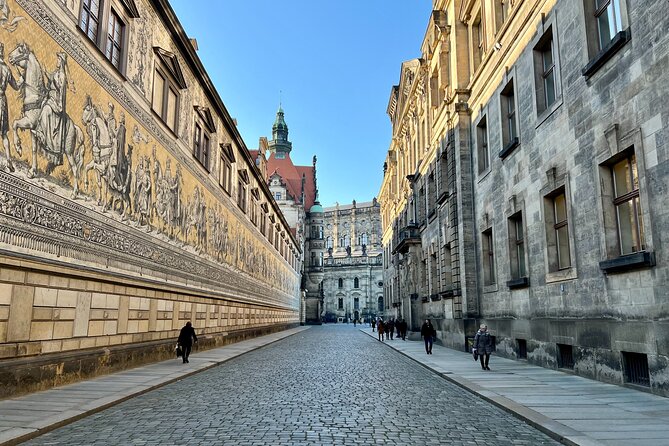
Stop 4: Fürstenzug, the porcelain mural that’s hard to believe
Now you get the wow factor. Fürstenzug is the largest porcelain mural in the world, showing a procession of rulers from the House of Wettin. It stretches over 100 meters, and the mural’s length makes it an “eyes first, read second” kind of stop.
You’ll likely appreciate the scale more than you expect. A guide’s job here is to help you understand what you’re actually looking at. When you learn that the mural depicts ruling figures and Saxon power, the wall becomes a timeline you can follow with your eyes.
Tip: if there’s any time pressure, don’t try to read every name or detail. Instead, look for the guide’s “big picture” points, then go back later on your own if you want to zoom in.
Stop 5: Dresden Castle (Royal Palace), royal power in stone and symmetry
The tour next heads to Dresden Castle, also called the Royal Palace of Dresden. Even without stepping inside paid spaces, the exterior is imposing. The guide’s context matters because this was the residence of the Electors and Kings of Saxony for centuries.
What you get from this stop is architectural thinking. You’ll see how political power wanted to look: bold facade, formal proportions, and a sense of permanence. Dresden Castle helps you understand why the city’s baroque identity is not just about churches. It also reflects rule, culture, and court life.
Possible drawback: with a limited walking tour window, your time at the palace area will be shorter than you might want. If you’re hoping for a long look, just plan a separate visit later.
Stop 6: Old Market Square (Altmarkt), the city’s older public heart
Then you’re at Altmarkt, Dresden’s old market square. This is one of those spaces where the history shows through in the layout, but the energy comes from what’s happening now: markets, festivals, and everyday public life.
The guide helps you connect the square to the way Dresden organized civic life over time. Even if you’re not there during a major event, the point is that Altmarkt has stayed central, not shoved off to the edges.
How to use this stop: take a moment to scan the surrounding buildings. The tour doesn’t just stop at the square itself, it helps you “read” the city blocks around it.
Stop 7: Brühlsche Terrasse, the Balcony of Europe views over the Elbe
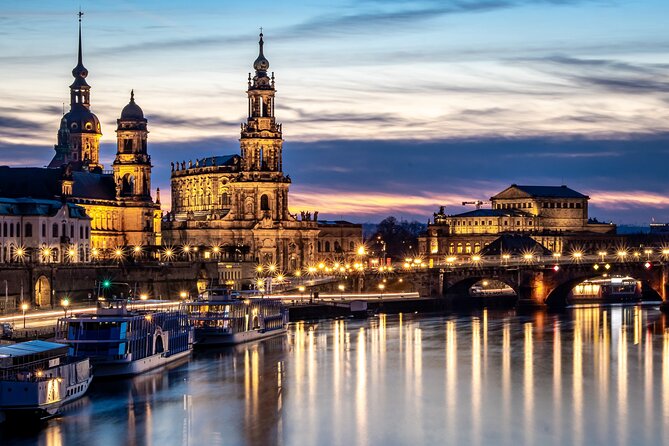
Now you get a view break. Brühlsche Terrasse, often called the Balcony of Europe, offers panoramic views across the Elbe River with Dresden’s historic skyline.
This is a good moment to reset your brain. You’ve just moved through monuments and facades, and suddenly you see how the city sits in relation to the river. It also helps you connect the earlier architectural stops with the broader geography of Dresden.
If you’re a photo person, you’ll likely enjoy this stop more because you can test multiple angles. If it’s cold or windy, bring a hat or layer because riverfront breezes can feel sharper than you expect.
Stop 8: Katholische Hofkirche, the Baroque cathedral and the Silbermann organ
The Katholische Hofkirche, also called Dresden Cathedral, is next. This is classic baroque in the skyline sense, and the guide frames it as a major landmark.
A key detail you’ll hear about is the Silbermann organ. Even if you don’t go inside on this walk, knowing the organ’s reputation gives you a better mental picture of what kind of artistry this church is built for.
Why it matters: Dresden’s baroque identity isn’t only about shapes and domes. It’s also about performance, sound, and ceremonial space. The organ detail keeps the tour from turning into just exterior sightseeing.
Stop 9: Semper Opera House (Semperoper), Dresden’s cultural signature
Then comes the Semper Opera House (Semperoper). It’s world-famous for its architecture and cultural role, and it’s named after its architect, Gottfried Semper.
The guide’s context here tends to focus on how such a building signals civic pride and court-level culture. Even from the outside, the structure feels like a statement: Dresden wanted to be seen as a place of art, not only power.
If you’re an opera fan: you might be tempted to plan a performance ticket after. This tour, though, stays outside, so think of it as a strong “first look” and then make your own add-on if you want seats.
Stop 10: Dresden Zwinger, baroque palace gardens and major art collections nearby
Finally, you finish near the Dresden Zwinger. This palace complex is known for baroque architecture, gardens, and impressive collections of art and historical artifacts.
Because this is the last stop, you’ll likely feel the pace picking up toward the finish. It’s still a valuable ending point because Zwinger is huge and visually complex, even from the outside.
How I’d plan it: if you have extra time after the tour, this is where you can naturally transition into a longer visit on your own, since the tour ends nearby at Sophienstraße.
What makes the guide style work on this tour
A big part of why this walk earns high marks is the way the guide tells the story. Names that have shown up include James, Dominique, Nicola, and Nicolas, and the common thread is clear: they connect details to the bigger Dresden story, without losing the room.
You’ll also notice practical guidance. Guides often help you understand what you should focus on next, so when you leave the tour you’re not just tired. You’re oriented.
One review detail that’s surprisingly helpful: a guide used a yellow umbrella to make the group easy to find at the start. If you want smooth logistics, that kind of visible meeting marker is a win.
One caution to keep in mind: in a few cases, some guests felt the guide’s approach to modern political topics wasn’t the right fit. I can’t promise your guide will go in that direction, but if you’re hoping for strictly neutral historical context, it helps to set that expectation early by asking for a focus on architecture and Dresden history.
Who this Dresden tour suits best
This tour is ideal for you if you want:
- A high-impact overview of Dresden in a short time window
- Exterior viewing of the top sites, without buying extra tickets during the walk
- A guide-led explanation that connects baroque art to real historical events
It’s also a good pick if you like architecture, religious history, and the “why did the city rebuild like this” angle. If you’re traveling with limited time, the route from Neumarkt to the Zwinger hits many must-sees with minimal transit.
It may be less ideal if you want long museum-style stops or a lot of indoor time. The tour does not enter paid attractions, so expect mostly standing and looking, with explanations as you go.
How to plan your day around a 2 hours 15 minutes walking tour
Because the stops are spaced around the center, you can pair this with other Dresden experiences without major backtracking.
A simple strategy:
- Plan a light, flexible lunch before or after, since food and drinks are not included
- Bring a water bottle, especially in warm months
- Wear shoes that handle uneven pavement and lots of standing
Also, Dresden in any season can shift quickly. The tour runs in all weather, so pack a rain shell even if the forecast looks promising.
Should you book this Dresden Small Group Walking Tour?
I think you should book it if you want a smart, guided way to understand Dresden quickly. For the price, you get a structured narrative, a local English-speaking guide, and a route that hits major baroque icons plus the big emotional context around rebuilding.
I’d only hesitate if you strongly dislike pay-what-you-wish style endings, or if you really want a strictly formal, no-opinion history lesson. If that’s you, read the tour description again and be ready for a tip conversation.
If you’re flexible and open to a guide who connects the dots, this is a very practical way to start your Dresden trip and leave with a clearer sense of what you’re looking at, not just what you saw.
FAQ
How long is the Dresden Small Group Walking Tour?
It lasts about 2 hours 15 minutes.
What’s included in the tour price, and what’s not?
The tour includes a local expert guide and a thoroughly constructed narrative. Food and drinks are not included.
Do we enter any paid attractions during the walk?
No. The group will not enter any paid attractions.
Where do we meet, and where does the tour end?
It starts at the Martin Luther Statue in Neumarkt, 01067 Dresden, and ends near Dresden Zwinger at Sophienstraße, 01067 Dresden.
What language is the tour offered in?
The tour is offered in English.
Is it a small group?
Yes, the tour has a maximum of 35 travelers.
What should I do about weather?
The tour operates in all weather conditions, so dress appropriately for rain or cold.
Can I cancel for a full refund?
Yes, you can cancel for a full refund if you cancel at least 24 hours before the experience’s start time.
Newest Dresden reviews on the site
- Winterland Tour to Bohemian and Saxon Switzerland from Dresden★ 5.0 · 22 reviews
- Walking Tour of Historic Dresden with a Christmas Touch. Small group tour.★ 4.5 · 9 reviews
- The Best of Bohemian and Saxon Switzerland Day Trip from Dresden★ 5.0 · 68 reviews
- Sightseeing tour by ConferenceBike★ 5.0 · 14 reviews
- Tickets Dresden Transport Museum★ 4.0 · 23 reviews
- 1.5 hours Segway Elbe Mini Tour★ 5.0 · 66 reviews
- Top Full-Day Adventure: Bohemian & Saxon Switzerland from Dresden★ 5.0 · 68 reviews
- Escape game in Dresden’s old town 90 minutes★ 5.0 · 8 reviews
Walking Tours, compared.



Berlin’s Best: 2 Hour Walking Tour Third Reich and the Cold War
Read our review →
Third Reich Berlin: Hitler and WWII Walking Tour
Read our review →Browse the lists this tour appears in