
Reviewed · WALKING TOURS
Dresden Private Walking Tour With A Professional Guide
Dresden clicks into place with a guide. This private walk with a professional local guide strings together the city of Dresden’s biggest baroque landmarks, with time to ask questions as you go. I especially like the start at Katholische Hofkirche, where the crypt connects Dresden rulers and the Wettin dynasty in a way that makes the building feel personal.
I also like how the route keeps moving but still stays comfortable, from the Semper Opera House to the Zwinger Palace and the Procession of Princes mural. Your guide can tailor the focus on the spot, and it is a nice touch when guides like Cosima begin by asking what you want to prioritize. The tradeoff: the tour runs about 2 hours with short visits, and admission tickets are not included, so if you want to go inside, plan extra time or separate entry.
In This Review
- Key takeaways before you go
- Meeting at King Johann, and how the 2 hours really works
- Katholische Hofkirche: Augustus the Strong and the Wettin family story
- Semper Opera House: why the building matters even if you never attend a performance
- The Dresden Zwinger: courtyards that make baroque feel human-sized
- Grosser Schlosshof and Dresden Castle: Renaissance power and the House of Wettin
- Frauenkirche Dresden: why that dome earns its reputation
- Procession of Princes mural: the porcelain family tree finish
- Price and value: what you pay for and where it makes sense
- Practical tips to make the most of the short stops
- Who should book this Dresden private walking tour
- Should you book it
- FAQ
- Is the tour private or shared?
- How long is the Dresden walking tour?
- What language is the tour offered in?
- Where do we meet the guide?
- Do we need transportation during the tour?
- Is the walking difficult?
- Are admission tickets included for the stops?
- Can the tour be customized?
- Is a mobile ticket provided?
- Can I get a full refund if I cancel?
Key takeaways before you go
- Private, local guide, up to 15 people means your group stays together and you can set the pace.
- Katholische Hofkirche first gives you a powerful anchor for understanding the city’s Catholic and Protestant power mix.
- Semperoper + Zwinger close together makes this an efficient afternoon loop without any hassle for transport.
- Dresden Castle area is the star moment for Renaissance architecture fans and anyone curious about the House of Wettin.
- Women of Dresden has its own highlight at Frauenkirche with a huge dome and an easy landmark-to-landmark flow.
- Procession of Princes is a wow finish since it is one of the largest porcelain artworks in the world, viewed at the castle stables courtyard.
Meeting at King Johann, and how the 2 hours really works
You start at the Statue of King Johann on Theaterplatz. It is a straightforward meeting point, and it helps that the tour is a walk with no transportation needed. The activity level is easy, and the route is designed so most people can participate, including any age.
Timing is the key word here. Each stop is about 20 minutes, so this is not a slow museum marathon. I like that structure because it forces smart viewing, but you should also know what it means: if you want long photo breaks or extra time inside buildings, you might need to add a later stop on your own.
Because it is private, you can usually steer the guide toward what you care about most. One of the best moments I have seen recommended is when a guide like Cosima checks in early, asks what your group wants to focus on, and then keeps the walking rhythm while adjusting the story.
More Walking Tours in Dresden
- Dresden: City & Semperoper Guided Walking Tour
★ 4.8 · 2,307 reviews - Dresden: Guided City Walk
★ 4.6 · 2,075 reviews - Dresden: Complete Walking Tour with Frauenkirche Visit
★ 4.8 · 700 reviews
Katholische Hofkirche: Augustus the Strong and the Wettin family story
Your first big stop is Katholische Hofkirche, one of Dresden’s foremost landmarks. The church is Catholic, but the city itself was mostly Protestant among the general population when it was built. That contrast matters, because the rulers were Catholic, and the architecture shows power in stone.
What I like about starting here is how it gives you a framework for everything that follows. You learn that in the crypt, the heart of King Augustus the Strong is buried, along with other members of the Wettin family, plus remains of people who married into the family, like Princess Maria Carolina of Savoy. That kind of detail turns a pretty building into a clear story about who mattered in Dresden and why.
Plan for this stop to be mostly about seeing and listening, not about ticket time. Admission tickets for this church are not included, so if you want deeper access, you will likely need separate entry. With only about 20 minutes on the clock, I suggest using this moment to orient yourself: notice the look and scale of the church, then let the guide’s background connect the dots.
Semper Opera House: why the building matters even if you never attend a performance
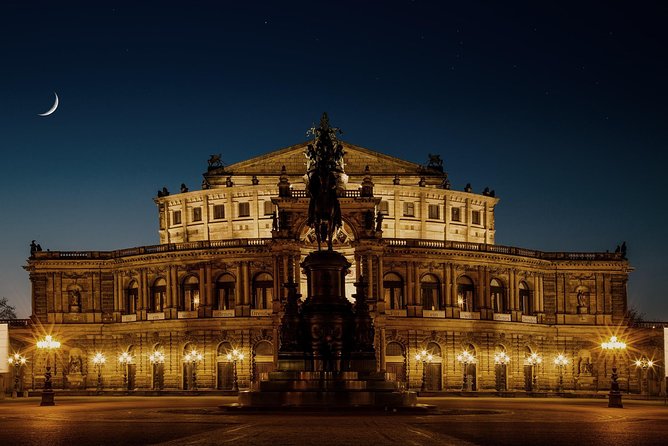
Next is Semper Opera House, or Semperoper. Even if you never plan to see an opera performance here, you will get something valuable from the outside and immediate surroundings: it is regarded as one of the most beautiful European opera houses, and it is a prime example of Dresden Baroque architecture.
This is also where the story reaches into culture and prestige. The building has a long list of premieres, including major works by Richard Wagner and Richard Strauss. That detail is not trivia. It explains why the opera house is not just a pretty facade, but a symbol of Dresden at its confident best.
Like the first stop, admission is not included. So you are mainly experiencing the architecture and context during your short visit. If you are the type who likes to linger for photos, use your guide’s knowledge to choose the best angles for the facade and the most meaningful viewpoints nearby.
The Dresden Zwinger: courtyards that make baroque feel human-sized
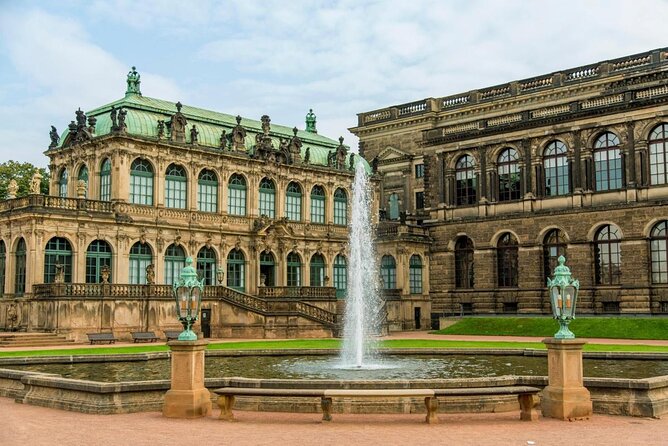
Then it is on to the Dresden Zwinger. This is one of Germany’s world-famous baroque palace complexes, and it is easy to see why the place gets attention. You get pavilions and galleries, the Crown Gate, the Nymphs’ Bath, and the courtyard gardens. In other words, it is not just one building. It is a whole outdoor baroque scene you can walk through and visually organize in a short time.
I like that the Zwinger works well in a guided format. Baroque architecture can feel like a lot if you try to process it alone. With a guide, the details become a checklist in your mind, not random decoration. Instead of guessing what you are looking at, you learn what the parts are called and why they mattered.
Again, the time is short, and admission tickets are not included for your Zwinger stop. So I would treat this as a strong orientation and photo stop. If you want the full interior museum experience, consider adding that later once you know what elements you care about most.
Same city, a different way to spend the afternoon:
- Dresden: Semperoper Tickets and Guided Tour
★ 4.7 · 12,102 reviews - Dresden: The Original Night Watchman Tour in Lantern Light
★ 4.6 · 6,653 reviews - Dresden: Semperoper and Old Town Tour
★ 4.8 · 5,735 reviews - Dresden: River Sightseeing Boat Cruise
★ 4.3 · 5,323 reviews
Grosser Schlosshof and Dresden Castle: Renaissance power and the House of Wettin
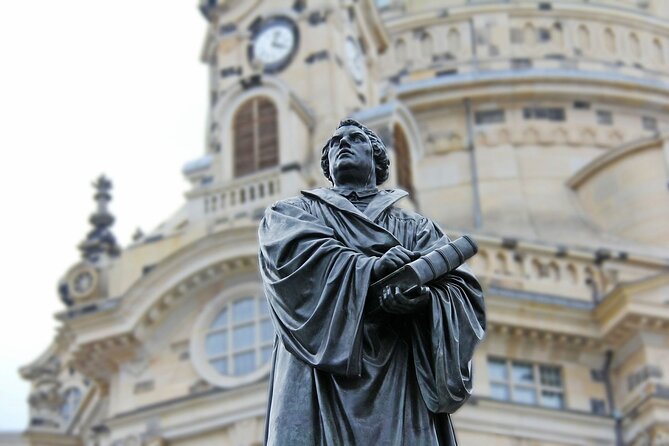
Now you reach what most people will feel as the tour centerpiece: the Dresden Castle area, especially the big courtyard of the Residence, Grosser Schlosshof Dresdner Residenz.
Dresden Castle is described as one of the most important examples of Renaissance architecture in Germany, and it is also tied directly to rule. Over more than seven centuries, it served as the residence of the electors and kings of Saxony from the House of Wettin. This is where the tour starts to feel like a timeline in walking form.
The guide helps you connect a long-running dynasty to real landmarks. You learn that the House of Wettin was a dynasty of counts, dukes, prince-electors, and kings, and it ruled territories of what are now parts of Saxony and Thuringia for 953 years. That kind of scale sounds abstract until you are standing in courtyards designed for power displays and public presence.
The courtyard moment is also a practical gift. Even when interior access is not part of your plan, courtyards give you space to observe symmetry, building proportions, and the way the complex holds attention. The tour gives you about 20 minutes here, so I suggest focusing on three things while you are in the courtyard: what looks Renaissance here versus what feels baroque nearby, where the main sightlines lead, and what parts your guide highlights as central to Wettin rule.
Frauenkirche Dresden: why that dome earns its reputation
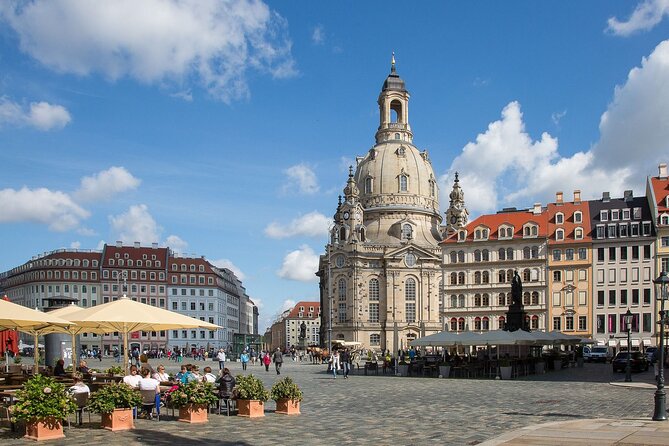
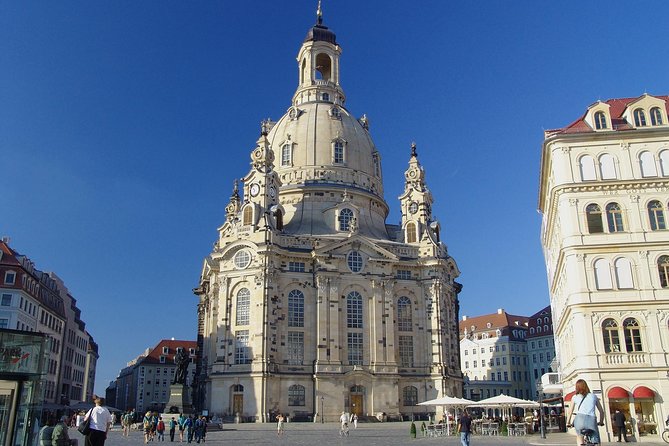
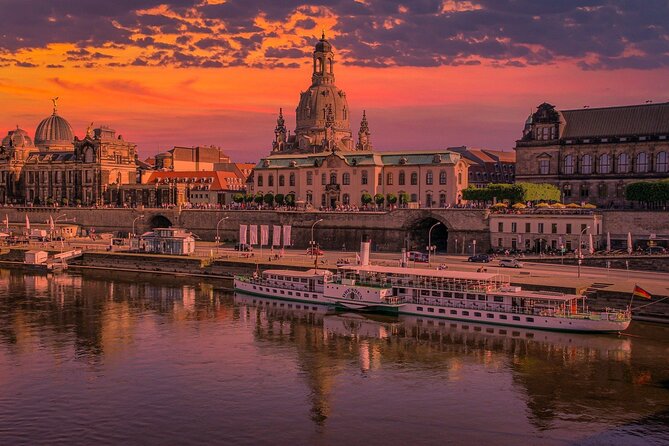
No Dresden walk feels complete without Frauenkirche Dresden. This Lutheran church of Our Lady is considered an outstanding example of Protestant sacred architecture, and the dome is one of the largest in Europe.
The best way to use your 20 minutes here is to take in scale first, then let your guide connect the church to Dresden identity. A common local comparison is that the church is to Dresden what St. Paul’s Cathedral is to London. Even if you do not love comparisons, the meaning is clear: it is a landmark people rally around.
Admission tickets are not included, so you are mostly viewing from outside and around the area in your scheduled time. Still, the dome and the surrounding view cues make this a strong stop for orientation. If you are the type who likes to take a quick panorama and then decide where to spend later, do that here.
Procession of Princes mural: the porcelain family tree finish
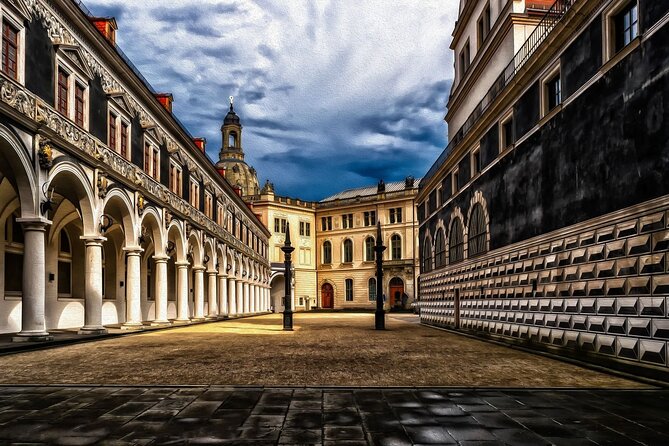
The last stop is a visual payoff: the Procession of Princes. It is described as the largest porcelain artwork in the world, and it displays ancestral portraits of 35 margraves, electors, dukes, and kings of the House of Wettin between 1127 and 1904.
This ending works because it turns the long dynasty talk from earlier stops into something you can scan. Instead of hearing about 900 years of rule as a concept, you see the lineup as a mural portrait wall. The artwork is located on the outer wall of the Stables Courtyard of Dresden Castle, so it feels connected to the main power center you saw a bit earlier.
For your final minutes, I recommend slowing down just slightly. Use your guide’s story cues to help you notice patterns across the portraits, names tied to rule, and the way the timeline stretches over centuries. Even if porcelain art is not your usual thing, the idea is simple, and it lands.
Price and value: what you pay for and where it makes sense
The price is $281.22 per group, up to 15 people. The big value point is that it is per group, not per person. If your group is small, you may feel it as a splurge. If you travel with friends or a family unit and can fill more of that group capacity, the cost per person drops fast.
You are also paying for guided time with a local professional and the private format. This matters because the stops are visually impressive on their own, but Dresden’s real advantage is how layers of power, architecture styles, and rebuilding shape what you see today. A good guide makes those connections. And based on examples like Cosima, the best tours also include a quick check-in at the start so you do not waste your limited 2 hours.
One more value angle: the tour includes a mobile ticket and runs with a simple walk plan. No complicated schedules, no transit transfers, no guessing where to start. You meet at King Johann and then work through major landmarks on foot.
If you are a budget traveler, this might be your first question: do I want guided context or do I want to wander on my own for less? If you enjoy architecture explanations and you want your time capped in two hours, this tour is a strong way to do it.
Practical tips to make the most of the short stops
This is easy walking, but it is still walking. Bring comfortable shoes, especially if you plan to roam after the tour. Also keep an eye on the fact that admission tickets for each major site are not included. Your guide will still show you what matters, but you may want to decide ahead of time what you want to see from the inside versus from the outside.
If you care about photos, ask your guide to suggest where to stand. In at least some experiences, guides have been more interactive than others. I would rather you plan to be proactive: ask questions, ask for photo-friendly angles, and request a quick orientation once you arrive at a stop.
Because the schedule is about 20 minutes per stop, do not try to do everything in one day. Use this tour to set direction. Then add one longer self-guided visit where you feel most drawn in, like the sites with the most emotional pull for your group.
Who should book this Dresden private walking tour
This is a great pick if you want an efficient hit list of Dresden’s top baroque and civic landmarks without building your own route. It is also ideal if you like architecture stories tied to real people and real dynasties, not just dates on a sign.
I would especially recommend it for:
- First time visitors who want the main sights connected by clear explanations
- Small groups who value pacing control and optional on the spot customization
- Travelers who prefer walking tours but do not want to figure out the best order themselves
- Anyone with limited time who needs a plan that fits into an afternoon
It might feel less ideal if you want a museum deep dive or if your top priority is going inside multiple buildings. Since admission is not included at each stop, you would need to add visits separately.
Should you book it
Yes, if you want a focused, easy walking route that links Dresden’s most important landmarks into a coherent story in about 2 hours. The private guide format is the real selling point, especially when your guide checks what you want to see and adjusts the pacing accordingly.
I would think twice if you are expecting long interior visits or lots of free time at each site. This is a tight loop by design, and admission tickets are not included for the stops. If you accept that tradeoff, you get a smart way to see Dresden at street level, with context that helps the city make sense fast.
FAQ
Is the tour private or shared?
It is private, meaning only your group participates. Your group can be up to 15 people.
How long is the Dresden walking tour?
It is about 2 hours.
What language is the tour offered in?
The tour is offered in English.
Where do we meet the guide?
You meet at the Statue of King Johann, Theaterplatz 1, 01067 Dresden, Germany.
Do we need transportation during the tour?
No. This walk tour does not require transportation.
Is the walking difficult?
The activity level is easy, and it is suitable for any age.
Are admission tickets included for the stops?
No. Admission tickets are not included for the listed stops.
Can the tour be customized?
Yes. The guide can customize the tour on the spot.
Is a mobile ticket provided?
Yes. The tour includes a mobile ticket.
Can I get a full refund if I cancel?
Yes, with free cancellation. You can cancel up to 24 hours in advance for a full refund. If you cancel less than 24 hours before the start time, you do not get a refund.
Newest Dresden reviews on the site
- Winterland Tour to Bohemian and Saxon Switzerland from Dresden★ 5.0 · 22 reviews
- Walking Tour of Historic Dresden with a Christmas Touch. Small group tour.★ 4.5 · 9 reviews
- The Best of Bohemian and Saxon Switzerland Day Trip from Dresden★ 5.0 · 68 reviews
- Sightseeing tour by ConferenceBike★ 5.0 · 14 reviews
- Tickets Dresden Transport Museum★ 4.0 · 23 reviews
- 1.5 hours Segway Elbe Mini Tour★ 5.0 · 66 reviews
- Top Full-Day Adventure: Bohemian & Saxon Switzerland from Dresden★ 5.0 · 68 reviews
- Escape game in Dresden’s old town 90 minutes★ 5.0 · 8 reviews
Walking Tours, compared.




Berlin’s Best: 2 Hour Walking Tour Third Reich and the Cold War
Read our review →
Third Reich Berlin: Hitler and WWII Walking Tour
Read our review →Browse the lists this tour appears in