
Reviewed · WALKING TOURS
Walking Tour on Origins of Nazism in Munich – English
Munich has hard history you can walk. This English route uses real addresses to explain how the German Workers’ Party turned into the Third Reich, connecting the story to places you can actually see, including the brewery site and propaganda-era architecture. I like that the tour stays organized and time-efficient at about 2 hours.
I also like the mix of locations, from the Square of the Victims of National Socialism to major squares tied to Nazi-era city planning. One thing to consider: the topic is enormous, and even with the guide’s clear framing, 2 hours can feel short if you want deeper context and follow-up museum time.
In This Review
- Key Highlights You’ll Feel Fast
- A 2-hour English route that makes Munich’s Nazi origins make sense
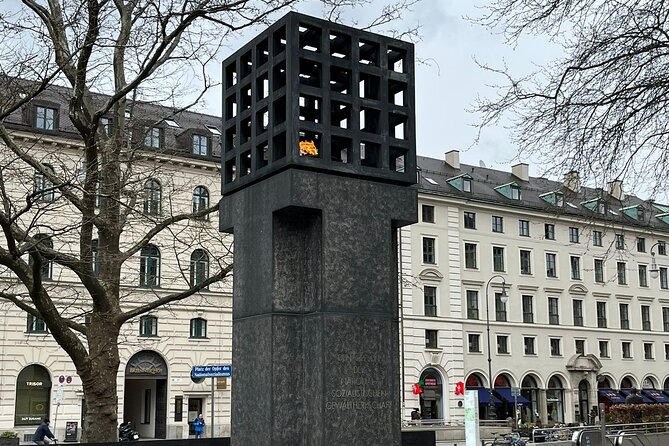
- Stop 1: Platz der Opfer des Nationalsozialismus and what the tour asks you to notice
- Stop 2: Staatliches Hofbräuhaus, where the Nazi party built its base
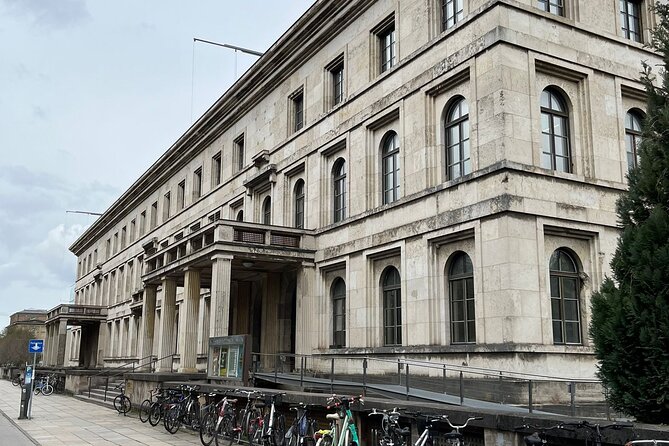
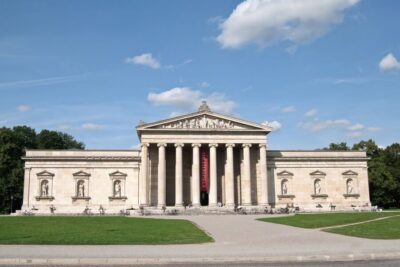
- Stop 3: Haus der Kunst as a first propaganda building
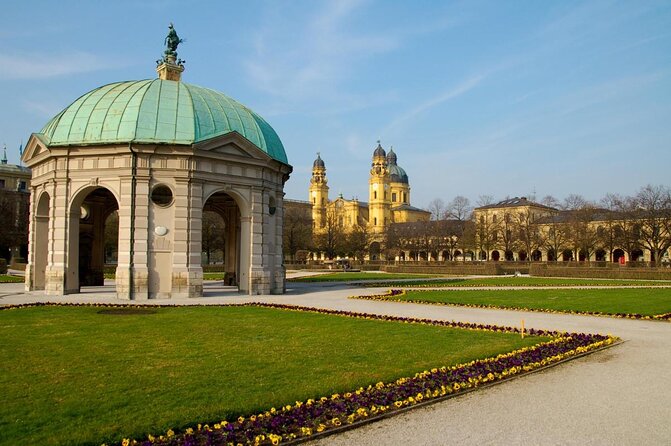
- Stop 4: Hofgarten, a needed pause in the timeline
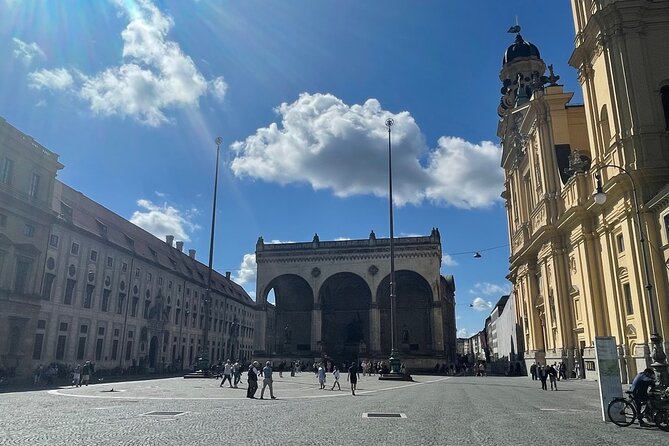
- Stop 5: Odeonsplatz, one of Munich’s most important squares
- Stop 6: Königsplatz, the backbone of the new city plan
- What you really get for the $20.16 price
- How the guide’s approach helps you avoid getting lost
- The main drawback: the subject is huge, so plan follow-up
- Who should book this tour, and who might want a longer option
- Should you book this Walking Tour on Origins of Nazism in Munich?
- FAQ
- Where does the tour start?
- What time does the tour begin?
- How long is the walking tour?
- Is the tour in English?
- How much does it cost?
- What does the ticket include?
- Is it a mobile ticket?
- How many people are in the group?
- Can I cancel for a full refund?
- Where does the tour end?
Key Highlights You’ll Feel Fast
- A short, guided orientation to how Nazism rose in Munich, with real stops along the way
- Included admissions at several key sites, plus free stops that keep the cost focused
- Major squares and power-sites, including Odeonsplatz and Königsplatz
- A built-in reflection stop, centered on victims of National Socialism
- A small-ish group, capped at 35 travelers for a more conversational feel
A 2-hour English route that makes Munich’s Nazi origins make sense
This is an easy, practical walking tour format: about 2 hours on foot, led by an expert guide and offered in English. The meeting point is at Mariensäule, Marienplatz 22, 80331 München, and the tour starts at 3:00 pm, then ends at Königsplatz 1, 80333 München.
A big plus for planning: it uses a mobile ticket, so you are not juggling printed vouchers. And with a maximum group size of 35, you usually get enough space to hear the guide without feeling lost in a crowd.
The tour price is $20.16 per person. For that, you are paying for guided interpretation plus admissions that are included at multiple stops, not just a lecture from the sidewalk. It is a good setup for travelers who want a serious, grounded introduction without turning the day into a full history marathon.
More Walking Tours in Munich
- Munich: Third Reich & WWII Walking Tour
★ 4.6 · 6,181 reviews - Third Reich Walking Tour Munich
★ 4.5 · 4,291 reviews - Munich: Old Town & Viktualienmarkt City Walk in German
★ 4.7 · 2,304 reviews
Stop 1: Platz der Opfer des Nationalsozialismus and what the tour asks you to notice
You start at Marienplatz, then the first named stop is Platz der Opfer des Nationalsozialismus. The time here is short, about 15 minutes, and the admission is free.
This stop matters because it flips the usual “power story” focus. Before you move into places tied to Nazi activity, you begin at a square dedicated to the victims of National Socialism. That framing helps you keep your bearings: you are not touring to admire architecture, you are learning how a political movement escalated into mass violence and how Munich fits into that timeline.
In a practical sense, this is also a good moment to settle in. You can listen, orient your expectations, and mentally prepare for the rest of the walk.
Stop 2: Staatliches Hofbräuhaus, where the Nazi party built its base
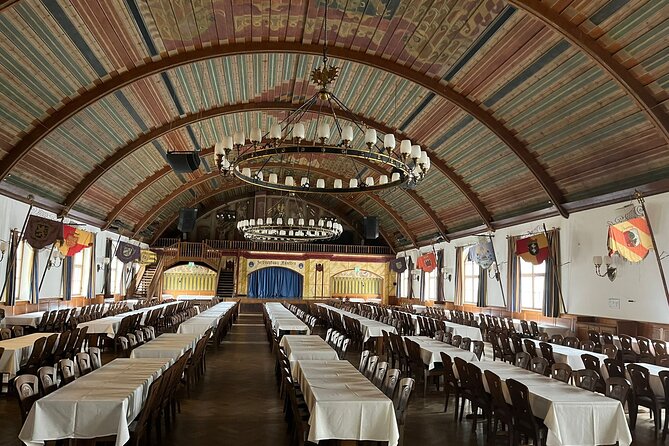
Next comes Staatliches Hofbräuhaus (listed as the place where the Nazi party established its base). The stop runs about 15 minutes, and admission is included.
Even if you are familiar with German history, this kind of site has a way of making the past feel uncomfortably close. A famous brewery is not usually the first thing you think of when you hear the words Nazi rise and consolidation, but the tour is specifically guiding you to those uncomfortable links.
Here’s what makes the stop valuable for you: it turns an abstract idea into a map. When the guide explains the early German Workers’ Party context, you can tie it to a real, everyday-feeling location, which helps you remember the sequence later.
A small consideration: because this is a high-profile public venue, you may want to keep an eye on your surroundings and stick close to the guide so you do not lose the group while taking photos.
Stop 3: Haus der Kunst as a first propaganda building
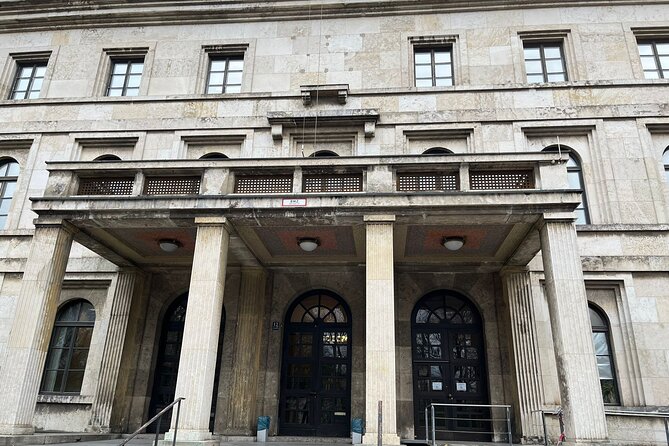
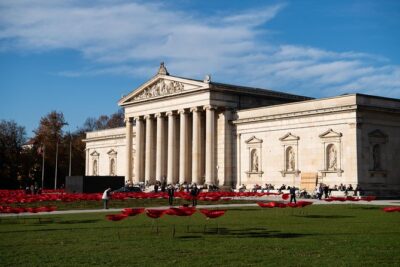
Then you head to Haus der Kunst, which the tour describes as the current museum and the first propaganda building of the Third Reich. Time on site is about 15 minutes, with admission included.
This stop is where the story shifts from origin to messaging. Propaganda is not only something you read about in history books. It is architecture, display spaces, and the way public life gets organized to push an ideology.
What you can expect from a guided walk like this is that the guide connects what you see to larger themes, including how Hitler’s movement grew influence and how the Nazi regime used spectacle and control.
The tour’s overview also points to major episodes like Hitler’s coup attempt and events such as the burning of Goebbels’ books and the Night of Broken Glass. You can use this museum stop to anchor those names in your head as you listen, even if the details unfold in a narrative rather than a single exhibit.
Same city, a different way to spend the afternoon:
- From Munich: Neuschwanstein & Linderhof Castle Full-Day Trip
★ 4.6 · 14,646 reviews - Neuschwanstein & Linderhof Castle-Fairytale Day Tour from Munich
★ 4.5 · 7,275 reviews - Dachau Concentration Camp Memorial Site Tour from Munich by Train
★ 4.5 · 5,637 reviews - Neuschwanstein Castle Tour from Munich
★ 4.5 · 5,117 reviews
Stop 4: Hofgarten, a needed pause in the timeline
You then reach Hofgarten, one of the most important parks in Munich, for about 20 minutes. Admission is listed as included.
Parks can sound like filler, but in a tour with heavy subject matter, the break is useful. You get a breather from concentrating on buildings and names, and it is easier to process what you just heard.
For your day, this stop can also help with pacing. With a walk that covers major squares, you do not want to be rigidly “on” the whole time. A park segment gives your brain a reset so the final parts of the route land better.
If you are someone who gets restless on tours, this is a good spot to stand comfortably, look around, and let the guide’s words settle.
Stop 5: Odeonsplatz, one of Munich’s most important squares
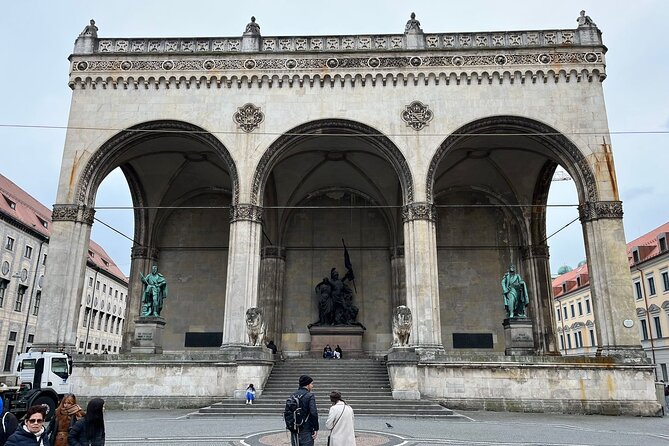
Next is Odeonsplatz, another key square in the story of the city, with a 15-minute stop and free admission.
Squares are power. They are gathering spaces, stage areas, and places where messages become public. When your guide points out how Nazi power and planning took shape, standing in a major Munich square helps you understand the scale of what those leaders were trying to do.
This is also one of the stops that can help you with future self-guided exploration. Once you see the square in person, it becomes easier to recognize it later if you pass through on your own.
Stop 6: Königsplatz, the backbone of the new city plan
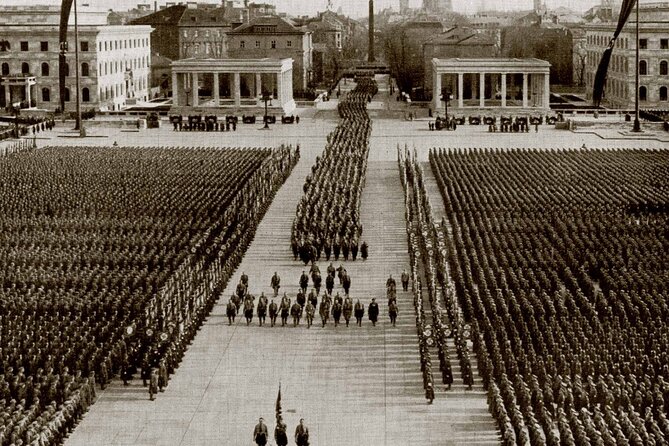
The tour ends at Königsplatz. The time here is about 15 minutes, admission is free, and the tour’s official end point is Königsplatz 1.
The route describes Königsplatz as one of the main squares that formed the backbone of the new city designed by the Third Reich. That is a big claim, and it is why this stop is a strong finish: you see how ideology was tied to urban design, not just political rhetoric.
If you want one final takeaway, it is this: the Nazi regime did not rely only on speeches and arrests. It also shaped public space so its worldview became part of everyday sightlines.
As a practical travel note, this ending location is also useful. Königsplatz is a logical point to continue your day in central Munich, and since the tour is near public transportation, it is usually straightforward to move on after.
What you really get for the $20.16 price
It is easy to look at a low price and wonder what is included. In this case, the value is clearer when you track how the stops work.
- You pay $20.16 per person for a guided experience that lasts about 2 hours.
- The tour includes an expert guide.
- Admission is included at multiple stops, specifically Staatliches Hofbräuhaus, Haus der Kunst, and Hofgarten.
- Other parts are free, including Platz der Opfer des Nationalsozialismus, Odeonsplatz, and Königsplatz.
So you are not just paying for narration. You are paying for guided interpretation plus time in select venues where access is built into the ticket.
Also, booking tends to happen ahead of time (the average booking window is about 35 days). That is a clue that the tour is in demand, probably because it offers a focused overview without a huge time commitment.
How the guide’s approach helps you avoid getting lost
The tour is described as covering the birth of the German National Socialist Workers’ Party and the rise of the Third Reich. It also mentions that you will learn the meaning of Nazism, its consequences, and you will hear about controversial episodes such as Hitler’s coup attempt and major acts of intimidation like book burning and mass violence.
The practical benefit for you is that the guide does not treat these as isolated trivia. The places along the route give those episodes a spatial order, so you can build a timeline in your head as you walk.
I also like how the itinerary alternates between:
- victim-centered reflection (Square of the Victims),
- power and public access sites (brewery and major squares),
- and messaging spaces (propaganda-era museum building).
That rhythm helps you stay oriented instead of drowning in names. It is also easier to ask yourself the right questions while you look around.
The main drawback: the subject is huge, so plan follow-up
One review point that matches what your instincts might tell you: the theme is extensive, and two hours can feel like it goes by quickly. That is not a flaw so much as reality. Nazism is a long, complicated story with many branches, and this tour is designed as an introduction rather than a full course.
If you want more depth, you can use this walk as a foundation, then build around it. Since the tour already includes venues with admission, you might pair it with additional museum time before or after, depending on what you care about most.
Think of it like this: you are buying clarity and direction, not trying to master 20th century history in one afternoon.
Who should book this tour, and who might want a longer option
This tour is a strong match if you want:
- a serious orientation to the Nazi rise in Munich,
- a structured walk with included entry to some stops,
- and an English guide to help connect the dots.
It is also a good fit if you prefer outdoor walking and quick venue access instead of a long indoor museum day.
Who might hesitate? If you are the type who wants exhaustive detail, you may find the length limiting. You will probably still enjoy the route, but you may feel the itch to go deeper in independent reading or longer museum visits after.
Given the group cap at 35 and the pace of about 15 to 20 minutes per stop, it is also friendly for most people who can do a short city walk.
Should you book this Walking Tour on Origins of Nazism in Munich?
Yes, if you want a focused, guided way to understand Munich’s connection to the Nazi rise, with real locations and admissions built into the price. The route makes sense, it is in English, and it gives you a clear sequence from victims’ memory through power sites and propaganda-era spaces.
Book it if you have limited time but still want context. If you have all day and you prefer very detailed history, consider pairing this with additional museum time so you can satisfy both your curiosity and your attention span.
In short: this tour is best as your foundation layer. It gives you the map, the names, and the places, and it sets you up to explore the rest of Munich with more understanding.
FAQ
Where does the tour start?
The tour starts at Mariensäule, Marienplatz 22, 80331 München, Germany.
What time does the tour begin?
The start time is 3:00 pm.
How long is the walking tour?
The duration is approximately 2 hours.
Is the tour in English?
Yes, the tour is listed as being in English.
How much does it cost?
It costs $20.16 per person.
What does the ticket include?
The tour includes an expert guide. Admission is included for some stops, while other stops are free.
Is it a mobile ticket?
Yes, it is listed as a mobile ticket.
How many people are in the group?
The tour has a maximum of 35 travelers.
Can I cancel for a full refund?
Yes. You can cancel for a full refund if you cancel at least 24 hours before the experience’s start time.
Where does the tour end?
The tour ends at Königsplatz 1, 80333 München, Germany.
Newest Munich reviews on the site
- Private day trip from Munich to Eagle’s Nest, Salzburg and back★ 4.5 · 15 reviews
- Private Tour from Munich to Salzburg with English Speaking Driver★ 4.5 · 10 reviews
- Private day trip: Munich to Neuschwanstein Castle, local driver★ 4.5 · 3 reviews
- Private day trip from Munich to Salzburg and Hallstatt★ 4.5 · 17 reviews
- Private Day Trip Munich to Harburg, Dinkelsbuhl & Rothenburg★ 4.5 · 24 reviews
- Private Day Trip from Munich to Eagle’s Nest and Hallstatt★ 4.5 · 9 reviews
- Munich Lake Konigssee and Berchtesgaden Salt Mine Private Tour with Lake Cruise★ 4.5 · 7 reviews
- Private day trip from Munich to Eagle’s Nest and Salzburg★ 4.5 · 9 reviews
Walking Tours, compared.

Berlin’s Best: 2 Hour Walking Tour Third Reich and the Cold War
Read our review →
Third Reich Berlin: Hitler and WWII Walking Tour
Read our review →Browse the lists this tour appears in