
Reviewed · WALKING TOURS
Rostock: Private Guided Walking Tour
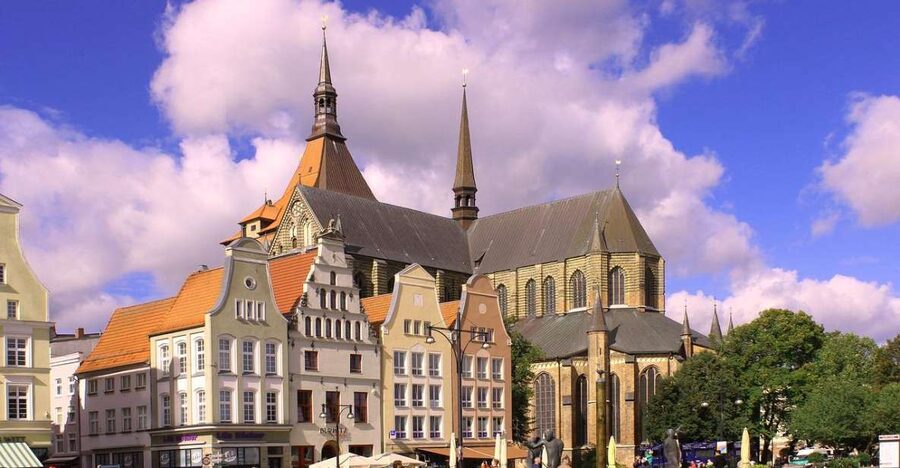
Rostock tells its story in towers and streets. This 2-hour private walking tour links Baltic-port life, Hanseatic power, and the city’s post-WWII rebuild, all while you move through the old center on foot. You’ll start right at Neuer Markt, then glide past the Gothic Town Hall, St. Mary’s Church and its 15th-century astronomical clock, and the surviving pieces of the city’s defenses.
Two things I especially like: first, the tour connects big themes to specific places, so the astronomical clock and the WWII survival/reconstruction story actually make sense together. Second, it’s easy to make it feel personal, since the local guide can customize on the spot. One consideration: entrance fees are not included, so if you want to go inside beyond the viewpoints, you may need extra money and time.
In This Review
- Key Points You Should Know Before You Go
- Neuer Markt Start: Seagulls’ Fountain and Fast Orientation
- Town Hall and the Seagulls’ Fountain: Where Myth Meets Civic Pride
- What You Learn About Rostock’s Name and the Hanseatic League
- St. Mary’s Church and the Astronomical Clock from the 1400s
- St Petri and the Fishermen’s Gothic Tower After WWII
- Old Fortifications Walk: Ramparts, Guard Houses, and a Wooden Wall Walk
- Dutch Renaissance Stone Gate and the University’s Fountain of Happiness
- Price and Logistics: Does $280 Per Group Up to 15 Make Sense?
- Who This Tour Fits Best (And Who Might Want Something Else)
- Should You Book This Rostock Walking Tour?
Key Points You Should Know Before You Go
- Neuer Markt meeting point at the Seagulls’ Fountain, so you can get oriented fast.
- Gothic Town Hall with seven towers plus a baroque-and-gothic vibe you can spot immediately.
- St. Mary’s Church is highlighted for its role in WWII air raids and its famous astronomical clock from the 15th century.
- WWII rebuilding told on the street, not just in theory, including St Petri’s fishermen-tower story.
- City fortifications walk with ramparts, guard houses, and a stretch of wooden wall walk.
- Dutch Renaissance Stone Gate and the motto on its walls, followed by the University’s Fountain of Happiness area.
Neuer Markt Start: Seagulls’ Fountain and Fast Orientation
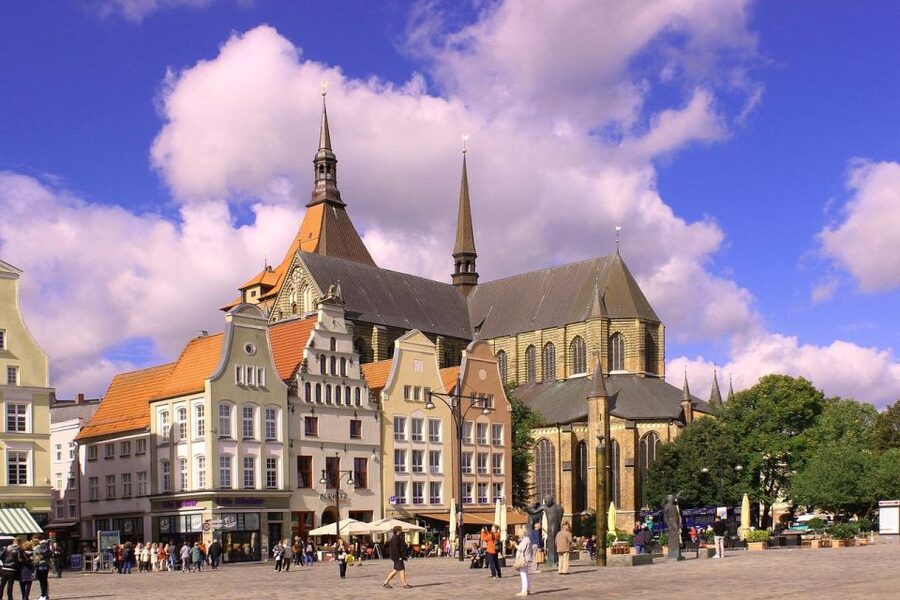
Your tour begins by the Seagulls’ Fountain in New Market Square, Neuer Markt, at 18055 Rostock. That’s a smart starting point, because it puts you in the middle of the action right away: squares, facades, and the kind of streets where you can feel how the city is laid out.
From the first minutes, you’ll learn how to read Rostock. The guide points out the mix of architectural styles in the core streets, then connects those visual clues to what Rostock used to be: a Baltic port city with international reach, and a major player in the Hanseatic world. If you’re short on time, this is the kind of orientation that helps you later explore on your own without wandering.
Also, since it’s a private group with a local professional guide, it’s not just a lecture. You’ll get time to ask practical questions and adjust your walking pace.
Practical tip: wear comfortable shoes. Two hours in old-town Rostock is still real walking, and the routes include uneven historic streets and stair-level viewpoints.
More walking tours in Rostock:
- Rostock: City Walking Tour
★ 4.9 · 198 reviews - Rostock: Surprise Walk of the city with a Local
★ 5.0 · 3 reviews - Discover Berlin Half-Day Walking Tour
★ 5.0 · 9,624 reviews
Town Hall and the Seagulls’ Fountain: Where Myth Meets Civic Pride
One of your first big stops is the Town Hall area, where you can admire the mixt style of baroque and Gothic architecture and the Town Hall’s seven towers. Even if you are not an architecture person, towers are a shortcut. They tell you this was built for visibility, status, and civic authority.
Right near that central energy is the Seagulls’ Fountain, with a story you’ll get directly from your guide. The figures are tied to the sea, with Neptune and his sons, which fits Rostock perfectly. This is a city that looked outward to the Baltic, traded broadly, and counted ships and sailors as part of daily life.
Why that matters: it’s easy to treat fountains like decoration. Here, the guide uses the imagery to explain how a port city celebrates its identity. You stop looking at the street as scenery, and start reading it as branding from centuries ago.
If your guide is one like Jana (a name that’s come up with strong praise for insider details), you’ll likely get the kind of small, story-based context that makes the square feel animated, not just photographed.
What You Learn About Rostock’s Name and the Hanseatic League
The tour doesn’t just point at landmarks. It also tackles two key stories: the origins and historical significance of the city name Rostock, and the city’s role in the Hanseatic League.
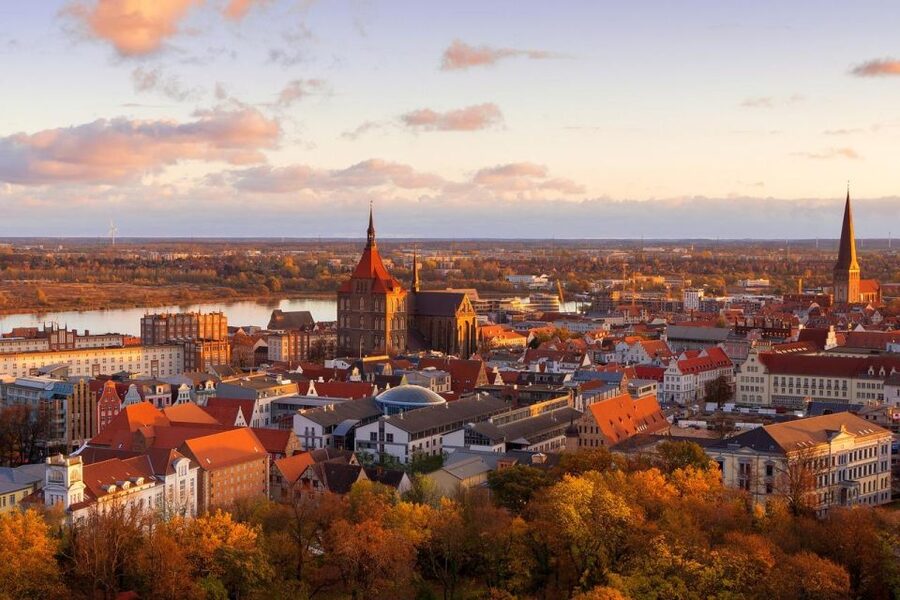
The Hanseatic League part is especially valuable because it changes how you view the old town. When you understand that Rostock was tied to a powerful trading network, you’ll notice how the civic buildings, church prominence, and fortifications all supported a wealthy, connected economy. The guide helps you connect the dots between trade and the built environment you’re walking past.
The name story is the kind of detail that you might not find quickly on your own. Hearing it in context, with the guide steering you to relevant places nearby, makes it stick. You leave with more than a list of sights. You leave with a framework for why Rostock looked the way it did.
A small caution: if you prefer pure architecture and want fewer historical explanations, this tour still leans history-forward, especially with the Hanseatic and WWII segments. It’s not a quick “look at that” walk only.
St. Mary’s Church and the Astronomical Clock from the 1400s
Next comes St. Mary’s Church, and this stop is a highlight for several reasons. Your guide explains that it’s the only main Rostock church to survive the WWII air raids. That fact alone changes how you experience the building. You’re not looking at an old church just because it’s old. You’re looking at a survivor.
Then there’s the astronomical clock, built in the 15th century. A clock like this is not just a timekeeper. It’s a statement about learning, measurement, and what the city valued enough to build into stone.
If you like the “why” behind landmarks, you’ll probably enjoy this stop the most. The guide helps you interpret the clock as part of the culture of the time, tied to the church’s role in daily life. It’s also the kind of artifact that makes you slow down, because it’s designed to be studied, not just passed.
One practical consideration: entrance fees are not included. Even if you can see key elements from outside or from public areas, if you specifically want interior access related to the church and clock, budget extra time and money.
A few more Rostock walks and trips to compare
- Rostock: Guided tour of the historic city center
★ 4.5 · 311 reviews - Best Berlin Shore Excursion from Warnemunde or Rostock Port
★ 4.8 · 200 reviews - Rostock: Full-Day, Half-Day, or Sunset Sailing Experience
★ 4.7 · 174 reviews - Rostock: Half-Day, Full-Day or Sunset Catamaran Cruise
★ 4.8 · 162 reviews
St Petri and the Fishermen’s Gothic Tower After WWII
Rostock’s WWII story is not vague on this tour. You hear it through buildings, especially at St Petri Church.
Your guide points out the tower of St Petri as a gothic landmark for fishermen in the area, then explains how it was destroyed during WWII and later rebuilt. That sequence is meaningful: it shows how livelihoods shaped architecture, and how reconstruction reshaped the city’s look and identity.
This stop is also a good reminder that the city’s resilience is not only about grand history. It’s about people rebuilding the places tied to work, community, and daily routines. If you care about the human side of postwar restoration, this is where the tour delivers.
Potential drawback: if you’re expecting a museum-style WWII narrative with artifacts and photographs, this is still a walking-tour format. You get context and key stories, but not a deep exhibit experience.
Old Fortifications Walk: Ramparts, Guard Houses, and a Wooden Wall Walk
After the church stop, you shift from vertical landmarks to defensive lines. You’ll see parts of Rostock’s old fortifications, including ramparts with built-in guard houses and a section of the wooden wall walk.
This is one of those segments that rewards slow attention. Fortifications are easy to ignore when you’re moving quickly. On this tour, the guide helps you understand their logic: how the city protected itself, and how defenses shaped movement and neighborhood edges.
What I like here is the physical nature of it. You aren’t only told about history. You can sense it, because the defenses are still there in a way that’s visible and walkable. Even a short wall segment can make you picture where watch points were and why certain routes mattered.
Practical tip: bring a small water bottle. Two hours can feel longer in cool or windy Baltic weather.
Dutch Renaissance Stone Gate and the University’s Fountain of Happiness
One of your best “photo meets meaning” stops is the Stone Gate, a Dutch Renaissance entry that your guide frames with the motto written on its walls:
Sit intra te concordia et publica Felicitas, meaning May harmony and prosperity reign within your walls.
That motto is a strong ending note for this tour’s themes. You start with civic buildings and sea symbolism, you move through trade networks, then you hit the WWII survival and rebuilding reality, and finally you land at a gate that mixes style with a message about how the city wanted to function.
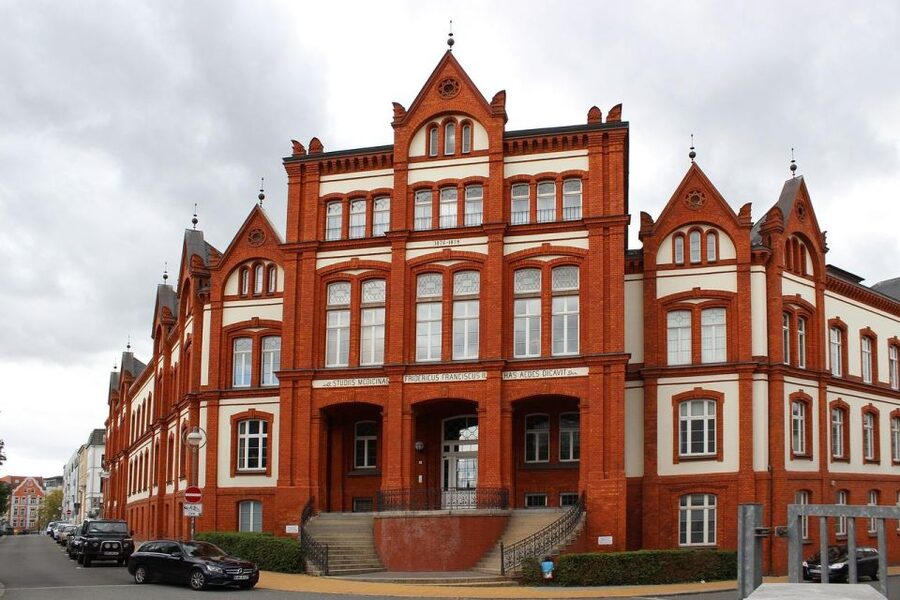
From there, you’ll connect the old city to Rostock’s status as a university town. The guide highlights that the University of Rostock dates from 1419 and is one of the oldest in the world. Then you’ll see the area connected with the Fountain of Happiness.
Why this works in a two-hour walking tour: it broadens Rostock beyond commerce and conflict. A university is long-term thinking. It signals education, ideas, and continuity, which fits the tone after WWII rebuilding. You walk away with a sense of resilience that goes beyond the war years.
Price and Logistics: Does $280 Per Group Up to 15 Make Sense?
The tour costs $280 per group, for a group size up to 15 people, and it lasts 2 hours. That pricing is unusual compared with per-person tours, and the value depends on how many of you go together.
If you’re traveling as a small group, you can estimate cost per person by dividing $280 by your group size. For example, a group of 6 brings the cost down considerably compared with paying individually, and it keeps the experience private.
Because entrances are not included, your real total can rise if you choose to pay entry fees for church areas or clock access beyond what you can view without a ticket. Still, for many people, the walk-and-learn format covers the main experience.
Where the private format matters most: you get a guide who stays with your group only, and you can ask questions while moving. That’s hard to recreate with self-guided walking unless you already know what to look for.
Who This Tour Fits Best (And Who Might Want Something Else)
This guided walk suits you if you want a tight, structured introduction to Rostock that mixes architecture, the Hanseatic League, and WWII reconstruction without turning into a long day.
It also works well if you like practical storytelling. The tour’s strength is linking symbols to real places, like Neptune at the Seagulls’ Fountain, the clock in St. Mary’s, and the fishermen connection at St Petri.
You might consider a different option if you want:
- a longer itinerary (because two hours is focused and keeps moving)
- heavy museum time (entrance fees are not included)
- lots of time climbing inside towers or deep reading in dark interiors (this tour is designed for walking and seeing key landmarks)
Should You Book This Rostock Walking Tour?
Yes, I’d book it if your goal is to understand Rostock quickly and enjoy the main sights with a real local guide. The mix of Town Hall, St. Mary’s astronomical clock, fortifications, and the WWII resilience story is a powerful combo for a short time in the city.
Book it especially if you’re the kind of traveler who likes context, not just postcards. And if you’re traveling in a group of friends or family, the per-group pricing can be a smart way to keep the experience private without paying top prices per person.
If you can only do one guided experience in Rostock, this is the one that gives you the most story per minute of walking.
Newest Rostock reviews on the site
- Rostock: Surprise Walk of the city with a Local★ 5.0 · 3 reviews
- Rostock: Electric Boat Rental on the Warnow River★ 4.8 · 106 reviews
- Rostock: Half-Day, Full-Day or Sunset Catamaran Cruise★ 4.8 · 162 reviews
- Rostock: Hot Rod Harbor City Tour★ 4.9 · 16 reviews
- Rostock: Hot Rod Sightseeing Tour to Warnemünde★ 5.0 · 19 reviews
- Berlin and Sachsenhausen: Shore Trip from Warnemünde Port★ 4.8 · 40 reviews
- Discover Rostock: A Guided City Tour for Cruise Guests★ 3.7 · 7 reviews
- Distillery tour with guide!★ 4.7 · 14 reviews
Walking Tours, compared.


Berlin’s Best: 2 Hour Walking Tour Third Reich and the Cold War
Read our review →
Third Reich Berlin: Hitler and WWII Walking Tour
Read our review →Browse the lists this tour appears in