
Reviewed · WALKING TOURS
Munich Private Walking Tour With A Professional Guide
Munich clicks when someone gives you the backstory. This private walking tour is all about your own professional guide, walking you through the historic center with stories that connect major sights to the people and power that shaped them. You can ask questions freely, and you can even steer the route on the spot if you want something different.
I especially like the way the stops are chosen for impact in a short time window, and how you get both the famous sights and the “how did that happen?” context around them. One possible drawback: this is an easy walking plan, but it is still walking, so if you struggle with crowds or prefer lots of sit-down time, you may want to pace yourself and ask your guide to slow down.
In This Review
- Key Things That Make This Tour Worth Your Time
- Starting at Fischbrunnen: Get Your Bearings Fast
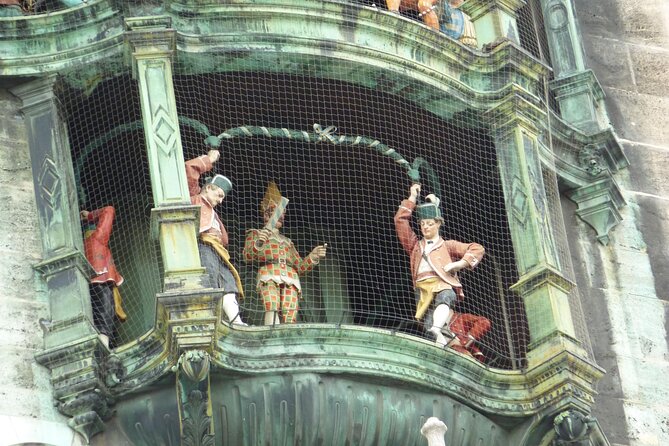
- Marienplatz and the Rathaus-Glockenspiel: A Clock Show With a Point
- St. Peter to Frauenkirche: Two Church Vibes, One Legible Story
- Odeonsplatz and the Beer-Hall-Putsch: History at Street Level
- Ludwigstrasse and Max-Joseph-Square: Power Lines and Great Views
- Hofbräuhaus and Viktualienmarkt: Beer Heritage Meets a Practical Finish
- How the Timing and Group Size Affect Your Experience
- Who Should Book This Munich Private Walk (and Who Might Prefer Something Else)
- Should You Book This Private Walk in Munich?
- FAQ
- What is the duration of the Munich private walking tour?
- How much does the tour cost, and how many people are included?
- Is the tour available in English?
- Are entrance fees included for attractions?
- Do I need transportation during the tour?
- Can I cancel for a full refund?
Key Things That Make This Tour Worth Your Time
- Private, small-group feel with a guide assigned just to your group (up to 15).
- Big-sight coverage in about 2 hours, without needing any transit.
- Glockenspiel details you can actually picture, including the number of bells and moving figures.
- Dark-to-memorable history in the same walk, from the Beer-Hall-Putsch to the myths tied to Frauenkirche.
- A practical food finish, with a stop at Viktualienmarkt and time near Hofbräuhaus.
- Guides who can be very entertaining, with examples including Tom Lipton and Peter.
Starting at Fischbrunnen: Get Your Bearings Fast
You begin at Fischbrunnen, Marienplatz 8, right in the heart of Munich. That location matters. You are not trekking across town before the tour starts, and you can immediately feel the shape of the old center. It is an easy walk, and the plan is built so you move steadily between major landmarks instead of bouncing around.
Because this is private, you are not stuck with a one-size-fits-all lecture. If you are the type who likes to understand the why behind the what, this format works. If you prefer to focus on architecture, you can steer the conversation that way. If you want more history, your guide can go there too.
Also, you will likely notice that the walk is designed for viewing more than entry. Entrance fees are not included, so you should expect that the highlights are mostly seen from the outside or in public spaces. That keeps the schedule realistic and prevents the tour from turning into a line-waiting marathon.
More Walking Tours in Munich
- Munich: Third Reich & WWII Walking Tour
★ 4.6 · 6,181 reviews - Third Reich Walking Tour Munich
★ 4.5 · 4,291 reviews - Munich: Old Town & Viktualienmarkt City Walk in German
★ 4.7 · 2,304 reviews
Marienplatz and the Rathaus-Glockenspiel: A Clock Show With a Point
The first major stop is Rathaus-Glockenspiel, the famous clock tower tied to the Old and New Town Hall complex. This is one of those places where it is easy to just stare at the performance and move on. The value here is that you get the story behind it.
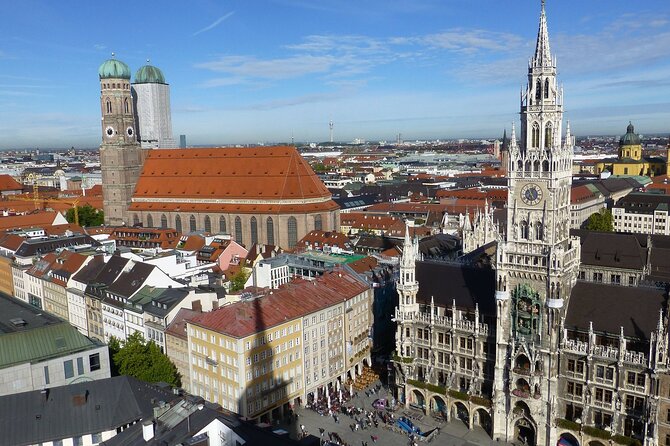
You learn about Mary’s Column, which gave the name to Marienplatz. Then your guide frames the Town Halls, setting up why this square became a stage for Munich identity. And when you reach the clock tower itself, you get the specifics that make it feel real: 43 bells and 32 figures. That kind of detail sticks because it gives you a map for what you are seeing.
Your guide also talks you through two historical events shown by the wooden figurines at set times. If you catch the show, great. If you do not, you still get the meaning, so you feel less like you missed a highlight and more like you arrived at a place with traditions.
This stop also pays off geographically. Very nearby, you are close to St. Peter, Munich’s oldest Catholic church. Even if you do not go in, it helps to have a guide point out what makes that continuity matter. Munich is often described in broad strokes, but small clues like this make it feel like a living city.
St. Peter to Frauenkirche: Two Church Vibes, One Legible Story
From Rathaus-Glockenspiel and St. Peter, the walk brings you toward Frauenkirche, Munich’s largest church. The double-tower view is a moment you are meant to catch, and the guide ensures you notice the features people talk about.
You also hear the legend connected to the church, including the idea of the devil’s footprint. Legends can sound like campfire talk, but when a guide ties them to local beliefs and the look of the building, they become part of how Munich explains itself.
Here is what you should watch for: Frauenkirche looks simple from a distance, but up close it has a strong, deliberate presence. With a guide, you learn what to focus on. Without one, you might treat it like a pretty backdrop. With a guide, it becomes easier to read as a statement of power and faith.
One practical note from how guides tend to work on this kind of route: you may want to position yourself so you can hear clearly. If your guide speaks softly, it can be harder to follow in a busy square. If that happens, it is totally fair to ask them to repeat, or to move closer. You are paying for a guided experience, so use your advantage.
Odeonsplatz and the Beer-Hall-Putsch: History at Street Level
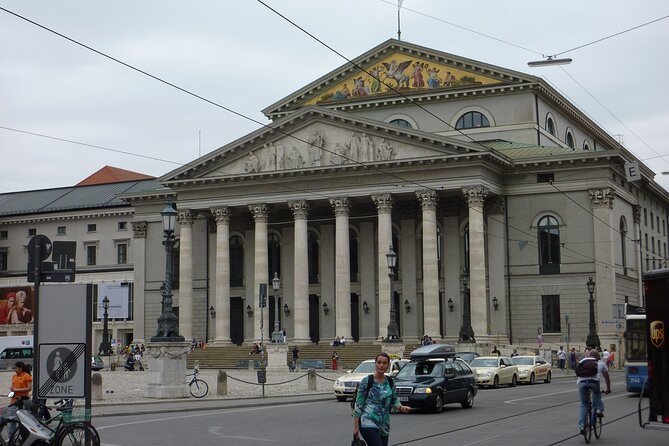
Next you head to Odeonsplatz, a key Munich square tied to political turbulence. This is where the tour shifts from pretty postcard scenes to the kind of history that explains why a city’s past still matters.
You learn about the Beer-Hall-Putsch, including the story of a tense night when about two thousand men, led by Adolf Hitler, marched toward the center of Munich in an attempt to seize power. Your guide frames it so it does not feel like a textbook paragraph. It lands as a chain of decisions and consequences that played out on actual streets.
Your route also passes the Theatine Church, built by Elector of Bavaria Ferdinand Maria and his wife as a thank-you gesture for the birth of the long-awaited heir, Prince Max Emanuel. That contrast is striking, and it is one reason this stop is effective. You see how rulers used architecture to announce legitimacy, even while the political temperature later turned darker.
If you like history that has edges, this is the section. If you prefer lighter pacing, just know this portion is more intense. You can always ask your guide to spend less time on the darker details and more time on the buildings and symbols around you.
Same city, a different way to spend the afternoon:
- From Munich: Neuschwanstein & Linderhof Castle Full-Day Trip
★ 4.6 · 14,646 reviews - Neuschwanstein & Linderhof Castle-Fairytale Day Tour from Munich
★ 4.5 · 7,275 reviews - Dachau Concentration Camp Memorial Site Tour from Munich by Train
★ 4.5 · 5,637 reviews - Neuschwanstein Castle Tour from Munich
★ 4.5 · 5,117 reviews
Ludwigstrasse and Max-Joseph-Square: Power Lines and Great Views
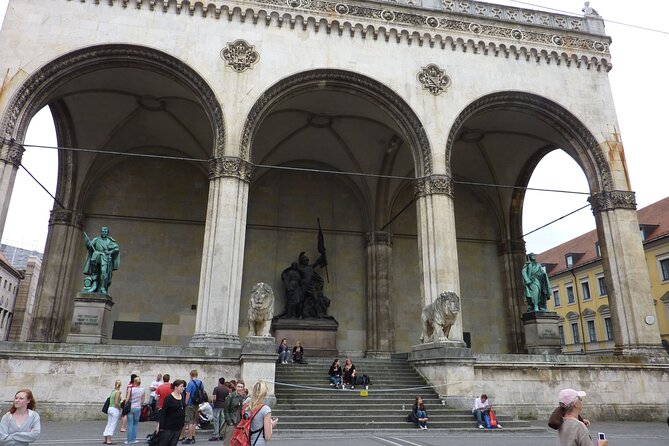
From Odeonsplatz and toward Ludwigstrasse, you get a look at the city’s grander, neo-classical planning. Ludwigstrasse is where Munich starts to feel like it is designing its own image. Your guide shows you how the architecture connects institutions and authority.
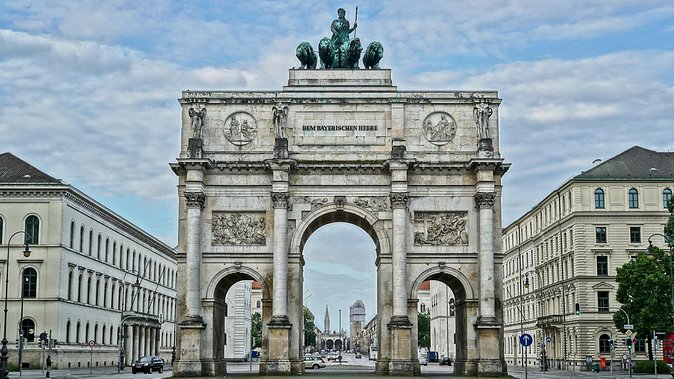
You pass the State Library, described as the oldest university of Munich, and also the Gate of Victory. Even if you cannot stop for long at each spot, you are building a mental line. That line helps you understand Munich as a planned city, not just a collection of landmarks.
Then you move to Max-Joseph-Square, where the payoff is the view. You look toward the Opera, the National Theater, and the Royal Palace, the Residence. The Residence is described as the former palace of the Bavarian monarchs and is presented as the largest palace in all of Germany. Even if you do not go inside, the guide helps you place it, so it becomes more than a big building. It becomes a symbol of how Munich functioned as a seat of power.
This is also a good moment to take a breath. The walking pace stays easy, but you have likely been concentrating for a while. Ask questions here if you have them. Guides tend to be at their best when you ask, because it turns the tour into a conversation, not a script.
Hofbräuhaus and Viktualienmarkt: Beer Heritage Meets a Practical Finish
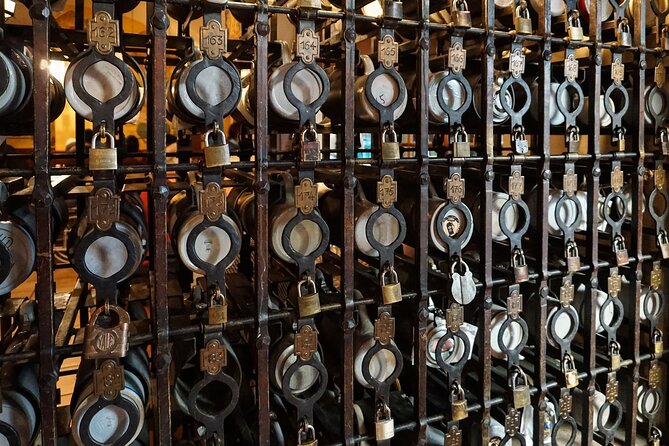
The tour brings you to Hofbräuhaus, often described as the mothership of beer halls, established in 1589. This is a stop that works whether you drink beer or not. You get the cultural weight of the place, plus a strong sense of Munich as a city where food and tradition are public, not hidden.
Because entrance and tastings are not included, treat this as a chance to look around and soak in the atmosphere, then decide what to do next. If you do choose to order something, at least you will know what the place represents instead of guessing.
From there, the route continues to Viktualienmarkt, a public food market known for fresh local products. This is a smart end point. It gives you options right when you likely want lunch or a snack. If you are the type who likes to eat where locals shop and snack, this is a great match.
Also, if your guide is the helpful type, you may end the walk with practical suggestions for where to eat next. I like tours that do that because it saves you time later, especially if you are trying to keep your day efficient.
How the Timing and Group Size Affect Your Experience
This is a 2-hour walking tour at an easy activity level. No transportation is needed, which keeps the plan simple. And because it is a private experience, you are not squeezed into a parade of strangers. That matters for hearing stories clearly and for asking questions.
The price is listed as $305.11 per group (up to 15). Value depends on who you bring. If you are a solo traveler, you are paying for a private guide, which can feel pricey. If you come with a small family or a group of friends, the cost per person drops fast, and the “just us” factor becomes the real win. In other words, it is not just a tour, it is a shared conversation with someone who can adjust to your pace.
One more detail: confirmations happen at the time of booking, and mobile tickets are used. That makes the day-of experience smoother. It also helps if you like to avoid printed ticket hassles.
And because the tour is offered in English, you get full access to the stories rather than relying on translations of signage. It makes a difference at stops like Odeonsplatz, where the narrative gives context you will not always find just by reading a plaque.
Who Should Book This Munich Private Walk (and Who Might Prefer Something Else)
Book this if you want a structured highlights walk with room for questions, and you like learning history through the places where it happened. It is a good fit for ages across the spectrum because the activity level is easy and the route is designed for walking the center without scrambling.
You should also consider booking if you care about the famous sights but do not want the experience to feel like you are just ticking boxes. The guide-led storytelling is the main value here, especially around the Glockenspiel details and the historical turning points tied to Odeonsplatz.
Skip or adjust expectations if you want lots of indoor time. Since entrance fees are not included, most of what you get is viewing and learning in public spaces, with minimal ticketed stops. Also, if you are very sensitive to audio clarity in crowds, plan to stay close to the guide and ask them to slow down or repeat when needed.
Should You Book This Private Walk in Munich?
Yes, with two conditions. First, go in expecting a 2-hour guided orientation plus history, not a museum day. Second, choose a spot near your guide so you can actually hear the stories.
If that matches your style, this is a strong way to spend your first day in Munich. You will leave with a clearer sense of how the Glockenspiel, churches like St. Peter and Frauenkirche, political history at Odeonsplatz, and the beer and market culture at Hofbräuhaus and Viktualienmarkt all connect into one real city you can walk through again on your own.
FAQ
What is the duration of the Munich private walking tour?
The tour lasts about 2 hours.
How much does the tour cost, and how many people are included?
The price is $305.11 per group, with up to 15 people included.
Is the tour available in English?
Yes, the tour is offered in English.
Are entrance fees included for attractions?
No, entrance fees are not included.
Do I need transportation during the tour?
No transportation is needed, since it is a walking tour.
Can I cancel for a full refund?
Yes. You can cancel up to 24 hours in advance for a full refund. If you cancel less than 24 hours before the start time, the amount you paid will not be refunded.
Newest Munich reviews on the site
- Private day trip from Munich to Eagle’s Nest, Salzburg and back★ 4.5 · 15 reviews
- Private Tour from Munich to Salzburg with English Speaking Driver★ 4.5 · 10 reviews
- Private day trip: Munich to Neuschwanstein Castle, local driver★ 4.5 · 3 reviews
- Private day trip from Munich to Salzburg and Hallstatt★ 4.5 · 17 reviews
- Private Day Trip Munich to Harburg, Dinkelsbuhl & Rothenburg★ 4.5 · 24 reviews
- Private Day Trip from Munich to Eagle’s Nest and Hallstatt★ 4.5 · 9 reviews
- Munich Lake Konigssee and Berchtesgaden Salt Mine Private Tour with Lake Cruise★ 4.5 · 7 reviews
- Private day trip from Munich to Eagle’s Nest and Salzburg★ 4.5 · 9 reviews
Walking Tours, compared.

Berlin’s Best: 2 Hour Walking Tour Third Reich and the Cold War
Read our review →
Third Reich Berlin: Hitler and WWII Walking Tour
Read our review →Browse the lists this tour appears in