
Reviewed · WALKING TOURS
Mannheim, guided walking tour: Industrial culture at the commercial port
Mannheim’s port feels like a living machine. This 2-hour guided walk connects the Neckar and Rhine waterways with real industrial architecture, starting at Teufelsbrücke and ending in Jungbusch. I really like how the tour turns containers, warehouses, and bridges into a story you can picture, not just scenery.
I also like the way it tracks change, from the working-class port life to Jungbusch as a multicultural, artsy, night-out district. The main drawback to plan around is that it is all weather, and it is not suitable for wheelchair users, so you need good walking legs and weather-ready clothing.
In This Review
- Key highlights worth your attention
- Teufelsbrücke is a perfect way to start
- From Neckar waterlines to inland port industry, step by step
- The industrial culture lesson you actually remember
- Bridge architecture as part of the story
- What the port walk is like in real life
- Jungbusch: the change from workers to artists and nightlife
- Why this ending makes the whole tour click
- Price and value: $17 for a story you can walk through
- Language and what to expect from the guide
- Who should book this Mannheim port and Jungbusch walk
- Should you book this Mannheim industrial port walk?
- FAQ
- Where does the tour start?
- How long is the Mannheim guided walking tour?
- How much does the tour cost?
- What language is the live guide?
- Does the tour run in bad weather?
- Can I cancel for a refund?
- Is the tour wheelchair accessible?
Key highlights worth your attention
- Teufelsbrücke as the starting signal: oldest preserved bridge in Mannheim and a remnant from the early industrial age
- One of Europe’s biggest inland ports: see how Mannheim’s port shapes daily life and trade at the water’s edge
- Bridge and industrial architecture with context: you learn what you are looking at and why it matters
- Crossing waterways again and again: the route keeps pulling you back to the port’s working geography
- Jungbusch’s shift over time: from workers and sack carriers to a bohemian art district
- Nightlife atmosphere near the canal: the tour ends in an area known for local evenings and creative energy
Teufelsbrücke is a perfect way to start
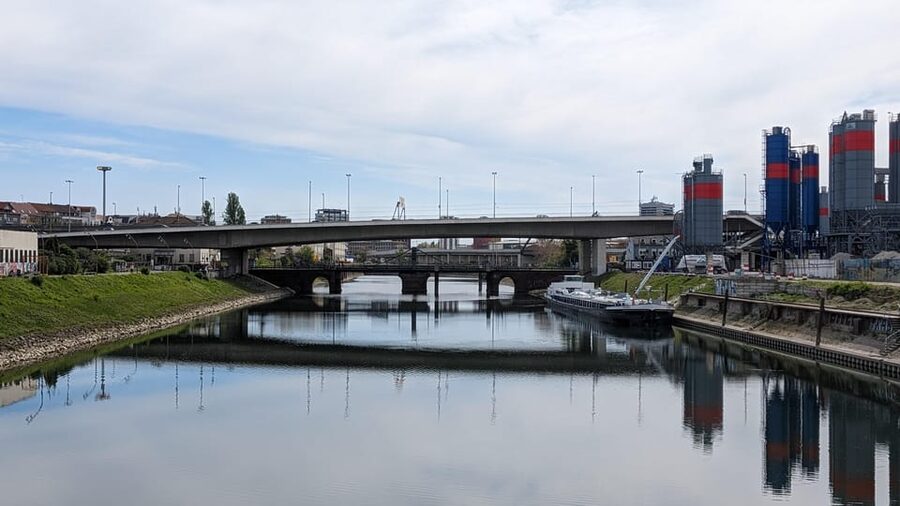
If you like your city tours with an actual point of view, this one starts in the right place. The meeting point is at Devil’s bridge, Teufelsbrücke, which is the oldest preserved bridge in Mannheim. That matters because the tour uses it like a time marker: you are not just walking through the present, you are stepping into Mannheim’s early industrial era from the first minute.
Teufelsbrücke also works as a mental reset. Before you even reach the port area, you are already thinking about how bridges, rivers, and trade move together. That is the tour’s theme, and it keeps paying off as you go.
One practical note before you arrive: try to show up a few minutes early and double-check you are joining the correct group if you booked through a third-party platform. A real booking mixup happened when two groups started at the same time, and it caused confusion at the end. It is an easy fix on your end, just verify the exact departure window.
More walking tours in Mannheim:
- Mannheim, guided Walking Tour: Discover Mannheim
★ 4.5 · 62 reviews - Mannheim: Express Walk with a Local in 60 minutes
★ 4.7 · 5 reviews - Mannheim, guided walking tour: surprise tour
★ 5.0 · 3 reviews
From Neckar waterlines to inland port industry, step by step
The port of Mannheim sits at the mouth of the Neckar into the Rhine. That geography is the engine behind the city’s industrial identity, and the tour uses it well. You will learn how shipping has mattered here for centuries, and today the port is one of the most important inland ports in Europe.
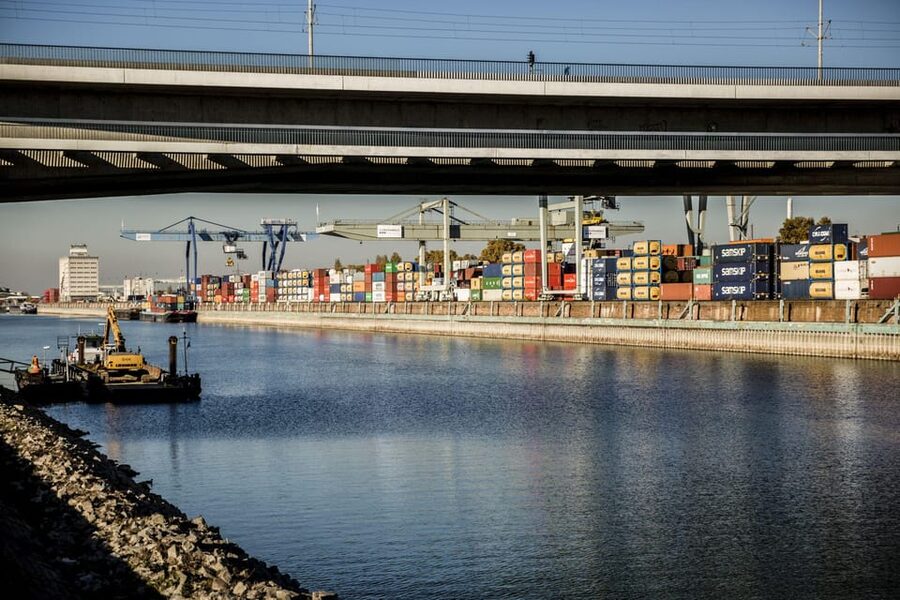
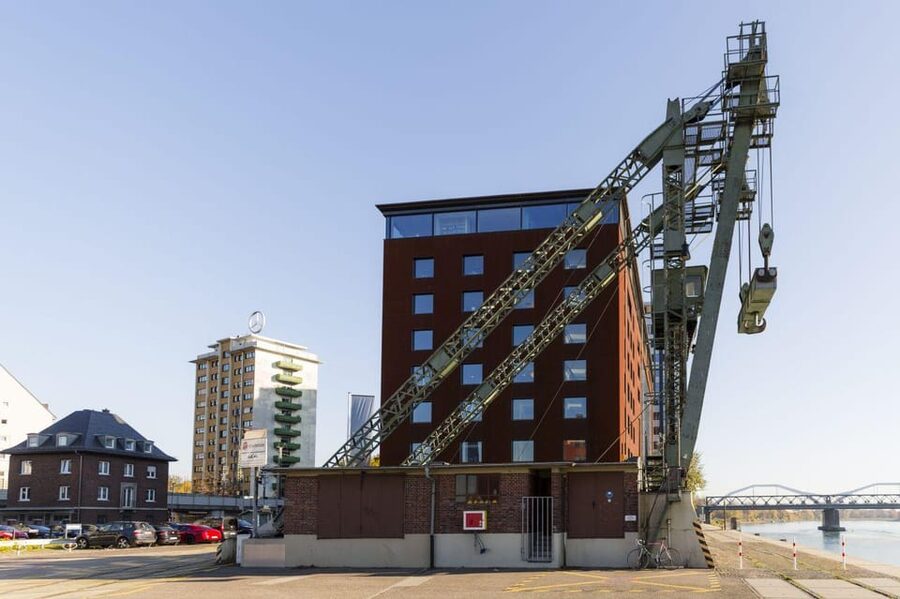
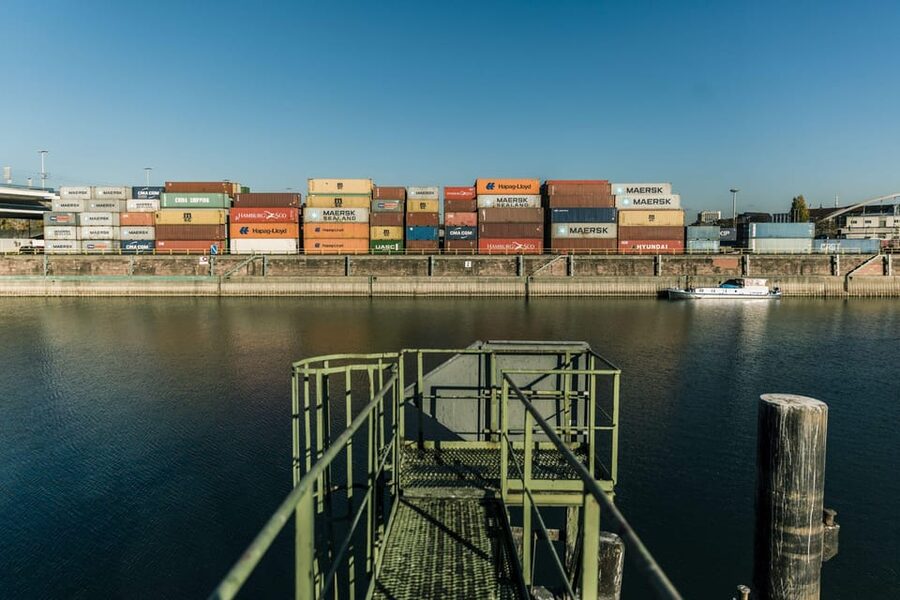
What you will see is very much the working side of the city: large container ships, loading stations, and warehouses. Some tours stop at picturesque viewpoints. This one keeps you close to the functional stuff, which is exactly why it feels authentic. You are seeing the infrastructure that drives trade, and you are learning the human side too.
As you move from Teufelsbrücke toward the port zone, you will repeatedly cross waterways. That is not random walking. It keeps you oriented to the waterways that shape everything about Mannheim’s layout. Every time you cross, the guide connects the dots between location, industry, and how people worked around the water.
The industrial culture lesson you actually remember
Here is what makes this walk more than a brochure loop. You do not just hear that Mannheim had industry, you learn how industrial culture began and how it shaped daily life for port workers.
The tour explains former conditions for people who worked there, including the kinds of jobs tied to moving goods. It also brings in the realities of port life, which helps the architecture and industrial spaces feel personal. Instead of looking at buildings like they are frozen objects, you start noticing details as clues: structure, placement, and the way the river trade required specific kinds of spaces.
Bridge architecture as part of the story
You also get a guided look at bridge and industrial architecture. That is a big deal because Mannheim’s bridge elements are not just decoration. They represent engineering and trade needs during key periods of industrial growth.
Teufelsbrücke is the anchor. After that, you will keep spotting bridge-related objects and learning how Mannheim’s infrastructure evolved. Even if you are not an architecture nerd, the guide makes it understandable by linking what you see to why it exists.
A few more Mannheim walks and trips to compare
- Mannheim, guided costume tour: Tour with Night Watchman
★ 4.9 · 26 reviews - Mannheim: Public Night Watchman Tour with Night Watchwoman Marie
★ 5.0 · 23 reviews - Segway Tour: Old Town Hall, Water Tower & Ehrenhof
★ 5.0 · 21 reviews - Mannheim: Segway Tour along the Neckar River
★ 5.0 · 15 reviews
What the port walk is like in real life
This tour is scheduled for 2 hours, which means it is intense in a good way. You are not doing a slow, sightseeing-only stroll. You are moving with purpose, stopping enough for explanations, then walking again. If you like to get value out of a limited time window, you will appreciate that pace.
Because the route is built around the port area, plan for an urban-industrial feel. The visuals are containers, cranes, warehouses, and working waterways, not old-world squares. That is not a problem, it is the point. You get a different flavor of Germany than what most people expect, and it is tied directly to how the city functions.
The tour is also in all weathers. That means you should dress for wind and sudden rain, not for sunny photo conditions. Comfortable shoes matter a lot here, since you are walking on city surfaces and staying active for the full 2 hours.
Jungbusch: the change from workers to artists and nightlife
The best part of this experience for many people is how it shifts gears at the end. You finish with a detour to Jungbusch, a district separated from the port area by the connecting canal.
That canal matters because it is a boundary you can feel. On one side you have the working port world. On the other, Jungbusch tells a different story.
Historically, Jungbusch was connected to the workers and the sack carriers who lived near the port. Today the neighborhood is known for a creative pulse: multicultural, trendy, and strongly associated with bohemian art life. The tour brings you to the area where the vibe changes from industrial work to nightlife and art energy.
Why this ending makes the whole tour click
A lot of industrial tours stop at industry and never answer the question, OK, so what happened later? Here, the Jungbusch stop gives you a bridge to the present.
You start thinking about reuse, migration, and what happens when a city evolves. You also get a real sense of how Mannheim’s “working city” identity did not disappear, it transformed. And if you are the type who likes to end a tour somewhere you can keep exploring afterward, Jungbusch is a strong choice because it is described as a local nightlife hotspot.
Price and value: $17 for a story you can walk through
At $17 per person for a 2-hour live guided city tour, this is priced like a “short but specific” experience. You are paying for a guide to connect industrial architecture, port geography, and neighborhood change into one coherent walk.
If you tried to do this on your own, you might see container ships and bridges, but you would likely miss the meaning behind them, like why certain bridges are preserved, how industrial culture started in this setting, and how port life shaped the city’s later districts. The value is in interpretation.
Also, the tour covers a lot of ground within a compact time. You get the port area plus Jungbusch, so you are not forced to pick between “industry” and “neighborhood life.” You get both in one outing.
Food and drinks are not included, so plan your timing. If you want a full evening out, you can treat Jungbusch like your cue to eat and linger on your own.
Language and what to expect from the guide
The guide is German, and some content is shown in its original language. If you speak even a little German, you will probably catch extra details. If you do not, do not panic. The stops are visual and the themes are clear: bridges, waterways, port industry, and the neighborhood shift to Jungbusch.
A practical tip: if you want to follow everything closely, listen for the connections the guide makes between location and history. The most important information usually lands at the physical features: where you cross water, where the bridge comes into view, and how the canal shapes the neighborhood transition.
Who should book this Mannheim port and Jungbusch walk
This tour fits best if you:
- Like industrial and architectural themes more than traditional old-town sightseeing
- Want a short, guided way to understand Mannheim’s port importance in Europe
- Prefer walking tours that explain what you are seeing, not just where to stand
- Are curious about how working-class areas evolve into creative districts
It may not be your best match if:
- You need wheelchair-friendly routes, because it is not suitable for wheelchair users
- You hate weather-based walking, since it runs in all weathers
- You want a food-focused itinerary, because there is no food or drink included
Should you book this Mannheim industrial port walk?
Yes, if you want a genuinely different side of Germany and you like tours that explain the city’s mechanics. The strongest reasons to go are the starting point at Teufelsbrücke, the guided look at Mannheim’s inland port as a European trade hub, and the ending in Jungbusch where the story becomes human and current again.
If you are comfortable walking for about 2 hours and you dress for the weather, this tour is a smart use of time. It is not expensive, and you come away with a much clearer picture of why Mannheim looks and works the way it does.
FAQ
Where does the tour start?
The meeting point is at Devil’s bridge (Teufelsbrücke).
How long is the Mannheim guided walking tour?
The duration is 2 hours.
How much does the tour cost?
The price is $17 per person.
What language is the live guide?
The live tour guide is German, and some content is shown in its original language.
Does the tour run in bad weather?
Yes. The tour takes place in all weathers.
Can I cancel for a refund?
You can cancel up to 24 hours in advance for a full refund.
Is the tour wheelchair accessible?
No, the tour is not suitable for wheelchair users.
If you tell me when you plan to visit Mannheim and what your German level is, I can suggest the best time of day to pair this with food and a post-tour wander in Jungbusch.
Newest Mannheim reviews on the site
- historic Heidelberg, Mercedes Museum/ Schwetzinger Schloß, privat★ 5.0 · 3 reviews
- Explore Mannheim in 60 minutes with a Local★ 5.0 · 5 reviews
- Segway Tour of Mannheim: Rhein, Waldpark, and Lindenhof★ 5.0 · 13 reviews
- Mannheim: Segway Tour along the Neckar River★ 5.0 · 15 reviews
- Public tour with Bertha Benz through the city of inventors, costume tour★ 5.0 · 10 reviews
- Mannheim, guided walking tour: surprise tour★ 5.0 · 3 reviews
- Mannheim’s Art and Culture revealed by a Local★ 4.3 · 3 reviews
- Mannheim, guided park tour: Luisenpark★ 5.0 · 3 reviews
Walking Tours, compared.

Berlin’s Best: 2 Hour Walking Tour Third Reich and the Cold War
Read our review →
Third Reich Berlin: Hitler and WWII Walking Tour
Read our review →Browse the lists this tour appears in