
Reviewed · WALKING TOURS
Hanover: Guided Walking Tour of the Linden-Limmer District
Hanover’s industrial side is right here on foot. This 2-hour guided walking tour in the Linden-Limmer district uses real buildings to explain how a royal garden became factory housing and street life. You’ll get a clear, friendly narrative while you move through places like Küchengarten and Limmerstraße without feeling rushed.
What I like most is the way the tour mixes preserved details with big-picture change. I also like that it points you to both the practical, working history and the modern culture stops, like the Faust cultural center. The one thing to consider is that a lot of the interest is about industrial-urban transformation, so if you’re only chasing classical sights and big monuments, this may feel more “thoughtful” than flashy.
In This Review
- Key highlights at a glance
- Walking Into Hanover’s Linden-Limmer Story
- Price and Value for a 2-Hour Guided Walk
- Where to Meet: TAK – Die Kabarett Bühne
- Küchengarten and the Royal Supply Garden You Can Still Read
- Why the pavilion relocation matters
- Weberstraße Weavers’ Houses: From Courtly Craft to Industrial Power
- Prussia’s 1866 Annexation and the Land-Use Twist Around Lichtenbergplatz
- Ihme Center: The Architecture Everyone Argues About
- Hanover Combined Heat and Power Plant: Industry With a Purpose
- Faust Cultural Center in the Former Werner and Ehlers Bed Factory
- Nedderfeldstraße: Graffiti Art, Pubs, and the Apollo Cinema
- Limmerstraße and the Limmern: Where the District Feels Alive
- Group Feel, Guide Style, and What You’ll Likely Enjoy
- Is This Tour for You? Practical Fit Checks
- Should You Book Hanover’s Linden-Limmer Walking Tour?
- FAQ
- What is the meeting point for the tour?
- How long is the guided walking tour?
- What language is the tour guide speaking?
- How much does the tour cost?
- What are the main stops you will see?
- Is the tour wheelchair accessible?
- What is the cancellation policy?
- Is there a reserve and pay later option?
- Is the tour offered on multiple start times?
Key highlights at a glance
- Küchengarten courtyard scenes tied to Hanover’s supply of the royal family
- Weavers’ houses on Weberstraße 20/21 plus a preserved 1749 kitchen garden structure
- Ihme center as a local debate piece, including why young people find it compelling
- Faust cultural center in the former Werner and Ehlers bed factory
- Graffiti, pubs, and Apollo cinema along Nedderfeldstraße
- Limmerstraße’s high-density street energy with kiosks, restaurants, and cafés
Walking Into Hanover’s Linden-Limmer Story
Linden-Limmer can look like just another city neighborhood until someone connects the dots for you. On this tour, you learn that the district was shaped by rulers, industry, and later by new housing patterns. The whole walk works like an outdoor lesson, but it stays practical because you’re seeing the physical evidence as you go.
I especially value how the tour keeps the focus on what’s still there. You’re not just hearing big dates, you’re standing near buildings that survived from older eras. That makes the story easier to trust, and it’s a great way to learn Hanover without needing a museum ticket.
And yes, it also has a sense of fun. Linden-Limmer is the kind of place where you can turn a short walk into a longer afternoon by planning a café stop afterward.
More Walking Tours in Hanover
- Hannover: Guided City Walk
★ 4.5 · 486 reviews - Hannover: Crime Walking Tour
★ 4.6 · 387 reviews - Hanover: Flashlight Guided Walking Tour at Night
★ 4.7 · 52 reviews
Price and Value for a 2-Hour Guided Walk
At $17 per person for a 2-hour guided tour, this is priced like a local experience, not a big sightseeing production. You’re paying for interpretation: someone helps you understand what you’re looking at, including industrial and architectural details that most people miss.
The real value is time. If you tried to self-guide Linden-Limmer from scratch, you could easily wander in circles or miss why particular buildings matter. A guide compresses the thinking, so you walk away with a mental map you can actually use later.
For planning, the duration is short enough to fit into a day with other Hanover stops. It’s also a solid choice if you only have part of a day and want something more specific than a generic city overview.
Where to Meet: TAK – Die Kabarett Bühne
You’ll meet your guide at TAK – Die Kabarett Bühne. The guide will be wearing a Hannover Marketing & Tourismus GmbH card around their neck, so it should be easy to spot the right person.
This matters because Hanover can be spread out, and a clean meeting point saves you stress. If you’re trying to keep your schedule tight, starting from a dedicated venue like TAK helps you avoid the “where exactly are they?” scramble.
The tour runs in German, so if you prefer English commentary, you may want to double-check language fit before booking. If your German is basic, you’ll still get a lot visually, but the narrative is the heart of the experience.
Küchengarten and the Royal Supply Garden You Can Still Read

The tour’s opening theme is the Küchengarten, the kitchen garden that once supplied the royal family. This is one of those concepts that sounds ordinary until you see what it implies: it was food production at a local, organized scale, tied directly to power and daily life.
One of the most tangible stops centers on preserved structures from that earlier courtly period. You’ll learn about the kitchen garden pavilion that dates back to 1749, and you’ll also connect that to how the area later changed hands and purposes.
What I like about this kind of start is that it gives you a baseline. Before the factories and workers’ quarters, the district was about provision and estate life. Once you know that, later changes feel less random and more like a predictable shift in land use.
Same city, a different way to spend the afternoon:
- Hannover: 24-Hour Hop-On Hop-Off Sightseeing Bus Ticket
★ 4.2 · 298 reviews - SEA LIFE Hannover Ticket
★ 4.0 · 96 reviews - Hanover: Royal Gardens of Herrenhausen Guided Tour
★ 4.6 · 78 reviews - Hanover: Night tour with night watchman Melchior
★ 4.4 · 72 reviews
Why the pavilion relocation matters
The tour also points out that the kitchen garden pavilion from 1749 was moved to the Lindener Berg in 1913. That detail is small, but it’s powerful because it shows continuity with change. Even when the district’s function shifted, some elements were treated as worth preserving.
If you like urban history, this is the kind of clue you’ll remember later, even after you leave Hanover.
Weberstraße Weavers’ Houses: From Courtly Craft to Industrial Power
On the walk, you’ll also encounter preserved weavers’ houses at Weberstraße 20/21. The fact that these homes survived helps you understand that industry wasn’t just “out there.” It shaped everyday life, including where people lived and worked.
The tour connects this to the rise of factory production in the Linden district. You’ll learn that the founding of factories began with (lime) Johann Egestorff. That name and detail matter because it ties the industrial story to an actual starting point, not a vague era.
Then the big shift lands: with machine and textile industry, Linden developed from the most beautiful village in the Kingdom of Hanover into a pure workers’ quarter. That contrast is the district’s core theme, and the walk helps you feel it as you move through the streets.
Possible drawback to plan for: if you’re not into textile or industrial history, the story can feel heavy. But that’s also why the guided format works, because you get the context that makes it click.
Prussia’s 1866 Annexation and the Land-Use Twist Around Lichtenbergplatz
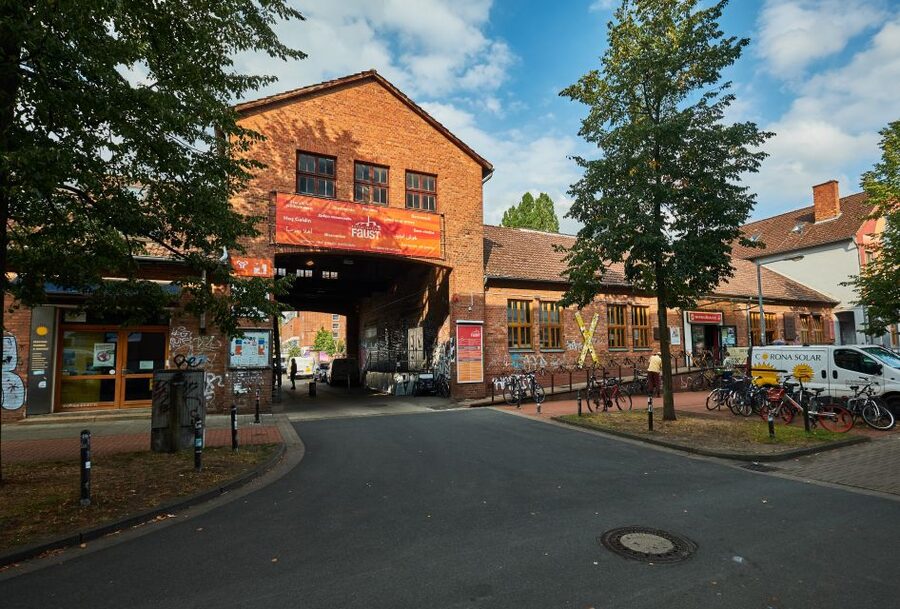
The tour’s timeline turns at the 1866 annexation by Prussia. This is when the area of the royal kitchen garden became free, opening the door for major new development.
From there, the district transforms again. You’ll hear how a freight station was built, and how a middle-class residential area developed around Lichtenbergplatz. This is one of those “wait, that’s not what I expected” moments: the same land can support more than one class of life depending on what gets built.
For you, the practical takeaway is that Linden-Limmer is not a single-style neighborhood. It’s layered. That’s why the tour is worth doing on foot. Streets and blocks help you visualize how land use shifts can create mixed urban identities.
Ihme Center: The Architecture Everyone Argues About
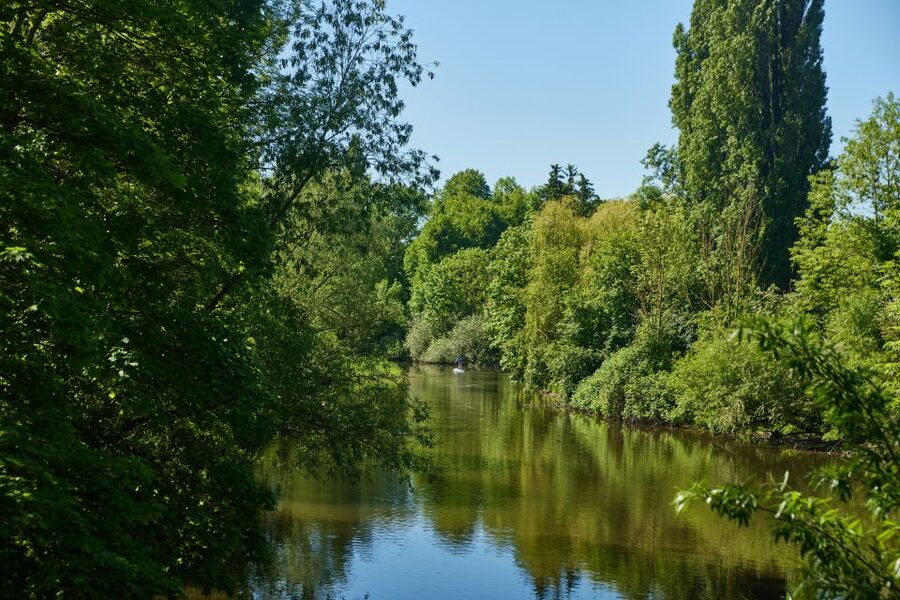
Next comes the Ihme center, and this stop has a built-in tension. Many Hanoverians call it an eyesore, yet it still sparks strong interest, especially among young people who are drawn to the brutalist construction method.
I like this kind of stop because it teaches you how to see architecture socially. You’re not just learning what the building looks like. You’re learning how people react to it, and why.
For readers, the easiest way to enjoy the Ihme center is to treat it like a conversation topic. Look at the form, note the harsh, industrial feel that brutalism is known for, and then remember the tour’s framing: local dislike can coexist with youth fascination.
Hanover Combined Heat and Power Plant: Industry With a Purpose

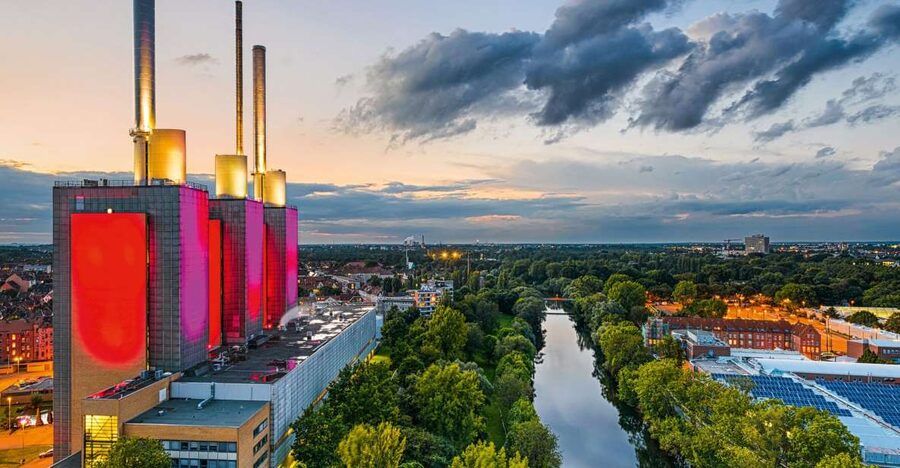
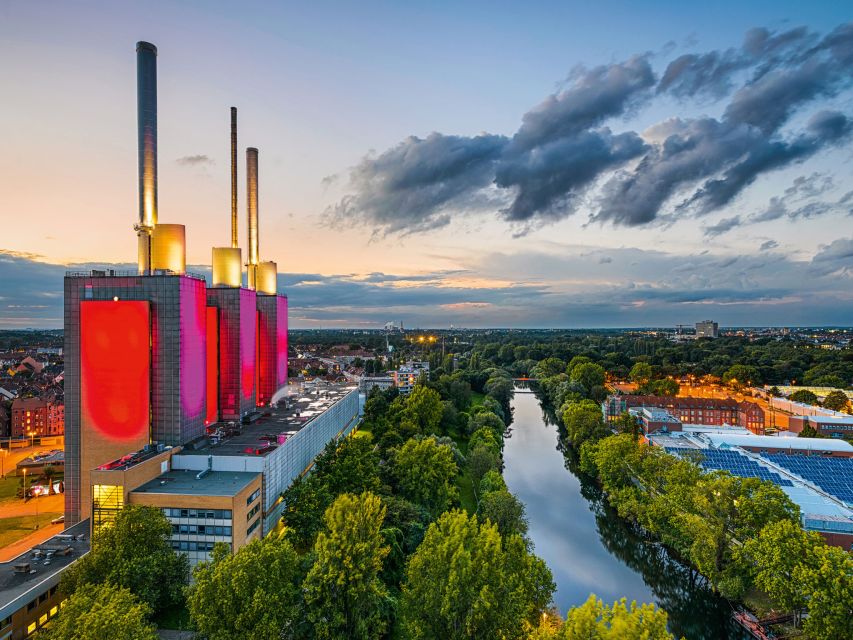
Another highlight is the Hanover combined heat and power plant. On a walking tour, you might not expect to get meaningfully close to infrastructure, but this one is included for a reason: it represents how the city runs, not just how it looks.
I like that the tour doesn’t treat industry as only a past chapter. It shows that modern function is still present in the district’s story. Even if you’re not an engineering person, it’s useful to understand the city’s energy and heat systems as part of the urban reality.
If you tend to skip “utility” stops while traveling, this is a good one to pay attention to. It helps you connect the history of factories with the present-day systems that keep neighborhoods working.
Faust Cultural Center in the Former Werner and Ehlers Bed Factory
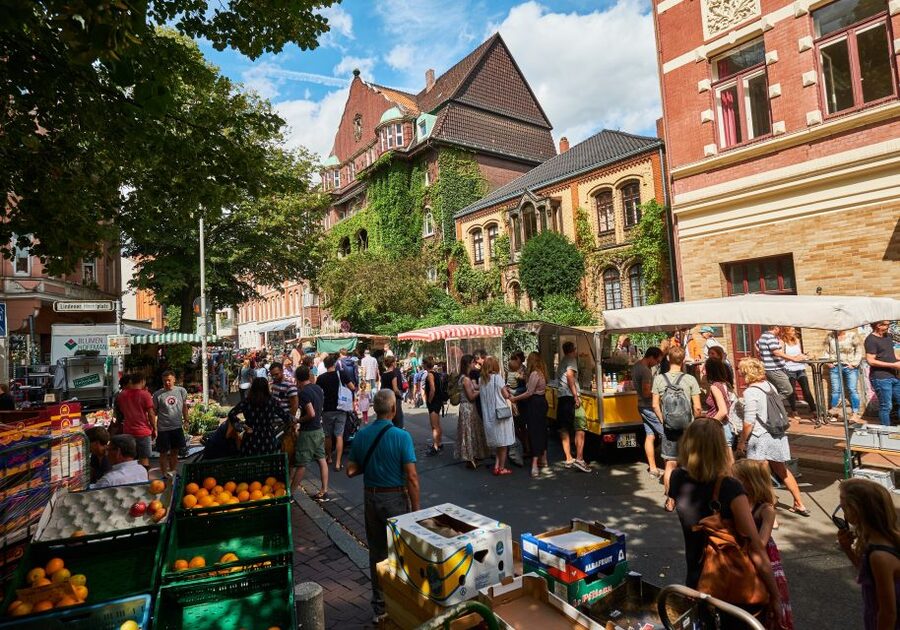
One of the most satisfying stops is the Faust cultural center. The tour explains that it houses the former Werner and Ehlers bed factory, and today the site hosts concerts, exhibitions, readings, and other cultural events.
This is where Linden-Limmer’s story becomes feel-good without losing credibility. Repurposing industrial buildings into public cultural spaces is a real urban pattern, but it lands better when you learn the original use first.
As you stand there, you’ll likely notice the contrast between the building’s industrial role and its current public purpose. That contrast is a big reason the district is so interesting: you can see how change doesn’t always mean erasure.
Nedderfeldstraße: Graffiti Art, Pubs, and the Apollo Cinema
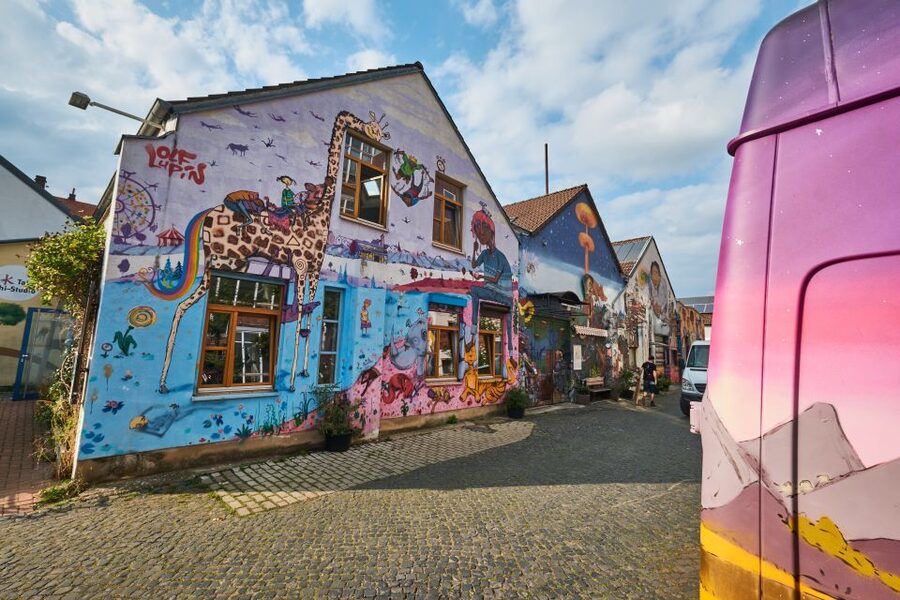
Then you move into street-level Linden-Limmer life on Nedderfeldstraße. This area is described as a zone you can immerse yourself in, especially for its graffiti art and numerous pubs.
Right next to that, the tour points you to the Apollo cinema, which the guide frames as one of the first arthouse cinemas in Germany. That’s a great detail because it shifts the story again. Linden-Limmer isn’t only industrial and working class. It also has a cultural thread tied to film and independent tastes.
If you’re planning your own follow-up after the tour, this is the part of the walk that naturally extends into time off-script. You’ll be in the mood for a drink, a snack, and one more stop.
Limmerstraße and the Limmern: Where the District Feels Alive
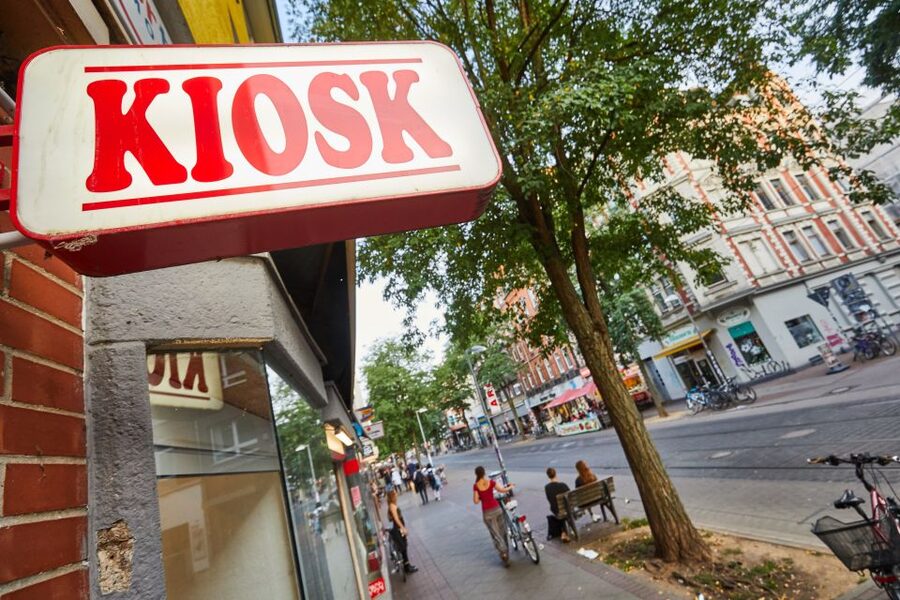
Finally, you reach Limmerstraße, where the walk emphasizes the popularity of the area, often referred to as the Limmern. You’ll see a high density of kiosks, restaurants, and cafés packed into the neighborhood fabric.
This stop matters because it closes the loop. The tour started with provisioning, then moved into factories and housing, and now it ends with everyday social life. You’re not leaving the story in the past. You’re seeing the living present of the district.
I recommend using this moment to slow down. The best way to enjoy it is to look around, pick one place you’d actually go back to, and then decide whether you want to linger after your 2 hours are up. That’s how you turn a guided walk into real local time.
Group Feel, Guide Style, and What You’ll Likely Enjoy
The tour is guided by a live guide in German, and the experience can feel friendly and relaxed. One thing I’d take from the overall feedback is that the atmosphere tends to be small and easygoing, which is ideal when you want to ask questions or just absorb without pressure.
If you’re traveling with someone who enjoys chatting and not just snapping photos, this is a good fit. The tour’s value comes from dialogue and interpretation, not from speed.
Is This Tour for You? Practical Fit Checks
This walk works best if you like these kinds of travel goals:
- You want industrial-urban history that’s grounded in real places
- You enjoy architecture debates, like the Ihme center conversation
- You want culture built into everyday neighborhoods, like the Faust cultural center
- You like ending in a lively street area, with Limmerstraße as the payoff
It may not be the best choice if you’re chasing only grand sights or a standard “old town highlights” route. Linden-Limmer is more about how a district functions, and how it evolved.
Still, for a first-time visitor to Hanover, this is a smart way to see a major slice of the city with less effort than self-guiding would take.
Should You Book Hanover’s Linden-Limmer Walking Tour?
I think you should book it if you want a compact but meaningful introduction to Hanover’s urban transformation. For $17 and 2 hours, you’re getting a guided explanation of preserved structures, industrial shifts, and today’s cultural street life.
Book it especially if you’re curious about what happens when courtly land becomes factory neighborhoods, and when former industry turns into public culture. If you also want an ending that naturally leads to a café or a drink, Limmerstraße is a strong reason to go.
FAQ
What is the meeting point for the tour?
Your guide will wait for you at TAK – Die Kabarett Bühne. They will be wearing a Hannover Marketing & Tourismus GmbH card around their neck.
How long is the guided walking tour?
The tour lasts 2 hours.
What language is the tour guide speaking?
The live tour guide speaks German.
How much does the tour cost?
The price is $17 per person.
What are the main stops you will see?
The tour includes Küchengarten, Ihme center, Hanover combined heat and power plant, Faust cultural center, and Limmerstraße.
Is the tour wheelchair accessible?
Yes, it is wheelchair accessible.
What is the cancellation policy?
You can cancel up to 24 hours in advance for a full refund.
Is there a reserve and pay later option?
Yes, you can reserve your spot and pay later.
Is the tour offered on multiple start times?
Starting times depend on availability, so checking available slots will show what works for your schedule.
Newest Hanover reviews on the site
- Hanover: Very British – on the trail of the personal union★ 4.4 · 3 reviews
- Hanover Center: Outdoor Escape Game★ 4.7 · 13 reviews
- Hanover: Old Town Historical Walking Tour by Geo Epoche★ 4.4 · 11 reviews
- Hanover: Royal Gardens of Herrenhausen Guided Tour★ 4.6 · 78 reviews
- Hanover: Linden-Limmer Krimi-Rätsel-Tour★ 4.5 · 15 reviews
- Hanover: Night tour with night watchman Melchior★ 4.4 · 72 reviews
- Hannover: Private pub crawl with insider-guide & free shots★ 4.0 · 11 reviews
- Hanover: Crime Tour by Bike★ 4.8 · 25 reviews
Walking Tours, compared.



Berlin’s Best: 2 Hour Walking Tour Third Reich and the Cold War
Read our review →
Third Reich Berlin: Hitler and WWII Walking Tour
Read our review →Browse the lists this tour appears in