
Reviewed · MUSEUMS
DDR Museum Berlin Admission Ticket
Step into everyday life behind the Iron Curtain. The DDR Museum Berlin uses recreated rooms and hands-on moments to explain East Germany from 1949 to 1989. I especially like the interactive exhibits that make the history feel physical, and the English signage helps you stay oriented. One thing to consider: the museum is on the smaller side and it can get very crowded, which makes reading harder.
Your ticket is timed, so you pick a slot that fits your day, then head to the museum yourself. Expect a visit that runs about 1 to 2 hours, mostly on your own pace, with a clear route through living spaces, transport, and political life. It works for couples, history lovers, and families, but if you hate crowds, plan your arrival carefully.
DDR Museum Berlin is also close to major sights, which makes it easy to stack with other central Berlin stops. Location is simple: it sits opposite Berlin Cathedral at Karl-Liebknecht-Str.1. If you’re curious about how people actually lived under a socialist regime, this is an efficient, memorable way to get answers fast.
In This Review
- Key highlights that make this museum worth your time
- DDR Museum Berlin Location: Karl-Liebknecht-Str.1 across from Berlin Cathedral
- Ticket Value at about $16: timed entry, English exhibits, and a 1 to 2 hour plan
- What happens inside: walking through GDR life from 1949 to 1989
- Replica apartments and East German TV: the small stuff that makes it real
- Trabant car exhibition and virtual GDR housing estate tour
- Stasi interrogation and political life: elections, the Socialist Union Party, and control
- Exiting through a hole in the Berlin Wall: the museum’s last message
- Crowds and heat: timing your visit so you can actually enjoy it
- English support and the “small museum” reality
- Best fit: who this DDR Museum Berlin ticket suits
- Tips to get the most from your hour or two
- Should you book this DDR Museum Berlin ticket?
- FAQ
- Where is the DDR Museum Berlin located?
- How long does the visit take?
- Is the ticket mobile?
- Is the museum experience available in English?
- What does the admission ticket include?
- What is not included with the ticket?
- What are the opening hours?
- How do you enter, do you pick a time?
- Is there free cancellation?
- Is this suitable for kids and adults?
Key highlights that make this museum worth your time
- Interactive “live like then” exhibits that focus on everyday details, not just facts
- Trabant car exhibition plus films and a virtual look at GDR housing estates
- Stasi interrogation experience and displays about political life, including voting
- Reconstructed apartments and TV programming that show what daily life felt like
- Exit through a Berlin Wall hole that lands the visit with a sobering final note
DDR Museum Berlin Location: Karl-Liebknecht-Str.1 across from Berlin Cathedral
Getting there is straightforward, and that matters because this is a short visit. The DDR Museum Berlin is at Karl-Liebknecht-Str.1, and it’s opposite Berlin Cathedral. That means you can plan your day around big landmarks and not waste time hunting for the entrance.
It’s also described as being near public transportation, so if you are using Berlin’s transit, you should be able to arrive without a hassle. I like this kind of museum stop because it fits naturally between longer sightseeing blocks.
If you’re coming by foot, center yourself on the cathedral area first, then walk across toward the museum. Once you’re inside, the layout is designed as a guided walk through themed spaces, so you do not need to think about navigation much.
More Museum Tours in Berlin
- Berlin: Natural History Museum Entrance Ticket
★ 4.6 · 3,382 reviews - Berlin: Museum Island Multiple Museum Entry Ticket
★ 4.4 · 2,861 reviews - Skip-the-Line: Berlin Wall Museum at Checkpoint Charlie
★ 4.1 · 2,041 reviews
Ticket Value at about $16: timed entry, English exhibits, and a 1 to 2 hour plan
At $16.26 per person, the price feels fair for a timed, self-paced museum experience that lasts about 1 to 2 hours. You are not buying a long tour with a heavy itinerary. Instead, you are paying for access to a set of themed rooms, interactive elements, and media that explain GDR life.
You also get a mobile ticket and English is offered. In practice, this means you can manage your ticket on your phone, then show up at your chosen time slot. You should still plan to arrive a few minutes early so you’re not stuck figuring out entry at the busiest moment.
One practical note: some visitors report ticket access issues when mobile passes do not scan smoothly, or when vouchers need extra steps. So, I suggest you keep your ticket confirmation handy and be ready to ask staff for help if the gate acts up. That little precaution can save your mood.
What happens inside: walking through GDR life from 1949 to 1989
This museum is built like a time capsule you can walk through. You move room by room into the East German world, controlled by a socialist regime, with the period framed from 1949 to 1989. The approach is more experiential than lecture-style.
As you go, you’ll see reconstructed living spaces, including setups designed to look lived-in, plus televisions that play propaganda-style programming. The idea is to help you connect the dots between daily life and the system running behind it.
The museum also uses a mix of formats: rooms you can walk into, media screens, and hands-on touches that encourage participation. That mix is one reason the visit works for both adults and kids. It can also be one reason some people feel it is more of an attraction than a traditional quiet museum, especially when it’s busy.
Replica apartments and East German TV: the small stuff that makes it real
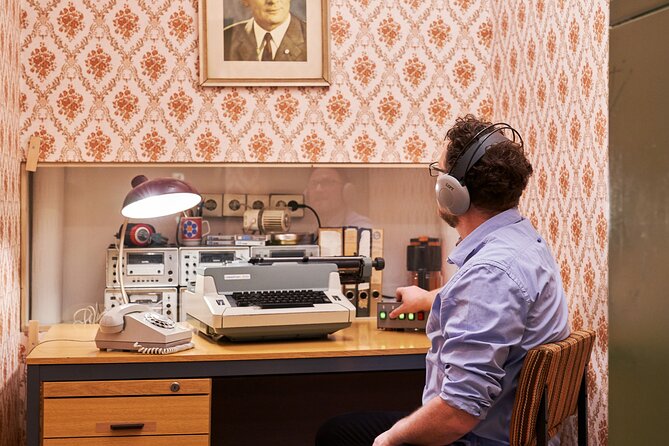
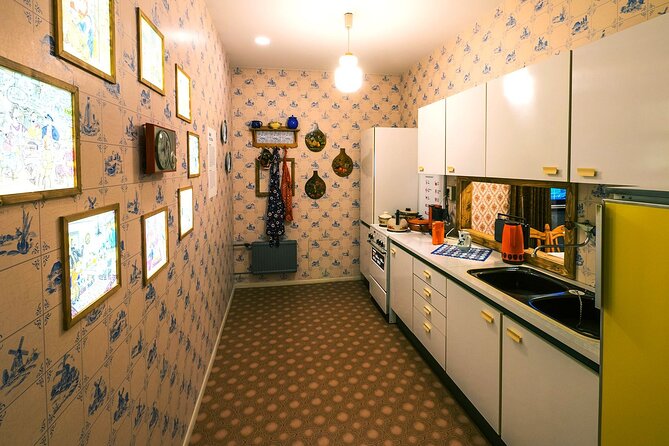
One of the best parts of the DDR Museum is how it tries to make you feel the everyday constraints. You are not just reading about policy, you’re looking at kitchen and living room recreations, then spotting the kind of objects and design choices that shaped domestic life.
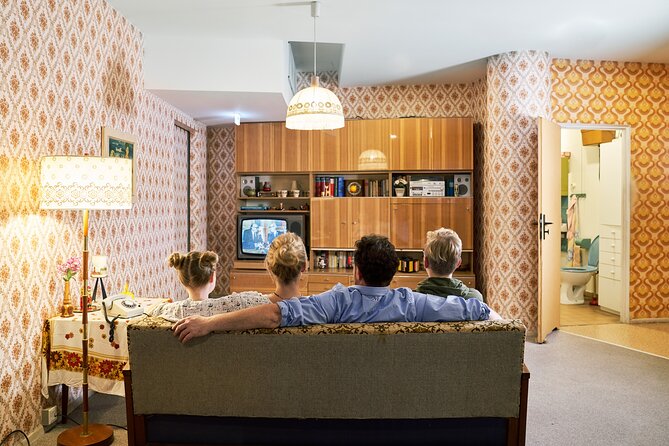
You can expect to spend time in spaces like a reconstructed East German living room, with details that make the era feel tangible. One highlight in the experience is watching East German TV programming in the room setting, so you get the message delivery style, not just the idea that propaganda existed.
There’s also the sense of playing the role of a Berliner during the socialist era, at least for a moment. That role-playing angle is not gimmicky, it’s how the museum makes the theme stick.
The main drawback here is scale. The museum can feel small, and if it’s crowded, you’ll be stuck shifting your body to get sightlines to media and labels. If you care about reading every plaque, choose a quieter time.
A few more Berlin walks and trips to compare
- Berlin: Interactive DeJa Vu Museum Entrance Ticket
★ 4.1 · 1,338 reviews - Berlin: East Side Gallery Spree Cruise in a Solar Catamaran
★ 4.1 · 1,086 reviews - Cold War, Berlin Wall, Spies and the East Side Gallery
★ 5.0 · 1,024 reviews - Berlin WelcomeCard: Museum Island & Public Transport
★ 4.3 · 999 reviews
Trabant car exhibition and virtual GDR housing estate tour
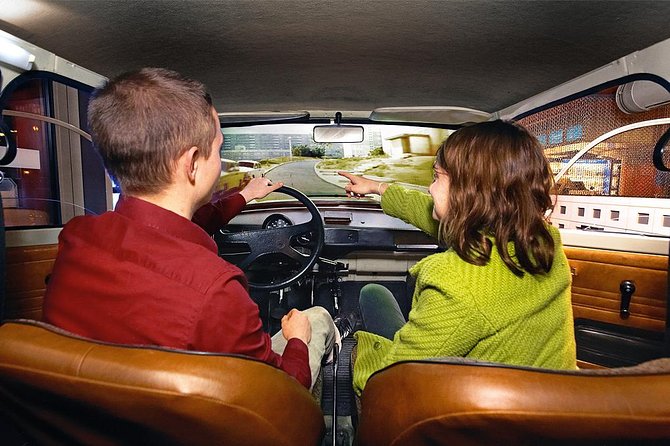
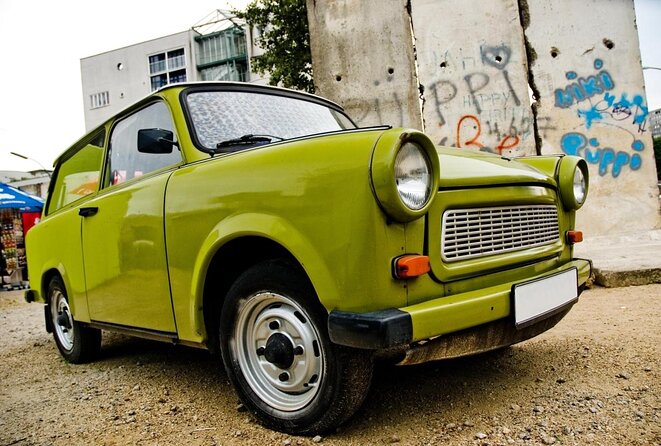
The Trabant is the star for many people, and it’s easy to see why. The museum includes a Trabant car exhibition where you can get close to the vehicle and absorb why this model became part of Eastern Bloc life. There are also film-style everyday scene elements that help connect the car to lived routines.
What I like is that it’s not only about the car as a collectible. The museum links transport to the larger context of housing and everyday infrastructure through a virtual tour of a GDR housing estate.
In other words, this section helps you stop thinking in terms of one famous symbol and start thinking in terms of the whole system: where people lived, how they moved, and what daily life looked like.
If you’re short on time, don’t skip this area. It gives you a fast, visual understanding that complements the more text-heavy parts of the museum.
Stasi interrogation and political life: elections, the Socialist Union Party, and control
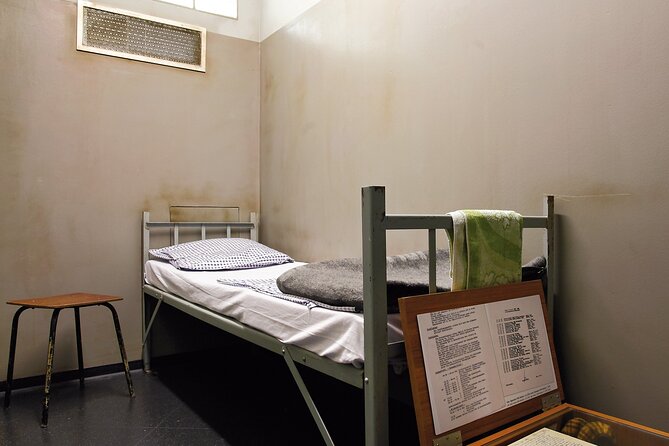
The museum does not treat the topic of state control as abstract. You’ll encounter displays connected to the Stasi and see an interrogation room setup. This is the kind of exhibit that can land with real weight because it is designed around the idea of surveillance and intimidation.
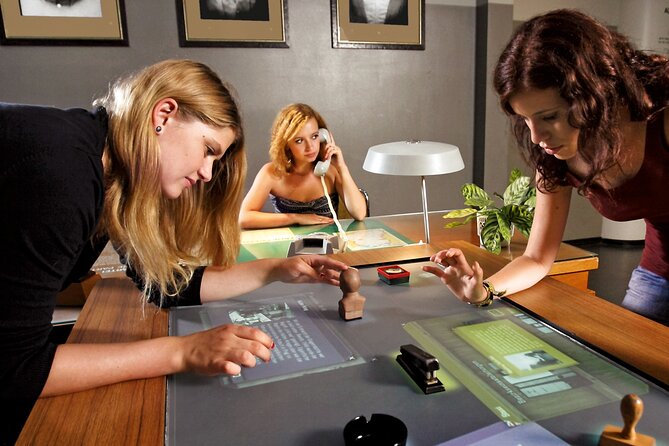
You’ll also see museum content tied to political life, including learning about the Socialist Union Party and the way GDR elections and voting worked. The museum uses interactive elements here, including the option to take part in actions like voting in a GDR election display.
I think this is valuable because it connects the dots between everyday life and the political structure behind it. A lot of history museums only show you results. This one aims to show you mechanisms.
One consideration: some people find the family-friendly presentation style too playful for such a serious subject, especially when kids are running around and interactive stations create bottlenecks. If you visit with younger children, you can still have a great time, but help set expectations early: this is history, not a theme park ride.
Exiting through a hole in the Berlin Wall: the museum’s last message
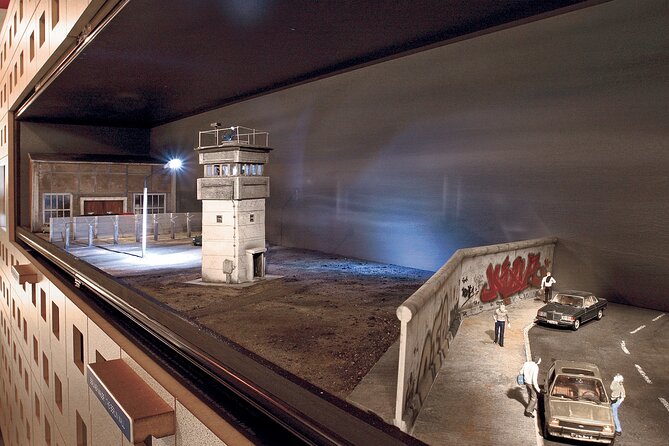
The final walk through the museum is designed to end with context. You exit through a hole in the Berlin Wall, which turns your leaving moment into part of the narrative. It’s a simple theatrical choice, but it works because it forces the ending to feel bigger than the room you just left.
After seeing reconstructed interiors, the Trabant world, and the political displays, the Berlin Wall exit gives the emotional framing: what this system meant, and why it ended.
If you’re the type who likes history with a clear take-away, this closing moment gives you one.
Crowds and heat: timing your visit so you can actually enjoy it
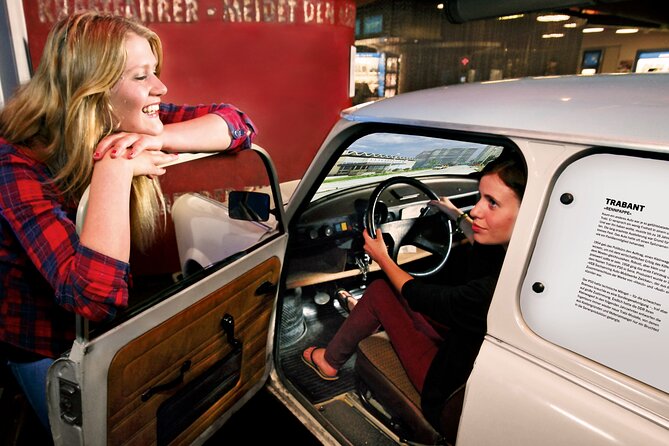
If I had to pick one factor that changes the experience most, it’s time of day. The museum can be very crowded, and because the building is smaller, crowds can affect your ability to read labels, watch screens, and move between exhibits.
A second issue that shows up in the experience is heat. Some visitors note it can be extremely hot inside because there’s no air conditioning. That can make you rush, cut your time short, or miss details.
So here’s my practical advice: pick a time when you can move comfortably. If you’re flexible, avoid peak arrival windows. The museum stays open daily until 9:00 PM, so you have options for a later, quieter visit.
Plan to slow down if it is busy anyway. This museum rewards careful looking, but it’s hard to do when you are constantly squeezing past other people.
English support and the “small museum” reality
You do not need German to have a good visit. The museum provides lots of information in English throughout, and that helps keep you from bouncing between rooms without understanding what you’re seeing.
Also, the museum does not take all day. Many people find it finishes in about an hour to two hours, depending on how much you read and how long you spend on interactive stations. If you want maximum value, I suggest you give yourself the full 1 to 2 hours rather than trying to do it like a quick photo stop.
That said, it really is a small museum. If you want a huge number of rooms like a large national museum, you might feel disappointed. But if you want a concentrated, hands-on way to understand East Germany, the size can actually be a benefit, because it keeps the visit focused.
Best fit: who this DDR Museum Berlin ticket suits
This experience is ideal if you fit one of these profiles:
- You love GDR history but want an experience that feels practical and visible, not just a lecture.
- You want something interactive that still teaches you about political control and everyday life.
- You’re visiting with kids or teens who may engage better with hands-on rooms and media.
- You want a central Berlin stop that is easy to pair with other sights, since it sits near major landmarks.
If you strongly prefer quiet museums with lots of space, you should be picky about timing. The heat and crowding can be deal-breakers if you are sensitive to discomfort.
Tips to get the most from your hour or two
A few small choices can make a big difference:
- Give yourself time to watch the media in the reconstructed rooms, not just glance at the screens.
- Do the Trabant and the virtual housing estate before you get tired. They are visual anchors.
- If you want to read, go at a calmer time. Crowds shrink your attention span fast.
- If you’re with kids, set a simple expectation before you enter: interact, but keep your pace respectful.
These are the kinds of habits that turn a short museum visit into a satisfying learning experience.
Should you book this DDR Museum Berlin ticket?
If your goal is a focused, hands-on introduction to life in East Germany, this ticket is a good use of time. At about $16 for 1 to 2 hours, you get interactive rooms, English explanations, and major thematic highlights like the Trabant exhibition and a Stasi interrogation experience. The Berlin Wall exit also gives a meaningful ending without dragging the visit longer than it needs to be.
I would only hesitate if you know you hate crowds or you have low tolerance for hot indoor spaces. In that case, choose your slot carefully and plan to move through at a steady pace. With good timing, this becomes one of those central Berlin activities that actually teaches you something, quickly and memorably.
FAQ
Where is the DDR Museum Berlin located?
The museum is located opposite Berlin Cathedral at Karl-Liebknecht-Str.1 in Berlin, Germany.
How long does the visit take?
The experience runs about 1 to 2 hours.
Is the ticket mobile?
Yes. The admission ticket is described as a mobile ticket.
Is the museum experience available in English?
Yes, it is offered in English.
What does the admission ticket include?
The ticket includes DDR Museum admission.
What is not included with the ticket?
Food and drinks are not included, and there is no hotel pickup and drop-off.
What are the opening hours?
The museum is open Monday through Sunday from 9:00 AM to 9:00 PM during the listed period.
How do you enter, do you pick a time?
You choose a date and time slot, and then you make your own way to the museum on that day.
Is there free cancellation?
Yes. Free cancellation is available if you cancel up to 24 hours in advance for a full refund.
Is this suitable for kids and adults?
Yes. It’s described as a fun destination for kids as well as adults, and most travelers can participate.
Newest Berlin reviews on the site
- Jetbike Berlin fun bike beer bike★ 5.0 · 3 reviews
- Karl-Marx-Allee Walking Tour: Berlin’s Socialist History★ 5.0 · 5 reviews
- Homeless on chic streets: city tour in Berlin from personal experience★ 4.6 · 3 reviews
- Berlin: Sachsenhausen Concentration Camp Guided Tour★ 4.9 · 42 reviews
- Historyof the Trans, Queer & Gay communities of Berlin tour★ 4.8 · 17 reviews
- Historic Berlin Pubs & History Tour★ 4.9 · 73 reviews
- Berlin: City Center Walking Tour★ 4.7 · 45 reviews
- Half-Day Berlin Highlights Segway Expedition★ 4.5 · 61 reviews
Museums, compared.



Skip-the-Line: Berlin Wall Museum at Checkpoint Charlie
Read our review →Browse the lists this tour appears in