
Reviewed · MUSEUMS
Berlin: Museum of Communication Entrance Ticket
Berlin can be loud, but this museum makes you listen. The Museum für Kommunikation in Berlin traces how humans shared news, ideas, and signals, from early tools to smartphones. It’s a rare mix of artifacts and active learning, so you don’t just look, you try.
I especially like two things: the chance to see world-famous philately, including the Blue Mauritius, and the way the exhibits invite interaction through interactive terminals around the atrium. One practical consideration is that the museum is self-paced, so if you love a tightly structured tour, you may want to plan your route so you do not wander too long.
In This Review
- Key Highlights You Should Plan Around
- Museum für Kommunikation Berlin: What Your $9 Ticket Really Buys
- 40,000 Years of Messaging in One Visit, and Why It Makes Sense
- The Postal Museum Focus, Including the Blue Mauritius
- Interactive Terminals Near the Atrium: Try Communication Instead of Just Reading It
- Greeting People Around the World: Communication Is Social, Not Just Technical
- Using the Audio-Visual App to Build Your Own Route
- A Realistic 1-Day Game Plan (So You Do Not Feel Rushed)
- What This Is Best For: Kids, Curious Adults, and Anyone Who Travels Often
- Practical Notes for Planning Your Day in Berlin
- Should You Book This Museum of Communication Ticket?
- FAQ
- Do I need to reserve a time slot to visit?
- How much is the Berlin Museum of Communication entrance ticket?
- How long is the ticket valid?
- What is included with the ticket?
- Is the museum wheelchair accessible?
- When is the museum open or closed?
- Is free cancellation available?
Key Highlights You Should Plan Around
- Blue Mauritius stamp viewing ties the museum’s story to one of philately’s most famous rarities
- 40,000 years of communication is presented through about 2,000 objects, so you get real scale, not vague timelines
- Interactive communication terminals let you test signals using smoke, light, and acoustic cues
- Greeting experiences across cultures help the museum feel human, not just historical
- Audio-visual app keeps you moving at your own speed, so you can revisit what grabs you
Museum für Kommunikation Berlin: What Your $9 Ticket Really Buys
For about $9 per person, you’re paying for a full museum visit plus an audio-visual app. That pricing feels fair because you get more than a room of glass cases. The museum builds a story of communication milestones, then gives you tools to experience the ideas yourself.
Also, you do not need to reserve a time slot for entry. That is handy in Berlin, where plans change based on weather, subway delays, or the mood you’re in. You can roll in when it fits your day and spend as long as you want within the one-day validity.
The museum is wheelchair accessible, so it’s a good option when your group includes mobility needs. And because it’s focused on how messages travel, you’re likely to find something interesting even if you are not a stamp person or a tech person. The themes are universal.
More Museum Tours in Berlin
- Berlin: Natural History Museum Entrance Ticket
★ 4.6 · 3,382 reviews - Berlin: Museum Island Multiple Museum Entry Ticket
★ 4.4 · 2,861 reviews - Skip-the-Line: Berlin Wall Museum at Checkpoint Charlie
★ 4.1 · 2,041 reviews
40,000 Years of Messaging in One Visit, and Why It Makes Sense
The museum frames communication as a long human project. You’re looking at around 40,000 years of communication history, presented through roughly 2,000 objects. That scale could feel overwhelming, but the museum organizes it so you can handle it in chunks.
What makes this work for me is the approach: the exhibits connect older methods to current questions about how we communicate today. The museum does not treat communication as fixed or finished. Instead, it presents milestones and also points toward ongoing debates, inviting you to consider new angles rather than swallowing one neat storyline.
If you enjoy museums that connect past and present, you’ll appreciate this. If you prefer facts only, you still get plenty of objects, signals, and practical examples. The museum’s strength is that it keeps asking, in a calm way, why communication methods change and what they do to society.
The Postal Museum Focus, Including the Blue Mauritius
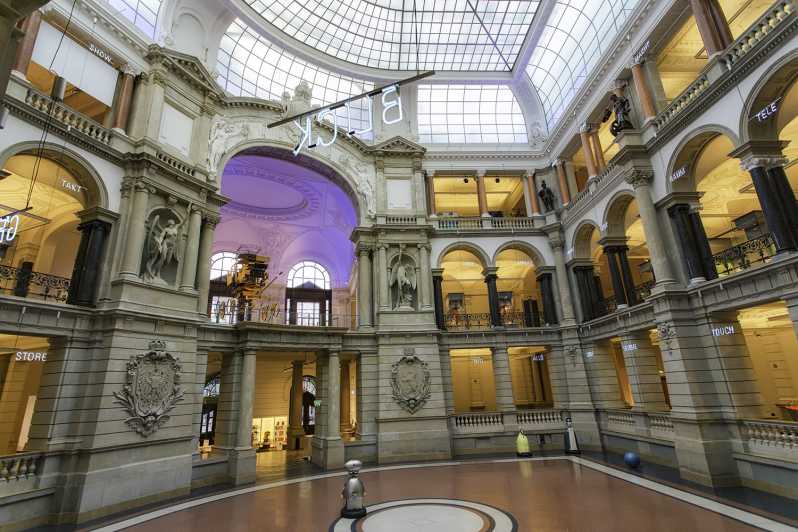
A big draw here is the postal museum angle, which is perfect if you like the idea of messages as physical objects. Stamps, letters, routes, and systems turn communication into something you can hold conceptually, even when the real artifacts are protected behind display.
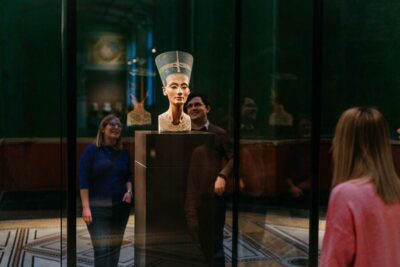
And then there’s the headline item: the Blue Mauritius. It’s presented as one of the world’s most famous and rarest stamps, and that alone gives your visit a clear anchor point. If you came to Berlin for culture with one memorable “stop-the-clock” moment, this is where you get it.
I also like that the museum’s postal focus is not just about rarity. It helps you see postal communication as an infrastructure that changed how people trusted information and how far a message could travel. You’re not only admiring an item, you’re learning why items like stamps matter, how they represent systems, and how they connect personal messages to global networks.
One tip: when you reach the postal-focused areas, slow down. Rare artifacts are more satisfying when you give yourself time to actually read labels and absorb what the stamp stands for, not just what it’s called.
Interactive Terminals Near the Atrium: Try Communication Instead of Just Reading It
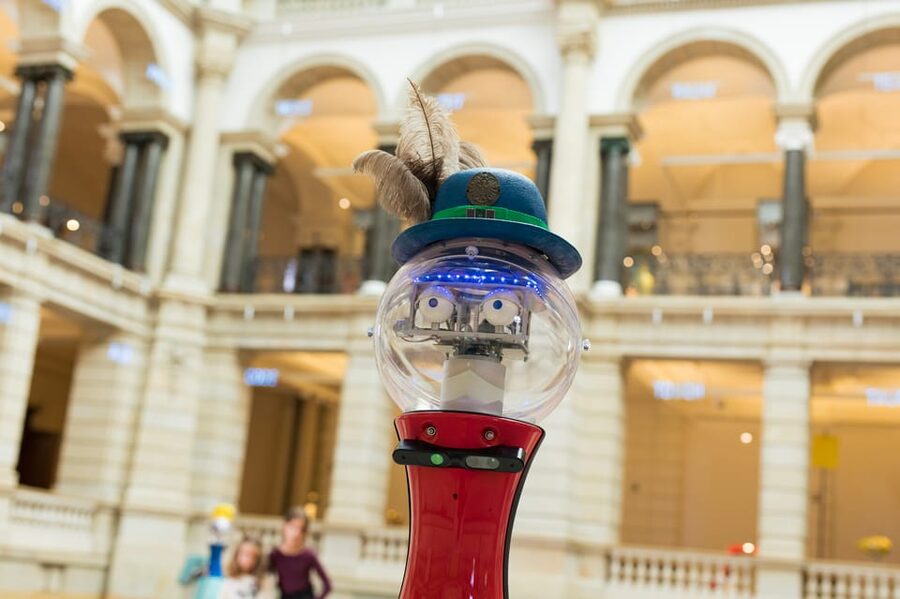
The centerpiece for hands-on learning is the communication gallery around the atrium. Here, the museum sets up interactive terminals that turn basic communication principles into something you can test.
You’ll see ways to exchange or simulate information using smoke, light, or acoustic signals. That means you can experience the tradeoffs behind different signaling methods. Visual signals tend to depend on line of sight. Sound can travel differently depending on the environment. Smoke brings its own limitations and strengths. Even without deep technical knowledge, these interactions make the concepts feel real.
The museum also includes digital displays. Those are useful because they bridge old and new communication methods, letting you compare how information moves now versus how it moved through physical means.
Another detail I find smart: the terminals are set within a gallery that encourages you to flow from one interaction to the next. It’s not a single “activity station,” it’s a network of learning moments that keeps your attention. If you’re visiting with kids, this is often the part where they stop fidgeting and start asking questions.
A few more Berlin walks and trips to compare
- Berlin: Interactive DeJa Vu Museum Entrance Ticket
★ 4.1 · 1,338 reviews - Berlin: East Side Gallery Spree Cruise in a Solar Catamaran
★ 4.1 · 1,086 reviews - Cold War, Berlin Wall, Spies and the East Side Gallery
★ 5.0 · 1,024 reviews - Berlin WelcomeCard: Museum Island & Public Transport
★ 4.3 · 999 reviews
Greeting People Around the World: Communication Is Social, Not Just Technical
One of the more human features is the way the museum helps you explore greetings and how people communicate in different places. The museum uses interactive elements to make the idea of greetings feel practical and culturally aware.
That matters because greetings are communication systems in miniature. They’re quick signals, built from custom and expectation. They also show how communication can be different even when the goal is the same, connecting two people.
When you pair this with the larger exhibit story, it prevents the museum from becoming too object-only. You remember that communication is not just about sending messages. It’s about meaning, context, and the social rules that come with every message.
If you’ve ever felt like your travel experiences were shaped more by misunderstandings and small signals than by big landmarks, you’ll probably enjoy this section. It connects museum learning to everyday life.
Using the Audio-Visual App to Build Your Own Route
The museum gives you access to an audio-visual app, and I think this is one of the best ways to do it. The exhibits can be dense because there’s so much material covering so many eras. The app helps you keep moving without missing what matters to you.
Because it’s self-guided, you can follow your curiosity instead of being rushed through someone else’s priorities. If you get hooked by postal history, you can linger. If you’re more interested in the interactive terminals, you can circle back.
Here’s a practical strategy: start with the atrium gallery to get your “communication senses” awake. Then head toward the areas that feel like your must-see list, like the Blue Mauritius display. After that, use the app to fill gaps. That order helps because you’ll understand the museum’s main theme before you hit the details.
Also, plan on pausing. This is not just viewing. You’ll want time to read labels and run the interactive elements. The app makes those pauses more productive because you’re not just stopping, you’re reorienting to the exhibit’s point.
A Realistic 1-Day Game Plan (So You Do Not Feel Rushed)
The ticket is valid for 1 day, and you do not need to reserve a strict arrival window. That flexibility is useful, but it still helps to have a simple plan.
A good flow looks like this:
- Start with the atrium area and terminals. Get hands-on right away so the rest of the museum feels less abstract.
- Target the postal highlights next, including the Blue Mauritius. Give yourself time here because it can be a big emotional payoff moment.
- Work through the galleries at the pace the app suggests, focusing on what you found most relevant in the first half.
- Finish by reconnecting themes, especially where the museum links historical communication to present debates and cultural patterns.
The museum’s story covers early milestones up to modern technology. That’s why the middle part of your visit matters. If you just sprint through the middle, you may miss the connective tissue that makes the museum feel thoughtful rather than like a storage unit of interesting artifacts.
If you only have a short window, use the app to pick a few core sections and accept that you will not see everything. There’s no prize for cramming. Communication history is full of side paths, and a thoughtful selection usually beats a rushed completion.
What This Is Best For: Kids, Curious Adults, and Anyone Who Travels Often
This museum is a great match for families because there’s a strong interactive element. One big “yes” from a practical perspective is the combination of touch-friendly engagement and hands-on terminals, plus the broader communication theme kids can understand quickly.
For adults, it works when you like thinking about systems: how messages move, how technology changes behavior, and how culture shapes communication habits. You do not need expertise. The museum encourages participation, so you can learn as you go.
If you’re the kind of traveler who likes museums that make you pay attention to everyday life, you’ll probably leave with new observations. You’ll look at letters, stamps, signals, and digital communication differently because you’ll have the “why” behind each method.
And if you simply want a fun break from Berlin’s big-ticket landmarks, this is a smart switch. It’s not less “Berlin,” it’s a different kind of curiosity. Germany is known for planning and systems, and communication is one of the most fascinating systems to understand.
Practical Notes for Planning Your Day in Berlin
Before you go, check the museum’s schedule. It’s closed on Mondays, and it is also closed on December 24, 25, and 31. On public holidays, it opens from 10:00 AM to 6:00 PM.
On payment, the museum offers flexibility. You can purchase tickets without cash, and at the museum counter you can pay with cash. That’s helpful because it means you can adjust based on what you carry in your daypack.
Finally, since the museum is self-guided, you should plan your energy. This is a visit where you’ll want to move between exhibit zones and use interactive stations. Bring comfortable shoes, and expect your time to expand naturally when something grabs you, like the stamp display or the signal terminals.
Should You Book This Museum of Communication Ticket?
If you like museums where you learn and do things, I think you should book this. The value is strong for the price because you get an admission ticket plus an audio-visual app, and the exhibits are built around interaction, not just looking.
I’d especially recommend it if you want one Berlin museum that works for both adults and kids, and if you care about a specific highlight like the Blue Mauritius. It’s also a smart pick if you’re fascinated by how information travels, how signals work, and how communication culture changes from place to place.
The only reason to hesitate is if you hate self-paced museums and want strict, guided structure. In that case, you might feel like you are spending too much time choosing where to go. Otherwise, it’s an easy yes for a thoughtful day indoors.
FAQ
Do I need to reserve a time slot to visit?
No. You do not need to reserve time slots for your museum visit.
How much is the Berlin Museum of Communication entrance ticket?
The price is $9 per person.
How long is the ticket valid?
The ticket is valid for 1 day.
What is included with the ticket?
Your ticket includes admission to the Museum of Communication and access to the audio-visual app.
Is the museum wheelchair accessible?
Yes, the museum is wheelchair accessible.
When is the museum open or closed?
The museum is closed on Mondays and on December 24, 25, and 31. On public holidays it is open 10:00 AM to 6:00 PM.
Is free cancellation available?
Yes, you can cancel up to 24 hours in advance for a full refund.
Newest Berlin reviews on the site
- Jetbike Berlin fun bike beer bike★ 5.0 · 3 reviews
- Karl-Marx-Allee Walking Tour: Berlin’s Socialist History★ 5.0 · 5 reviews
- Homeless on chic streets: city tour in Berlin from personal experience★ 4.6 · 3 reviews
- Berlin: Sachsenhausen Concentration Camp Guided Tour★ 4.9 · 42 reviews
- Historyof the Trans, Queer & Gay communities of Berlin tour★ 4.8 · 17 reviews
- Historic Berlin Pubs & History Tour★ 4.9 · 73 reviews
- Berlin: City Center Walking Tour★ 4.7 · 45 reviews
- Half-Day Berlin Highlights Segway Expedition★ 4.5 · 61 reviews
Museums, compared.





Skip-the-Line: Berlin Wall Museum at Checkpoint Charlie
Read our review →Browse the lists this tour appears in