
Reviewed · MUSEUMS
Berlin: Admission Ticket to the Samurai Museum Berlin
A samurai museum in Berlin sounds strange. That is exactly why it is fun. You walk into a world of armor, swords, masks, and myths with taiko and a tea ceremony touch built into the visit.
I especially like how the museum mixes real artifacts with interactive stations, so you are not just reading labels. Another big plus is the museum’s focus on Japan, not Hollywood, so the exhibits feel grounded even when pop culture comes up. One thing to consider is that it is not set up for little kids, since it is not suitable for children under 10.
If you are short on time, you can still make it work, because it is in central Berlin and easy to hop to before dinner. My only caution is that you will want to manage your expectations: this is an entry-ticket experience with self-paced exploring, so you will not automatically get a full guided talk unless you choose that option at the museum.
In This Review
- Key things to know before you go
- Entering Berlin-Mitte with a Samurai Museum as your main stop
- Getting there and timing your visit with flexible entry
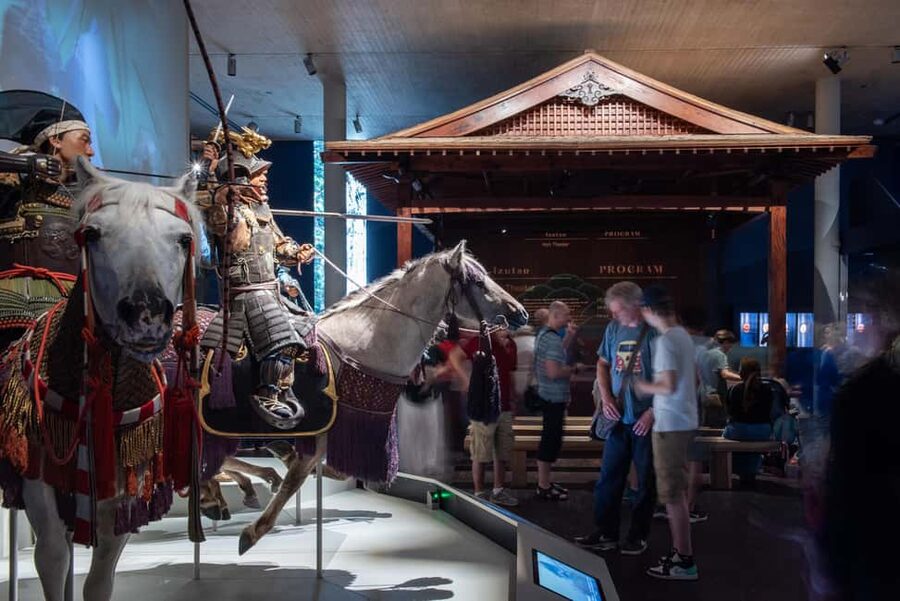
- What you will really see: armor, weapons, masks, and the world around them
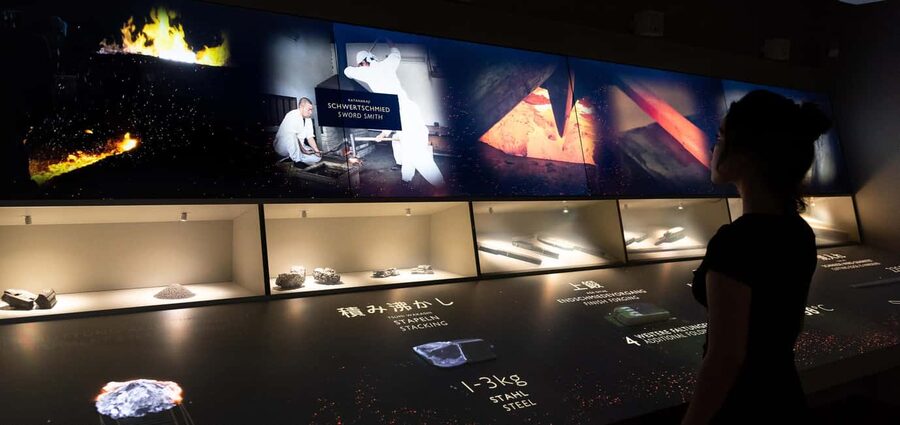
- Hands-on stations: ninja techniques and sword-blade production
- Taiko and tea ceremony: the museum’s best sensory payoff
- Nō theatre, tea house, and realistic projections in traditional spaces
- Kitsune riddles, Yōkai challenges, and how to stay engaged
- The Peter Janssen Collection: why that flea-market origin matters
- How long should you plan, and what to pair in your Berlin day
- Price and value: is $15 per person a fair deal?
- Who should book this museum, and who might skip it
- Should you book the Samurai Museum Berlin?
- FAQ
- Where is the Samurai Museum Berlin located?
- What public transport lines can I use?
- How much is the admission ticket?
- How long is the ticket valid?
- Is line-skipping included?
- What’s included in the price?
- What is not included?
- Are pets, food, and drinks allowed?
- Is it wheelchair accessible, and is it suitable for young children?
Key things to know before you go
- 900 exhibits up close, covering armor, weapons, masks, and the broader samurai world
- Holographic taiko performance plus a tea house experience using real traditional materials and techniques
- Ninja and sword-blade stations with projections and touchscreens, so you can learn by doing
- A big draw is the fox Kitsune riddles, plus a challenge game tied to Yōkai
- The museum sits in Berlin-Mitte near Alexanderplatz and Museum Island, which makes a same-day combo easy
- The ticket is flexible, valid 1 to 14 days, and you can use it on your smartphone
Entering Berlin-Mitte with a Samurai Museum as your main stop
The Samurai Museum Berlin is located on Auguststraße in Berlin-Mitte, right where you already want to be if your trip includes Museum Island or the area around Alexanderplatz. That matters, because you do not have to carve out a half-day in a distant neighborhood. You can treat this like a focused indoor “culture reset” after walking around central Berlin all morning.
I like that the museum is surrounded by the usual Mitte mix of cafés, restaurants, and shopping. You can plan to arrive, spend your time inside, then head out for a meal without any transit stress. It is also a good fit if you like planning around transit stops rather than around strict tours.
This is also one of those experiences where the setting adds to the story. You are in Berlin, but the building details for key spaces point toward Japan, which helps you switch gears from city noise to museum quiet fast.
More Museum Tours in Berlin
- Berlin: Natural History Museum Entrance Ticket
★ 4.6 · 3,382 reviews - Berlin: Museum Island Multiple Museum Entry Ticket
★ 4.4 · 2,861 reviews - Skip-the-Line: Berlin Wall Museum at Checkpoint Charlie
★ 4.1 · 2,041 reviews
Getting there and timing your visit with flexible entry
You have two practical advantages here. First, the museum is easy to reach using major lines. If you are using the U-Bahn, aim for U6 Oranienburger Tor or U8 Rosenthaler Platz. If you are using the S-Bahn, S1, S2, S25, S26 Oranienburger Straße are options. Tram riders can look at M1, M5 near Oranburger Straße, or M8 near Rosenthaler Platz. Bus lines 142 and M41 also stop nearby.
Second, the ticket is flexible. The Samurai Flex Ticket is valid for 1 to 14 days, and you can pick your day and time. That flexibility helps if your Berlin schedule changes due to weather, museum lineups, or your energy level.
A practical strategy: go earlier in the day if you want a calmer pace, or go in the late afternoon if you want to pair it with a Museum Island walk. Either way, plan for a museum visit that is active. Many stations involve touchscreens, projections, and hands-on elements, so you will move around more than you would in a quiet gallery where you just stand and read.
What you will really see: armor, weapons, masks, and the world around them
The museum’s core promise is simple: you get close access to a major collection. It is billed as Europe’s only samurai museum, and the big number to remember is 900 historical exhibits. That span is what keeps the visit from feeling repetitive. You will see legendary swords, incredible armor, and mysterious masks, and you will also get context for how all of that fits into Japanese culture across time.
I like that the museum is not only about the iconic look. Yes, the helmets and armor are dramatic, but the museum also connects the dots to techniques, rituals, and the myths that surrounded samurai culture. That is why you can walk out understanding why samurai imagery shows up everywhere, including in pop culture. (The museum even frames the samurai as an inspiration for Star Wars, which is a fun way to start a conversation with friends after your visit.)
If you are a details person, you will probably spend extra time here. If you are more casual, you can still move faster because the exhibits are set up to be browsed like chapters. Either way, you do not have to “solve” the whole collection. Just pick what grabs you, then circle back if you have energy.
Hands-on stations: ninja techniques and sword-blade production
A major reason this museum works is the way it teaches. This is not only glass cases and labels. There are interactive installations with projections and touchscreens, and some areas are designed to feel hands-on, even when you are not literally manipulating the objects.
Two stations in particular stand out from the experience description. One is the chance to learn techniques connected to ninja traditions. The other is a focus on the production of legendary sword blades. If you have ever wondered what makes a sword story feel more technical than just dramatic, these areas are where that curiosity gets answered.
How to use these stations well: do not rush the first time. Take a moment, then try again more slowly. Touchscreens can be tempting to speed through, but the learning payoff comes when you pause long enough to read what the station is guiding you through. If you are with someone who enjoys hands-on tasks, this is the part where you will both get pulled in.
A few more Berlin walks and trips to compare
- Berlin: Interactive DeJa Vu Museum Entrance Ticket
★ 4.1 · 1,338 reviews - Berlin: East Side Gallery Spree Cruise in a Solar Catamaran
★ 4.1 · 1,086 reviews - Cold War, Berlin Wall, Spies and the East Side Gallery
★ 5.0 · 1,024 reviews - Berlin WelcomeCard: Museum Island & Public Transport
★ 4.3 · 999 reviews
Taiko and tea ceremony: the museum’s best sensory payoff
The museum builds in two cultural experiences that give you more than visuals. You get a taiko drum performance that is presented through a holographic experience, and you also get a tea ceremony element inside the museum’s own tea house setup.
This is where I think the museum earns its reputation. It gives you an emotional entry point. Before you even fully process the armor and weapons, you are already hearing and seeing rhythms and rituals connected to Japanese culture. That helps a lot if you tend to glaze over in artifact-heavy spaces.
The Nō theatre and tea house deserve special mention. The description says these spaces were built in Japan using traditional materials and techniques, then erected in Berlin later. The museum uses realistic projections to tie the spaces to the cultural influences they represent. Translation for your visit planning: you are not just looking at rooms. You are watching how those rooms function in the broader story of samurai-era cultural influence.
If you love atmosphere and not just objects, schedule extra time so you can settle into these spaces instead of treating them like a quick stop.
Nō theatre, tea house, and realistic projections in traditional spaces
The museum includes a spacious Nō theatre plus a tea house, both designed to echo Japanese tradition. The key detail is not just that the spaces exist. It is that the museum uses projections to bring the tradition to life in context.
For a visitor, that means you will have a break from constant walking and reading. You can slow down, watch the projections, and connect what you saw earlier in the galleries to what you are seeing in these cultural rooms. It is a smoother learning curve than bouncing between unrelated exhibits.
For the tea house portion, you get insight into the processes of the centuries-old tea ceremony. The practical tip here is simple: keep your phone away for a few minutes so you can follow the flow. If you keep grabbing photos, you may miss the pacing the ceremony is trying to show. You do not need to be a tea expert. The value is in seeing the sequence and understanding why it was treated as cultural practice, not just drink service.
Kitsune riddles, Yōkai challenges, and how to stay engaged
Not every part of the museum is about solemn artifacts. The museum also leans into story and challenge. Two highlights are specifically called out: the fox Kitsune riddles and a speed-focused game called Yokaigame.
I like this kind of learning because it turns the museum into an activity, not a chore. If you are visiting with a group, these challenges give you something to do together without needing someone to lecture. Even if you are going solo, the puzzles make the experience feel less like standing in front of the same display type.
Here is how to get the most value from the game stations: start early enough that you are not rushed at the end. If you wait until you are ready to leave, you will feel pressured to sprint through them. Building in time also helps if a station has a short wait.
The Peter Janssen Collection: why that flea-market origin matters
One of the strongest value signals in the museum description is the Peter Janssen Collection. The museum says the collection began with a find at a flea market in Berlin and grew into a private collection of more than 4,000 objects. That backstory matters, because it explains why the museum feels like a passion project rather than a generic theme attraction.
The collection spans from the late Kofun to the early Meiji period, covering a wide sweep of time, described as roughly the 6th to 19th century. That range helps you see development over time instead of only a snapshot of samurai at their most dramatic.
Two specific highlights mentioned in the description give you a sense of variety: an 18th-century palanquin, a 17th-century armor of the Matsudaira clan, and tea utensils from the era of Sen no Rikyū (1522 to 1591). If you like craftsmanship, this is where the museum can surprise you. These objects are not just armor as war gear. They connect to travel, status, and the tea culture that shaped social life.
How long should you plan, and what to pair in your Berlin day
Because your ticket is flexible and self-paced, the best plan is based on your own curiosity. If you love artifacts and want time at the interactive stations, you will likely want a longer visit. If you mainly want the cultural spaces like the Nō theatre and tea house plus a quick pass through the armor and sword areas, you can still see the highlights without turning the visit into a full day.
A practical approach in Mitte:
- If you are doing Museum Island, place the museum either before or after your outdoor walks.
- If you are pairing with Alexanderplatz, plan to arrive when you have energy for moving around, since interactive stations involve more motion.
Also remember the museum rules that affect your comfort. Pets are not allowed, and food and drinks are not allowed inside. Luggage or large bags are also not allowed, so travel light. That one rule can change how easy it feels to visit, especially if you are coming from a train station with a big daypack.
Price and value: is $15 per person a fair deal?
At $15 per person, this is priced like an entry ticket to a serious museum, not an all-day attraction. The value comes from what you get for that price: a large collection of exhibits, multiple interactive areas, and built-in cultural experiences like taiko and tea ceremony spaces.
The hidden value is how the museum structures learning. You are not only looking. You are also participating through interactive screens, projections, hands-on style stations, and challenge games. That tends to make people feel satisfied rather than just “done with exhibits.”
One cost note that matters: an exhibition catalog is not included. If you like to take notes and bring home extra reading, you might want to budget separately for that type of souvenir. But if you just want the visit and you travel light, you will not feel forced to add anything.
Overall, $15 makes this a good value stop in a city where museum prices can climb fast.
Who should book this museum, and who might skip it
This place makes sense for:
- You if you want a Japan focused experience in Berlin without needing flight time.
- You if you like hands-on stations, touchscreens, and puzzle-style engagement.
- You if you enjoy costume or craftsmanship, especially armor, swords, and masks.
- You if you want cultural rooms like the Nō theatre and tea house, not just a weapon gallery.
It might be less ideal if:
- You are traveling with kids under 10, since it is not suitable for that age group.
- You prefer purely quiet, traditional museums where you only observe. This museum has active, interactive elements, which is great for many people but not everyone.
Should you book the Samurai Museum Berlin?
If you want a smart, central Berlin stop that mixes real artifacts with interactive learning and cultural performance spaces, I would book it. The price is reasonable, the location is convenient, and the experience includes enough variety that you should not feel stuck with one type of exhibit.
Book it sooner rather than later if you want to plan around nearby Mitte sights, but you do have flexibility thanks to the ticket validity window. The biggest deciding factors for me are your interest in samurai and related culture, and whether you like learning through stations and mini challenges. If yes, you are very likely to enjoy your time here. If your main goal is a classic art museum only, you might find the interactive format less to your taste.
FAQ
Where is the Samurai Museum Berlin located?
It is located on Auguststraße in Berlin-Mitte.
What public transport lines can I use?
The closest options listed include U6 (Oranienburger Tor) and U8 (Rosenthaler Platz). For the S-Bahn, you can use S1, S2, S25, and S26 at Oranienburger Straße. Trams include M1 and M5 at Oranienburger Straße, and M8 at Rosenthaler Platz. Bus options include 142 at Tucholskystraße and M41 at Abgeordnetenhaus.
How much is the admission ticket?
The price is listed as $15 per person.
How long is the ticket valid?
It is valid for 1 to 14 days, with availability showing starting times.
Is line-skipping included?
Yes, the ticket includes skip the ticket line.
What’s included in the price?
You get an entry ticket.
What is not included?
An exhibition catalog is not included.
Are pets, food, and drinks allowed?
No. Pets are not allowed, and food and drinks are not allowed.
Is it wheelchair accessible, and is it suitable for young children?
Yes, it is wheelchair accessible. It is not suitable for children under 10.
Newest Berlin reviews on the site
- Jetbike Berlin fun bike beer bike★ 5.0 · 3 reviews
- Karl-Marx-Allee Walking Tour: Berlin’s Socialist History★ 5.0 · 5 reviews
- Homeless on chic streets: city tour in Berlin from personal experience★ 4.6 · 3 reviews
- Berlin: Sachsenhausen Concentration Camp Guided Tour★ 4.9 · 42 reviews
- Historyof the Trans, Queer & Gay communities of Berlin tour★ 4.8 · 17 reviews
- Historic Berlin Pubs & History Tour★ 4.9 · 73 reviews
- Berlin: City Center Walking Tour★ 4.7 · 45 reviews
- Half-Day Berlin Highlights Segway Expedition★ 4.5 · 61 reviews
Museums, compared.



Skip-the-Line: Berlin Wall Museum at Checkpoint Charlie
Read our review →Browse the lists this tour appears in