Reviewed · PRIVATE
Private Taxi Tour of Berlin East and West and Neighbourhood approx. 4-6h
Berlin can feel like a split personality.
This private 4 to 6 hour taxi tour stitches it together in one smooth loop, using key landmarks to explain how the city changed, then tried again. I love the comfort of a warm car paired with real, street-level context, and I also like that the guide, Gunter Bauer, builds in short walks and photo stops so you are not just staring out a window. One thing to keep in mind: you cover a lot, so you will often have to choose what to enter and what to see from outside.
In This Review
- Key highlights if you want East and West in one day
- Why a private taxi loop beats hopping between neighborhoods
- Price and what makes it feel fair for 4 to 6 hours
- Pickup, timing, and the reality of choosing stops in a big city
- Reichstag, Brandenburg Gate, and the glass-and-iron story of reunified Germany
- Unter den Linden and the government corridor: where power hides in plain sight
- The Wall, East-West border areas, and Berlin’s “how it happened” stops
- East Berlin through Friedrichstraße to Alexanderplatz, then over to West’s iconic squares
- Humboldt Forum, Mies van der Rohe, and Berlin’s habit of rebuilding with meaning
- West Berlin boulevard time: Kurfürstendamm, KaDeWe, and the Kaiser Wilhelm Memorial Church area
- Sony Center and Potsdamer Platz: modern design built on a moved survivor
- How to choose what you should ask Gunter to prioritize
- Should you book this East and West private taxi tour?
- FAQ
- How long is the private taxi tour of East and West Berlin?
- What’s included with the tour price?
- Is pickup offered from the hotel?
- Is lunch included?
- Is this a private tour?
- Are child seats available?
- What is the cancellation policy?
Key highlights if you want East and West in one day
- Short, well-paced get-outs at major sites, so you can actually look around, not just pass by
- Gunter Bauer’s history-by-place explanations, with memorable details at the Reichstag, Wall sites, and memorials
- Comfort-first touring, including air-conditioned transportation and WiFi on board
- Major Berlin architecture in context, from Unter den Linden to the Humboldt Forum and Mies van der Rohe’s modern gallery buildings
- Wall history made practical, with stops tied to places like Topography of Terror and Checkpoint Charlie
- Photo help during stops, so you get included in the pictures without awkward guest math
Why a private taxi loop beats hopping between neighborhoods
If you have limited time, Berlin is tough to DIY. The city is big, traffic patterns can be annoying, and the East versus West story is easier when you see places in sequence. This tour is built for that, using a private taxi format to connect major districts without draining your day.
You get the best of both worlds: the car handles the distance, and you still get frequent stops for quick walking and photos. That matters with Berlin, because details are where the meaning lives. A gate, a façade, a memorial, even a street alignment can tell you who controlled the city and why the design choices mattered.
It also helps that this is a private experience, so you can ask for course corrections. Based on how the tour is run, I’d expect the guide to adjust to your interests and to what is realistically possible in Berlin traffic.
Just understand the tradeoff: you are not doing a museum marathon. This is a highlights-and-context plan, so if you want long inside time at multiple museums, you may need extra hours.
A few more Berlin walks and trips to compare
- Berlin: Reichstag, Dome and Government District Guided Tour
★ 4.7 · 18,288 reviews - Berlin: 1-Hour City Tour by Boat with Guaranteed Seating
★ 4.3 · 16,993 reviews - Berlin: TV Tower Standard Entrance Ticket
★ 4.4 · 15,883 reviews
Price and what makes it feel fair for 4 to 6 hours
At $179.82 per person for roughly 4 to 6 hours, the value is in the “time compression.” You are paying for a driver who knows where to park, how to route around closures, and how to explain the city so you understand what you are looking at.
The included basics matter more than you might think:
- pickup from within the S-Bahn ring around the center (about a 5 km radius near Brandenburg Gate)
- an air-conditioned vehicle, private transportation, and parking fees
- WiFi on board
- pickup coordination by message (you only go outside after confirmation)
- the taxi ride and city tour both included with VAT
This is especially good value if you are traveling with mobility limits. Even if you are healthy, Berlin can chew up time just with transit lines and walking between far-apart stops. A private car also makes the day easier for families, because you are not stuck doing long stretches on foot.
One caution: the vehicle size can matter. In at least one case of feedback, the vehicle was considered too small for a group of four. If you have a larger group, ask about car size before you go, so you do not end up cramped.
Pickup, timing, and the reality of choosing stops in a big city
This tour works because it is flexible. Berlin traffic can change your route fast, and the itinerary includes optional elements depending on time and how the day moves. That is a practical advantage of taxi touring: you can still hit the core East-West story even if one stop runs long.
Pickup is included if you are inside the S-Bahn ring near the center. If you are starting outside that ring (or from BER airport), pickup can cost extra based on the Berlin taxi tariff. You will want to give yourself time if you are coming from farther out, because the car is part of the experience, not an afterthought.
Plan for a lot of brief moments rather than one long sit-down. Some stops are designed for a quick look from outside, while others allow a short walk. The “best day” strategy is to decide what you want most, then trust the guide to fill the rest with complementary stops.
If you have a short list of must-sees, share it early and clearly. The tour can run close to its plan, so your priorities are important. Also, be ready for one or two sites to be outside-only, because the schedule is built around seeing multiple areas rather than waiting in line all day.
Reichstag, Brandenburg Gate, and the glass-and-iron story of reunified Germany
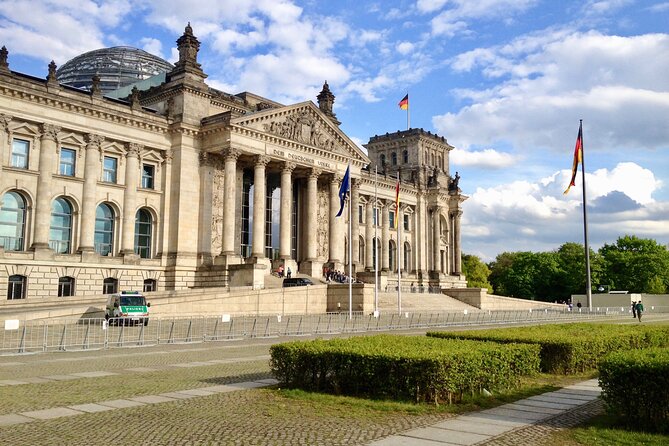
This is where the tour starts to feel like a timeline. You begin with a major seat of government and symbolism, then move toward the city’s postwar reset.
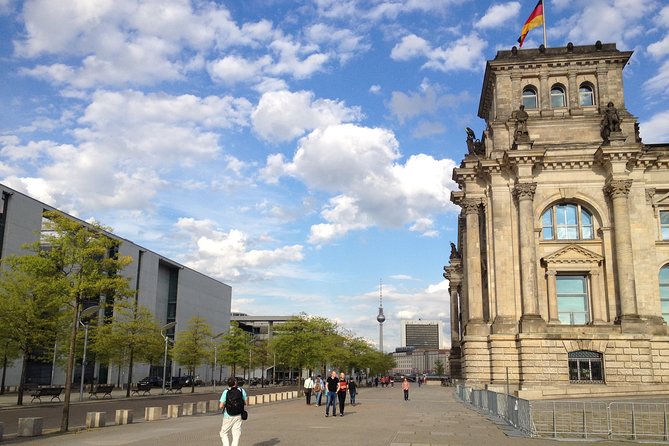
The Reichstag area is introduced with the long view: the Red Army flag moment, the building’s awkward history in divided Berlin, and later the rebuild after reunification. The modern dome is treated as more than a photo spot. It becomes a lesson in how Berlin chose visibility, transparency, and a new identity after decades of barriers.
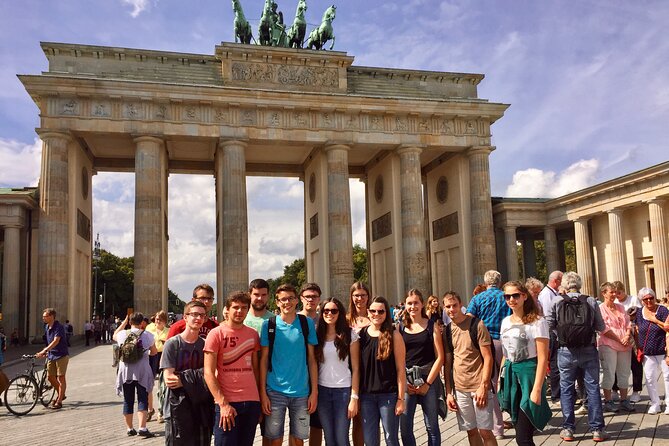
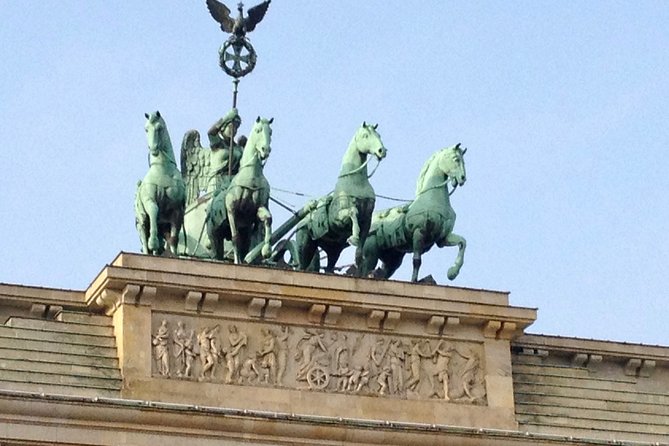
Next comes the Brandenburg Gate area, explained as a “parlor” of the city, even though it was never as open as the postcard view suggests. The guide’s point is simple and useful: this gate used to be trapped by walls and by the way East and West were separated.
You’ll also get the surrounding square logic, including how Pariser Platz and nearby embassies formed again after wartime destruction. The best part is that the tour doesn’t just name places. It tells you why they were rebuilt in specific styles, and why so many buildings around the gate carry political intent.
What I like about this section is that it anchors your day. Once you understand the Reichstag and the gate, later stops like memorial sites and Wall locations make emotional sense instead of feeling random.
Same city, a different way to spend the afternoon:
- Berlin: Boat Tour Along the River Spree
★ 4.4 · 11,252 reviews - Discover Berlin Half-Day Walking Tour
★ 5.0 · 9,624 reviews - Berlin: Government District around the Reichstag Guided Tour
★ 4.7 · 8,447 reviews - Berlin: Reichstag, Plenary Chamber, Cupola & Government Tour
★ 4.6 · 8,422 reviews
Unter den Linden and the government corridor: where power hides in plain sight
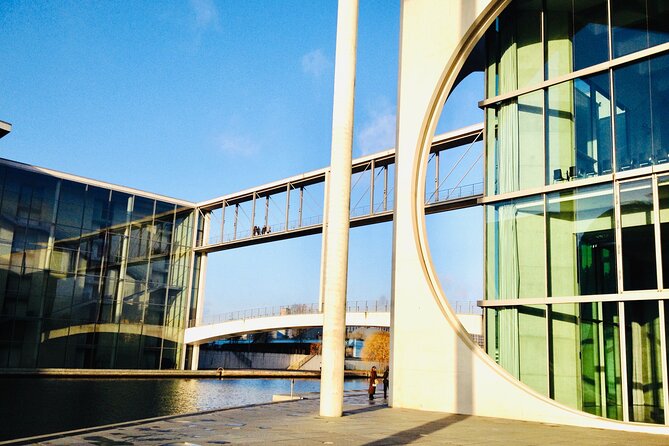
From the Gate, you move into the city’s grand central spine. Unter den Linden is described as the original idea of a calmer route leading toward the hunting grounds, later turned into a major boulevard. The guide brings in an entertaining detail about how planting choices mattered, including the story of linden trees winning out over nut trees. That kind of “why this looks like this” explanation makes the boulevard feel earned.
This section also helps you read Berlin’s architecture as a political map. You pass or stop near major institutions that were reshaped by regime changes. The former Soviet presence is presented as a deliberate statement of who was in charge when other Western embassies lay in ruins.
The tour also touches the Forum Fridericianum area, tying together structures around Opera Square, the cathedral-like meetinghouses, and the message of what was built for public life. There is also a stark reminder that public squares can be repurposed by ideology, including book burning on May 10, 1933. Even if you do not linger long, the explanation frames what you see.
Then comes a key memorial stop: the Neue Wache area and the significance of the Käthe Kollwitz sculpture. This part can feel quiet and heavy, which is exactly what you want in an East-West day. It prevents the tour from becoming only about architecture and trivia.
If you are sensitive to dark themes, this is the part to pace yourself. Short walks help, but you may want extra time to process what you are hearing.
The Wall, East-West border areas, and Berlin’s “how it happened” stops
This is the emotional core of the tour. Instead of vague history, you hit places tied to real events and real escape attempts.
You see major Wall-era transport logic, including Friedrichstraße station, described as the only rail connection enabling onward travel between East and West in the Wall period. That makes the station feel different, not just like another train stop. The explanation focuses on barriers, checkpoints, and the human desperation involved when families and travelers were separated.
You also get Topography of Terror, built around excavation and documentation of Nazi security organs and their crimes. It is handled as an open-air and information-hall experience, with the guide connecting the site to what was found and how it is presented today.
Checkpoint Charlie is another pivot point. You learn why it mattered during Allied control times, and also why it nearly escalated into a global catastrophe when tanks showed up in 1961. Today you do not just see a replica box. You see the contrast between how chaotic that era could have been and how carefully this site is curated now.
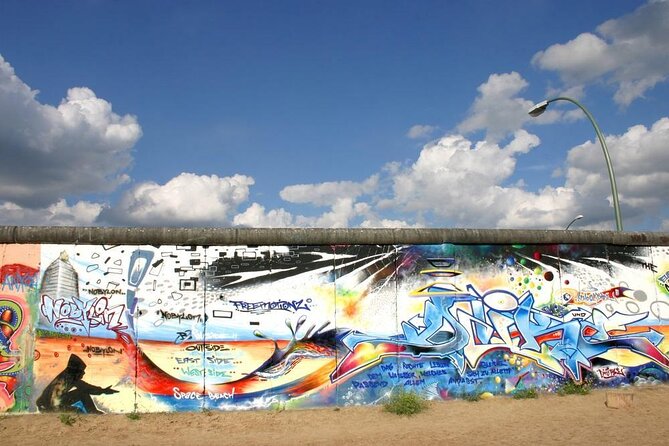
Then the tour connects to the present through reunification art: the East Side Gallery. The explanation includes the Wall length, the idea that what you see is shaped by later choices, and how artists transformed it after 1990. The best way to see East Side Gallery is with fresh eyes, not as a souvenir stop.
Finally, you hit small but powerful remnants like a last stretch of perforated wall and a version of Berlin where escape stories can be pointed out in walking distance.
If there is a drawback here, it is pacing again. You cover several Wall sites, and each one could take longer. Still, the sequence helps. You leave with a story, not just a list of locations.
East Berlin through Friedrichstraße to Alexanderplatz, then over to West’s iconic squares
After the Wall narrative, the tour broadens into “how everyday Berlin used to work.” Alexanderplatz is explained as an older name tied to trade, then later transformed in GDR times into a stage for mass movement and monumental architecture, with the TV tower as the visible proof of socialist engineering.
You also pass or reference the larger urban planning idea: what might have been destroyed if motorway-style plans of the 1960s had won. This is useful because it explains why Kreuzberg has a different feel today. Even if parts are gentrified, the tour frames that character as something shaped by what got saved as well as what got built.
On the West side, the tour includes Gendarmenmarkt, often described as one of Berlin’s most beautiful squares. The guide treats the domes as architectural meetinghouses linked to Frederick II’s choices, and you get the contrast of the German and French cathedral structures. It is also tied to language and refugee history, with services and a small museum connected to Huguenots.
This section is a nice breathing space. It is less about fear and more about how Berlin wanted to look and gather itself into something “official.” The guide also connects the square to what you can see inside museums when you have the time.
So the emotional arc is smart: hard history, then a return to civic design, then back again to symbolism and modern reinvention.
Humboldt Forum, Mies van der Rohe, and Berlin’s habit of rebuilding with meaning
This tour includes major “postwar and postreunification” architecture, and it is one of the reasons it works even if you know Berlin’s landmarks already.
The Humboldt Forum is framed as a site that sat empty for decades, then rebuilt from the old Berlin Palace footprint and logic. The explanation focuses on what was destroyed, what was documented before demolition, and how the reconstructed exterior links back to earlier baroque identity. It also points to the rooftop terrace as a highlight, because seeing Berlin from above turns your driving loop into a real map.
If you are lucky, the guide helps with timing and access to viewpoints. In at least one case of feedback, pre-booked ticket help for the top view was a highlight. Even when you cannot get everything in, you will still understand why the roof terrace matters for orientation.
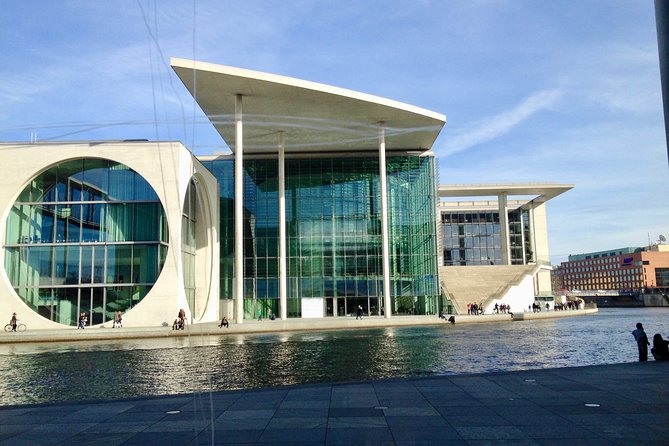
Later you reach the modern “Kulturforum” zone and key museum architecture. You get the sense of design choices as intentional: the Neue Nationalgalerie by Mies van der Rohe is described with its striking metal roof and the unusual idea of no internal walls in the main exhibition hall, with paintings handled below in a basement setup. The guide uses that to explain how the building affects how you experience art.
Then there is another layer of historical reuse around government offices. You see buildings associated with German military history, including the courtyard setting tied to Stauffenberg’s failed plot. Again, the point is not just name-dropping buildings. It is connecting place to event.
This is where the tour becomes more than sightseeing. It becomes an explanation for why Berlin keeps returning to the same questions: what should be preserved, what should be rebuilt, and what should be openly visible.
West Berlin boulevard time: Kurfürstendamm, KaDeWe, and the Kaiser Wilhelm Memorial Church area
If you want classic West Berlin flavors, this itinerary gives you the big boulevard section. You move toward Kurfürstendamm and around the Kaiser Wilhelm Memorial Church area.
The guide treats this area as a mix of memory and shopping practicality. The Memorial Church gets explained from both sides, including the interior lighting effect created by glass elements and why the church feels strangely quiet despite being in a loud city center. The soundproofing detail is part of the story, because it shows Berlin’s effort to turn destruction and rebuilding into a place for reflection.
Then comes the boulevard walk logic: Tauentzienstraße and the department store area, including KaDeWe. The guide frames KaDeWe not as a luxury flex but as a time-efficient way to experience Berlin consumer culture in one stop, with the food halls mentioned for the “yes, this is a real ritual” effect.
If you are food-motivated, this is a good zone to pair sightseeing with a snack or late lunch plan. If you are not into shopping, treat it as a landmark area and keep moving.
This part is lighter, but still connected back to the tour’s theme: how West Berlin re-styled public life and built spaces for attention, spending, and gathering.
Sony Center and Potsdamer Platz: modern design built on a moved survivor
You end up near Potsdamer Platz, and the tour gives you a modern Berlin anchor in the Sony Center. This stop is not just a futuristic photo shoot. The guide explains how the site used to be a major older hotel area and how one wing was preserved through an elaborate process.
The key story: the old building was moved about 75 meters and roofed over, then adapted so its ballroom became usable again in the new design. That detail makes Potsdamer Platz feel less like a generic business district and more like a city that refuses to let everything disappear.
The architecture itself, including the sloping roof that looks like it is floating, is a good counterpoint to the earlier glass-in-iron government buildings. It shows Berlin’s repeat pattern: rebuild boldly, then find ways to protect at least part of the past.
This is a strong “wrap up” stop because it helps your brain connect the day’s themes: ruins, borders, reunification, and reinvention.
How to choose what you should ask Gunter to prioritize
You will enjoy this tour more if you treat it like a plan with choices, not a rigid checklist. Here is how I would decide what matters most before you meet:
- If you want the East-West divide, prioritize Wall sites like Topography of Terror and the Checkpoint Charlie area, then let the guide choose the rest.
- If you care more about architecture, ask for longer outside time around Reichstag, Unter den Linden, and Humboldt Forum.
- If you want West Berlin icons, make sure Gendarmenmarkt and the Kurfürstendamm area stay on the route.
Also, be realistic about what you can enter. Some stops are built for quick viewing and explanation. Even with a private guide, you are working inside a time window.
If you are a first-time visitor, consider doing this early in your trip. The payoff is that your next days become easier because you start recognizing how neighborhoods relate to each other.
Finally, if you have mobility needs, tell the guide what you can handle walking-wise. In multiple examples of feedback, this tour format worked well for people who wanted to avoid long standing lines and long walks.
Should you book this East and West private taxi tour?
I would book this tour if you want a high-impact Berlin day that explains the city through its borders, memorials, and rebuilt landmarks. The format is especially good for short stays, families, and anyone who would rather trade transit hassle for a comfortable ride with frequent, meaningful stops.
I would think twice if you are the type who wants to spend lots of time inside museums every stop. This tour is built for coverage and context, not for deep, long admissions at multiple attractions. Also, if you have a group of four and comfort matters, confirm the vehicle size in advance.
If you want one day to make the city’s past and present feel connected, this is a smart pick. And if you like good photos without having to play cameraman all day, it helps that Gunter is set up to take pictures at stops and keep things moving.
FAQ
How long is the private taxi tour of East and West Berlin?
It runs about 4 to 6 hours.
What’s included with the tour price?
Pickup within the S-Bahn ring is included, along with an air-conditioned vehicle, parking fees, private transportation, WiFi on board, and the taxi ride and city tour with VAT.
Is pickup offered from the hotel?
Yes, pickup is included within the S-Bahn ring (around the center near Brandenburg Gate, about a 5 km radius). Pickup outside the ring or from BER airport may cost extra.
Is lunch included?
No, lunch is not included.
Is this a private tour?
Yes, it is private. Only your group participates.
Are child seats available?
Yes. A child seat for toddlers from six months to three years is available, plus a booster seat for older children. A baby seat can be brought on request.
What is the cancellation policy?
You can cancel for a full refund up to 24 hours in advance. If you cancel less than 24 hours before the start time, the amount paid is not refunded.
Newest Berlin reviews on the site
- Day trip through multicultural city landscapes & photo highlights★ 5.0 · 5 reviews
- Berlin in one day – day tour with an expert guide★ 5.0 · 14 reviews
- Berlin on Your Own – Deluxe Round Trip from Warnemünde Port★ 4.5 · 5 reviews
- Berlin sightseeing boat tour on the Spree★ 4.0 · 93 reviews
- Berlin by Night Private Tour – All Must-See Sites Magically Lit Up at Night★ 4.0 · 5 reviews
- Berlin & Sachsenhausen Concentration Camp Tour from Warnemünde and Rostock Port★ 4.5 · 60 reviews
- Berlin & The Third Reich Private Guided Tour★ 5.0 · 3 reviews
- Berlin and Car Culture Tour★ 4.5 · 8 reviews
Private, compared.

Berlin Private Complete History All Day Walking Tour
Read our review →
Munich Private Tour with a Local – Highlights & Hidden Gems
Read our review →
Private Walking Tour Berlin Third Reich Hitler and World War II
Read our review →
Strasbourg: Private City Sightseeing Boat Tour
Read our review →
1.5-Hour Private Tour through Historical Old Town
Read our review →