
Reviewed · CONCENTRATION CAMP MEMORIAL TOURS
Private Sachsenhausen Concentration Camp Memorial Tour
Sachsenhausen is history you can walk through. This private, English-language tour helps the site make sense with a licensed guide trained by the Memorial Foundation. You get a focused route through the places that show how the Nazi camp system worked, not just what happened.
Two things I really like: you cover the major Sachsenhausen components in one orderly day, from the main entrance to execution and detention spaces. And because it is private, the guide can shape the pace and your questions, which matters a lot at a site this heavy.
One drawback to think about first: the topics are difficult, and the experience is long. Also, private transportation is not included, so you will want a plan for how to get between Berlin and the memorial.
In This Review
- Key things that make this Sachsenhausen Memorial tour work
- Sachsenhausen in one private day: what you really see
- Meet at Pariser Platz, then go private all the way
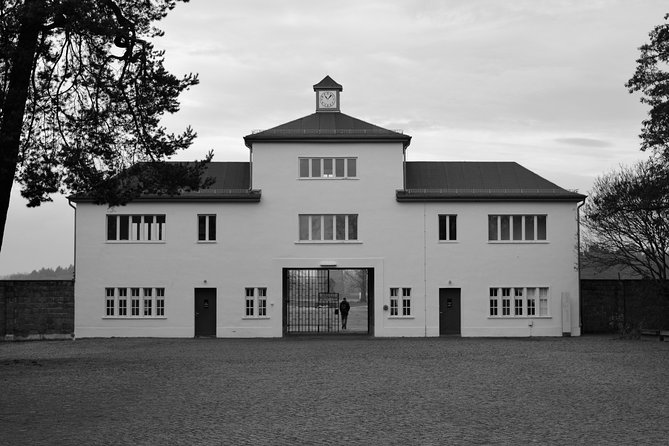
- Tower A and the main entrance: where the system starts to feel real
- Camp infirmary and pathology building: the medical side of brutality
- Station Z: the purpose-built execution facility
- Former kitchen exhibition: learning how the camp kitchen connects
- SS and Gestapo prison: detention as a method
- Former prisoner barrack blocks: the lived reality behind the system
- How the guide ties 1930s Nazi power to World War II changes
- Price and value: $390.50 per group up to 5
- Logistics that matter for a smooth 6-hour visit
- Who should book this private Sachsenhausen tour
- Should you book? My take
- FAQ
- Is this tour private or shared?
- How long is the Sachsenhausen Memorial tour?
- What language is the tour offered in?
- What parts of the camp do you visit?
- What is included in the price?
- Where is the meeting point?
- Can I cancel and get a full refund?
Key things that make this Sachsenhausen Memorial tour work
- Foundation-licensed guide who is trained by the Camp’s Memorial Foundation
- A set stop sequence that includes Tower A, Station Z, the SS and Gestapo prison, and barracks blocks
- History tied to change over time, including shifting prisoner types, numbers, and nationalities
- Private pacing so you can focus where you want and pause to take it in
- Admission included so you can spend less time sorting logistics
- English mobile ticket for smooth entry
Sachsenhausen in one private day: what you really see
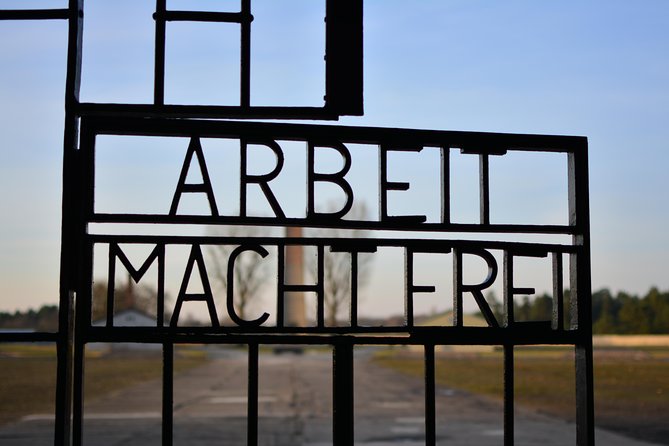
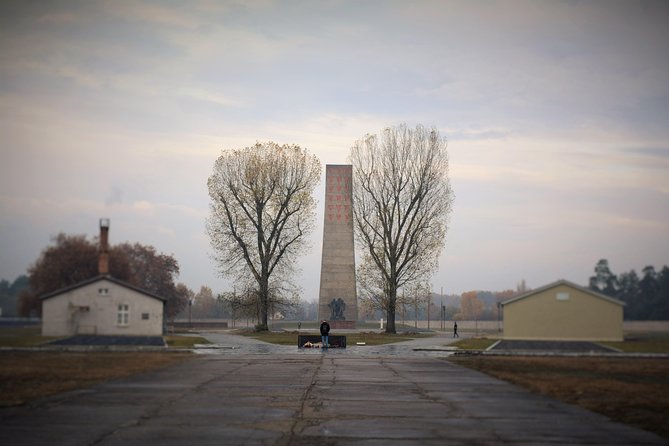
Sachsenhausen is not a vague museum stop. It is a planned camp space, so you feel the logic of control as you move from one part to the next. On this tour, you are not handed a vague overview. You get a guided read of the grounds, which makes the site easier to understand and harder to forget.
The big win is how the tour ties the physical layout to the history of the Nazi dictatorship. You start with the camp as an institution and then follow how it developed as politics hardened in the 1930s and the Second World War expanded the system. That framing helps you connect the dots without turning the visit into a blur of names and dates.
More Concentration Camp Memorial Tours in Berlin
- Berlin: Sachsenhausen Concentration Camp Tour in English
★ 5.0 · 5,711 reviews - Berlin: Sachsenhausen Concentration Camp Memorial Tour
★ 4.7 · 3,716 reviews - Sachsenhausen Concentration Camp Bus Tour in English from Berlin
★ 5.0 · 1,962 reviews
Meet at Pariser Platz, then go private all the way
The meeting point is the Academy of Arts at Pariser Platz 4, in Berlin. The tour ends back at that same meeting point, which keeps your day from turning into a maze of end points.
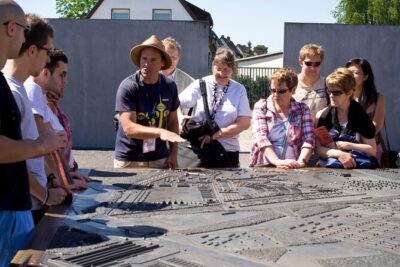
This is also a true private tour, meaning only your group participates. The group size is up to 5, so you should expect a more conversational format than large group tours. In practice, this matters because questions at Sachsenhausen often need context, and you do not have to rush to fit someone else’s schedule.
If you are thinking about guides, the feedback around this experience highlights names like Aaron, Paul (described as Paul the Irishman), and Julian. The common thread is that these guides connect the camp story to the wider German political timeline and explain tough material in a way that still feels clear and humane.
Tower A and the main entrance: where the system starts to feel real
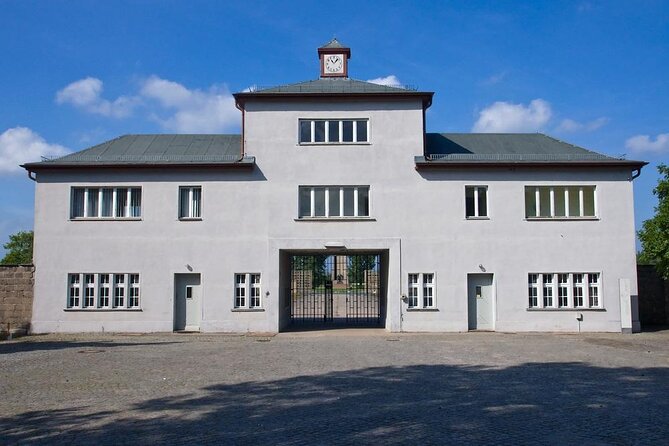
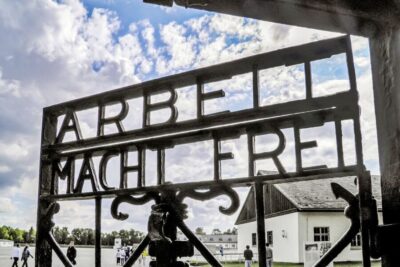
Tower A, the main entrance, is your first major stop. This is not a random photo location. It is where the camp’s purpose-built nature becomes obvious, and where the guide can explain how the camp was designed to enforce power and control.
I like this starting point because it sets a mental map. You begin with a sense of the entry point and the camp’s structure, so later stops like the prison areas and execution facility do not feel disconnected.
The main consideration here is pace. You are entering a place built for cruelty, and it can feel emotionally intense right away. If you know you need quiet moments, it helps that this is private, so you are less likely to feel pushed along.
Camp infirmary and pathology building: the medical side of brutality
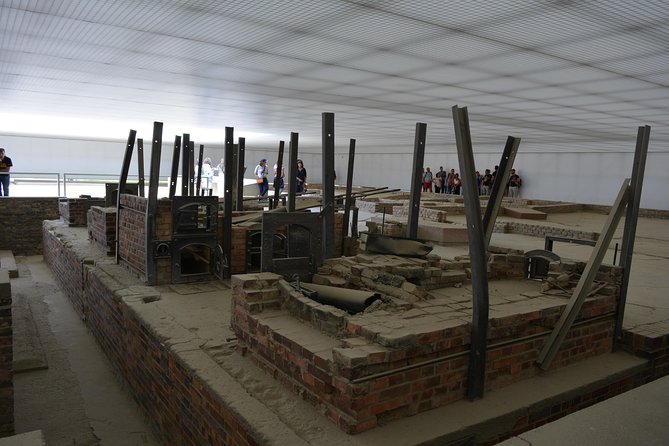
Next comes the camp infirmary and pathology building. It is one of the hardest stops, but it is also one of the most important for understanding what the camp system did beyond forced labor and imprisonment.
This part of the route gives you a reality check about how Nazi ideology tried to turn people into objects and experiments. Even when the guide keeps the explanation focused, the sheer subject matter is heavy, and you will likely need a minute after.
Practical tip: bring a little patience for yourself. You will be moving through several different buildings, and some parts of the site will ask more of your emotions than your brain. Plan to take breaks when you need them.
More memorial site visits from Berlin:
- Berlin: Sachsenhausen Concentration Camp Tour in English
★ 4.8 · 1,889 reviews - Sachsenhausen Concentration Camp Memorial Tour (Max. 15 Guests)
★ 5.0 · 1,516 reviews - Berlin: English Bus Tour to Sachsenhausen Concentration Camp
★ 4.9 · 1,380 reviews - Berlin: Sachsenhausen Concentration Camp and Potsdam Tour
★ 4.6 · 1,334 reviews
Station Z: the purpose-built execution facility
Station Z is the camp’s purpose-built execution facility. Seeing an execution space as an actual designed site, not just an abstract concept, changes how you understand the camp system. It shows how violence was integrated into the machinery of the place.
This is one of the stops that tends to stick with people, because it is where the story shifts from confinement to death in a very direct way. The guide’s job here is to explain what this space represented in the camp’s functioning, while keeping the focus on historical understanding.
A drawback to note: if you are visiting with children or anyone who struggles with graphic, emotionally charged history, this is the moment where discomfort may rise. The best approach is to go in with your expectations set that this tour includes the hard parts, and to lean on your guide if you want a slower tempo.
Former kitchen exhibition: learning how the camp kitchen connects
The exhibition in the former camp kitchen building is a quieter shift from the most emotionally direct spaces. It helps you understand the daily operations of the camp and why the system was not only about punishment, but also about routine control.
What I like about this stop is how it rounds out the story. After spaces that show coercion and punishment, the kitchen exhibition can help you grasp how the camp kept running as a functioning institution.
You should expect a lot of explanation here too, because the guide is meant to connect these points into a timeline. The goal is for you to leave knowing how Sachsenhausen and the broader camp system came into being, how it developed, and how it changed as Nazi dictatorship strengthened and the war unfolded.
SS and Gestapo prison: detention as a method
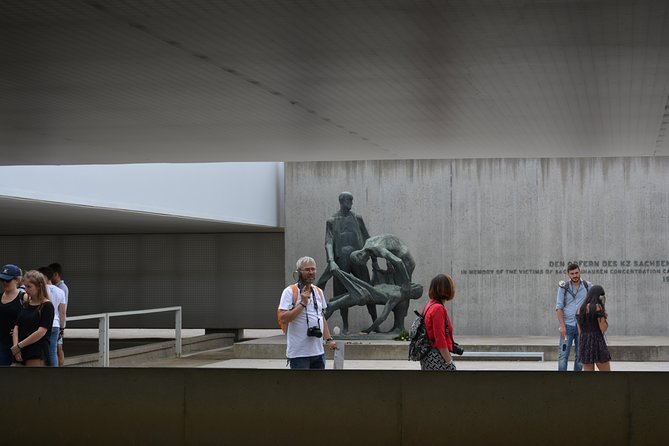
The SS and Gestapo prison stop shows another side of the system: detention and enforcement through imprisonment and interrogation spaces. This is where you can see how the Nazi camp system fit into the broader apparatus of political repression.
Because this is a private tour, the guide can usually tailor the level of detail to your questions. That matters a lot here, since the history can be both complex and personally upsetting.
One practical consideration: you may want to bring a notepad or just mental cues for questions. If you leave the prison area without asking what something means historically, you might spend the rest of the day trying to reconstruct it. With a private format, it is easier to ask and clarify on the spot.
Former prisoner barrack blocks: the lived reality behind the system
You also visit former prisoner barrack blocks. This is one of the strongest places on the tour for understanding daily imprisonment rather than only the camp’s administrative or enforcement side.
I like that the route does not treat the barracks as a final stop that wraps everything up. Instead, it lands as a reminder that the machinery you have just studied was made to operate on people, day after day.
Even if you have a general sense of what concentration camps were like, a guided walk through these barracks helps you connect scale, structure, and purpose. It becomes easier to understand why the system changed over time, including shifting prisoner numbers, types, and nationalities.
How the guide ties 1930s Nazi power to World War II changes
One of the most praised parts of this experience is how the guide builds a timeline. The tour is designed so you learn how Sachsenhausen and the camp system came into being and developed over time. You also learn how prisoner groups changed, including changes in types, numbers, and nationalities as the Nazi dictatorship strengthened in the 1930s and as World War II reshaped the camps.
This is the piece that turns the tour from a list of sights into something you can actually use. When you understand the evolution of the system, you are better equipped to see patterns across the broader history of the Holocaust and Nazi repression.
If you are wondering what makes one guide different from another, the names mentioned in the feedback matter here. Aaron is described as able to lay out a timeline of the politics at the time, and Paul is praised for taking time and being flexible in how the tour unfolds. Julian is noted for detailed explanations and for balancing serious topics with a pace that does not crush you.
Price and value: $390.50 per group up to 5
At $390.50 per group (up to 5), this is not the cheapest way to visit Sachsenhausen. The value only clicks if you plan to share the cost, or if you truly want the private format and licensed instruction.
Here is how I think about it: what you are paying for is a foundation-trained guide plus an organized route through the key spaces, plus the ability to ask questions without feeling like you are on a conveyor belt. For a site like this, that guidance can be worth it, because you cannot always interpret what you are seeing just by looking.
It is also a good fit if your group has specific interests, like how the execution system worked, how detention spaces were organized, or how prisoner demographics shifted over time. A private guide can spend time where your curiosity needs answers.
Logistics that matter for a smooth 6-hour visit
The tour duration is about 6 hours. The timing matters because Sachsenhausen is mentally taxing, so you will want a plan for staying focused without forcing yourself to rush.
Admission is included, which helps. Public transport tickets and private transportation are not included, so you are responsible for getting to and from the site. The upside is that the tour starts at a clear Berlin location, and it ends back at the same meeting point.
You also get a mobile ticket, and confirmation is received at the time of booking. If you need service animals, they are allowed.
For comfort, wear shoes you trust. You will be moving between several parts of the memorial, and you will likely spend time standing in place while the guide explains what you are seeing.
Who should book this private Sachsenhausen tour
This is a strong choice if you want a structured, stop-by-stop visit with an official, licensed guide. It also works well if you are traveling as a small group and you care about pacing and questions.
It is especially suited to people who want the story beyond a surface summary. The tour’s emphasis on how the camp and its prisoner system evolved over time is built into the route, so you do not have to guess what is connected to what.
If you prefer to explore completely on your own, you might find a private guide less necessary. But for many people, having a guide help interpret the site is the difference between seeing buildings and truly understanding how the system functioned.
Should you book? My take
Book this tour if you want a private Sachsenhausen experience led by a Camp Memorial Foundation licensed guide, and if you want the history explained through the camp’s key spaces. The structure of the route, from Tower A to Station Z and the prison and barracks areas, plus the timeline framing of changes across the 1930s and World War II, is what makes it genuinely useful.
Skip it or consider an alternative if your budget is tight for a single person and you do not plan to split the group cost. Also consider your emotional bandwidth. This is not a casual outing, and you will be seeing a site tied to unspeakable violence.
If you do book, give yourself permission to slow down. The best experience is when the tour helps you understand, not when you try to rush to the next stop.
FAQ
Is this tour private or shared?
It is a private tour, and only your group will participate.
How long is the Sachsenhausen Memorial tour?
The duration is approximately 6 hours.
What language is the tour offered in?
The tour is offered in English.
What parts of the camp do you visit?
The tour includes Tower A (main entrance), the camp infirmary and pathology building, Station Z, the exhibition in the former camp kitchen building, the SS and Gestapo prison, and former prisoner barrack blocks.
What is included in the price?
A professional, licensed guide trained and licensed by the Camp’s Memorial Foundation is included, and admission is included.
Where is the meeting point?
The tour starts at Academy of Arts, Pariser Platz 4, 10117 Berlin, Germany, and it ends back at the meeting point.
Can I cancel and get a full refund?
Yes. You can cancel up to 24 hours in advance for a full refund. If you cancel less than 24 hours before the start time, the amount paid will not be refunded.
Newest Berlin reviews on the site
- Your ticket to The Wall Museum Berlin★ 3.0 · 60 reviews
- Rickshaw Tours Berlin – Groups of up to 16 people with several rickshaws★ 4.0 · 97 reviews
- Love and War in Berlin: Self-Guided Story Puzzle Walk★ 5.0 · 7 reviews
- Warnemuende Shore Excursion: Berlin Private Sightseeing Tour from Rostock★ 5.0 · 4 reviews
- eSIM for Germany and 34 European Countries★ 4.5 · 16 reviews
- Walking on the Wall: 3-Hour Tour in Berlin★ 4.5 · 34 reviews
- Karl-Marx-Allee Tour: Life and Architecture in East Berlin★ 5.0 · 19 reviews
- Warnemuende Shore Excursion: Private Berlin Tour★ 4.5 · 27 reviews
Concentration Camp Memorial Tours, compared.
Sachsenhausen Concentration Camp Tour in English
Read our review →
Dachau Concentration Camp Memorial Site Tour from Munich by Train
Read our review →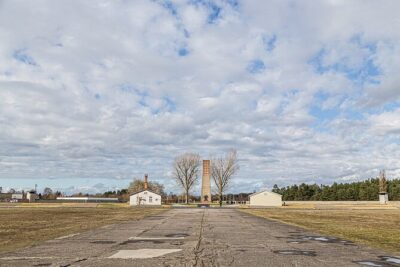
Sachsenhausen Concentration Camp Memorial Tour
Read our review →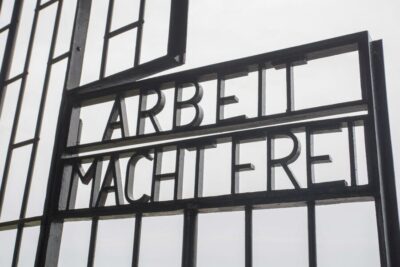
Sachsenhausen Concentration Camp Bus Tour in English from Berlin
Read our review →Sachsenhausen Concentration Camp Tour in English
Read our review →
Sachsenhausen Concentration Camp Memorial Tour (Max. 15 Guests)
Read our review →Browse the lists this tour appears in