
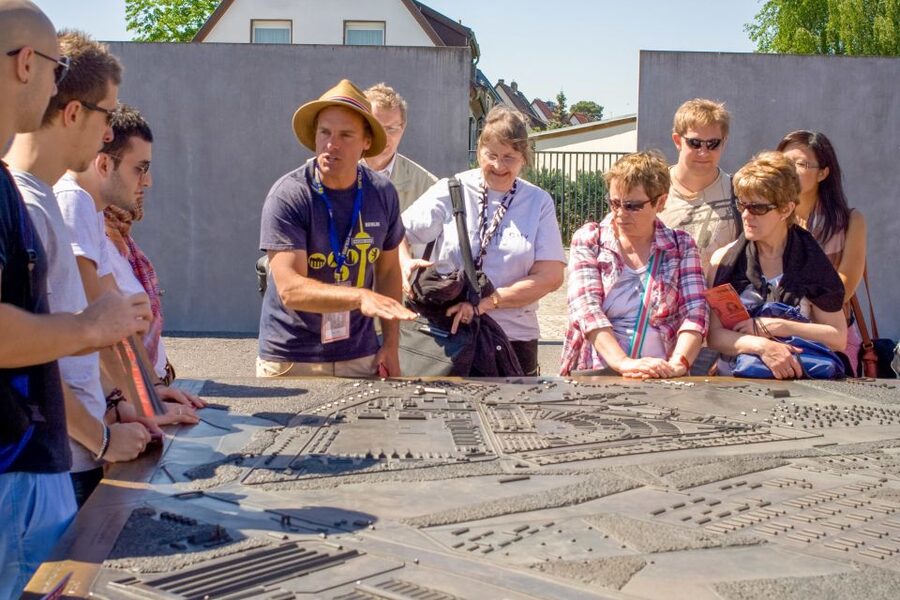
Reviewed · CONCENTRATION CAMP MEMORIAL TOURS
Berlin: English Bus Tour to Sachsenhausen Concentration Camp
Sachsenhausen leaves a mark fast. This 4-hour English-guided coach tour pairs a background lecture on the ride with a focused walk through Sachsenhausen Memorial’s most important areas. I especially liked how the key sites are shown clearly, from Tower A and the commandant’s house to the crematoria and gas chamber, and how time is built in for reflection rather than rushing you through. The main consideration is simple: it’s not wheelchair accessible, and the on-site visit is limited, so if you want to read everything slowly, you may feel short on time.
If you’re visiting Berlin and trying to understand the Nazi camp system beyond slogans, this trip is one of the most direct ways to do it. You’ll also get the added value of a comfortable, air-conditioned ride and a licensed guide who sets context before you step inside. Still, be prepared for a very heavy subject, and plan your day accordingly so the experience can land without you having to sprint to the next stop.
- A bus lecture before you reach the memorial, so names and locations make sense when you arrive
- Drive past Oranienburg and see the wider area tied to forced labor
- Tower A and Arbeit Macht Frei on-site, plus the camp’s internal layout and control points
- Crematoria, gas chamber, execution trench, and infirmaries all covered with historical context
- Infirmary barracks and medical experimentation, shown as part of the camp’s cruel system
- Tour pacing with built-in moments to pause, which matters on a site like this
In This Review
- Why Sachsenhausen Works Better Than a Quick Daytrip
- Price and What You’re Really Paying For
- The Friedrichstraße Meeting Point, Simple and Fast to Find
- The Coach Ride to Sachsenhausen: Use It for the Context
- Tour Length on Site: Why Two Hours Feels Tight
- Inside Sachsenhausen Memorial: Key Sites You’ll See
- Tower A and the Camp Entrance Story
- The Commandant’s House: Where Control Looked Like Administration
- Crematoria, Gas Chamber, and Execution Grounds
- The Camp’s Interior and the Scale of Death
- Infirmaries and Medical Experimentation
- Barracks Where Prisoners Were Brutally Treated
- Guides People Appear to Love, and What to Look For
- What to Bring and How to Plan Your Day
- Return to Berlin: A Final Chance to Process
- Should You Book This Sachsenhausen Tour From Berlin?
Why Sachsenhausen Works Better Than a Quick Daytrip
Most people go to Berlin and stick to the big memorials and museums in the city center. This tour adds something different: it takes you to a camp built for control and expansion, where the system had a logic that administrators tried to make efficient. That contrast is what makes Sachsenhausen hard to forget.
I like that the guided approach helps you connect what you see with what came before. Before you even walk the grounds, your guide’s commentary frames how the Nazi system expanded from ideology into infrastructure. That background is what keeps the visit from feeling like a checklist of “horrors,” and turns it into understanding.
Price and What You’re Really Paying For
At around $55 per person for a 4-hour experience, the price isn’t just “getting a bus there.” You’re paying for three things that add real value on a day like this: a licensed English guide, round-trip private air-conditioned transport, and memorial entry with a donation included.
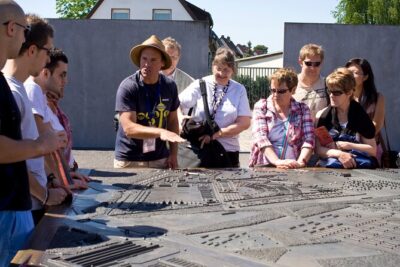
The memorial entry and a €3 donation per person are part of what you get. You also receive a map of the former camp, which sounds small, but it helps you follow what your guide is pointing out and find your bearings while you walk. If you’re the type who hates spending vacation time figuring out how to reach a site, this package format is a big win.
More Concentration Camp Memorial Tours in Berlin
- Berlin: Sachsenhausen Concentration Camp Tour in English
★ 5.0 · 5,711 reviews - Berlin: Sachsenhausen Concentration Camp Memorial Tour
★ 4.7 · 3,716 reviews - Sachsenhausen Concentration Camp Bus Tour in English from Berlin
★ 5.0 · 1,962 reviews
The Friedrichstraße Meeting Point, Simple and Fast to Find
This tour starts at the square outside Friedrichstraße train station, on the area between the Tränenpalast (Palace of Tears) and the station. Guides meet you there wearing a blue lanyard and a yellow name tag, holding yellow umbrellas.
Because the meeting point is so central, you avoid the “where do we all gather” stress that can happen with out-of-the-way tours. I’d still give yourself a little extra buffer time. Berlin transit is easy, but this is one of those days you want to be mentally ready, not rushing.
The Coach Ride to Sachsenhausen: Use It for the Context
The bus ride takes about 50 minutes each way. The best part is that you’re not staring out the window the whole time. Many groups get a historical background lecture on the ride so you understand what you’re about to see.
This matters because Sachsenhausen isn’t just one building or one event. It was designed from the ground up for control, expansion, and a brutal day-to-day routine. When your guide explains the system first, the details inside the camp feel more meaningful instead of random.
You’ll also pass through the area around Oranienburg, where the tour highlights where inmates would have been used for work. Seeing the broader geography helps you understand that the camp wasn’t sealed off from everything else. It was connected to the economy and the surrounding towns.
Tour Length on Site: Why Two Hours Feels Tight
The guided portion at the memorial is about 2 hours. That’s a realistic window given the size of Sachsenhausen Memorial and the number of significant locations. Still, you should know what that means for your personal style: if you want to slow-read exhibits, spend extra time at each memorial plaque, or linger for questions, you might feel the time limit.
The upside is that you won’t waste time getting oriented. Your guide leads you between the most important points, including areas that can be confusing if you’re on your own. On a site this emotionally intense, having a structured route can actually help you process everything.
More memorial site visits from Berlin:
- Berlin: Sachsenhausen Concentration Camp Tour in English
★ 4.8 · 1,889 reviews - Sachsenhausen Concentration Camp Memorial Tour (Max. 15 Guests)
★ 5.0 · 1,516 reviews - Berlin: Sachsenhausen Concentration Camp and Potsdam Tour
★ 4.6 · 1,334 reviews - Sachsenhausen concentration camp.
★ 5.0 · 1,189 reviews
Inside Sachsenhausen Memorial: Key Sites You’ll See
Your visit focuses on the parts of Sachsenhausen that show how the Nazi camp system worked in practice. You’ll walk through stark barracks and key structures tied to punishment, confinement, labor, and death. And your guide should keep connecting scenes to the broader plan behind the camp.
Here are the specific areas you can expect, and why each one matters:
Tower A and the Camp Entrance Story
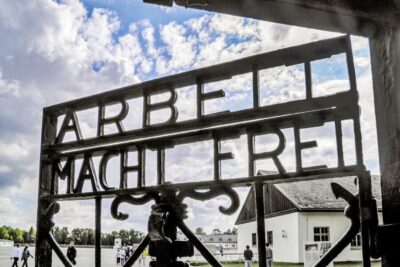
One of the first chilling focal points is Tower A, including the slogan Arbeit Macht Frei. On most memorial sites, you feel the weight immediately. At Sachsenhausen, the slogan is especially disturbing because it’s presented at a point that was meant to symbolize a lie about freedom and work.
Your guide’s explanation helps you understand that propaganda didn’t just exist on posters. It lived on the physical entry points and inside the daily structure of the camp. Seeing it in context makes it land in a different way.
The Commandant’s House: Where Control Looked Like Administration
You’ll also see the commandant’s house, which functions as a reminder that atrocities were managed with bureaucratic efficiency. It’s easy to imagine camps as chaos. On a tour like this, the point is to show you something worse: the system was organized, planned, and run like an operation.
That is why the commandant’s house is such an important stop. It reframes your understanding from “evil happened” to “people did this methodically.”
Crematoria, Gas Chamber, and Execution Grounds
The tour covers some of the most difficult parts of the memorial site, including the crematoria and the gas chamber, plus the execution trench. These are not just historical artifacts. They are the physical evidence of how killing was built into the camp’s operations.
If you’re sensitive to graphic details, this is where you’ll feel the strongest emotional impact. This is also where having a guide who explains with respect matters, especially if questions come up.
I also liked that the tour doesn’t treat these places like isolated horror set pieces. The guide ties them back to the camp’s overall routine and the way the system processed prisoners.
The Camp’s Interior and the Scale of Death
You’ll be shown the interior of the camp, where an estimated 35,000 people were murdered or died of disease. That number is not meant to be “consumed” like trivia. It’s meant to help you understand scale, which is something your brain struggles with when you see only a few buildings.
Your guide’s job is to slow that down, so the scale becomes human, not just statistical. A good guide also helps you understand the difference between what was planned, what was improvised, and how disease and neglect fit into the overall system.
Infirmaries and Medical Experimentation
Sachsenhausen includes infirmary areas and infirmary barracks where experimentation took place during the war. These stops are especially important because they show cruelty in a different costume. When you see these spaces with context, you can understand how perpetrators twisted medicine into a weapon.
The tour also includes other confinement-related spaces such as isolation and punishment cells. Together, these points show the full pipeline of control, from breaking prisoners physically and mentally to punishing them for resistance and forcing compliance.
Barracks Where Prisoners Were Brutally Treated
Expect time focused on the barracks where prisoners experienced brutal treatment. Even when a building looks quiet today, your guide’s commentary can make clear what life was like inside those walls. This is one of the most sobering parts of the tour because the scale feels personal.
The best tours here do two things at once: they explain the system and they give you space to absorb it without being overwhelmed.
Guides People Appear to Love, and What to Look For
Across groups, the most praised element is the guide’s delivery. Many people highlight guides such as Paul, Jamie G, Hannah, Georgia, Klaus, Rafael, Maria, and Nikolai for being clear, compassionate, and respectful with tough material.
What does that mean for you practically? When your guide talks, pay attention to how they handle empathy, not just facts. I look for guides who set expectations before the hardest sites, keep explanations direct, and pause when it makes sense. That style helps you stay present instead of shutting down.
Also, a few guides are noted for clear bus commentary on the way back, including how Germany approaches remembrance today. That kind of closing context can help you leave the site with a more complete picture.
What to Bring and How to Plan Your Day
You’ll walk a fair amount on uneven ground and across multiple areas. Bring comfortable shoes because you’ll spend time on foot inside the memorial area. A camera is listed as fine, though you might want to think about how you’ll use photos respectfully in such places.
The tour suggests you bring a light snack and drink. That’s not just a comfort tip. On a heavy, emotional day, low energy makes it harder to process what you’re learning.
Dress for the weather. The memorial is outdoors for key sections, so a jacket or layers can matter, even in mild conditions.
Finally, plan your day so you’re not immediately rushing into something loud or celebratory. This is a day that asks for quiet reflection afterward.
Return to Berlin: A Final Chance to Process
After the memorial visit, you head back to Berlin by air-conditioned bus. You’ll arrive back at the same central meeting area at Friedrichstraße train station, which is convenient if you’re continuing sightseeing or heading home.
The return ride isn’t just transport. With strong guides, this is where the commentary often becomes reflective, connecting what happened inside Sachsenhausen to Germany’s current approach to education and remembrance. That closing thread can help you make sense of the experience without turning it into a blur.
Should You Book This Sachsenhausen Tour From Berlin?
I think you should book this tour if you want a guided, English-language route that hits Sachsenhausen’s most important areas without wasting time figuring out the logistics yourself. The value is in the full package, entry plus donation, licensed guidance, and the coach ride context that helps everything click once you arrive.
Skip it or reconsider if you need wheelchair access or have very limited mobility. Also reconsider if you’re hoping for a relaxed, casual sightseeing day. This is structured for understanding, and it’s heavy.
If your goal is to leave Berlin with a clearer, more direct view of how the Nazi camp system operated, this is a strong choice. You’ll come away tired, thoughtful, and better informed, which is exactly what a trip to a place like Sachsenhausen is supposed to do.
Newest Berlin reviews on the site
- Jetbike Berlin fun bike beer bike★ 5.0 · 3 reviews
- Karl-Marx-Allee Walking Tour: Berlin’s Socialist History★ 5.0 · 5 reviews
- Homeless on chic streets: city tour in Berlin from personal experience★ 4.6 · 3 reviews
- Berlin: Sachsenhausen Concentration Camp Guided Tour★ 4.9 · 42 reviews
- Historyof the Trans, Queer & Gay communities of Berlin tour★ 4.8 · 17 reviews
- Historic Berlin Pubs & History Tour★ 4.9 · 73 reviews
- Berlin: City Center Walking Tour★ 4.7 · 45 reviews
- Half-Day Berlin Highlights Segway Expedition★ 4.5 · 61 reviews
Concentration Camp Memorial Tours, compared.
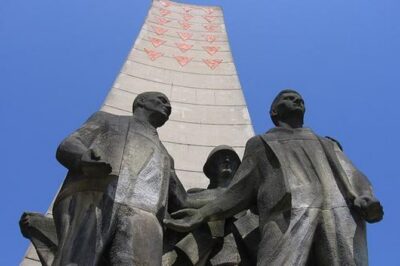
Sachsenhausen Concentration Camp Tour in English
Read our review →
Dachau Concentration Camp Memorial Site Tour from Munich by Train
Read our review →
Sachsenhausen Concentration Camp Memorial Tour
Read our review →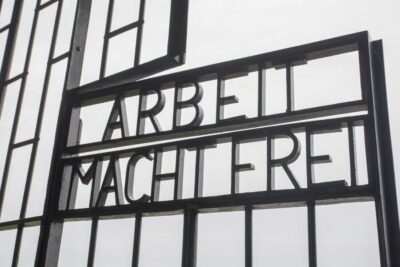
Sachsenhausen Concentration Camp Bus Tour in English from Berlin
Read our review →Sachsenhausen Concentration Camp Tour in English
Read our review →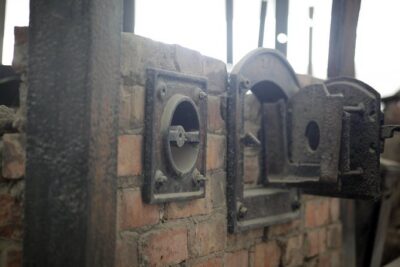
Sachsenhausen Concentration Camp Memorial Tour (Max. 15 Guests)
Read our review →Browse the lists this tour appears in