
Reviewed · CONCENTRATION CAMP MEMORIAL TOURS
Never Again Sachsenhausen Concentration Camp
Sachsenhausen hits hard, in the best way. A tight 4-hour visit to the Sachsenhausen Memorial and Museum, guided in English, with a small group and a clear, present-day framing from guide Siobhán. I especially like how the tour explains how the camp worked as a system of control, and how it connects that history to today’s far-right politics without getting preachy in tone. One possible drawback: the commentary takes a political and feminist lens, so if you want a strictly neutral, purely academic approach, this may feel too opinionated.
After a briefing at the visitor center, you get time to walk key areas on your own, including places tied to prison life and medical abuse. You also leave with a better sense of what happened when the Nazis lost power and the site shifted into later uses, from Soviet detention to propaganda.
In This Review
- Key Things to Know Before You Go
- Why Sachsenhausen Still Matters Beyond One Page of History
- Price and Value: What $31.29 Covers
- Getting There From Potsdamer Platz (And Keeping It Simple)
- The Visitor Center Walk: Models, Structures, and a Site That Changed Hands
- Autonomous Time Inside the Camp: Barracks and the Camp Kitchen
- The Infirmary Stop: Eugenics, Racism, and Control Over Women
- What Siobhán Does That Turns a Site Visit Into Learning
- Group Size, Pace, and Who This Works For
- Practical Notes You’ll Be Glad You Knew
- Should You Book It? My Decision Guide
- FAQ
- How long is the Sachsenhausen tour?
- Is the tour offered in English?
- What does the ticket price include?
- Where does the tour start and end?
- Do I need a public transport ticket in Berlin?
- Do I get a mobile ticket?
- How big is the group?
- Is the tour suitable for everyone physically?
- What if I need to cancel?
Key Things to Know Before You Go
- Small group size (max 15) means you can ask questions and keep the pace humane.
- English mobile ticket keeps things simple and avoids last-minute paperwork stress.
- Siobhán’s sensitive tone balances clarity about atrocities with respect for visitors and the subject.
- Independent exploration time lets you move at your own speed in the barracks areas and beyond.
- Thematic focus on control and dehumanization runs through everything you see, not just a timeline.
- Admission and memorial donation included gives you real value for a short, focused outing.
Why Sachsenhausen Still Matters Beyond One Page of History
If you care about how societies fall into cruelty, Sachsenhausen is one of the places that makes it real fast. This memorial site shows how violence was not random. It was organized, planned, and built into daily routines, with prisoners reduced to objects to be controlled, used, and discarded.
What I appreciate here is that the story is not treated like a closed chapter. The guide links what you see at Sachsenhausen to ideas and movements that are still active in Germany today. That connection is why this tour feels more like civic education than sightseeing.
More Concentration Camp Memorial Tours in Berlin
- Berlin: Sachsenhausen Concentration Camp Tour in English
★ 5.0 · 5,711 reviews - Berlin: Sachsenhausen Concentration Camp Memorial Tour
★ 4.7 · 3,716 reviews - Sachsenhausen Concentration Camp Bus Tour in English from Berlin
★ 5.0 · 1,962 reviews
Price and Value: What $31.29 Covers
At around $31.29 per person for about 4 hours, you are paying for more than a bus ride and a set of facts. Your ticket includes admission for the memorial, plus a donation tied to the site. That donation piece matters, because it supports the work of preserving and explaining the grounds.
You also benefit from a live guide, not just a headphone track. In a place this heavy, the difference shows. A person can set a respectful tone, adjust to your group, and handle questions in the moment. And with a group capped at 15, you are not stuck behind a crowd.
One practical catch: snacks and bottled water are not included. Bring what you need, or be ready to buy nearby. Also, you will need your own public transport ticket for getting around Berlin, since the tour does not provide an ABC zone transit pass.
Getting There From Potsdamer Platz (And Keeping It Simple)
The meeting point is Potsdamer Platz 10, 10785 Berlin. The tour ends back at the same place, which is a relief if you are trying to plan a tight day.
The site is reachable by public transportation, and the experience runs close enough that you can get yourself there without a private transfer. The tour also allows service animals, which is helpful to know if you travel with an assistance animal.
One more thing that can make your day smoother: you receive a confirmation at booking time, and your ticket is mobile. That reduces friction, especially when you are already dealing with Berlin transit and finding the right entrance.
The Visitor Center Walk: Models, Structures, and a Site That Changed Hands
The experience starts with a walk from the train area toward the visitors’ center. This opening stretch matters because it sets context before you step into the physical grounds.
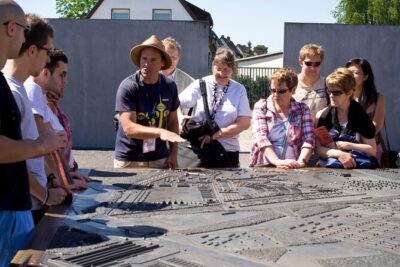
In the visitor center, you are shown detailed models of the camp and how the design supported control. This is not just architecture trivia. You are looking at how space was used to dominate people, enforce superiority, and keep prisoners trapped in a system where power flowed one direction.
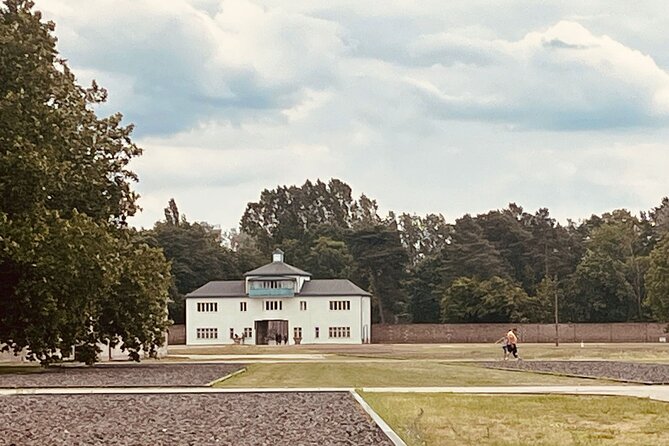
From there, the tour points out the site’s transformation over time. You learn how a former SS training camp became a Brandenburg police academy after World War II. That shift is unsettling for an important reason: it underlines how institutions can reuse places tied to atrocity, unless there is a strong commitment to remembrance and truth-telling.
If you want a tour that starts by making you understand the layout and purpose, this is a strong format. It gives your eyes something to hold onto when you move through the grounds.
More memorial site visits from Berlin:
- Berlin: Sachsenhausen Concentration Camp Tour in English
★ 4.8 · 1,889 reviews - Sachsenhausen Concentration Camp Memorial Tour (Max. 15 Guests)
★ 5.0 · 1,516 reviews - Berlin: English Bus Tour to Sachsenhausen Concentration Camp
★ 4.9 · 1,380 reviews - Berlin: Sachsenhausen Concentration Camp and Potsdam Tour
★ 4.6 · 1,334 reviews
Autonomous Time Inside the Camp: Barracks and the Camp Kitchen
After the initial orientation, you get autonomous exploration time in key areas. This is where the experience feels most practical for your own attention span. You can slow down at the places that hit you hardest, and you can skip ahead when you feel ready.
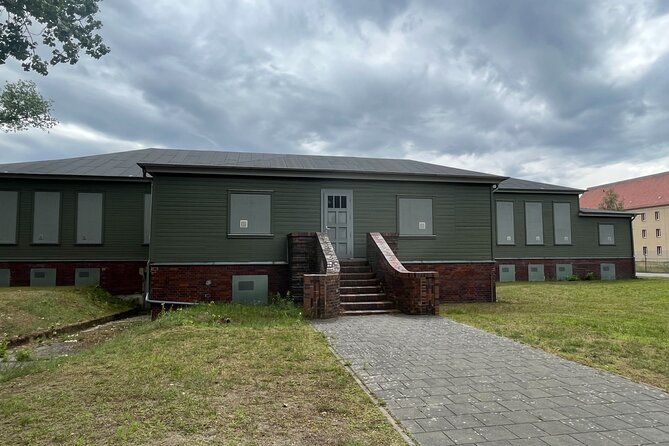
You will walk through areas tied to prison life, including the prisoners’ barracks and the camp kitchen. These are not just preserved buildings. They are evidence of how the camp functioned day after day, how prisoners were confined, fed, and worked under brutal conditions.
One sensitive topic the guide addresses is the present-day reality around denial and hate. The experience references how Holocaust denial and far-right attacks have targeted the site. It also connects those kinds of attacks to current German far-right politics, including the rise of the AfD. For me, this is one of the tour’s most valuable elements, because it prevents history from being treated like a museum exhibit sealed in glass.
You might find that this framing makes the whole visit feel more urgent. That urgency is not there to shock you. It is there to help you recognize the patterns when they show up again.
The Infirmary Stop: Eugenics, Racism, and Control Over Women
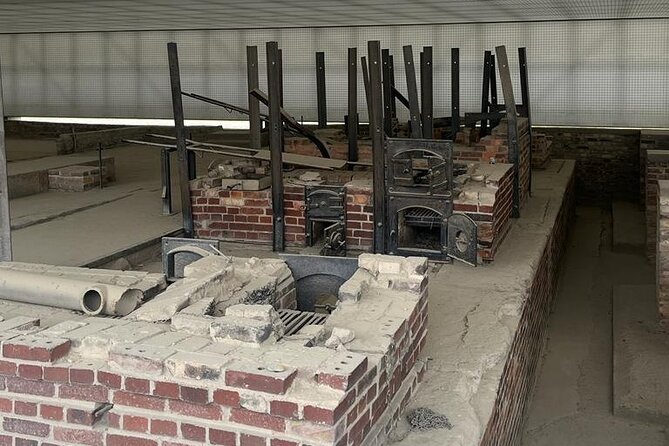
The most emotionally difficult part of the grounds is often the infirmary area, and this tour does not shy away from why. The guide explains how Nazi medical systems carried racism and cruelty into experiments and policies.
You learn about themes such as eugenics and how prisoners were treated as instruments rather than human beings. The tour also covers the disturbing reality of violence connected to the control of women’s bodies. And there is discussion of how prisoners were used in ways that benefited Nazi doctors’ careers, with people reduced to lab subjects.
This section is heavy for a reason. It is not there as a graphic add-on, it is there to show how ideology could be turned into “science” and institutional practice. If you are the kind of visitor who needs to understand the mechanism behind cruelty, this stop delivers.
At the same time, the guide manages the tone carefully. In the reviews, Siobhán is described as respectful toward the suffering and the feelings people bring with them. That matters, because in places like this, you do not want a tour that rushes or performs.
What Siobhán Does That Turns a Site Visit Into Learning
This is not presented as a dense, scripted lecture. It is more guided than an audio tour, and more flexible than a rigid group-only tour.
A big reason it works is the way Siobhán communicates. Multiple accounts point to her being careful with the group’s emotional load. She explains hard details, but she keeps the pace respectful, not frantic.
Another standout is how the commentary is filtered through a progressive, feminist lens, connecting the past to the present. That is a real difference from tours that keep everything in a strictly historical frame. Here, you get interpretation, including how racism and misogyny shaped the camp system and the wider Nazi worldview.
One review also mentions a small amount of appropriate levity. That might sound strange for Sachsenhausen, but the point is balance. The tour does not try to numb you with humor, it uses brief human moments so you can process what you are seeing without walking out broken.
If you want a guide who can hold both seriousness and clear thinking, this is a solid match.
Group Size, Pace, and Who This Works For
The tour caps at 15 travelers, which is ideal for a site like this. In a camp memorial, you need time. You also need a group that can stay together without turning the experience into a slow moving obstacle course.
You should also have a moderate physical fitness level. That does not mean athletic. It means you should be comfortable walking and spending time outdoors, moving between sections of the memorial.
This format can work well for mixed ages. One account specifically mentions teens and adults in the same group, with the guide adapting and answering questions. Still, you know your own kids best. If you are bringing younger teens, consider whether they can handle intense topics like eugenics and medical abuse.
Who may want another option: if you strongly prefer a strictly neutral, step-by-step historical narrative with minimal modern connections, the tour’s framing might not match your expectations.
Practical Notes You’ll Be Glad You Knew
Bring water or plan to buy it. Snacks and bottled water are not included, and you will likely want a small buffer for your own energy.
Also, confirm your transit plan. The tour is near public transport, but you still need your own ABC zone ticket.
If you hate last-minute tech stress, the mobile ticket can be a plus. You receive confirmation at booking, and you will not be juggling printed passes.
And yes, you should be ready for a topic that is heavy by design. This is not a light day trip. The payoff is understanding how and why the camp operated, and how that connects to the present.
Should You Book It? My Decision Guide
Book this tour if you want a guided visit that gives you real context, not just a self-paced walk. The combination of a careful guide, memorial admission included, and time to explore on your own is a strong value play.
I would especially recommend it if you care about the links between history and today. The experience connects the camp to later uses of the site and to modern far-right politics, including the AfD. That helps you walk away with more than dates and names.
Consider skipping or choosing a different style if political framing makes you uncomfortable. This tour makes no secret that the guide’s lens is progressive and feminist, and that shapes what gets emphasized.
If your goal is respectful, clear learning in a small group, this is a good bet. If your goal is a purely neutral, academic history-only tour, you may want to compare options first.
FAQ
How long is the Sachsenhausen tour?
It runs about 4 hours.
Is the tour offered in English?
Yes, it is offered in English.
What does the ticket price include?
Admission to the memorial is included, and there is also a donation for the memorial included.
Where does the tour start and end?
It starts at Potsdamer Platz 10, 10785 Berlin, Germany and ends back at the meeting point.
Do I need a public transport ticket in Berlin?
Yes. A public transport ticket for the ABC zone is not included.
Do I get a mobile ticket?
Yes, the experience includes a mobile ticket.
How big is the group?
There is a maximum of 15 travelers.
Is the tour suitable for everyone physically?
The tour lists a moderate physical fitness level as the expectation.
What if I need to cancel?
You can cancel for a full refund up to 24 hours before the experience start time.
Newest Berlin reviews on the site
- Your ticket to The Wall Museum Berlin★ 3.0 · 60 reviews
- Rickshaw Tours Berlin – Groups of up to 16 people with several rickshaws★ 4.0 · 97 reviews
- Love and War in Berlin: Self-Guided Story Puzzle Walk★ 5.0 · 7 reviews
- Warnemuende Shore Excursion: Berlin Private Sightseeing Tour from Rostock★ 5.0 · 4 reviews
- eSIM for Germany and 34 European Countries★ 4.5 · 16 reviews
- Walking on the Wall: 3-Hour Tour in Berlin★ 4.5 · 34 reviews
- Karl-Marx-Allee Tour: Life and Architecture in East Berlin★ 5.0 · 19 reviews
- Warnemuende Shore Excursion: Private Berlin Tour★ 4.5 · 27 reviews
Concentration Camp Memorial Tours, compared.
Sachsenhausen Concentration Camp Tour in English
Read our review →
Dachau Concentration Camp Memorial Site Tour from Munich by Train
Read our review →
Sachsenhausen Concentration Camp Memorial Tour
Read our review →
Sachsenhausen Concentration Camp Bus Tour in English from Berlin
Read our review →Sachsenhausen Concentration Camp Tour in English
Read our review →
Sachsenhausen Concentration Camp Memorial Tour (Max. 15 Guests)
Read our review →Browse the lists this tour appears in