
Reviewed · CONCENTRATION CAMP MEMORIAL TOURS
Dachau Memorial Public Tour
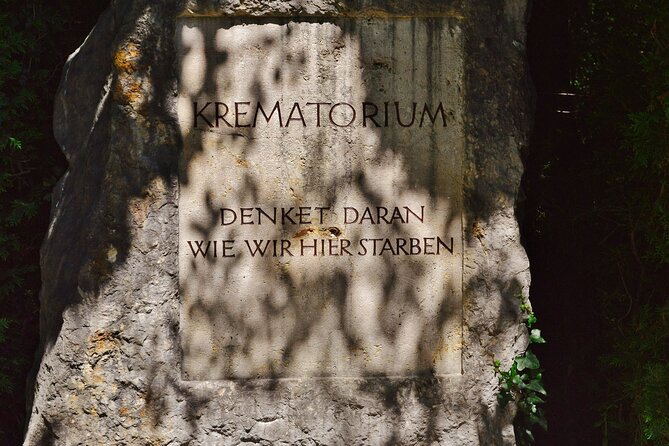
A visit to Dachau Memorial changes how you read history, and this Dachau public tour gives you a live English guide to connect the dots. I like that the tour aims for clarity, from how the camp ran day to day to what the Nazi system did to prisoners. It is heavy material, but the structure helps you follow it without getting lost.
I also like the practical setup: the tour includes a local professional guide and a public transport ticket, which makes the Munich to Dachau day feel more straightforward. In about 5 hours, you cover major story blocks like daily camp dynamics, medical experiments, and the specific fate of Roma prisoners. One possible drawback is timing and logistics, because some past bookings reported confusing details about guide location or starting times, so you should be ready to double-check.
In This Review
- Key things to know before you go
- Dachau in context: what you’re really walking into
- From Munich’s Marienplatz Fish Fountain to Dachau grounds
- The core story: daily camp life, guards, and prisoner control
- The hardest section: medical experiments on prisoners
- Roma prisoners: stories you can’t afford to miss
- Survivor perspective and the meaning of liberation in 1945
- Price and value: is $126 fair for what you get?
- Who this tour suits best, and who should be cautious
- Final take: should you book this Dachau Memorial Public Tour?
- FAQ
- Where is the meeting point?
- How long is the Dachau Memorial public tour?
- What language is the tour in?
- Is there a live guide?
- What is included in the price?
- Is food and beverage included?
- What is the cancellation policy?
- Can I reserve and pay later?
- Are there multiple starting times?
Key things to know before you go
- English live guide to explain the camp system, not just dates on a wall
- Public transport ticket included, useful for getting out of Munich without extra planning
- Daily life focus, including guards and the mechanics of prisoner control
- Medical experiments highlighted, a key part of what made Dachau an “Academy of Terror”
- Roma prisoners’ stories included, helping fill in names and narratives that are often overlooked
Dachau in context: what you’re really walking into
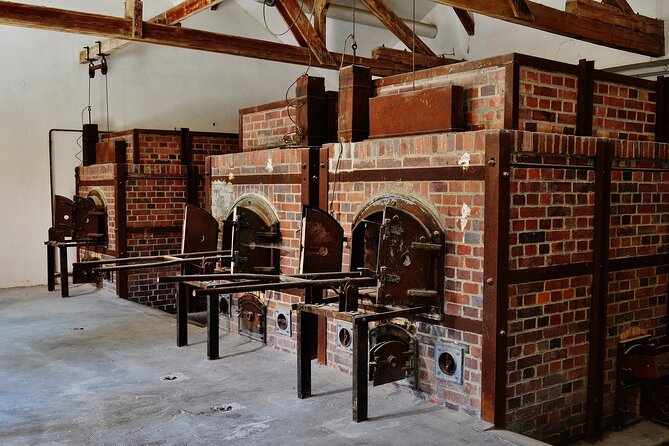
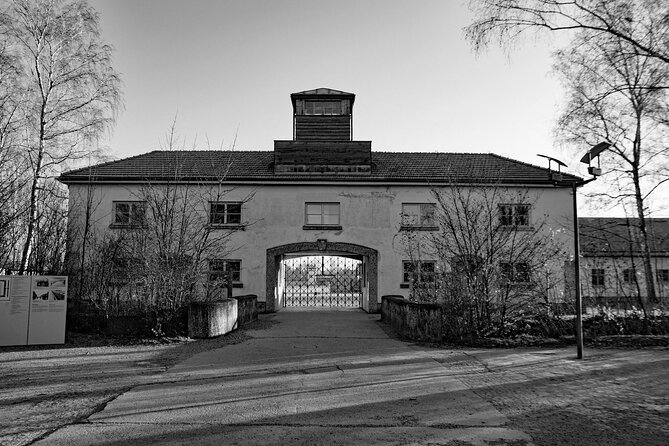
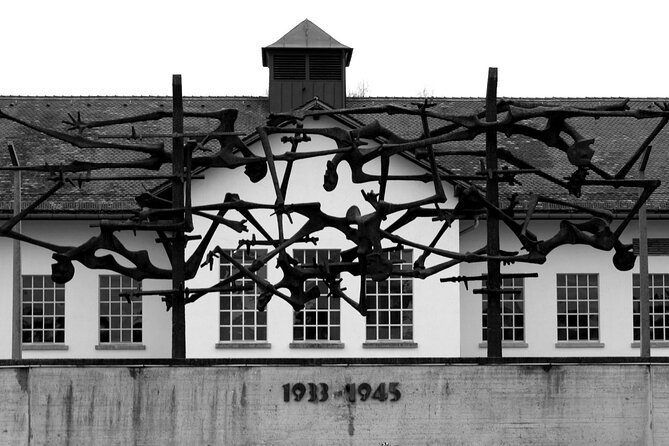
Dachau is the Nazis’ first concentration camp in Germany, and that matters. Opened in 1933, it started as a place for political prisoners, then evolved into forced labor on a huge scale. Over roughly 12 years, it held more than 200,000 inmates, and it became known as an “Academy of Terror,” meaning a training ground for cruelty meant to be replicated.
The memorial also carries the full weight of international suffering. Dachau is linked to the deaths of around 40,000 people from 34 nations, before liberation in 1945 by the American army. When you step onto the grounds, you’re not visiting a single tragedy. You’re seeing a system: policies, routines, and decisions that were carried out with bureaucratic calm.
That’s why I’m glad the tour leans into the how, not just the what. Knowing that Dachau later became a model for brutality helps you understand why this site is preserved. It’s not only about remembering victims, it’s also about recognizing the structure that allowed abuse to scale up.
More Concentration Camp Memorial Tours in Munich
- Dachau Concentration Camp Memorial Site Tour from Munich by Train
★ 4.5 · 5,637 reviews - From Munich: Dachau Memorial Site Day Tour
★ 4.8 · 2,723 reviews - From Munich: Dachau Memorial Site Half-Day Trip
★ 4.7 · 2,526 reviews
From Munich’s Marienplatz Fish Fountain to Dachau grounds
This is a Munich-based public tour, so you start in the city. The meeting point is at the Fish Fountain, Marienplatz 8, 80331 München. You’ll join a group for an English-language live guided visit, and the tour includes a ticket for public transport.
Because this is a public guided tour with a fixed duration of 5 hours, plan your day around that block. You do not want to stack tight connections right after, especially because commuting plus entry plus walking inside the memorial takes time. If you hate surprises, give yourself a little buffer before and after.
Also, I’d treat meeting details as something to manage actively. The camp visit is solemn, not chaotic, but your start still depends on finding the right guide. Some past bookings reported confusing or conflicting information about guide location and contact details, so when you get your confirmation, note the meeting point and your exact start time. Be there early enough that you can regroup if the group is delayed.
The core story: daily camp life, guards, and prisoner control
One of the strongest parts of this tour is how it explains daily life inside Dachau. You’re not just hearing about ideology. You’re hearing about routines, power, and what prisoners experienced in practice. The tour covers guards and prisoners, and it explains how the camp dynamics kept people under constant threat.
I like this approach because it turns the site from an abstract historical lesson into something your brain can organize. When you understand the daily rhythm of control, you get a clearer picture of how cruelty became normal operating procedure. That’s often the difference between reading about atrocities and truly grasping how a system worked.
You’ll likely feel the contrast between what the camp pretended to be, and what it actually did. Even if you know the broad facts, the detailed camp dynamics can still land hard. Do not expect a cheerful pace. This is a place where your attention will naturally narrow, and where the guide’s explanations help you keep that attention on meaning instead of getting overwhelmed.
Practical tip for you: wear shoes you can stand in for a while, and keep your camera away. Not because it’s forbidden here in the info you were given, but because you’ll want your full attention for the guide’s sequencing of events.
The hardest section: medical experiments on prisoners
Another major focus of the tour is the gruesome medical experiments carried out on helpless prisoners. This is the kind of topic that can feel almost too awful to hold in your head, which is exactly why a guided explanation helps. A good guide organizes the story so you can follow the timeline and the intent behind the abuse.
From a value standpoint, it’s worth looking at what the tour promises to cover here. Many visits to Holocaust and Nazi sites stay broad. This one explicitly calls out medical experiments, which signals that you won’t leave with only generalities. You should be prepared for emotionally intense content and for a presentation that frames the experiments as part of how the camp functioned, not as isolated horror.
If you’re sensitive to graphic or disturbing topics, plan your mental pacing. Take short breaks when you need them, and let the guide lead the transitions. Trying to power through can make it harder to process what you’re being told.
More memorial site visits from Munich:
- From Munich: Dachau Memorial Site Full-Day Tour
★ 4.9 · 1,406 reviews - Dachau Concentration Camp Memorial Tour with Train from Munich
★ 4.5 · 955 reviews - Early-Start Dachau Memorial Half-Day Tour from Munich
★ 5.0 · 942 reviews - Guided Dachau Concentration Camp Memorial Site Tour with Train from Munich
★ 5.0 · 920 reviews
Roma prisoners: stories you can’t afford to miss
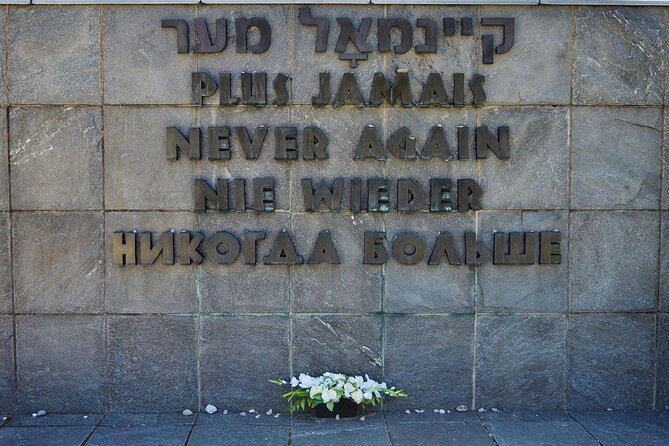
This tour also highlights the dreadful fate of Roma prisoners. That matters because many people arrive at Dachau knowing the broad story of political prisoners and forced labor, but fewer know how Roma people were targeted and imprisoned there. Including Roma prisoners specifically gives you a more complete view of Nazi persecution.
I appreciate that this is not treated as a side note. The tour’s own focus suggests the guide treats these experiences as essential context, not supplemental information. For you, that means you walk away with a fuller understanding of how the Nazi system persecuted multiple groups through detention, forced labor, and mass death.
This part can also feel personal in a different way. Even if you do not have family connections, you’re building a mental map of whose names appear in the historical record and whose voices have been harder to find. The tour’s decision to illuminate Roma prisoners’ fates is a strong reason to consider it.
Survivor perspective and the meaning of liberation in 1945
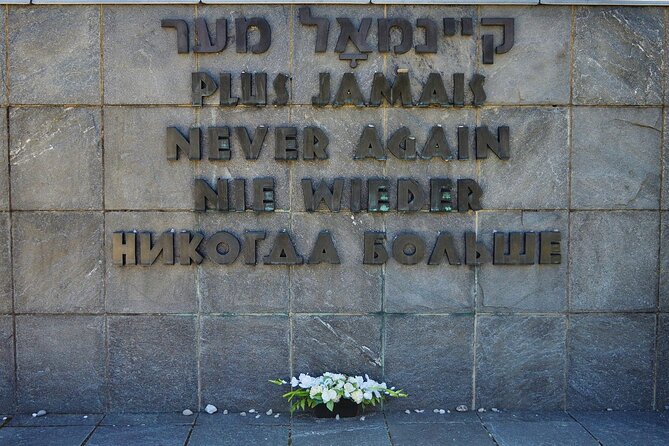
A key highlight is that you hear gripping tales from survivors, bringing a human perspective to resilience. This is one of the most important ingredients for a memorial visit. Facts give you the structure, but survivor testimony gives you the pulse.
The memorial period you’re learning about includes a hard timeline: the camp’s use over 12 years, the death count linked to Dachau, and then liberation in 1945 by the American army. The survivor stories tie those dates to what it meant to endure, survive, and finally have liberation. That connection can be the difference between knowing history and understanding it.
I also like that the tour frames Dachau as a place where terror was systematized. Hearing survivors after learning about the camp’s daily controls and experiments helps you see the full arc: how the machine of abuse worked, and what it cost.
Emotional safety note: if you feel yourself getting numb, that can happen with intense memorials. Try stepping back for a moment and focusing on one thing the guide said that you can carry forward, like a concept or a detail that gives the story shape.
Price and value: is $126 fair for what you get?
The price is listed at $126 per person for a 5-hour experience. On paper, that is not a bargain deal. But value here is not only the ticket. You’re paying for an English live guide, a structured explanation of multiple core story areas, and a public transport ticket included in the package.
Think about what a self-guided visit would cost you. You’d still need transport from Munich and you’d likely want to use an audio guide or timed exhibits. The tour’s value is that it organizes the story blocks you came for: daily camp life, the camp’s brutal medical experiments, Roma prisoners, and survivor perspectives. If you want a guided narrative rather than piecing together information yourself, $126 can make sense.
The one caution is that your experience depends on smooth execution. Some past bookings reported a failure to happen as described, and other issues with conflicting guide location or contact info. That doesn’t automatically mean your day will go wrong, but it does mean you should treat timing and meeting point seriously. If you’re arriving in Munich with a packed schedule, consider building slack into your day so one hiccup does not snowball into a wasted morning.
Who this tour suits best, and who should be cautious
This tour is best for you if you want an English guided experience that explicitly covers multiple difficult aspects of Dachau, not only the broad overview. You’ll likely enjoy it most if you appreciate structure, and if you want a narrative that moves from camp purpose to daily control to specific crimes like medical experiments and the persecution of Roma prisoners.
It may be a tougher fit if you’re looking for a light, easy day trip. This is a memorial focused on genocide, forced labor, and cruelty. The guided explanations and survivor stories are emotionally demanding.
If you struggle with very heavy topics, you can still go, but plan your own boundaries. Stick with the tour timing so you can pace yourself, and avoid scheduling other major activities on the same day.
Final take: should you book this Dachau Memorial Public Tour?
I’d book this tour if you want a guided, English narrative that covers the main parts people come for, including daily camp life, medical experiments, Roma prisoners, and survivor testimony, all within a 5-hour window. The included public transport ticket and a local professional live guide are real value, especially if you don’t want to handle logistics on your own.
I would also book it with one condition: confirm the start time and meeting details in advance, and plan to arrive early at the Fish Fountain in Marienplatz. Based on prior reports, that is the area most likely to affect your day. If you do that, you’ll give yourself the best shot at a respectful, focused visit.
FAQ
Where is the meeting point?
You meet at the Fish Fountain, Marienplatz 8, 80331 München, Germany.
How long is the Dachau Memorial public tour?
The duration is 5 hours.
What language is the tour in?
The live tour guide offers the tour in English.
Is there a live guide?
Yes. The tour includes a local professional guide on a public guided tour.
What is included in the price?
Included items are the local professional guide, a ticket for public transport, and an online payment processing fee.
Is food and beverage included?
No. Food and beverage are not included.
What is the cancellation policy?
Free cancellation is available, and you can cancel up to 24 hours in advance for a full refund.
Can I reserve and pay later?
Yes. You can reserve now and pay later, meaning you pay nothing today.
Are there multiple starting times?
Starting times depend on availability. You can check availability to see starting times.
Newest Munich reviews on the site
- Klassik im Museum★ 5.0 · 6 reviews
- Hidden Architectural Gems of Munich (Max. 16 guests)★ 4.9 · 52 reviews
- From Munich: Herrenchiemsee Palace and Boat Trip Day-Tour★ 4.8 · 129 reviews
- Munich: Half-Day Skip-the-Line Neuschwanstein Castle Tour★ 4.6 · 110 reviews
- Glockenbachviertel culinary – the food tour★ 4.6 · 5 reviews
- From Munich: To Neuschwanstein Castle, Linderhof, Oberammerg★ 4.7 · 8 reviews
- From Munich: Dachau Memorial Site Tour in Spanish★ 4.9 · 300 reviews
- From Munich: Trip to Neuschwanstein & Linderhof in Spanish★ 4.8 · 282 reviews
Concentration Camp Memorial Tours, compared.
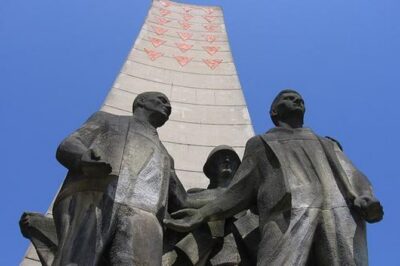
Sachsenhausen Concentration Camp Tour in English
Read our review →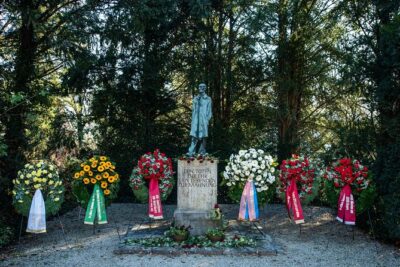
Dachau Concentration Camp Memorial Site Tour from Munich by Train
Read our review →
Sachsenhausen Concentration Camp Memorial Tour
Read our review →
Sachsenhausen Concentration Camp Bus Tour in English from Berlin
Read our review →Sachsenhausen Concentration Camp Tour in English
Read our review →
Sachsenhausen Concentration Camp Memorial Tour (Max. 15 Guests)
Read our review →Browse the lists this tour appears in