
Reviewed · CONCENTRATION CAMP MEMORIAL TOURS
Berlin: Sachsenhausen Concentration Camp Guided Tour
Sachsenhausen is heavy history, handled with care. This 5-hour small-group trip combines easy Berlin logistics with a guided walk through the camp’s systems, routines, and cruelty, plus stories of resilience. I especially like the small group size that keeps the experience human, and I like the guided narrative that explains how the camp functioned, not just what happened.
You do need to be ready for the material. This is a confronting place, with sites connected to executions and medical abuse, and you will spend real time outdoors rain or shine, so comfortable shoes matter a lot.
In This Review
- Key things that make this tour worth your time
- Why Sachsenhausen feels different from other camp visits
- Alexanderplatz to the memorial, the 30-minute setup that matters
- Passing the entrance and understanding the camp machinery
- Prisoner routine, roll call, and what life was like behind the walls
- The Jewish sector barracks: overcrowding and forced living conditions
- Camp cell blocks, British POWs, and the people behind the labels
- Kitchen break and the exhibition, including drawings on the walls
- Special Camp no. 7 after the war: abuse did not end overnight
- Station Z, the gas chamber, crematorium, and the final solution
- The infirmary and medical experiments: where cruelty wore a lab coat
- Value check: is $115 for 5 hours a fair deal?
- Practical tips so the day goes smoother
- Should you book the Sachsenhausen guided tour near Berlin?
- FAQ
- How long is the Berlin Sachsenhausen guided tour?
- Where do I meet for pickup?
- Is pickup and drop-off included?
- How many people are in the group?
- Is the tour guided in English?
- Is the tour wheelchair accessible?
- Will the tour run in bad weather?
- What should I bring with me?
- Are drones allowed?
- What is included with my ticket besides the guide?
Key things that make this tour worth your time
- Pickup and drop-off from Alexanderplatz keeps you from juggling trains and schedules
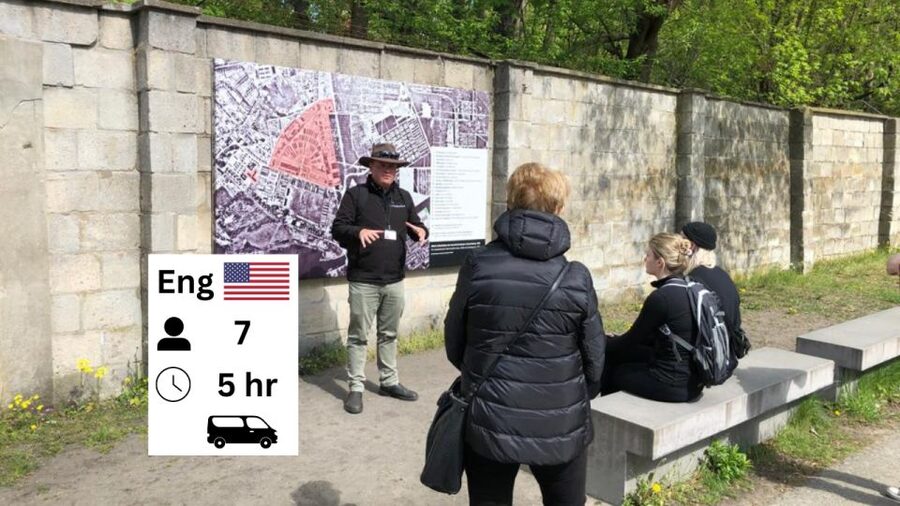
- Small group capped at 7 means you can ask questions and keep your place in the story
- A guide-led route through key camp areas connects everyday prison life to the machinery of mass murder
- Station Z and the infirmary are included, so the story reaches the darkest endpoints
- Post-war Special Camp no. 7 shows how abuse continued after 1945
- Skip-the-line ticket handling plus a van ride makes the whole half-day run smoother
Why Sachsenhausen feels different from other camp visits
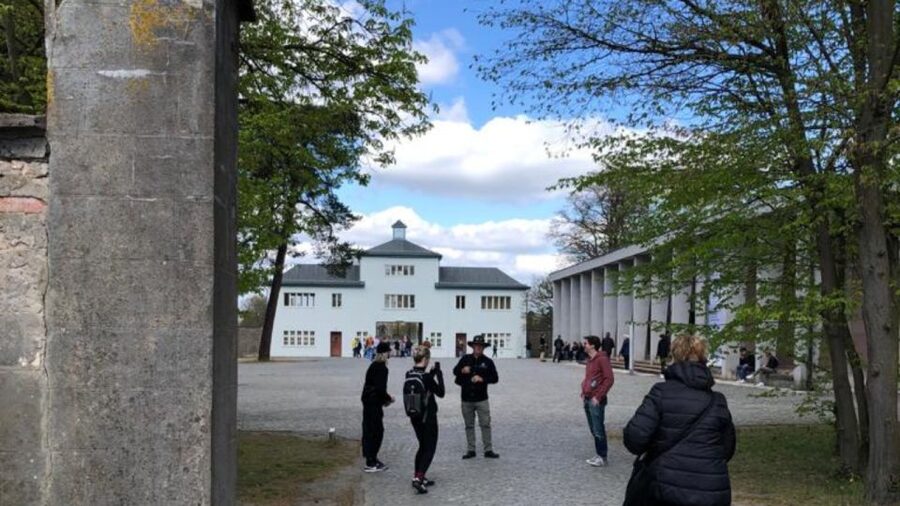
Sachsenhausen is located just outside Berlin, and it carries an extra chill for one main reason: it was treated as a prototype. Your guide frames it as an early model for how the Nazi concentration camp system was organized, managed, and expanded. That context matters. Without it, camp visits can feel like a collection of shocking rooms and facts. With it, you start seeing the pattern, how policies became routines, and how ordinary paperwork and guard procedures fed into atrocity.
I also like that the tour does more than list dates. It keeps returning to motivation and mindset, in a sober way. You’ll look at the mindset of prisoners trying to survive and the mindset of guards operating inside a brutal structure. That angle does not soften anything. It just makes the story more understandable, and more disturbing because it shows how cruelty could be systematized.
More Concentration Camp Memorial Tours in Berlin
- Berlin: Sachsenhausen Concentration Camp Tour in English
★ 5.0 · 5,711 reviews - Berlin: Sachsenhausen Concentration Camp Memorial Tour
★ 4.7 · 3,716 reviews - Sachsenhausen Concentration Camp Bus Tour in English from Berlin
★ 5.0 · 1,962 reviews
Alexanderplatz to the memorial, the 30-minute setup that matters
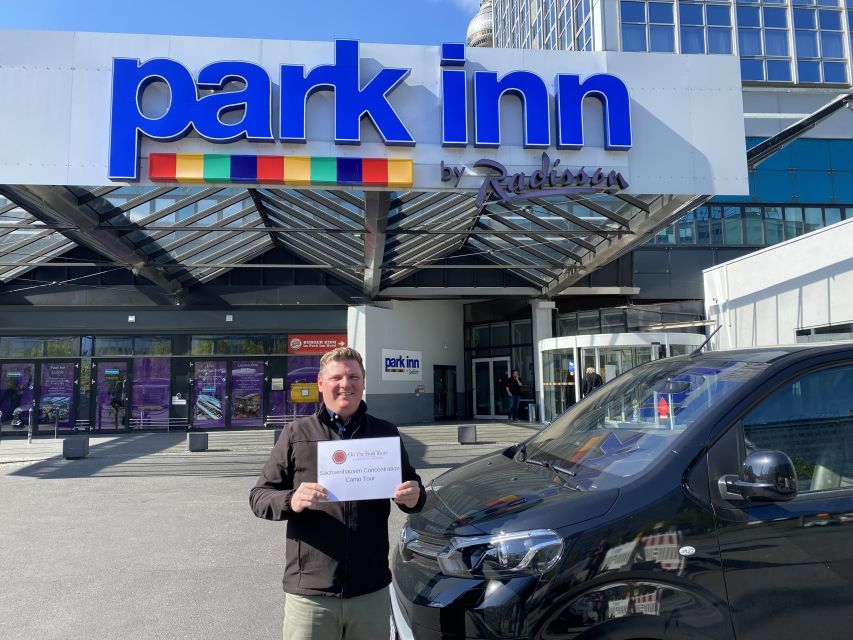
Most people underestimate how much a good start affects the whole experience. Here, you meet at the Park Inn by Radisson Berlin Alexanderplatz at the taxi pick-up and drop-off point. Then you ride by van for about 30 minutes. That drive is not dead time.
Your guide uses the trip to introduce the methodology of the Nazi concentration camp system and to explain why Sachsenhausen became the model camp for later camps. In other words, you get the mental map before you reach the gate. You also get to settle in with a bottle of water, and you avoid the stress of trying to coordinate transport on the day you’re most emotionally focused.
This is also where the small-group format shows its value. With a group of up to 7, the guide’s pacing can stay tighter. You’re less likely to feel rushed, or lost, or left behind when questions come up.
Passing the entrance and understanding the camp machinery
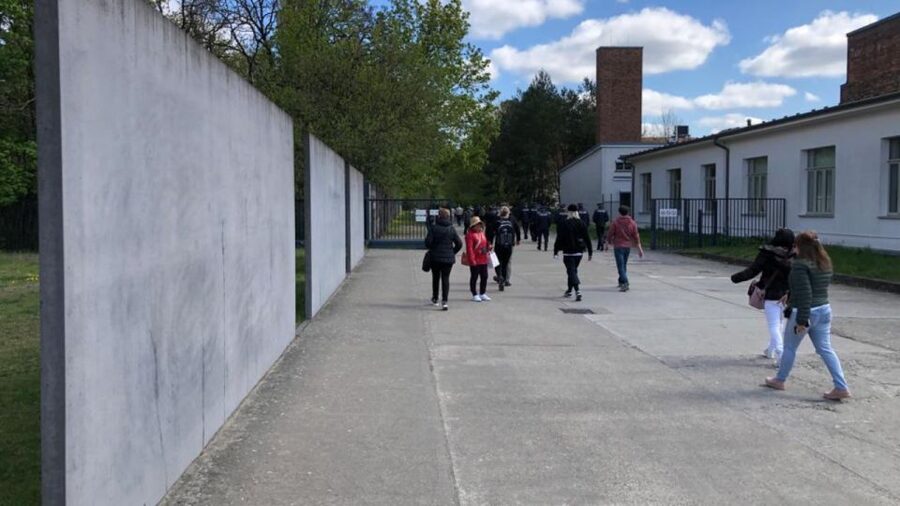
Once you arrive at the Sachsenhausen Memorial, the tour walks you through administrative and managerial space before it hits the emotional gut-punch areas. A key stop is the SS Concentration Camps Inspectorate, described as the authority that oversaw the entire concentration camp system of the Third Reich. That’s an important choice. It forces you to see the bureaucracy behind the horror.
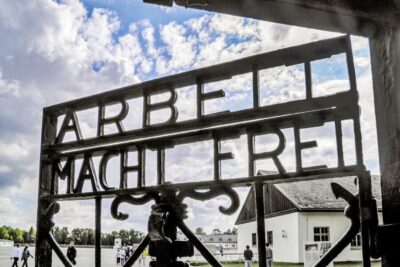
Then you enter through the main entrance and pass under Tower A, in front of the notorious motto ARBEIT MACHT FREI. Even if you’ve heard it before, seeing it in place lands differently. It is propaganda built to mock suffering, and the guide’s explanation gives you the context for why such symbols were used inside a system built for degradation and exploitation.
From there, the tour shifts into prisoner reality. You’ll be introduced to the daily routine, including the morning roll call. You’ll also hear about the shoe testing track, a detail that underlines how the camp controlled bodies down to small physical necessities. These are the moments where your guide helps the site stop being abstract and becomes specific.
Prisoner routine, roll call, and what life was like behind the walls
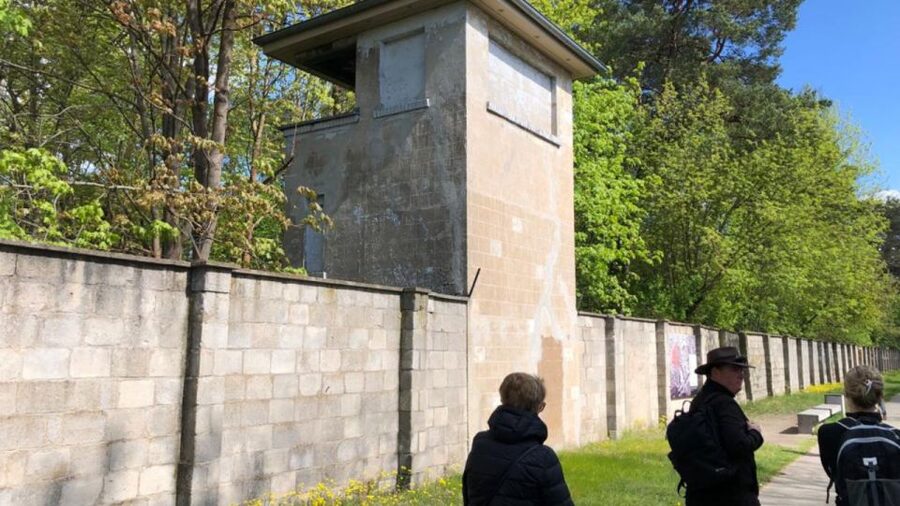
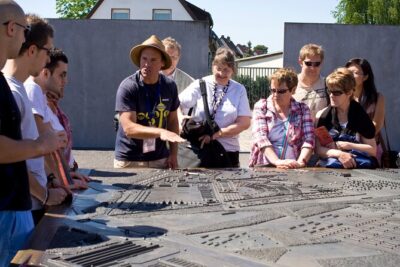
The camp layout can look like an outdoor museum at first glance, but the guide keeps bringing it back to function. You are shown how routine worked, how control was enforced, and how time and movement were managed.
The morning roll call is not just a historical fact. It represents discipline used to break down identity and morale. When you understand that, you read the space differently. The same goes for the shoe testing track. It’s easy to think of it as a minor cruelty, but when explained in context it shows how survival needs became points of punishment.
Your guide also examines the everyday lives, struggles, and challenges faced by prisoners. I appreciate this because it pushes past the simplest story line of suffering only. It includes the constant problem-solving prisoners faced, the limits on dignity, and how survival depended on a brutal mix of luck, structure, and human endurance.
More memorial site visits from Berlin:
- Berlin: Sachsenhausen Concentration Camp Tour in English
★ 4.8 · 1,889 reviews - Sachsenhausen Concentration Camp Memorial Tour (Max. 15 Guests)
★ 5.0 · 1,516 reviews - Berlin: English Bus Tour to Sachsenhausen Concentration Camp
★ 4.9 · 1,380 reviews - Berlin: Sachsenhausen Concentration Camp and Potsdam Tour
★ 4.6 · 1,334 reviews
The Jewish sector barracks: overcrowding and forced living conditions
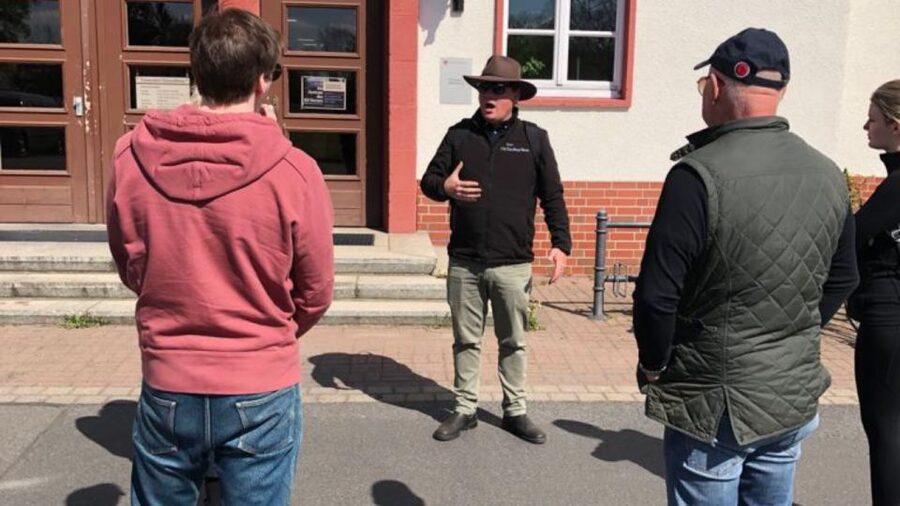
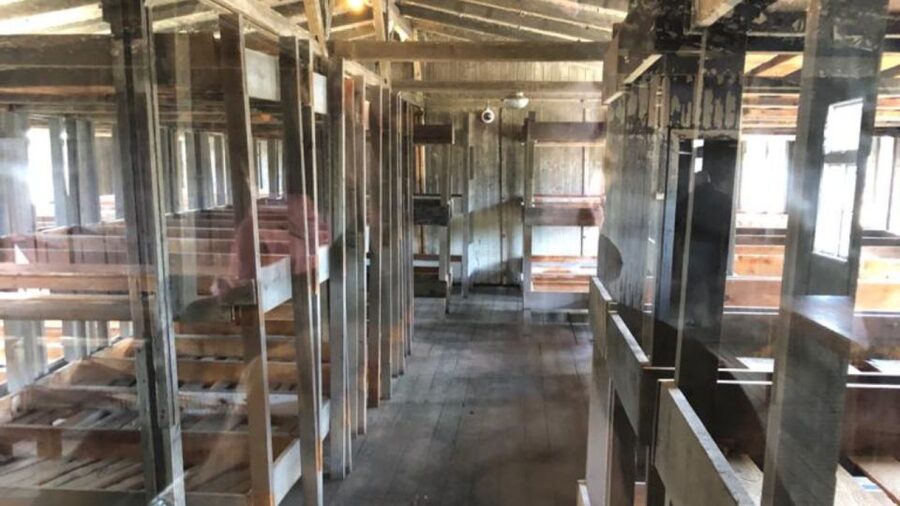
The tour then moves to the Jewish sector of the camp. This is where you’ll encounter some of the most difficult descriptions, including walking through overcrowded barracks. The guide’s approach here is structured and respectful, but the content is still hard.
Pay attention to what the guide emphasizes about forced living conditions. Barracks are not just buildings. They are compressed space designed to control movement, reduce privacy, and intensify deprivation. Seeing them as part of a designed system helps you connect the architecture to the harm.
This section can be emotionally draining, so it helps that the tour keeps moving in a sequence that builds understanding. You’re not dropped into the worst scenes without preparation. You’ve already been introduced to how the camp operated, so the barracks feel like a logical next step, not random tragedy.
Camp cell blocks, British POWs, and the people behind the labels
Next comes the camp cell block, described as shrouded in secrecy and tied to cruel mistreatment. This is also where the tour addresses specific groups held there. You’ll hear about British POWs, along with special inmates, including Stalin’s son.
That detail does not turn the story into a personal trivia show. It underlines how the Nazi camp system categorized people into different groups while using the same underlying machinery of control and cruelty. If you’ve only thought about concentration camps as one uniform experience, this part complicates that. It shows differences in treatment and purpose, while keeping the overall picture of abuse and dehumanization clear.
The cell block stops also test your focus. You’ll likely feel the urge to rush. Don’t. Let the guide pace you. The goal is understanding, not speed.
Kitchen break and the exhibition, including drawings on the walls
After the cell block area, you reach the camp kitchen. This is a rare moment to breathe. There’s a short break, time to use restrooms, and a chance to explore an exhibition of camp items.
One detail I really value here is that you can see prisoner drawings still visible on the walls. Art in a place like this can feel impossible, and that is exactly why it matters. Those marks are proof that imagination and humanity did not disappear completely under brutality. The guide links this to resilience, without turning it into a sentimental theme.
If you’re the type who likes to understand how the camp functioned day to day, the exhibition items can also anchor the story. You’re not only hearing about suffering. You’re encountering physical remnants that help explain how prisoners lived, coped, or were used by the system.
Special Camp no. 7 after the war: abuse did not end overnight
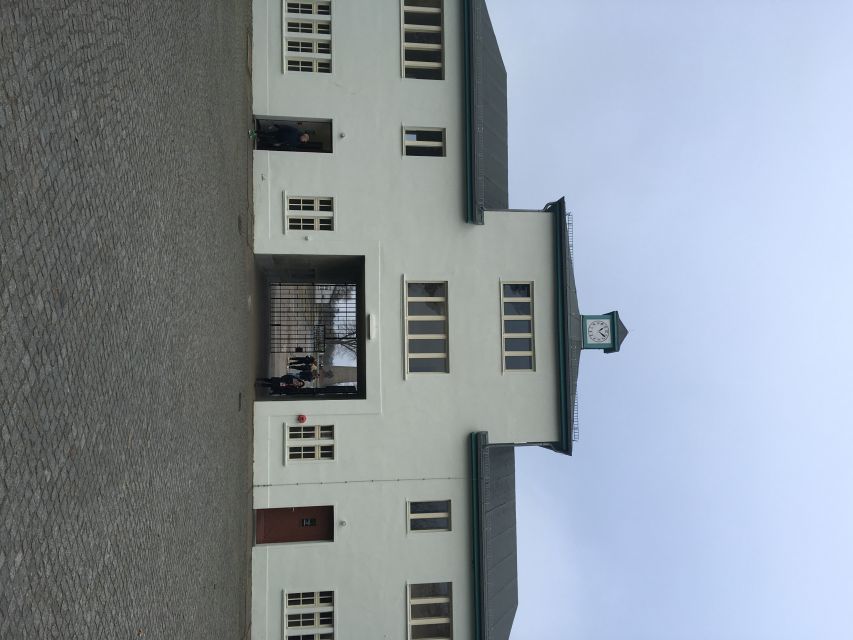
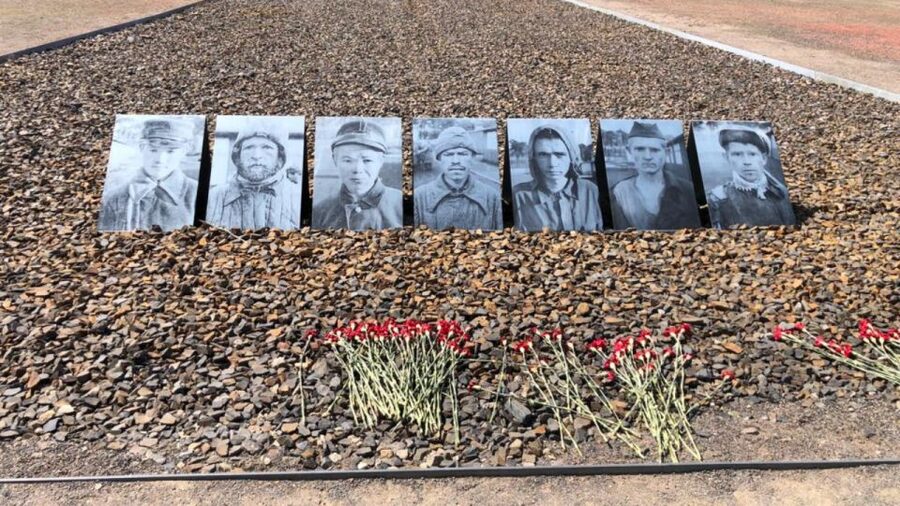
Many camp visits end with liberation. This one continues after 1945, with the camp’s post-war use by the Soviet Union. The site is discussed as Special Camp no. 7 and is described as holding 60,000 prisoners, including German POWs, convicted war criminals, and political prisoners.
This section is vital for understanding how the camp identity did not simply vanish when the Nazis fell. Your guide talks about continued mistreatment, post-war conservation efforts, and the impact on modern Germany. That matters because it connects remembrance to living history.
Also, it challenges the comforting idea that evil belongs only to one era or one regime. Abuse and incarceration can persist in new political clothing. Here, you see that continuity without losing sight of Nazi crimes and the Holocaust.
Station Z, the gas chamber, crematorium, and the final solution
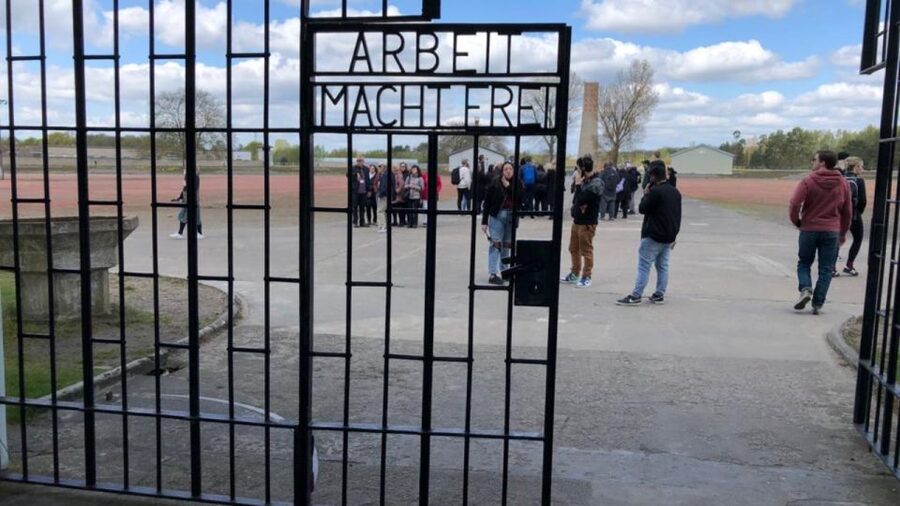
Then the tour reaches Station Z, including the execution site, gas chamber, and crematorium. This is the part that most people remember for the rest of their lives. The guide explains what you are seeing and places it within the Final Solution, the systematic murder of prison inmates.
There is no way to make this easy. What you can do is make it deliberate. Stand still when the guide pauses. Take in what you are shown. If you get overwhelmed, it is okay to slow your breathing and focus on the guide’s explanation rather than trying to force your eyes to move faster.
This is where the tour’s structured approach becomes emotionally protective. You’re not just wandering to the darkest rooms. You’re moving along a guided sequence that explains intent, process, and scale.
The infirmary and medical experiments: where cruelty wore a lab coat
Before leaving, you pass through the camp infirmary. This area is tied to medical experiments on prisoners. That detail is stated clearly, and it is chilling for a simple reason: the language of medicine was used as a cover for abuse.
Your guide’s job here is not to shock you for sport. It’s to explain how power works when there is no ethics, no oversight, and no humanity allowed to limit experimentation. Even if you know the topic already, the presence of the infirmary in the site layout makes the system feel more real.
It is also one of the reasons I think this tour is more than an “important stop.” It’s an education in how institutions can be weaponized.
Value check: is $115 for 5 hours a fair deal?
At $115 per person for a 5-hour experience, this sits in the mid to upper range for Berlin day trips. The value comes from what’s included, not just the headline price.
You’re getting:
- Pickup and drop-off from central Alexanderplatz
- A van ride that keeps logistics simple
- A live English guide
- Bottle of water
- Skip-the-ticket-line handling
- A small-group format limited to 7 participants
- A meaningful contribution to the camp memorial
For me, the best part is the time efficiency. A self-guided visit can be done, but it does not give you the step-by-step interpretation you need to connect entrances, administrative spaces, prison routines, and post-war use. Here, the guide is doing the heavy lifting of structure, and the small group size helps you keep up.
Practical tips so the day goes smoother
This tour takes place rain or shine. Plan for at least part of your time outdoors at the memorial site, plus walking between areas.
Bring:
- Comfortable shoes
- Snacks
Not allowed:
- Drones
- Alcohol or drugs
- Alcoholic drinks in the vehicle
- Bare feet
The wheelchair-accessible note matters too. It signals that the route is planned with mobility needs in mind, though you should still expect walking and time in outdoor areas.
One more practical thought, since this is a serious site: keep your phone use restrained. You’ll get more from the guide if your attention stays on the spaces and the explanations rather than documenting everything.
Should you book the Sachsenhausen guided tour near Berlin?
If you want a guided experience that connects the dots, yes, I’d book it. This is the kind of tour where the structure matters, because it moves from administration to prison routines, then to specific sections tied to different prisoner groups, and finally to the execution and medical abuse sites, plus the post-war continuation as Special Camp no. 7.
It may not be the right fit if you’re looking for something lighthearted or if you know you struggle with prolonged emotionally heavy settings. But if your goal is understanding the Holocaust and the camp system in a clear, paced, respectful way, this small-group format with a guide-led narrative is a strong match.
If you do book, aim to show up early at Alexanderplatz, wear shoes you trust, and go in with the mindset of learning. This place deserves attention, not rushing.
FAQ
How long is the Berlin Sachsenhausen guided tour?
The duration is 5 hours.
Where do I meet for pickup?
You meet at the main entrance at the taxi pick-up and drop-off point at Park Inn by Radisson Berlin Alexanderplatz.
Is pickup and drop-off included?
Yes, pickup and drop-off from a central location are included.
How many people are in the group?
The tour is a small group limited to 7 participants.
Is the tour guided in English?
Yes, the live tour guide language is English.
Is the tour wheelchair accessible?
Yes, the tour is wheelchair accessible.
Will the tour run in bad weather?
The tour takes place rain or shine.
What should I bring with me?
Wear comfortable shoes and bring snacks.
Are drones allowed?
No, drones are not allowed.
What is included with my ticket besides the guide?
Your ticket includes a bottle of water and a meaningful contribution to the camp memorial.
Newest Berlin reviews on the site
- Jetbike Berlin fun bike beer bike★ 5.0 · 3 reviews
- Karl-Marx-Allee Walking Tour: Berlin’s Socialist History★ 5.0 · 5 reviews
- Homeless on chic streets: city tour in Berlin from personal experience★ 4.6 · 3 reviews
- Historyof the Trans, Queer & Gay communities of Berlin tour★ 4.8 · 17 reviews
- Historic Berlin Pubs & History Tour★ 4.9 · 73 reviews
- Berlin: City Center Walking Tour★ 4.7 · 45 reviews
- Half-Day Berlin Highlights Segway Expedition★ 4.5 · 61 reviews
- Berlin: Cold War History and Berlin Wall Guided Walking Tour★ 5.0 · 33 reviews
Concentration Camp Memorial Tours, compared.
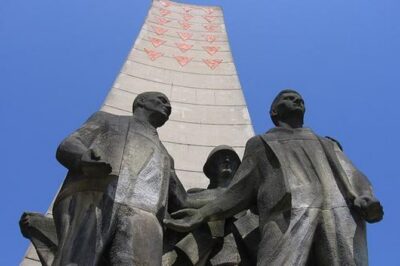
Sachsenhausen Concentration Camp Tour in English
Read our review →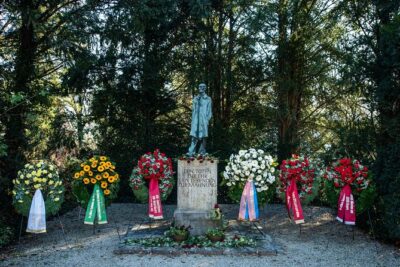
Dachau Concentration Camp Memorial Site Tour from Munich by Train
Read our review →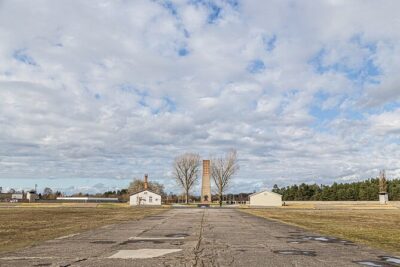
Sachsenhausen Concentration Camp Memorial Tour
Read our review →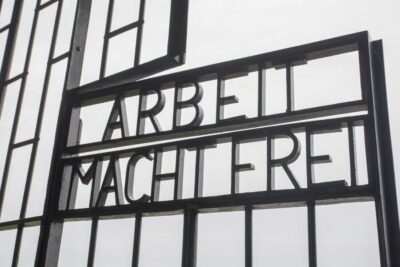
Sachsenhausen Concentration Camp Bus Tour in English from Berlin
Read our review →Sachsenhausen Concentration Camp Tour in English
Read our review →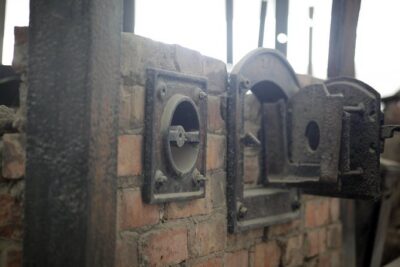
Sachsenhausen Concentration Camp Memorial Tour (Max. 15 Guests)
Read our review →Browse the lists this tour appears in