

Reviewed · HISTORICAL TOURS
Berlin: Charité Hospital History Walking Tour
Medicine has a Berlin address with painful chapters. This Charité Hospital history walking tour traces how Charité began in 1710 and grew into a medical powerhouse, with a visit to the Veterinary Anatomy Theatre, Berlin’s oldest academic building. You’ll walk the neo-gothic campus, meet the scientific names people still cite, and connect it all to the real-life stories behind the Charité TV series.
I love the way the tour pairs beauty with facts, especially the neo-gothic architecture and the famous medical figures linked to Charité, like Robert Koch and Rudolf Virchow. I also like that it doesn’t stop at famous breakthroughs, it follows the institution through social progress and also through moral collapse under the Nazi era.
One drawback to plan for: the walk is mostly outdoors, and the theatre visit can occasionally be affected by internal events or public holidays. Dress warm, and expect a steady walking pace for about two hours.
In This Review
- Key highlights worth your time
- Why Charité still matters on foot
- Meeting by the Robert Koch statue (and why the start is easy)
- Veterinary Anatomy Theatre: 18th-century learning, not a museum vibe
- Neo-gothic Charité campus: beautiful, but never just decorative
- Rachel Hirsch and the shift toward social progress in medicine
- Nazi-era ethics and the brutal misuse of medical power
- East Germany, science pride, and windows bricked against the West
- Connecting the tour to the Charité TV series
- Timing, walking comfort, and what to wear
- Price and value: what $28 buys you in practice
- Who should book this tour, and who might want to skip it
- Should you book the Berlin Charité Hospital History Walking Tour?
- FAQ
- How long is the Charité Hospital History Walking Tour?
- Where do I meet my guide?
- What does the ticket price include?
- Is the Veterinary Anatomy Theatre visit always guaranteed?
- What should I bring and wear?
- Is this tour suitable for children?
Key highlights worth your time

- Charité’s origins in 1710, starting as a plague house to deal with an approaching epidemic
- Veterinary Anatomy Theatre, Berlin’s oldest surviving academic building
- Medical pioneers on the campus, including Robert Koch and Rudolf Virchow
- Women in medicine story, Rachel Hirsch becomes the first woman with a medical professorship in Prussia in 1913
- A clear look at Nazi and East German eras, including what changed and what was deliberately hidden
- Strong guiding style, with English and German options and guides like Martina (BB tours) noted for extra context and analysis
Why Charité still matters on foot
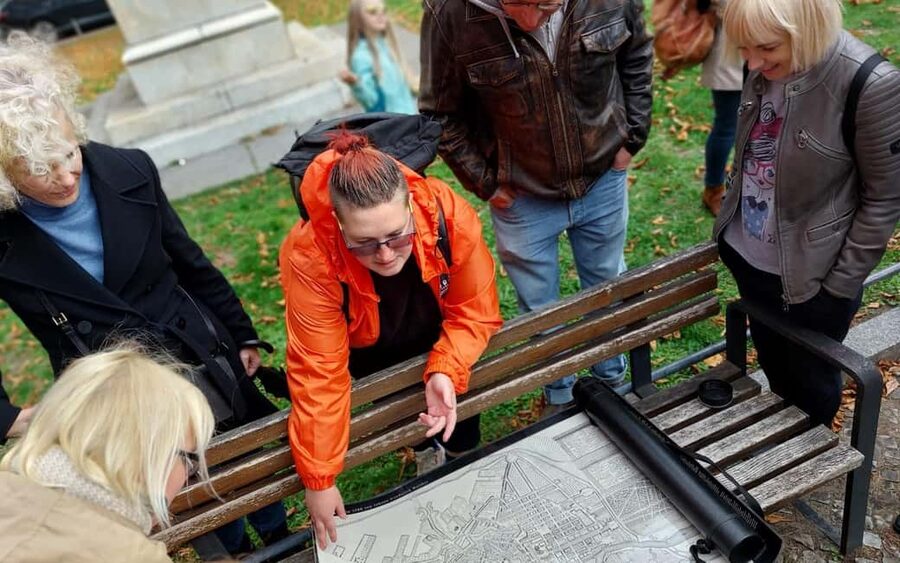
If you want Berlin history that is more than pretty facades, Charité delivers. This is the city’s oldest hospital, and it became famous for medical breakthroughs made by people whose names you’ll recognize. But the tour is careful about the full picture. It shows how medicine advances while institutions also reflect the politics and ethics of their times.
You start with the hospital’s founding in 1710, when it was built as a simple plague house meant to protect against an epidemic. That opening matters because it sets expectations. You’re not just looking at a landmark. You’re seeing how fear, disease, and public health shaped decisions long before modern medicine had antibiotics, imaging, or today’s standards for consent and ethics.
And the early methods described are a big reality check. In the early days, treatment could include bloodletting, doses of mercury, and amputations. It’s hard medicine, even when presented historically, and it helps you understand why medical progress at Charité was so urgent, and why later scientific claims carried enormous weight.
More History Tours in Berlin
- Berlin: Natural History Museum Entrance Ticket
★ 4.6 · 3,382 reviews - Berlin: 3-Hour World Heritage Cruise to Potsdam
★ 4.5 · 1,569 reviews - Berlin: History of the Third Reich Guided Walking Tour
★ 4.7 · 791 reviews
Meeting by the Robert Koch statue (and why the start is easy)
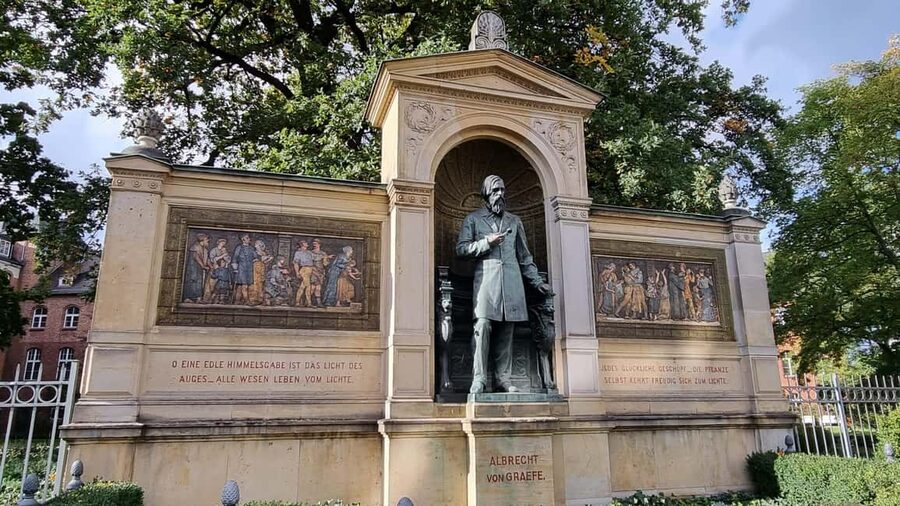
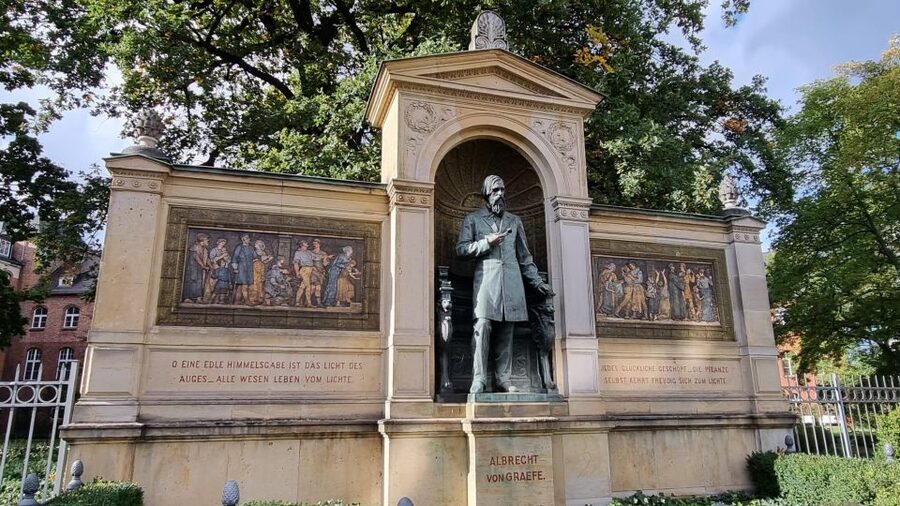
The tour begins at Robert-Koch-Platz, right by the Robert Koch statue. You’ll meet your guide there and look for an orange umbrella. That simple visual cue saves time, especially if you’re navigating Berlin streets in cold weather or before caffeine.
This starting point also helps you get oriented quickly. Robert Koch is one of the medical names you’ll hear again and again as the walk continues, so beginning with his presence on the plaza gives context fast. You don’t just get dates and facts. You get a sense of place, which is exactly what makes campus walks work.
The tour is set up for about two hours, with comfortable shoes as the baseline requirement. It’s not a rushed sprint between stops, but it is a real walk. If you tend to stop for photos often, allow a little extra time so you don’t feel stuck catching up.
Veterinary Anatomy Theatre: 18th-century learning, not a museum vibe
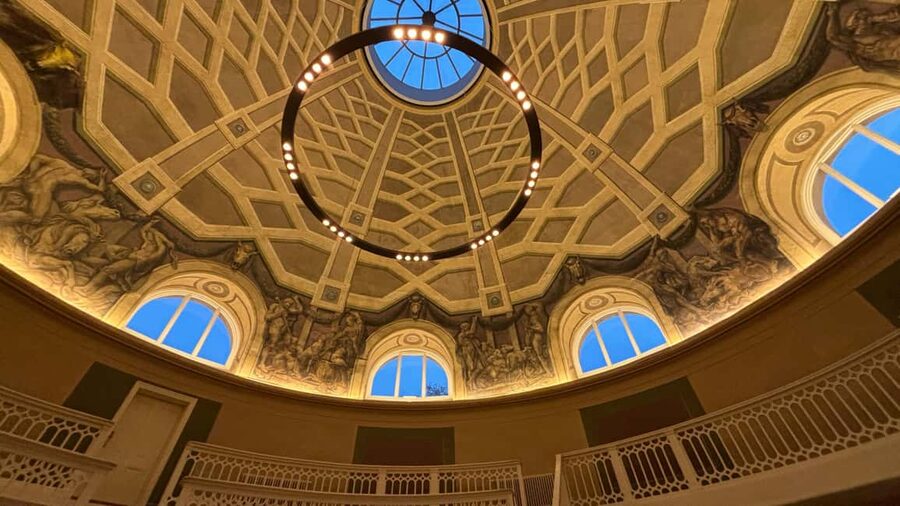
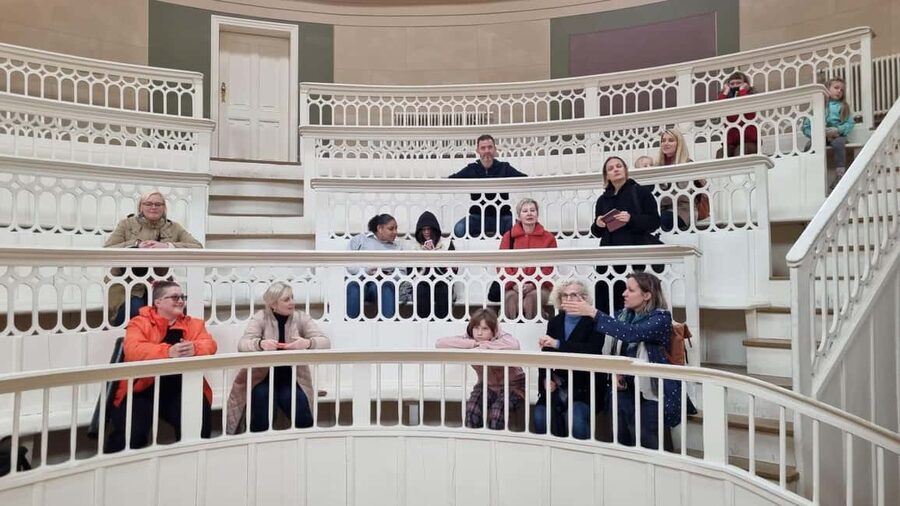
One of the most memorable parts of the experience is the stop at the Veterinary Anatomy Theatre, visited for about 15 minutes. Even without going far into scientific detail, you can feel that this room was built for study. It is still the oldest academic building in Berlin, and that alone makes it worth your attention.
What makes the visit more than sightseeing is what you learn inside and around it. The tour frames the theatre as a place where ailments of city livestock and cavalry horses were explored in the 18th century. That might sound niche, but it connects to daily life back then. Horses powered transport and work. Livestock fed cities. When these animals suffered, people suffered too.
So when you look at the theatre as a learning space, it becomes a window into how knowledge spread. It also explains why medical institutions weren’t only about treating people. They were tied to agriculture, labor, and military needs, all of which shaped what researchers studied and how quickly they tried to solve problems.
If the theatre happens to be closed on a particular day due to internal events or a public holiday, you’ll lose that exact visit. It’s not common, but it’s worth knowing so you can adjust expectations in advance.
Neo-gothic Charité campus: beautiful, but never just decorative
After the theatre, the walk moves along the historical neo-gothic Charité campus. This is where the tour feels like a proper walking tour, not a lecture on a bench. You get guided stops around the campus, with short segments of explanation as you move.
This part is built for recognition. You’ll hear about major medical pioneers tied to Charité, including Robert Koch and Rudolf Virchow. You might know their names already, but the tour gives you a sense of why they matter and how their work fit into the hospital’s reputation and growth.
I especially like the way the architecture supports the story. Neo-gothic buildings can look like they belong to churches or universities, and that’s the point. Charité wasn’t only a hospital. It became a major academic and scientific site, and you can see that ambition in the campus design.
But the tour doesn’t treat the campus as clean and heroic. It also connects the institution to changing social rules, and to periods when medical ethics were twisted by ideology. That contrast is uncomfortable, but it gives the architecture a more honest meaning. The buildings are beautiful, yet they are also the stage for real decisions that affected lives.
More Walking Tours in Berlin
- Discover Berlin Half-Day Walking Tour
★ 5.0 · 9,624 reviews - Berlin: Third Reich and Cold War 2 Hour Walking Tour
★ 4.9 · 6,830 reviews - Berlin: Discover Berlin Walking Tour
★ 4.9 · 5,998 reviews - Berlin’s Best: 2 Hour Walking Tour Third Reich and the Cold War
★ 5.0 · 5,486 reviews
Rachel Hirsch and the shift toward social progress in medicine

One of the most hopeful sections of the tour is also one of the most specific. The guide points out the story of Rachel Hirsch, described as the first woman to hold a medical professorship in Prussia, in 1913. The significance here isn’t only the fact. It’s that the appointment marked a step forward for women in medicine during a time when acceptance was far from automatic.
The tour also mentions resistance within the institution. That matters for you because it keeps the story grounded. Progress wasn’t handed over. It was negotiated, blocked, and fought for. When you hear these details, the mention of a major professorship stops being a footnote and starts to feel like a turning point in real human careers.
If you care about how social attitudes shaped institutions, this is one of the parts where you’ll feel the tour’s balance. It doesn’t just name an achievement. It shows the friction around it, which is what makes history feel true rather than polished.
Nazi-era ethics and the brutal misuse of medical power

Charité’s history includes a dark chapter under the Nazi regime, and the tour addresses it directly. The framing is that medical ethics were disregarded, and ideas of racial hygiene were imposed ruthlessly. It also points out that while some doctors stayed quiet, others organized the extermination of psychiatric patients.
This is heavy material. The value of including it on a walking tour is that you learn where these decisions took root, and how institutional power can be used to harm. You’re not hearing abstract evil. You’re seeing that the same place associated with scientific breakthroughs also hosted crimes made possible by political control and the manipulation of medical authority.
When the tour reaches this section, it helps to be ready for moral discomfort. If you prefer only uplifting stories, you might find parts of this emotionally tough. But if you want to understand why the ethics of medicine became so important in the first place, this portion helps connect the dots.
East Germany, science pride, and windows bricked against the West
After the Nazi era comes another historical contrast. The tour explains how in subsequent decades, East Germany prided itself on achievements of Charité. At the same time, it describes that windows facing the capitalist West were bricked up.
That detail is small, but it’s sharp. It suggests a physical boundary for ideas, not only politics. And when you hear it while standing near parts of the campus, you understand how architecture can become messaging. The building doesn’t just hold history. It can enforce it.
This is one of the reasons this tour feels more meaningful than a simple “greatest hits of medicine.” It shows that institutions keep changing their story depending on who is in power.
Connecting the tour to the Charité TV series
The tour explicitly connects its stories to the Charité TV series, with the message that you’ll hear real-life stories behind what you might have seen on screen. You don’t need to have watched the show to follow along. The guidance focuses on the real events and the people behind them.
Still, for you as a TV viewer, this is a useful way to correct and clarify the line between entertainment and history. When you visit real sites, the show’s themes like ethical conflict, shifting roles in medicine, and institutional pressure stop feeling like plot mechanics and start feeling like part of documented human choices.
I find that the best historical tours do this by staying grounded. They don’t assume you know every name, and they keep the story readable even when it covers complicated topics.
Timing, walking comfort, and what to wear
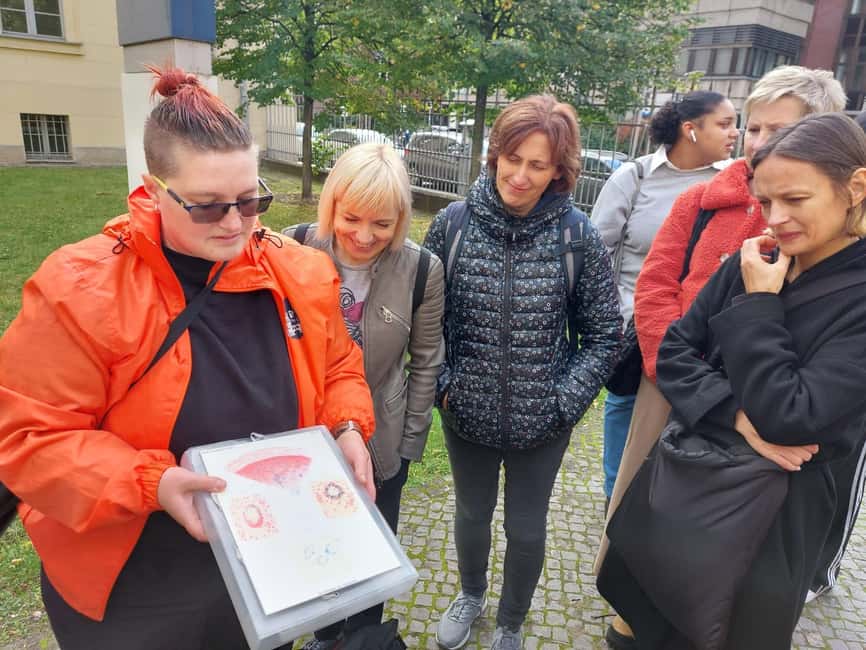
The total duration is about 2 hours, and most of it is outside. That simple note changes your planning more than you might expect. Berlin weather can shift quickly, and cold wind can make short outdoor stretches feel longer.
Bring comfortable shoes and water. If you’re the type who runs cold, wear layers. You’ll be standing and walking for the full length of the tour, with no long indoor breaks planned beyond the theatre stop.
Group pacing also matters. The walk includes multiple guided segments, each about 15 minutes, so you’ll have time to hear the story without it turning into one long unbroken talk. It’s structured enough that you can absorb details without feeling dragged.
Price and value: what $28 buys you in practice
At $28 per person, this tour is priced like a solid local guided walk rather than a museum-only ticket. What you get is an expert local guide plus admission to the Veterinary Anatomy Theatre, which is listed as free.
That admission piece is important. It’s one thing to hear about an old building. It’s another to actually visit the interior space that the tour is built around. Since theatre access is included, the price feels less like you’re paying for narration and more like you’re paying for a real experience with entry included.
What’s not included is also worth noting. Entry to other buildings where hospital or university activities take place is not included, and some areas of the Charité campus are restricted for guided tours. The information you’ll be given suggests that you can explore certain areas independently after the tour, but that doesn’t mean full free access to everything. If your dream day is to go inside every possible building, you might want to treat this tour as the campus story and theatre visit, not a full on-site pass.
Who should book this tour, and who might want to skip it
I think this is a great fit if you like medical history, institutional history, or history that includes both breakthroughs and ethical failures. The tour format makes it easy to connect big names and big events to actual buildings and spaces.
It also helps if you like guided structure. With an expert local guide in English or German, you’ll get the explanation without needing to look everything up on your phone between stops.
The tour is wheelchair accessible. That’s a real plus for mobility needs, but you should still expect walking and standing for about two hours, with most of the time outdoors.
Age-wise, it’s recommended for ages 14 and up, and it’s not suitable for children under 14. That’s because of the historical depth and heavier subject matter.
If you prefer very light entertainment history only, this may feel heavy. But if you want Berlin through a serious lens that still moves at a human pace, this is one of the stronger choices around.
Should you book the Berlin Charité Hospital History Walking Tour?
Book it if you want a smart, well-paced walking tour that connects the Charité campus to real people and real ethical choices, starting from the 1710 plague-house origin story and continuing through names you already know. You’ll get the Veterinary Anatomy Theatre experience, plus a guided path through the neo-gothic campus and the institution’s social and moral turning points.
Skip or reconsider if you’re not comfortable with cold outdoor walking for about two hours, or if you need guaranteed access to the theatre every time due to your schedule. Also, if you only want uplifting stories, be aware that the tour includes the Nazi era’s misuse of medical power and violence.
If you’re trying to choose between a generic “history walk” and something more specific, this is the one that gives you real context you can feel in the buildings.
FAQ
How long is the Charité Hospital History Walking Tour?
The tour lasts about 2 hours.
Where do I meet my guide?
Meet by the Robert Koch statue in Robert-Koch-Platz. Look for your guide holding an orange umbrella.
What does the ticket price include?
It includes an expert local guide and the visit to the Veterinary Anatomy Theatre (free admission).
Is the Veterinary Anatomy Theatre visit always guaranteed?
Not always. On occasion, the theatre can be closed due to internal events or on public holidays.
What should I bring and wear?
Wear comfortable shoes and bring water. Dress warmly for cold weather because most of the tour takes place outside.
Is this tour suitable for children?
It’s not suitable for children under 14 years. Minors must be accompanied by an adult.
More Historical Tours in Berlin
- Berlin Historical Highlights Walking Tour
★ 4.9 · 657 reviews - Berlin: 1h Boutiquestyle-Cruise on the Historic HEMINGWAY
★ 4.6 · 563 reviews - Berlin Private Complete History All Day Walking Tour
★ 5.0 · 474 reviews - Berlin: Cold War Era History Guided Bike Tour
★ 4.8 · 413 reviews
Newest Berlin reviews on the site
- Jetbike Berlin fun bike beer bike★ 5.0 · 3 reviews
- Karl-Marx-Allee Walking Tour: Berlin’s Socialist History★ 5.0 · 5 reviews
- Homeless on chic streets: city tour in Berlin from personal experience★ 4.6 · 3 reviews
- Berlin: Sachsenhausen Concentration Camp Guided Tour★ 4.9 · 42 reviews
- Historyof the Trans, Queer & Gay communities of Berlin tour★ 4.8 · 17 reviews
- Historic Berlin Pubs & History Tour★ 4.9 · 73 reviews
- Berlin: City Center Walking Tour★ 4.7 · 45 reviews
- Half-Day Berlin Highlights Segway Expedition★ 4.5 · 61 reviews
Historical Tours, compared.

City History Canal Sightseeing Tour on a Motorboat
Read our review →




Browse the lists this tour appears in