Reviewed · PRIVATE
Architectural Berlin: Private Tour with a Local Expert
Berlin buildings talk, if you listen. This private, architecture-focused tour threads together Berlin’s big eras in just two hours, from Museum Island’s neoclassical gallery setting to the Berlin Philharmonie’s tent-like soundbox. I like the small-group intimacy, because you can ask questions and actually stay on the details, plus you get skyline context like how the Berliner Fernsehturm shaped Berlin’s look.
One thing to consider: the experience can hinge on your guide’s preparation. If your guide has not planned site access and context, an architecture tour can feel flat, even if the person is friendly.
Tailored to your pace and interests, the route is designed for a walk that feels manageable, with stops that may shift with weather. It starts in the historic museum area (near Bodestraße 1) and ends near the Philharmonie (Herbert-von-Karajan-Straße 1), so you finish in one of Berlin’s most iconic music neighborhoods.
In This Review
- Key highlights you should care about
- A 2-hour architecture tour that reads like a timeline
- Your route: Museum Island to the Philharmonie, end-to-end
- Museum Island neoclassicism, and why the frame matters
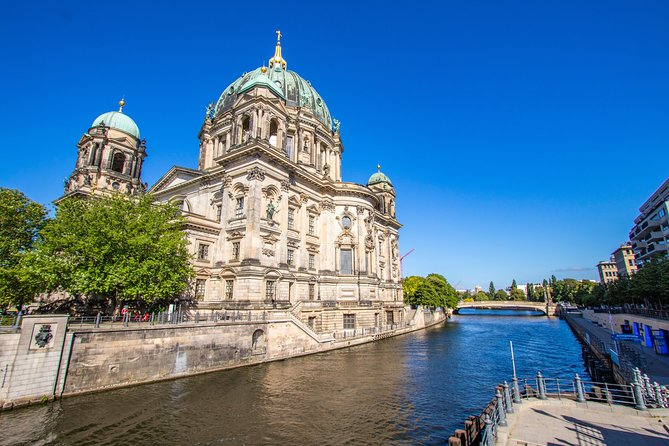
- Lustgarten area church, Renaissance and Baroque under one dome
- An eco-minded modern office, where function signals values
- The Reichstag and Norman Foster’s glass dome
- A modern building that respects its historic neighbors
- Berlin Philharmonie: the tent shape and why acoustics matter
- Guides and value: what you pay for at $639.96 per group
- Practical tips to make this feel like your Berlin
- Should you book this Architectural Berlin private tour?
- FAQ
- How long is the private architecture tour?
- What is the price and group size?
- Where does the tour start and end?
- What is included in the tour price?
- Do I need to buy tickets for museums or monuments?
- Does the itinerary change based on weather or interests?
- Is cancellation free if my plans change?
Key highlights you should care about
- A true skyline anchor, with context around the Berliner Fernsehturm and how it changed Berlin’s horizon
- Museum Island neoclassicism, framed through 19th-century art and the architecture that houses it
- Lustgarten dome drama, where Renaissance and Baroque mix with a huge church silhouette
- Reichstag + Norman Foster glass dome, a political landmark explained in plain language
- Berlin Philharmonie acoustics, including why that tent shape matters for how sound travels
- Private and adjustable, with walking pace and stop emphasis adapted to you
A 2-hour architecture tour that reads like a timeline
Berlin is not one style. It is layers. What I like about this tour is that it treats architecture like storytelling, not just postcard photos. You move from neoclassical order to church grandeur, then to eco-minded modern offices, politics in glass, and finally culture in tuned acoustics.
The time window is short, about two hours, so you get enough variety without spending your whole day marching across the city. And because it is private for up to two, you are not stuck with someone else’s interests leading the conversation.
If you want an architecture lesson that also helps you find your bearings in Berlin, this format is a strong match. You end near the Philharmonie, which makes it easy to keep exploring on foot afterward.
A few more Berlin walks and trips to compare
- Berlin: Reichstag, Dome and Government District Guided Tour
★ 4.7 · 18,288 reviews - Berlin: 1-Hour City Tour by Boat with Guaranteed Seating
★ 4.3 · 16,993 reviews - Berlin: TV Tower Standard Entrance Ticket
★ 4.4 · 15,883 reviews
Your route: Museum Island to the Philharmonie, end-to-end
The tour begins at Bodestraße 1, 10178 Berlin and ends at Herbert-von-Karajan-Straße 1, 10785 Berlin. That matters because you are not just visiting one building, you are crossing a part of central Berlin where the city’s “past meets present” feeling is very real.
Because the itinerary adapts to your walking pace and interests, the exact stop order can flex, and weather can shift what you see. That is helpful in Berlin, where rain can change your comfort level fast, especially if you are stopping for photos and looking closely at façades.
Also, you get a mobile ticket, which keeps things simple. Entry tickets for museums and monuments are not included, so if you want to go inside any building, plan on paying those separately.
Museum Island neoclassicism, and why the frame matters
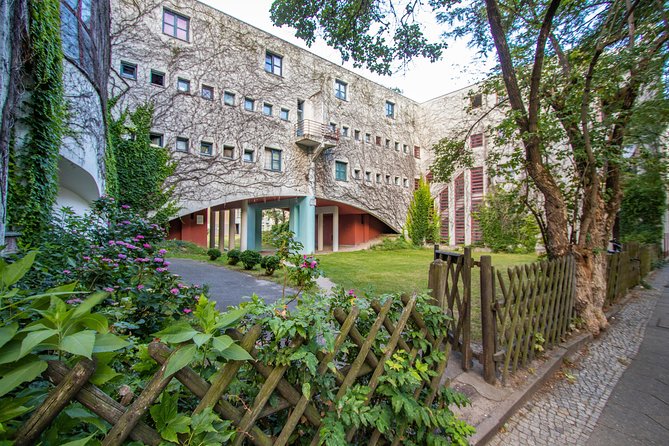
One stop centers on a key element of Museum Island, with a neoclassical façade built to hold art in a very “designed” way. This is the kind of architecture that feels calm and formal on the outside, but it sets expectations for what you look for inside.
You will see how the building’s classical proportions shape the experience of 19th-century art, and that is the key lesson. Architecture here is not just decoration. It is a statement about order, education, and what the city wanted its art spaces to represent.
A practical note: Museum Island can be busy, and neoclassical buildings reward slow looking. If your guide is strong, you will get quick orientation so you know where to look first, not just a list of dates.
Lustgarten area church, Renaissance and Baroque under one dome
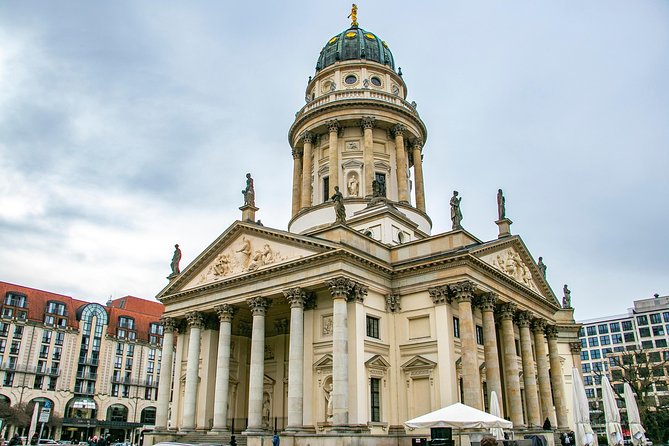
Near Lustgarten park, the tour includes a grand historic church with Renaissance and Baroque elements and a large dome that dominates the skyline.
This is one of those stops where you learn how Berlin borrows drama from older European design. Renaissance brings balance, Baroque adds movement and emotional weight, and the dome does the job of making the building feel important from far away.
What you should watch for here is the way the church’s massing and dome silhouette work together. Even if you do not go inside, you can understand the building’s purpose just by comparing views from different angles during your walk.
Possible drawback: churches and domes can have variable viewing access depending on events or weather. If your goal is specifically interior photos or a full visit, you may need extra time beyond the tour.
Same city, a different way to spend the afternoon:
- Berlin: Boat Tour Along the River Spree
★ 4.4 · 11,252 reviews - Discover Berlin Half-Day Walking Tour
★ 5.0 · 9,624 reviews - Berlin: Government District around the Reichstag Guided Tour
★ 4.7 · 8,447 reviews - Berlin: Reichstag, Plenary Chamber, Cupola & Government Tour
★ 4.6 · 8,422 reviews
An eco-minded modern office, where function signals values
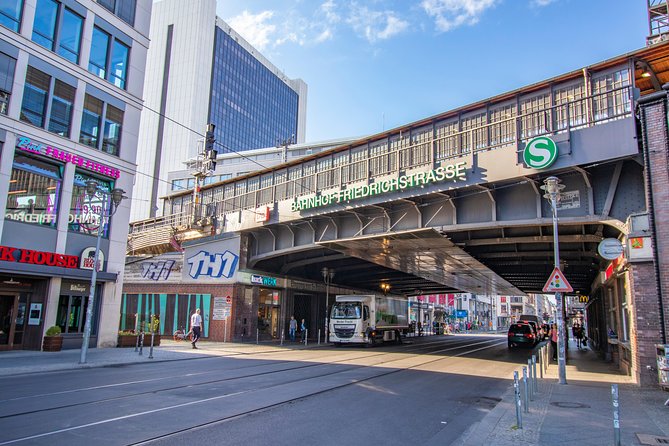
Then the tour shifts to a modern office building known for innovative, eco-friendly architecture. This stop is valuable because it reframes “modern Berlin” as more than a skyline style trend.
Instead, you start asking practical questions: How does a workplace building reduce impact? How does it handle light, comfort, and the feel of daily use? Even without technical details, the architecture gives you cues about priorities.
This part is also a nice contrast stop after the heavy church and museum visuals. It helps your brain reset, so the bigger landmarks later land with more impact.
If you like design that shows up in everyday life, you will probably enjoy this one most. If you only care about mega-landmarks, you might want to spend extra time asking your guide what makes this building eco-friendly beyond its reputation.
The Reichstag and Norman Foster’s glass dome
The tour’s big political highlight is Germany’s parliament building, with its iconic glass dome designed by Norman Foster.
This is one of the most teachable moments of the whole route, because it is architecture built around ideas, not just aesthetics. The glass dome is often explained as a symbol of political transparency, and your guide should connect that concept to the way the building is shaped for how people approach it.
Even if you have seen photos of the dome before, a guided walk changes the viewing experience. You start to notice how sightlines and elevated views turn visitors into part of the building’s message.
One consideration: dome and interior access may require extra planning and tickets, since entry is not included. If you care about going inside, plan your timing accordingly so you do not feel rushed.
A modern building that respects its historic neighbors
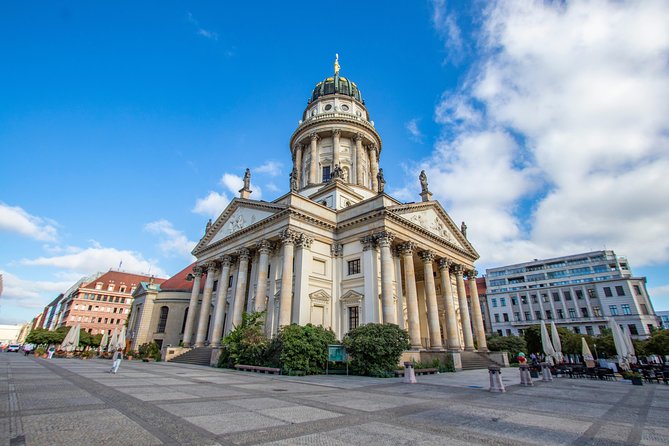
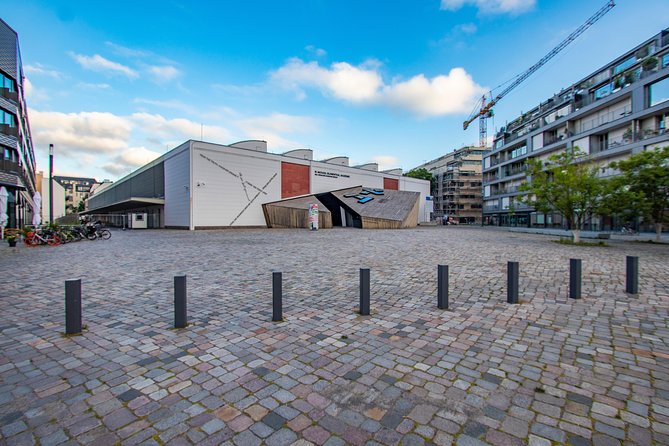
Next comes a stop that blends modern architecture with the historical context around it. Berlin does this a lot, and it is one of the reasons the city can feel intellectually engaging rather than just visually impressive.
This stop is meant to show you how a newer structure can either bully its surroundings or work with them. The best moments here are when you can compare materials, scale, and façade rhythm.
If your guide explains what to look for, you will leave with a sharper eye for Berlin’s “conversation between eras.” That is a real value. It makes you notice architecture on your own after the tour ends, not only during the stops.
Berlin Philharmonie: the tent shape and why acoustics matter
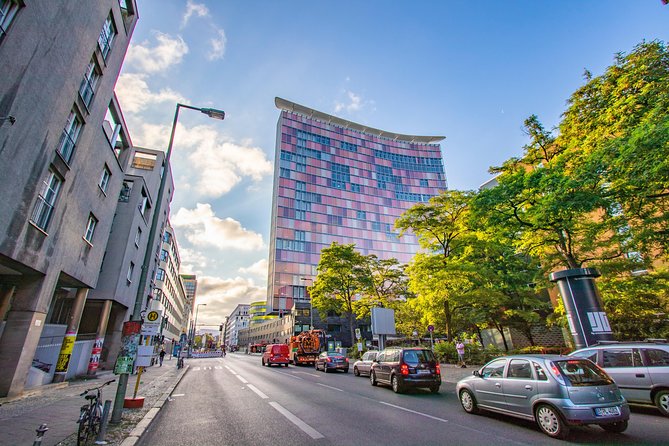
The final architectural culture hit is the Berlin Philharmonie, known for its distinctive tent-like shape and brilliant acoustics. This is not architecture as backdrop, it is architecture as instrument.
The tour connects the building’s form to how sound behaves. That is important because it changes how you think about style. In a concert hall, architecture is not just about looks, it is about physics and audience experience.
If you are a music fan, you will get extra meaning here. If you are not, you can still appreciate how design choices can control sound, lighting, and sightlines all at once.
You also end at Herbert-von-Karajan-Straße 1, putting you right where you can continue with more exploring or even line up for a show if your schedule allows.
Guides and value: what you pay for at $639.96 per group
The price is $639.96 per group, up to two people, for about two hours. That is not a budget cost. It is a “pay for attention” cost.
So how is it worth it? Here is the honest math. You are paying for:
- a private format, meaning you can ask questions and move at your pace
- a local expert guide, focused specifically on architecture rather than generic city history
- a tailored itinerary, which matters a lot in a city as layered as Berlin
If you are traveling with one other person, the per-person cost is more reasonable than it sounds. If you are solo, it can still be a smart move if you really care about architectural details and want a guide who can translate them quickly into something you can see with your own eyes.
The risk is also clear. An architecture tour is only as strong as the person leading it. When guides bring real planning and easy clarity, the whole experience clicks. When they have not prepared, you may spend time at major sites without getting the design story you came for.
Practical tips to make this feel like your Berlin
A private walking tour works best when you show up ready to look up. Bring:
- comfortable shoes for steady walking
- a light layer, Berlin can feel chilly even when the air looks mild
- a camera, and a habit of taking a few photos, then pausing to compare angles
Since the itinerary can adapt to your interests, you can guide the conversation. If you care more about political architecture, lean into the Reichstag stop and ask how Norman Foster’s dome relates to older ideas of public space. If you care about design tech, put questions to the eco-friendly office and the way modern buildings handle light and use.
If you want the city to feel less overwhelming afterward, ask your guide for quick “what to notice next” pointers while you are walking. Even a short list can help you spot architectural features on your own later.
Finally, keep the pacing flexible. This is a two-hour window, so you want to leave time for short stops, not sprint between landmarks.
Should you book this Architectural Berlin private tour?
Book it if you want a focused architecture walk with a guide who can connect buildings to meaning, and you like the idea of moving from museum neoclassicism to political transparency and finally to the Philharmonie’s acoustics. It is especially good for couples or two friends who want a private pace and a tailored conversation.
Skip or be extra selective if you mainly want broad sightseeing with minimal detail, because this tour rewards curiosity and close looking. Also, if you know you will be disappointed by limited site access, ask in advance how the guide plans for entry areas, since entry tickets for museums and monuments are not included.
If your guide is prepared and you communicate what you care about, this is one of those tours that makes Berlin feel legible fast, and that kind of confidence is worth paying for.
FAQ
How long is the private architecture tour?
It runs for about 2 hours.
What is the price and group size?
The price is $639.96 per group, up to 2 people.
Where does the tour start and end?
It starts at Bodestraße 1, 10178 Berlin and ends at Herbert-von-Karajan-Straße 1, 10785 Berlin.
What is included in the tour price?
Included are a Local Expert Guide, an exclusive private tour, and a tailored itinerary.
Do I need to buy tickets for museums or monuments?
Entry tickets for transportation, museums, and monuments are not included, so you may need separate tickets if you want to go inside.
Does the itinerary change based on weather or interests?
Yes. The route adapts to your interests and walking pace, and stops may vary depending on weather conditions.
Is cancellation free if my plans change?
Yes, you can cancel for a full refund if you cancel up to 24 hours in advance of the experience start time.
Newest Berlin reviews on the site
- Day trip through multicultural city landscapes & photo highlights★ 5.0 · 5 reviews
- Berlin in one day – day tour with an expert guide★ 5.0 · 14 reviews
- Berlin on Your Own – Deluxe Round Trip from Warnemünde Port★ 4.5 · 5 reviews
- Berlin sightseeing boat tour on the Spree★ 4.0 · 93 reviews
- Berlin by Night Private Tour – All Must-See Sites Magically Lit Up at Night★ 4.0 · 5 reviews
- Berlin & Sachsenhausen Concentration Camp Tour from Warnemünde and Rostock Port★ 4.5 · 60 reviews
- Berlin & The Third Reich Private Guided Tour★ 5.0 · 3 reviews
- Berlin and Car Culture Tour★ 4.5 · 8 reviews
Private, compared.


Berlin Private Complete History All Day Walking Tour
Read our review →
Munich Private Tour with a Local – Highlights & Hidden Gems
Read our review →
Private Walking Tour Berlin Third Reich Hitler and World War II
Read our review →
Strasbourg: Private City Sightseeing Boat Tour
Read our review →
1.5-Hour Private Tour through Historical Old Town
Read our review →