
Reviewed · HISTORICAL TOURS
Where It All Began: Berlin’s Queer & Trans History Tour
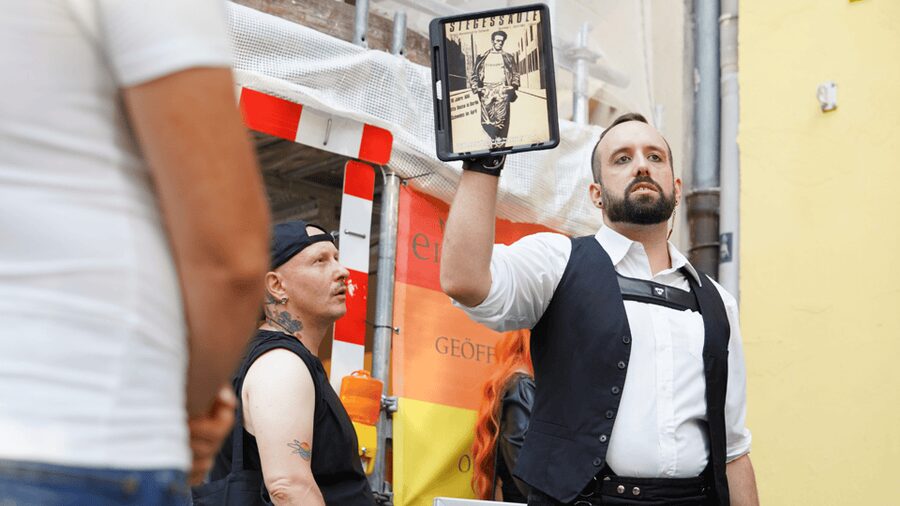
This tour turns Berlin’s past into street theater. You follow Jeff, a queer activist and gender scholar, for 3 hours of LGBTQIA+ history powered by 200+ archival photos, rare audio clips, and AR scenes.
What makes it especially interesting is that it moves across 150+ years, from the earliest modern rights pioneers to Nazis, the AIDS crisis, and today’s club and Pride culture.
I love the way it treats trans history as central, not a footnote, including early trans identities, gender-affirming surgeries, and the idea of transvestite certificates. I also like how it connects the story to real nightlife, covering lesbian bars and cabarets from the 1920s through the scene shaping global clubs.
One consideration: this is not a gentle, kids-friendly history walk. It includes sensitive content notes like antisemitism and racism, Nazi Germany and (mass) murder, HIV/AIDS, sex work, sexual violence, nudity, and more, plus some loud, bright areas that can be stimulating.
In This Review
- Quick reasons to go
- Berlin queer and trans history, priced at $81 for a small group
- Jeff-led format: AR Mixies, quizzes, and rare audio that keeps you engaged
- Starting at Alnatura near Nollendorfplatz, then walking through names that matter
- Ulrichs and Hirschfeld footsteps: early rights, world-first trans identities, and gender-affirming history
- Lesbian nightlife and feminist movements: 1920s bars, cabarets, and community under pressure
- Nazis, persecution, and the Internationale Stele gegen das Vergessen moment
- AIDS crisis activism, divided Berlin, and a wall joke that carries weight
- Queer influence on global nightlife and Pride, from Chez Romy Haag to Berghain
- What $81 buys you, and when it feels like a bargain
- Who should book, and who might want to skip it
- Should you book this Berlin Queer and Trans History Tour?
- FAQ
- How long is the tour?
- How much does it cost per person?
- Where do we meet, and where does it end?
- Is the tour wheelchair accessible?
- What language is the tour in?
- Does the tour use AR or special photo features?
- Is this tour suitable for children?
Quick reasons to go
200+ archival photos, videos, and rare audio clips used throughout the walk
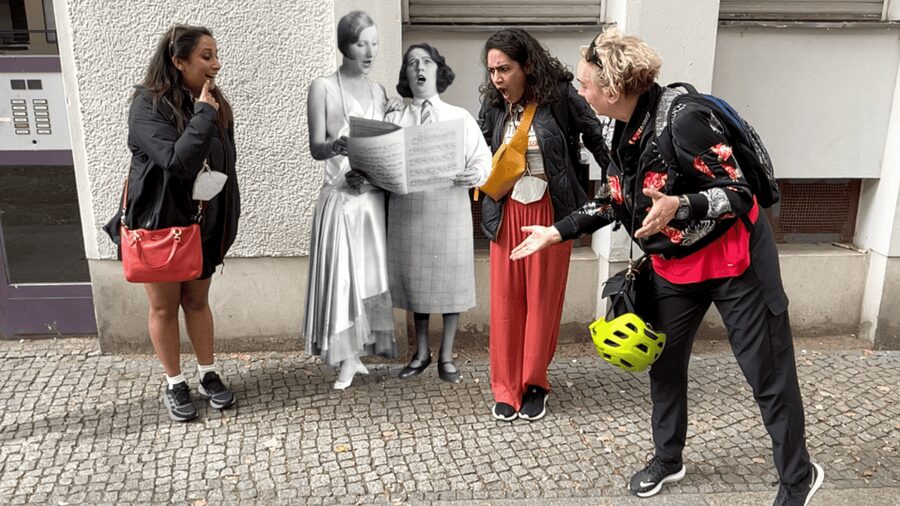
Mixies AR selfies with historic figures for pictures you actually want to keep
Quizzes and interactive questions that make you pay attention without feeling tested
Queer and trans milestones, from early activists to forced erasure under the Nazis
Nightlife through time, from 1920s lesbian spaces to club culture and Pride today
Small group size (max 10), which makes inclusion feel built-in
Berlin queer and trans history, priced at $81 for a small group
For $81 per person, you get a 3-hour guided walk that is much more than a slideshow on the sidewalk. The value here is the format: a small group capped at 10, plus 200+ archival materials, AR moments, and a guide who actively leads the discussion.
Berlin is big, and queer and trans history is spread out. This tour does the smart thing: it stitches key locations into a narrative you can carry with you, ending back at Nollendorfplatz after stops including Karl-Heinrich-Ulrichs-Straße and Metropol.
The practical side matters too. The route is wheelchair accessible, though some paths may be bumpy, and you can request accessible toilets. Videos you watch during the tour have subtitles in German, English, or both, and if you have visual disabilities, the guide can describe the visual material.
More History Tours in Berlin
- Berlin: Natural History Museum Entrance Ticket
★ 4.6 · 3,382 reviews - Berlin: 3-Hour World Heritage Cruise to Potsdam
★ 4.5 · 1,569 reviews - Berlin: History of the Third Reich Guided Walking Tour
★ 4.7 · 791 reviews
Jeff-led format: AR Mixies, quizzes, and rare audio that keeps you engaged
The tour runs on interaction, not passive listening. You’re not just following a script, you’re answering quiz questions, absorbing multimedia at stops, and taking AR selfies through the Mixies feature. It’s a clever trick: it gets your brain out of spectator mode.
I like that Jeff’s role goes beyond presenting facts. With a background as a queer activist and a gender scholar, the delivery comes with care, not just information. In a small group, it also helps that people can feel included and welcomed, which is exactly what you want when the subject matter is emotional and sometimes heavy.
Expect the tour to feel a bit like moving through a timeline that talks back. Instead of only images, you get videos, interviews or audio clips, and personal quotes. That media mix matters because it helps you grasp lived experience, not just dates.
Starting at Alnatura near Nollendorfplatz, then walking through names that matter
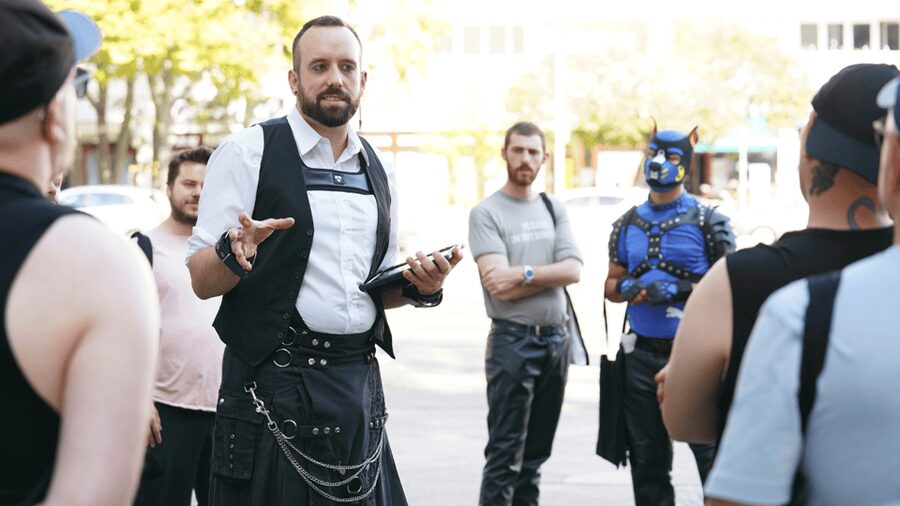
You meet in front of Alnatura Super Natur Markt at Else-Lasker-Schüler-Straße 18, and the tour finishes at Nollendorfplatz. That matters for planning. You can build this into a day without needing complicated transport logistics afterward, since you end where you started nearby.
Even the early stops teach you how Berlin honors its past. Karl-Heinrich-Ulrichs-Straße is where the story begins with pioneers tied to the modern LGBTQIA+ rights movement. And as the walk continues, you keep picking up clues from the names and places, building a map in your head of what happened and why it mattered.
A nice detail for pacing: not every stop is a long lecture. Some are short guided moments, which helps the tour feel doable across 3 hours. You still get depth, but you’re not stuck in one spot for the entire time.
Ulrichs and Hirschfeld footsteps: early rights, world-first trans identities, and gender-affirming history
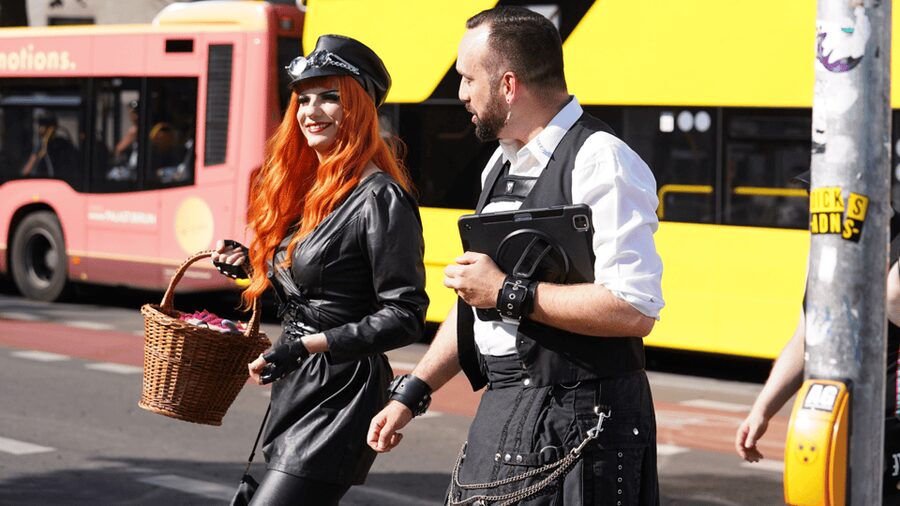
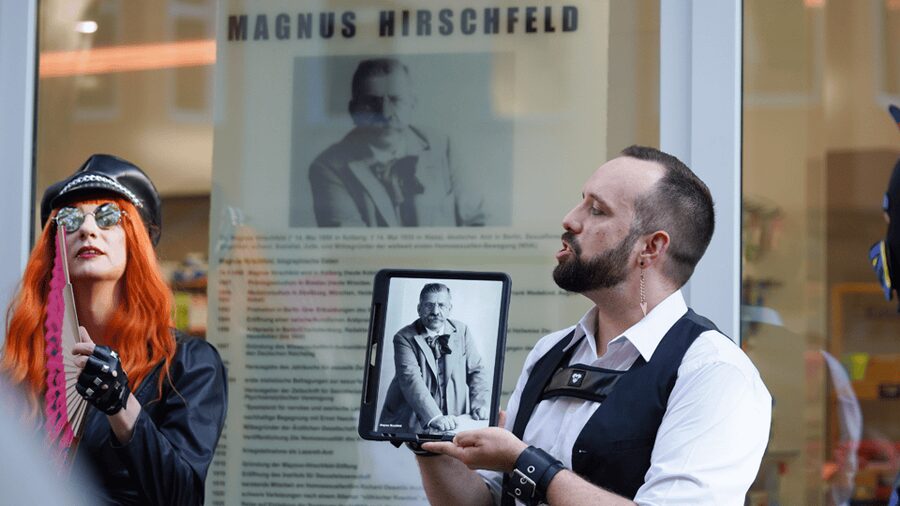
This is one of the tour’s strongest sections because it covers early LGBTQIA+ activism and the emergence of trans identities that many people never learn about in standard city tours. You hear about Karl Heinrich Ulrichs and Magnus Hirschfeld and how the modern movement started over a century ago.
What really makes this part hit is that it’s not only about activism as a concept. It includes specific history around early trans identities and gender-affirming medical milestones, including the idea of the first gender-affirming surgeries. The tour also explains how trans people lived openly with transvestite certificates, and how Nazis tried to erase this knowledge.
The way the tour uses rare audio clips and archival media helps here. When you see photos, hear voices, and connect them to what you’re standing near, the subject stops being abstract. It becomes something with texture, language, and faces.
If you care about accuracy, you’ll probably appreciate the research intensity. One review highlight was Jeff showing exceptional, unusual image material, and that lines up with what this tour promises: 200+ archival photos, videos, and audio. The media isn’t there just to decorate the walk. It’s the backbone of the storytelling.
A few more Berlin walks and trips to compare
- Berlin Historical Highlights Walking Tour
★ 4.9 · 657 reviews - Berlin: 1h Boutiquestyle-Cruise on the Historic HEMINGWAY
★ 4.6 · 563 reviews - Berlin Private Complete History All Day Walking Tour
★ 5.0 · 474 reviews - Berlin: Cold War Era History Guided Bike Tour
★ 4.8 · 413 reviews
Lesbian nightlife and feminist movements: 1920s bars, cabarets, and community under pressure
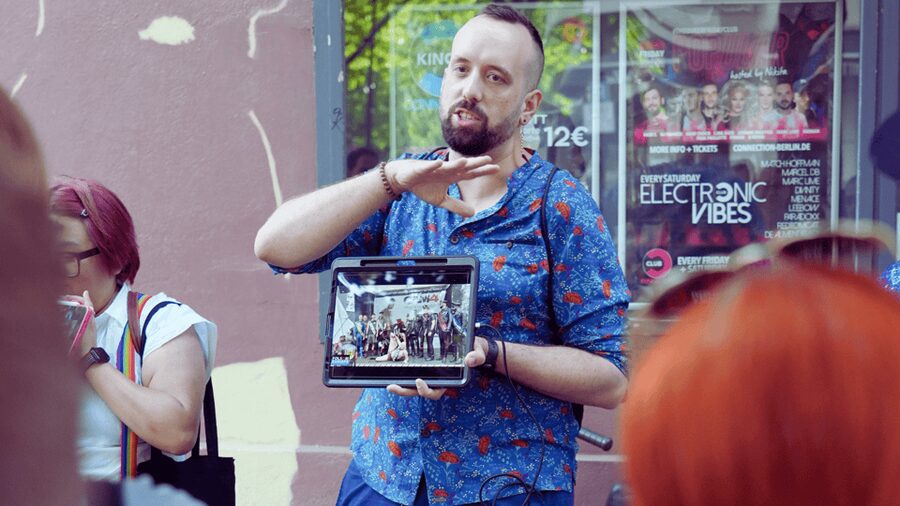
Berlin’s queer women and feminist momentum show up as a major thread. You get a section that steps into lesbian bars and cabarets of 1920s Berlin, where queer women found community and also resistance.
The guide ties this era to recognizable cultural icons mentioned in the tour materials, including Claire Waldoff, Marlene Dietrich, and Josephine Baker. Even if you already know some of these names, the tour’s angle is what changes the experience. It uses the nightlife layer to show how identity and public life intersected.
Then you connect the dots between that pre-crackdown moment and what comes later. Queer nightlife was not just entertainment. It was a social structure, a way to survive, and a public statement that drew attention from those who wanted control.
This is also where quizzes and interactive moments work well. They keep you from sliding into passive history mode while the story covers culture, politics, and personal identity all at once.
Nazis, persecution, and the Internationale Stele gegen das Vergessen moment
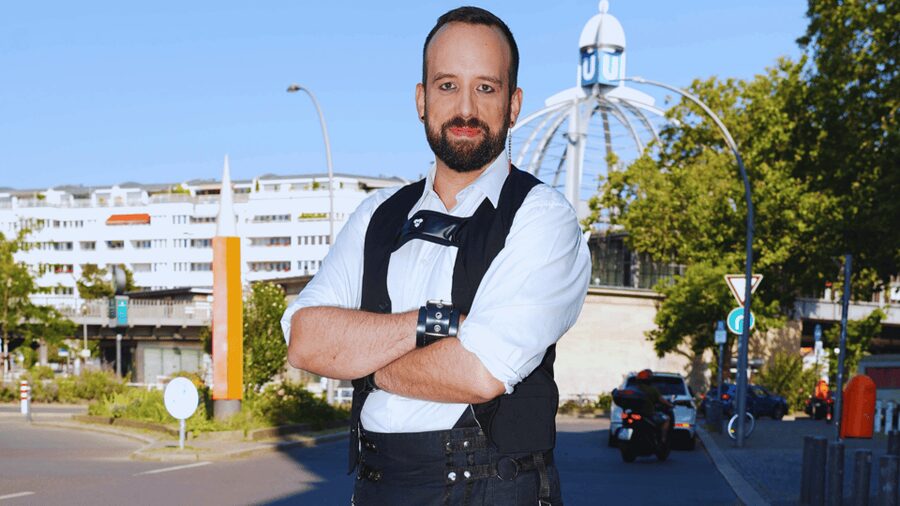
No queer history tour in Berlin can skip the Nazi era, and this one treats it directly. You learn about Hitler’s contradictory stance on homosexuality, the persecution of queer people, and how queer resistance survived under Nazi control.
What I value is how the tour frames erasure as an active force. It doesn’t only say history was harmed. It explains that Nazis tried to wipe out trans and queer life, and then the postwar world had to work against that loss.
The stop at Internationale Stele GEGEN DAS VERGESSEN is the kind of location that makes the narrative land in your body. It’s a reminder that memory is political. When the tour places these themes beside a physical monument, it pushes you to notice what the city chooses to acknowledge.
This portion is also where the content notes become relevant in a very real way. The tour covers antisemitism, racism (including sexualized racism), homophobia, transphobia, queerphobia, Nazi Germany and (mass) murder, and more. If you know certain topics hit you hard, plan your emotional bandwidth before you go.
AIDS crisis activism, divided Berlin, and a wall joke that carries weight
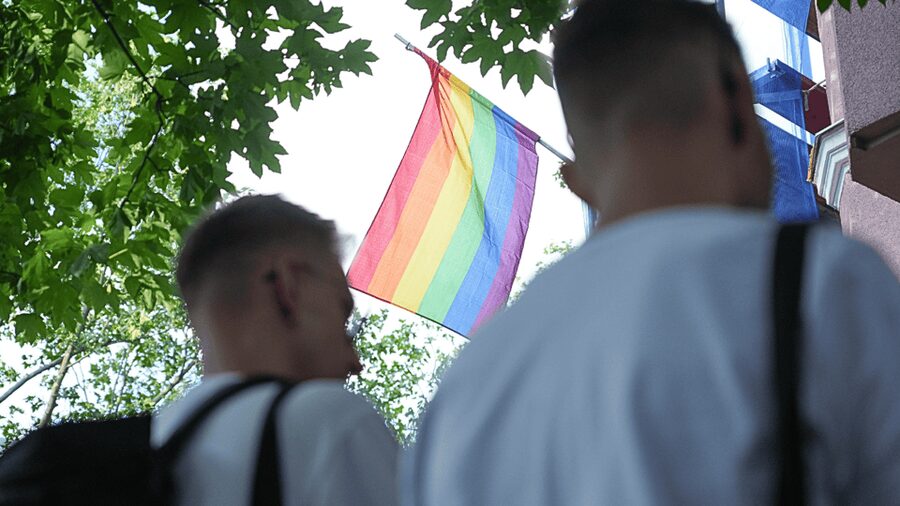
Berlin’s AIDS crisis chapter is about more than tragedy. It connects to activism, survival, and the way community networks kept people going. You learn how Berlin’s LGBTQIA+ community fought for survival during the AIDS crisis, and the tour points to activist hubs like SchwuZ.
Then comes one line that sticks, because it turns history into a memorable symbol: the Berlin Wall was called the condom of the GDR. It’s a nickname with bite, and the tour uses it to show how people made meaning and used humor and language even when conditions were brutal.
You’ll likely enjoy this part if you like history that connects to real people and real strategies. You’re not only hearing about policy and suffering. You’re seeing how activism and spaces helped shape community resilience.
The tour keeps moving through recognizable Berlin places like Prinz Eisenherz and Connection Club along the way. Even when a stop is brief, it supports the bigger idea: queer and trans life was shaped by where people gathered, and the gathering points changed as repression changed.
Queer influence on global nightlife and Pride, from Chez Romy Haag to Berghain
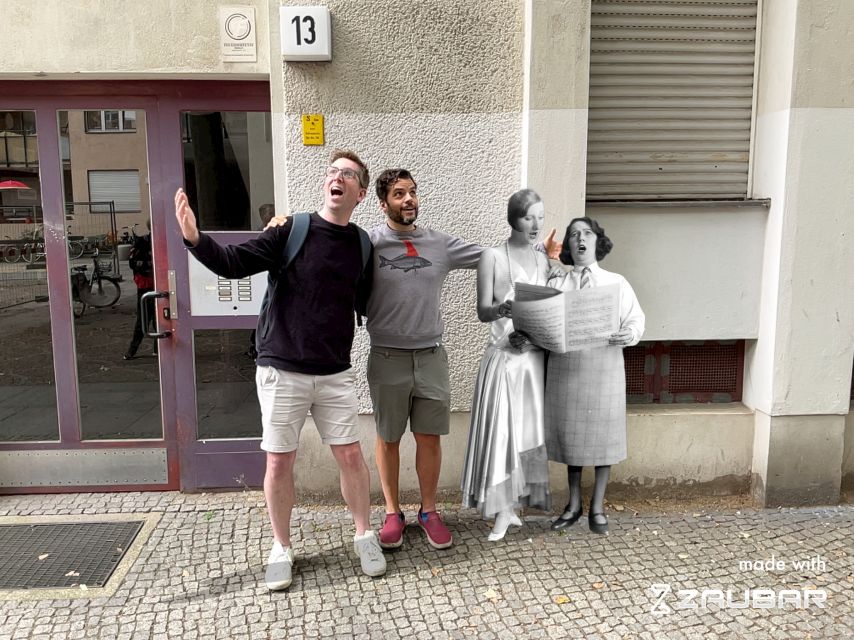
The tour finishes by linking Berlin’s past to the nightlife and Pride culture you can still feel in the city today. It covers how LGBTQIA+ culture shaped Berlin’s club scene, and it name-checks spaces like Chez Romy Haag and Berghain as part of that long influence arc.
Then it widens again to show how Pride movements, Dyke March, and Folsom Europe connect back to the legacy of local resistance and creativity. This is useful if you’re visiting Berlin and also planning your next stops in Europe or beyond, because it explains why Berlin’s nightlife is not just a local hobby. It’s part of a wider cultural pattern.
Ending at Nollendorfplatz makes the wrap-up feel logical, like you’re stepping back onto a living map. You’ve watched history happen in layers, from the early rights movement to modern nightlife, and now you have a clearer sense of what to pay attention to when you walk around on your own later.
What $81 buys you, and when it feels like a bargain
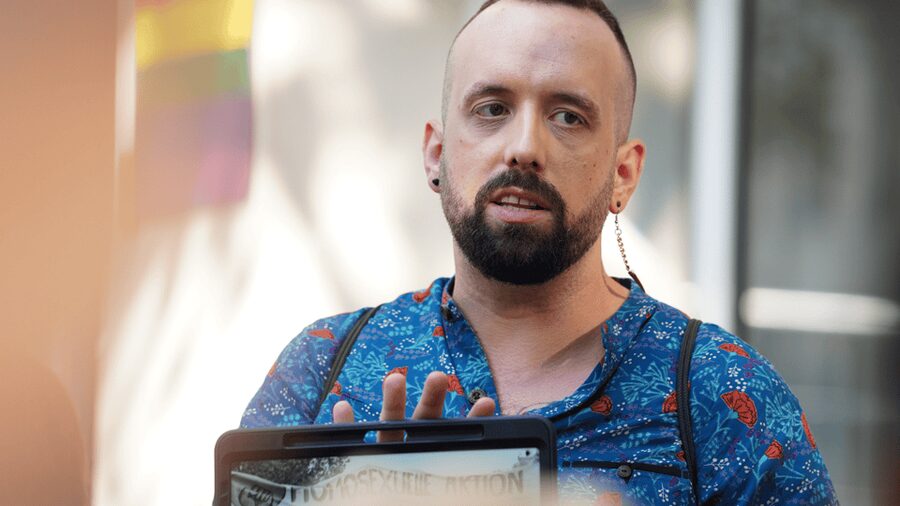
Price in Europe can be tricky. $81 for a 3-hour walking tour is not cheap, but it can also be a fair deal depending on how the tour spends your time.
Here’s what you’re really paying for:
A small group limited to 10
A guide with activist and gender scholar credentials
200+ archival photos, videos, and rare audio clips
Augmented Reality Mixies selfies
Interactive quiz questions
Insider tips on Berlin’s modern queer nightlife and events
If you’ve ever done tours where you pay for basic narration and a couple of street photos, this is different. The multimedia and AR components are not side quests. They’re the main delivery system.
So this tends to feel like good value if you enjoy story-driven walking tours and you like learning through media. If you prefer quiet, purely text-based history, you might feel the format is a lot.
Who should book, and who might want to skip it
This tour is a great fit for you if any of these are true:
You want an authentic queer and trans history experience in Berlin, not just a quick overview
You’re interested in activism and gender history, including early trans identities and gender-affirming medical milestones
You want nightlife context tied to real social change, from 1920s lesbian spaces to today’s Pride and club culture
You like small groups and guides who include everyone
It’s probably not the best choice if:
You’re traveling with children, because the content is not suitable for under 18
You have low tolerance for sensitive topics, since the tour explicitly covers a long list of heavy material, including Nazi persecution and violence, HIV/AIDS, sex work, and sexualized violence
- Bright lights and loud noise are hard for you, since some parts of the tour happen in areas with high sensory input
Should you book this Berlin Queer and Trans History Tour?
Book it if you want Berlin’s LGBTQIA+ and trans story told with real effort, strong research, and tools that keep you mentally awake. The fact that Jeff leads it as a queer activist and gender scholar, combined with the 200+ archival media and AR Mixies selfies, makes this feel like more than a walk. It’s a history lesson you can carry in photos and memory.
Skip it if you want a light, feel-good tour, or if you need a strictly sanitized version of history. This one is honest, and that honesty comes with content that can be triggering.
If you’re on the fence, think about your own travel style. If you like interactive guides, multimedia storytelling, and history with emotional weight, you’ll probably leave with a deeper sense of how Berlin shaped modern queer and trans life, and how that legacy still shows up tonight.
FAQ
How long is the tour?
It lasts 3 hours.
How much does it cost per person?
The price is $81 per person.
Where do we meet, and where does it end?
You meet at Nollendorfplatz in front of Alnatura Super Natur Markt (Else-Lasker-Schüler-Straße 18), and the tour finishes at Nollendorfplatz.
Is the tour wheelchair accessible?
The route is wheelchair accessible, but some paths may be bumpy. Accessible toilets are available upon request.
What language is the tour in?
The live tour guide speaks English.
Does the tour use AR or special photo features?
Yes. It includes Augmented Reality elements through Mixies, which lets you take personalized AR selfies with historic figures.
Is this tour suitable for children?
No. It is not suitable for children under 18.
Newest Berlin reviews on the site
- With Reichstag roof-terrace: Insider Parliament tour★ 4.6 · 41 reviews
- Berlin: guided canoe | kayaktour★ 4.1 · 7 reviews
- Small Group Tour: “Wild Kreuzberg”★ 4.8 · 189 reviews
- Vegan Food Tour in Berlin Mitte★ 5.0 · 5 reviews
- Ultimate E-Bike Tour of Berlin with Beer Garden Stop★ 5.0 · 4 reviews
- Understanding Kreuzberg: The roots of local (sub)culture★ 4.9 · 11 reviews
- True Berlin Flavors – Street Food Tour at Alexanderplatz★ 4.9 · 8 reviews
- Traces Of Berlin: Guided Berlin Tour (English or German)★ 3.3 · 3 reviews
Historical Tours, compared.
City History Canal Sightseeing Tour on a Motorboat
Read our review →
Browse the lists this tour appears in