
Reviewed · OLD TOWN WALKING TOURS
Munich: Walking Tour Old Town 3D VR Tour in GERMAN
Time travel fits in your hands. This Munich Old Town 3D VR walking tour pairs a live guide with smartphone-powered glasses so you can watch key squares and landmarks change across time. I like the way the guide stitches stories to specific spots, and I like that you get to focus on details you would usually walk past.
I also like the structure of the tour, especially the split timeline at Marienplatz, where you move from one era to another in the same public space. One thing to consider though: the VR quality seems hit or miss depending on the setup, and a few people felt the visuals were closer to still images than cinematic, moving scenes.
Over about 2 hours, you’ll do a guided walk through Munich’s historic core while the VR app shows you 3D renderings tied to four locations. It’s German-only, so if your German is basic, plan to lean on the visuals and the guide’s explanations as best you can.
In This Review
- Key Points You Should Know Before You Go
- Where You Start: Orlandohaus (Platzl 4) and the 3D Tour Setup
- Marienplatz Split Timeline: 1570 Grain Market to Later Town Hall Life
- Plazał in 1895: How This Area Became the Urmünchner Place
- Hofbräuhaus Past and Present: Seeing the Same Spot Through Time
- How the VR Works With Your Phone, and When It Might Frustrate You
- German Live Guide: Getting the Most Out of the Stories
- Price, Time, and Value: Is $37 Worth It for 2 Hours?
- Who Should Book This 3D Old Town Tour, and Who Might Skip It
- Quick Tips to Avoid Tech Headaches on the Day
- Should You Book This Munich Old Town 3D VR Tour?
- FAQ
- How long is the Munich Old Town 3D VR walking tour?
- What does the tour cost?
- Is there a live guide, and what language is it in?
- What is included in the price?
- What do I need to bring?
- Do I need to download an app before using the VR glasses?
- Where is the meeting point?
- Is the tour wheelchair accessible?
- Which areas in Old Town are covered with the 3D renderings?
- Can I cancel and get a refund?
Key Points You Should Know Before You Go
- Orlandohaus meeting point (Platzl 4): easy to find, with a guide carrying a big blue Weis(s)er Stadtvogel bag and a 3D Tour sign.
- Marienplatz is split by time: west side to 1570, east side around 300 years later, with stark historical scenes included.
- Four VR focus areas: Marienplatz (two eras), Platzl (1895), and Hofbräuhaus (past and present).
- Smartphone app required: you download an app at the meeting point and insert your phone into the VR glasses.
- Guide energy matters most: multiple reviews praise the guide’s engagement and clear teaching.
- VR can disappoint if you expect motion video: some guests reported still-image style visuals and occasional tech issues.
Where You Start: Orlandohaus (Platzl 4) and the 3D Tour Setup
Meet directly in front of the Orlandohaus at Platzl 4. Your guide will have a big blue bag with the white words Weis(s)er Stadtvogel, plus a 3D Tour sign. This matters because the tour depends on getting everyone set up quickly. If you’re even a few minutes late, you can slow the group as you troubleshoot the phone and app.
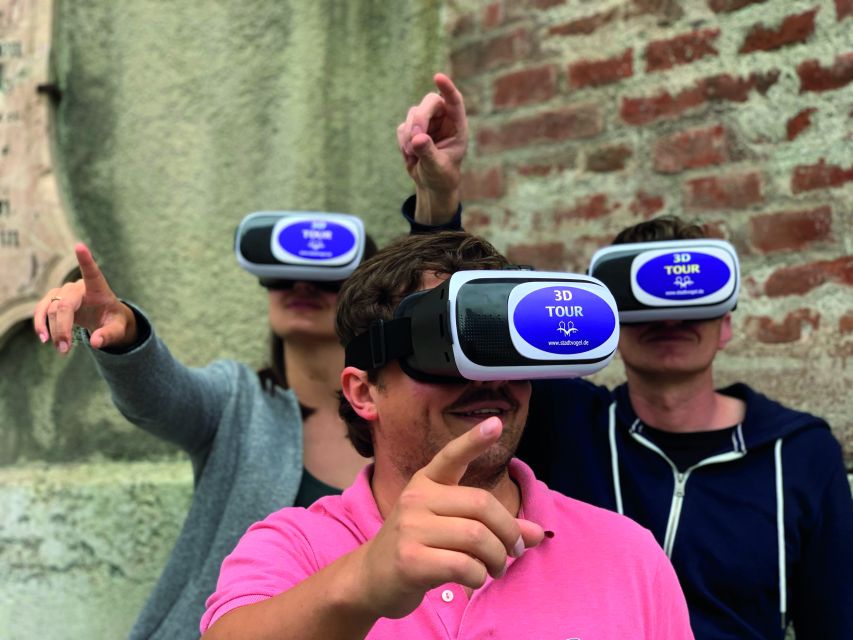
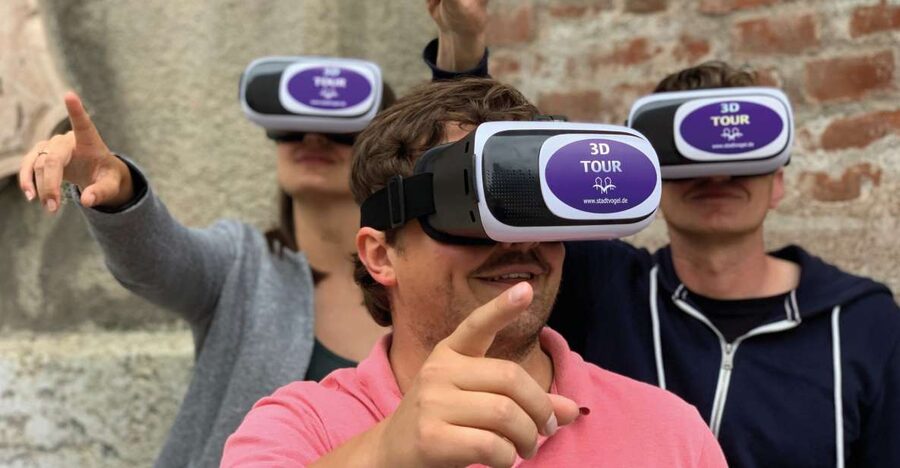
The VR system is not a plug-and-play headset. Everyone must download the app on their own smartphone at the meeting point. After that, the app is inserted into the VR glasses so you can see the 3D renderings tied to the tour stops. That means you should show up with a charged phone and internet access, because those two items are explicitly part of the requirements.
This is a smart plan for a walking tour because it keeps the hardware simple and transportable. But it also means your experience can depend on your phone’s responsiveness, your battery level, and your ability to follow setup instructions. In other words, the logistics are part of the show here, not just a small detail.
More Old Town Walking Tours in Munich
- Munich: Old Town & Viktualienmarkt City Walk in German
★ 4.7 · 2,304 reviews - Munich Old Town Walking Tour
★ 4.5 · 1,287 reviews - Munich: Spooky Tour of Old Town in German
★ 4.6 · 1,112 reviews
Marienplatz Split Timeline: 1570 Grain Market to Later Town Hall Life
Marienplatz is where the tour’s time travel really gets practical. For the sake of the show, the square is treated like two different eras in two different directions. On the western side, you step into 1570. On the eastern side, you’re placed around 300 years later. Same square, different Munich.
On the 1570 side, you’ll connect the setting to the Medieval grain market and the darker side of civic life, including the gallows used for special executions and the so-called disgraceful donkey. I found that kind of storytelling valuable because it puts history on the street, not behind a museum label. It also explains why this square feels important even if you’re just passing through on your way to dinner.
Then you move to the eastern side, and the tour shifts the focus. You’ll see what the old town hall looked like in 1870, including the first completed part, plus period scenes like carriages and old professions in action. This is the part that can make you look at familiar buildings with different eyes. You stop thinking of them as static scenery and start seeing them as stages where everyday work happened.
One consideration: if you’re expecting the VR visuals to behave like a full movie, you might feel let down. Some people reported that the VR glasses functioned more like viewable images than moving scenes. Still, even when the visuals are more “rendering” than “animation,” having the guide point out what to watch can make the differences click.
Plazał in 1895: How This Area Became the Urmünchner Place
Next comes Platzl, with surprises set in 1895. This stop is designed to show how neighborhoods change, not just how buildings look. You get a story-driven VR glimpse of what this area was like, and then you hear how it transformed into the Urmünchner place you recognize today.
What makes this useful for you is the cause-and-effect feel. Instead of only saying, “This is old,” the guide connects the past to the present. You learn how an area earns its character over time, through changes in use, people, and the everyday rhythm of the street.
In practice, Platzl is a good moment to slow down and watch the guide’s cues. When a tour uses VR, the best results usually come from doing what the guide asks: look where they point, stand where they indicate, and pay attention to the sequence. If you drift away to get a better photo, you can miss the exact “then and now” comparison the VR is meant to highlight.
There is also a subtle benefit here for non-VR fans. Even if the headset portion doesn’t fully impress you, the guided walking explanation still gives you something concrete: a way to interpret the place you’re standing in. That’s exactly what multiple reviews praised, the guide’s engagement and the willingness to make the material feel alive.
Hofbräuhaus Past and Present: Seeing the Same Spot Through Time
The tour also includes a look at Hofbräuhaus in past and present forms. This is a smart choice because Hofbräuhaus is one of those Munich landmarks that many people think they already know. You see it, you pass it, you may even have a meal nearby. But the VR framing can help you understand it as an evolving setting rather than a fixed postcard.
In the experience, the guide uses the VR rendering approach to compare what you see now to what came before. For me, this type of comparison is the whole point of “3D time travel” tourism: the visuals act like a history book you can stand inside. You’re not just learning that something changed, you’re seeing the change attached to a physical location.
Just remember that the tour’s success relies on the phone-and-app setup. If your phone struggles with the VR display, you might get a weaker effect here. One review complaint specifically mentioned that people were able to see images on their phones better than through the glasses. That’s not ideal, but it does suggest a practical fallback: keep your phone handy and follow along even if the glasses feel less impressive at a given moment.
More Walking Tours in Munich
- Munich: Third Reich & WWII Walking Tour
★ 4.6 · 6,181 reviews - Third Reich Walking Tour Munich
★ 4.5 · 4,291 reviews - Munich: Night Watchman Walking Tour
★ 4.7 · 2,092 reviews - Munich Ghosts and Spirits Evening Walking Tour
★ 5.0 · 1,900 reviews
How the VR Works With Your Phone, and When It Might Frustrate You
Here’s the key technical part, and it’s worth taking seriously: you download an app at the meeting point, then the phone goes into the VR glasses to show the 3D images. This isn’t just a “nice to have.” It’s the core delivery method for the tour’s promise.
I like this approach because it lowers the barrier compared with tours that rely on expensive headsets. It’s also why the tour can stay flexible across different starting times. But it also explains why some guests ended up frustrated.
Some reviews complained that the VR glasses were more like a toy, and that they showed still images rather than moving pictures. Others said the visuals were easier to see directly on the phone. There were also comments about two glasses or phones not working properly, which likely points to setup timing, app loading, or device compatibility.
So what should you do to protect your experience? Start with the basics you already know you must do: charged smartphone and internet access. Then, when you get to the meeting point, slow down and do the app steps carefully. If something doesn’t look right in the first moment, ask the guide for help immediately rather than waiting for the next stop.
Also, adjust expectations. This sounds like 3D renderings presented through VR, not a full VR blockbuster. If you treat it like guided “visual history” rather than high-end animation, you’ll probably enjoy it more.
German Live Guide: Getting the Most Out of the Stories
The tour runs with a live guide in German. That’s important because the tour is story heavy. The VR visuals are the hook, but the explanations are what turn the images into understanding.
If your German is strong, you’ll get the full payoff from the details, like why Marienplatz is split by era, what scenes the guide highlights, and how Platzl’s 1895 version connects to the Urmünchner place you see today. If your German is limited, you can still benefit, but you might need to focus harder on visuals and on the guide’s key points you can catch.
A practical idea: don’t expect to “translate in your head” for every sentence. Instead, let the guide’s gestures and references do the work. The tour is designed around specific locations, so the guide likely anchors each story to where you are standing. That makes language less of a barrier than it would be on a pure lecture.
This is also where the strongest positive reviews point. People praised the guide’s enthusiasm and knowledge, saying it was taught with heart and good energy. That’s the one part you can count on most, because it doesn’t depend on whether your VR glasses feel amazing. If you show up ready to listen, the stories can carry the experience.
Price, Time, and Value: Is $37 Worth It for 2 Hours?
At $37 per person for 2 hours, you’re paying for three things: a guide, a walking route through central Munich, and VR glasses plus the phone-based app experience. That’s not just a “see a few things” tour. It’s a controlled format where the technology is supposed to add context to specific historic moments.
Is it good value? It can be, especially if you like guided history and you’re curious about Munich’s old-town evolution. The fact that you cover multiple anchor points like Marienplatz, Platzl, and Hofbräuhaus makes the 2-hour timing feel efficient. You also get the benefit of a live person shaping the narrative. That can beat self-guided wandering if you want meaning, not just photos.
But value depends on your expectations for the VR portion. Since some guests reported that the glasses felt less capable, and some images were not as dynamic as hoped, you should treat the VR as a tool for visualizing eras, not as a substitute for a cinematic VR show. If you want motion-heavy entertainment, you might judge the experience harshly.
For me, the “fair” way to think about the price is this: you’re paying for a guided, tech-assisted walking history tour. If the guide is engaging (and that seems consistent in strong reviews), the experience still has real worth even if the visuals are imperfect.
Who Should Book This 3D Old Town Tour, and Who Might Skip It
This tour is a good fit if you want an organized way to experience Munich’s historic core, and you like learning while you walk. It’s also friendly for groups, and the format works well for families and friends who enjoy a shared “look at this in the past” moment.
Because it’s wheelchair accessible, it’s also worth considering if you need that option in your Munich plans. The tour is still a walking tour, so you’ll want to assume there will be some time on foot, but the accessibility note is clearly part of the offering.
You might consider skipping if:
- you strongly expect high-end VR animation or cinematic moving video
- you dislike smartphone-based VR setups
- you know your phone battery is usually the first to fail on outings
On the flip side, if you can follow setup steps, keep your phone charged, and you’re open to history presented through 3D renderings, you’re likely to enjoy it. The guide quality seems to be the biggest consistent upside.
Quick Tips to Avoid Tech Headaches on the Day
- Arrive at Platzl 4 (Orlandohaus) a little early so the app setup can happen calmly.
- Bring a charged smartphone and make sure you have internet access for the download.
- Follow the guide’s positioning cues at each stop, especially at Marienplatz, where the tour changes sides for different eras.
- If the glasses don’t look great, do not panic. Stay calm and use what you can, because some people reported the phone screen can show the images more clearly.
Should You Book This Munich Old Town 3D VR Tour?
Book it if you want a guided walk through Munich’s Old Town with a time-based story format, and you’re curious to see how Marienplatz, Platzl, and Hofbräuhaus can be reimagined using 3D renderings. I’d especially recommend it if you value the guide’s role, since the most praised part of the experience is clearly the teaching style and energy.
Skip or lower expectations if you’re shopping for polished, moving VR like you’d see in a modern arcade. The VR portion can be hit or miss depending on setup, and a few people found the glasses less impressive than expected.
FAQ
How long is the Munich Old Town 3D VR walking tour?
The tour duration is 2 hours.
What does the tour cost?
It costs $37 per person.
Is there a live guide, and what language is it in?
Yes, it is a live tour guide, and the tour language is German.
What is included in the price?
The price includes a guide, a walking tour, and VR glasses.
What do I need to bring?
You should bring a charged smartphone and have internet access.
Do I need to download an app before using the VR glasses?
Yes. All participants must download an app onto their smartphone at the meeting point, and the app is inserted into the VR glasses.
Where is the meeting point?
Meet directly in front of the Orlandohaus at Platzl 4. The guide will have a big blue bag and a 3D Tour sign.
Is the tour wheelchair accessible?
Yes, the tour is wheelchair accessible.
Which areas in Old Town are covered with the 3D renderings?
The tour focuses on four places, including Marienplatz (split into a 1570 side and a side around 300 years later), Platzl (1895), and Hofbräuhaus (past and present).
Can I cancel and get a refund?
Yes. Free cancellation is available up to 24 hours in advance for a full refund.
More Old-Town Walks in Munich
- Munich: Walking Tour Old Town and Viktualienmarkt
★ 4.7 · 839 reviews - Munich: Old Town Walking Tour
★ 4.7 · 589 reviews - Munich: Viktualienmarkt & Altstadt Food Tour
★ 4.7 · 481 reviews - Munich: Old Town Guided Walking Tour
★ 4.6 · 479 reviews
Newest Munich reviews on the site
- Munich Beer and Bavarian Bites Small-Group Tour★ 5.0 · 167 reviews
- Munich to Prague – Private Transfer with 2 hours of Sightseeing★ 5.0 · 6 reviews
- Munich – the essential walking tour★ 5.0 · 30 reviews
- 800 Years of History: A Munich GPS Audio Tour★ 4.5 · 12 reviews
- Munich in the 3rd Reich and WW2 private walking tour★ 5.0 · 148 reviews
- Munich Food Tour with Full Meal & Drinks by Do Eat Better★ 5.0 · 59 reviews
- Munich Scavenger Hunt and Sights Self-Guided Tour★ 4.5 · 8 reviews
- Munich Christmas Market Small Group Tour with Gingerbread Heart★ 4.0 · 9 reviews
Old Town Walking Tours, compared.


Old Town & Viktualienmarkt City Walk in German
Read our review →


Browse the lists this tour appears in