
Reviewed · OLD TOWN WALKING TOURS
Munich Old Town – Guided Walking Tour in English
Munich feels like a history book you can walk through. I like how this tour connects big landmarks to real Bavarian stories, especially at Hofbräuhaus, and it also makes the city’s power shifts and beer culture easy to grasp. You also get practical extras from guides like Alex and Jean, from local food pointers to the kind of facts that stick, like the legend around Aloisius. One possible downside is that the carillon knight-fight show can feel like the least satisfying stop if you wanted more grand sights.
In about 150 minutes, you’ll cover Munich’s Old Town core on foot, with a clear narrative and an expert local guide. You meet at the main gate of St. Peter Church, and the guide holds a yellow Walkative umbrella, so it’s hard to miss. If the day is busy, you’ll still find the pacing works, with enough stopping time to look up, not just keep moving.
In This Review
- Key highlights you will actually remember
- A 2.5-hour Munich Old Town walk that gives you quick bearings
- St. Peter Church to Marienplatz, where Munich’s civic center comes alive
- Marienplatz’s carillon knight-fight: the stop that can feel underwhelming
- Hofbräuhaus and the beer culture story behind the mugs
- Odeonsplatz and the National Theater area, where royal Munich feels close
- Max Joseph Platz and the Wittelsbach era: power made visible
- Roman beginnings, 700 years of rule, and the unification story
- Beer Hall Putsch and Mein Kampf: the dark chapter handled with care
- Joseph Ratzinger before Pope Benedict XVI, and how careers intersect with place
- The guides: humor, pacing, and follow-up tips that extend the trip
- Price and what you really get for $29
- After the walk: how to use what you learned
- Should you book this Munich Old Town guided walk?
Key highlights you will actually remember
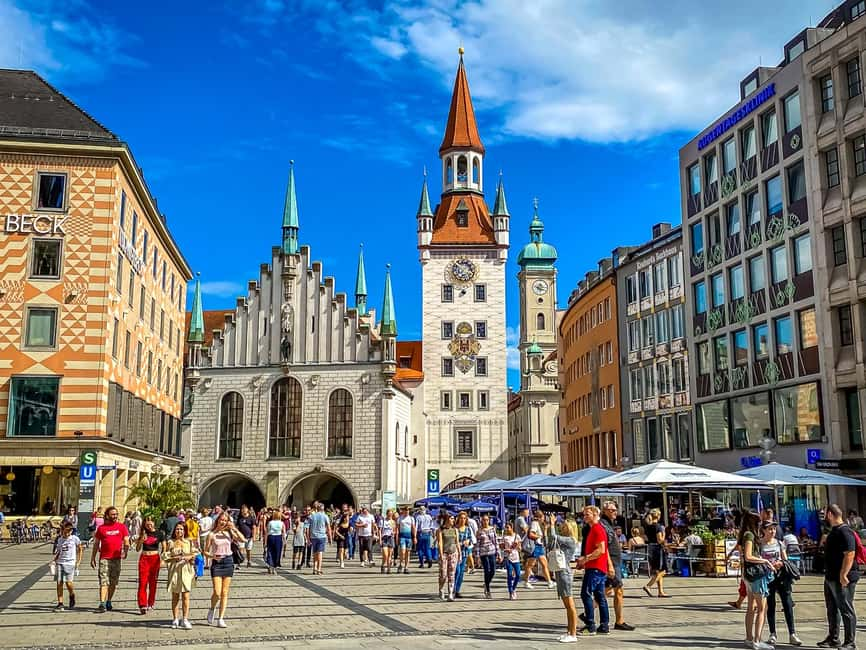
- Marienplatz, New and Old Town Hall for the civic heart of Munich
- Hofbräuhaus and the development of Bavaria’s beer culture
- Odeonsplatz and the National Theater area for royal era architecture and scale
- Max Joseph Platz and royal residences linked to the Wittelsbach rulers
- WWII-era context handled with care including the Beer Hall Putsch and the background around Mein Kampf
- Carillon knight-fight show is included, but it may not land for everyone
A 2.5-hour Munich Old Town walk that gives you quick bearings
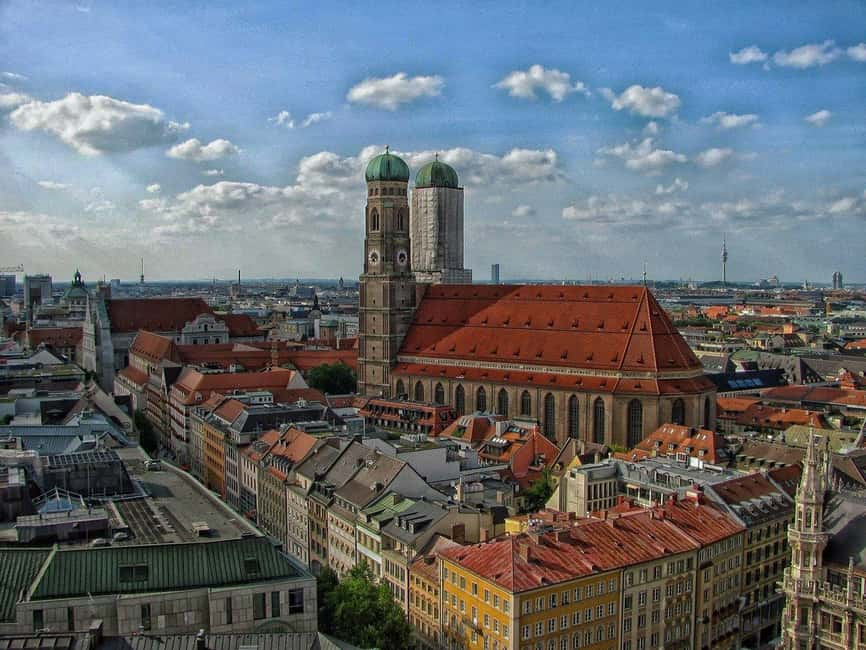
This is the kind of tour you take early in a trip when you want orientation and meaning, not just photos. At 150 minutes, you cover a lot of ground in the historic center without dragging the experience into a full day.
The value also comes from the format. It’s a live walking guide with a thoroughly constructed narrative, so each stop has a reason, even when the topic turns serious. And in the real world, guide styles matter: I’ve seen names like Jean, Alex, Patrick, Noel Byrnes, and Patricia pop up with praise for humor, pace, and answering questions.
More Old Town Walking Tours in Munich
- Munich: Old Town & Viktualienmarkt City Walk in German
★ 4.7 · 2,304 reviews - Munich Old Town Walking Tour
★ 4.5 · 1,287 reviews - Munich: Spooky Tour of Old Town in German
★ 4.6 · 1,112 reviews
St. Peter Church to Marienplatz, where Munich’s civic center comes alive
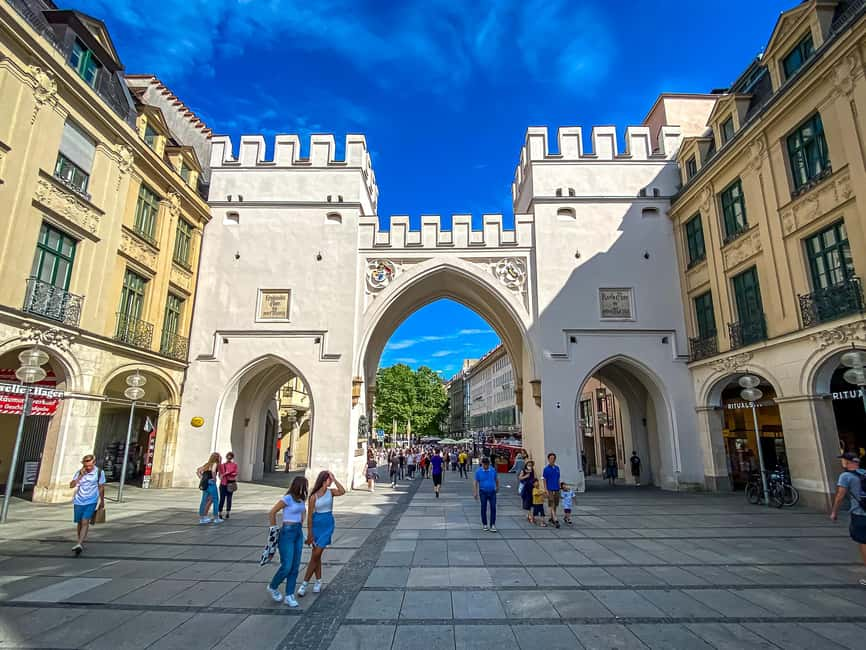
You start at the main gate of St. Peter Church, where your guide is waiting with a yellow umbrella from Walkative. From there, the route leads you into Marienplatz, and that’s where Munich’s “center” feeling becomes real fast.
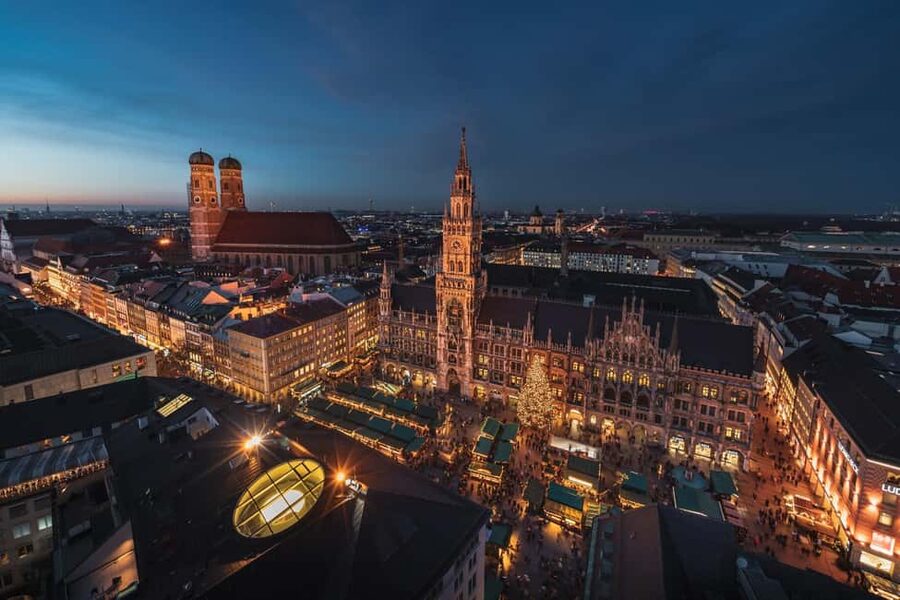
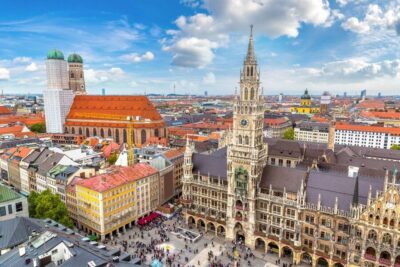
Marienplatz is where the Old Town’s identity shows up in stone. Expect a focus on the New and Old Town Hall, which gives you more than a quick exterior glance. You’ll understand why this place matters, not just what it looks like, which makes it easier to navigate the rest of the city later.
Marienplatz’s carillon knight-fight: the stop that can feel underwhelming
One moment on this route is the city carillon’s knightly figure fights. The tour includes it, but it’s also described as possibly the most disappointing attraction in Munich for some people.
Here’s how I’d think about it: if you love ceremonial tradition and you’re in the mood for a quick, quirky diversion, it can be a fun interlude. If you’re here mostly for big architecture and museum-level storytelling, treat it as a short break, not the emotional climax of the whole walk.
Hofbräuhaus and the beer culture story behind the mugs
Hofbräuhaus is a must on any first trip to Munich, and this tour does more than point and shoot. You’ll see the famous hall and get the bigger Bavaria beer-culture story, including how the region’s identity and beer traditions became tightly connected.
I also like the kind of details a guide can bring to this stop. One example that shows up in guide tip-style moments is the story of Aloisius, a figure connected with Hofbräuhaus lore. Another is how Munich kids and symbols show up on emblems around the city, including a familiar little character that many people notice only after someone points it out.
And yes, the tour nods to the scale of beer culture, from the Oktoberfest idea of hectolitres poured to the classic litre mugs. You don’t need to be a beer expert to enjoy this part. If anything, the best guides make it feel like a social system, not just a beverage.
More Walking Tours in Munich
- Munich: Third Reich & WWII Walking Tour
★ 4.6 · 6,181 reviews - Third Reich Walking Tour Munich
★ 4.5 · 4,291 reviews - Munich: Night Watchman Walking Tour
★ 4.7 · 2,092 reviews - Munich Ghosts and Spirits Evening Walking Tour
★ 5.0 · 1,900 reviews
Odeonsplatz and the National Theater area, where royal Munich feels close
From Marienplatz, you head toward the grander, more formal parts of the city. At Odeonsplatz, Munich starts to feel more like a stage set for power and performance, with architecture that reads as confident and official.
The tour also includes the National Theater and State Opera area. This matters because you’re not just walking past buildings, you’re learning how the city presented itself across different eras. You’ll understand what you’re looking at, so the buildings become context, not background noise.
Max Joseph Platz and the Wittelsbach era: power made visible
Max Joseph Platz is where you can feel the royal planning of Munich. The tour takes you past key spaces tied to the residences of the Bavarian kings and includes stops linked to the Wittelsbachs, the family that ruled for centuries.
This part of the walk is especially valuable if you like your sightseeing with a timeline attached. Instead of treating “the royal stuff” like one long blur, you’ll connect rulers to how Munich developed, and you’ll get a sense of why some streets and squares feel designed, not accidental.
It also helps explain why Bavaria’s identity feels so distinct within Germany. Munich is not just a place with a few famous sights. It’s a place where institutions, rulers, and culture all shaped what you see today.
Roman beginnings, 700 years of rule, and the unification story
One of the strengths of this tour is that it doesn’t keep history locked inside dates. You’ll hear about the Roman beginnings of the city, then the long arc of rule under the Wittelsbach family.
From there, you’ll reach the 19th century unification of Germany by Bismarck. That connection is useful because it helps you place Munich in a bigger national story, rather than treating it like an isolated Bavaria bubble.
When this is done well, it changes how you read the city. You’ll start noticing layers, why certain spaces feel older, and why Munich’s political identity got shaped the way it did.
Beer Hall Putsch and Mein Kampf: the dark chapter handled with care
This tour also covers a serious side of Munich’s 20th-century past. You’ll discuss the Beer Hall Putsch in 1923, when Adolf Hitler attempted to seize power by force, and how it led to prison. You’ll also hear about Mein Kampf and the Nazi rise that followed.
I like that the tour frames these topics as part of the city’s story, not as sensational trivia. And based on guide feedback, the best guides handle it sensitively, aiming to educate without turning it into spectacle.
If you want a completely light-hearted stroll, this might not be your match. But if you want to understand Munich as it really is, this inclusion is part of being honest about place.
Joseph Ratzinger before Pope Benedict XVI, and how careers intersect with place
Another important element is the story of Joseph Ratzinger, the future Pope Benedict XVI, and his work while still an archbishop. It’s a reminder that Munich is not only defined by 20th-century politics and old royal power.
This is the kind of detail that makes the walk feel three-dimensional. You see the same city that hosted brutal chapters, but you also learn how faith, careers, and institutions shaped everyday life across decades.
The guides: humor, pacing, and follow-up tips that extend the trip
If you’re choosing a walking tour in a place with lots of history, the guide is the difference between a list and a real experience. The strongest feedback I’ve seen centers on guides who tell stories clearly, keep a comfortable pace, and make space for questions.
Names that come up often include Alex, Jean, Patrick, and Noel Byrnes, with praise for humor and engagement. Some guides also share extra practical ideas beyond the route, like what to eat next. For instance, you might hear food pointers such as a classic leberkase sandwich idea from Viktualienmarkt, which is the kind of helpful lead that saves you time later.
Price and what you really get for $29
At $29 per person, this is priced like a solid “first-day orientation” tour. The included value is the expert local guide and the structured narrative, and the stops are dense enough to justify the time.
It’s also worth understanding the payment style. This experience joins a general pay-as-you-wish walking tour format. Your booking amount covers the reservation fee and the guide’s payment in advance, and the info you’re given says no more payment is required on the spot.
That matters because it keeps the experience straightforward. You can focus on learning and walking, not figuring out awkward payment math mid-tour.
After the walk: how to use what you learned
The best part of taking a guided Old Town walk is what it unlocks after you leave. Once you know what you’re looking at at Marienplatz, Hofbräuhaus, and the royal squares, the rest of your Munich time gets easier.
I’d lean into the city legends and food hints you pick up during the walk. Aloisius-related lore at Hofbräuhaus is fun to remember while you’re deciding what to order, and the Leberkase sandwich tip can be a great next stop if you’re thinking beyond beer alone.
Also, the history you get here will make your later self-guided choices smarter. You’ll be able to connect what you see in churches, squares, and monuments to the larger Bavarian story instead of collecting random facts.
Should you book this Munich Old Town guided walk?
Book it if you want a fast, well-structured orientation to Munich, with both the beer identity and the political history that shaped the city. It’s a strong option for first-time visitors, and it’s especially good if you like your landmarks explained in plain language, with enough humor to keep hard topics from feeling like a lecture.
Consider skipping or adjusting your expectations if you mainly want light sightseeing. The carillon knight-fight show is included and can be underwhelming, and the tour covers serious WWII-era context, so you should be ready for that shift.
If you want Munich with meaning, not just movement, this is a very practical place to start.
More Old-Town Walks in Munich
- Munich: Walking Tour Old Town and Viktualienmarkt
★ 4.7 · 839 reviews - Munich: Old Town Walking Tour
★ 4.7 · 589 reviews - Munich: Viktualienmarkt & Altstadt Food Tour
★ 4.7 · 481 reviews - Munich: Old Town Guided Walking Tour
★ 4.6 · 479 reviews
Newest Munich reviews on the site
- Munich – the essential walking tour★ 5.0 · 30 reviews
- Munich Beer and Bavarian Bites Small-Group Tour★ 5.0 · 167 reviews
- Munich to Prague – Private Transfer with 2 hours of Sightseeing★ 5.0 · 6 reviews
- 800 Years of History: A Munich GPS Audio Tour★ 4.5 · 12 reviews
- Munich in the 3rd Reich and WW2 private walking tour★ 5.0 · 148 reviews
- Munich Food Tour with Full Meal & Drinks by Do Eat Better★ 5.0 · 59 reviews
- Munich Scavenger Hunt and Sights Self-Guided Tour★ 4.5 · 8 reviews
- Munich Christmas Market Small Group Tour with Gingerbread Heart★ 4.0 · 9 reviews
Old Town Walking Tours, compared.
Old Town & Viktualienmarkt City Walk in German
Read our review →
Browse the lists this tour appears in