
Reviewed · HISTORICAL TOURS
Lübeck: Hanseatic League History Walking Tour
If you like trade history with real streets behind it, Lübeck delivers. This Hanseatic League History Walking Tour turns the city’s medieval walls, harbors, and guild buildings into a clear story, not a lecture. I especially like the way the tour strings together big themes, merchant power and maritime networks, with very specific stops like the Holsten Gate and St. Mary’s Church.
I also like the pace. Ninety minutes is enough to see major landmarks and still feel like you’re moving through places people actually lived and worked. One thing to consider: it is a walking tour through older streets and alleys, so you’ll want comfortable shoes and a willingness to cover ground at a steady clip.
In This Review
- Key highlights at a glance
- Why Lübeck makes Hanseatic League history click
- Starting at the Holsten Gate, where Lübeck guarded its power
- Salt storehouses and the Trave Harbour: where trade becomes physical
- Grote Petersgrube and stepped-gable lanes you can actually picture
- St. Mary’s Church, and why Baltic cities copied Lübeck
- Buddenbrook House of the Mann family: seeing merchant status in stone
- Schiffergesellschaft guild hall: where Hanseatic sailors found their people
- The Hospital of the Holy Spirit and Lübeck’s peaceful backyards
- Price and value: what $259 per group gets you
- The walking reality: 90 minutes that actually feel manageable
- Who should book this Lübeck Hanseatic tour
- Should you book it?
- FAQ
- Where does the tour start?
- How long is the Lübeck Hanseatic League History Walking Tour?
- Is this a private tour?
- How many people can be in a group?
- What languages are available for the live guide?
- What is included in the price?
- Are food and drinks included?
- How much does the tour cost?
- Can I cancel for a full refund?
- Is there an option to pay later?
Key highlights at a glance
- Holsten Gate start at the famous Holstentor fortification gateway, one of four gates in that wall passage
- Trade-focused sights like the Trave Harbour and salt storehouses, where commerce stops being abstract
- Große Petersgrube street scene with old brick and stepped-gable buildings
- St. Mary’s Church context and why it became a model for churches across the Baltic Hanseatic world
- Guild storytelling at the Schiffergesellschaft guild hall for Hanseatic sailors
- A calm ending at the Hospital of the Holy Spirit, with a look into romantic backyards
Why Lübeck makes Hanseatic League history click
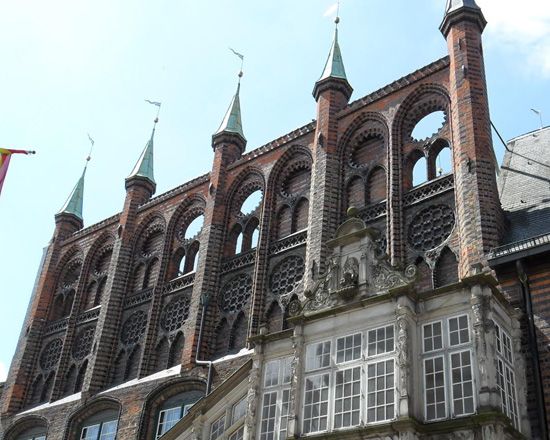
Lübeck is one of those rare places where history is written in the buildings. You can point to a wall passage gate. You can walk past the kind of architecture merchant families would recognize instantly. And you can stand near the waterways that made the whole Hanseatic system possible.
What makes this tour work is the focus. You are not just ticking off landmarks. You are learning how an alliance of merchant guilds grew into a city confederation, and how that network helped connect sea routes and trade across Northern Europe. The tour frames the league’s heyday as a web that stretched from Riga to Bruges, with around 300 maritime and inland cities involved. That scale sounds huge. In Lübeck, it stops feeling abstract.
You’ll also notice what the tour emphasizes: narrow alleys, stepped gables, and those tucked-away courtyards. This is the everyday setting for merchant wealth, guild life, and later social institutions.
A few more Lubeck walks and trips to compare
- Lübeck: Private Historical and Architectural Walking Tour
★ 4.5 · 6 reviews - Leipzig: City History Canal Sightseeing Tour on a Motorboat
★ 4.7 · 7,671 reviews - Berlin: Natural History Museum Entrance Ticket
★ 4.6 · 3,382 reviews
Starting at the Holsten Gate, where Lübeck guarded its power
The tour meets at the Holsten Gate, so you begin right at one of the city’s most recognizable fortification points. From there, you get the sense that Lübeck was not just a pretty medieval town. It was a working trading hub that needed protection.
The Holstentor wall passage is highlighted as one of four city fortification gates connected to that stretch of wall. Even if you only know Lübeck by name, seeing the gate this early helps you understand the city’s mindset: merchants and mariners needed security because trade depended on it.
Practical tip: arrive a few minutes early if you can. This is a 90-minute tour, and you want to settle in before the guide starts linking the gate to the wider Hanseatic story.
Salt storehouses and the Trave Harbour: where trade becomes physical
After the fortifications, the route moves toward the city’s trading side. You stroll past salt storehouses and along the Trave Harbour.
This is a smart shift. Salt matters because it is basic for preservation, shipping, and long-distance commerce. You are walking by architecture that suggests storage, logistics, and the steady rhythm of goods moving in and out. The Trave Harbour brings in the maritime piece, so the Hanseatic League’s sea connections stop being a concept and become a location you can stand beside.
If you like history that feels practical, this part is for you. You start to see how the league’s member cities coordinated around predictable trade routes and shared commercial interests.
Grote Petersgrube and stepped-gable lanes you can actually picture
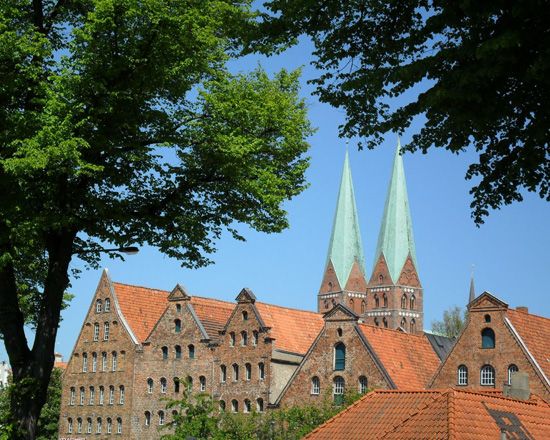
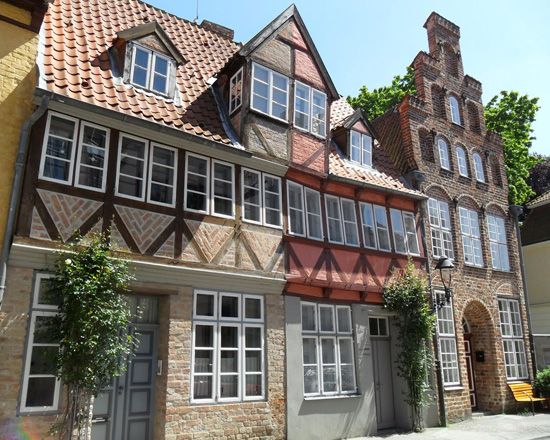
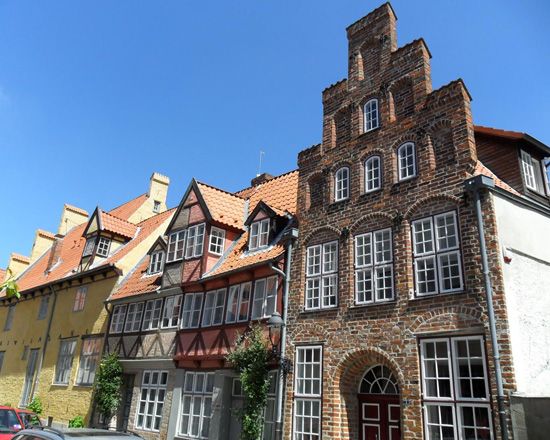
Next comes one of Lübeck’s oldest streets, Große Petersgrube. The tour points out old brick and stepped-gable buildings, the kind of construction that turns medieval North Germany into something you can almost touch with your eyes.
This section works because it slows down just enough to let you register details. Stepped gables are not random decoration. They are part of the city’s look and identity, and they help you read Lübeck as a merchant town built for display and durability.
Then come the narrow alleys and the typical feel of the old town. You get the sense of a place where people moved on foot, with deliveries and daily routines routed through tight lanes. It is also the kind of walking that rewards good shoes and a calm pace.
More walking tours in Lubeck:
- Lübeck: Express Walk with a Local
★ 4.9 · 10 reviews - Lübeck: Old Town Highlights Private Walking Tour
★ 4.8 · 8 reviews - Discover Berlin Half-Day Walking Tour
★ 5.0 · 9,624 reviews - Berlin: Third Reich and Cold War 2 Hour Walking Tour
★ 4.9 · 6,830 reviews
St. Mary’s Church, and why Baltic cities copied Lübeck
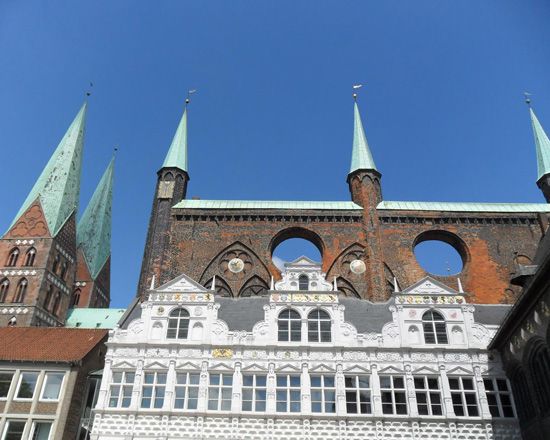
St. Mary’s Church is a major stop and a major clue about influence. The tour explains that this church served as a model for numerous churches in Hanseatic cities across the Baltic region.
That detail matters. It means Lübeck was not only trading goods. It was exporting ideas, styles, and prestige through culture. When you connect that to the scale of the league, the church becomes a signpost of how authority moved along the same networks as commerce.
Expect to spend time here, because the point is not only the building itself but the story of how a style spread. If you enjoy architecture, you’ll appreciate how the guide links form to power.
Buddenbrook House of the Mann family: seeing merchant status in stone
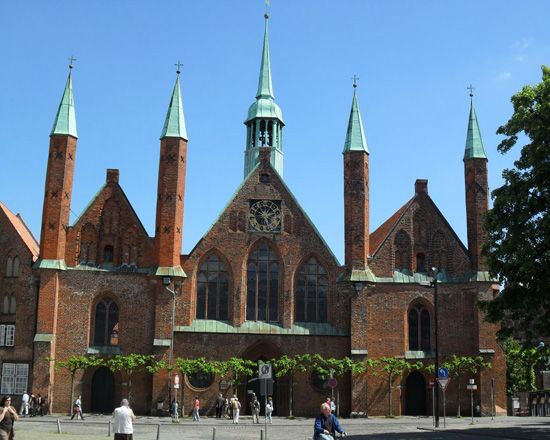
Passing by the Buddenbrook House of the Mann family, the tour adds another layer to the merchant world. The stop is less about a single dramatic event and more about presence: families who benefited from trade left marks that still shape the street today.
This is where Lübeck starts to feel personal. When a tour includes a family-connected landmark like this, you are not only learning about institutions, you’re seeing how wealth and social standing show up in real addresses and buildings.
If you’re coming to Lübeck from another German city, this is also a nice reminder that Hanseatic towns had their own identity. Lübeck was not a copy of elsewhere. It had its own merchant logic and its own way of presenting success.
Schiffergesellschaft guild hall: where Hanseatic sailors found their people
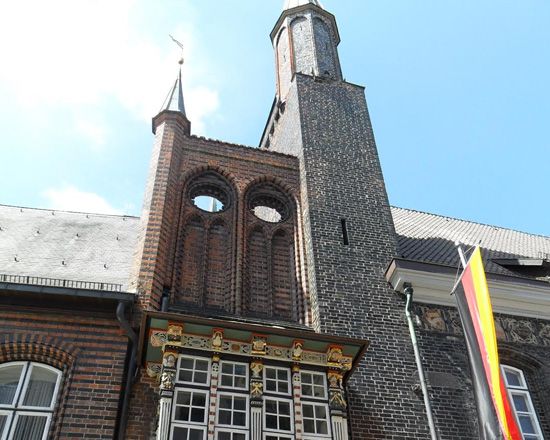
One of the most atmospheric parts of the route is the Schiffergesellschaft guild hall. The guide highlights it as the venerable meeting place where the sailors of the Hanseatic League used to stop by.
A guild hall is different from a church or a fortress. It is a social and professional hub, a room where networks tightened. When the tour frames this location as connected to sailors, it reinforces the Hanseatic idea that trade depended on organized groups, not lone adventurers.
This stop is also a good moment to listen for connections. The guide ties together earlier stops like the harbour and storehouses with the idea of organized maritime life. That is one reason the tour feels coherent: you keep seeing the same system from different angles.
The Hospital of the Holy Spirit and Lübeck’s peaceful backyards
The tour ends at the Hospital of the Holy Spirit. It is presented as one of Lübeck’s oldest social institutions, and it makes a gentle landing after all the trade and guild focus.
Here, you can look into one or two romantic backyards. That’s the right kind of contrast. It reminds you that while the Hanseatic League built power through commerce, cities also had long-term social structures that mattered to everyday life.
If you’ve been walking for 80 minutes already, this ending feels kind. It gives you a chance to slow down, take a photo without rushing, and reflect on how a medieval city balanced work and care.
Price and value: what $259 per group gets you
The price is $259 per group up to 6 people for a 90-minute tour. That pricing setup can be good value if you’re traveling as a small group, like friends, a family unit, or colleagues.
Here’s the simple math. At the full group size, $259 divided by 6 is about $43 per person. Even if you’re not at six, you still benefit from the private-group model. You get the guide’s attention and the chance to steer slightly toward what you care about, especially since the tour format supports questions.
Speaking of attention, the strongest praise from recent tour experiences points to guides who are fun, energetic, and willing to meet the group’s wishes. You might see this show up in how the guide adapts to interests like seeing courtyards (Höfe). That kind of flexibility is hard to price in, but it’s where value often hides.
The walking reality: 90 minutes that actually feel manageable
A 90-minute history walk sounds short, but Lübeck old streets can feel like a maze if you’re doing it alone. Having a guide helps you keep a clear route and understand what you’re seeing before you wander too far off course.
Still, there’s one reality check. The tour includes narrow alleys, traditional architecture, and courtyard looks. Plan on steady walking. Wear comfortable shoes, and bring a light layer if the weather shifts, especially since Northern Germany can change quickly.
Group size is private, with up to 6 people. That usually means less waiting and more direct conversation. It also means the guide can keep things moving while still responding to your pace.
Who should book this Lübeck Hanseatic tour
This tour is a great match if you want:
- A focused introduction to Hanseatic League life in Lübeck, not just scattered facts
- A walk that connects major landmarks like the Holsten Gate and St. Mary’s Church to a single storyline
- Architecture and city details, including stepped gables and backyards, that you might miss on your own
- A guide who makes the story feel lively and who can respond to the group’s interests
It may be less ideal if you want long sit-down time, or if you prefer a very slow, stop-everywhere pace. This is built for a 90-minute flow with several key stops.
Should you book it?
Yes, if you want a smart, story-driven way to understand Lübeck’s Hanseatic world. Starting at the Holsten Gate, moving through the harbour and trade-related sights, then reaching guild and social institutions gives you a full arc in a short time.
I’d book this when you have limited hours in Lübeck. You’ll get the big picture, plus concrete locations tied to commerce, architecture, and influence. And if you care about details like courtyards and how different parts of the city reflect merchant life, you’ll likely enjoy the way the guide can adjust to what your group wants to see.
FAQ
Where does the tour start?
Please meet your tour guide at the Holsten Gate.
How long is the Lübeck Hanseatic League History Walking Tour?
The tour duration is 90 minutes.
Is this a private tour?
Yes. It is a private group experience.
How many people can be in a group?
The price is per group up to 6 people.
What languages are available for the live guide?
The tour is offered in German and English.
What is included in the price?
A professional city guide is included.
Are food and drinks included?
No. Food and drinks are not included.
How much does the tour cost?
The price is $259 per group (up to 6 people).
Can I cancel for a full refund?
Free cancellation is available up to 24 hours in advance for a full refund.
Is there an option to pay later?
Yes. You can reserve now & pay later.
Newest Lubeck reviews on the site
- Lübeck’s old town by canoe: explore and circumnavigate on your own★ 4.8 · 24 reviews
- Lübeck zwischen Grusel und Geschichte Truecrime zu Halloween★ 4.7 · 50 reviews
- Lübeck: Old Town Highlights Private Walking Tour★ 4.8 · 8 reviews
- Lübeck: The Culinary City Tour – Lübeck Lukullisch★ 4.7 · 26 reviews
- Lübeck Day Pass – Day ticket for Lübeck museums★ 4.0 · 15 reviews
- Lübeck: Private Historical and Architectural Walking Tour★ 4.5 · 6 reviews
- Lübeck: Architecture and Local Craft Private Guided Tour★ 4.0 · 6 reviews
- Lübeck: Express Walk with a Local★ 4.9 · 10 reviews
Historical Tours, compared.
City History Canal Sightseeing Tour on a Motorboat
Read our review →
Browse the lists this tour appears in