
Reviewed · LüBECK TOURS
Lübeck: Architecture and Local Craft Private Guided Tour
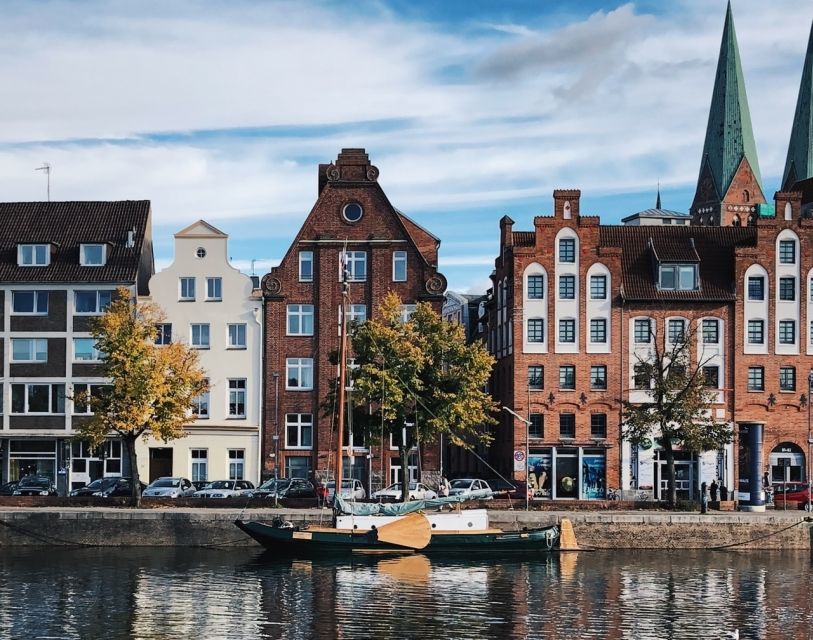
One landmark sums up Lübeck’s power. From Holstentor you’ll get a focused, private walk through the city’s famous Hanseatic brick architecture, plus the human stories that grew around it. I like that the tour is built around real places you can point at, and I especially appreciate the attention to how the brick craft shaped everyday life. One thing to consider is that a few church interiors may involve an optional entry fee.
You’ll cover the big sights, like the churches and the market area, but the tour also follows the “behind the scenes” side of city life, including passages, courtyards, and the way Lübeck’s building landscape changed over time. The result is a strong mix of architecture, practical urban history, and local character, all guided live in English or German. The drawback is simple: at 90 minutes, you will have to choose your pace, because you cannot linger everywhere.
In This Review
- Key highlights to look for on this private Lübeck walk
- Lübeck’s Gothic brick looks better when someone explains why
- Starting at Holstentor: a smart 90-minute plan on foot
- Town market square: Rathaus and Ratskirche St. Marienchurch
- Buddenbrockhaus: Baroque detail in a Hanseatic city
- Glockengießerstraße: courtyards and passages with a purpose
- Sagging houses, altered gables, and the real mechanics of change
- Brick-making in a merchant’s house: craft as city power
- Church time and optional entry: plan how you want to spend it
- Price per group, value for 1 to 8 people, and how to judge it
- Who this Lübeck architecture tour fits best
- Should you book this Lübeck architecture and craft tour?
- FAQ
- Where does the tour start?
- How long is the tour?
- Is this tour private, and how big is the group?
- What languages are available?
- Are church entrances included in the price?
- Can I get a refund if my plans change?
Key highlights to look for on this private Lübeck walk
- Holstentor as the anchor point, meeting outside and revisiting it as the tour’s final payoff
- Gothic brick architecture with street-level explanations, not just pretty facades
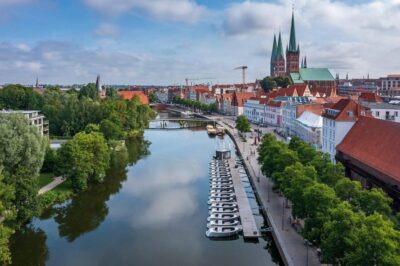
- Town market square sights, including Rathaus and Ratskirche St. Marienchurch
- Baroque Buddenbrockhaus stop, tying architecture to merchant-era Lübeck
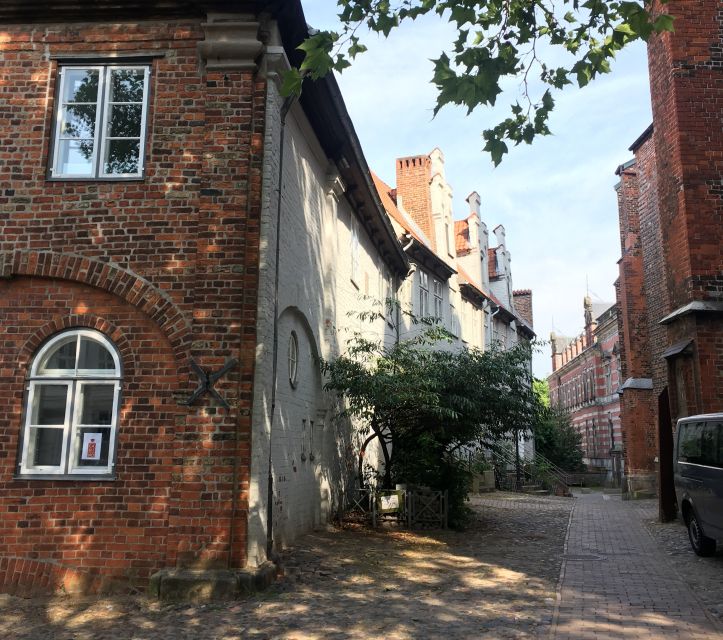
- Glockengießerstraße passages and courtyards, with construction and access stories
- Brick-making lessons in a merchant’s house, explaining why craft mattered for the whole city
Lübeck’s Gothic brick looks better when someone explains why
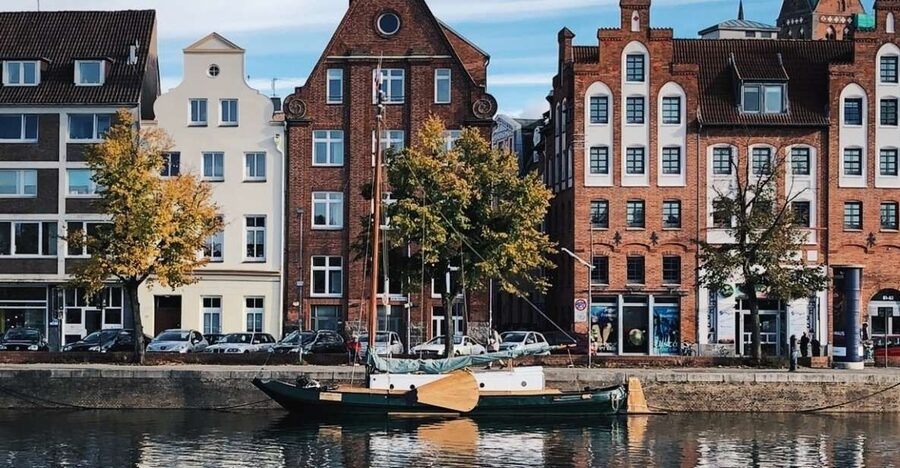
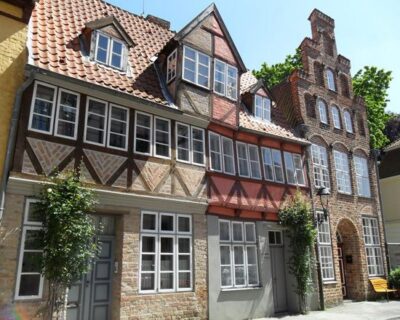
Lübeck can feel like a living textbook of Hanseatic building. What makes it special is the brick itself. This is not decorative brick for show, it’s a practical building material that became a citywide signature. During this private tour, the guide connects the visual style to real construction choices, so you start noticing details you would otherwise miss, like the patterns and proportions that made brickwork recognizable from block to block.
You’ll also get context for what was happening in the city as it expanded. The tour points out things like how Middle Ages construction areas were artificially expanded, how some houses sagged over time, and how later gable alterations changed the look of older streets. Those sound like technical notes, but they help you understand why Lübeck looks the way it does today, even when buildings are centuries old.
And because the tour is private, the pace stays about you. If you want more background on churches, ask. If you care more about daily life and merchant buildings, the guide can lean that way. That flexibility is one of the best values in a short, 90-minute architecture walk.
A few more Lubeck walks and trips to compare
- Lübeck: 1-Hour Splash Bus City Tour
★ 4.0 · 2,626 reviews - Lübeck: entertaining guided tour to old town highlights
★ 4.7 · 594 reviews - Lübeck: Entertaining Tour Through Hidden Courtyards
★ 4.8 · 483 reviews
Starting at Holstentor: a smart 90-minute plan on foot
You meet your guide at Holstentor, right at the entrance, then head into the old town streets. The tour runs for 90 minutes, and it can start any time between 9:00 AM and 7:00 PM based on what you prefer. That matters if you are pairing this with other Lübeck highlights, since the city’s best sights are often walkable but time windows can be tight.
Because it is private and sized for up to 8 people, you are less likely to get swept along in a big group. It also makes question time easier. The tour is in English or German, led by a professional city guide. From what you can expect, the guide is the whole point, the person who turns “pretty buildings” into “I understand what I am looking at.”
Practical tip: wear shoes you can walk in comfortably for the full hour plus. Lübeck is old town, and old town means uneven surfaces and frequent stops. If you rush, you miss the explanations. If you plan to move at a steady, calm pace, the 90 minutes feels exactly right.
Town market square: Rathaus and Ratskirche St. Marienchurch
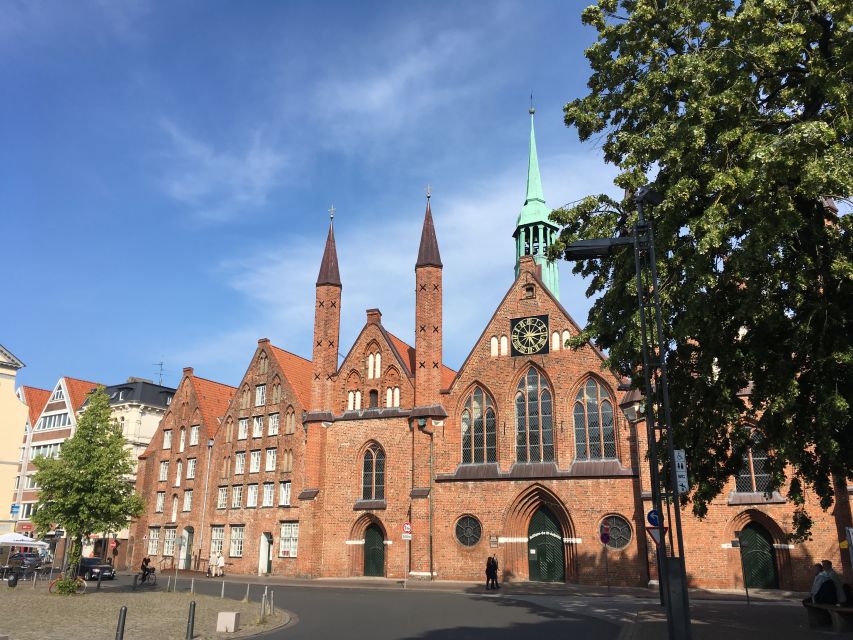
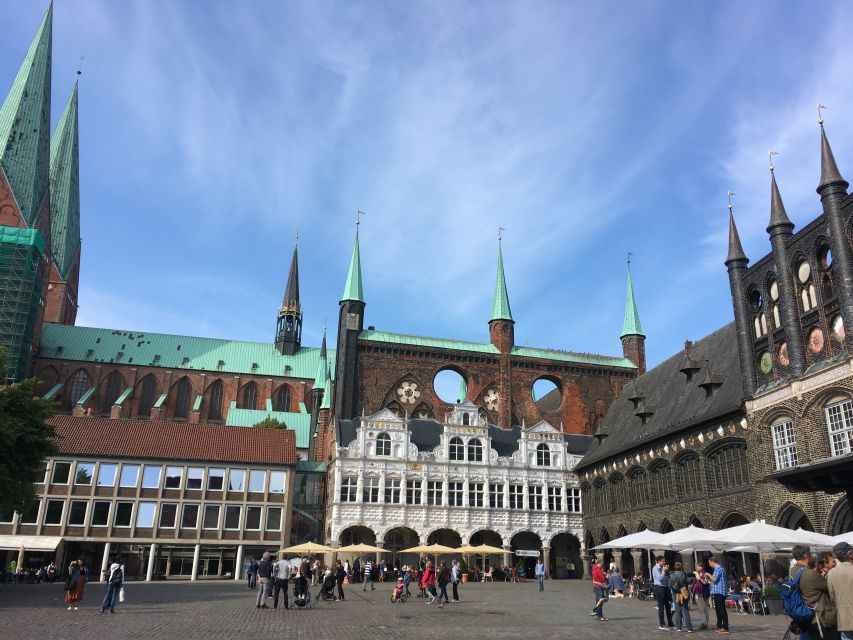
The tour’s town market stop is where Lübeck’s civic pride comes into focus. You’ll stroll through the marketplace area and get a close look at the town hall, plus the standout church called Ratskirche St. Marienchurch. This is the kind of stop that can be confusing if you just arrive and take photos, because you might not know what you are seeing or why it mattered.
With a guide, the church becomes more than a landmark. The tour explains how the city’s world-famous churches fit into Lübeck’s identity, not as separate monuments but as parts of a functioning urban culture. Churches in this part of Northern Germany were closely tied to community life, power, and wealth, and the guide ties that to the Hanseatic setting.
This is also a good place to slow down and compare building styles. You can see how brickwork and Gothic design create a strong visual rhythm, then notice how town structures around the market relate to that rhythm. If you care about architecture, this is one of the best payoff zones on the route.
One consideration: church interiors are optional, and there is a small entrance fee listed for churches. Even if you skip interiors, the exterior viewing and the guide’s context here are still worthwhile.
Buddenbrockhaus: Baroque detail in a Hanseatic city
After the market, you pass the Buddenbrockhaus, a Baroque building that adds contrast to Lübeck’s brick Gothic identity. This is the kind of stop that helps you avoid the common mistake of treating a historic city as one uniform style. Lübeck changes over time, and that change is part of the story.
The tour uses this section to show you how different eras left visible marks. That is useful because it trains your eye for time layers: you start to recognize when something looks like it belongs to an earlier building phase and when later adjustments shifted the look. The tour also talks about the city’s evolving construction pattern, including ideas like expansion into Middle Ages building areas and later alterations.
If you enjoy architecture, this stop gives you a pause from the main Gothic rhythm. It helps you see Lübeck as an inhabited place, not a theme park of one perfect era. And since this is a private guide format, you can ask follow-up questions if you want more detail about how Baroque influence shows up in Northern German urban life.
Same city, a different way to spend the afternoon:
- Lübeck: Electric Boat Rental – without driving licence
★ 4.8 · 174 reviews - Lübeck: Classic Tour of the Hanseatic City
★ 4.8 · 64 reviews - Lübeck: Hanseatic League History Walking Tour
★ 4.9 · 57 reviews - Lübeck zwischen Grusel und Geschichte Truecrime zu Halloween
★ 4.7 · 50 reviews
Glockengießerstraße: courtyards and passages with a purpose
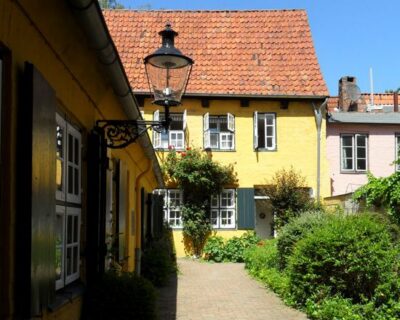
Next comes Glockengießerstraße, a name that already hints at the area’s craft connections. Here you can see several passages and courtyards, and the guide explains their history and construction. This is one of the tour sections that makes it feel more local and more human, because courtyards and passages are where you get a sense of movement, access, and how people organized space before modern streets became the norm.
These are not just cute side alleys. When the guide explains how the passages and courtyards were built and why, you start understanding why Lübeck felt walkable and functional even in dense historic neighborhoods. You can also pick up how brick construction supported this kind of urban layout, since the material and design choices allowed for strong, repeatable building systems.
This portion is especially good for travelers who like “small scale” architecture. Big churches and gates get the headlines, but passages and courtyards are where you feel the city’s daily logic. If you like looking behind the façade, this is a highlight.
Practical tip: if you want photos, bring your phone camera settings for shaded courtyards. Lighting can shift quickly, so you may need a steady hand while you pause for explanations.
Sagging houses, altered gables, and the real mechanics of change
One of the tour’s strengths is that it teaches you how Lübeck has survived time and settlement issues while still looking coherent. The guide discusses sagging houses and modern gable alterations, plus the idea of artificial expansion of construction areas in the Middle Ages. These points are technical, but they are the reason historic cities look like historic cities, not like freshly built replicas.
Here is why this matters to you as a traveler: once you understand that buildings can sag, settle, and be adjusted, you stop chasing perfection. You start noticing causes. Why does one façade look slightly different than the neighbor’s? Why do alterations appear at certain heights? Why do some streets show signs of older planning? The tour gives you a framework to answer those questions on the spot.
This is also where the private format shines again. If you are the type who wants to know how brick structures perform, or why later repairs changed appearances, you will appreciate that the guide can tailor the explanation. Short tours are often too rigid, but this one stays focused and adaptive.
If your interest leans more toward art history, keep an open mind here. The structural and urban-history angle makes the Gothic brick identity feel even more impressive, because it is tied to real building challenges.
Brick-making in a merchant’s house: craft as city power
A major highlight is a visit to a local merchant’s house and the guide’s insight into brick-making, including why mastering this craft was so important to Lübeck and its inhabitants. This is not just a trivia stop. It reframes Lübeck’s architecture as a skill network and an economic strategy.
When brick-making is done well, it supports faster construction and more consistent building quality, which matters when a city is growing and competitors are nearby. In a Hanseatic trading economy, the ability to build strong, reliable structures is a competitive advantage. The tour uses this idea to connect craft, wealth, and everyday life.
This part is ideal if you want a more grounded understanding of why Lübeck got famous for brick Gothic in the first place. You’ll come away with a better mental model: brick is not only a look, it is a capability.
One more thing: even if you do not think of yourself as an “architecture person,” you can still enjoy this. Brick-making turns architecture from a visual experience into a human story about materials, labor, and ambition.
Church time and optional entry: plan how you want to spend it
The tour includes time to focus on Lübeck’s world-famous churches, including the big names you see around the town market. Church entrance fees are listed as optional, at 2.00 EUR. That means you can keep costs down if you prefer to rely on the exterior viewing and the guide’s explanations.
If you do choose to enter a church, you’ll likely get more value from the time spent there, since the guide has already given you context for what you are seeing. If you skip interiors, you can still enjoy the way churches shape street views and skyline lines.
Dress sensibly for indoor stops, even in warmer months, because old churches can feel cooler. Also, keep an eye on what the guide suggests in terms of which interiors are most worth your limited time. With a 90-minute tour, smart choices beat trying to do everything.
Price per group, value for 1 to 8 people, and how to judge it
At $277 per group up to 8, this tour is priced for a private group rather than a solo traveler discount. The best way to judge value is to compare what you get: a live professional city guide for 90 minutes, delivered privately, with a route that hits key architecture stops plus smaller, story-driven areas like passages and courtyards.
For two or four people, it can feel like a practical luxury. You pay more than a group walking tour, but you trade away crowd stress for a guided, question-friendly pace. That is especially meaningful in architecture towns, where good explanations can make the difference between shrugging and really noticing.
For one person traveling alone, it might feel expensive unless you are using it as part of a special itinerary moment, like your only architecture-focused activity. But if you are visiting Lübeck with family or friends, splitting the group cost can make it a very fair way to get deeper than surface sightseeing.
Also, because the tour time is short, you get a concentrated experience. It is easier to fit into a day than a longer multi-stop excursion, and it gives you a set of landmarks you can build on afterward when you explore on your own.
Who this Lübeck architecture tour fits best
This tour is a strong match if you like Gothic brick architecture, want context for churches and civic buildings, and enjoy stories that tie buildings to the lives of people who lived there. It is also ideal for travelers who prefer a guided walking route over trying to decode a historic city map on their own.
You’ll likely get the most from this tour if:
- You want a guided explanation of how Lübeck’s building style works, including construction changes over time
- You care about the “why,” not just the “what,” like brick-making and how craft mattered
- You want a short, efficient experience that still feels specific to Lübeck
If you only want broad highlights and photo stops, you might not need a private guide. But if you like architecture explanations, this is the type of tour that helps you look smarter while walking.
Should you book this Lübeck architecture and craft tour?
I would book it if your idea of a great Lübeck day includes Gothic brick details, church context, and the less obvious city spaces like passages and courtyards. The private format, the 90-minute length, and the focus on brick-making and urban changes make it a good value for people who want their architecture time to mean something.
Skip it only if you are primarily after a casual, self-guided stroll with minimal interpretation, or if church interiors are a must for you and you want a longer schedule than 90 minutes. Otherwise, this is one of those rare short tours that gives you a clear mental map of the city, so you can keep appreciating Lübeck long after you finish walking.
FAQ
Where does the tour start?
Your guide meets you at the Holstentor. Wait directly at the entrance of the Holstenstor.
How long is the tour?
The tour lasts 90 minutes.
Is this tour private, and how big is the group?
Yes. This is a private group experience, priced per group up to 8 people.
What languages are available?
The tour is available in English and German.
Are church entrances included in the price?
Church entrance fees are not included. Entrance is optional, with a listed cost of 2.00 EUR.
Can I get a refund if my plans change?
Free cancellation is available up to 24 hours in advance for a full refund.
Newest Lubeck reviews on the site
- Lübeck zwischen Grusel und Geschichte Truecrime zu Halloween★ 4.7 · 50 reviews
- Lübeck’s old town by canoe: explore and circumnavigate on your own★ 4.8 · 24 reviews
- Lübeck: Old Town Highlights Private Walking Tour★ 4.8 · 8 reviews
- Lübeck: The Culinary City Tour – Lübeck Lukullisch★ 4.7 · 26 reviews
- Lübeck Day Pass – Day ticket for Lübeck museums★ 4.0 · 15 reviews
- Lübeck: Private Historical and Architectural Walking Tour★ 4.5 · 6 reviews
- Lübeck: Hanseatic League History Walking Tour★ 4.9 · 57 reviews
- Lübeck: Express Walk with a Local★ 4.9 · 10 reviews
Lübeck Tours, compared.
entertaining guided tour to old town highlights
Read our review →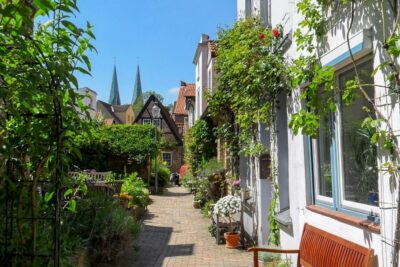
Lübeck zwischen Grusel und Geschichte Truecrime zu Halloween
Read our review →
Browse the lists this tour appears in