Reviewed · BERLIN TOURS
Hitler’s Berlin – the rise and fall (Small Group)
Berlin can feel heavy. This walking tour connects Nazi rise and collapse sites in just 2.5 hours. I like how it stays close to the street level story of how power grew, how it turned brutal, and how Berlin remembered it all, stop by stop.
Two things I really like: the small-group size means more Q&A and less rushing, and the guide’s academic focus on WWII keeps the explanations clear and grounded. I also like that you get Then and Now photographs and historic maps to help you see what has changed since the Nazi era.
One possible drawback: this is a serious, emotional topic, and you will do a moderate walk on uneven outdoor surfaces while standing for short periods at each stop, so you’ll want comfy shoes and a calm mindset.
In This Review
- Key Points That Make This Tour Worth Your Time
- Hitler’s Berlin, The Short Walk That Explains a Long Tragedy
- Price and Time: What $54.44 Buys You in Real Terms
- Route Logic: From Brandenburg Gate to Topography of Terror
- How the Guide Material Helps You Read Berlin’s Monuments
- Stop 1: Memorial to the Sinti and Roma Victims of National Socialism
- Stop 2: Reichstag Building and the Nazis’ Road to Power
- Stop 3: Soviet Memorial Tiergarten and the Battle of Berlin
- Stop 4: The Holocaust Memorial, Meaning, Memory, and Space
- Stop 5: Monument to Homosexuals Persecuted Under National Socialism
- Stop 6: Führerbunker, Hitler’s Final Days
- Stop 7: Johann Georg Elser Memorial and Resistance
- Stop 8: Aviation Ministry of Berlin, Göring’s Office World
- Stop 9: Topography of Terror, Gestapo HQ Site and a Breather
- Group Experience: What Makes This Tour Feel Personal
- Walking Comfort: What You Should Expect on Your Feet
- Who This Tour Is For (and Who Might Want Something Else)
- Should You Book Hitler’s Berlin: The Rise and Fall (Small Group)?
- FAQ
- Is this tour wheelchair accessible?
- How long is Hitler’s Berlin: The rise and fall?
- Is the tour in English?
- Where does the tour start and end?
- What sites are included in the walking route?
- What’s included in the ticket price?
- Are food and drinks included?
- What is the cancellation policy?
Key Points That Make This Tour Worth Your Time
- Small-group attention with time for questions and reflection
- Then and Now photos plus historic maps to connect past and present
- One tight route from Brandenburg Gate to Topography of Terror
- Memorials that broaden the story beyond the usual Berlin highlights
- A heavy but respectful tone on genocide, persecution, and resistance
- English guide experience with most guests praising clarity and sensitivity
Hitler’s Berlin, The Short Walk That Explains a Long Tragedy
This is the kind of tour you do when you want more than postcard Berlin. You’ll be walking a compact stretch of central Berlin and using it like a map for the Nazi rise and fall, from the politics that helped Hitler take power to the violence that followed, and the memorial landscape that still carries grief and accountability.
What makes it especially useful is the way the stops build on each other. You start with the human victims and the ideologies that made persecution feel thinkable to the regime. Then you move to the institutions and places where Nazi power took shape, before finishing at memorials and sites tied to the final collapse and the wartime apparatus that helped run terror.
The tour also gives you a practical framework for understanding Berlin’s biggest monuments. Yes, the Holocaust Memorial and Topography of Terror are famous, but the guide’s linking of events helps you read them instead of just looking at them.
A few more Berlin walks and trips to compare
- Berlin: Reichstag, Dome and Government District Guided Tour
★ 4.7 · 18,288 reviews - Berlin: 1-Hour City Tour by Boat with Guaranteed Seating
★ 4.3 · 16,993 reviews - Berlin: TV Tower Standard Entrance Ticket
★ 4.4 · 15,883 reviews
Price and Time: What $54.44 Buys You in Real Terms
At about $54.44 per person for roughly 2 hours 30 minutes, you’re paying for two things that are hard to DIY: a tight guided route and historical interpretation that stays focused.
Let’s break down the value:
- Time efficiency. You cover a lot of key sites without figuring out the order, transit, and what each location actually meant.
- Context, not just facts. Many Berlin monuments are powerful, but confusing if you do not know what they are reacting to. A guide helps you connect the dots quickly.
- Small-group format. The max group size is 15, and the tour is designed for interaction, not a silent march.
If you enjoy history but do not want to spend a day crisscrossing the city, this feels like a strong fit. If you want a slow, museum-style pace, you might feel the stops are too brief, because each location is mostly a short guided moment plus reflection.
Route Logic: From Brandenburg Gate to Topography of Terror
The tour begins at Pariser Platz, with Brandenburg Gate as your landmark starting point, and it ends at Topography of Terror on Niederkirchnerstraße.
This matters for two reasons:
- You get a clear start and finish. You know where you are, and you have an easy end point to continue exploring.
- You end with the most direct WWII-era documentation site on the route. Topography of Terror is where the Gestapo headquarters once stood, so you finish with the institutional machinery and documentation that explains how terror was organized.
Plan an open block at the end. The tour includes a break at Topography of Terror for tea or coffee and restrooms, so you can refresh before your next stop.
How the Guide Material Helps You Read Berlin’s Monuments
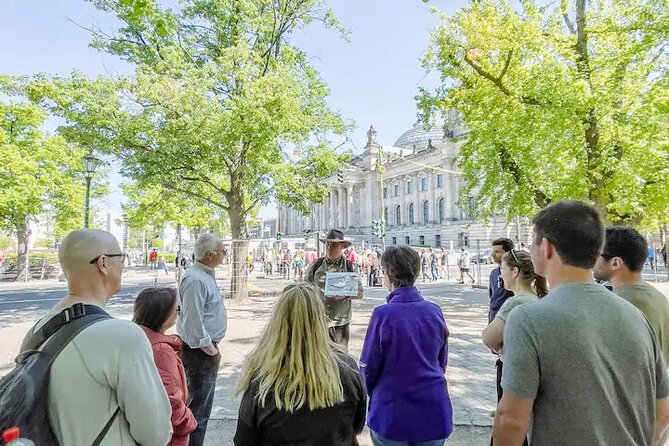
This experience includes an expert local guide with an academic background in WWII history. It also provides Then and Now photographs and historic maps, which is a big deal in Berlin because many former sites have been rebuilt or repurposed.
I like this format because it changes how you look at the street. Instead of thinking, I am standing in front of a monument, you start asking, what was here, what happened, and what does the city choose to show today.
You also get opportunities for reflection and Q&A. The Q&A element is one of the most praised parts of the tour, and it’s also one of the most practical. If you have questions about how ideology turned into policy, or how Berlin decided what to memorialize, this is the moment to ask.
Same city, a different way to spend the afternoon:
- Berlin: Boat Tour Along the River Spree
★ 4.4 · 11,252 reviews - Discover Berlin Half-Day Walking Tour
★ 5.0 · 9,624 reviews - Berlin: Government District around the Reichstag Guided Tour
★ 4.7 · 8,447 reviews - Berlin: Reichstag, Plenary Chamber, Cupola & Government Tour
★ 4.6 · 8,422 reviews
Stop 1: Memorial to the Sinti and Roma Victims of National Socialism
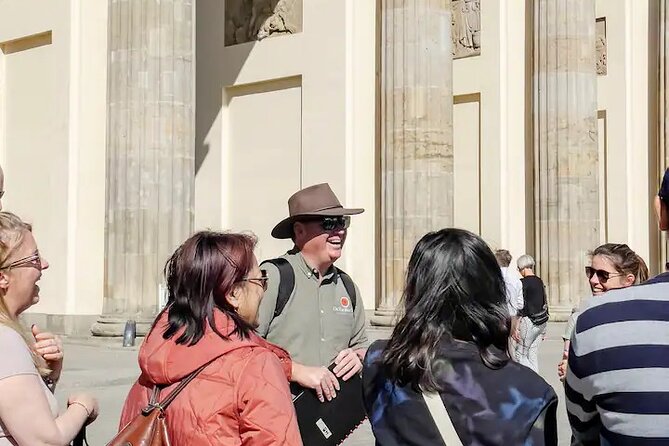
Time on site: about 10 minutes, with free admission
You start with the Memorial to the Sinti and Roma Victims of National Socialism. This is not a random opening. It sets the tone by grounding the story in victims and in the cruel social philosophies that the Third Reich later used to underpin the Holocaust.
Why this stop is valuable:
- It expands the Holocaust narrative beyond the most commonly known focus points.
- It gives you vocabulary for what “persecution ideology” looks like when it becomes state policy.
- It reminds you that Nazi terror targeted multiple groups, not just one.
Possible consideration: 10 minutes is short. If you want longer reading time, you should treat this as an orientation stop, then plan to revisit memorial areas later on your own if you want to sit with it longer.
Stop 2: Reichstag Building and the Nazis’ Road to Power
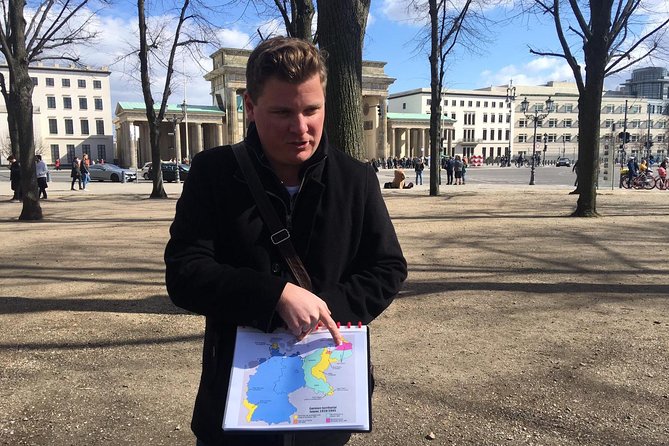
Time on site: about 15 minutes, with free admission
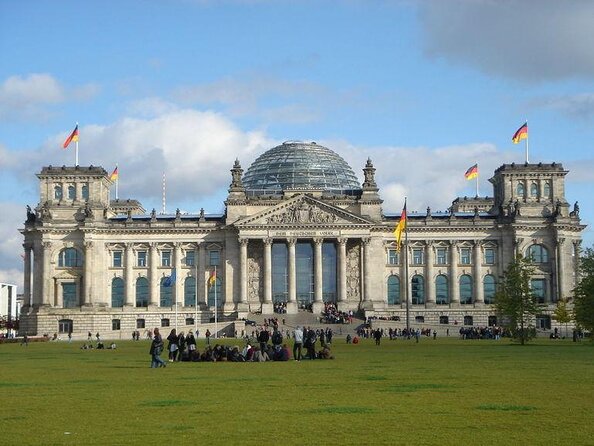
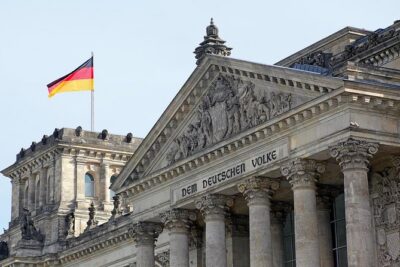
Next up is the Reichstag Building, Germany’s parliament. The guide explains how the Nazi Party were elected to power and how Hitler became Führer of Germany.
This stop is important because it breaks a common misconception. It is not only about tanks and battles. It’s about how political support, elections, and power structures can be exploited.
What to pay attention to:
- Listen for the political pathway. The tour’s framing makes you think about how ordinary institutions can be captured.
- Use the time to ask questions if you want help connecting the dots between propaganda, legal power, and later violence.
Possible drawback: this is still a walking tour, so you won’t have museum depth here. The value is in the guided explanation, not in long independent study.
Stop 3: Soviet Memorial Tiergarten and the Battle of Berlin
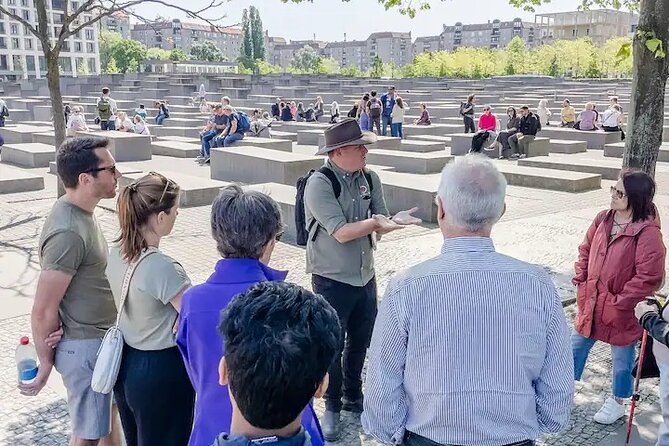
Time on site: about 15 minutes, with free admission
The tour then moves to the Soviet Memorial in Tiergarten. This is tied to the Battle of Berlin, described as the third bloodiest operation of WWII. You’ll discuss brutal fighting and how post-war remembrance shaped what remains.
What makes this stop matter:
- It broadens your view beyond Nazi crimes alone to include the full wartime catastrophe of Berlin.
- It helps you understand how remembrance works after mass violence, including whose suffering becomes emphasized in public space.
Possible consideration: this is an emotionally intense context, and the short time means you’ll likely be standing and listening in place rather than walking through a large interpretive display.
Stop 4: The Holocaust Memorial, Meaning, Memory, and Space
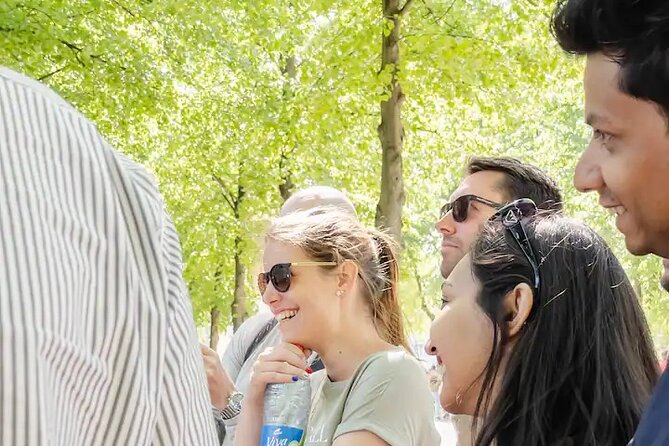
Time on site: about 15 minutes, with free admission
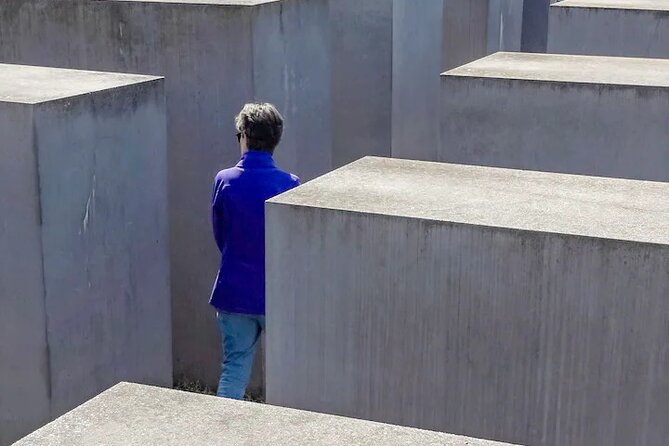
Now you reach the Holocaust Memorial, formally the Memorial to the Murdered Jews of Europe. The largest ethnic group targeted by the Nazis is central here, and you’ll have a chance to discuss the meaning of the memorial.
This stop is one of the most talked about parts of the tour because it forces a different type of understanding. You are not just learning facts. You are walking an environment designed to make you feel disorientation and weight, then using the guide’s prompts to turn that emotion into clearer thinking.
How to use the time:
- Walk with intent, not just quick photo-taking.
- When the guide invites discussion, listen closely. The discussion is part of what makes the site meaningful.
Possible drawback: the Holocaust Memorial is moving and visually striking, so it can be easy to focus on the space and miss the explanation. If you tend to wander for photos, try to stay with the group for the guided sections.
Stop 5: Monument to Homosexuals Persecuted Under National Socialism
Time on site: about 5 minutes, with free admission
This is a brief stop, but it’s also a powerful one. You’ll visit the monument to homosexuals persecuted under the National Socialist regime.
Why it’s worth even a short visit:
- It adds a chapter that is often missing from casual Holocaust conversations.
- It shows the regime’s persecution as policy, not only as wartime chaos.
Possible consideration: the time is short by design. If you care deeply about this topic, plan to spend extra time later on your own with any Berlin monument that stayed with you.
Stop 6: Führerbunker, Hitler’s Final Days
Time on site: about 15 minutes, with free admission
You’ll visit the Führerbunker area where Hitler spent his final days of WWII.
This stop is stark. The point is not to sensationalize or dramatize it. The point is to understand collapse at the center of a regime that engineered mass suffering. Hearing the story framed this way helps you see the final days as the end of a destructive system, not a movie ending.
Possible drawback: again, it’s brief. You’ll leave knowing the context, but you won’t get a full historical timeline on site.
Stop 7: Johann Georg Elser Memorial and Resistance
Time on site: about 15 minutes, with free admission
Next is the Johann Georg Elser Memorial. You’ll discuss the story of Elser and his role in a plot to oppose the Nazi regime and assassinate Adolf Hitler, along with how other efforts to resist also connected.
This is one of those stops that helps your brain stop only at victimhood and terror. It points you toward human resistance, even when the odds were brutal.
What to listen for:
- How the guide explains the network of opposition and the risks involved.
- How resistance fits into the broader Nazi timeline, not as a side note.
Possible consideration: if you prefer purely architectural or documentary sites, you might find this stop more narrative and discussion-heavy.
Stop 8: Aviation Ministry of Berlin, Göring’s Office World
Time on site: about 5 minutes, with free admission
At the Aviation Ministry of Berlin, you’ll learn that when it was built it was described as the largest office building in Europe. Built in 1936 to house the German Ministry of Aviation, known as Reichsluftfahrtministerium, it was headed by Hermann Göring.
I like this stop because it reminds you that mass violence required admin, buildings, and bureaucracy. War is not only front lines. It is also paperwork, planning, and infrastructure.
Possible drawback: the time is short. Use it to grasp the idea, then expect to read or reflect more later if you want details.
Stop 9: Topography of Terror, Gestapo HQ Site and a Breather
Time on site: about 20 minutes, with free admission
The tour ends at Topography of Terror, the site where the Gestapo headquarters once stood. You’ll also get a break here for tea or coffee and to use the restrooms.
This is a strong closing stop because it connects the moral story to the mechanism of terror. Gestapo HQ is one of the most direct ways to understand how the regime functioned day to day.
Practical tip: if you want to continue exploring after the tour, ask your guide for the best connection options to your next destination. The end point is designed to plug into the rest of your Berlin plan.
Group Experience: What Makes This Tour Feel Personal
The max group size is 15, and that matters more than many people expect on a heavy-topic walking route. With a small group, you can hear questions better, you can get answers that fit your concern, and the guide can adjust pacing if the group wants more explanation.
The tone is also frequently praised as sensitive. Multiple guide names show up in positive feedback, including Scott, Johan, Jochen, Matt, and Roshana. The best part of their reviews is not just that they know dates, but that they explain the story with care and clear structure.
Still, be aware of a reality check. One less favorable comment pointed out that hearing clarity can be an issue due to background noise, and that the English delivery can vary by guide. To protect yourself from that, stand where the guide’s voice carries well, and don’t be afraid to raise a question if you cannot hear something.
Walking Comfort: What You Should Expect on Your Feet
This tour is built around short stops with walking between them, and it is roughly a few city blocks. You should have a moderate physical fitness level, and you should expect to walk on outdoor surfaces.
My advice:
- Wear shoes you can stand in for 10 to 20 minutes at a time.
- Dress for weather. It operates in all weather, so bring a layer, not just a good jacket.
- If you need quiet breaks, plan them around the stop durations, especially the longer break at Topography of Terror.
Who This Tour Is For (and Who Might Want Something Else)
This is ideal if you:
- enjoy historical walking tours with clear narration
- want a focused route that covers Nazi rise and collapse in one compact area
- care about memorial sites and the context behind them
- want a guide to answer your questions on politics, ideology, and resistance
You might choose a different tour if you:
- dislike emotionally heavy topics and need a lighter approach
- want a longer stay at each memorial rather than a short guided touch
- struggle with standing and walking for about 2.5 hours outdoors
Should You Book Hitler’s Berlin: The Rise and Fall (Small Group)?
I’d book it if you want a guided structure that turns Berlin’s most important memorials into a clear story. At around $54.44 for about 2.5 hours, the value comes from the compact route, the small-group interaction, the guiding materials like Then and Now photographs and historic maps, and the fact that the tour covers more than just the headline sites.
If your goal is to understand how the Nazi regime took power, how it carried out persecution, and how Berlin remembers, this tour gives you a strong start. Do it early in your Berlin trip if you want the city to make more sense later. Do it with a plan for a quiet moment after, because these stops can stick with you.
FAQ
Is this tour wheelchair accessible?
The tour information says travelers should have moderate physical fitness and it operates outdoors in all weather. It does not mention wheelchair accessibility, so you’ll want to confirm with the operator directly before booking.
How long is Hitler’s Berlin: The rise and fall?
The duration is listed as approximately 2 hours 30 minutes.
Is the tour in English?
Yes, it is offered in English.
Where does the tour start and end?
It starts at Brandenburg Gate, Pariser Platz, 10117 Berlin, Germany. It ends at Topography of Terror, Niederkirchnerstraße 8, 10963 Berlin, Germany.
What sites are included in the walking route?
The tour includes stops at the Memorial to the Sinti and Roma Victims of National Socialism, the Reichstag Building, the Soviet Memorial Tiergarten, the Holocaust Memorial, the Monument to Homosexuals Persecuted Under National Socialist Regime, the Führerbunker, the Johann Georg Elser Memorial, the Aviation Ministry of Berlin, and Topography of Terror.
What’s included in the ticket price?
Included items are an expert local guide with WWII academic background, small-group experience, guided visits to key Nazi-era sites and memorials, Then and Now photographs and historic maps, and opportunities for reflection and Q&A.
Are food and drinks included?
No. Food and drinks are not included, though there is a break at Topography of Terror where you can get tea or coffee and use restrooms.
What is the cancellation policy?
You can cancel for free up to 24 hours in advance for a full refund. The operator notes free cancellation and that cancellations made less than 24 hours before start time are not refunded.
Newest Berlin reviews on the site
- Day trip through multicultural city landscapes & photo highlights★ 5.0 · 5 reviews
- Berlin in one day – day tour with an expert guide★ 5.0 · 14 reviews
- Berlin on Your Own – Deluxe Round Trip from Warnemünde Port★ 4.5 · 5 reviews
- Berlin sightseeing boat tour on the Spree★ 4.0 · 93 reviews
- Berlin by Night Private Tour – All Must-See Sites Magically Lit Up at Night★ 4.0 · 5 reviews
- Berlin & Sachsenhausen Concentration Camp Tour from Warnemünde and Rostock Port★ 4.5 · 60 reviews
- Berlin & The Third Reich Private Guided Tour★ 5.0 · 3 reviews
- Berlin and Car Culture Tour★ 4.5 · 8 reviews
Berlin Tours, compared.
Reichstag, Dome and Government District Guided Tour
Read our review →
1-Hour City Tour by Boat with Guaranteed Seating
Read our review →
Government District around the Reichstag Guided Tour
Read our review →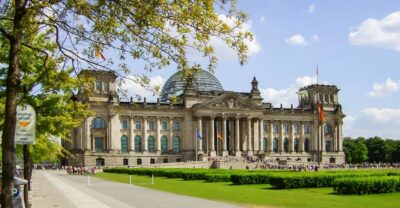
Reichstag, Plenary Chamber, Cupola & Government Tour
Read our review →