
Reviewed · MUSEUMS
Hamburg: Ticket for the Paradox Museum
Your phone turns into a science tool.
Paradox Museum Hamburg is an optical-illusion playground built around hands-on exhibits, and it lives right on Alter Wall in the city center. Since the end of 2024, you can wander through 14 colorful rooms (1,300 sqm) and experience more than 50 playful challenges where your eyes and body disagree about what is happening.
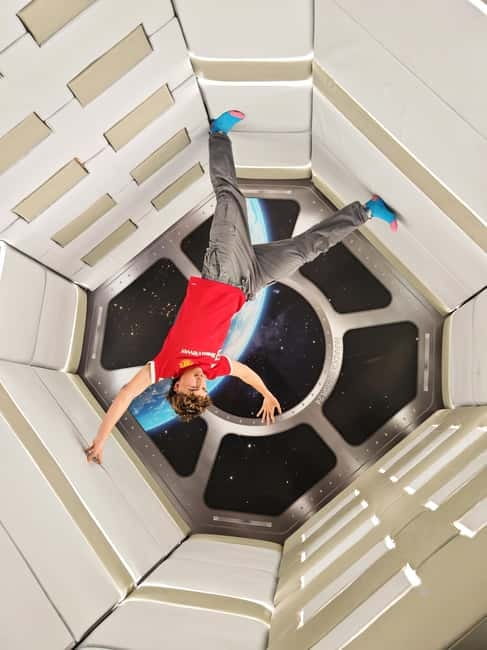
What I like most is how physical it feels, especially in the Zero Gravity Room, where you can experience weightlessness in a totally accessible way. I also love the mirror-based rooms, because the confusion is immediate and you can test your instincts over and over. One thing to consider: this is interactive and photo-friendly, so if you prefer quiet museums with lots of explanation, you may spend more time experimenting and less time sitting with formal interpretation.
In This Review
- Key things to know before you go
- Paradox Museum Hamburg on Alter Wall: ticket value and expectations
- How 14 rooms and 50+ exhibits fit into 60 to 90 minutes
- Entering the museum: validation, self-guided flow, and photo-friendly help
- Optical illusions built for photos: how to get the best results
- Zero Gravity Room and mirror rooms: the highlights that make people grin
- Physical and mathematical phenomena you can actually test
- Hamburg art meets science: what to look for in the creative details
- Family-friendly pace for kids, teens, and adults
- Planning tips: what to bring, and how to avoid a shaky outing
- Price and logistics: is $27 worth it for what you get?
- Should you book the Paradox Museum Hamburg ticket?
- FAQ
- How long does the Paradox Museum Hamburg experience take?
- Where do I go when I arrive?
- What is included with the ticket?
- Is Paradox Museum Hamburg wheelchair accessible?
- What payment methods are accepted on site?
- What should I bring with me?
Key things to know before you go
- 14 rooms, 1,300 sqm, 50+ exhibits, so plan for lots of walking inside a single ticket
- Smartphone-ready photo moments are built into the experience, and staff help you find strong spots
- Self-paced experimentation with optical illusions, physical effects, and math ideas you can test right there
- Zero Gravity and mirror rooms are major highlights for all ages
- Hamburg art meets science, including works by Hamburg artists that mix creativity with STEM concepts
- 60 to 90 minutes is the sweet spot, so don’t overstuff your schedule before or after
Paradox Museum Hamburg on Alter Wall: ticket value and expectations

Paradox Museum Hamburg is one of those places where the ticket feels less like admission and more like a ready-made afternoon plan. For about $27 per person and 60 to 90 minutes, you get access to a large, indoor set of rooms designed for hands-on play, optical illusions, and interactive science art. That matters in a city like Hamburg, where a lot of timed attractions can cost more for less “try it yourself” time.
The museum is in the heart of town, right on Alter Wall, so you can fit it between meals, sightseeing, and Hafen-city strolls without needing a long transit plan. Also, the experience is set up for fast engagement. You are not waiting for a show start, and you are not stuck in one gallery. You move from room to room, testing perceptions and physical effects as you go.
One practical note that affects your enjoyment: the museum includes rooms and exhibit elements where you will likely want a clear phone photo. That means good lighting and a bit of space in front of each setup. If you arrive during peak times, expect to wait briefly for a camera spot. It is usually a small tradeoff for a more memorable experience.
More Museum Tours in Hamburg
- Hamburg: International Maritime Museum Entrance Ticket
★ 4.7 · 547 reviews - Hamburg: Entrance to the Museum Ship Cap San Diego
★ 4.7 · 467 reviews - Hamburg: Museum of Illusions Ticket
★ 4.3 · 366 reviews
How 14 rooms and 50+ exhibits fit into 60 to 90 minutes
The museum spans 1,300 sqm and is arranged as 14 rooms, with more than 50 exhibits spread across them. That sounds like a lot, but the design is built for quick hits. You can approach it like a route: do the major illusion rooms first, then circle back to the ones you still want to repeat.
In a 60 to 90 minute slot, you can realistically do everything once at a comfortable pace, plus take extra time on photo-heavy exhibits. If you try to “speedrun” it, you will still have fun, but you will miss the best trick part, which is repeating the illusion to see how your brain adapts.
I recommend walking in with a simple strategy:
- Start with the big “wow” rooms so your phone battery and your attention are fresh.
- Then do the smaller interactive tasks where you can test a physical or math concept.
- Finish with the rooms you want to re-photograph, not the rooms you rushed through.
Staff in the hallways can help you find the best photo spots, which is useful when you are trying to frame an effect correctly. I like that because it reduces the guessing game and helps you get better shots without slowing the whole experience down.
Entering the museum: validation, self-guided flow, and photo-friendly help

Your visit starts at reception, where you validate your ticket. From there, the experience is essentially an indoor discovery route. The flow is designed so you do not need a formal guided script to understand what is happening. The exhibits are interactive, so the “instruction” is mostly your own experiment and the visible setup in front of you.
A standout detail is the human support in the building. Staff in the hallways help you find best photo spots, which sounds small but matters a lot. With optical illusions, angles are everything. Getting the right position is the difference between a cool photo and a confusing one that looks nothing like the effect you saw in person.
Also, bring what you need to enjoy this in full:
- A charged smartphone (you want photos, and the experience invites sharing)
- A camera if you like extra control
- A credit card, since only card payments are accepted on site
That card payment detail matters because you may want souvenirs at the end, and you probably will not want to interrupt the mood by hunting for a cash machine.
Optical illusions built for photos: how to get the best results
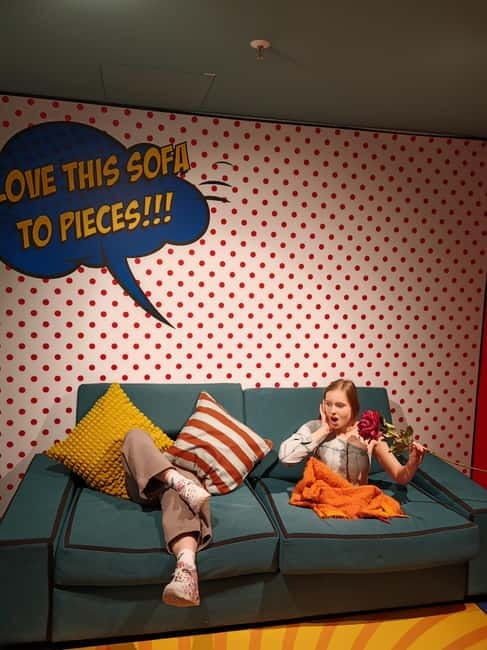
A lot of museums claim they are photo-friendly. Paradox Museum is photo-friendly in a very practical way, because the illusions are designed to be seen and shared. When the exhibit works, it is obvious. When it does not, you can usually fix it by adjusting your position or timing your movement.
Here is what I would do if I wanted the best results without stressing:
- Take one quick test shot early, so you learn the setup angle.
- Then do your “real” photos after you understand where you stand.
- Repeat the effect once you have your phone framing locked.
Because staff can point you toward photo spots, you can also ask simple questions if you are unsure. You do not need an explanation lecture. You mostly need the correct place to stand or a hint about how to catch the effect in the camera view.
One more thing: the museum has multiple mirror rooms. Those tend to turn into a two-part challenge. First, you experience the illusion with your body and eyes. Second, you try to record it so it looks as convincing as it feels. Give yourself a little extra time for those, even if you are on a tight schedule.
A few more Hamburg walks and trips to compare
- Hamburg: RICKMER RICKMERS Museum Entry Ticket
★ 4.6 · 269 reviews - Hamburg: 3-Day Art Exhibition & Gallery Ticket
★ 4.6 · 34 reviews - Hamburg: FC ST. PAULI-MUSEUM Entrance Ticket
★ 4.5 · 19 reviews - Berlin: Jewish Museum Berlin Entrance Ticket
★ 4.5 · 8,393 reviews
Zero Gravity Room and mirror rooms: the highlights that make people grin
The museum’s big sensory moments are the ones that put your body into the illusion.
In the Zero Gravity Room, you experience weightlessness. That is exactly the kind of exhibit that works for different ages and different comfort levels, because it is not a complex concept you have to study first. You just enter the space and your body reacts to what the room is doing.
Then come the mirror rooms, where your senses get confused so much that walking straight ahead becomes a challenge. This is not “look at a mirror, smile” stuff. It is a controlled environment where your orientation and balance get tested. That makes it fun, but it also means you should move carefully. If you are visiting with kids, keep an eye on them in these rooms, because they will want to test it again and again.
Why these rooms matter for your visit: they are the easiest way to feel the museum’s promise that nothing is as it seems. They also create the most instant shareable moments, which is a big part of the Paradox Museum format.
If you want a museum day that feels like entertainment and learning at the same time, these rooms deliver fast.
Physical and mathematical phenomena you can actually test
Paradox Museum Hamburg is built around physical and mathematical phenomena presented through play. That is a smart idea, because math and physics can feel abstract when it stays inside a textbook. Here, the concept becomes a bodily experience.
You will see setups that challenge perception, trigger physical reactions, and turn “why does that happen?” into a question you can test yourself. Instead of learning by memorizing, you learn by doing. The exhibits invite you to question what you think you see, and then they show you how your brain fills in gaps.
This is also where the museum feels valuable for mixed groups. Teens might enjoy the science angle. Kids enjoy the immediate fun. Adults often love the irony of it, because the rooms expose how often your senses assume things without checking.
The museum also includes works by Hamburg artists that combine art and science. That matters because it prevents the experience from feeling like a generic science center. There is a creative layer, so the math moments come wrapped in visual design and artistic choices.
Hamburg art meets science: what to look for in the creative details
The Paradox Museum Group includes a clear “art plus science” angle, and Hamburg has its own local flavor here. The museum features works by Hamburg artists that combine art and science, which you can treat like an added layer while you move through the rooms.
What I would pay attention to:
- How the visual design guides you toward the illusion
- How the materials and shapes influence how your brain interprets motion, depth, or scale
- How the exhibit layout makes you move, not just watch
Even if you do not catch every scientific explanation, you can still enjoy the creative thinking. The exhibits are not only puzzles. They are also scenes. That gives you more to notice, and it makes the whole visit feel less repetitive, even with so many rooms.
Family-friendly pace for kids, teens, and adults
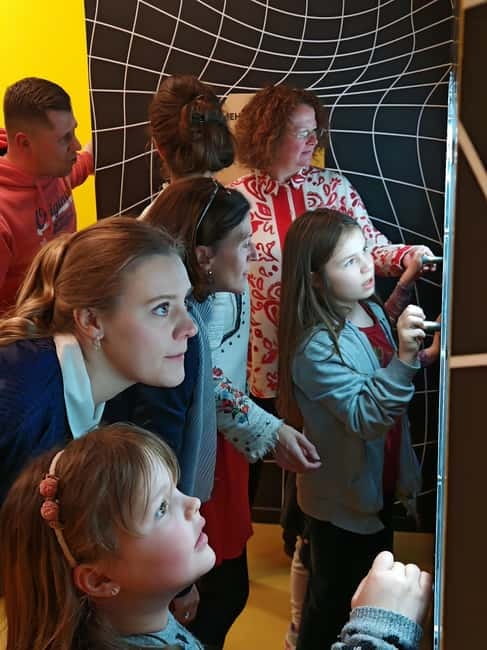
The museum is designed for a wide age range. It is the kind of attraction where a group can agree on what they are doing in the first minute, not after an hour of “what do you want to do?”
One reason it works: the exhibits are hands-on and visual, not dependent on reading complex text to start enjoying them. That keeps toddlers and older kids engaged. Teens and adults often get a kick out of the science framing and the way the illusions expose perception.
You can also expect generational fun. The experience is playful enough that grandparents can join in without needing to “understand the theory,” while teens still get the satisfaction of experimenting and noticing patterns.
If you are traveling with family, I would do this:
- Decide on two or three must-do rooms (Zero Gravity and a mirror room are the obvious winners)
- Let everyone pick a couple favorites afterward
- Keep an eye on spacing in the illusion rooms, since the whole point is sensory confusion
Planning tips: what to bring, and how to avoid a shaky outing
You do not need a backpack of gear, but the right basics make the visit smoother.
Bring:
- Camera (optional if you are phone-only, but nice for better control)
- Credit card (only card payments are accepted on site)
- Charged smartphone (you will want to capture and share)
Also, plan your timing like a real activity, not a quick stop. 60 to 90 minutes is enough time to do the main exhibits, plus photos, plus a slow pass through the rooms you liked. If you cram a big meal right before, you might feel rushed, especially once you hit the mirror rooms where people naturally want repeat shots.
Finally, plan for the boutique at the end. After your visit, you can buy gifts, books, games, T-shirts, umbrellas, or other souvenirs. If you like taking home something related to the experience, that is a fun closure.
Price and logistics: is $27 worth it for what you get?
At about $27 per person, you are paying for a lot of “active minutes” inside a large indoor space. The value comes from the number of exhibits (50+) and the room count (14). You are not paying for one small gallery. You are paying for a full set of activities where your participation is the point.
It also helps that the museum is timed at 60 to 90 minutes. That is a reasonable length for a ticket attraction. In other words, you are not committing to half a day for a single stop.
If you are a couple or a group, the price stacks up, but so does the shared payoff. Optical illusion rooms create memories fast, and the photo-friendly setups reduce the awkwardness of taking turns. If you are traveling solo, it is still worth it because the exhibits are interactive enough that you are never stuck waiting for someone else to finish.
The one drawback in terms of value is that the experience is not described as a long, guided lecture. It is more about action than deep, spoken explanation. If you want a museum day where every exhibit has a clear talk track, you might feel like you are doing more experimenting than listening.
Should you book the Paradox Museum Hamburg ticket?
Book it if you want a fun, sensory, and photo-ready attraction in central Hamburg, and you like learning by doing. The Zero Gravity Room, the mirror rooms, and the mix of physical and mathematical phenomena are exactly the kind of experience that works for groups and for mixed ages. At $27 for 60 to 90 minutes, it is also a good use of time when you want something more memorable than a quick museum lap.
Skip it or think twice if you prefer traditional museum formats with quiet viewing and lots of explanation. This is an active, interactive environment, and the best experience happens when you are willing to move, try, and take a few repeat shots.
If your ideal day includes playful science, optical illusions, and a local art twist, this is a strong pick.
FAQ
How long does the Paradox Museum Hamburg experience take?
It is designed to be experienced in about 60 to 90 minutes.
Where do I go when I arrive?
Go to reception to have your ticket validated.
What is included with the ticket?
Your ticket includes entry to the Paradox Museum Hamburg with interactive exhibits, optical illusions, and illusion experiences.
Is Paradox Museum Hamburg wheelchair accessible?
Yes, it is wheelchair accessible.
What payment methods are accepted on site?
Only card payments are accepted on site.
What should I bring with me?
Bring a camera if you want one, a credit card, and a charged smartphone.
Newest Hamburg reviews on the site
- Hamburg: Interactive Crime Theater Tour in German★ 4.7 · 319 reviews
- Harbor Tour with Live moderation in German★ 3.8 · 4 reviews
- Hamburg: Walking Tour for School Groups★ 4.8 · 10 reviews
- Hamburg: Westfield, Speicherstadt & Elbphilharmonie Tour★ 4.5 · 86 reviews
- Hamburg: St. Pauli District and Beer Tour★ 4.7 · 84 reviews
- Hamburg: Twilight cruise★ 3.7 · 15 reviews
- Hamburg: Tour of Blankenese on the Banks of the Elbe★ 4.5 · 14 reviews
- Hamburg Traditional Food Tour: Full Meal and Drinks★ 5.0 · 3 reviews
Museums, compared.




Skip-the-Line: Berlin Wall Museum at Checkpoint Charlie
Read our review →Browse the lists this tour appears in