
Reviewed · OLD TOWN WALKING TOURS
Fall in Love with Munich in a Private Old Town Walking Tour
One walk can connect centuries fast, from stone walls to beer halls. I love the private format, and I love that entrance fees are included as you move from site to site. One thing to consider: it is a history and legends focused walk, so if you want a heavy food or museum day, you will still need to plan that on your own after.
You will start at Isar Gate and finish at Marienplatz, which is exactly where it makes sense to keep exploring. With Victoria, you can expect clear English storytelling and practical guidance you can use right away, whether you want coffee, a classic beer, or a smarter next stop.
In This Review
- Key Things to Know Before You Walk
- Munich Old Town in 2 Hours, From Walls to Marienplatz
- Price and Value: What $157.28 Means for a Private Tour
- Your Guide Starts at Isar Gate, and the City Begins to Make Sense
- Sterneckerbräu: When the Walk Touches Nazi History
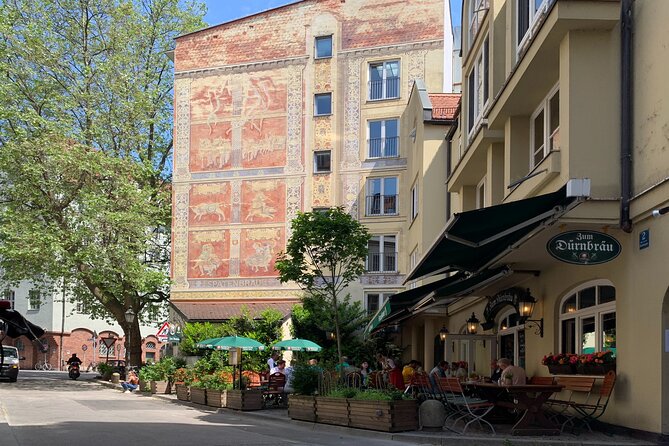
- Dürnbräugasse Old Tavern Pass-By: A Millennia-Style Reality Check
- Hofbräuhaus München: Beer Hall Time, Plus the Stories Behind It
- Pfistermühle and the Pretzel Legend: Food Symbolism You Can Actually Use
- Alter Hof Courtyard: Wittelsbach Power and the Munich Flag Color Story
- Dallmayr Delikatessenhaus: Royal-Style Shopping for Coffee and Treats
- Schäfflerstraße and the Coopers Street Legend
- Frauenkirche: Devil’s Footprint and the Cathedral Wind
- Marienplatz: Glockenspiel, Fischbrunnen Traditions, and White Sausage Origins
- How the Tour Plays With Real Travelers: Pace, Questions, and Mixed Ages
- Planning Your Next Step After Marienplatz
- Should You Book This Private Munich Old Town Tour?
- FAQ
- Is this tour private?
- How many people are in a group?
- How long does the tour last?
- What language is the tour offered in?
- Are entrance fees included?
- Do I need to bring food or drinks?
Key Things to Know Before You Walk
- Private group, up to 6: The pace stays comfortable, not cattle-car fast.
- Two hours, old town concentrated: You cover a lot without feeling rushed.
- Entrance tickets included: Several stops include admission time, not just photo ops.
- Beer hall visit with context: You go inside Hofbräuhaus and connect it to Munich beer traditions.
- Marienplatz with the Glockenspiel: You get the big square, plus the stories behind its famous sights.
- Guide-led insider tips: You finish with restaurant and sightseeing recommendations for the rest of your trip.
Munich Old Town in 2 Hours, From Walls to Marienplatz
Munich is famous for beer, but it is also famous for layers. This walk helps you read those layers as you go, starting with medieval defenses and ending in the city’s grand ceremonial center. You are not just checking boxes. You are learning what the buildings were for, what people believed, and why the city shaped itself the way it did.
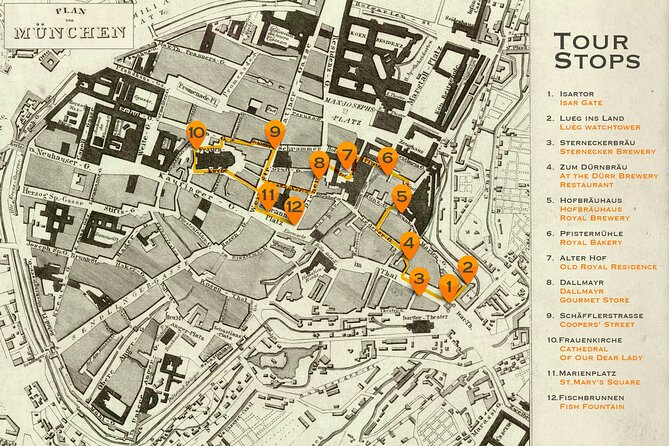
The tour is built around a simple flow. You start at Isar Gate, where Munich’s fortifications and foundation stories set the tone. Then you gradually move forward in time, threading medieval legends, political turning points, and brewing culture into a single route you can actually remember.
At the end, you are dropped at Marienplatz, so you can keep going without needing a map app and a second commute. It is a strong finish because Marienplatz is where the old town feels most alive.
More Old Town Walking Tours in Munich
- Munich: Old Town & Viktualienmarkt City Walk in German
★ 4.7 · 2,304 reviews - Munich Old Town Walking Tour
★ 4.5 · 1,287 reviews - Munich: Spooky Tour of Old Town in German
★ 4.6 · 1,112 reviews
Price and Value: What $157.28 Means for a Private Tour
The price is $157.28 per group, up to 6 people, for about 2 hours. That is the key value point: you are paying for a private guide, not a per-person seat. If you have a full group of 6, the cost works out to roughly $26 per person for a guided walk that includes admissions.
Even if you travel as a couple or a small family, the value holds because the experience is not just narration. You get a guided route that includes entrance tickets at multiple stops, plus a digital map of the itinerary. Then you get practical recommendations for where to eat and what to see next, which can save you time and second-guessing.
Your Guide Starts at Isar Gate, and the City Begins to Make Sense
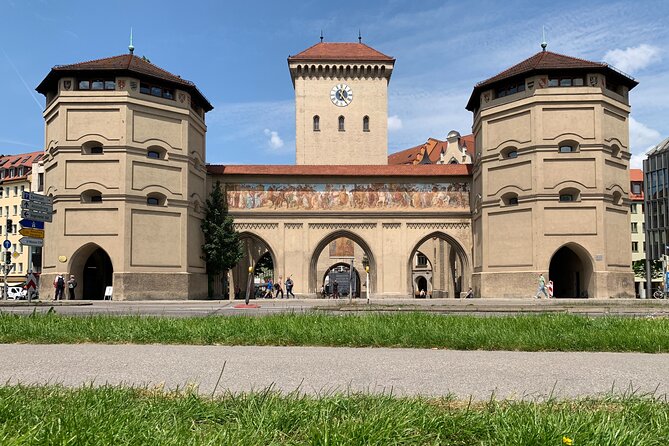
Meeting point is Isar Gate (Isartor), at Tal 50, right by the central arch. This matters because Isartor is not a random landmark. It is a gateway into Munich’s medieval thinking.
At the Isar Gate stop, you learn how the city grew from fortifications and trade. You also see disguised remnants of the main medieval city wall, which is one of those details you would likely miss on your own. The guide also shares foundation legend material and a story about how trading one single product helped Munich grow into a metropolis.
Two additional details make this stop more memorable than the usual medieval lecture. First, there is a connection to Munich’s most beloved comedian, whose museum is hosted by the towers of the Isar Gate. Second, you get the playful idea that time in Bavaria runs backwards, which gives you a sense of the local humor you will hear again later in beer-hall stories.
The practical result: after Isar Gate, you walk through the old town with better questions in your head.
Sterneckerbräu: When the Walk Touches Nazi History
Next comes Sterneckerbräu, where you learn about Adolf Hitler’s first public speech that helped lead him to joining the German Workers’ Party. It is a short stop, but it is an important one.
This is where a good guide earns their fee. The goal is not sensationalism. The value is context. You learn how a specific building became a key location for the Nazi Party over time, and you see how political movements attach themselves to everyday public spaces.
If you are visiting with teenagers or you want Munich’s 20th-century story explained clearly, this is a useful segment. It anchors later history in physical geography, which helps the bigger narrative stick.
More Walking Tours in Munich
- Munich: Third Reich & WWII Walking Tour
★ 4.6 · 6,181 reviews - Third Reich Walking Tour Munich
★ 4.5 · 4,291 reviews - Munich: Night Watchman Walking Tour
★ 4.7 · 2,092 reviews - Munich Ghosts and Spirits Evening Walking Tour
★ 5.0 · 1,900 reviews
Dürnbräugasse Old Tavern Pass-By: A Millennia-Style Reality Check
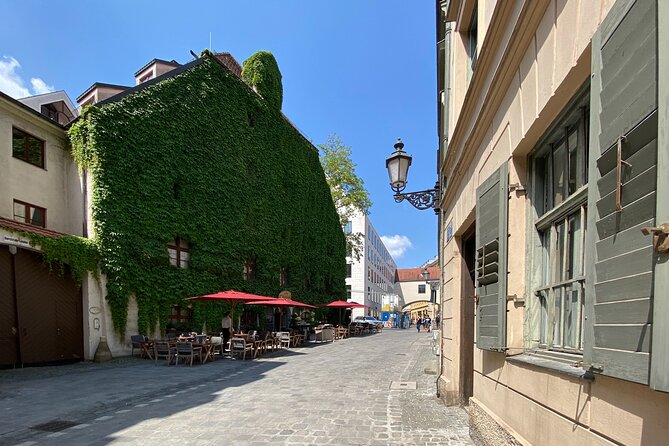
From there you pass through Dürnbräugasse, where you hear the story of the oldest tavern in town. The big point is resilience, how one place managed to preserve its status for more than half a millennium.
This is not a long stop. It is a reminder that Munich’s identity is not only about famous monuments. It is also about everyday institutions that survived wars, shifting borders, and changing tastes. You start noticing how tradition can function like infrastructure.
Hofbräuhaus München: Beer Hall Time, Plus the Stories Behind It
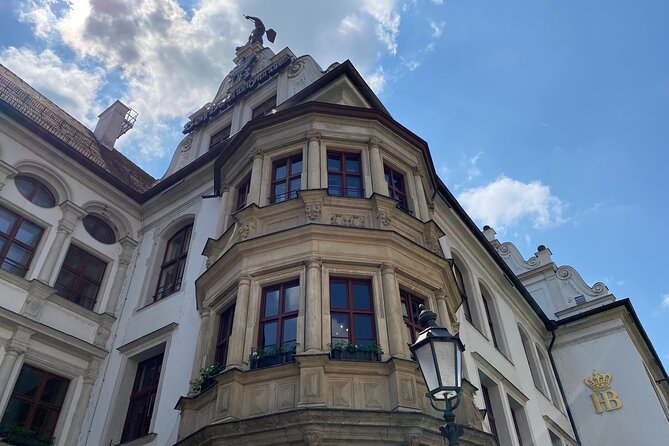
Hofbräuhaus München is the emotional center of the route, and it is also the most iconic. You visit the former royal brewery, now the famous beer hall many people picture when they hear Munich.
Here is what you actually get, not just what you imagine:
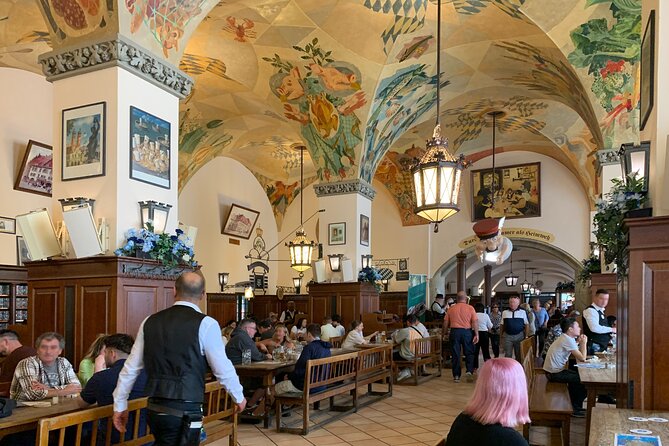
- You go inside the main hall and see the interiors
- You spot the peculiar regular tables
- You get a look at beer mugs of regular guests stored in special cells
Then the guide ties it to beer rules and rituals. You learn about the beer purity law, Bavarian brewing tradition, and how Oktoberfest fits into the city’s brewing culture. You also get Munich beer garden secrets, which is useful if you plan to spend more time outside after the walk.
One fun, memorable detail is meeting the beer angel. It is the kind of quirky touch that makes a beer hall visit feel like Munich, not just Germany.
Potential drawback here: Hofbräuhaus is a famous place. Even with included time, it can feel busy depending on the day and time. If you get sensitive to crowds, plan to be patient and focus on the guide-led explanations rather than speed-scanning for photos.
Pfistermühle and the Pretzel Legend: Food Symbolism You Can Actually Use
Next is Restaurant Pfistermühle, where you see the former royal bakery. This stop focuses on a legend about the pretzel and its symbolic connection to Munich.
Food stories work best when they do more than explain origin. They help you see why a food is treated like heritage. By the time you leave this area, you are more likely to order what locals consider meaningful, not just what looks good in a travel photo.
If pretzels are on your must-eat list in Munich, this stop gives you a bit of background that makes the moment feel personal.
Alter Hof Courtyard: Wittelsbach Power and the Munich Flag Color Story
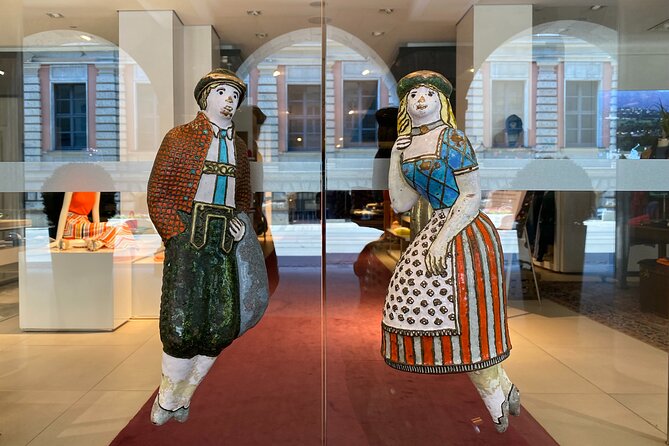
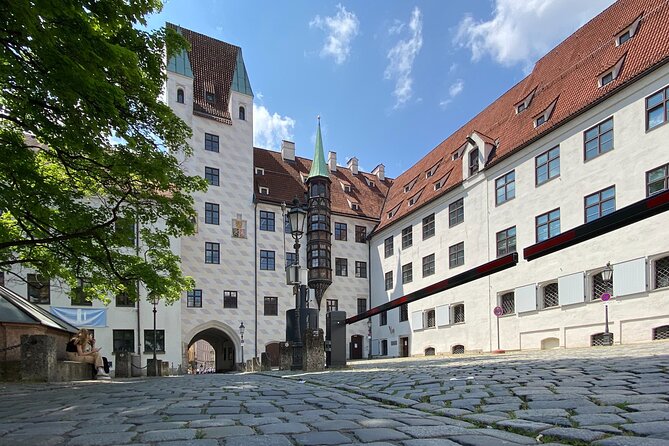
Alter Hof brings you into the inner courtyard of the first residence of the Wittelsbach royal family in Munich. Courtyards can feel like filler on tours, but this one comes with stories you can build on.
You learn about the legend of the Royal Zoo, plus the unexpected role it played in the life of Holy Roman Emperor Louis IV. You also hear why Munich’s flag got its colors.
This is a nice stop if you like the mix of politics and everyday symbolism. It is not only about who lived where. It is about how rulers left marks you can still see today.
Dallmayr Delikatessenhaus: Royal-Style Shopping for Coffee and Treats
Dallmayr Delikatessenhaus is next, a historical gourmet store with a longstanding royal tradition that is now one of the largest delicatessen companies in Europe.
The stop is short and designed for atmosphere and context. You walk past and pick up history, then you also get insider tips for food lovers and coffee addicts. Even if you do not plan to buy anything right then, this helps you know where to return later.
It is also a good reminder that Munich’s old town is not frozen in time. It is living commerce, with heritage branding built into everyday shopping.
Schäfflerstraße and the Coopers Street Legend
You cross Schäfflerstraße, known as Coopers’ Street. Here you hear Munich’s famous legend about a 16th-century pest containment celebration, including a traditional dance that has been performed in the Bavarian capital until today.
This is one of those stops that gives you more than facts. It gives you a local reason to look for patterns: trades shaped streets, and communities shaped rituals. You begin to see why legends often attach to labor and public celebrations.
Frauenkirche: Devil’s Footprint and the Cathedral Wind
Frauenkirche, Munich’s cathedral, is a major highlight with a focused message: legends and architecture are tied together.
Inside or around the cathedral, you learn about the legend of its construction and how the interior relates to what people wanted the building to communicate. You also sight the Devil’s footprint, a small but memorable feature that adds a bit of theatrical charm.
Then comes a detail that feels almost like a riddle. You discover the secret of the wind surrounding the cathedral all year around, irrespective of season. It is exactly the kind of story that makes you look around for physical evidence when you normally might just glance up at the skyline.
Marienplatz: Glockenspiel, Fischbrunnen Traditions, and White Sausage Origins
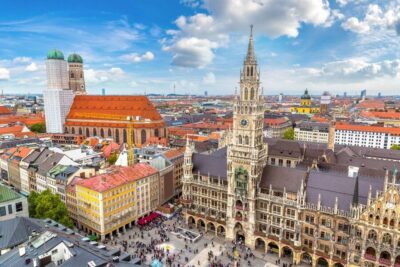
The walk ends at Marienplatz, Munich’s central square and the heart of the old town. This is where you slow down for a final concentration of major landmarks and local traditions.
You admire the Fischbrunnen (Fish fountain), which is Munich’s most famous fountain. Then the guide brings the square to life with stories tied to it, including wallet washing and butchers’ jump traditions.
You also hear the story about where Munich white sausage was invented and the curious circumstances around it. If you are going to eat Weißwurst later that day, this stop adds meaning and makes the meal feel like part of a continuing tradition.
Finally, you focus on St. Mary’s Square, the New and Old Town Halls it is flanked by, and the Glockenspiel. You learn how the world-famous mechanical clock reenacts two momentous scenes from the city’s history to carillon tunes.
Even if you have seen photos of the Glockenspiel before, hearing the scenes explained makes the mechanism feel less like a tourist gadget and more like public storytelling.
How the Tour Plays With Real Travelers: Pace, Questions, and Mixed Ages
A strong private guide does two jobs. They teach, and they manage the walk.
This tour is designed for a comfortable pace, which is a big deal when you are mixing ages, strollers, or just recovering from travel. The guide is set up to stay flexible, answer questions as you go, and adjust so the group stays engaged rather than exhausted.
You can also expect visual support on an iPad, including pictures and maps that help you connect the narrative to what you are seeing. That is especially helpful when you are learning about medieval walls, tower locations, or the political meaning of a single building.
Practical comfort also matters on a 2-hour walk. The guide builds in a bathroom stop midway, and she can work with a slightly later start if travel delays hit your schedule. There is even an offer to take a group photo, which is a small touch that many people end up appreciating later.
Planning Your Next Step After Marienplatz
The tour ends in the center, so you are not trapped at the far edge of the old town. From Marienplatz, you can branch out on foot with the guide’s recommendations in mind.
If you want to keep the momentum, I suggest you do this in two parts:
- Eat something classic in the area while the history still feels fresh in your head.
- Pick one additional sight for a second visit, instead of trying to crowd everything into one day.
A smart move here is to ask your guide for a prioritized list before the tour ends, based on your food preferences and how much walking you want to do after.
Should You Book This Private Munich Old Town Tour?
Book it if you want a high-quality old town overview with real context, not just a photo walk. The combination of medieval fortifications at Isar Gate, political context at Sterneckerbräu, a proper visit inside Hofbräuhaus, and a finishing sweep through Frauenkirche and Glockenspiel makes this a strong first-time Munich route.
Skip it or adjust expectations if you want a food-only tour, a full museum day, or lots of long indoor time. This is a walking, storytelling experience, and the best value comes when you treat it like the foundation for the rest of your Munich plans.
If you are traveling with mixed ages, or you simply want someone to help you understand what you are looking at as you go, this private format is exactly the kind of start that makes the whole trip feel easier.
FAQ
Is this tour private?
Yes. This is a private tour/activity, and only your group participates.
How many people are in a group?
The price is per group for up to 6 people.
How long does the tour last?
The duration is about 2 hours.
What language is the tour offered in?
The tour is offered in English.
Are entrance fees included?
Yes. The tour includes admission tickets for the stops listed, while the tour itself is free of charge for those entry items.
Do I need to bring food or drinks?
No food or drinks are included, so plan to eat on your own before or after.
More Old-Town Walks in Munich
- Munich: Walking Tour Old Town and Viktualienmarkt
★ 4.7 · 839 reviews - Munich: Old Town Walking Tour
★ 4.7 · 589 reviews - Munich: Viktualienmarkt & Altstadt Food Tour
★ 4.7 · 481 reviews - Munich: Old Town Guided Walking Tour
★ 4.6 · 479 reviews
Newest Munich reviews on the site
- Munich to Prague – Private Transfer with 2 hours of Sightseeing★ 5.0 · 6 reviews
- Munich – the essential walking tour★ 5.0 · 30 reviews
- Munich Beer and Bavarian Bites Small-Group Tour★ 5.0 · 167 reviews
- 800 Years of History: A Munich GPS Audio Tour★ 4.5 · 12 reviews
- Munich in the 3rd Reich and WW2 private walking tour★ 5.0 · 148 reviews
- Munich Food Tour with Full Meal & Drinks by Do Eat Better★ 5.0 · 59 reviews
- Munich Scavenger Hunt and Sights Self-Guided Tour★ 4.5 · 8 reviews
- Munich Christmas Market Small Group Tour with Gingerbread Heart★ 4.0 · 9 reviews
Old Town Walking Tours, compared.
Old Town & Viktualienmarkt City Walk in German
Read our review →

Browse the lists this tour appears in