
Reviewed · CITY TOURS
East Berlin: City of Shadows Walking Tour
Berlin had a second, darker street.
This 3-hour East Berlin history walk is a fast, focused way to understand how Communist-era power shaped everyday life, and how that still shows up in the city today, with a local historian guiding you through major landmarks. I love the storytelling angle, especially the human side of division and what it did to families and neighbors. I also like the tight 7-stop route, which gives you real orientation fast, from the Brandenburg Gate to Alexanderplatz.
One possible drawback: the time at each place is brief. You’ll get strong context, but if you want deep museum time, plan to return later, especially for the Stasi-related sites.
In This Review
- Key Highlights You Will Feel Quickly
- City of Shadows East Berlin: What This Tour Really Does for You
- Price and Logistics: Is It Good Value at $156.53?
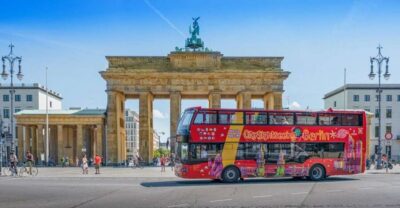
- Stop 1: Brandenburg Gate, Reagan, Soviet Ambition, and the Wall’s Shadow
- Stop 2: Friedrichstrasse and the Palace of Tears
- Stop 3: Park am Nordbahnhof and the Idea of Ghost Stations
- Stop 4: Karl-Marx-Allee and the Socialist Paradise That Failed
- Stop 5: Memorial of the Berlin Wall and the Death Strip Reality
- Stop 6: Stasimuseum and Stasi Surveillance Under Eric Mielke
- Stop 7: Alexanderplatz, East German Pride, and the 1989 Turning Point
- What to Know Before You Go
- Who This Tour Fits Best
- Should You Book East Berlin: City of Shadows?
Key Highlights You Will Feel Quickly
- Local historian explanations that connect buildings to real political control
- Brandenburg Gate to Alexanderplatz flow that helps you map East Berlin in your head
- Human-scale details like the Palace of Tears and family separation rules
- Wall memorial perspective centered on the Death Strip stories
- Stasi HQ focus on surveillance networks and Eric Mielke’s role
- Small group size (max 8) which keeps questions possible
City of Shadows East Berlin: What This Tour Really Does for You
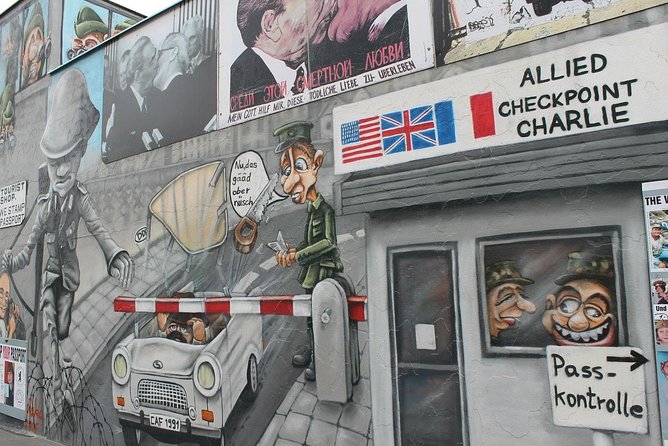
This tour is built for orientation and understanding, not for checking box after box of museum galleries. You get a guided walk through East Berlin’s Communist-era sites, then you leave with the larger story sorted out: Cold War politics, East German daily life, and how ordinary people lived with fear, rules, and propaganda.
You’ll also get a clear sense of how East Berlin looked from street level. The important thing is not just what happened, but how the system worked, and how it shaped space, transit, and even what you could do with your own life.
And because it’s only about 3 hours, you can fit it into a first or second day in Berlin without losing your whole afternoon.
More Walking Tours in Berlin
- Discover Berlin Half-Day Walking Tour
★ 5.0 · 9,624 reviews - Berlin: Third Reich and Cold War 2 Hour Walking Tour
★ 4.9 · 6,830 reviews - Berlin: Discover Berlin Walking Tour
★ 4.9 · 5,998 reviews
Price and Logistics: Is It Good Value at $156.53?
At $156.53 per person, this isn’t a cheap gimmick tour. What you’re paying for is a local historian plus a structured route that hits major DDR era locations in one go, with a small group size of up to 8 travelers.
That matters because East Berlin can feel confusing. You might see a building or square and know it’s important, but you might not know why it matters politically. This tour fills in those blanks in real time, with stops that are mostly free to enter as listed on the route.
Logistics are mostly straightforward, but plan on some transit. The tour includes public transport between key points since distances can be too far to walk. If you don’t already have a visitor transit pass, you’ll want a Berlin day metro pass. The tour suggests these options:
- One-way ticket Tarif AB: 2.8 EUR (senior discount 1.70 EUR)
- Day ticket for one person: 7 EUR (senior discount 4.70 EUR)
If you can’t purchase in advance, the guide can help you buy at the first metro station on the tour.
Also note the meeting setup: the tour starts at Unter den Linden 42, 10117 Berlin, and pickup is offered from any hotel or accommodation in Berlin. You’ll still be walking and riding metro during the tour, so comfortable shoes help.
Finally, it runs in English, and you’ll need a moderate physical fitness level. This is doable for most people who can handle a normal walking day, just don’t plan on a totally sedentary experience.
Stop 1: Brandenburg Gate, Reagan, Soviet Ambition, and the Wall’s Shadow
You begin at the Brandenburg Gate area, and that’s a smart choice. It forces the story to start with symbolism, then quickly turns into power politics.
Your historian links the modern built environment to the dark, often hidden history behind it. You’ll hear how the post-war division of Germany into four parts hardened into decades of Cold War tension. From there, the tour points to how Communist control played out locally, including East Germans’ growing discontent and the government’s brutal suppression.
One of the strongest moments here is the Reagan reference from June 1987. You’ll hear how Ronald Reagan publicly urged Soviet Premier Mikhail Gorbachev to tear down the wall. It’s a reminder that the Berlin Wall was not just a Berlin story, it was a global political flashpoint.
You’ll also look near the former Soviet Embassy, described as a grandiose monument built in 1945 amid World War II rubble. The point is not the architecture alone. It’s the message behind the building, Stalin’s ambition to control all of Berlin.
What I like about starting here is that it teaches you how to read the city like a document. You stop seeing neutral landmarks and start seeing claims to power.
Stop 2: Friedrichstrasse and the Palace of Tears
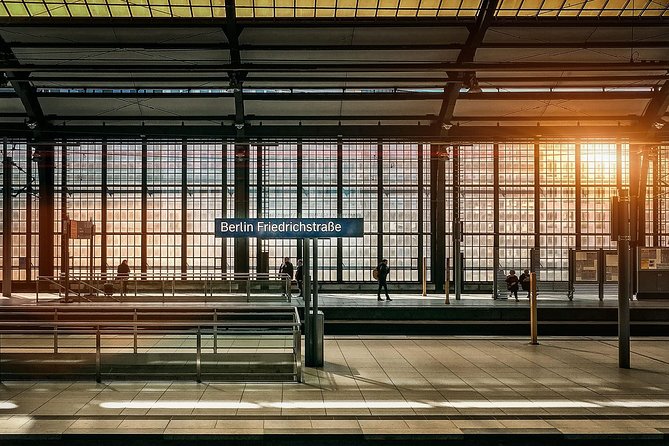
Next you move to Friedrichstrasse station, a key crossing point between East and West Berlin. Stations like this were not just transit hubs. They were places where borders turned into paperwork, delays, and life-changing decisions.
You’ll hear how East Germany’s immigration rules tore families apart. At Friedrichstrasse, the sad goodbyes happened in an office known as the Palace of Tears. The nickname is memorable because it captures the emotion of the place, and it helps you understand why people feared these crossings.
The drawback to consider: the stop is short. You’re not going to get a long, quiet walkthrough time for every detail. Instead, you get the big context and the emotional framing, then you move on.
Still, this stop is worth it because it gives you a human lens. Once you understand why families were forced into controlled exits, later stops about escape attempts make more sense.
Same city, a different way to spend the afternoon:
- Berlin: Reichstag, Dome and Government District Guided Tour
★ 4.7 · 18,288 reviews - Berlin: 1-Hour City Tour by Boat with Guaranteed Seating
★ 4.3 · 16,993 reviews - Berlin: TV Tower Standard Entrance Ticket
★ 4.4 · 15,883 reviews - Berlin: Boat Tour Along the River Spree
★ 4.4 · 11,252 reviews
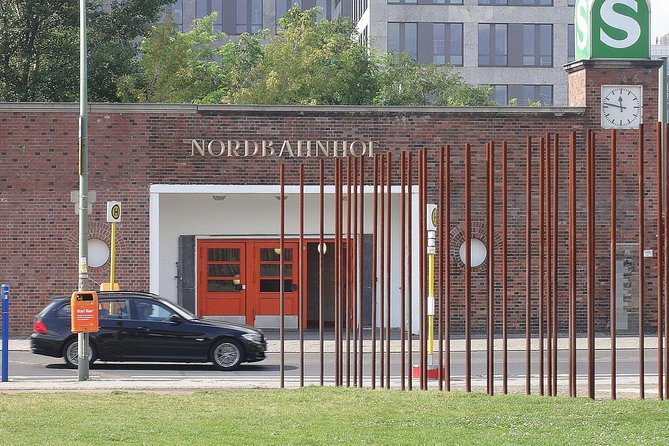
Stop 3: Park am Nordbahnhof and the Idea of Ghost Stations
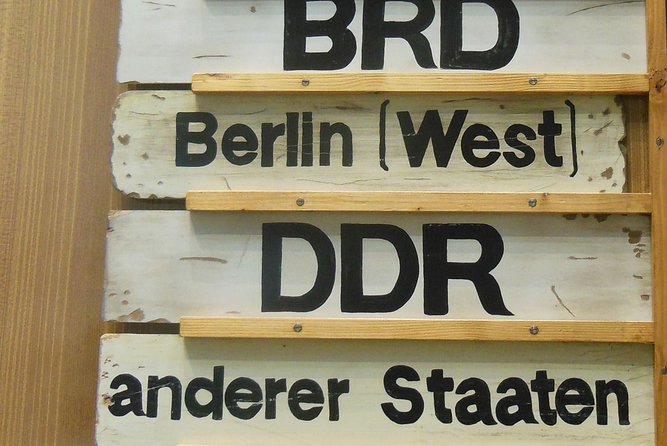
At Park am Nordbahnhof, you’ll encounter one of those Berlin details that sounds strange until it clicks. Because of the way the city was divided, there were ghost stations, unused stops on West Berlin subway lines that were located in East German territory.
The key detail is that these stations were heavily guarded even though they were not meant for normal use. That tells you something important about how the DDR saw movement and access, control first, convenience second.
This is one of those stops where a good historian is essential. Without context, you might just think you’re looking at an ordinary area. With context, you see the system behind it: transit lines crossing borders, and security architecture designed to prevent unwanted contact.
If you like “how the machine worked” explanations, you’ll probably enjoy this segment a lot.
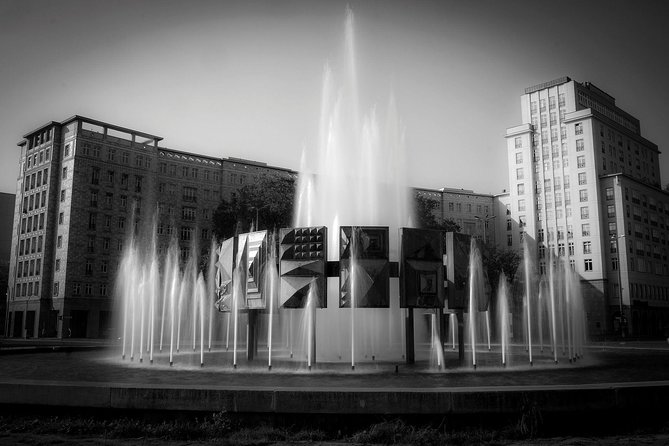
Stop 4: Karl-Marx-Allee and the Socialist Paradise That Failed
Karl-Marx-Allee is a massive housing complex and a statement of policy in stone and concrete. Your guide frames it as part of East Germans’ dreams for a Socialist paradise, then flips that dream into the darker reality.
You’ll consider how those grand visions turned into deprivation, suppression, and paranoia. The tour doesn’t treat this as abstract history. It connects the ideology to what people had to live with day to day.
This stop can be visually impressive, but the value is what you learn to look for. You start asking different questions: Who benefited from the design? How did the state keep control of daily life? What did propaganda promise, and what did people experience instead?
Time here is short, so keep your attention on the big takeaways. You’re building the framework for understanding the later stops, especially the Wall memorial and the Stasi segment.
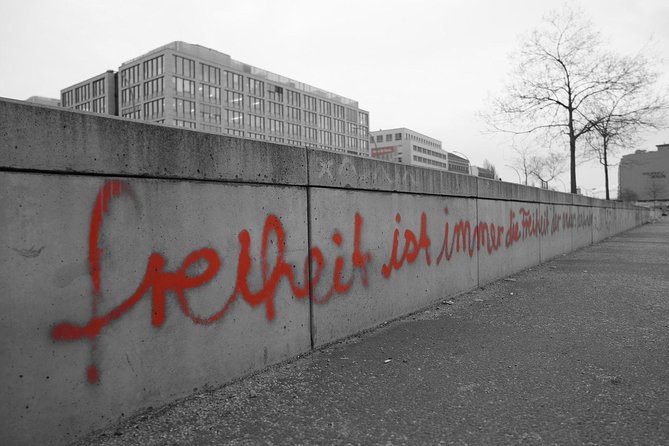
Stop 5: Memorial of the Berlin Wall and the Death Strip Reality
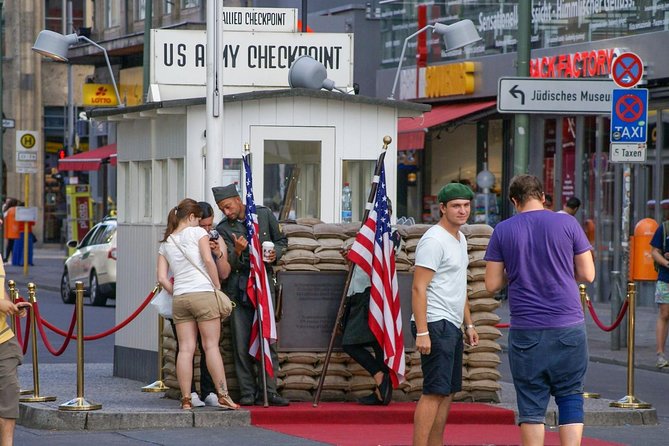
Then the tour hits its emotional center: the Memorial of the Berlin Wall. This is where you can experience the Death Strip in context, and where stories about escape attempts become part of the route.
Your guide explains why people tried to flee and why those attempts could end in tragedy. You’re not just hearing about barriers. You’re learning how the DDR designed space to discourage escape, and how violence was built into enforcement.
This stop is only around 15 minutes, so you won’t have hours to absorb everything. But for many people, that’s actually a helpful structure. It keeps the tour moving, while giving you the key emotional and historical point that holds the whole narrative together.
If you’re someone who wants to reflect longer, plan to come back afterward on your own. The memorial is the kind of place where reading more and lingering helps your brain process what you just heard.
Stop 6: Stasimuseum and Stasi Surveillance Under Eric Mielke
The Stasimuseum stop is where the tour shifts from borders and streets into the internal logic of control. The Stasi, East Germany’s secret police, coerced neighbors and family members into spying on each other. That isn’t just a dramatic headline. It’s a description of how surveillance turned communities into pressure systems.
At the former Stasi headquarters, you’ll learn about the feared leader Eric Mielke and how he recruited a massive network of spies. You’ll also hear that surveillance techniques were innovative in their own way, meaning the state wasn’t just watching, it was organizing people and information.
This is often one of the most memorable parts of any Cold War-focused tour, because it explains why fear spread even without a guard at your door.
One practical point: this tour is not designed to be a full museum day. A common expectation to have is that you’ll get strong context here, but you might still want to return if you want deeper exhibits and longer reading time. The upside is you’ll know what to focus on when you do.
Stop 7: Alexanderplatz, East German Pride, and the 1989 Turning Point
You end at Alexanderplatz, the center of public life in East Berlin. That ending makes sense because it brings the story back to the people and the moment when the system started collapsing.
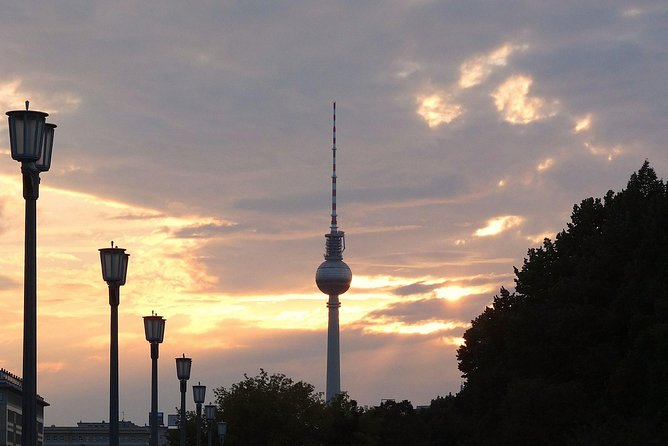
The square was rebuilt in the 1960s with major monuments like the futuristic parliament building and the iconic TV Tower. Your guide uses these landmarks as symbols of East German pride and modernization, then connects them to what happened in 1989.
This is where the narrative lands on the demonstrations that grew at Alexanderplatz and helped bring 40 years of Communist rule to an end. In other words, you see how public space was supposed to communicate power, and then you see how it became the stage for change.
If you want to understand Berlin’s political legacy in a way that feels real, this is a strong final stop. It turns your earlier stops into causes and effects, not isolated scenes.
What to Know Before You Go
A few practical tips will make the experience smoother.
First, plan your day with the 3-hour block in mind. You’ll move between sites using public transport, and the stops are timed. If you cram too much afterward, you may miss a chance to sit with what you learned.
Second, bring something small to snack on. Food and drinks are not included. The tour is history heavy, and you’ll likely want energy.
Third, dress for walking and transit. The day is built around moving, not sitting in a classroom. Moderate physical fitness is required, and that’s a good sign to take literally.
Fourth, since many sites are free to enter based on the route notes, your main “ticket” is staying mentally engaged with the context you’re hearing. The tour works best if you let each stop connect to the next.
Finally, if you care about museum depth, treat this tour as your orientation layer. It gives you the map. Then you can choose what to explore longer on your own.
Who This Tour Fits Best
This is a great fit if you want:
- A clear East Berlin overview tied to how the DDR worked
- A guided explanation of the Berlin Wall era, not just photos and dates
- A small-group format where you can ask questions
- A history walk led by a local historian who connects politics to lived reality
It might be less ideal if you want a long museum crawl or if you expect every stop to include extended inside access. The tour is structured for momentum, and the museum-style depth is limited by design.
If you’re visiting Berlin for the first time, this can be an excellent way to get your bearings fast. If you already know the basics, you’ll still likely appreciate how the tour highlights lesser-known links like ghost stations and the Palace of Tears.
Should You Book East Berlin: City of Shadows?
I’d book this if you want a well-structured, English-language guided walkthrough of key East Berlin DDR sites that turns confusing history into a connected story. The value is in the local historian and the way the route connects symbolism, transit, the Wall, and surveillance into one coherent picture.
I’d skip it, or at least treat it as a starter, if you’re hunting for deep time inside museums. This tour gives you context and emotional framing, but you’ll probably want to come back later for longer museum reading and slower reflection, especially around Stasi-related material.
If you’re balancing time and want the best “understanding per hour,” this tour is a strong choice. You’ll leave with the Cold War logic of East Berlin much clearer than when you arrived.
Newest Berlin reviews on the site
- Day trip through multicultural city landscapes & photo highlights★ 5.0 · 5 reviews
- Berlin in one day – day tour with an expert guide★ 5.0 · 14 reviews
- Berlin on Your Own – Deluxe Round Trip from Warnemünde Port★ 4.5 · 5 reviews
- Berlin sightseeing boat tour on the Spree★ 4.0 · 93 reviews
- Berlin by Night Private Tour – All Must-See Sites Magically Lit Up at Night★ 4.0 · 5 reviews
- Berlin & Sachsenhausen Concentration Camp Tour from Warnemünde and Rostock Port★ 4.5 · 60 reviews
- Berlin & The Third Reich Private Guided Tour★ 5.0 · 3 reviews
- Berlin and Car Culture Tour★ 4.5 · 8 reviews
City Tours, compared.
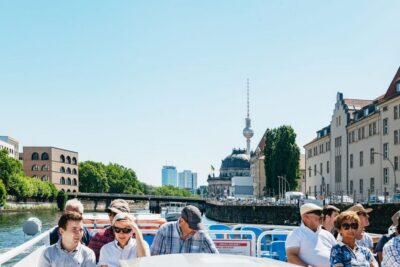
1-Hour City Tour by Boat with Guaranteed Seating
Read our review →
City History Canal Sightseeing Tour on a Motorboat
Read our review →
Browse the lists this tour appears in