
Reviewed · 2-HOUR EXPERIENCES
Berlin: Karl-Marx-Allee 2-Hour Tour
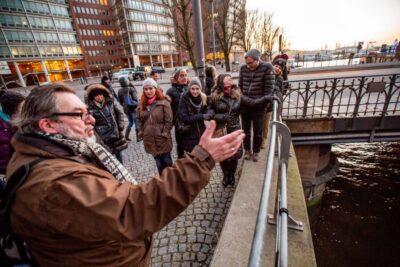
Karl-Marx-Allee history is easy when you walk it. This 2-hour walking tour follows the boulevard’s changes from Frankfurter Allee to Stalinallee, then to today’s name, while you spot standout buildings like Frankfurter Tor. I especially like how the route connects big political decisions to real street design, and I also love the human scale of apartment blocks along Friedrichshain.
One thing to plan for: there is no hotel pickup, and the meeting point can vary by option, so you’ll want to arrive ready to start on time and on foot.
In This Review
- Key points you will actually care about
- Karl-Marx-Allee’s job: politics, people, and one long boulevard
- Frankfurter Tor, and why those towers matter
- Friedrichshain apartment buildings with arcades: where the street meets everyday life
- Kosmos cinema and Josef Kaiser: culture built into the plan
- Hochhaus an der Weberweise: reading ambition in height
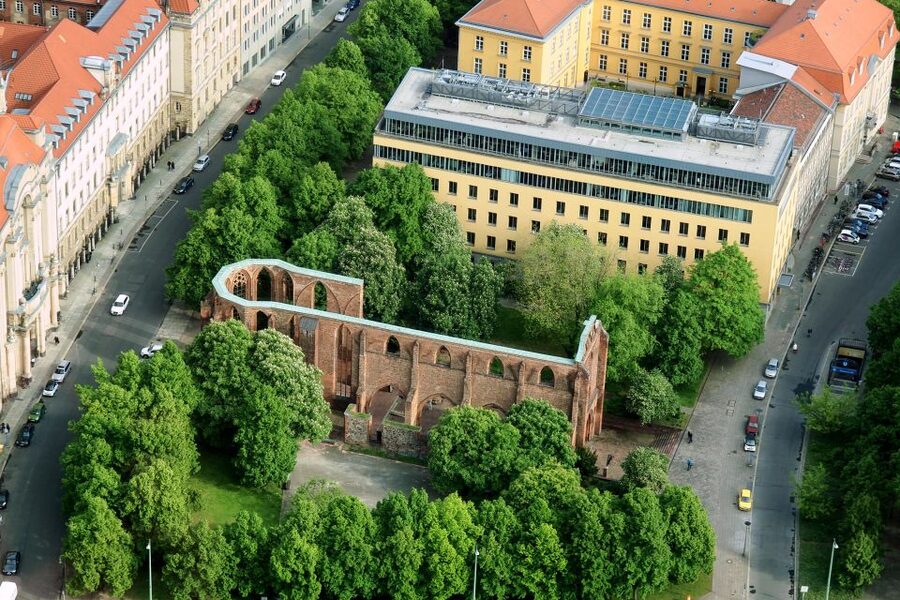
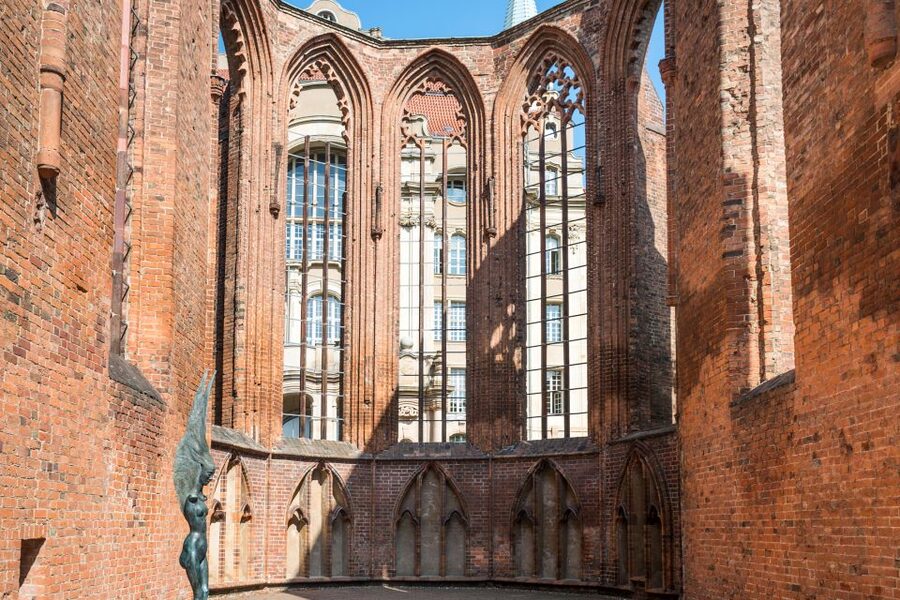
- Partial ruins of the Church of the Resurrection: the city’s scars show up
- Strausberger Platz: the gateway feeling of the socialist city center
- Price and value: what $23 buys in 2 hours
- What kind of traveler will enjoy this most?
- Should you book the Karl-Marx-Allee 2-hour tour?
- FAQ
- How long is the Berlin Karl-Marx-Allee tour?
- What is the price per person?
- Is it a walking tour?
- Do I get hotel pickup and drop-off?
- Where does the tour start?
- What languages are available?
- What are the key highlights included on the route?
- Does the tour focus on the boulevard’s name changes?
- Is there a cancellation policy?
- Can I reserve without paying right away?
Key points you will actually care about
- Frankfurter Tor: those twin towers are the photo stop you understand faster with a guide.
- Friedrichshain arcades: socialist-era housing with practical street-level rhythm.
- Kosmos cinema by Josef Kaiser: a cultural landmark tied to the area’s planning.
- Karl-Marx-Allee’s name changes: a fast lesson in how regimes leave fingerprints on streets.
- Strausberger Platz and high-rises: your gateway view of the socialist city center concept.
Karl-Marx-Allee’s job: politics, people, and one long boulevard
Karl-Marx-Allee is not just a pretty street. It is a real project from the post-war era, built to show power, organize daily life, and reshape the center of Berlin. The boulevard is almost 2 kilometers long, and it was designed to function like a major monument for the capital, which is why you keep noticing the same big planning ideas repeating block after block.
The tour’s best trick is how it turns that into something you can read on the sidewalk. You do not just hear slogans. You learn what changed as the street picked up different identities, and you see how architecture can carry ideology without needing a single sign. You also get a clear sense of why Berliners still argue about these buildings: they are useful, impressive, and controversial all at once.
If you like architecture, street-level history, and how neighborhoods evolve, this works well. If you are only looking for museums or interior spaces, you might feel slightly shortchanged, since this is a walking route focused on what you can see from the street.
A few more Berlin walks and trips to compare
- Berlin: Reichstag, Dome and Government District Guided Tour
★ 4.7 · 18,288 reviews - Berlin: 1-Hour City Tour by Boat with Guaranteed Seating
★ 4.3 · 16,993 reviews - Berlin: TV Tower Standard Entrance Ticket
★ 4.4 · 15,883 reviews
Frankfurter Tor, and why those towers matter
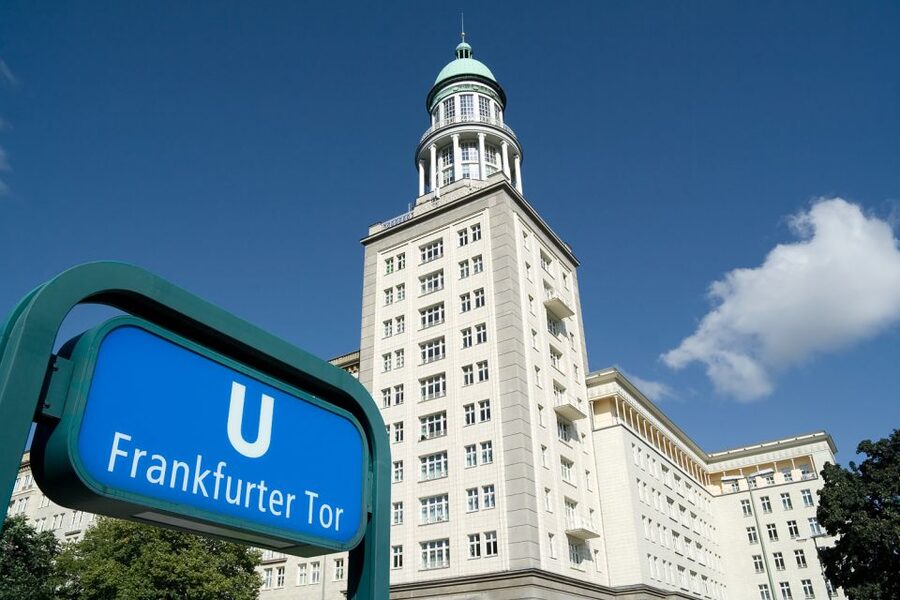
The tour kicks off around Frankfurter Tor, and that is a smart start. The towers there are a visual anchor, the kind of landmark that makes you understand the boulevard’s scale immediately. It also helps that Frankfurter Tor sits at the moment where the street starts to feel like a statement, not just a road.
With a guide, the stop becomes more than a viewpoint. You learn that Karl-Marx-Allee went through identity shifts, and the area around Frankfurter Tor is tied to how the boulevard was framed at different times. That name evolution, from Frankfurter Allee to Stalinallee and finally Karl-Marx-Allee, is not trivia. It is a clue to how Berlin rebranded itself again and again.
Practical note: if you want photos, arrive with your phone battery charged and your timing flexible. This area is the kind of place where a few minutes can make a difference in lighting and crowd levels.
Friedrichshain apartment buildings with arcades: where the street meets everyday life
Next, you move into Friedrichshain and see the apartment buildings with arcades. This is one of my favorite parts of the tour because it is where the grand plan meets daily routines. Arcades give a covered, walkable edge at street level. That means weather protection, easier circulation, and a more “designed” street experience, not just buildings sitting behind fences.
These buildings also show a key point about post-war urban planning: the goal was not only housing, it was shaping a whole environment. You start noticing how repetition creates order, and how the street-level details can make something monumental feel livable.
A drawback to consider: because the focus is on architecture and street layout, you will spend more time looking than listening for interior details. Still, if you pay attention to the arcades, proportions, and how the blocks face the boulevard, you will come away with a much clearer mental map than you would from a quick self-guided pass.
Kosmos cinema and Josef Kaiser: culture built into the plan
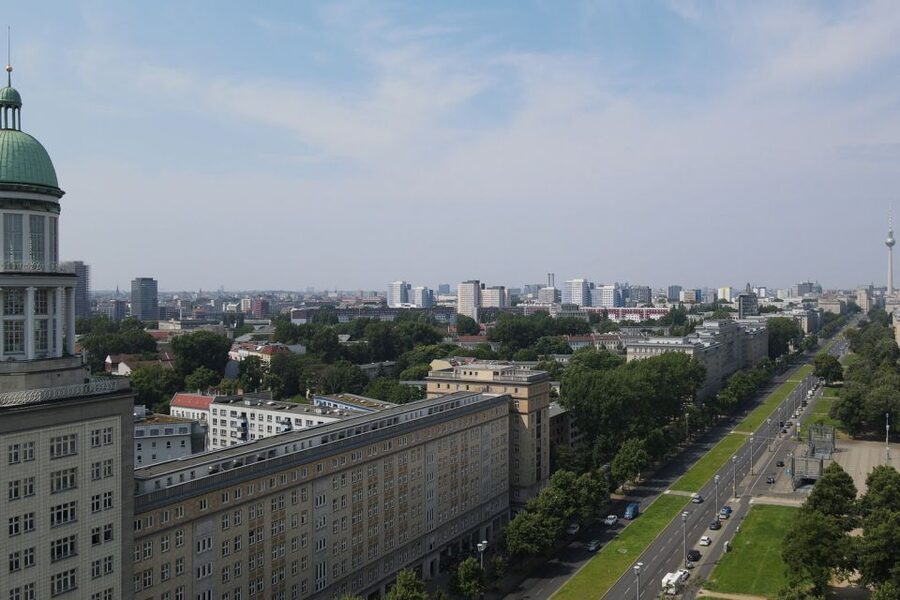
The tour also includes the Kosmos cinema, designed by Josef Kaiser. This stop is valuable because it shows that the area was not meant to be only residential and administrative. There was room for culture, public gathering, and entertainment as part of the streetscape.
I like this part because it adds a different layer to the story. When a place includes a major cinema, you can picture how people moved through daily life there: strolling, meeting, passing time. That makes the socialist-era architecture feel less like a frozen exhibit and more like a functioning urban system.
Watch for what a guide points out here, especially how the building relates to its surroundings. Even if you do not care about film, you should care about the fact that the built environment tried to create a shared public experience.
Same city, a different way to spend the afternoon:
- Berlin: Boat Tour Along the River Spree
★ 4.4 · 11,252 reviews - Discover Berlin Half-Day Walking Tour
★ 5.0 · 9,624 reviews - Berlin: Government District around the Reichstag Guided Tour
★ 4.7 · 8,447 reviews - Berlin: Reichstag, Plenary Chamber, Cupola & Government Tour
★ 4.6 · 8,422 reviews
Hochhaus an der Weberweise: reading ambition in height
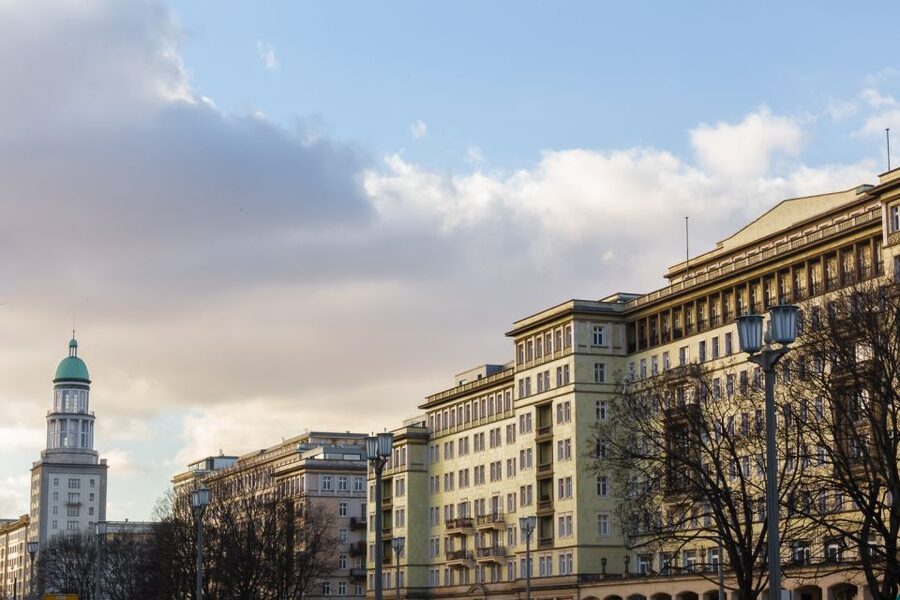
Then you hit Hochhaus an der Weberweise, the high-rise that adds vertical scale to the boulevard experience. This is where the tour balances out the long, horizontal feel of Karl-Marx-Allee. A high-rise changes how you perceive distance and neighborhood boundaries, and it makes the street look like part of a larger planned city layout.
In practical terms, this stop helps you understand why Karl-Marx-Allee looks the way it does. When planners think in terms of visual axes and future growth, the tallest forms become anchors. They pull the viewer’s eye, and they create a sense that the boulevard connects big areas, not just adjacent blocks.
If you are walking around Berlin a lot, you will recognize that high-rises can either feel alien or perfectly placed. Here, the context of the boulevard makes it easier to judge which one you think it is, and why.
Partial ruins of the Church of the Resurrection: the city’s scars show up
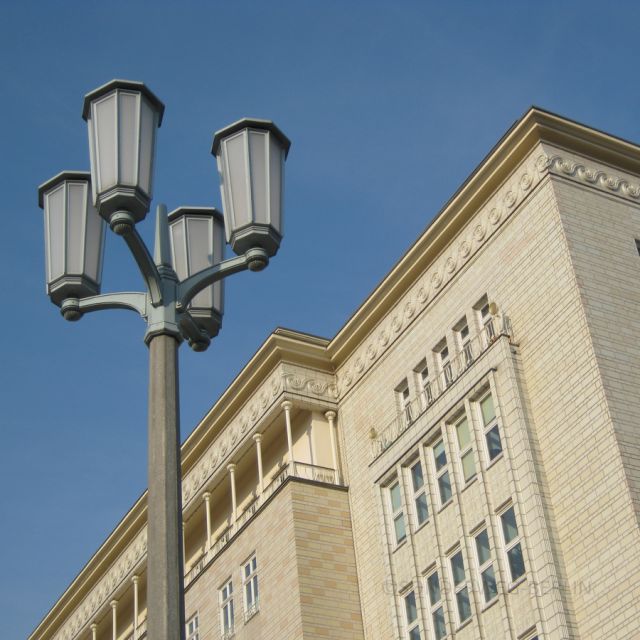
No architecture tour of this area is complete without confronting what survived unevenly. The route includes the partial ruins of the Church of the Resurrection. This stop shifts the mood, because ruins do not behave like monuments. They force you to think about time, damage, reconstruction, and what gets rebuilt versus what gets left visible.
I appreciate this moment because it keeps the tour honest. Post-war planning is a big theme along Karl-Marx-Allee, but Berlin is also a city of layers. A church ruin on this route reminds you that the era was not only about new construction. It was also about aftermath.
You might want to pause longer than the group does. Ruins are one of the few places where looking slowly really changes your understanding of the whole street story.
Strausberger Platz: the gateway feeling of the socialist city center
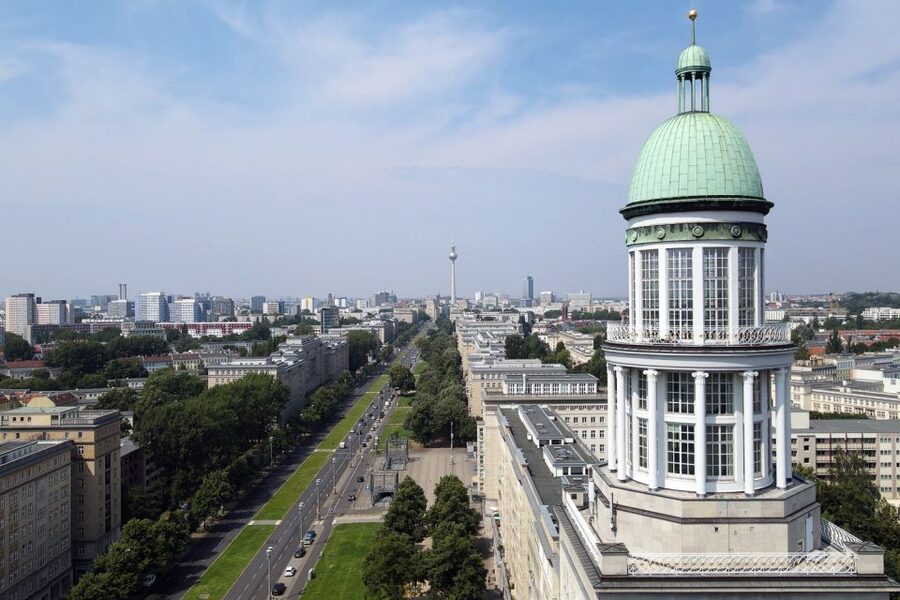
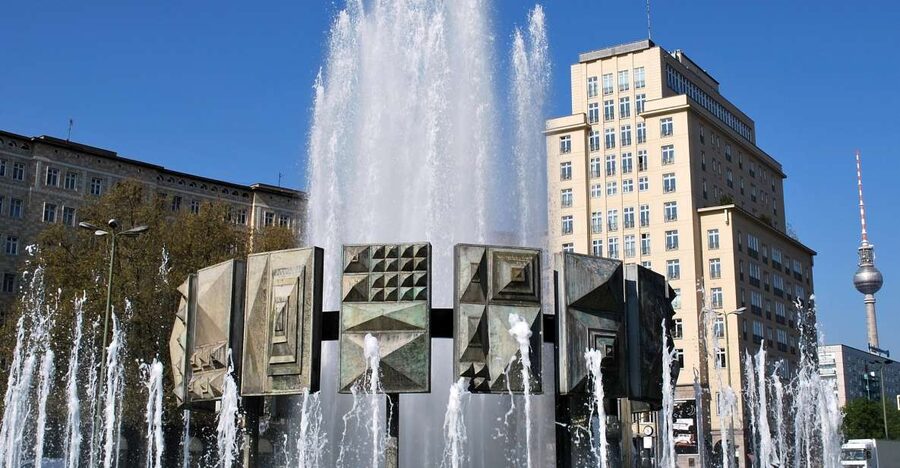
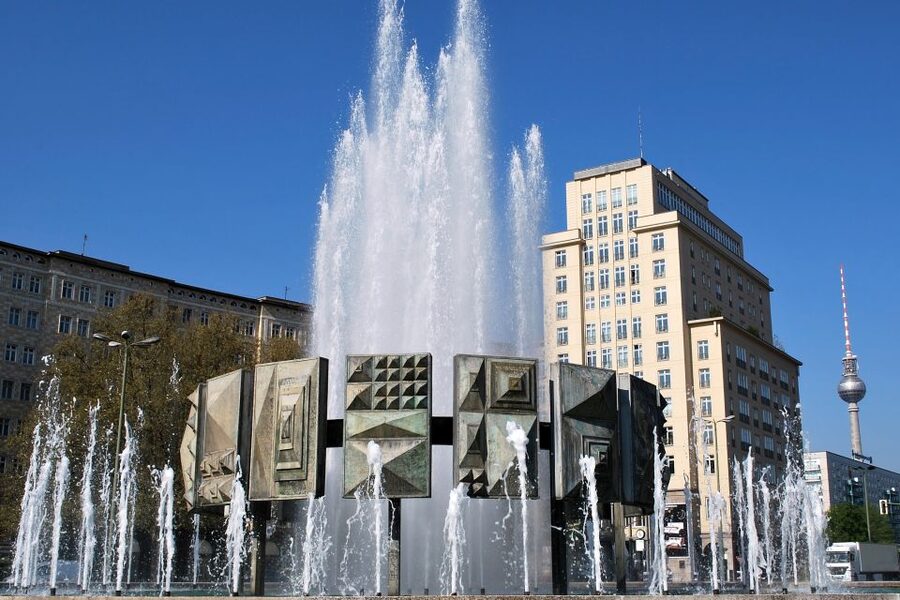
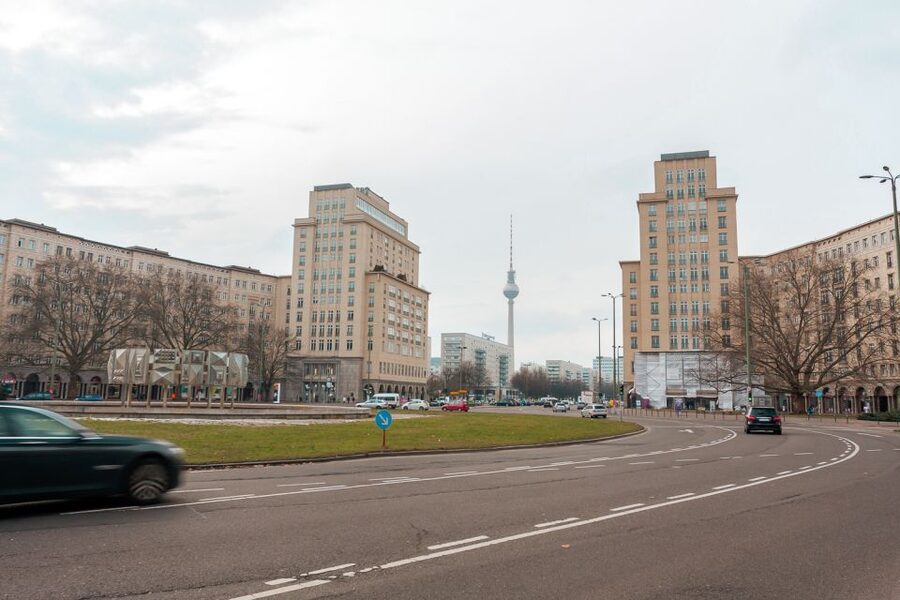
The last stretch includes Strausberger Platz and its distinctive high-rise buildings. This is where you get the “gateway” idea. The square functions like an entrance to the socialist city center concept, and the surrounding buildings help sell the sense that you are moving into a different kind of urban world.
This stop is also a good reminder that planning is not just about individual buildings. It is about how spaces choreograph movement and expectations. Strausberger Platz, with its clustered height, helps you see how the boulevard’s grandness was meant to funnel you toward a larger center.
The photos here are often the best if you step slightly back from the main viewing points and let the lines of the square and tower forms create a composition. A guide can help you spot the exact angles that communicate the layout faster.
Price and value: what $23 buys in 2 hours
At $23 per person for a 2-hour walking tour, this is a pretty strong value if you like architecture and want structure. You are paying for two things: time and interpretation. Two hours is not enough to wander randomly across Berlin, but it is long enough to connect a sequence of meaningful stops along one boulevard.
You also get an expert guide, and the overall score is excellent, with a 5-star average across 116 reviews. That matters because this kind of architecture tour succeeds or fails based on how well someone turns buildings into a clear story. The reviews emphasize that the guide Tobias can be passionate and very communicative, and that the walk may include helpful extras like historical photos and old posters that bring the street changes to life.
So here is the practical math: if you were to do this area on your own, you would likely see the buildings. With the guide, you get the “why” behind the architecture, plus a route that strings the key locations together in a way that builds understanding quickly.
What kind of traveler will enjoy this most?
This tour suits you if you:
- Want a focused walk through post-war architecture without needing to research for hours.
- Like learning how street names and design choices reflect politics.
- Enjoy history that you can see immediately, with buildings acting like open textbooks.
It is less ideal if you:
- Prefer mostly indoor sights or museum-style experiences.
- Want a wide, hop-on-hop-off style tour across many Berlin neighborhoods.
Should you book the Karl-Marx-Allee 2-hour tour?
I think you should book it if you want your Karl-Marx-Allee visit to feel coherent and insightful. The route covers the major architectural beats, including Frankfurter Tor, the Kosmos cinema, the high-rise at Hochhaus an der Weberweise, and the Church of the Resurrection ruins, then rounds out with Strausberger Platz. That is a lot to pack into 2 hours, and the walking format keeps the story grounded in real space.
If you already know Berlin architecture basics and want total depth, you might pair this with a longer self-guided day. But as an efficient, guided orientation to the boulevard and its political and urban design shifts, it is a smart use of time.
FAQ
How long is the Berlin Karl-Marx-Allee tour?
The tour duration is 2 hours.
What is the price per person?
The price is $23 per person.
Is it a walking tour?
Yes, it is a walking tour.
Do I get hotel pickup and drop-off?
No, hotel pickup and drop-off are not included.
Where does the tour start?
The meeting point may vary depending on the option booked.
What languages are available?
The live tour guide is available in German and English.
What are the key highlights included on the route?
You will see Frankfurter Tor, apartment buildings in Friedrichshain with arcades, the Kosmos cinema designed by Josef Kaiser, Karl-Marx-Allee, Hochhaus an der Weberweise, partial ruins of the Church of the Resurrection, and Strausberger Platz.
Does the tour focus on the boulevard’s name changes?
Yes, you will learn how Karl-Marx-Allee changed from Frankfurter Allee to Stalinallee and then to its current name.
Is there a cancellation policy?
Yes, free cancellation is available up to 24 hours in advance for a full refund.
Can I reserve without paying right away?
Yes, there is a reserve now & pay later option.
Newest Berlin reviews on the site
- Jetbike Berlin fun bike beer bike★ 5.0 · 3 reviews
- Karl-Marx-Allee Walking Tour: Berlin’s Socialist History★ 5.0 · 5 reviews
- Homeless on chic streets: city tour in Berlin from personal experience★ 4.6 · 3 reviews
- Berlin: Sachsenhausen Concentration Camp Guided Tour★ 4.9 · 42 reviews
- Historyof the Trans, Queer & Gay communities of Berlin tour★ 4.8 · 17 reviews
- Historic Berlin Pubs & History Tour★ 4.9 · 73 reviews
- Berlin: City Center Walking Tour★ 4.7 · 45 reviews
- Half-Day Berlin Highlights Segway Expedition★ 4.5 · 61 reviews
2-Hour Experiences, compared.


Berlin’s Best: 2 Hour Walking Tour Third Reich and the Cold War
Read our review →
Browse the lists this tour appears in