

Reviewed · CITY TOURS
Berlin: Hansaviertel “The City of Tomorrow” Guided Tour
50s architecture in Berlin feels like a time machine. This Hansaviertel walking tour takes you through the City of Tomorrow idea tied to the International Building Exhibition of 1957, where Berlin’s designers tried to make a modern city feel orderly and spacious. I love how the walk links the buildings to the district’s big concept, not just postcard views.
Two stops really landed for me: the Berlin Pavilion area and the Müller-Rehm/Siegmann House. They are the kind of places you can easily walk past on your own, but with a good guide you start noticing details that explain why these shapes and layouts mattered.
My only real caution is timing in winter. One practical note from the experience is that darker afternoons can make a 2-hour circuit feel a bit rushed, so check the start time and plan for cold weather while you walk.
In This Review
- Key points to know before you go
- Why Hansaviertel still feels like the City of Tomorrow
- How the 2-hour walking route actually feels
- Berlin Pavilion and the Müller-Rehm/Siegmann House
- Gropius-Haus and Kaiser-Friedrich Memorial Church, plus the Swedish House
- Hansaplatz station, the Library, and the Hospital
- Van den Broek House, Schwippert House, and the Academy of Art
- Your guide experience, Tobias and Mr Schwabe’s style
- Price and value at $23 for an architecture-focused 2 hours
- Who should book this tour, and who might skip it
- Should you book the Berlin Hansaviertel City of Tomorrow tour?
- FAQ
- How long is the Hansaviertel guided tour?
- What does it cost?
- Is this activity a walking tour?
- What languages are available?
- Do I get a live guide?
- Is the tour wheelchair accessible?
- What are some of the main stops?
- Where do I meet the guide?
- Can the tour start from specific points?
- Is free cancellation available?
Key points to know before you go
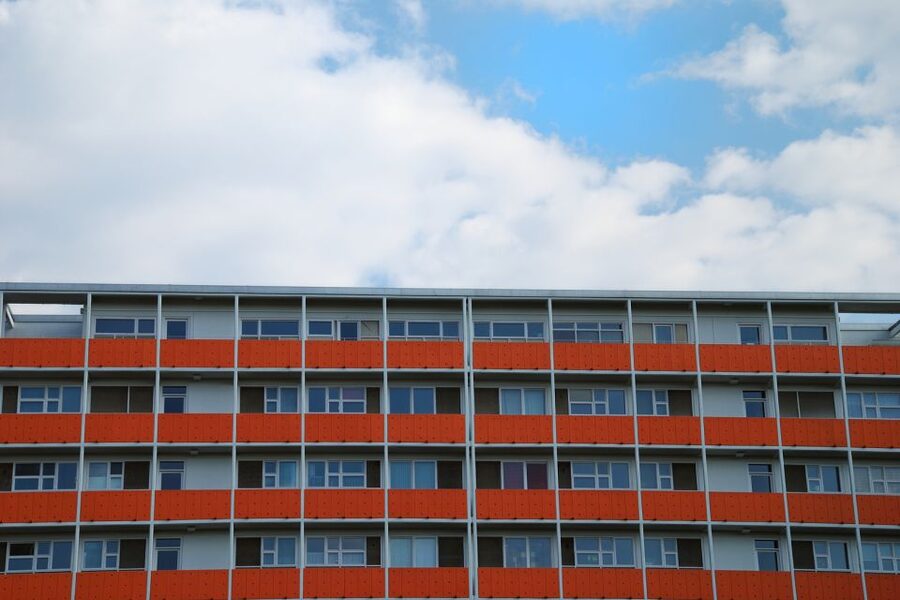
- Hansaviertel was designed for the 1957 International Building Exhibition, using modern urban planning ideas.
- You’ll see standout architecture in a compact walk, including the Berlin Pavilion and Müller-Rehm/Siegmann House.
- Expect major design contrasts, especially around the Gropius-Haus, Kaiser-Friedrich Memorial Church, and the Swedish House.
- You’ll also pass functional city sites, like Hansaplatz station, the Hansaviertel Library, and the Hansaviertel Hospital.
- The best part is the guide style, often with humor and a real knack for answering questions patiently.
Why Hansaviertel still feels like the City of Tomorrow
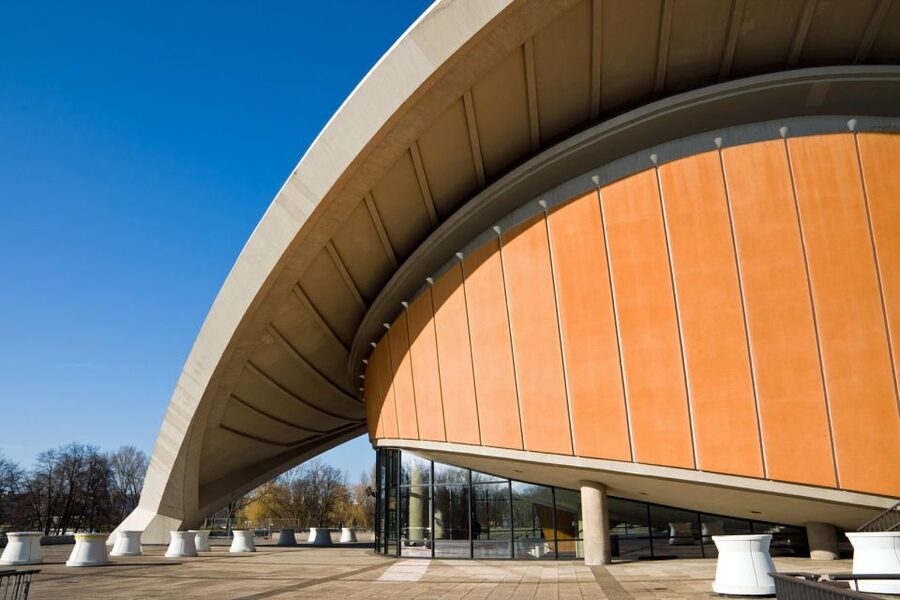
Hansaviertel is one of those Berlin neighborhoods where the streets feel planned, not accidental. The whole area was set up as a modern redevelopment project for the 1957 International Building Exhibition, with the goal of creating a structured, spacious city. That mission shows up in the spacing, the building placement, and the mix of residential and cultural spaces.
What I like most is how the tour helps you read the district. You are not just looking at buildings, you are learning how different architects responded to the same big challenge: How do you design modern life in a city that had to reinvent itself?
And the tour keeps that theme front and center. You start with the district’s overall plan, then the guide brings it down to specific buildings, so the city-wide idea becomes something you can point to with your own eyes.
A few more Berlin walks and trips to compare
- Berlin: Reichstag, Dome and Government District Guided Tour
★ 4.7 · 18,288 reviews - Berlin: 1-Hour City Tour by Boat with Guaranteed Seating
★ 4.3 · 16,993 reviews - Berlin: TV Tower Standard Entrance Ticket
★ 4.4 · 15,883 reviews
How the 2-hour walking route actually feels
This is a leisurely walking tour for about 2 hours, with a live guide in English or German. Meeting point can vary by option, so if you are picky about where your tour starts, double-check the exact location for your booking.
You will cover a lot of ground for the time because you are hopping between multiple architectural highlights and public sites. That matters because architecture tours can either drag or fly. This one stays in the sweet spot where you get enough stops to build a clear picture, without feeling like you are sprinting between photos.
One practical thought for winter: if you are visiting in colder months, bring layers and plan for darker light. The walk itself is the point, but reduced daylight can make the experience feel shorter than you want.
Berlin Pavilion and the Müller-Rehm/Siegmann House
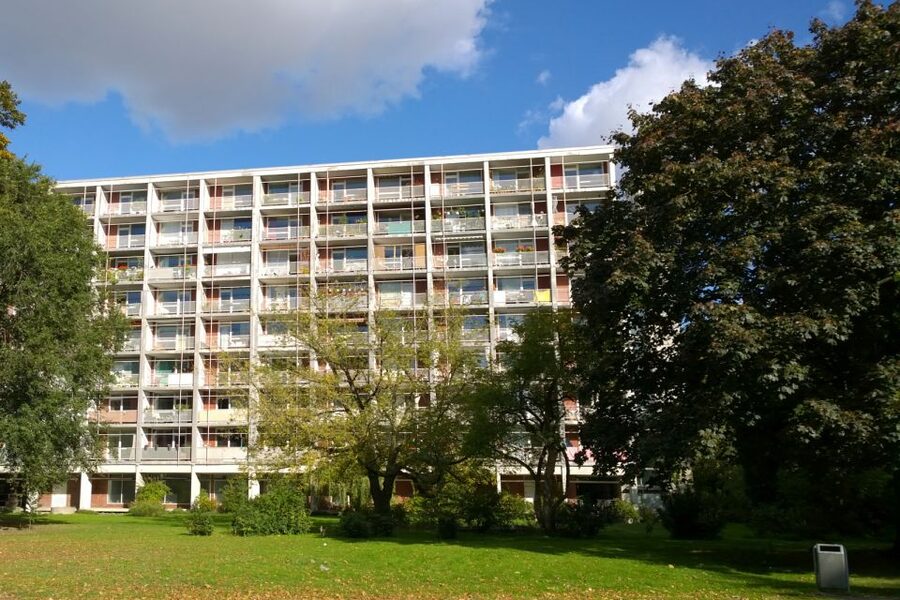
The tour’s first major emotional beat is the area around the Berlin Pavilion and the Müller-Rehm/Siegmann House. These stops anchor the whole “City of Tomorrow” pitch with architecture that looks forward, but also reflects the era that produced it.
The pavilion is important because it gives you context. You get the sense that this district was designed as a kind of showcase, where modern living and modern building methods could be demonstrated in a built environment. When the guide connects that idea to what you are seeing, you stop thinking of the buildings as isolated objects and start treating the neighborhood like one big design statement.
Then comes the Müller-Rehm/Siegmann House. This is where you get to see how the district’s planning principles turn into real housing form. I like this pairing because it keeps the story balanced. You get the conceptual frame at the pavilion, and then the practical reality at the house.
If you enjoy architecture, this is a stop where you will want to slow down. Look at how the building sits in the setting and pay attention to how the design supports the lived-in purpose behind it.
Gropius-Haus and Kaiser-Friedrich Memorial Church, plus the Swedish House
The tour really flexes its architectural variety around the Gropius-Haus, the Kaiser-Friedrich Memorial Church, and the Swedish House. These are not clones of the same style. They show how different architects and approaches could coexist within one redevelopment vision.
The Gropius-Haus is a key highlight for design lovers. The guide points out aspects of the building that are easy to miss if you only glance. It is one of those places where a little explanation changes your whole way of looking.
Next, the Kaiser-Friedrich Memorial Church adds an emotional and cultural layer. Places of worship tend to carry meaning beyond architecture, and this stop helps you see the district as more than a housing experiment. It also reminds you that Berlin’s rebuilding included public identity, not just buildings.
Then the tour passes the Swedish House, which widens the story again. The name itself hints at an international touch, and that fits the broader “City of Tomorrow” concept from the 1957 exhibition. This is one of the moments where the tour feels like it is teaching you how Berlin branded modernity to the world.
Same city, a different way to spend the afternoon:
- Berlin: Boat Tour Along the River Spree
★ 4.4 · 11,252 reviews - Discover Berlin Half-Day Walking Tour
★ 5.0 · 9,624 reviews - Berlin: Government District around the Reichstag Guided Tour
★ 4.7 · 8,447 reviews - Berlin: Reichstag, Plenary Chamber, Cupola & Government Tour
★ 4.6 · 8,422 reviews
Hansaplatz station, the Library, and the Hospital
Not every architecture tour includes practical city life. This one does. You pass Hansaplatz station, the Hansaviertel Library, and the Hansaviertel Hospital, which is a smart choice if you want the neighborhood to feel real.
These stops do two things for you:
First, they keep the walk grounded. Buildings are not just aesthetic exercises, they are infrastructure and services.
Second, they show you that the “tomorrow” idea was meant to operate in everyday routines, not only in showpiece structures.
Even if you are mainly interested in iconic architecture, I would not skip these. The guide’s explanations help you connect design choices to what people actually use: transit access, learning spaces, and healthcare.
And because these are not the typical tourist-photo magnets, they give you that side of Berlin that feels calmer and more local. You get to experience the district as a place people move through, not a set dressing for postcards.
Van den Broek House, Schwippert House, and the Academy of Art
As the tour continues, you move through more named architectural stops, including the Van den Broek House, the Schwippert House, and the Academy of Art.
This is where the variety really pays off. Instead of one highlight repeating itself, you see more examples of how architects interpreted modern urban living. The point is not just to collect names, it is to understand how one redevelopment plan could produce multiple design directions.
I also like the inclusion of the Academy of Art because it ties architecture to culture. It signals that modern city planning was not only about housing density or spacing. It was also about creating places where ideas and creativity could happen.
If you like asking questions, this section is perfect. You can test your own understanding. Look at how the buildings relate to their surroundings, then listen to how the guide links those decisions back to the overarching “structured, spacious city” concept.
Your guide experience, Tobias and Mr Schwabe’s style
The quality of the guide really shapes this tour, and the feedback you can take into your planning is clear: guides often bring both facts and personality. Tobias is repeatedly described as personable and engaging, with a tone that makes architecture feel friendly rather than intimidating. Mr Schwabe is also noted for high-level information delivery and kindness.
What you want from a tour like this is someone who can answer the obvious questions, plus the fun ones that pop up when you start noticing details. The best guide moments on this tour are when you ask about design choices and get a clear explanation right away. Several comments highlight how patiently guides handle questions, even when visitors have a lot of them.
So here is my practical tip: bring at least one question you genuinely care about. For example, you can ask how the 1957 exhibition ideals show up in layout, building form, or public spaces. When the guide answers, you will feel like you are reading the district, not just walking it.
Price and value at $23 for an architecture-focused 2 hours
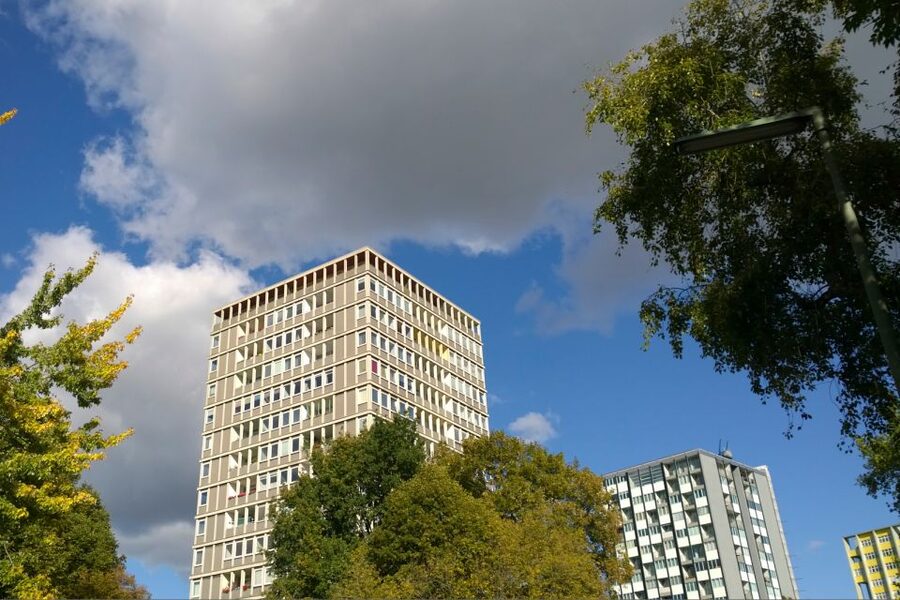
At $23 per person for a 2-hour guided walking tour, this is strong value for anyone who wants structure. Architecture tours can be hit or miss when you feel like you are paying for a bundle of stops without meaning. Here, the stops connect to a single theme: Hansaviertel as the City of Tomorrow plan tied to the 1957 exhibition.
You are also getting more than landmark façades. The route includes houses and cultural buildings, plus Hansaplatz station, the Hansaviertel Library, and the Hansaviertel Hospital. That mix makes the experience feel efficient and complete.
In plain terms: you are paying for a live guide who turns named buildings into a story you can actually remember. For $23, that is a very fair trade if your brain lights up for design and Berlin’s postwar-era ambition.
Who should book this tour, and who might skip it
Book this if you:
- Like 50s and mid-century architecture and want help seeing design choices, not just looking at buildings
- Want a Berlin walk that goes beyond the biggest, most obvious sights
- Enjoy history that is connected to how people live, learn, travel, and worship
You might also enjoy this even if you have been in Berlin a while. The district is the kind you can live near and still never properly explore, especially if you mostly stick to the central highlights.
Skip it if you:
- Want only top-tier monuments and views, with minimal walking and minimal explanation
- Do not like architecture topics or long-form guidance about urban planning
The tour is at its best when you are curious. If you are willing to look closely and listen, it rewards you.
Should you book the Berlin Hansaviertel City of Tomorrow tour?
I think it is an easy yes for architecture lovers and anyone who wants a different slice of Berlin. The standout is the combination of named buildings with a clear framework: the district was planned for the 1957 International Building Exhibition, and the guide helps you connect that idea to what you see on the ground.
Two practical points help you make the call. First, check your timing, especially in winter, because daylight affects how comfortable the experience feels. Second, if you like asking questions, you are likely to get a lot out of this tour thanks to guides who handle inquiries with patience and humor.
If you want a 2-hour walk that feels like you learned something real about Berlin’s planning and architecture, this one is worth your time.
FAQ
How long is the Hansaviertel guided tour?
The tour lasts 2 hours.
What does it cost?
The price is $23 per person.
Is this activity a walking tour?
Yes, it is a walking tour with a tour guide.
What languages are available?
The tour guide is available in English and German.
Do I get a live guide?
Yes, it includes a live tour guide.
Is the tour wheelchair accessible?
Yes, it is wheelchair accessible.
What are some of the main stops?
You’ll see places such as the Berlin Pavilion, Müller-Rehm/Siegmann House, Gropius-Haus, Kaiser-Friedrich Memorial Church, Swedish House, Hansaplatz station, Hansaviertel Library, Hansaviertel Hospital, Van den Broek House, Schwippert House, and the Academy of Art.
Where do I meet the guide?
The meeting point may vary depending on the option booked.
Can the tour start from specific points?
It is possible to organize tours beginning from specific points at certain times.
Is free cancellation available?
Yes. You can cancel up to 24 hours in advance for a full refund.
Newest Berlin reviews on the site
- Day trip through multicultural city landscapes & photo highlights★ 5.0 · 5 reviews
- Berlin in one day – day tour with an expert guide★ 5.0 · 14 reviews
- Berlin on Your Own – Deluxe Round Trip from Warnemünde Port★ 4.5 · 5 reviews
- Berlin sightseeing boat tour on the Spree★ 4.0 · 93 reviews
- Berlin by Night Private Tour – All Must-See Sites Magically Lit Up at Night★ 4.0 · 5 reviews
- Berlin & Sachsenhausen Concentration Camp Tour from Warnemünde and Rostock Port★ 4.5 · 60 reviews
- Berlin & The Third Reich Private Guided Tour★ 5.0 · 3 reviews
- Berlin and Car Culture Tour★ 4.5 · 8 reviews
City Tours, compared.

1-Hour City Tour by Boat with Guaranteed Seating
Read our review →
City History Canal Sightseeing Tour on a Motorboat
Read our review →

Browse the lists this tour appears in