
Reviewed · HISTORICAL TOURS
Augsburg: Historical Highlights Private Walking Tour
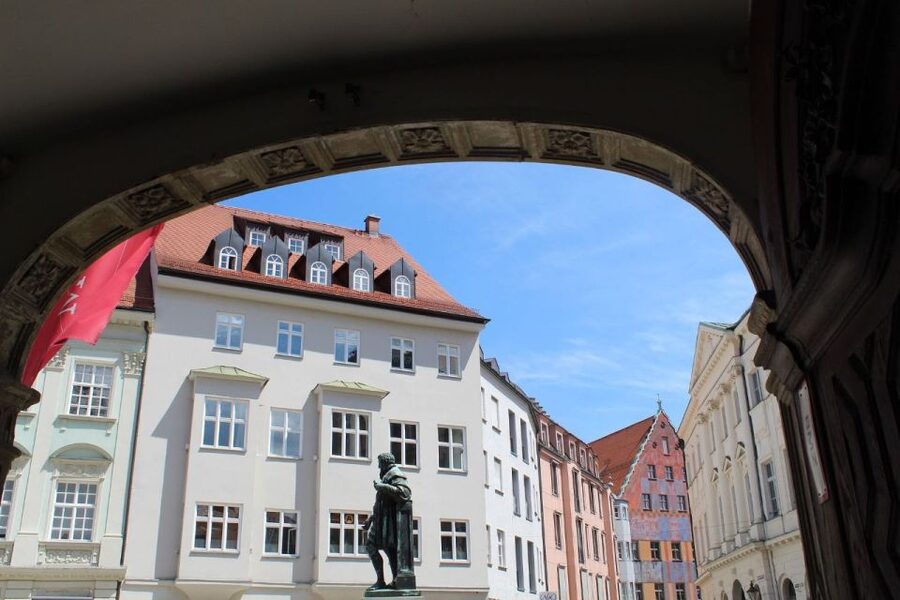
Augsburg history fits in two hours. This private walking tour links Roman origins starting in 15 B.C. with the Old Town sights people talk about for generations, and your guide can tweak the focus to what you care about most. You’ll get a smooth story on foot through Augsburg’s key landmarks, with local guidance steering the pace.
I especially love two stops. First, the Fuggerei, founded by the Fugger family as the oldest social settlement in world history, gives you a rare look at how civic planning mixed with faith. Second, the Augsburg Town Hall is unforgettable because it was the first building in the world to have 6 floors, which makes the architecture feel instantly practical, not just postcard pretty.
One thing to think about is value. At $362 per group (up to 15 people), it is a strong deal for a family or group, but it can feel pricey if you’re only booking for one or two. Also, entrance fees are not included, so check which stops require tickets before you go.
In This Review
- Key highlights to look forward to
- Starting at Fuggerei, where Augsburg’s civic story begins
- Roman origins in 15 B.C., then the provincial-capital era
- Augsburg Town Hall and its 6-floor claim to fame
- Fugger power and the city that grew with it
- Mozart’s father and Brecht’s birthplace: culture stops that feel human
- Schaezlerpalais at the end, a WWII survivor that still matters
- How the 2-hour private format works in real life
- Price and value: $362 per group up to 15 people
- Who should book this Augsburg highlights tour
- Should you book it? My decision guide
- FAQ
- Where is the meeting point for the tour?
- How long is the Augsburg historical highlights private walking tour?
- How much does the tour cost?
- Is this a private tour?
- What languages are the live guides?
- What is included in the price?
- Are entrance fees included?
- Can I cancel for a full refund?
- Is there an option to reserve and pay later?
- Is the tour suitable for wheelchair users?
Key highlights to look forward to
- Fuggerei start: the world’s oldest social settlement in the heart of town
- Roman Augsburg: founded as a Roman colony in 15 B.C., then grown into a provincial capital
- Town Hall with 6 floors: a global first, right in Augsburg’s center
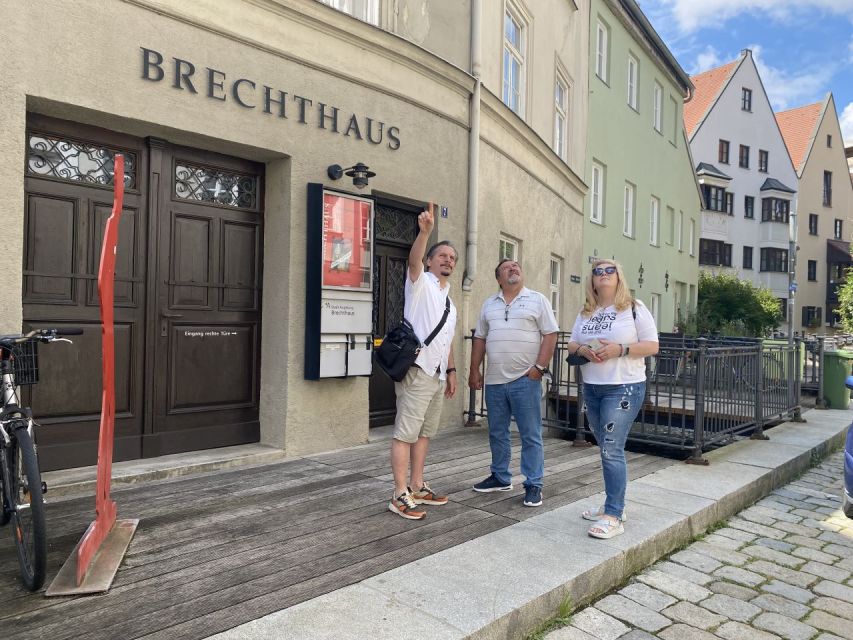
- Mozart and Brecht connections: you’ll see the birthplace sites tied to music and literature
- Schaezlerpalais finish: a building that survived World War II without a scratch
- Customizable walk: your guide adjusts the highlights on the spot
Starting at Fuggerei, where Augsburg’s civic story begins
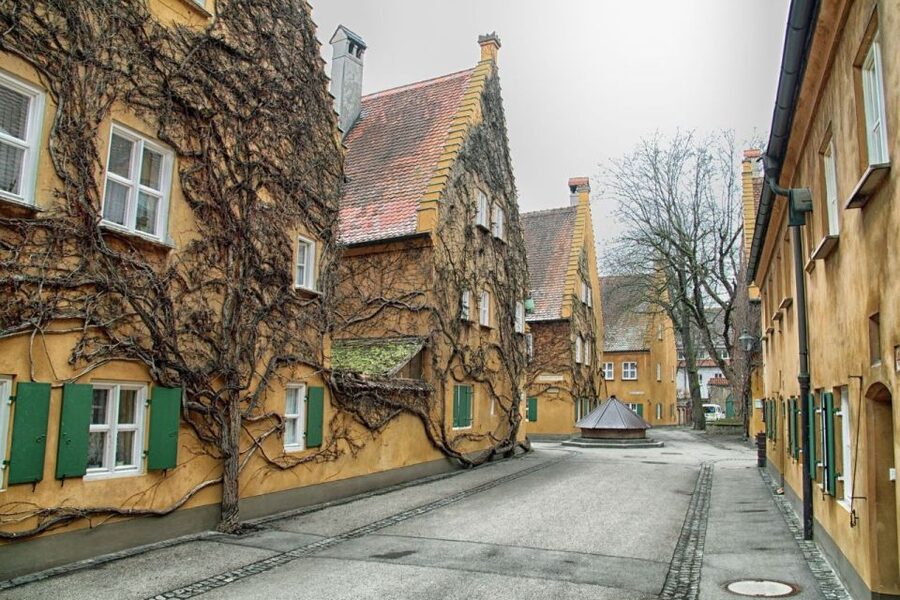
You meet at the Fuggerei, and that is a smart choice. Instead of starting with a monument, you start with a system: a social settlement created by the Fugger family that is still part of Augsburg’s identity. It’s one of those places where history stops being abstract. Even if you only know the name Fugger from books or museum labels, standing in the setting makes it click.
The best part is how your guide frames it. They connect the Fuggerei to the idea that Augsburg was not just important because of emperors and walls, but because ordinary people lived here in a real civic world. You also get a sense of how the city’s wealth and influence helped shape social life, not just big-ticket buildings.
Practical tip: plan on comfortable walking shoes. This is a walking tour in the old city, and the route is built for city-center sightseeing rather than long breaks.
A few more Augsburg walks and trips to compare
- Historical Walking Tour of Augsburg / Historische Führung
★ 4.7 · 41 reviews - Classic city tour in the World Heritage City of Augsburg
★ 4.0 · 41 reviews - Leipzig: City History Canal Sightseeing Tour on a Motorboat
★ 4.7 · 7,671 reviews
Roman origins in 15 B.C., then the provincial-capital era
From the Fuggerei onward, you’ll hear how Augsburg grew from a Roman foothold into something bigger. The tour tells the story that Augsburg was founded as a Roman colony in 15 B.C., and that it went on to become the capital of a province within the Roman Empire. That is a lot to fit into two hours, but the guide approach keeps it focused.
Here’s what you should take away: Roman Augsburg wasn’t just a date in a timeline. It explains why the city’s later importance made sense. When a Roman settlement anchors a region, later power centers often build on those routes, institutions, and layout patterns. You can feel the logic as you walk, even when you’re not staring at ancient stones the whole time.
This context also helps with everything you’ll see next. The Town Hall, the major families like the Fugger, even Augsburg’s later role in Swabia, all land with more meaning once you understand the city’s imperial background.
Augsburg Town Hall and its 6-floor claim to fame
The Augsburg Town Hall is one of those sights that sounds like a trivia fact until your eyes see the scale. This tour highlights it as the first building in the world to have 6 floors. That detail matters because it signals ambition and engineering confidence. It wasn’t a small civic office. It was a statement that Augsburg’s administration, wealth, and trade needed a proper vertical stage.
I like that this stop stays grounded. You’re not just told it is famous. You’re shown why it is famous, and you connect the structure to the city’s rising stature over time. That turns a quick look at a façade into something you remember.
If you’re the kind of traveler who enjoys architecture only when it has a story attached, you’re in the right place. This stop gives you both.
Fugger power and the city that grew with it
The Fugger family shows up again and again in Augsburg, and the tour makes sure you understand why. You’ll hear how they founded the Fuggerei and what that says about how Augsburg operated. This is where local history becomes practical: the Fugger name isn’t just a surname, it’s a window into how economic power translated into city influence.
You should expect your guide to connect dots. When the city becomes a hub, wealthy families often shape institutions, housing, and public life. Augsburg is a strong example of that. It’s also a relief when you travel, because you stop feeling like you’re collecting isolated facts. Instead, you get a cause-and-effect chain.
What I think is valuable for you: this approach helps you walk through the city with a “why” in mind. That makes the streets, squares, and landmark clusters more meaningful, even if you have only a short time window.
More walking tours in Augsburg:
- Augsburg: Walking Tour with Fuggerei
★ 4.6 · 2,245 reviews - Augsburg’s Water Management System – City Walking Tour
★ 4.5 · 168 reviews - Augsburg: Illuminated Guided Evening Walking Tour
★ 4.6 · 67 reviews
Mozart’s father and Brecht’s birthplace: culture stops that feel human
Two stops on this tour bring the city closer to modern cultural life. You’ll see Wolfgang Amadeus Mozart’s father’s birthplace, and you’ll also explore the birthplace of the acclaimed German artist and writer Berthold Brecht.
These aren’t random celebrity sightings. With the Roman and civic story in your head, you start noticing how Augsburg fits into broader German culture. The guide’s job here is to keep it human. Birthplaces are emotional anchors, and they also help you understand why a city earns a place in literature and music history.
How to get the most out of these stops: listen for the connection points. A good guide will explain what kind of artistic life those families or figures were connected to, and how the city’s environment helped shape creativity. Even when the details are brief, the context is what makes the moments stick.
Schaezlerpalais at the end, a WWII survivor that still matters
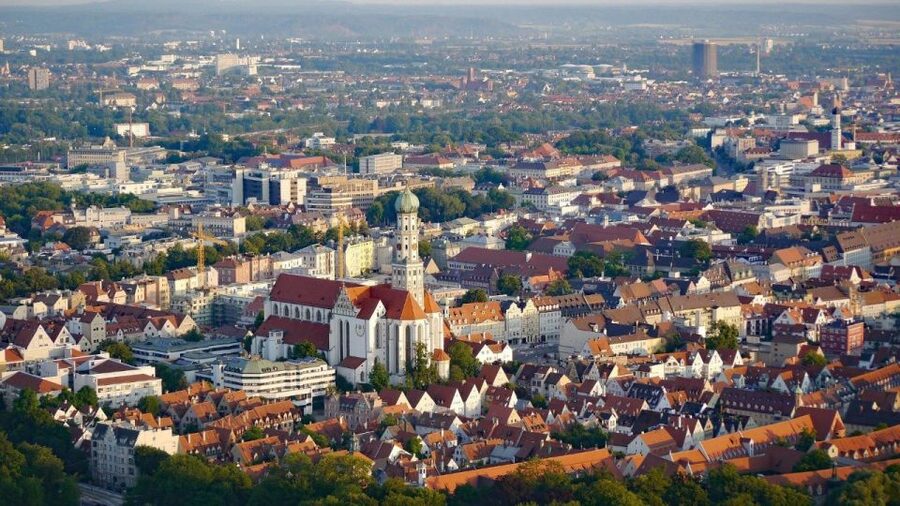
The tour finishes at the Schaezlerpalais. The standout detail is that it survived World War II without a scratch. That turns it into more than an elegant end point. It becomes a marker of continuity, the kind of place where you can sense history didn’t just start or stop at one era.
I like endings like this because you leave with a grounded feeling. You’ve walked through Augsburg’s Roman start, its civic ambition, and famous cultural connections. Then you end with a building that endured a major break in European history. It helps you understand why some cities feel layered. Augsburg is not only “old.” It’s a living place that had to survive real events.
How the 2-hour private format works in real life
This is a private group tour for up to 15 people, lasting about 2 hours. That duration is ideal when you want major highlights without turning your day into a full-day commitment. It’s also a sweet spot for storytelling, because a guide can build momentum instead of rushing.
The private format also matters. You can customize the highlights on the spot with your local guide. That’s useful if you care more about architecture, culture, or civic history. It also helps if you notice something as you walk and want a quick explanation, rather than sticking to a fixed script.
Languages are German and English, so you’ll get a live guide experience rather than an audio track. In my experience, live guidance is what makes short walking tours worth it, because the guide can adjust based on questions and attention.
Price and value: $362 per group up to 15 people
At $362 per group (up to 15), the pricing is designed for groups rather than solo travelers buying a single seat. Here’s how to think about value:
- If you have several people splitting the group cost, it can feel surprisingly reasonable for a private, guided, two-hour walk. For example, with 10 people the math lands around $36 per person, with 15 people it’s about $24 per person.
- If you’re booking for one or two, it may feel expensive compared with cheaper public tours. One piece of feedback highlights that concern directly, and it’s worth listening to if you’re traveling light.
Entrance fees are not included. That means the real cost depends on whether any stops require tickets, and how you plan to handle those. If you want a tour that stays entirely outside ticketed interiors, you may get more straightforward value.
My practical take: this is best when you can fill the group or when you strongly prefer private pacing and live tailoring. If you want maximum savings per person, you’d compare alternatives.
Who should book this Augsburg highlights tour
This works especially well for you if:
- You want a guided route through Augsburg’s top landmarks without doing planning gymnastics
- You care about Roman roots, civic development, and how major families shaped the city
- You like culture connections, like Mozart’s family link and Brecht’s birthplace, explained in context
- You want a guide who will adjust what you see based on your interests
It may be a weaker fit if:
- You need wheelchair-friendly access. This tour is not suitable for wheelchair users, likely because of the walking route in the old city area.
If you’re a first-timer in Augsburg with limited time, this gives you a strong overview. If you’re returning, the Roman and civic framing can add a new layer to places you thought you already knew.
Should you book it? My decision guide
Book it if you want a compact, private way to understand Augsburg from 15 B.C. to modern cultural connections, and you value a guide who can adjust the emphasis on the fly. Meeting at the Fuggerei and ending at the Schaezlerpalais is a smart structure, because it tracks the city’s story from social civic life through survival and continuity.
Skip or compare if price is your top priority and you’re traveling as a single person or couple. In that situation, a cheaper public walking tour might cover many of the same famous sights, while this one shines most when you can spread the group cost and enjoy the tailored, private feel.
FAQ
Where is the meeting point for the tour?
Meet at the Fuggerei.
How long is the Augsburg historical highlights private walking tour?
The tour lasts 2 hours.
How much does the tour cost?
It is $362 per group, up to 15 people.
Is this a private tour?
Yes. It is a private group tour.
What languages are the live guides?
The tour guide speaks German and English.
What is included in the price?
A local professional tour guide is included, along with the private guided tour.
Are entrance fees included?
No, entrance fees are not included.
Can I cancel for a full refund?
Yes. You can cancel up to 24 hours in advance for a full refund.
Is there an option to reserve and pay later?
Yes. You can reserve now and pay later.
Is the tour suitable for wheelchair users?
No, it is not suitable for wheelchair users.
Newest Augsburg reviews on the site
- Historical Walking Tour of Augsburg / Historische Führung★ 4.7 · 41 reviews
- Augsburg: Express Walk with a Local★ 4.8 · 3 reviews
- Augsburg: Illuminated Guided Evening Walking Tour★ 4.6 · 67 reviews
- Augsburg’s Water Management System – City Walking Tour★ 4.5 · 168 reviews
- Classic city tour in the World Heritage City of Augsburg★ 4.0 · 41 reviews
- Augsburg: Walking Tour with Fuggerei★ 4.6 · 2,245 reviews
Historical Tours, compared.
City History Canal Sightseeing Tour on a Motorboat
Read our review →


Browse the lists this tour appears in