
Reviewed · CITY TOURS
Augsburg’s Water Management System – City Walking Tour
Augsburg’s water tells a bigger story than you expect. On this 2-hour walk, I love how you can feel history underfoot with the cobblestones of Old Town, and then follow it to the Lech canals where the water route is still right there in front of you. One possible drawback: the tour leans hard into historical facts, so if you want lots of personal anecdotes, it may feel a bit more data driven than chatty.
You’ll see Augsburg’s best-known fountains along the way, including the Augustus fountain, plus Merkur and Herkules, and your local guide ties it all to Augsburg’s UNESCO World Heritage water management system. Optional and free of charge is the elysium® sound amplification system, which means clear audio even on busier streets if you bring a smartphone with internet and headphones.
I’d recommend this if you like walking city stories that actually explain how places worked. The tour starts in the heart of Augsburg at the Tourist Information Center, and you’ll want comfortable shoes because this is real Old Town cobblestone time.
In This Review
- Key points that make this tour worth your time
- Why Augsburg’s Water System Lands Perfectly in 2 Hours
- Meeting in the City Center, Then Following the Water Through Old Town
- Old Town Cobblestones and Why Fountains Matter More Than Decoration
- The Lech Quarter Walk: Canals, Cobblestones, and Red-Roofed Streets
- Rotes Tor Waterworks: The Oldest Existing Waterworks You Can Actually Visit
- Fountain Tour Mode: Augustus, Merkur, and Herkules
- The Guide Factor: Clear Facts, Strong Teaching, and the Right Expectations
- Optional elysium® Audio: When It Helps, and How to Use It
- Price and Value: 14,00€ Plus 3,00€ for a Guided UNESCO Walk
- Who Should Book This Augsburg Water Management Tour
- Should You Book the Augsburg Water Management System Walk?
- FAQ
- Where do I meet the guide?
- How long is the Augsburg water management system walking tour?
- What does the tour cost?
- What languages are available for the live guide?
- Is the tour wheelchair accessible?
- What is included in the price?
- Do I need a smartphone for the elysium® audio?
- Are entry tickets included for attractions?
- Are food and drinks included?
- Can I cancel for a refund?
Key points that make this tour worth your time
- UNESCO World Heritage system, explained through street stops tied to Augsburg’s 22 water management elements
- Lech quarter canals you can actually walk alongside, not just read about
- Rotes Tor waterworks, described as the oldest existing waterworks in central Europe
- Fountain highlights on a single route, including Augustus, Merkur, and Herkules
- Live guide in German or English, focused on how the system worked and why it mattered
- Optional elysium® audio using only your smartphone and headphones
Why Augsburg’s Water System Lands Perfectly in 2 Hours

This is one of those city walks where the time limit is a gift. You are not trying to see everything in Augsburg, you are trying to understand one connected theme, Augsburg’s water management system, which is recognized as a UNESCO World Heritage Site. The guide brings context to several of the system’s 22 elements, so the story clicks even if you are not a water-nerd going in.
What I like most is that the tour stays practical. You are outside, moving, and seeing where the water goes, where it was controlled, and where it made civic life possible. Even if the science is not the point, the human logic is. Cities need clean water, reliable flow, and maintenance, and Augsburg’s approach has been refined for centuries.
The result is that after the walk, you can look at Augsburg and not just see pretty buildings. You start to notice how the city’s design respects water routes, storage, and public fountains.
More walking tours in Augsburg:
- Augsburg: Walking Tour with Fuggerei
★ 4.6 · 2,245 reviews - Augsburg: Illuminated Guided Evening Walking Tour
★ 4.6 · 67 reviews - Historical Walking Tour of Augsburg / Historische Führung
★ 4.7 · 41 reviews
Meeting in the City Center, Then Following the Water Through Old Town
You start at the Tourist Information Center, in the city center, and then you head off on foot right away. The pacing is built for an easy but continuous walk, roughly two hours of getting from stop to stop without long transfers.
The Old Town cobblestones are part of the experience, not a nuisance. I love that the route encourages you to slow your step and notice details while your guide is explaining how the water system shaped the city. If you have ever taken a history tour that stays mostly theoretical, this one is different because you are always in the place the story is about.
One practical note from the vibe of the tour, it can run with very small groups. That usually means you get more attention, and you can ask questions. On rainy days, you will still be walking, so dress for wet or cold weather and plan to keep moving.
Old Town Cobblestones and Why Fountains Matter More Than Decoration
Augsburg’s fountains are not just street ornaments. On this tour, you learn to see them as part of how water was managed and shared in everyday life. When you stand near a fountain and hear the guide connect it to the broader system, the site stops being only pretty and starts being functional in your mind.
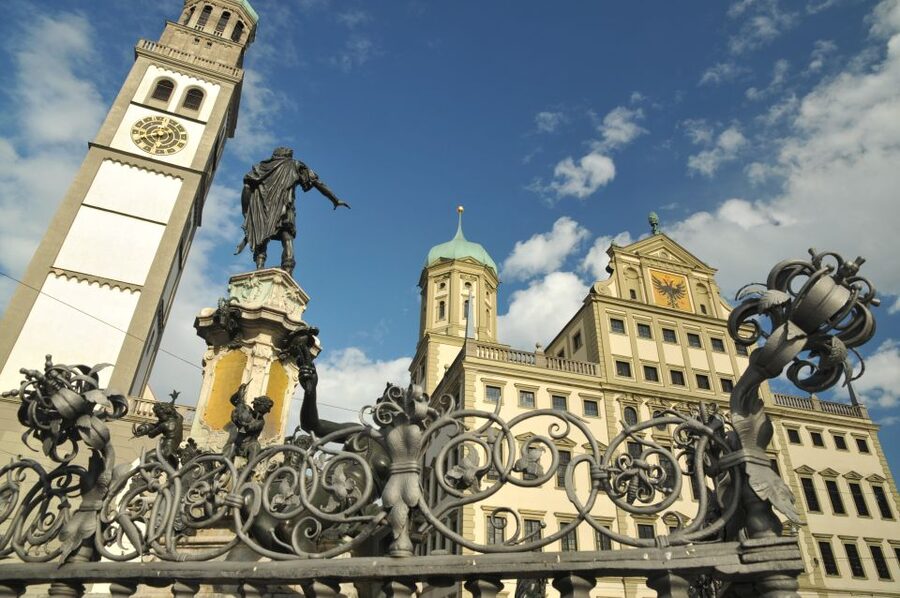
Along the route, you’ll admire multiple fountains, including the Augustus fountain, plus Merkur and Herkules. I found that the guide’s structure helps you remember each one by linking it back to the big picture of the water management system. That is valuable because it turns random sights into a coherent walk.
Also, fountains are great “pause points.” You can take a moment to look up at the surrounding architecture, then back down to how the water is presented. It gives your brain time to catch up with the facts your guide is sharing.
If your goal is to understand urban planning before you even know what you are looking at, this kind of fountain-focused history is a strong fit.
The Lech Quarter Walk: Canals, Cobblestones, and Red-Roofed Streets
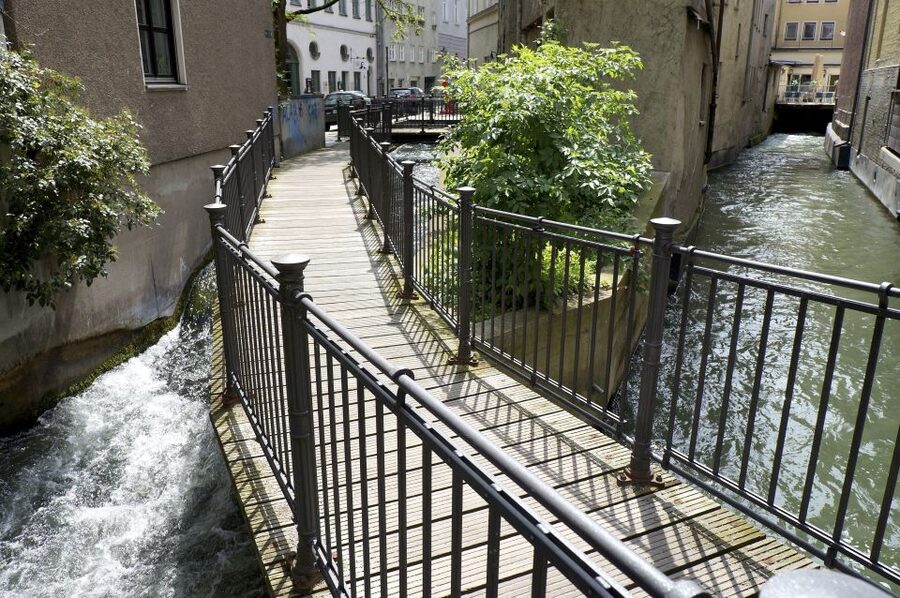
Then comes the Lech quarter, where the story becomes visible in a very direct way. You walk along small, historic canals tied to the city’s water management, and the setting helps you understand the role of water in daily movement through town.
You will pass cobblestone streets and see red-roofed houses, which gives the Lech quarter that close-to-the-ground, lived-in feel. Even if you are not measuring water flow, you can sense it. The canal edges and the way the streets relate to them make the topic easier to follow than if you were only seeing distant monuments.
This is also where I think the tour works for different learning styles. If you like visual cues, the canal is your cue. If you like walking and asking questions, the guide’s explanations make the canal stop more than a photo opportunity. And if you are a “how did this function” person, you get to connect the physical route to the system concept.
Bring patience for slow moments. The best understanding comes when you take a few seconds to look in both directions along the canal rather than only stopping for the front view.
A few more Augsburg walks and trips to compare
- Classic city tour in the World Heritage City of Augsburg
★ 4.0 · 41 reviews - Augsburg: Historical Highlights Private Walking Tour
★ 4.9 · 9 reviews - Augsburg: Express Walk with a Local
★ 4.8 · 3 reviews
Rotes Tor Waterworks: The Oldest Existing Waterworks You Can Actually Visit
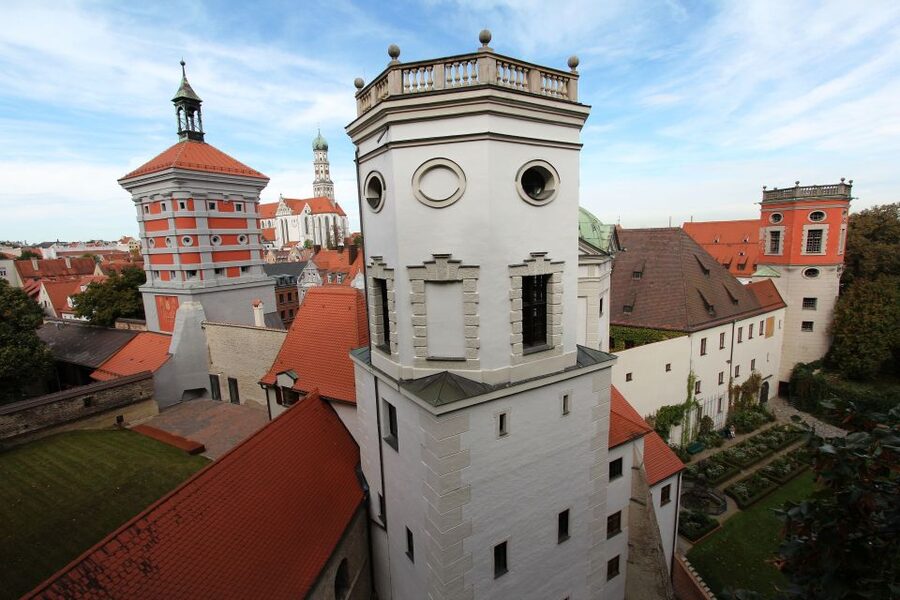
Rotes Tor is the stop that feels like a turning point. It is the waterworks area at an imposing location, and you learn about it as the oldest existing waterworks in central Europe. That phrasing is specific, and it matters, because it signals you are not just touring an idea. You are standing near infrastructure that has survived.
What I like about making this the “waterworks” moment is that it gives you a payoff. You spend the earlier part of the walk learning the logic of Augsburg’s water management system, and then the guide brings you to a physical site that embodies it.
Even without technical explanations, you can get the value here. When a city’s survival depends on water, its public works become part of its identity. The UNESCO angle feels more real because you can see how long a city has been investing in maintenance and reliability.
If you want to get more out of this stop, slow down and listen carefully to how the guide frames the waterworks within the system. The more you connect the site to earlier stops, the more the Rotes Tor moment lands.
Fountain Tour Mode: Augustus, Merkur, and Herkules
The fountain sequence is one of the highlights because it gives you multiple landmark points without turning the walk into a scavenger hunt. You’ll admire the Augustus fountain, and also see the Merkur and Herkules fountains.
Each fountain gives you another “chapter” in the story. I found it helps to mentally treat fountains like public interfaces. They were places people could rely on, and they were also visible markers that a city cared about water access. When the guide connects them to the system, the fountains become clues.
Also, fountains are perfect for short breaks built into the tour. When your guide explains, you can stand with enough space to listen, then look around and see how the fountain fits into the wider streetscape. It’s a simple way to keep energy up during a two-hour walk.
If you are photographing, you will probably want to keep your camera away during the first minute at each fountain. Listen first, then shoot when you understand what you are looking at. It makes the photos more meaningful afterward.
The Guide Factor: Clear Facts, Strong Teaching, and the Right Expectations
Your guide plays a huge role here, and the tour’s style is pretty consistent. One guide example that stands out is Brigitte Plonner, who is praised for making Augsburg’s water management easy to understand, with clear, vivid explanations and real enthusiasm. That kind of teaching matters because the subject can sound technical, but it doesn’t have to feel heavy.
At the same time, be aware of the tone. Some people found the delivery very fact focused and more historical than story driven. That does not make it bad. It just means you should go in expecting the emphasis to be on how the system worked and what it represented.
If you like history that is specific and anchored in place, you’ll likely enjoy it a lot. If you prefer lots of jokes, personal anecdotes, or emotional storytelling, you might find it a bit dry at times.
A practical tip: bring your questions to the fountains and canal stops. The guide is the bridge between what you see and what it meant.
Optional elysium® Audio: When It Helps, and How to Use It
One smart perk is the optional elysium® sound amplification system. You do not need to rent anything. You use your own smartphone, plus headphones, and you need an internet connection.
This is especially useful when you are walking through busy areas or outdoors where it can be hard to hear a guide over street noise. Even if your hearing is fine, it can make the facts easier to follow, which improves the whole value of the tour.
If you decide to use it, test your headphones before you meet the group. Then plan to keep your phone accessible without dropping it, since you will be walking and looking at the canal or fountains.
If you prefer not to use any audio assist, you can skip it. The tour is set up as a live guided walk, so you are not dependent on the system to enjoy the experience.
Price and Value: 14,00€ Plus 3,00€ for a Guided UNESCO Walk
The tour price is 14,00€ plus an administration fee of 3,00€ per person. Some listings summarize it around $20, but the stated structure is the euro price plus that extra fee.
Is it worth it? For me, it makes sense because you get a live guide for two hours, and you cover multiple meaningful elements of a UNESCO recognized water system. This is not a long museum slog where you pay for entry and sit quietly. You pay for guided interpretation across the city, and that’s where value shows up.
What you should budget separately: entry tickets to attractions are not included, and food and drinks are not included. If you plan to eat afterward, factor that into your schedule so you do not feel rushed right after the tour ends.
The tour also includes skip the ticket line. The practical takeaway is that if there are timed-entry elements involved at stops, you are not stuck waiting in the same way you might on your own.
Overall, the pricing feels reasonable for a themed UNESCO walk with a guide, especially if you care about understanding what you are seeing rather than just collecting photos.
Who Should Book This Augsburg Water Management Tour
You should book this if you want a walking tour that helps you interpret a city feature you can see but might not understand at first glance. It suits people who like:
- walking Old Town streets and learning what makes them work
- UNESCO sites explained in real-world locations
- guided focus on practical systems, not only architecture
It might be less ideal if you mainly want entertainment and stories. The emphasis here is facts and historical context, and that is exactly what many people come for, but it is also your best signal for whether the tour matches your taste.
If you have mobility needs, the tour is listed as wheelchair accessible. You still should wear comfortable shoes because cobblestones are part of what you are there to experience.
Should You Book the Augsburg Water Management System Walk?
If you are in Augsburg and you want more than surface sightseeing, I think this is a strong yes. You get a tight two-hour format, several standout stops, and a guide who can explain why Augsburg’s water system is considered important enough for UNESCO.
Book it especially if you enjoy learning through place based details, canals, fountains, and historic waterworks. And if you are the type who likes structure and clear information, you will likely come away feeling informed and satisfied.
If your preference is for lighter storytelling and fewer facts, adjust your expectations in advance. Go for the systems and the sites, not for anecdotes.
In the end, this is one of those tours that makes Augsburg feel more readable, like you suddenly understand the logic behind what you are seeing.
FAQ
Where do I meet the guide?
Meet your guide in front of the Tourist Information Center.
How long is the Augsburg water management system walking tour?
The tour lasts 2 hours.
What does the tour cost?
The price is 14,00€ per person plus an administration fee of 3,00€.
What languages are available for the live guide?
The tour is offered with live guiding in German and English.
Is the tour wheelchair accessible?
Yes, it is listed as wheelchair accessible.
What is included in the price?
Included are a tour guide and the walking tour, plus optional use of the elysium® sound amplification system and an administration fee.
Do I need a smartphone for the elysium® audio?
If you want to use the elysium® sound amplification system, you need your smartphone with internet connection and headphones.
Are entry tickets included for attractions?
No, entry tickets to attractions are not included.
Are food and drinks included?
No, food and drinks are not included.
Can I cancel for a refund?
Yes. You can cancel up to 24 hours in advance for a full refund. You can also reserve now and pay later, with payment due later.
Newest Augsburg reviews on the site
- Historical Walking Tour of Augsburg / Historische Führung★ 4.7 · 41 reviews
- Augsburg: Historical Highlights Private Walking Tour★ 4.9 · 9 reviews
- Augsburg: Express Walk with a Local★ 4.8 · 3 reviews
- Augsburg: Illuminated Guided Evening Walking Tour★ 4.6 · 67 reviews
- Classic city tour in the World Heritage City of Augsburg★ 4.0 · 41 reviews
- Augsburg: Walking Tour with Fuggerei★ 4.6 · 2,245 reviews
City Tours, compared.

1-Hour City Tour by Boat with Guaranteed Seating
Read our review →
City History Canal Sightseeing Tour on a Motorboat
Read our review →


Browse the lists this tour appears in