
Reviewed · CITY TOURS
All of Berlin (city panorama)
Berlin clicks into focus fast. This 4-hour All of Berlin panorama walk strings together the city’s big-name sights with clear guide commentary in Spanish. I especially like how you cover major squares and landmarks without spending hours planning, and how the guide turns stops like Checkpoint Charlie into real context. The one drawback to consider: this is a walking-heavy route, and memorial moments are emotionally intense.
You’ll also appreciate the practical setup. It’s capped at 25 people, you get a mobile ticket, and you end back where you started near the Berlin TV Tower. Still, if you do not walk well for long stretches, you may feel rushed or uncomfortable on a route built for seeing a lot in a short time.
In This Review
- Key highlights worth knowing before you go
- Why this 4-hour Berlin panorama tour is such a smart shortcut
- Starting at the Berlin TV Tower, then getting your bearings at Alexanderplatz
- Neptune Fountain, Rotes Rathaus, and Nikolaiviertel’s “old Berlin” contrast
- The UNESCO world heritage museum complex entrance: what you’ll notice even in a quick stop
- Berliner Dom and Lustgarten: the center of gravity for views and meaning
- Unter den Linden and Staatsoper: a royal-way street that still feels alive
- Bebelplatz and Neue Wache: where context matters more than photos
- Gendarmenmarkt and Checkpoint Charlie: beauty near a border reminder
- Potsdamer Platz, the Holocaust Memorial, and the Brandenburg Gate finish
- What the Spanish-only guide format means for you
- Walking pace and who should choose this format
- Included and not included: the practical value check
- Should you book the All of Berlin city panorama tour?
Key highlights worth knowing before you go
- Spanish-only guide keeps the storytelling tight and consistent, and the guide’s historical focus is a standout.
- A fast start at Alexanderplatz helps you orient immediately, before you move into older central areas.
- Most stops are free to enter, with one included paid admission at Neue Wache.
- Memorial stops are built into the route, so you get context, not just photos.
- Ends at Brandenburg Gate with a clear finish at one of Berlin’s most recognizable viewpoints.
- Small group size (up to 25) makes it easier to hear instructions and keep the pace.
Why this 4-hour Berlin panorama tour is such a smart shortcut
If Berlin is your first time in Germany’s capital, the hardest part is often figuring out what goes where. This tour is designed to solve that problem quickly. In about four hours, you move through the city center like you’re drawing a line from Berlin’s modern hub to its most famous landmark finish.
The price, $25.58 per person, makes the value feel straightforward when you compare it to the cost of piecing together entry fees, transport, and your own planning time. Most of the stops are free to enter, so you spend your money on the guide and the route, not on constant admissions. Add in that it’s run by cultourberlin, with a Spanish guide, and you’re paying for direction and context rather than just sightseeing.
One more reason this works: the route mixes places you can stroll around with viewpoints and squares tied to bigger themes. You are not stuck inside a van. You’re walking through parts of Berlin that feel best on foot, and that matters for getting oriented.
A few more Berlin walks and trips to compare
- Berlin: Reichstag, Dome and Government District Guided Tour
★ 4.7 · 18,288 reviews - Berlin: 1-Hour City Tour by Boat with Guaranteed Seating
★ 4.3 · 16,993 reviews - Berlin: TV Tower Standard Entrance Ticket
★ 4.4 · 15,883 reviews
Starting at the Berlin TV Tower, then getting your bearings at Alexanderplatz
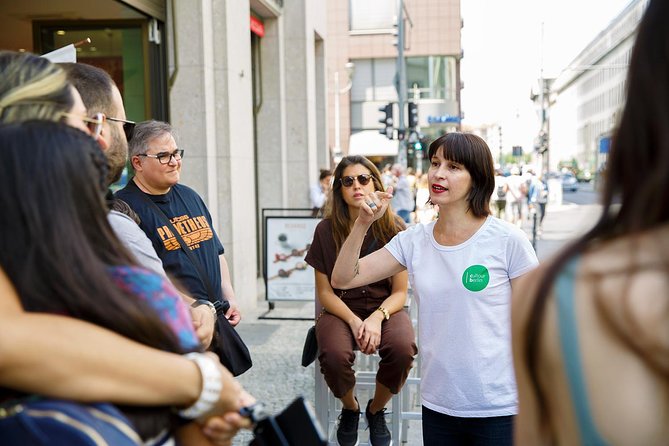
You kick off at the Berlin TV Tower area, Panoramastraße 1A (by the entrance). The start point is handy because it anchors the tour right in the city’s core, so you are not burning time crossing the whole city before you even begin.
From there, you head to Alexanderplatz, and this is more than a quick photo stop. The guide gives context about the square, why it looks the way it looks, and what makes it feel like the pulse of Berlin. You also get an easy introduction to landmarks you will see later, which helps everything click when you move toward the historical center.
A couple of quick early wins keep the momentum up:
- You learn what makes the Neptunbrunnen symbolically important, centered in Alexanderplatz.
- You spot and discuss the Rotes Rathaus, including the role of the Berlin council, so government buildings do not feel random.
These first stops are short, but they are built to set your mental map before the route deepens.
Neptune Fountain, Rotes Rathaus, and Nikolaiviertel’s “old Berlin” contrast
One thing I like about this tour is the contrast. After modern Alexanderplatz energy, you zoom into the kind of place that helps you understand Berlin’s layering.
You start with Neptunbrunnen, where the guide explains what the Neptune Fountain is and why it is a symbol. Even if you have seen fountains before, this helps you read the visual language of the square instead of just walking past it.
Then comes Rotes Rathaus, the red council building. You get a quick explanation of what the council does, which gives you a better sense of why this area matters for civic life, not just architecture.
Next, you head toward Nikolaiviertel, which the tour frames as one of the more original parts of Berlin, tied to its roughly 800-year foundation. The guide also points out the meaning of St Georg in the square. Stops like this are short, but they help you connect symbolism with place, and that is where a guided walk beats self-guided wandering.
The UNESCO world heritage museum complex entrance: what you’ll notice even in a quick stop
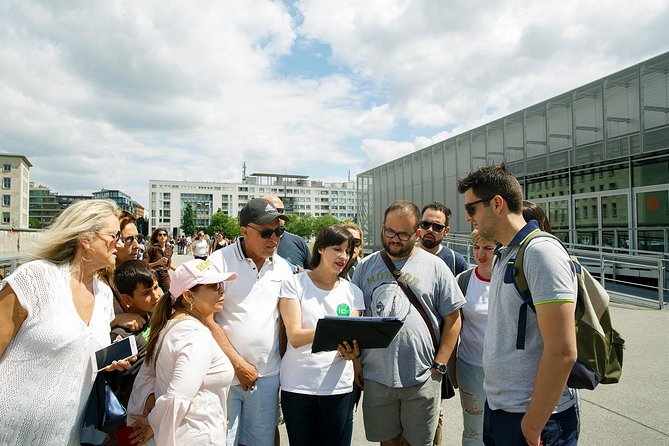
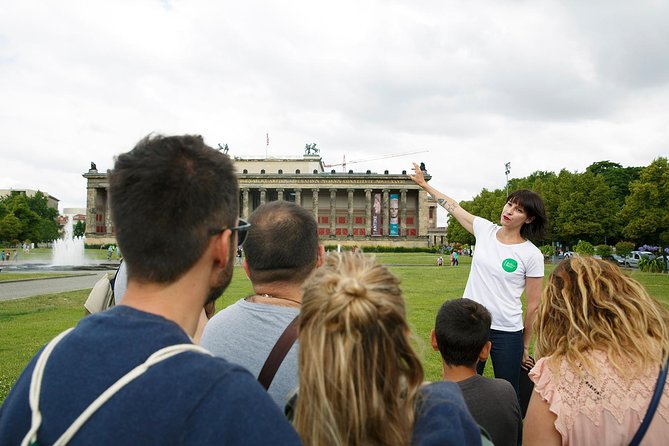
Midway through the central area, you pause to see the entrance of a complex of buildings tied to UNESCO world heritage. The description is brief, so you should not expect a long museum visit. But you will still get value from the guide’s framing, because UNESCO sites tend to feel “important” without you always knowing how.
This is the kind of stop that helps you do two things:
- Recognize what you are looking at.
- Understand why it is protected or significant.
Even a short look can make later self-exploration more meaningful, because you will know what to pay attention to if you return.
Same city, a different way to spend the afternoon:
- Berlin: Boat Tour Along the River Spree
★ 4.4 · 11,252 reviews - Discover Berlin Half-Day Walking Tour
★ 5.0 · 9,624 reviews - Berlin: Government District around the Reichstag Guided Tour
★ 4.7 · 8,447 reviews - Berlin: Reichstag, Plenary Chamber, Cupola & Government Tour
★ 4.6 · 8,422 reviews
Berliner Dom and Lustgarten: the center of gravity for views and meaning
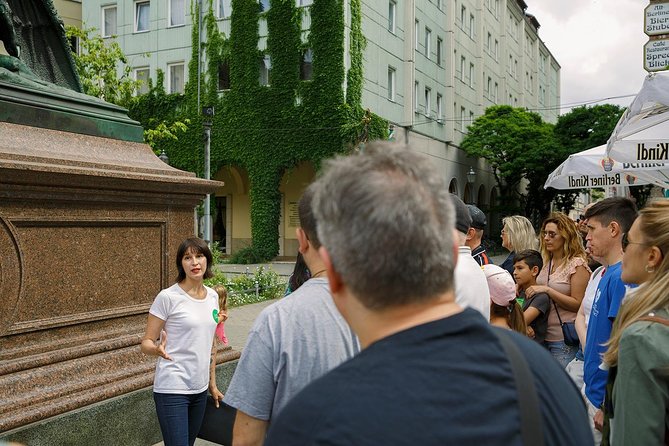
As you push deeper into the central historic zone, you move into two classic sights: Berliner Dom and Lustgarten.
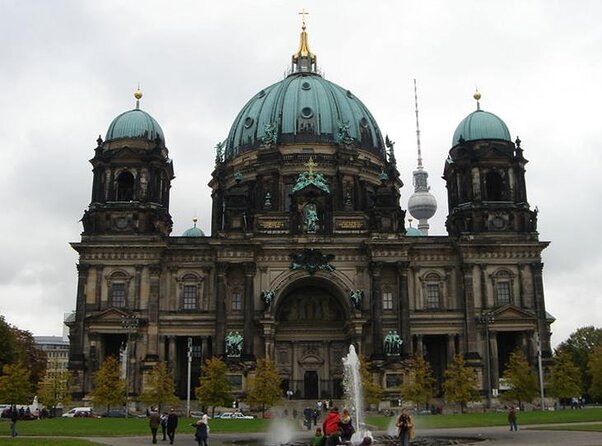
At Berliner Dom, you are not just admiring a dome from the outside. The guide explains the building’s beauty and decoration, and gives you the history behind the church, including what made it possible. That last bit matters. It turns the structure from a postcard into a story you can actually explain to someone later.
Then you step into Lustgarten, described as a remarkable city center spot. You learn what the garden is, why it has that name, and what makes it beautiful in context. Even though your time here is short, the guide turns it into a “read the space” moment. You are learning how Berlin’s public spaces were shaped, and why they sit where they do.
You will feel this section as a transition from “I am seeing famous buildings” to “I understand how the city arranged itself.”
Unter den Linden and Staatsoper: a royal-way street that still feels alive
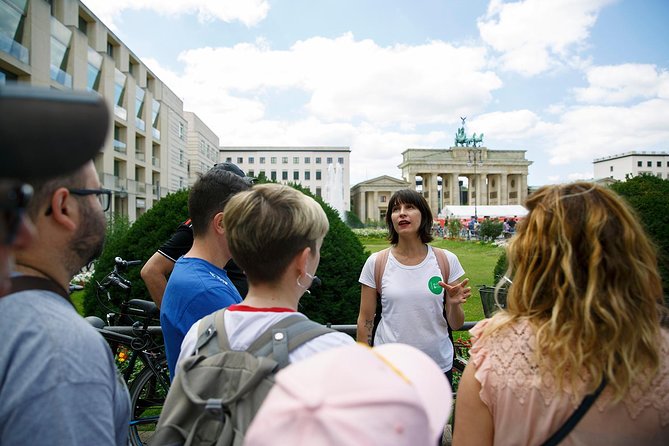
From Lustgarten, you move onto Unter den Linden, one of Berlin’s main streets. The tour connects it to a specific idea: it used to be a royal way from the palace to Tiergarten. Nowadays it is one of the most visited streets in Berlin.
That detail changes how you experience it. You start looking for the long, ceremonial feel of the corridor, not just where shops or pedestrians cluster. And because you are walking with a guide, you are getting the “why” behind the street’s role, which is easy to miss if you are just following your own route.
You then stop at Staatsoper Unter Den Linden, where the guide focuses on the opera house and helps you understand what makes the building’s presence on the street so notable. Even if opera is not your thing, this is still worth it because you are learning how a city brands itself through culture.
Bebelplatz and Neue Wache: where context matters more than photos
The middle of this tour gets heavier in a purposeful way. You reach Bebelplatz, and the guide talks about why the square was important during the 20th century. You also learn about the memorial in the middle of the square and why a figure connected to Hitler’s propaganda minister played an important role there.
That is a lot for a relatively short stop, and that is exactly why guided commentary matters. Without the guide’s explanation, the square can feel like a few monuments and then you move on. With it, you start to see the square as part of a broader story about power, messaging, and what was allowed to be public.
Next is Neue Wache, where the tour includes the admission. The guide explains that this memorial has been adapted to different times, and you see a piece of art by Käthe Kollwitz. Here, expect the tour to slow down mentally, even if the walk time is still efficient. This is the point where you stop thinking, “We’re checking boxes,” and start thinking, “This place is trying to teach something.”
Gendarmenmarkt and Checkpoint Charlie: beauty near a border reminder
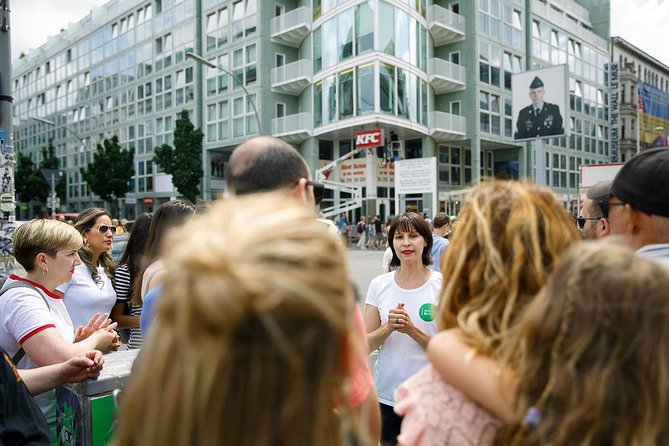
After the memorial-focused section, you get a visual reward at Gendarmenmarkt. The tour frames it as one of Berlin’s most beautiful public squares, built around harmony between the concert hall ensemble and two church buildings with towers. The point is not only aesthetics. The guide’s comments help you see why the layout feels balanced.
If you need a break from intensity, this is the spot to exhale. It still connects to Berlin’s identity, but in a way that feels gentler and more about how the city looks.
Then you move to Checkpoint Charlie, where you get a different kind of meaning. The tour describes it as a reminder of the former border crossing, the Cold War, and the partition of Berlin. You also have more time here to take it in.
This pairing, beauty first and border reminder second, is one of the tour’s strongest pacing choices. Berlin is not one mood. It is many moods next to each other.
Potsdamer Platz, the Holocaust Memorial, and the Brandenburg Gate finish
The last stretch is where the route becomes unforgettable for most people.
At Potsdamer Platz, you get a quick look at what the area was like from the beginning until today. The tour presents it as one of the most modern parts of Berlin right now. Even with a short stop, this gives you a bridge between the past-heavy areas and the present-day city.
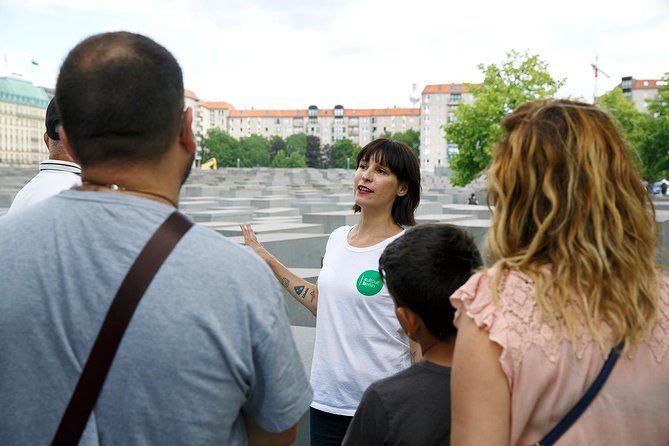
Then comes the Holocaust Memorial, officially the Memorial to the Murdered Jews of Europe. The guide helps you visit it and understand the meaning of its author. The key here is that you are not just taking a picture next to it. You are learning how to interpret what you see and why it is structured the way it is.
Finally, you end at Brandenburg Gate. The finish is set up for big views, including sights toward Tiergarten, the Parisien square, and the Adlon Hotel. The guide also covers the history behind the place. After four hours of moving, this ending is the reward moment: you leave with one clear anchor that helps you remember the route.
What the Spanish-only guide format means for you
This tour is operated by a Spanish-speaking local guide, and the commentary is in Spanish only. That is great if you understand Spanish or want to practice in a real-world setting. It can be a limitation if you need English or if you rely on quick translation for details.
The good news is that the tour is short enough that the guide’s explanations are likely to be clear and structured. And because the group stays together, you are not constantly trying to catch up.
One detail I really like: the tour has a maximum of 25 travelers, which helps the guide keep control of the group. Smaller groups generally make a walking tour feel calmer, and you can ask brief questions at stops when timing allows.
Walking pace and who should choose this format
This is built as a “see a lot without wasting time” walk. That means you should be comfortable with moving through the city for about 4 hours. The tour specifically notes it is not recommended for people who have trouble walking properly for long distances.
If you are traveling with mobility limitations, you might find the pace too demanding. Also, memorial stops can require standing and absorbing information. Plan for a route that mixes short walking segments with brief pauses.
On the other hand, if you enjoy history but want a day plan that does not turn into chaos, this tour can be a perfect match.
Included and not included: the practical value check
You get a Spanish-speaking local guide included. The tour does not include private transportation, so you should expect to rely on public transport connections or the walkable setup around the central sights.
Entry-wise, most stops are listed as free admission. Neue Wache is the one admission that is included, so you do not need to worry about paying at that specific point.
You also get a mobile ticket, which is helpful if you hate ticket-printing and prefer phone-ready details.
Should you book the All of Berlin city panorama tour?
Book it if you want a guided, efficient way to orient yourself in Berlin and see major landmarks in a single half-day. You get strong historical and cultural commentary, and the route is structured so you are not stuck guessing what matters at each stop. The standout strength is the guide storytelling, including the kind of historical detail people highlight, and the route also covers both iconic beauty and serious memorial context without making you plan it all.
Skip it or consider another option if you do not walk well for long distances, or if Spanish-only narration would feel like a barrier. This is not a “sit back and ride” tour. It is a steady city walk where you get your bearings through the guide’s explanations.
If you want one solid Berlin orientation experience you can build the rest of your trip around, this one is an easy yes.
Newest Berlin reviews on the site
- Day trip through multicultural city landscapes & photo highlights★ 5.0 · 5 reviews
- Berlin in one day – day tour with an expert guide★ 5.0 · 14 reviews
- Berlin on Your Own – Deluxe Round Trip from Warnemünde Port★ 4.5 · 5 reviews
- Berlin sightseeing boat tour on the Spree★ 4.0 · 93 reviews
- Berlin by Night Private Tour – All Must-See Sites Magically Lit Up at Night★ 4.0 · 5 reviews
- Berlin & Sachsenhausen Concentration Camp Tour from Warnemünde and Rostock Port★ 4.5 · 60 reviews
- Berlin & The Third Reich Private Guided Tour★ 5.0 · 3 reviews
- Berlin and Car Culture Tour★ 4.5 · 8 reviews
City Tours, compared.
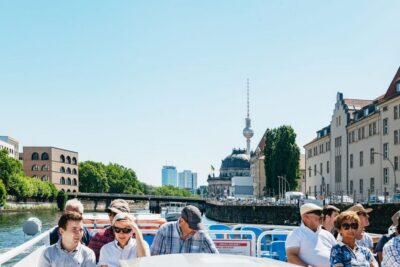
1-Hour City Tour by Boat with Guaranteed Seating
Read our review →
City History Canal Sightseeing Tour on a Motorboat
Read our review →
Browse the lists this tour appears in