Reviewed · BERLIN TOURS
Wall Tour Berlin – Fates, Heroes & Love Stories
Berlin’s wall stories still hurt. This 2-hour guided Wall Tour Berlin follows the line where East and West collided for decades, explaining how the border strip was built and how people tried to escape. You will stop at major wall memorial areas, get a clear sense of how the system worked, and hear human stories that make the Cold War feel painfully personal.
What I really like is the mix of “how it worked” and “what it cost.” You’ll hear about border construction details and then about the fates tied to the Wall, including tactics used by the GDR and the Stasi against young people, plus a couple of love stories because that, too, happened. A fair consideration: the subject matter is heavy, and it requires good weather since the tour is outdoors and depends on you moving between sites.
In This Review
- Key highlights to look for on this Berlin Wall tour
- Why this tour works so well in Berlin’s street-level context
- The route and timing: what you can expect in 2 hours
- Stop 1 at Nordbahnhof: the ghost stations you can still picture
- Stop 2 and 3 at the Berlin Wall Memorial: from denial to construction
- Stop 4: the memorial window and the Wall’s dead unknowns
- Stop 5 at Bernauer Strasse: seeing the border strip layout
- Stop 6 at Ackerstraße: the Church of Reconciliation site
- Stop 7 at the Wall zone: passenger agreements and pressure on young people
- Stop 8: apartment windows, exits, and jumps to death
- Stop 9: tunnel escapes and propaganda changes
- Stop 10: Conrad Schumann and the moment that ran ahead of the system
- Stop 11: kidnappings as a border enforcement tool
- Stop 12: the loudspeaker war, Berlin at full volume
- Stop 13 and the finish at Mauerpark: the Wall story continues after the fall
- Value and booking sense: why the price feels fair
- Who this tour is best for, and who might want a different style
- Quick practical notes you should plan around
- Should you book Wall Tour Berlin: Fates, Heroes and Love Stories?
- FAQ
- How long is the Wall Tour Berlin experience?
- How much does the tour cost?
- Where does the tour start and where does it end?
- Does the tour include tickets for memorial sites?
- Do I get a mobile ticket?
- What is the maximum group size?
- Is the tour suitable for most people?
- What happens if the weather is bad?
- Is there a minimum number of travelers needed?
- Can I get a full refund if I cancel?
- What tram can I take after the tour ends?
Key highlights to look for on this Berlin Wall tour
- Nordbahnhof ghost stations and why some S-Bahn platforms mattered during the GDR era
- Border strip mechanics, from Ulbricht’s denial to the sealed-off reality in 1961
- Bernauer Strasse viewpoints, where you can visually connect the dots along the former boundary
- Ackerstraße and the Church of Reconciliation site, where East and West worshipped together
- Escape methods and propaganda, including a legendary tunnel story and Conrad Schumann
- Loudspeaker war, a reminder that Berlin’s conflict was not only physical
Why this tour works so well in Berlin’s street-level context
Berlin is one of those cities where history is not locked in a museum room. It is on the street. This tour leans into that reality by walking the border zones in a tight loop, so the story stays grounded in the geography you can actually see.
At a cost of $19.66 per person and about 2 hours total, it also has practical value. You get a guided framework that helps you interpret what you see later on your own, without needing a full day to piece things together. And since the memorial stops list free admission tickets, your money goes to the guiding, not entry fees.
A few more Berlin walks and trips to compare
- Berlin: Reichstag, Dome and Government District Guided Tour
★ 4.7 · 18,288 reviews - Berlin: 1-Hour City Tour by Boat with Guaranteed Seating
★ 4.3 · 16,993 reviews - Berlin: TV Tower Standard Entrance Ticket
★ 4.4 · 15,883 reviews
The route and timing: what you can expect in 2 hours
This is designed as a compact, easy-to-follow walk with a group cap of 25. The tour starts at Elisabeth-Schwarzhaupt-Platz, 10115 Berlin and finishes at Oderberger Straße (Oderberger Str.), 10435 Berlin-Bezirk Pankow, near the Bernauer Strasse corner. The end point is also convenient for transit, since you can take the M10 tram to the main train station.
Most stops are short, often 5 to 10 minutes, which matters. In Berlin, you do not want to spend your time with long lectures while you stand around. Here, you get quick hits at each key location, with just enough time to absorb the setting before moving on.
Stop 1 at Nordbahnhof: the ghost stations you can still picture
You begin at the entrance to the Nordbahnhof S-Bahn area on Gartenstrasse. From here, the guide sets the tone by explaining the idea of ghost stations, S-Bahn stops that existed in the border era but did not function for normal travel.
That detail matters because it shows you a less obvious side of control. It was not only fences and walls. It was also movement itself, the ability to pass through a space, or not. If you ever wonder why border control can feel total, this is one of the first answers you get.
Stop 2 and 3 at the Berlin Wall Memorial: from denial to construction
The next stretch is at the Berlin Wall Memorial, with multiple brief stops. First, you get a short overview of how a wall could be built in the first place, basically the logic and planning behind it. Then you move into the 1961 timeline, including the moment when Walter Ulbricht put forward the famous line that there was no intention to build a wall, followed by the sealed border and wall construction within less than two months.
Even if you already know the broad story, this sequence is useful. It reminds you that political messaging and engineering decisions moved quickly. And it gives context for what you will see later along Bernauer Strasse, because the visuals only make sense once you understand the “why” and “how” behind the border strip.
Same city, a different way to spend the afternoon:
- Berlin: Boat Tour Along the River Spree
★ 4.4 · 11,252 reviews - Discover Berlin Half-Day Walking Tour
★ 5.0 · 9,624 reviews - Berlin: Government District around the Reichstag Guided Tour
★ 4.7 · 8,447 reviews - Berlin: Reichstag, Plenary Chamber, Cupola & Government Tour
★ 4.6 · 8,422 reviews
Stop 4: the memorial window and the Wall’s dead unknowns
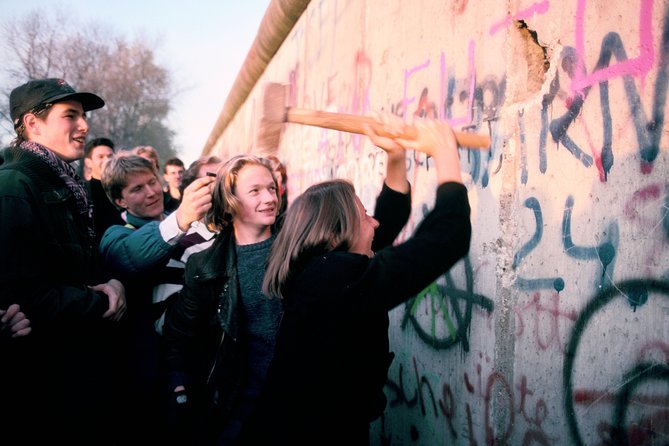
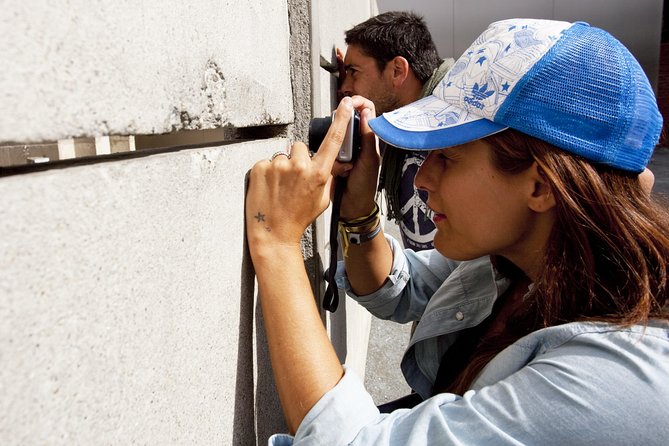
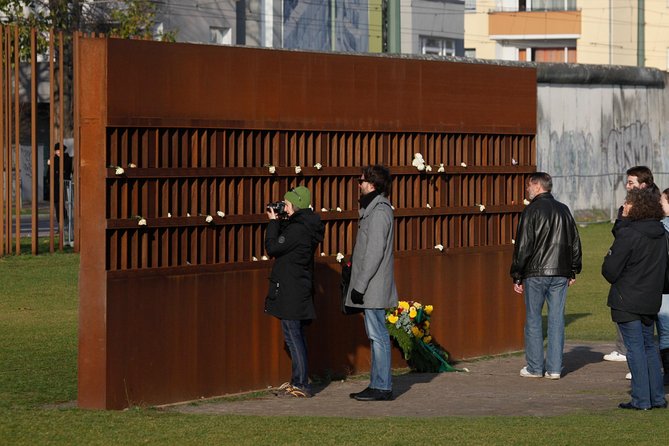
At another point inside the memorial area, the guide addresses deaths at the Wall between 1961 and 1989. The important point here is that the exact number of victims is not fully known, and at the memorial window you hear about the specific lives behind those statistics.
This stop is where the tour becomes emotionally direct. You are not just learning concepts. You are being asked to notice that freedom had consequences, and that many families were affected in ways that never fit into a simple timeline.
Stop 5 at Bernauer Strasse: seeing the border strip layout
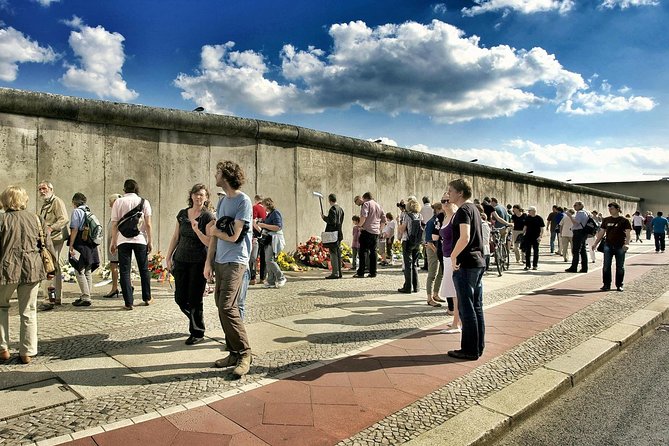
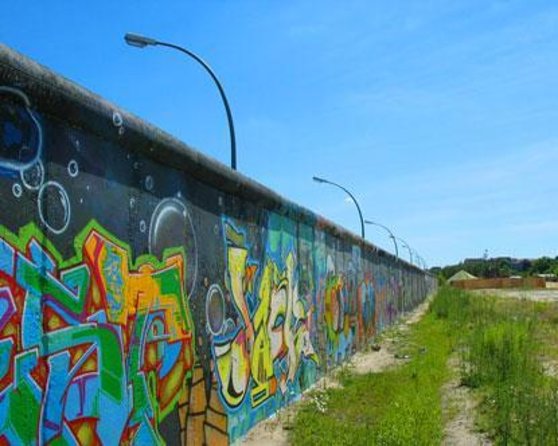
From the memorial area, you go to a viewing platform where you can take in an overview of the border strip along Bernauer Strasse. This is a turning point on the walk, because suddenly you can connect earlier explanations to the physical line where things happened.
When history is spread across a city, your brain needs a map. This is that moment. Stand still, look carefully, and let the guide’s interpretation help you “read” the space you are seeing.
Stop 6 at Ackerstraße: the Church of Reconciliation site
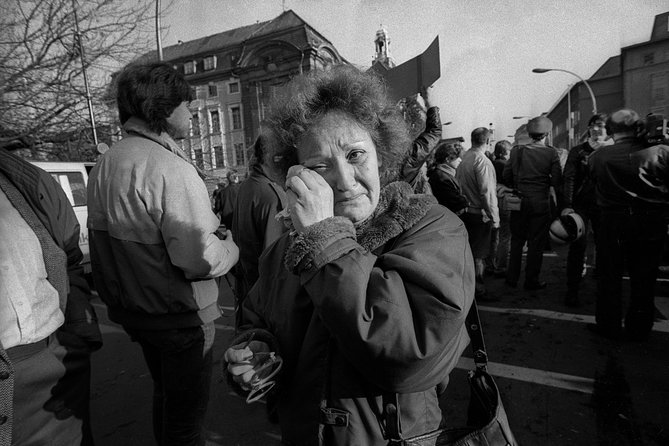
Not far from Ackerstraße, you reach the chapel linked to the Church of Reconciliation. This is where the church once stood in the middle of the border strip, and it’s one of those details that makes the whole era feel both more human and more absurd.
You learn that people from East and West Berlin celebrated services together there, until the border closure changed what was possible. Later, the tour explains what happened to the church after the border closed. Even in a short stop, this theme lands: the border did not only divide people socially and politically, it rearranged daily spiritual life too.
Stop 7 at the Wall zone: passenger agreements and pressure on young people
Back along the line, you hear about passenger agreements between the Senate of Berlin (West) and the GDR, agreements meant to make the Wall more permeable. The practical meaning is clear: even when the border was meant to be hard, there were still controlled ways to manage movement.
Then the tour turns to the harsher side, explaining how the GDR abused children and young people for its own purposes. That part of the story can be hard to absorb, but it matters because it shows propaganda was not only adult politics. It was also training, messaging, and psychological pressure aimed at the next generation.
Stop 8: apartment windows, exits, and jumps to death
This is one of the most sobering segments. Along Bernauer Strasse, residential buildings once had windows and exits oriented toward West Berlin, even though the houses themselves were on GDR territory. The guide covers the tragedies connected to that setup, including how fear and despair pushed hundreds to jump from windows to their deaths.
You also get time to look at pictures and videos at your leisure. That gives you control over your own pace. If you want to skim, you can. If you want to sit with details, you can do that too.
Stop 9: tunnel escapes and propaganda changes
The 1960s saw tunnel escapes, and you visit the area connected to a tunnel story that has become legendary. The tour explains how the GDR shifted the narrative for propaganda purposes, turning events that should have highlighted the desire to escape into something it could frame to control public belief.
This stop is valuable because it teaches a key point about total systems: even when reality forces change, power tries to rewrite what the events “mean.” You start to see the border as not only physical, but informational.
Stop 10: Conrad Schumann and the moment that ran ahead of the system
You hear about the escape of border guard Conrad Schumann. His jump is among the most famous escape attempts connected to the Wall, and the tour explains that he was wanted until the fall of the GDR.
This is where the Wall story gets complicated in a way that feels true to life. Sometimes people flee from fear or desperation. Sometimes they flee because an entire structure breaks internally for one person at the worst possible moment. And then the state responds.
Stop 11: kidnappings as a border enforcement tool
Kidnappings are described as part of the GDR’s core methods. You learn that former employees from the NVA and People’s Police were targeted, and that kidnappings were carried out by criminal gangs acting on orders from the GDR from the West back into the GDR. One kidnapping ended in death, and the guide shares that outcome.
This section is not just about what happened, but what it reveals: the border did not stop at the Wall. It reached across borders through coercion and violence, even when people were not inside the immediate barrier zone.
Stop 12: the loudspeaker war, Berlin at full volume
The Cold War was not silent. It included a massive loudspeaker war in Berlin, with the West and East making each other’s lives difficult through audio harassment.
It’s easy to forget that the conflict included everyday sensory pressure. This stop gives you a useful mental image for the era: you are not only dealing with fences, you are dealing with voices, messaging, and constant interruption.
Stop 13 and the finish at Mauerpark: the Wall story continues after the fall
Your tour ends right at Mauerpark. The guide ties the walking route back to the larger arc, explaining how the fall of the Wall fits into the story you followed along the border strip.
Ending at Mauerpark is smart for two reasons. First, it places closure in a place that feels like present-day Berlin, not just a memorial site. Second, it reminds you that the Wall era is not only something behind glass, it shaped what came next.
Value and booking sense: why the price feels fair
At $19.66 for roughly 2 hours, this tour offers a lot of concentrated context per hour. You get multiple stops that are all explicitly associated with major wall story sites, and each memorial-related stop lists free admission tickets, so you are not paying extra to access the spaces the guide is pointing out.
The group size cap of 25 can matter too. It is small enough that the guide can keep you on track, but not so tiny that the price feels like a private tour.
One practical caution from the rating pattern you should know: the average rating is 4.1 based on 9 reviews, and there have been complaints about a missing guide or no one meeting participants at the meeting point. That does not mean it will happen to you, but it does mean you should plan smart, arrive on time, and be ready to contact the provider if something feels off.
Who this tour is best for, and who might want a different style
This works well if you want structure. You will cover the border strip logic, escape stories, and the human impact without having to plan your own route across multiple sites. It is also a strong choice if you like guided interpretation, because each stop is linked to a specific theme, like ghost stations, tunnel escapes, Conrad Schumann, kidnappings, and the loudspeaker war.
If you prefer a lighter tone, or you get overwhelmed by death and trauma content, you might find this emotionally intense. The tour is short, but the material is heavy. It helps to mentally prepare for that and bring the mindset that this is education, not entertainment.
Quick practical notes you should plan around
- Wear shoes you can walk in comfortably. The tour is outdoors and you are moving between several sites.
- The tour requires good weather, and poor weather can lead to a different date offer or a full refund.
- Bring a charged phone. You get a mobile ticket.
- Transit is easy at the end, since the M10 tram can take you toward the main train station.
Should you book Wall Tour Berlin: Fates, Heroes and Love Stories?
I’d book it if you want a compact Berlin Wall overview that connects the geography to the story. It hits the big themes you need, including how the border strip was built, why certain movement points mattered, and how ordinary life got crushed by a system that used terror, propaganda, and coercion.
I’d pause if you know you cannot handle intense topics like deaths, jumps from buildings, kidnappings, and abuse of young people. Also, due to the occasional no-show complaint tied to meeting at the start point, show up early and stay alert to the meeting area.
If you’re the type who wants to understand what you are seeing on Bernauer Strasse the first time, this tour earns its value. You’ll leave with a clearer mental map of the Wall line and a story that sticks because it is tied to real places.
FAQ
How long is the Wall Tour Berlin experience?
It is about 2 hours.
How much does the tour cost?
The price is $19.66 per person.
Where does the tour start and where does it end?
It starts at Elisabeth-Schwarzhaupt-Platz, 10115 Berlin, and ends near Bernauer Str./Ecke Oderberger Str. at Oderberger Straße, 10435 Berlin-Bezirk Pankow.
Does the tour include tickets for memorial sites?
The memorial stops listed include free admission tickets.
Do I get a mobile ticket?
Yes, the tour uses a mobile ticket.
What is the maximum group size?
The tour has a maximum of 25 travelers.
Is the tour suitable for most people?
The experience notes that most travelers can participate.
What happens if the weather is bad?
If it is canceled due to poor weather, you’ll be offered a different date or a full refund.
Is there a minimum number of travelers needed?
Yes. If the minimum isn’t met, you’ll be offered a different date or a full refund.
Can I get a full refund if I cancel?
Free cancellation is available up to 24 hours in advance for a full refund.
What tram can I take after the tour ends?
You can take the M10 tram to the main train station from the end area.
Newest Berlin reviews on the site
- Your ticket to The Wall Museum Berlin★ 3.0 · 60 reviews
- Rickshaw Tours Berlin – Groups of up to 16 people with several rickshaws★ 4.0 · 97 reviews
- Love and War in Berlin: Self-Guided Story Puzzle Walk★ 5.0 · 7 reviews
- Warnemuende Shore Excursion: Berlin Private Sightseeing Tour from Rostock★ 5.0 · 4 reviews
- eSIM for Germany and 34 European Countries★ 4.5 · 16 reviews
- Karl-Marx-Allee Tour: Life and Architecture in East Berlin★ 5.0 · 19 reviews
- Warnemuende Shore Excursion: Private Berlin Tour★ 4.5 · 27 reviews
- Walking on the Wall: 3-Hour Tour in Berlin★ 4.5 · 34 reviews
Berlin Tours, compared.
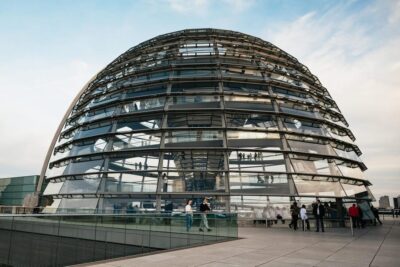
Reichstag, Dome and Government District Guided Tour
Read our review →
1-Hour City Tour by Boat with Guaranteed Seating
Read our review →
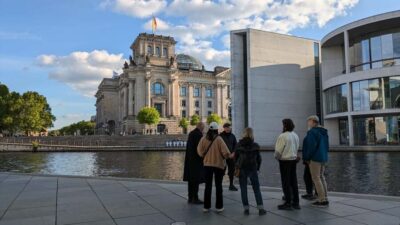
Government District around the Reichstag Guided Tour
Read our review →
Reichstag, Plenary Chamber, Cupola & Government Tour
Read our review →