
Reviewed · HISTORICAL TOURS
Quedlinburg UNESCO World Heritage Group Tour (private)
Quedlinburg is best understood on foot, with context. This private UNESCO tour packs more than 1,100 years of the city into a tight walk, from the market square to the Schlossberg and its collegiate church area. You get real orientation fast, plus the kind of local storytelling that turns buildings into characters.
I especially like how the route is built around Quedlinburg’s historic core. You’ll stop at major landmarks such as the town hall, St. Benedikti, and the Blasii church, then move through medieval lanes and half-timbered houses. The other thing I like is the Schlossberg focus, because that hill is the city’s dramatic high point, with stops like Klopstock House, the Lyonel-Feininger Museum area, and the castle gardens.
One thing to consider: the tour is only 2 hours, and the Schlossberg has cobblestones plus a steeper section. If your group is sensitive to incline, or you’re hoping for lots of time inside churches, you may feel a bit rushed since St. Servatii’s interior is not included.
In This Review
- Key highlights you’ll feel during the walk
- Quedlinburg’s UNESCO streets make sense when someone narrates them
- Meeting at the green city information office, then getting your bearings fast
- Old Town stops: town hall, St. Benedikti, Schuhhof, Blasii, and more
- Town hall and the market-square rhythm
- St. Benedikti and the church complex feeling
- Schuhhof and the texture of daily medieval life
- Die hell (the landmark listed as die hell) and street-level storytelling
- Blasii church and half-timbered context
- The half-cave museum: a quirky stop that breaks up the walking
- Schlossberg walk: Klopstock House, Lyonel-Feininger Museum area, gardens, and St. Servatii
- Klopstock House and the sense of named history
- Lyonel-Feininger Museum area and an art-focused pause
- Castle gardens: a breather with a purpose
- St. Servatii Collegiate Church highlight, without interior access
- The guide effect: what works best, and where it can wobble
- Half-timbered variety and famous names you can actually recall
- Culinary hotspot recommendations: what to do after the tour
- Price and group size: how $117 per group can work out well
- Practical tips so the cobbles and Schlossberg do not slow you down
- Should you book this Quedlinburg private UNESCO tour?
- FAQ
- How long is the private Quedlinburg UNESCO tour?
- Where does the tour meet?
- Is the tour private?
- What language is the live guide?
- What is included in the old town part?
- What’s included on the Schlossberg?
- Is St. Servatii Collegiate Church included inside?
- Is the tour suitable for families?
Key highlights you’ll feel during the walk
- Market-square start that keeps you from wasting time finding the right spots
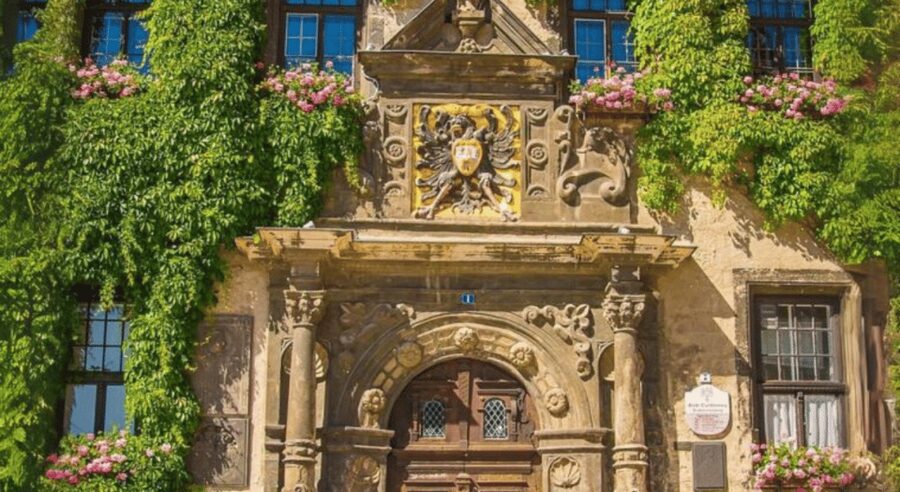
- Town hall and church stops that anchor the story of Quedlinburg’s old town
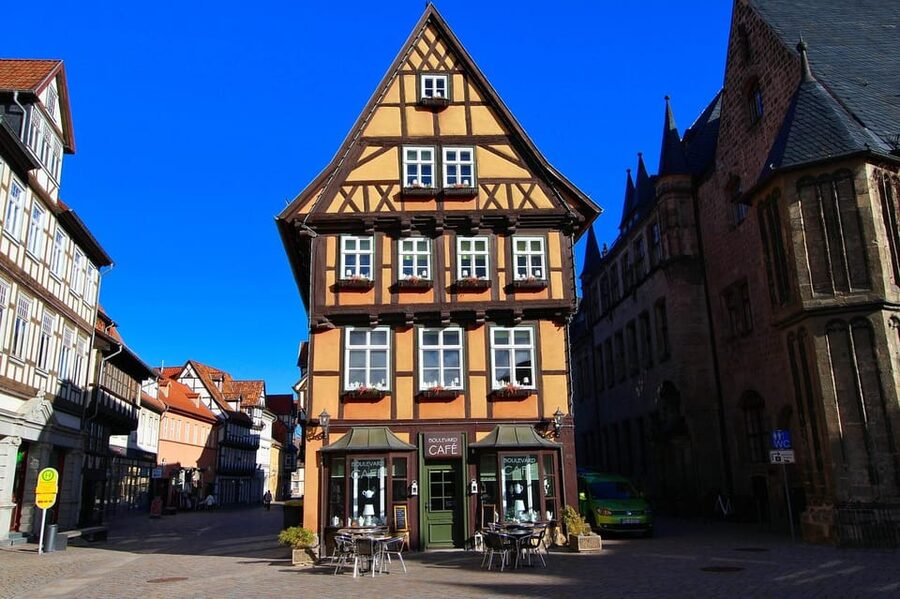
- Half-timbered architecture you can actually compare street by street
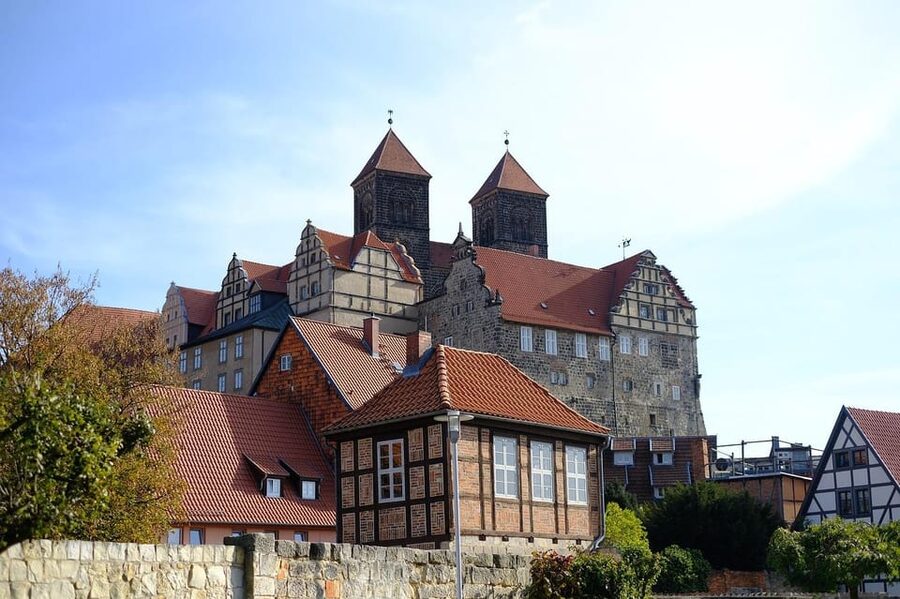
- Schlossberg route with Klopstock House, Lyonel-Feininger Museum area, and castle gardens
- St. Servatii Collegiate Church focus from the outside (inside is not part of this tour)
- Guide-led food recommendations for what to try after the walk
Quedlinburg’s UNESCO streets make sense when someone narrates them
Quedlinburg looks like a picture postcard, but without help you can miss the structure behind the beauty. The city is a UNESCO World Heritage site for a reason, and this tour is designed to show you what makes it function as a living history lesson, not just a collection of old buildings.
The route links the “everyday heart” of the town with the “big symbolic” area on the Schlossberg. That contrast helps you read the city. You’ll go from market-square civic buildings and churches to the hill where the collegiate church sits and where the atmosphere shifts from street life to something more monumental.
And because the guide is live and you’re in a private group, you’re not doing a grab-and-go checklist. You’ll get context for what you’re seeing and why it mattered over time, including names and famous personalities tied to Quedlinburg.
A few more Germany walks and trips to compare
- Leipzig: City History Canal Sightseeing Tour on a Motorboat
★ 4.7 · 7,671 reviews - Berlin: Natural History Museum Entrance Ticket
★ 4.6 · 3,382 reviews - Leipzig: 1.5-Hour Historical Walking Tour in German
★ 4.7 · 2,217 reviews
Meeting at the green city information office, then getting your bearings fast
Your tour starts right in front of the Quedlinburg city information office on the market square. The meeting point is just before the beginning of the tour, and the guide meets your group there, at the friendly city information spot marked in green.
This matters more than you might think. In old towns, the first 10 minutes can get messy, because the streets bend and signage can feel indirect. Having the guide meet you at the city information office helps you start clean, with no wandering for the start point.
Also, this is a private group. Price is set per group (up to 12 people), which makes the start time and pacing work better for mixed ages. Free entry for children and young people up to 16 also changes the family math in your favor.
Old Town stops: town hall, St. Benedikti, Schuhhof, Blasii, and more
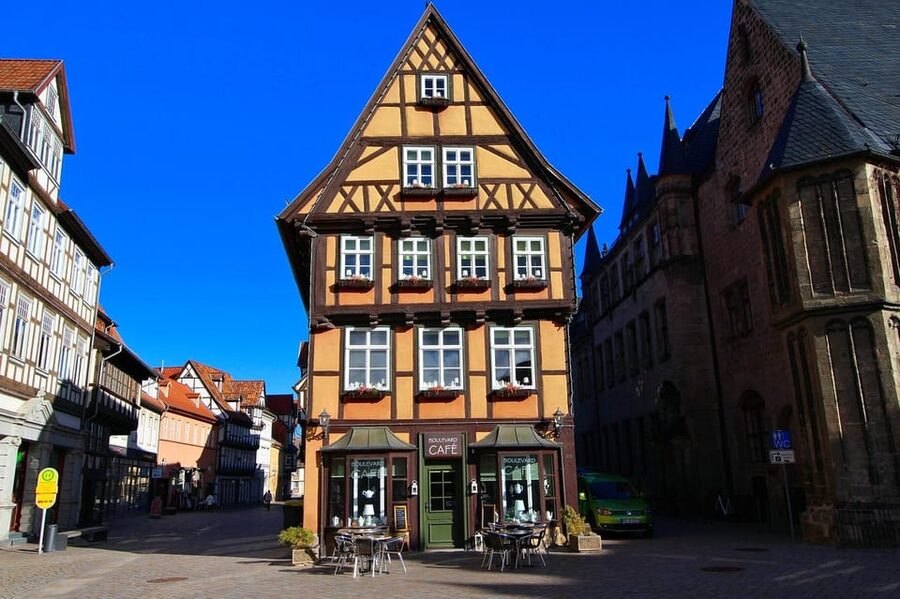
The walk through the historic old town is where you get the “bones” of Quedlinburg. You’ll move along a sequence of key places, each one reinforcing a different part of the story: civic power, faith, medieval everyday life, and the craftsmanship you still see in the half-timbered houses.
Town hall and the market-square rhythm
You begin in the market area and include the impressive town hall. This is the civic anchor. Even if you only glance at the façade at first, the guide’s explanations help you connect it to how Quedlinburg functioned as a community center.
The town hall stop is also useful because it sets your pace. Once you’ve got that first landmark, you can start “reading” the street layout instead of just looking at views.
Same city, a different way to spend the afternoon:
- Berlin: Reichstag, Dome and Government District Guided Tour
★ 4.7 · 18,288 reviews - Hamburg: Sex and Crime in St. Pauli Tour for Ages 18 +
★ 4.7 · 17,793 reviews - Berlin: 1-Hour City Tour by Boat with Guaranteed Seating
★ 4.3 · 16,993 reviews - Berlin: TV Tower Standard Entrance Ticket
★ 4.4 · 15,883 reviews
St. Benedikti and the church complex feeling
Next up is the market church of St. Benedikti. Churches in German historic centers are rarely only about worship. They’re also about long-term identity, art, and continuity.
If you like architecture and want to understand what makes a church façade feel different from one street to the next, this stop is worth paying attention to. It also gives you a clear point to orient your eyes before you move into narrower medieval lanes.
Schuhhof and the texture of daily medieval life
The tour includes the Schuhhof. The name suggests footwear and trade, and the presence of specific, named landmarks like this is exactly why a guided tour helps. Instead of walking past a building and wondering what it was, you get a short explanation that makes the streets feel lived-in.
Die hell (the landmark listed as die hell) and street-level storytelling
One of the included stops is a landmark noted as die hell. The wording can feel odd at first glance, but that’s often how medieval place names survive: not always in a way that translates smoothly into modern English.
In practice, a stop like this works because it gives the guide room for local stories. Those little facts are often what people remember later, even if they can’t describe every detail of a church façade.
Blasii church and half-timbered context
The Blasii church is another major religious stop, and placing it alongside the other landmarks helps you compare the style and role of different buildings. By the time you reach it, you’re already primed to notice construction details and street patterns.
This is also the section where half-timbered craftsmanship becomes more obvious. You can start noticing the variety in the way the timber framing and filling panels look from one building to another, which is one of the stated highlights of the tour.
The half-cave museum: a quirky stop that breaks up the walking
The old town portion includes the half-cave museum. A museum stop in the middle of an outdoor walk is a good rhythm change. It gives you a chance to reset your legs and your attention, while still staying on theme.
If you’re the type who enjoys small, specific sites rather than only “big photo monuments,” this half-cave stop is a nice inclusion.
Schlossberg walk: Klopstock House, Lyonel-Feininger Museum area, gardens, and St. Servatii
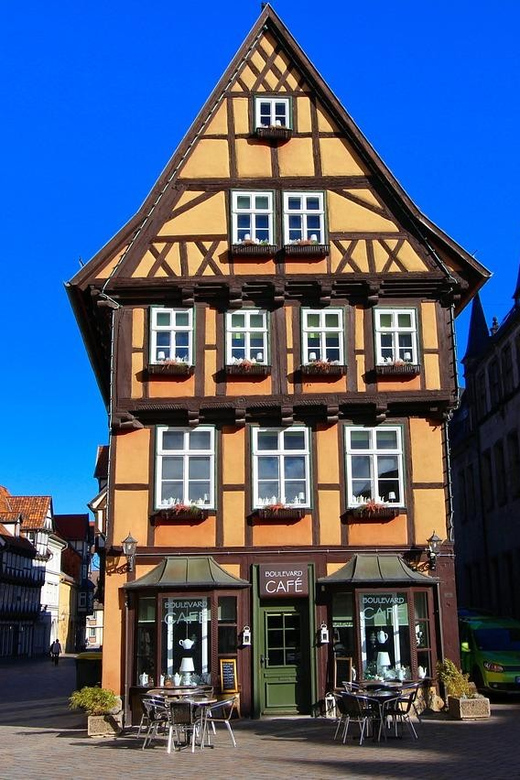
The Schlossberg is the peak experience, and you’ll feel that shift physically. Expect cobblestone paths and a steeper section as you climb. It’s not a deal-breaker for most visitors, but good shoes matter.
Once you reach the Schlossberg, the tour takes on a more panoramic mood. You’ll be oriented toward the collegiate church area, with stops connected to culture and art.
Klopstock House and the sense of named history
Klopstock House is included in the Schlossberg portion. Having a named stop like this turns the hill into more than a viewpoint. It becomes a place where people associated with Quedlinburg shaped its identity.
If you like connecting literature and culture to what you see, this stop gives you that link without turning the tour into a lecture.
Lyonel-Feininger Museum area and an art-focused pause
The tour includes the Lyonel-Feininger Museum. Even if you’re not spending long here, the inclusion is helpful because it signals that Quedlinburg is not frozen in time. It connects heritage with later cultural layers.
In a 2-hour tour, quick, well-placed art references help you avoid the “only medieval forever” feeling some visitors get when they expect purely historical sightseeing.
Castle gardens: a breather with a purpose
Castle gardens are also part of the Schlossberg section. Gardens on heritage sites are more than decoration. They create space between buildings and viewpoints, and they help you see the hill as a planned environment, not just a cluster of structures.
This stop is also a natural breathing point. If your group includes kids or anyone who needs slower moments, gardens give you a place to pause without losing the flow of the story.
St. Servatii Collegiate Church highlight, without interior access
The highlight of the tour is the Schlossberg, where the impressive collegiate church sits. The tour includes the St. Servatii Collegiate Church as a stop, but the inside is not included.
That’s important for expectations. If your dream is to see the interior, plan to add it separately on your own. If you mainly want exterior architecture, setting, and guided context, you’ll get what you came for.
The guide effect: what works best, and where it can wobble
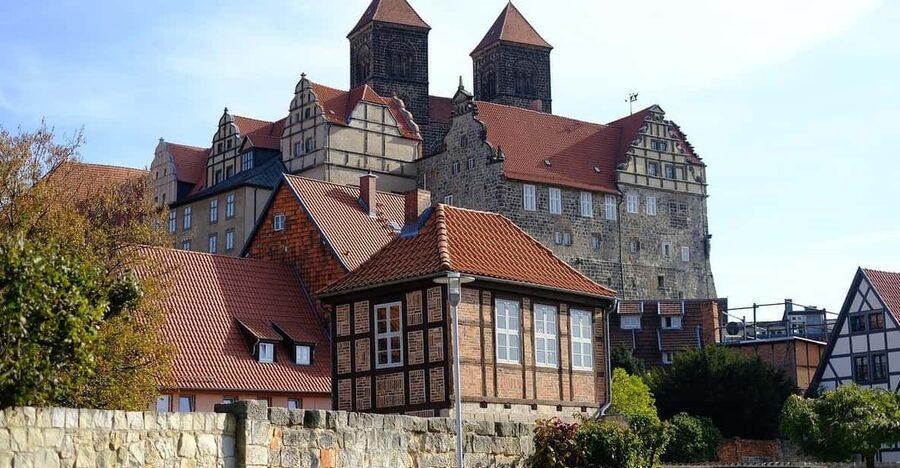
This tour lives and dies by the guide. And when it’s good, it’s really good: people praised the guide’s authentic enthusiasm and the way small stories made places feel connected. You can also sense the practical value of having someone steer you toward the right angles and the right details, because without guidance it’s easy to walk past meaningful corners and not realize it.
A guide named Klaus appears in the experience notes, and comments about his storytelling and knowledge were strongly positive. At the same time, there are also cautions: some people felt the guide spoke quickly enough to make listening harder, and others reported issues with pronunciation or general fit for kids.
So here’s the balanced take for you: if you’re comfortable with guided narration in German and your group can follow a brisk pace, you’ll likely enjoy the tour a lot. If you prefer slower speech, or you’re bringing children who need extra patience, you might want to set expectations that this is a compact walking tour with structured stops.
Half-timbered variety and famous names you can actually recall
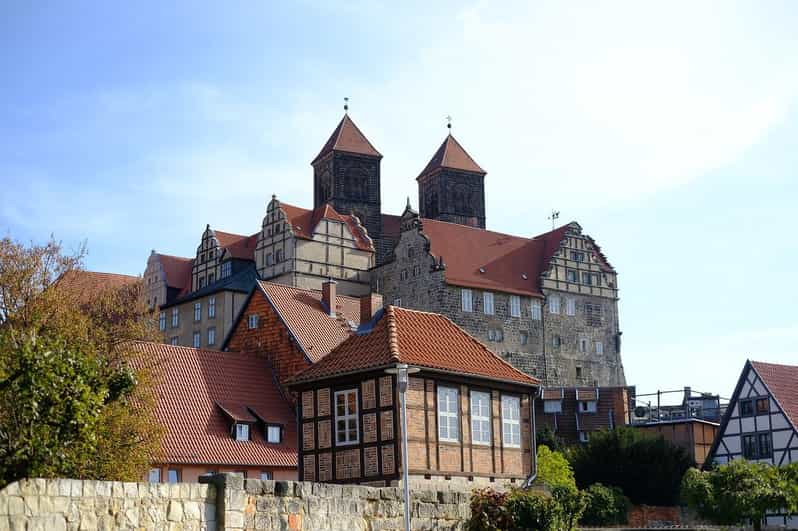
One of the tour highlights is admiration of the variety of half-timbered art. That’s a phrase that can sound generic until you see how a guide helps you compare.
On this walk, you’re not only looking at a single “pretty medieval façade.” You’re moving through the old town and then up to the Schlossberg, so you get a natural sequence of views. That makes it easier to notice differences: timber patterns, how buildings present themselves at street level, and how craftsmanship contributes to Quedlinburg’s overall character.
The tour also promises discovery of famous personalities from Quedlinburg. Those names matter because they keep the architecture from feeling like a museum display. Instead, you’re connecting the built environment to people who shaped the city, directly or indirectly.
Culinary hotspot recommendations: what to do after the tour
Another included piece is a presentation of culinary hotspots and recommendations. In a short tour, this can be one of the most practical “value adds,” because after 2 hours of walking, you want a plan for the next 2 hours, not a search marathon.
I’d use the guide’s food suggestions immediately, not later. Food recommendations are most useful when they come with local context, like what kind of meal to look for and where the timing tends to work out.
Price and group size: how $117 per group can work out well
The price is $117 per group, up to 12 people, for a duration of 2 hours. That structure is where the value often hides.
If you book with a full group of 12, you’re effectively paying under $10 per person. If you’re only a party of 2 or 3, it costs more per head, but you still get something you do not get on many walking tours: true private pacing, fewer awkward gaps, and a guide who can tailor attention to your group’s pace.
Children and young people up to 16 being free changes the equation for families. If you have kids, this can become one of the easiest budget-friendly ways to get guided context without paying extra for the young ones.
Also, this tour is listed as skipping the ticket line. Even if you’re mostly outside on foot, reducing delays for any paid elements makes the 2-hour window feel more like a real experience and less like waiting around.
Practical tips so the cobbles and Schlossberg do not slow you down
This tour runs in all weather conditions, so pack accordingly. Rain does not cancel the experience, which means you should plan for slick cobblestones and damp stone.
Here’s what you should do for comfort:
- Wear shoes with solid grip for cobblestones.
- Bring a rain layer if the forecast looks sketchy, because you’ll be outside a lot.
- If anyone in your group struggles with stairs or inclines, take the Schlossberg climb slowly and let the guide set pace.
The route includes a steeper section on the Schlossberg. It’s not described as extreme, but it is part of the tour design. You’ll enjoy it more if you treat it like a hill walk with stops, not like a flat stroll.
Language is German, so plan for that. If you’re not comfortable with German narration, your enjoyment may depend on whether your group can follow the guide’s pace and explanations.
Should you book this Quedlinburg private UNESCO tour?
I’d book this tour if you want a structured 2-hour way to understand Quedlinburg’s UNESCO sights without getting lost in the details. It’s a strong choice for groups that enjoy walking, architecture, and short stories that connect buildings to people. The Schlossberg focus is also a big reason to go, because the hill view and setting help you see what the city is really about.
Skip it or plan extra on your own if you specifically want to go inside St. Servatii, because interior access is not part of this tour. Also think twice if your group needs very slow narration in German. Some guides are praised for knowledge and enthusiasm, but there are notes that speech can be fast for listeners.
If you match the style, though, this feels like good value: private group, major landmarks in a compact route, and enough guidance that you come away with a mental map of Quedlinburg, not just a handful of photos.
FAQ
How long is the private Quedlinburg UNESCO tour?
The tour lasts 2 hours.
Where does the tour meet?
You meet in front of the Quedlinburger Stadtinformation on the market square (the city information office marked in green), and the guide welcomes your group there.
Is the tour private?
Yes. It is a private group tour.
What language is the live guide?
The live tour guide speaks German.
What is included in the old town part?
It includes a historical old town tour along the town hall, the market church of St. Benedikti, the Schuhhof, the landmark listed as die hell, the Blasii church, and the half-cave museum.
What’s included on the Schlossberg?
The Schlossberg tour includes Klopstock House, the Lyonel-Feininger Museum, the castle gardens, and the St. Servatii Collegiate Church area.
Is St. Servatii Collegiate Church included inside?
No. The St. Servatii Collegiate Church interior is not included.
Is the tour suitable for families?
Children and young people up to 16 are free. The tour does include cobblestones and a steeper section on the Schlossberg, so comfortable footwear helps.
Newest Germany reviews on the site
- Munich Beer and Bavarian Bites Small-Group Tour★ 5.0 · 167 reviews
- Munich to Prague – Private Transfer with 2 hours of Sightseeing★ 5.0 · 6 reviews
- Munich – the essential walking tour★ 5.0 · 30 reviews
- 800 Years of History: A Munich GPS Audio Tour★ 4.5 · 12 reviews
- Munich in the 3rd Reich and WW2 private walking tour★ 5.0 · 148 reviews
- Munich Food Tour with Full Meal & Drinks by Do Eat Better★ 5.0 · 59 reviews
- Munich Scavenger Hunt and Sights Self-Guided Tour★ 4.5 · 8 reviews
- Munich Christmas Market Small Group Tour with Gingerbread Heart★ 4.0 · 9 reviews
Historical Tours, compared.
City History Canal Sightseeing Tour on a Motorboat
Read our review →
Browse the lists this tour appears in