
Reviewed · HISTORICAL TOURS
Private Berlin In a Day History Tour With Expert Guide
Berlin in one day feels possible here. This private tour links the big story of Berlin, from Cold War divisions to today, with an expert history guide keeping the themes clear. I love the practical hotel pickup on foot and the way the plan stays structured without feeling rushed. The lunch stop in the middle is also a nice reset. One drawback: this is a lot of walking for 6 hours, so you will want comfortable shoes and a calm pace mindset.
If you want the highlights plus the why behind them, this is built for that. You also get a true guide-led day, not a self-guided checklist, and past tours have had guides like Toby and Steve who mix smart context with a good sense of humor. If you prefer a slower, more museum-heavy day, you might find the schedule a bit packed.
In This Review
- Key things to know before you go
- A 6-Hour Berlin History Walk That Actually Feels Like a Story
- Getting Oriented Fast, Starting at Brandenburg Gate
- From Reichstag to the Government Core: Power Under Pressure
- Tiergartenviertel, Victory Column, and the Holocaust Memorial: Ideals to Atrocities
- Hitler’s Bunker, Johann Georg Elser, and Detlev-Rohwedder-Haus: War Comes Close
- Topography of Terror and the Berlin Wall Memorial: Two Kinds of Confinement
- Checkpoint Charlie and East-West Berlin: Seeing Division in Real Space
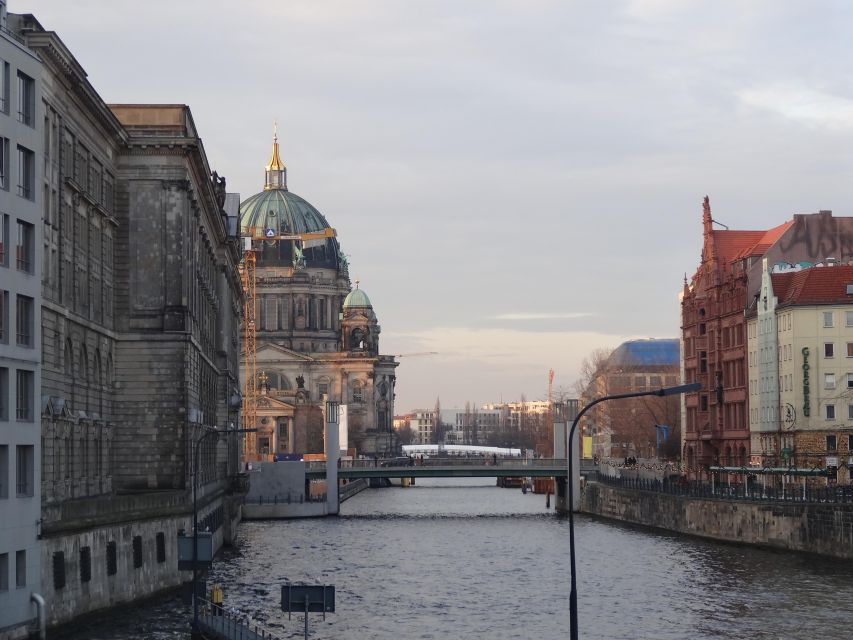
- Museum Island, Humboldt University, Humboldt Forum, and Marienkirche: Postwar Meaning
- German Historical Museum, Neue Wache, and Soviet Remembrance: Memory in Many Forms
- Lunch Reset Midway: Local Food Without Breaking the Flow
- TV Tower and Alexanderplatz: Modern Berlin, Loud and Visible
- Price and Value: Why $247 Can Make Sense for a Short Trip
- Who This Tour Fits Best, and Who Might Prefer Another Plan
- Should You Book This Berlin In A Day Tour?
- FAQ
- How long is the private Berlin in a Day history tour?
- How much does the tour cost?
- Is this tour private?
- Where is the meeting point if I do not get hotel pickup?
- Does the tour include hotel pickup?
- What language is the live guide available in?
- Is food or drinks included?
- What should I bring?
- Is the tour wheelchair accessible?
Key things to know before you go
- Hotel pickup on foot or meeting at Ebertstraße 24, in front of Hopfingerbräu by the Brandenburg Gate
- 6 hours, on foot, with frequent chances for snacks, bathrooms, and water
- Lunch included as a break, with a local partner and a quick taste of Berlin food culture
- Wall and Cold War focus, including Checkpoint Charlie and the Berlin Wall Memorial sites
- Major landmarks covered fast, from Holocaust Memorial to Museum Island and Alexanderplatz
A 6-Hour Berlin History Walk That Actually Feels Like a Story
Berlin can be overwhelming. It has layers stacked on layers: empires, wars, dictatorship, division, reinvention. What I like about this tour is that it treats the city like one connected narrative instead of separate monuments you hop between.
The time window is tight, but the route is designed to group themes. You start with symbols of German state power, move into Nazi-era and wartime scars, then hit division-era landmarks, and finally land on the postwar “new Berlin” culture zone near Museum Island and beyond.
You will also travel with a private group, so your guide can adjust the pace and answer questions. In the past, guides like Toby and Steve have been praised for making the day enjoyable, not dry. Still, the tradeoff is obvious: you are doing serious ground coverage in a short day.
More History Tours in Berlin
- Berlin: Natural History Museum Entrance Ticket
★ 4.6 · 3,382 reviews - Berlin: 3-Hour World Heritage Cruise to Potsdam
★ 4.5 · 1,569 reviews - Berlin: History of the Third Reich Guided Walking Tour
★ 4.7 · 791 reviews
Getting Oriented Fast, Starting at Brandenburg Gate
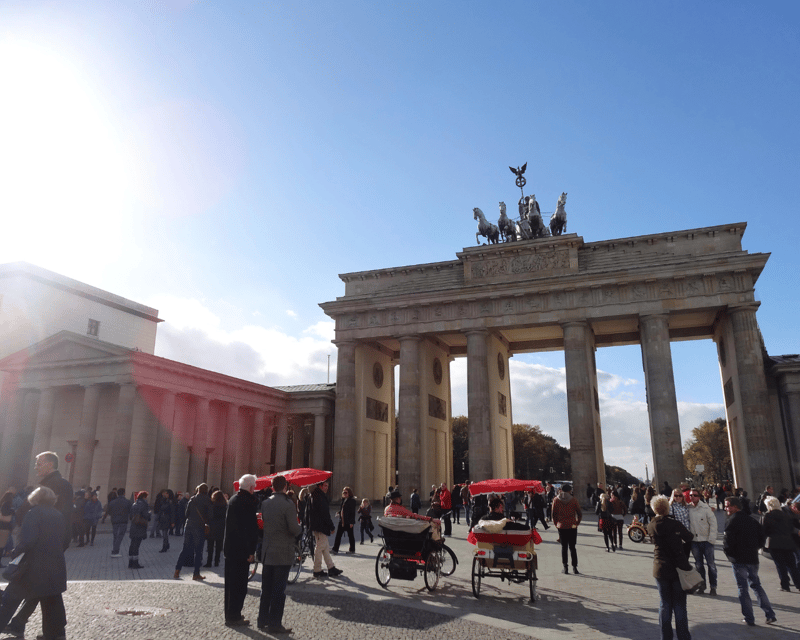
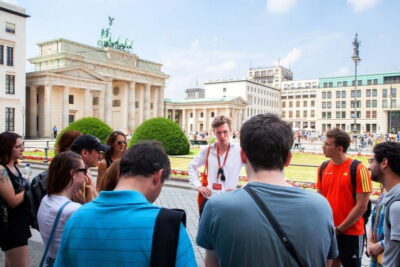
The day begins either with an on-foot pickup from your hotel or at the meeting point near the Brandenburg Gate, Ebertstraße 24, in front of Hopfingerbräu. That is a smart start because the Brandenburg Gate is one of those places where you can stand and instantly feel the city’s shifting meanings over time.
A good guide will help you read the gate beyond the postcard view. You get the sense that Berlin’s story is not just what happened, it is also how symbols get reused. The tour also keeps your bearings straight early on, so the rest of the day does not turn into “I saw stuff, I think.”
Keep in mind this is a walking tour. Even with stops, you are on your feet most of the time, so dress for comfort, not just looks.
From Reichstag to the Government Core: Power Under Pressure
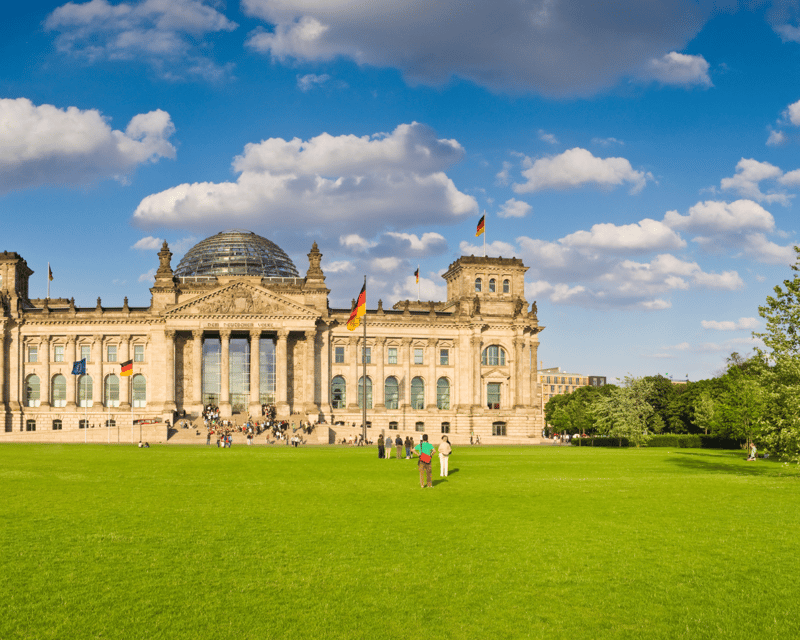
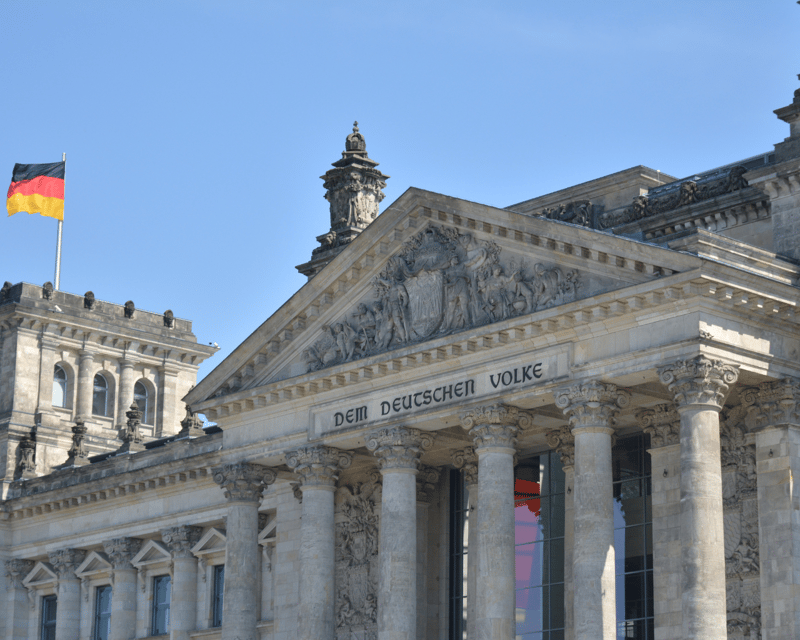
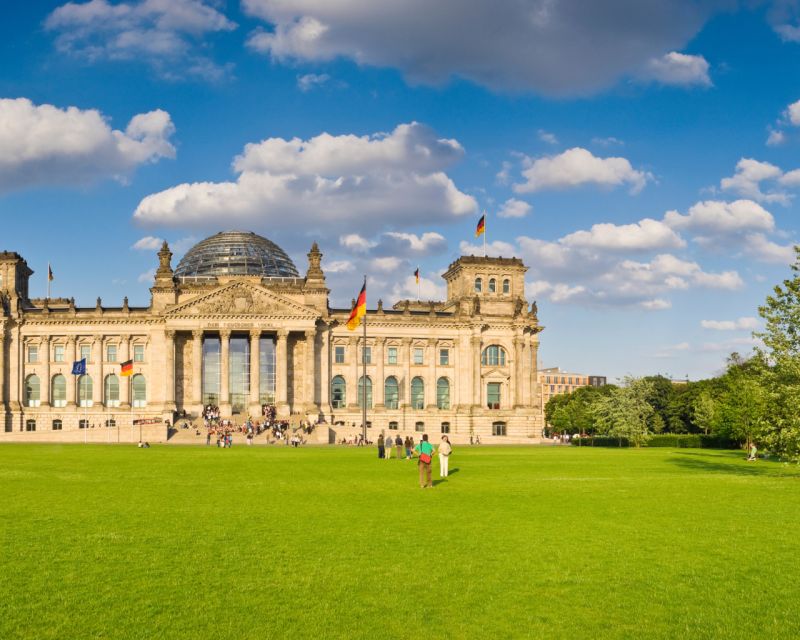
Next up is the Reichstag area. Even if you have been to Berlin before, the Reichstag gives context for why people fought over this city. The tour timing is short at each stop, but the guide’s job is to connect the dots: what the building represents, what happened around it, and why it matters in Berlin’s modern identity.
You will also spend time in the Tiergarten area and nearby viewpoints that set the stage for how Berlin’s center functions. These are the places where you can feel the “official Berlin” layout, including how monumental streets and public spaces shape movement.
This stretch is worth it if you like seeing the city’s structure, not just isolated sights. If you are more of a sit-and-watch type, you might find the quick stops move faster than you want.
Tiergartenviertel, Victory Column, and the Holocaust Memorial: Ideals to Atrocities
The route then turns toward the Victory Column area. In Berlin, that kind of monument often represents national pride and political messaging, and a guide can point out how the city’s memorial language evolved over time.
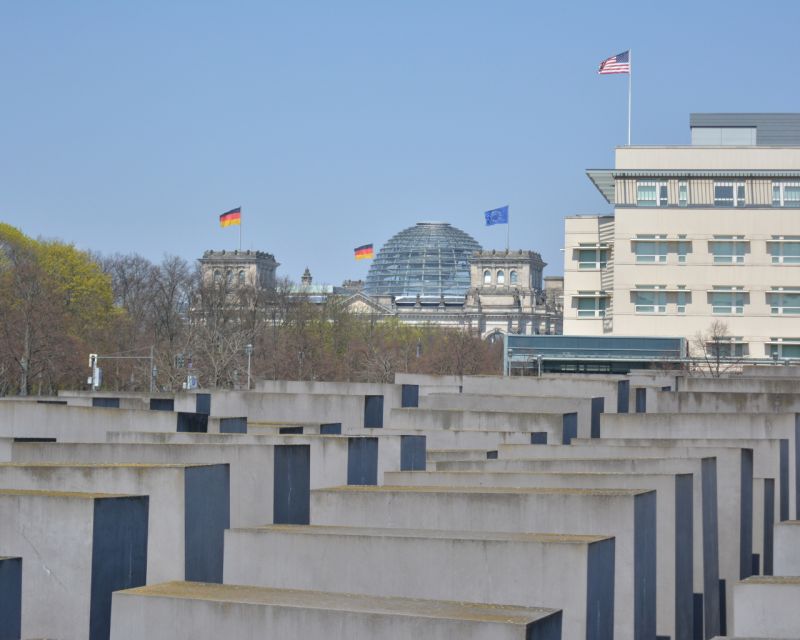
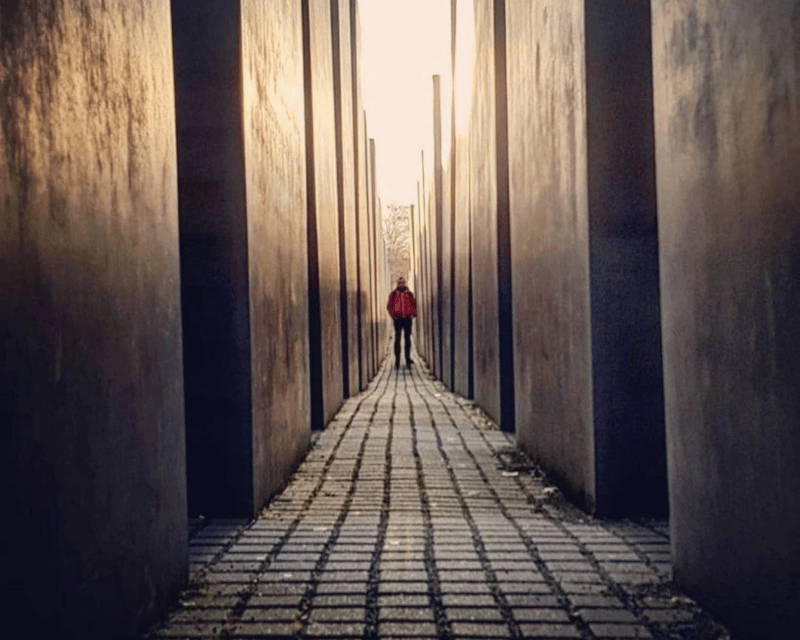
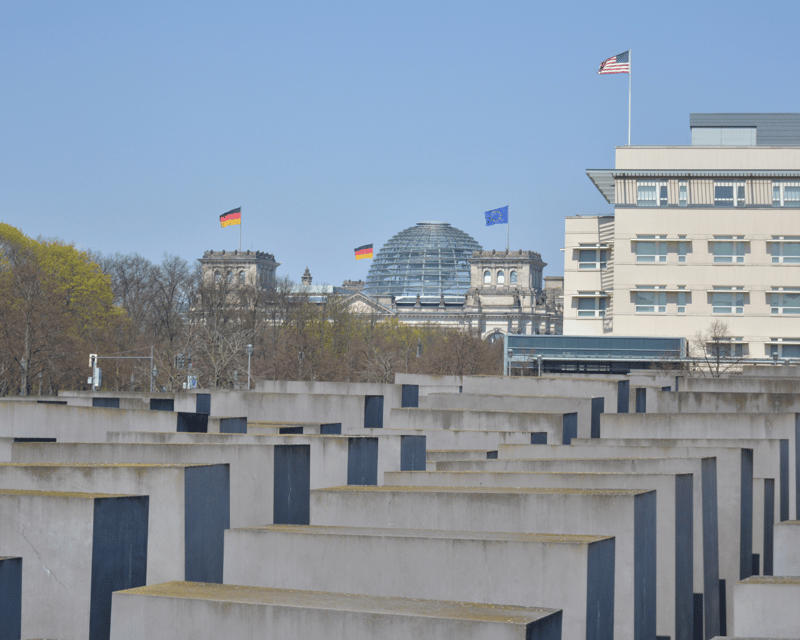
Then you hit the Holocaust Memorial, one of the most important places in Berlin. Here, the value is in how the site works emotionally and spatially. The Holocaust Memorial is not just a background stop. It’s designed for contemplation, and your guide can help you understand what you are seeing without turning it into a lecture.
What I appreciate is that the tour does not treat tragedy as an “add-on.” You go from state symbolism into the reality of what Europe endured in the 20th century, and the day’s story holds together.
A few more Berlin walks and trips to compare
- Berlin Historical Highlights Walking Tour
★ 4.9 · 657 reviews - Berlin: 1h Boutiquestyle-Cruise on the Historic HEMINGWAY
★ 4.6 · 563 reviews - Berlin Private Complete History All Day Walking Tour
★ 5.0 · 474 reviews - Berlin: Cold War Era History Guided Bike Tour
★ 4.8 · 413 reviews
Hitler’s Bunker, Johann Georg Elser, and Detlev-Rohwedder-Haus: War Comes Close
The day gets more direct with places tied to Nazi Germany and the lead-up to the worst outcomes. The itinerary includes Hitler’s Bunker, with time set aside to understand why this location still matters in Berlin’s memory landscape.
After that, you visit the Johann Georg Elser memorial. This gives the story another angle, one focused on resistance. A guide can help you connect this to the larger question of how people tried to stop catastrophe, even when success was far from guaranteed.
Then you head toward Detlev-Rohwedder-Haus. In a tour like this, such stops are often where modern Berlin memory meets complicated political history. You get a chance to see how the city’s later public life sits atop earlier scars.
A consideration here: these are emotionally heavy topics. The pacing with snack and water breaks helps, but you should still mentally plan for a serious day, not a casual sightseeing spin.
Topography of Terror and the Berlin Wall Memorial: Two Kinds of Confinement
At Topography of Terror, you are in the orbit of the Nazi terror machinery. The value of making this a scheduled stop is that your guide can connect documentation and location, so it feels tied to what you see rather than floating as generic history.
Then you move into Berlin Wall Memorial territory. The Wall is one of those topics where it is easy to know facts but hard to understand daily impact until you stand near the right spots. The Berlin Wall Memorial area helps you grasp the physical barrier and how it shaped movement, families, and the political boundary between East and West.
This part of the day tends to be where the tour earns its reputation. You go from terror institutions to the visible, geographic line that defined Cold War Berlin.
Checkpoint Charlie and East-West Berlin: Seeing Division in Real Space
Checkpoint Charlie is iconic, but it is also often misunderstood if you only know it as a photo stop. A strong guide helps you read it as a function of a system, not just a border checkpoint.
The tour also includes the theme of divided Berlin, East versus West, with additional time at Cold War-related sites and details like guard towers and “ghost station” elements. Even when you are not inside every museum, these clues let you understand how the city enforced separation.
If you like stories that turn into mental maps, you will like this section. It helps you picture the city as lived experience, not just a set of landmarks.
Museum Island, Humboldt University, Humboldt Forum, and Marienkirche: Postwar Meaning
After the heavy history stops, the itinerary shifts toward the cultural and academic center. You visit Humboldt University of Berlin, then continue toward Deutscher Dom and on to Museum Island and Humboldt Forum.
Museum Island is especially useful on a guided day because you are not just staring at buildings. You are learning why this area became a symbol of knowledge, preservation, and national identity after the chaos of earlier decades. Humboldt University adds another layer, because it connects the idea of education with what Berlin wanted to become.
You also have time around Marienkirche. Even short time here can help you understand how religious and historical architecture sits alongside the state-level story you have been following all morning.
This middle-to-late shift is a smart pacing choice. It helps you process what you just learned and reframe the city’s direction.
German Historical Museum, Neue Wache, and Soviet Remembrance: Memory in Many Forms
The route includes the Neue Wache and the German Historical Museum, plus time near a Soviet war memorial. This is where Berlin shows that memory is not one thing. It is multiple narratives, presented through different memorial designs and institutional choices.
What I like about including these stops is the balance. You see how different eras and governments chose to mark loss and explain the past. Your guide can point out the contrast between memorial styles and what each one tries to communicate.
If you are sensitive to symbol-heavy places, take your time here. The tour schedule is still paced for a 6-hour day, but you can slow down slightly during the memorial-focused moments.
Lunch Reset Midway: Local Food Without Breaking the Flow
The tour includes a lunch break at a local partner in the middle of the day. Food and drinks are not included, so you will choose what fits your budget, but the break matters.
A structured lunch stop is one of the most practical features of this tour. It prevents the “tour fatigue” trap where you rush through monuments hungry and dehydrated. Since there are also chances to stop for snacks, bathrooms, and water, you should be able to keep your energy up.
If you have dietary needs, I’d still plan to bring a simple backup snack in your day bag. The tour gives breaks, but you will appreciate having options.
TV Tower and Alexanderplatz: Modern Berlin, Loud and Visible
The last stretch brings you toward the TV Tower and Alexanderplatz. This is modern Berlin energy, the kind of place where the city feels fast, commercial, and confident.
At Alexanderplatz, you get a sense of how Berlin’s center functions now, compared with how it used to operate during division. The value of closing the day here is that the history you learned earlier is not trapped in the past. You can stand in the modern square and remember that the same city had borders, checkpoints, and walls cutting through ordinary life.
Then your day ends with drop-off at Ebertstraße 24, so you are not left scrambling across town.
Price and Value: Why $247 Can Make Sense for a Short Trip
At $247 per person for a 6-hour private tour, it is not cheap. But for Berlin, it can be good value if you fit the right profile.
This price often works best when you want four things at once:
- Many sites in limited time without hopping between guidebook “must-sees” on your own
- A guide who can connect locations and themes, so you do not just collect facts
- Private-group flexibility, since the pace can stay comfortable
- A plan that includes breaks, not just nonstop sightseeing
If you are traveling with one or two people and you would otherwise pay for separate tickets and still spend hours organizing routes, the guided structure becomes more logical. If you are traveling solo and prefer to linger, the value might feel less obvious because you can do parts of this route independently.
Who This Tour Fits Best, and Who Might Prefer Another Plan
This is a strong match if you want a high-impact Berlin history overview in a single day. It is also a good pick for first-time visitors who want the Wall story, WWII era context, and major central landmarks without multiple separate tours.
It is less ideal if you hate walking, need frequent long stops, or want a museum-first day. The plan is built for seeing many places, not for deep time inside exhibitions.
Also, it helps if you are okay with emotional subject matter. The Holocaust Memorial and WWII-linked sites mean the day has heavy moments.
Should You Book This Berlin In A Day Tour?
I would book this if you are short on time and you want a guide-led route that ties Berlin’s major historical phases together. The mix of Wall sites, Checkpoint Charlie, Holocaust Memorial, and the Museum Island area makes it feel like one coherent day, not a pile of stops.
Skip it if your ideal day is slow, quiet, and museum-centered. Also, if you know you get sore easily, plan your footwear and pacing seriously, because this is a walking tour with a full schedule.
If you do book, come ready to move, and let the guide do the connecting. That is where the value lives.
FAQ
How long is the private Berlin in a Day history tour?
The tour lasts 6 hours.
How much does the tour cost?
The price is $247 per person.
Is this tour private?
Yes, it is a private group tour.
Where is the meeting point if I do not get hotel pickup?
The meeting point is Ebertstraße 24, 10117 Berlin, in front of Hopfingerbräu restaurant by the Brandenburg Gate.
Does the tour include hotel pickup?
Yes, hotel pickup by the tour guide on foot is available.
What language is the live guide available in?
The live tour guide is available in English and Polish.
Is food or drinks included?
No, food and drinks are not included. The tour has a lunch break at a local partner, but you will pay for what you choose.
What should I bring?
Bring comfortable shoes for a walking tour.
Is the tour wheelchair accessible?
Yes, the tour is wheelchair accessible.
Newest Berlin reviews on the site
- Your ticket to The Wall Museum Berlin★ 3.0 · 60 reviews
- Rickshaw Tours Berlin – Groups of up to 16 people with several rickshaws★ 4.0 · 97 reviews
- Love and War in Berlin: Self-Guided Story Puzzle Walk★ 5.0 · 7 reviews
- Warnemuende Shore Excursion: Berlin Private Sightseeing Tour from Rostock★ 5.0 · 4 reviews
- eSIM for Germany and 34 European Countries★ 4.5 · 16 reviews
- Walking on the Wall: 3-Hour Tour in Berlin★ 4.5 · 34 reviews
- Karl-Marx-Allee Tour: Life and Architecture in East Berlin★ 5.0 · 19 reviews
- Warnemuende Shore Excursion: Private Berlin Tour★ 4.5 · 27 reviews
Historical Tours, compared.
City History Canal Sightseeing Tour on a Motorboat
Read our review →

Browse the lists this tour appears in