
Reviewed · CITY TOURS
Private Berlin City Center Walking Tour
Big Berlin sights click faster on a private walk. This tour keeps things focused, with an expert guide explaining the meaning behind major landmarks as you move through the center. I like the private walk approach and the chance to connect the dots instead of just collecting photos, especially on a first visit.
You also get hotel pickup, which means you are not stressed about finding the guide at a far-flung corner. The one drawback to plan for: the route is tightly timed, with lots of stops that are more look-and-learn than linger-and-explore, so it may not suit you if you want long museum time at each site.
In This Review
- Key things I’d plan around
- Berlin City Center in 4 Hours, With Hotel Pickup
- From Brandenburg Gate to the Reichstag: Why This Opening Two Works
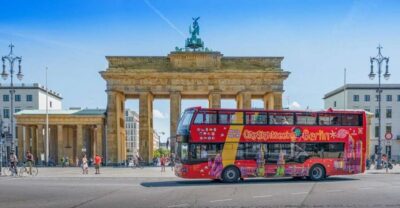
- Brandenburg Gate: the meaning behind the headline
- Reichstag Building: history tied to politics in plain view
- Holocaust Memorial Walkthrough: How the Guide Handles Hard Ground
- Fuhrerbunker and the Last Days Question: Hitler’s Bunker Site Explained
- Topography of Terror and the Berlin Wall Piece: East-West History in Context
- Aviation Ministry Building and Cold War Architecture
- Checkpoint Charlie and Gendarmenmarkt: Symbols at Street Level
- Bebelplatz and Unter den Linden: Stories Written into Public Space
- Neue Wache: Germany’s Central Memorial and the Complexity of Remembering
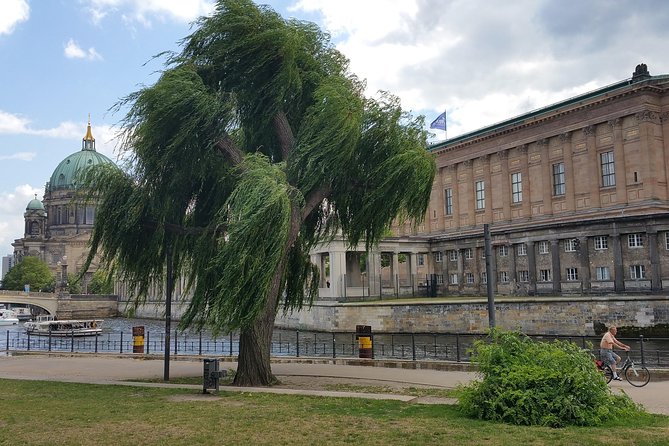
- Museum Island and the Big Central Sights: Buildings That Carry the Story
- Deutsches Historisches Museum and Lustgarten
- Humboldt Forum im Berliner Schloss and Berliner Dom
- Museum Island: the final anchor
- What This Private Tour Costs, and Why Value Can Be Real
- Who This 4-Hour Route Suits Best
- Should You Book This Private Berlin City Center Walking Tour?
- FAQ
- How long is the Private Berlin City Center Walking Tour?
- Where does the tour meet, and is hotel pickup included?
- Is the tour private, or will I join other people?
- What language is the tour offered in?
- Are entrance fees included for the stops?
- Is food or drinks included?
Key things I’d plan around
- Hotel lobby pickup to help you start without navigation headaches
- 4 hours, about 17 stops, so it is fast, efficient, and best for orientation
- English guide with a flexible route, so you can steer the conversation a bit
- Free admission set-up at each stop, meaning fewer ticket hassles during the walk
- High-impact memorials and sites, with context and interpretation, not just facts
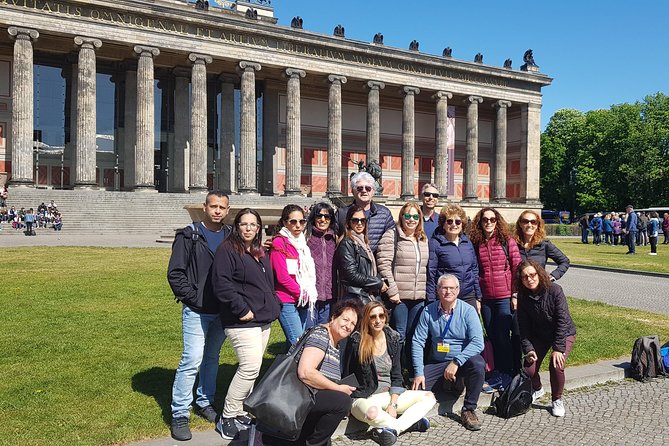
- Small private group (up to 15) for a more personal pace and questions
Berlin City Center in 4 Hours, With Hotel Pickup
This is a city-center walk designed to help you get your bearings fast. The standout practical win is pickup from your hotel lobby, so your “Day One in Berlin” jitters have somewhere to go besides making you late.
The tour runs about 4 hours and moves at a steady rhythm. Many stops are around 10 minutes, with a couple shorter windows. That matters because you are not signing up for a slow stroll. You are signing up for a guide-led route that explains why each landmark mattered, and how Berlin’s story got written in public space.
Also, the format is private, meaning only your group participates. With a maximum size of up to 15, it is large enough to feel social, but small enough for your guide to adapt in real time. If you have multiple ages in your party, this kind of structured pace tends to work well because you are not stuck on your own trying to plan the day minute by minute.
Finally, this is offered in English, and you use a mobile ticket. That is useful if you like to travel light and avoid rummaging for paper tickets during the walk.
More Walking Tours in Berlin
- Discover Berlin Half-Day Walking Tour
★ 5.0 · 9,624 reviews - Berlin: Third Reich and Cold War 2 Hour Walking Tour
★ 4.9 · 6,830 reviews - Berlin: Discover Berlin Walking Tour
★ 4.9 · 5,998 reviews
From Brandenburg Gate to the Reichstag: Why This Opening Two Works
Berlin’s biggest-name sights can feel like a random checklist unless someone explains the symbolism. That is exactly what this tour’s early section aims to do.
Brandenburg Gate: the meaning behind the headline
You start at Brandenburg Gate and talk about its history and significance. Even if you know the gate by reputation, you will get a better handle on what people have attached to it over time. Think of this as learning the “why” before you move on to the “what.”
One tip: at your first major stop, don’t over-focus on the perfect photo. Use those first minutes to listen for the big themes your guide repeats later, because the tour is built to echo them.
Reichstag Building: history tied to politics in plain view
Next you view the Reichstag Building and discuss its history across key years. Even without a long visit, it sets the tone for the rest of the walk. Berlin’s landmarks here are not just architecture. They are stages where Germany’s political story changed direction, again and again.
If your time in Berlin is limited, this opening pair helps you avoid that common trap where you recognize buildings but cannot connect them to the larger narrative.
Same city, a different way to spend the afternoon:
- Berlin: Reichstag, Dome and Government District Guided Tour
★ 4.7 · 18,288 reviews - Berlin: 1-Hour City Tour by Boat with Guaranteed Seating
★ 4.3 · 16,993 reviews - Berlin: TV Tower Standard Entrance Ticket
★ 4.4 · 15,883 reviews - Berlin: Boat Tour Along the River Spree
★ 4.4 · 11,252 reviews
Holocaust Memorial Walkthrough: How the Guide Handles Hard Ground
Stop three is the Holocaust Memorial, the Memorial to the Murdered Jews of Europe. The tour focuses on walking through the memorial and discussing why it was built and how different people interpret it.
This is not the kind of stop where you want to “speed read” your way through. Your guide’s role is especially important here, because memorials like this come with layers of meaning. The fact that the tour explicitly covers context and interpretations tells you to slow your thinking, even if the stop itself is time-limited.
A practical consideration: wear shoes you can stand in for a bit. Even if your visit is guided and structured, memorial spaces often invite quiet walking and repeated glances. If you go in expecting a quick photo stop, you will miss the point.
Fuhrerbunker and the Last Days Question: Hitler’s Bunker Site Explained
Then you move to the Fuhrerbunker, the place where Hitler’s bunker was, and you discuss the events of the last days of the war. Importantly, the tour also addresses whether Hitler did or did not commit suicide, as part of the discussion.
Why this is valuable: it keeps the conversation grounded in uncertainty and competing narratives rather than presenting one simple script. In a city where propaganda has left long shadows, understanding how stories get told (and retold) is part of being a good observer.
If you prefer tours that stay away from uncomfortable debate, this stop might feel heavy. On the other hand, if you want your guide to treat the topic with seriousness and acknowledge complexity, this is one of the strongest parts of the route.
Topography of Terror and the Berlin Wall Piece: East-West History in Context
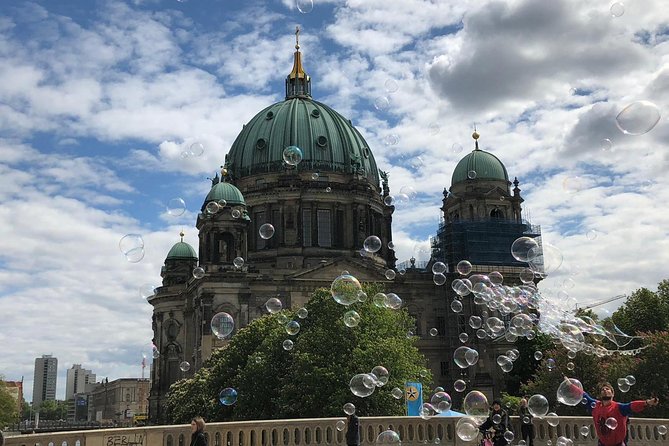
The tour takes you to Topography of Terror, and it does something helpful with the pacing: it gives you more than one moment of context.
You first see an original piece connected with the Berlin Wall and discuss how it came up. Then the route comes back to the Topography of Terror area for an additional stop focused on the site and its history.
This is one of those sequences where you will feel your understanding click. The initial wall-focused stop gives you a physical anchor, while the later stop ties that object to the broader background for the division of Berlin and Germany after WWII. Even with brief stop times, this structure prevents the information from feeling random.
If you like learning by comparison, watch for the way your guide contrasts different kinds of memory: physical barriers, political decisions, and later efforts to explain what happened.
Aviation Ministry Building and Cold War Architecture
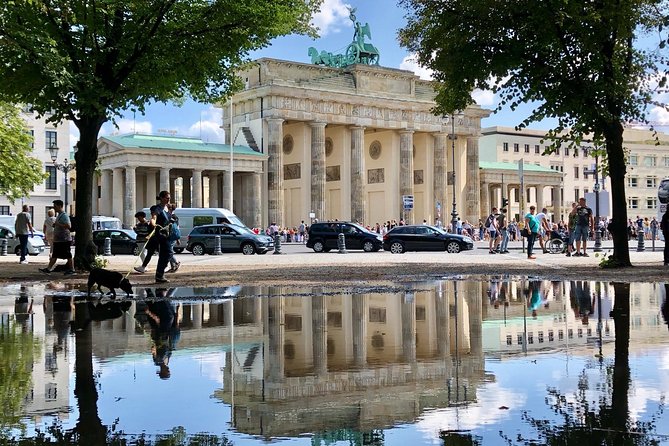
Another major stop is the Aviation Ministery of Berlin. Here, the tour discusses the building’s background, including that it was built as Herman Göring’s Aviation Building. It also covers how it served as a House of Ministries under the GDR government in East Germany.
This is a great kind of stop when you care about how power leaves fingerprints on buildings. Even if you are not going inside, you can still read a city through what was built, who used it, and what changed after political control shifted.
Practical note: listen to how your guide explains the transition from one era to the next. Berlin’s architecture often works like a paper trail, but only if someone points out the steps.
Checkpoint Charlie and Gendarmenmarkt: Symbols at Street Level
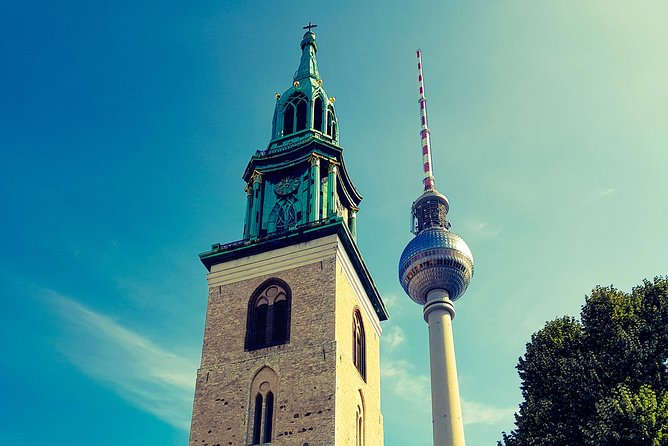
Checkpoint Charlie is a quick site stop, but it carries big symbolic weight. The tour has you see the site and it fits naturally after the earlier wall and division discussions. In other words, you’re not just ticking off Cold War icons. You’re seeing how the “big system” shows up in a specific place.
Next up is Gendarmenmarkt. You see the site and the guide discusses what you are looking at. Even though the stop is short, it is a good breath-between-heavy-topics moment. You get a change of scenery in the center, and then you move back into more story-driven stops.
If you get tired of standing in one spot, use these public squares to reset. Look up, scan the space, then re-engage with what your guide says. Berlin often rewards that rhythm.
Bebelplatz and Unter den Linden: Stories Written into Public Space
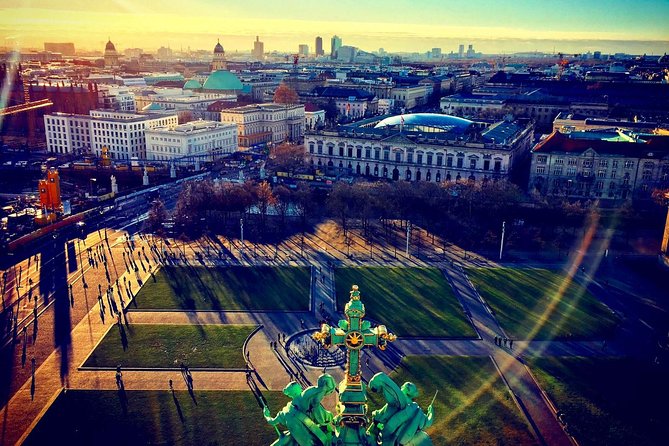
At Bebelplatz, you see the square and discuss the events that happened there. Squares are tricky on your own because they can look like nothing more than open space. With a guide, the same view becomes a map to what mattered.
Then the tour moves to Unter den Linden, where you see the avenue. This kind of stop matters because it helps you understand Berlin as a planned city, with major routes shaped by different eras and priorities.
This is also a good time to ask your guide a question. With a route like this, the guide often connects what you are seeing now to themes you heard earlier, like public memory, political authority, and how the city’s image got reorganized after WWII.
Neue Wache: Germany’s Central Memorial and the Complexity of Remembering
Stop twelve is Neue Wache, described as Berlin’s central memorial for all victims throughout German history. Your guide covers when and in what context the building was built, and how each regime used it for its own purposes.
This is a powerful combination because it does two things at once. It honors victims, and it explains how remembrance can be shaped, controlled, and repurposed. In a city where history keeps returning to the street, that context is not optional. It is part of understanding what the memorial means today.
If you have strong feelings about memorials, this may be the stop where your guide’s tone matters most. The tour is designed to talk about the complexity of German remembrance, given the difficult history. So expect a serious conversation, not a quick stop-and-go.
Museum Island and the Big Central Sights: Buildings That Carry the Story
The last stretch leans into Berlin’s major cultural landmarks around Museum Island and nearby areas. This is where the tour helps you connect the outward face of Berlin to what was built, rebuilt, and used as the city reshaped itself.
Deutsches Historisches Museum and Lustgarten
You stop at the Deutsches Historisches Museum, where the guide discusses the history of the building and its architecture. Then you move to Lustgarten, where the tour discusses the history of the site.
Even though you are not spending long inside, these stops work as “frame makers.” They help you see why certain places become go-to public reference points, especially when you start comparing eras.
Humboldt Forum im Berliner Schloss and Berliner Dom
Next is Humboldt Forum im Berliner Schloss, tied to the history of the Berlin City Palace. Then you view Berliner Dom and discuss the history of the site.
If you are sensitive to architectural symbolism, these stops are interesting because they show how Berlin talks to itself through major building projects. Your guide’s job here is to keep the conversation from becoming only aesthetic. You get the story-side context too.
Museum Island: the final anchor
Finally, you arrive at Museum Island, see the site, and discuss its history. Museum Island is the kind of place where being told the meaning before you go can change how you look at what’s in front of you. By the end of the route, your brain is already trained to ask, what changed, why, and what did people want the city to say about itself?
What This Private Tour Costs, and Why Value Can Be Real
The price is listed as $397.38 per group, up to 15 people. That sounds like a lot, but value in a private walking tour comes down to how many people share the guide time and how much you save in planning effort.
For a small family, or a group of friends who want a structured route, this kind of pricing can become reasonable fast. The tour includes all fees and taxes, and it is led by an expert private guide. It also uses a setup where stops are tied to free admission, so you avoid the common “ticket stacking” problem that can eat both time and budget.
What you are really paying for is the guide’s ability to connect each site to the next, so you leave with a mental map instead of separate snapshots. If you have limited time and want the city’s big themes explained without you doing homework at the hotel, this is one of the cleaner value propositions in Berlin.
One more angle: this is booked on average 41 days in advance. That usually means it fills, so if you are even slightly interested, lock it in earlier rather than hoping for last-minute space.
Who This 4-Hour Route Suits Best
This tour is ideal if you fit one of these profiles:
- First-time visitors who want the big-name sites explained in a logical sequence
- People short on time who still want context, not just photos
- Groups that want hotel pickup and a guide to keep things organized
- Mixed-age groups who benefit from a steady schedule and frequent “reset points”
It is less ideal if you want a slow, museum-heavy day with long entrances. The tour is structured for movement and interpretation, not for extended time inside venues.
Also, it includes a flexible itinerary element. That means if your group wants to linger a little longer on one theme, your guide may adjust within the overall walk plan.
Should You Book This Private Berlin City Center Walking Tour?
I would book it if you want a guided route that explains Berlin’s major landmarks and the stories behind them, especially if you like learning through walking and public-space context. The hotel pickup and fast, structured format make it feel efficient without feeling rushed in a chaotic way.
You should think twice if you hate short stops or you plan to spend serious time inside museums and memorial-adjacent exhibits. This route is built for orientation and understanding the meaning behind the headlines, not for deep solo wandering for hours.
If your goal is clarity, this is a strong choice.
FAQ
How long is the Private Berlin City Center Walking Tour?
It runs for about 4 hours.
Where does the tour meet, and is hotel pickup included?
It starts at Scheidemannstraße 5, 10557 Berlin, Germany. Pickup is offered from the lobby of your hotel.
Is the tour private, or will I join other people?
It is a private tour/activity, and only your group participates.
What language is the tour offered in?
The tour is offered in English.
Are entrance fees included for the stops?
All fees and taxes are included, and the listed stops show admission ticket as free.
Is food or drinks included?
Food and drinks are not included.
Newest Berlin reviews on the site
- Your ticket to The Wall Museum Berlin★ 3.0 · 60 reviews
- Rickshaw Tours Berlin – Groups of up to 16 people with several rickshaws★ 4.0 · 97 reviews
- Warnemuende Shore Excursion: Berlin Private Sightseeing Tour from Rostock★ 5.0 · 4 reviews
- eSIM for Germany and 34 European Countries★ 4.5 · 16 reviews
- Love and War in Berlin: Self-Guided Story Puzzle Walk★ 5.0 · 7 reviews
- Walking on the Wall: 3-Hour Tour in Berlin★ 4.5 · 34 reviews
- Karl-Marx-Allee Tour: Life and Architecture in East Berlin★ 5.0 · 19 reviews
- Warnemuende Shore Excursion: Private Berlin Tour★ 4.5 · 27 reviews
City Tours, compared.

1-Hour City Tour by Boat with Guaranteed Seating
Read our review →
City History Canal Sightseeing Tour on a Motorboat
Read our review →
Browse the lists this tour appears in