Reviewed · BERLIN TOURS
Path of Resistance: Berlin’s Hidden Holocaust Stories
Resistance has a Berlin address. This walking tour maps WWII courage in real places across Berlin’s Jewish quarter, using small-group storytelling that connects everyday choices to Nazi terror. You cover key sites tied to antisemitism, deportation, and the stubborn ways people resisted.
What I really like is how the tour gives you two powerful kinds of clarity: you see Otto Weidt’s Workshop for the Blind up close, and you hear the story behind the Rosenstraße Protest, where German women demanded the release of their husbands. The guide also keeps the focus on human decisions, not just dates and suffering.
One thing to consider: this is emotionally heavy and mostly outdoors in all weather, so plan for steady walking and bring rain protection or sun coverage.
In This Review
- Key highlights worth planning for
- Walking Through Berlin’s Jewish Quarter, One Stop at a Time
- Meeting at the Former Imperial Post Office, Then Straight Into WWII Berlin
- New Synagogue and the Moses Mendelssohn School, Why the Neighborhood Changes Everything
- Grosse Hamburger Straße Cemetery, a Place That Refuses to Let Names Fade
- Otto Weidt’s Workshop, Practical Help in a System Built to Destroy
- The Block of Women and the Rosenstraße Protest, When Protest Was Risky and Public
- Museum Island and Neue Wache, Memory in the Official Spaces
- Bebelplatz and the 1933 Nazi Book Burning Site, Censorship as a Roadmap
- Trains to Life, Trains to Death, and the Deportation Story Written in Movement
- Stolpersteine Memorials and Quiet Remembrance in the Old Quarter
- Learning from Nicholas Winton, and the Many Faces of Resistance
- Price and Practical Value for About $57 and 150 Minutes
- Who This Tour Fits Best
- Before You Go: What to Pack and How to Prepare Mentally
- Should You Book Path of Resistance?
- FAQ
- Where is the tour starting point?
- How long is the walking tour?
- What language is the guide?
- What group size should I expect?
- Is the tour wheelchair accessible?
- What is included in the price?
- What is not included?
- What should I bring, and what is not allowed?
Key highlights worth planning for
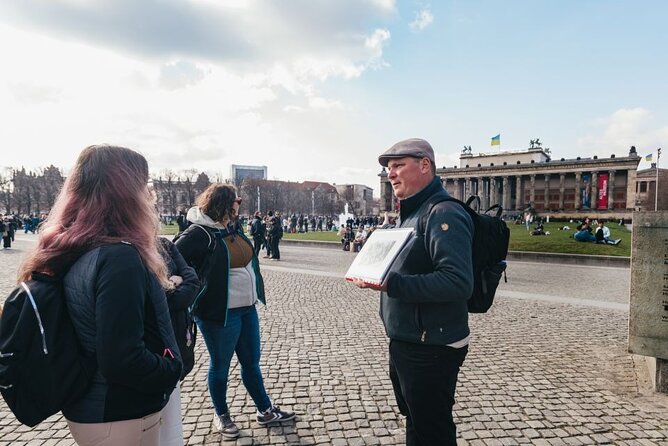
- WWII-specialist guidance in a small group so questions do not get lost.
- Otto Weidt’s Workshop for the Blind, a grounded story of protection and practical defiance.
- Bebelplatz and the 1933 book burning site, tying censorship to the Nazi attack on free thought.
- Rosenstraße Protest, a rare angle on collective action and civilian courage.
- Stolpersteine memorials and older Jewish sites, where memory lives in the sidewalk and courtyards.
- Otto Weidt to Nicholas Winton, including stories of help that kept children from being deported.
Walking Through Berlin’s Jewish Quarter, One Stop at a Time
Berlin can feel like a museum city, but this tour tries to do something different. You move through streets and corners where history is still readable, with plaques, quiet courtyards, and memorials that slow you down.
The structure matters. This is about traceable paths, not random stops. You start near the Former Imperial Post Office, then work through sites connected to Jewish life, persecution, and resistance, and you end at Berlin Friedrichstraße station.
The pace is built for meaning. With a duration of about 150 minutes, you get enough time for a real guided narrative, plus discussion and Q&A rather than a rushed photo sprint.
A few more Berlin walks and trips to compare
- Berlin: Reichstag, Dome and Government District Guided Tour
★ 4.7 · 18,288 reviews - Berlin: 1-Hour City Tour by Boat with Guaranteed Seating
★ 4.3 · 16,993 reviews - Berlin: TV Tower Standard Entrance Ticket
★ 4.4 · 15,883 reviews
Meeting at the Former Imperial Post Office, Then Straight Into WWII Berlin
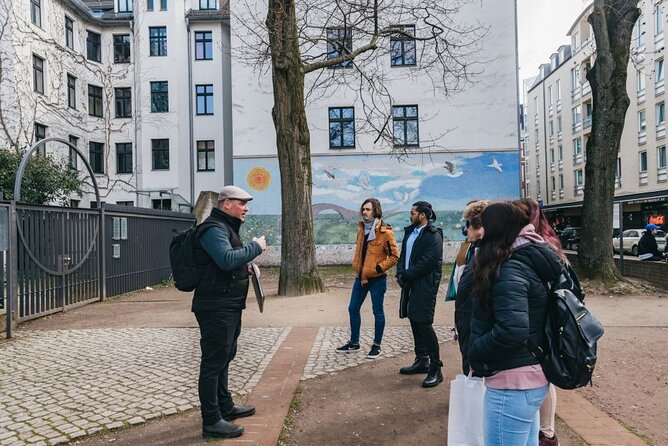
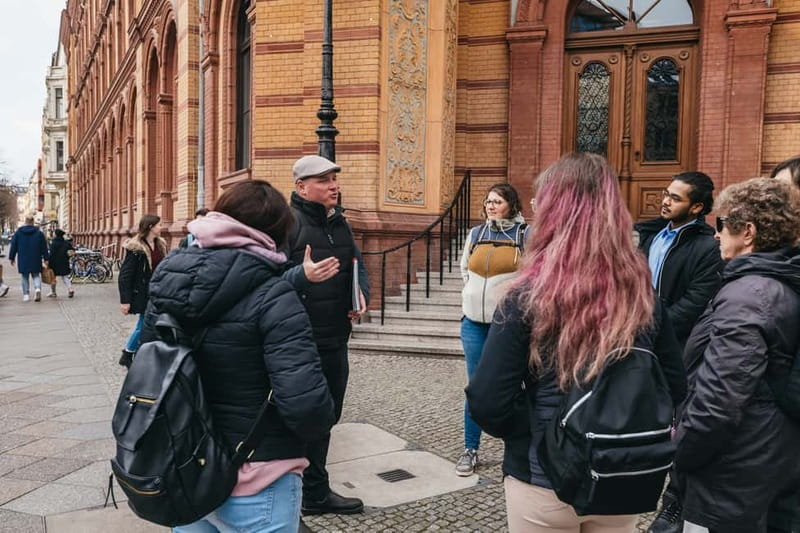
You meet at the Former Imperial Post Office, and the guide holds a blue umbrella at the main entrance. Arrive about 10 minutes early. That small buffer helps you get oriented before you head into the old quarter.
This opening sets the tone. Rather than starting with abstract politics, you are anchored in Berlin’s everyday geography, then shown how that geography became part of the machinery of persecution and the occasional counter-move.
I also like that the tour is designed for respectful attention. You will be visiting memorial spaces and former-linked sites, so the guide’s storytelling style needs to be careful, direct, and human.
New Synagogue and the Moses Mendelssohn School, Why the Neighborhood Changes Everything
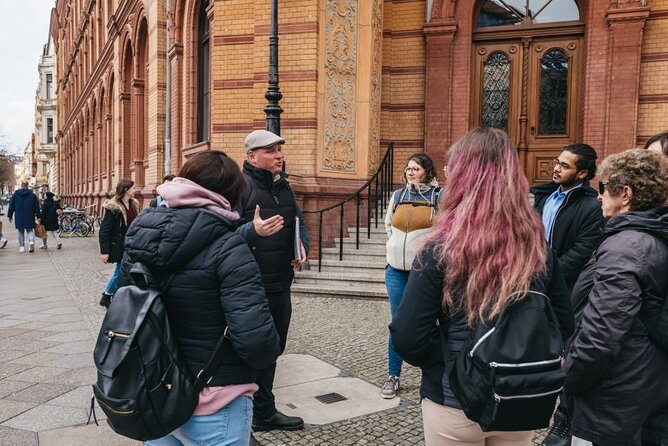
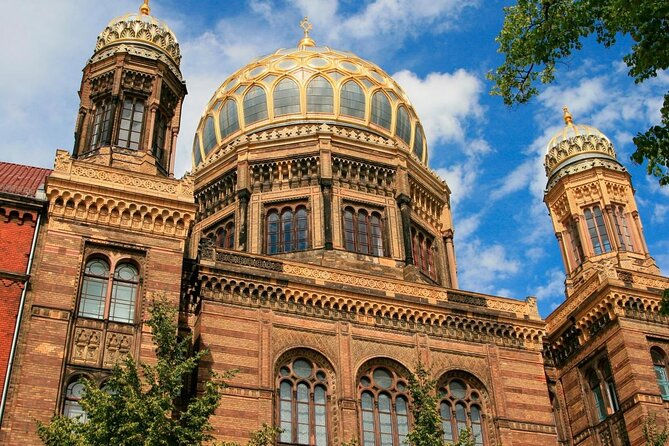
Early on, you visit the New Synagogue Berlin, Jewish Centre. You do not just look at architecture. You use it as a gateway to the long story of Jewish life in Berlin and why this area mattered.
Next is the Jüdisches Gymnasium Moses Mendelssohn. This stop gives you context for how communities organized education and identity, long before the Nazis narrowed freedom and turned society into a weapon.
If this is your first Holocaust-focused trip to Berlin, this ordering is smart. You get roots first, then consequences. That makes later deportation and resistance stories land harder, in a good way.
Potential drawback for some people: because these are living-community areas, you should expect a quieter atmosphere and be ready to stay focused even when the surroundings look calm.
Grosse Hamburger Straße Cemetery, a Place That Refuses to Let Names Fade
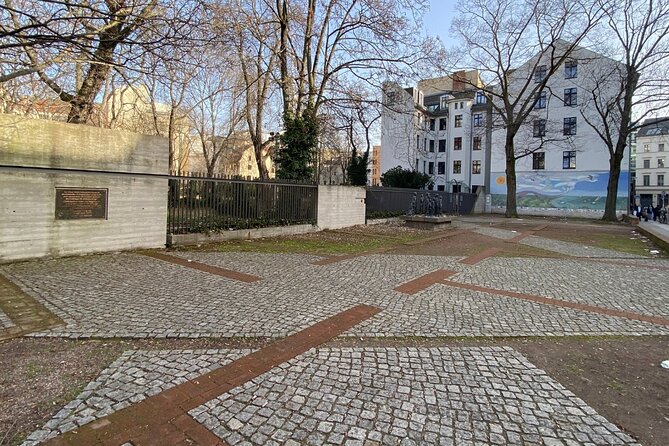
You spend time at the Grosse Hamburger Strasse Cemetery. Cemeteries can feel like they belong to the past only, but on this tour they work as a reminder that victims and communities were real people with families and histories, not just anonymous tragedy.
A tour stop like this also changes your listening. The guide’s explanation will often connect broader policy to personal impact, and the setting helps your brain stop treating it like a slideshow.
If you are the type who likes grounding details, this is one of the places where you might notice how the tour uses names and local references to make the story feel specific.
Same city, a different way to spend the afternoon:
- Berlin: Boat Tour Along the River Spree
★ 4.4 · 11,252 reviews - Discover Berlin Half-Day Walking Tour
★ 5.0 · 9,624 reviews - Berlin: Government District around the Reichstag Guided Tour
★ 4.7 · 8,447 reviews - Berlin: Reichstag, Plenary Chamber, Cupola & Government Tour
★ 4.6 · 8,422 reviews
Otto Weidt’s Workshop, Practical Help in a System Built to Destroy
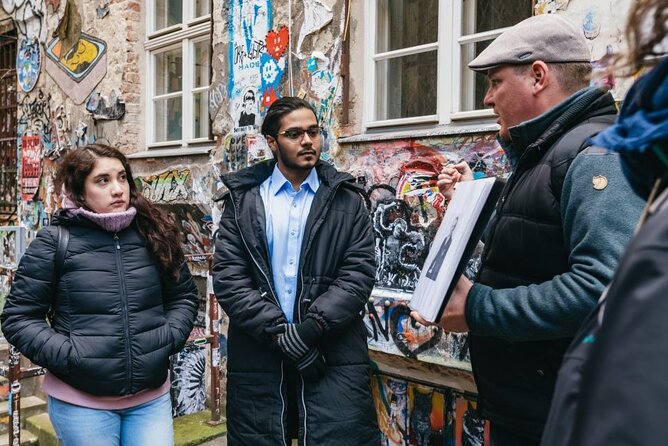
One of the most moving stops is Otto Weidt’s Workshop for the Blind. This is not about grand speeches. It’s about protection, labor, and the stubborn act of choosing to help when the surrounding system punishes it.
The tour highlights how Weidt shielded blind and deaf Jewish workers from persecution. That detail matters because it shows resistance can be practical. It can be someone rearranging daily life to keep vulnerable people safer.
You also get to see how resistance did not always look like open rebellion. Sometimes it looked like hiding people, bending rules, exploiting loopholes, or creating a space where the Nazi machinery could not reach as easily.
The Block of Women and the Rosenstraße Protest, When Protest Was Risky and Public
You visit the Block of Women, then move toward the women’s protest story at Rosenstraße. These stops focus on a form of resistance that often gets less attention than sabotage or underground action.
The Rosenstraße Protest is framed as German women standing up to demand the release of their Jewish husbands. What makes it powerful is that the resistance is visible and collective, but it is still risky. The Nazis did not tolerate public defiance, even when the protesters were not trying to overthrow the regime with weapons.
This section is also where the tour’s emotional pacing shows up. The guide keeps connecting the dots without turning the story into spectacle. You leave with a clearer sense of what courage cost in real human terms.
Tip for you: if you tend to get overwhelmed by heavy topics, this is a good moment to slow your walking and take the guided pause seriously. The tour’s memorial focus is part of why it works.
Museum Island and Neue Wache, Memory in the Official Spaces
You head through Museum Island for guided context and then pause at Neue Wache. These stops are different from the more intimate sites like workshops and cemeteries. Here, the story connects to how Berlin remembers and frames 20th-century violence after the fact.
I like that the tour does not ignore public memory. You get a chance to think about how nations tell stories over time, what gets commemorated, and how the present shapes the way history is understood.
If you already know Berlin’s museums, you might wonder why they are included in a Holocaust-resistance walking route. The answer is that memory is part of the topic. The tour uses these locations to help you read Berlin’s layers, not just the Nazi-era ones.
Bebelplatz and the 1933 Nazi Book Burning Site, Censorship as a Roadmap
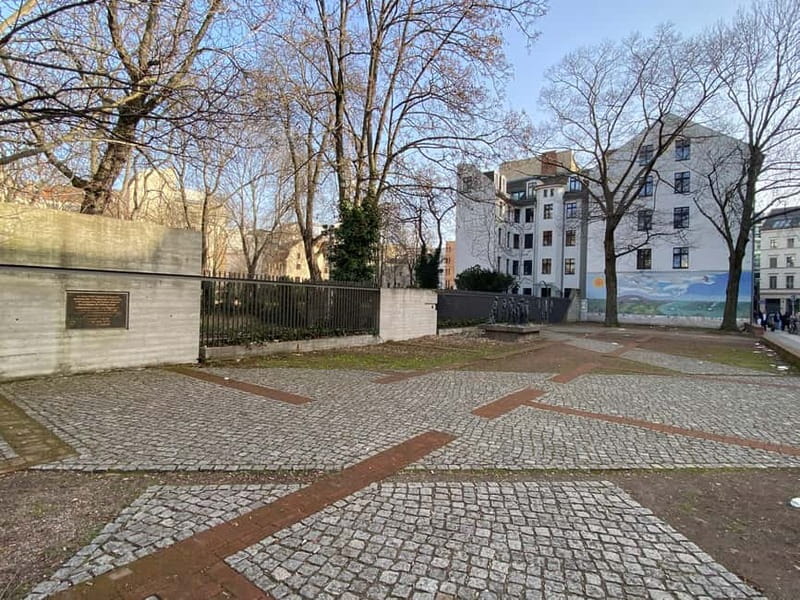
A standout moment is the 1933 Nazi book burning site at Bebelplatz. This is where the tour makes a crucial point: ideology did not only spread through laws and terror. It also spread through control of information.
You stand at the location tied to the Nazi campaign against free thought and intellectual freedom. That framing is useful because it shows the progression. You see how the Nazis targeted ideas first, then applied force.
This stop also helps you connect the dots to the antisemitism driving state violence. When a regime attacks truth and education, it makes cruelty easier to justify and harder to challenge.
Trains to Life, Trains to Death, and the Deportation Story Written in Movement
You visit Trains to Life, Trains to Death, and you also cover a former deportation centre as part of the guided narrative. These stops focus on how persecution became logistics.
Rail and transit are not just background details. The tour uses them to explain how genocide depended on organized movement, paperwork, and coordination. You learn how state-sponsored antisemitism turned into a system designed to eliminate Jewish people, not just exclude them.
If you want to understand the Holocaust as more than a tragedy, this is the section that often helps. It reframes the story as a grim method, which is necessary to understand how it happened and how resistance sometimes tried to disrupt it.
And yes, it is heavy. That is the point. The guide’s job here is to keep the focus on meaning, not shock.
Stolpersteine Memorials and Quiet Remembrance in the Old Quarter
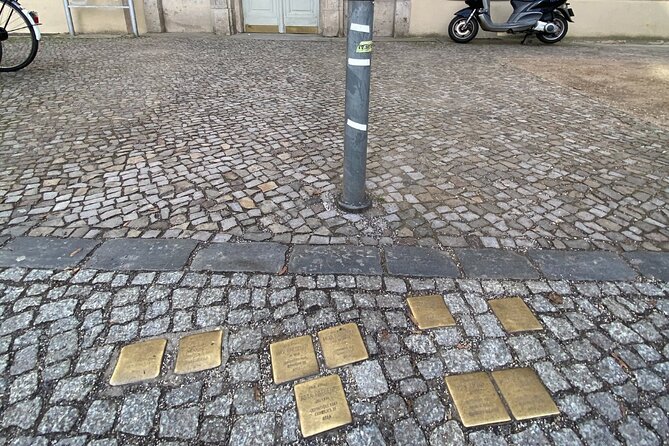
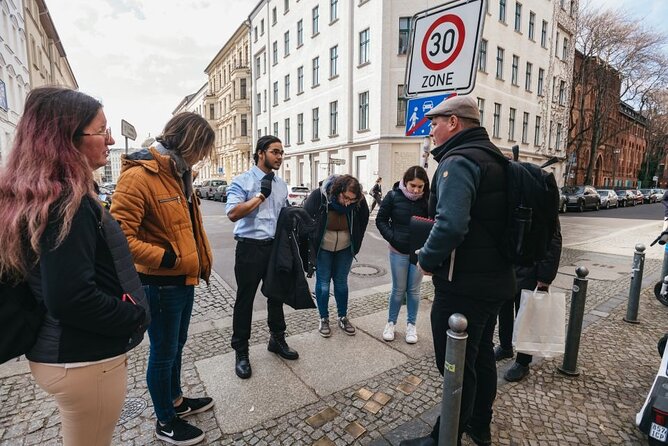
You also explore Stolpersteine memorials in Berlin’s old quarter. Even if you have seen these brass-and-stone tributes elsewhere, they can hit differently in Berlin because you are walking through the same streets where Jewish families once lived.
This portion teaches you a practical way to read a city. Instead of treating memorials like decorations, you learn to look for names, patterns, and what the tour calls the traces of defiance, loss, and survival.
I like this blend of public and sidewalk memory. It makes it harder to turn victims into numbers. You keep meeting individuals through small, specific anchors.
Learning from Nicholas Winton, and the Many Faces of Resistance
The tour also weaves in the story of Nicholas Winton, often associated with the nickname British Schindler. The point is not the label. It’s what the story represents: rescuing children when the future looked completely shut.
Together with the stories of Otto Weidt and other resistance themes, Winton’s inclusion expands your sense of what resistance can look like. It can be local protection. It can be escape networks. It can be defiance with consequences.
The guide also ties these stories back to broader Nazi beliefs, including the Nazis’ ideology about Aryan superiority and their distorted concept of sub-races. That context matters because it shows how racism became policy and how policy became brutality.
Price and Practical Value for About $57 and 150 Minutes
At about $57 per person for roughly 150 minutes, you are paying for more than walking. You are paying for expert interpretation, access to multiple memorial and museum stops, and a guide who can hold the story together.
Here is where the value shows up:
- Entry to museums and memorials is included, so you are not juggling ticket purchases mid-walk.
- You get Then and Now photographs and historical maps, which help you compare what you see today with what was there then.
- The small-group format means you can ask questions as the story gets complicated.
Also, because this tour focuses on the Jewish quarter and resistance themes, it tends to be more specific than generic WWII city walks. If you want Berlin to feel connected to names and local locations, this kind of guided structure helps.
What you might not love: if you prefer very upbeat, light sightseeing, the subject matter will not match that mood. But if you want understanding and respectful attention, the time and price are reasonable.
Who This Tour Fits Best
This is a strong match if you:
- Want WWII history in Berlin that stays human, not abstract.
- Are interested in both resistance and the system that made resistance dangerous.
- Enjoy walking tours where you get context at each stop, not just photo landmarks.
- Like small groups where Q&A is actually part of the experience.
It is also a good fit for first-time Berlin visitors who want a focused, meaningful narrative beyond the usual highlights.
Before You Go: What to Pack and How to Prepare Mentally
Bring comfortable shoes. This tour is a walking format, and you will be moving through multiple stops.
Bring an umbrella and water. You are told the tour runs in all weather conditions. If it rains, you will be thankful you are not trying to improvise.
One more practical note: alcohol and drugs are not allowed. Plan to keep it calm and respectful.
Mentally, I suggest you give yourself permission to slow down. This is the kind of tour where a moment of quiet matters as much as the next factual point.
Should You Book Path of Resistance?
I think you should book this tour if you want Berlin history to make sense as a chain of choices, not a blur of sites. The combination of small-group WWII specialist guidance, concrete locations like Otto Weidt’s Workshop and Bebelplatz, and the focus on resistance gives you a clearer, more personal understanding than a casual overview.
Skip it only if you know you cannot handle emotionally intense themes, or if you strongly dislike walking outdoors in changing weather. Otherwise, it is a focused way to see how courage showed up across different kinds of risk and different kinds of help.
FAQ
Where is the tour starting point?
The tour meets at the former Imperial Post Office. The guide will be standing at the main entrance holding a blue umbrella.
How long is the walking tour?
The duration is 150 minutes.
What language is the guide?
The live tour guide is English.
What group size should I expect?
It is a small-group experience limited to 10 participants.
Is the tour wheelchair accessible?
Yes, it is wheelchair accessible.
What is included in the price?
The tour includes an expert local historian as your guide, entry to museums and memorials, small group size, Then and Now photographs and historical maps, interactive discussion and Q&A, and insider recommendations for further exploration.
What is not included?
Public transport tickets are not included (not required for this walking tour). Food or drinks are also not included.
What should I bring, and what is not allowed?
Bring comfortable shoes, an umbrella, and water. Alcohol and drugs are not allowed. The tour runs in all weather conditions, so dress appropriately.
Newest Berlin reviews on the site
- Your ticket to The Wall Museum Berlin★ 3.0 · 60 reviews
- Rickshaw Tours Berlin – Groups of up to 16 people with several rickshaws★ 4.0 · 97 reviews
- Love and War in Berlin: Self-Guided Story Puzzle Walk★ 5.0 · 7 reviews
- Warnemuende Shore Excursion: Berlin Private Sightseeing Tour from Rostock★ 5.0 · 4 reviews
- eSIM for Germany and 34 European Countries★ 4.5 · 16 reviews
- Walking on the Wall: 3-Hour Tour in Berlin★ 4.5 · 34 reviews
- Karl-Marx-Allee Tour: Life and Architecture in East Berlin★ 5.0 · 19 reviews
- Warnemuende Shore Excursion: Private Berlin Tour★ 4.5 · 27 reviews
Berlin Tours, compared.

Reichstag, Dome and Government District Guided Tour
Read our review →
1-Hour City Tour by Boat with Guaranteed Seating
Read our review →

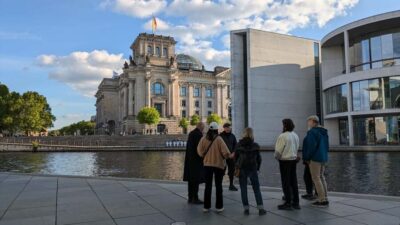
Government District around the Reichstag Guided Tour
Read our review →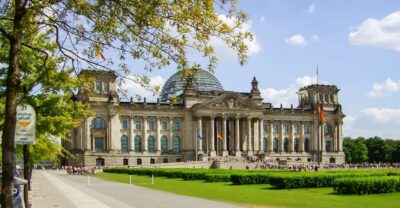
Reichstag, Plenary Chamber, Cupola & Government Tour
Read our review →