
Reviewed · CITY TOURS
Lübeck: Classic Tour of the Hanseatic City
Brick, bells, and Hanseatic secrets in 90 minutes. This private tour of Lübeck connects the city’s UNESCO-era brick architecture to the trade that made it powerful, starting right at the Holstentor. You also get a clear, story-driven route through the old town that helps everything click, from church silhouettes to decorated streets.
I especially like the way the walk focuses on Lübeck’s signatures. Two standout parts for me are the Hanseatic churches skyline and the Merchant Houses, the Kaufmannshäuser, which give you a feel for how everyday business shaped the city.
One consideration: 90 minutes moves at a steady pace. If you want long pauses inside churches or lots of museum time, this is more “see and understand” than “slow and linger.”
In This Review
- Key things that make this Lübeck tour worth your time
- Lübeck in 90 minutes: what this tour really gives you
- Starting at Holstentor: the fastest way to understand the old town
- The skyline lesson: five main churches and the City of Seven Spires
- Kaufmannshäuser and decorated streets: where merchant power shows
- Salzspeicherhäusern and the Port of Lübeck: the trade engine underneath
- Town hall, Teufelchen, and St. Mary’s Church: civic pride in brick
- Buddenbrook-Haus and the decorated houses finale
- What the guide does best, based on real naming patterns
- Price and value: $259 for up to 6 people
- Who should book this Lübeck walking tour
- Quick planning tips before you go
- FAQ
- Where is the meeting point?
- How long is the tour?
- Is this a private tour?
- What is the price?
- What languages are offered?
- What is included in the price?
- What is not included?
- What sights are covered on the walk?
- Is free cancellation available?
- Is reserve now, pay later available?
- Should you book this Lübeck tour?
Key things that make this Lübeck tour worth your time
- Holstentor start, easy to find, right at the gate so you begin with the best photo and context
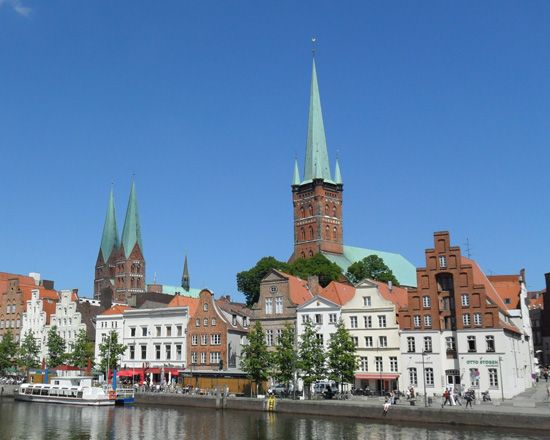
- Five main churches in one route, so you get the City of Seven Spires skyline view without guessing
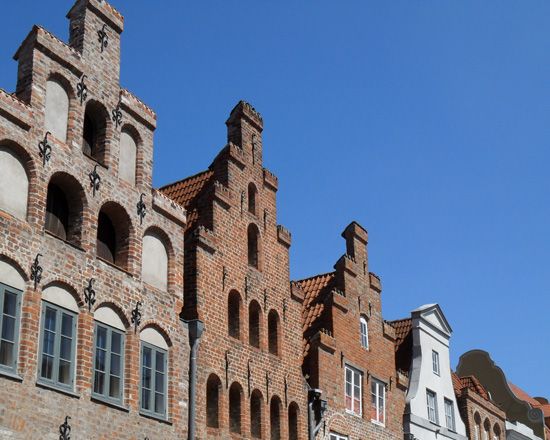
- Kaufmannshäuser streetside details, where merchant wealth shows up in brick, forms, and decoration
- Salzspeicherhäusern and the port area, linking Lübeck’s medieval looks to Baltic Sea commerce
- Town hall, Teufelchen, and St. Mary’s Church, a tight mix of civic pride and landmark buildings
- Buddenbrook-Haus finish, a literature-linked endpoint for wandering and looking at decorated houses
Lübeck in 90 minutes: what this tour really gives you
Lübeck is one of those northern German cities where the past is still visible in your line of sight. You can see it in brickwork, in church towers, and in the way the old town keeps its structure. This tour is built to make that obvious fast, without turning into a lecture.
The biggest value for you is orientation. In a short time, you learn what you are looking at and why it mattered, especially as Lübeck became the first German UNESCO World Heritage Site in 1987. Instead of seeing random streets, you understand the city as a connected Hanseatic system: trade, civic power, religion, and wealthy merchant homes all stitched together.
You also get a guided route with a professional guide, in German or English. If you like asking questions as you walk, a private group format is a big help. You can tailor the pace a bit, and you are not stuck waiting for a larger group to catch up.
A few more Lubeck walks and trips to compare
- Lübeck: 1-Hour Splash Bus City Tour
★ 4.0 · 2,626 reviews - Lübeck: entertaining guided tour to old town highlights
★ 4.7 · 594 reviews - Lübeck: Entertaining Tour Through Hidden Courtyards
★ 4.8 · 483 reviews
Starting at Holstentor: the fastest way to understand the old town
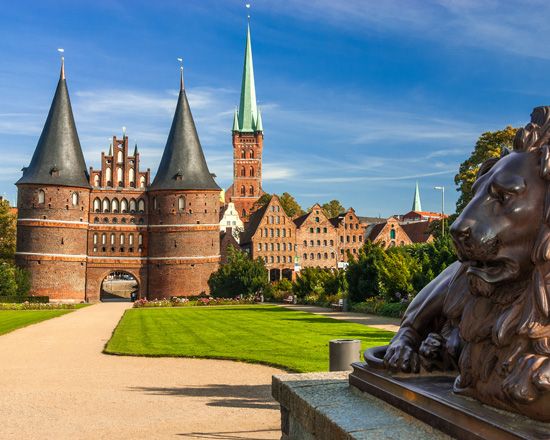
The tour begins at the Holstentor, Lübeck’s famous gate. For many visitors, this is the first “oh yes, I’ve seen this” moment. What this tour adds is the context around why that gate mattered in a trading city and how it fits into the older city layout.
If you care about architecture, this is a good opener. Standing at Holstentor gives you a sense of scale and direction, so when you start moving into the streets afterward, you feel like you are following the city instead of wandering. And since the meeting point is right there at the gate, you do not waste time figuring out logistics or second-guessing where to start.
For you as a reader, the smart move is to arrive a minute early and take a first look. Even if you plan to photograph later, that first minute helps you recognize what the guide points out next.
The skyline lesson: five main churches and the City of Seven Spires
Lübeck is famous for its church spires, often described through the City of Seven Spires nickname. This tour is designed to walk you through the big church landmarks, so the skyline makes sense instead of staying abstract.
The guide takes you past and around Lübeck’s five main churches, which is a very efficient way to get the feeling of the city’s religious and civic world. You are not just looking at towers. You learn what they represent in the Hanseatic city pattern, and how the skyline got shaped by that long period when trade wealth helped fund major buildings.
Here is what you can do to get the most out of this part: when a spire or church silhouette comes into view, pause for a moment and look at the relationship between the churches and the street grid. That’s when the city’s structure becomes readable. You start to see how the old town grew around power centers, not just around roads.
A small drawback to plan for: churches mean open views and scenic stopping points, but you will not get a long “inside” experience at each one in 90 minutes. If you want interior details, this tour is best as a first pass, then you can decide what to revisit later.
Kaufmannshäuser and decorated streets: where merchant power shows
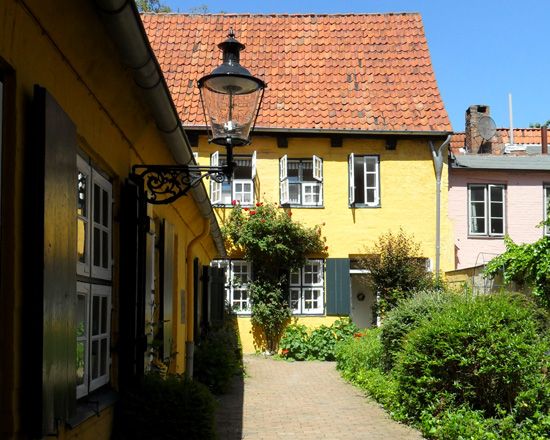
One of the best parts of the tour is how it treats the Kaufmannshäuser, the merchants’ houses. These brick homes are more than pretty facades. They tell you how the Hanseatic economy shaped domestic life and how wealth could be visible in a cityscape that also had gates, churches, and civic buildings.
As you walk the little streets, you are encouraged to look at decorated houses and street-level details. This is where Lübeck shifts from a “big sight” city into a human scale one. You start noticing features that you would likely miss if you only chased towers and gates.
I like this segment because it makes the city feel coherent. When you connect the merchants’ houses to the port and the salt storage area later, the architecture stops being random. It becomes a story you can follow with your eyes.
Practical tip: wear comfortable walking shoes here. The route is a strolling pace, but old-town streets can feel uneven, and you will want to slow down for details.
Same city, a different way to spend the afternoon:
- Lübeck: Electric Boat Rental – without driving licence
★ 4.8 · 174 reviews - Lübeck: Hanseatic League History Walking Tour
★ 4.9 · 57 reviews - Lübeck zwischen Grusel und Geschichte Truecrime zu Halloween
★ 4.7 · 50 reviews - Lübeck: The Culinary City Tour – Lübeck Lukullisch
★ 4.7 · 26 reviews
Salzspeicherhäusern and the Port of Lübeck: the trade engine underneath
The tour does not leave you staring at brick without context. After the Holstentor start, you continue to the Salzspeicherhäusern, the salt storage houses area. You also pass the former industrial heart of the city and the Port of Lübeck.
This is a valuable “why Lübeck looks like this” section. Salt trade was central to Baltic connections, and Lübeck’s role as a Baltic Sea city helped build the prosperity behind the architecture. Seeing the storage houses and the port-side character adds a layer most architecture-only walks miss.
What you should expect here is a shift in mood. The old town still looks medieval, but you feel the working-city side of Lübeck, the place where goods moved and wealth circulated. This helps you understand how a gate like the Holstentor and brick merchants’ houses fit into one system.
If you like history explained with spatial logic, this part is for you. It also pairs well with the church and town hall stops, because you see how religious institutions and civic authority fit alongside commerce.
Town hall, Teufelchen, and St. Mary’s Church: civic pride in brick
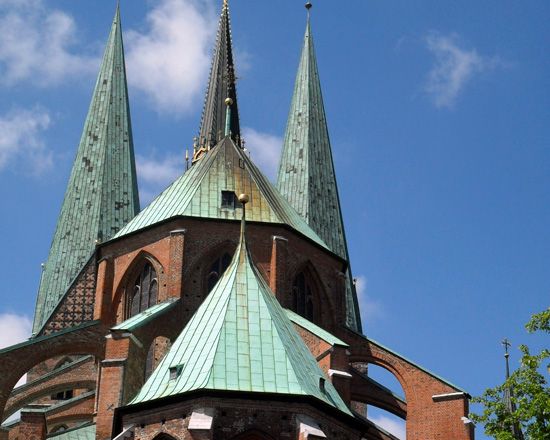
From the port area, the tour continues to the town hall and then toward other key landmarks including Teufelchen and St. Mary’s Church.
The town hall stop matters because it connects Lübeck’s Hanseatic identity to civic power. In cities like this, civic architecture often shows up as confidence, order, and authority. You will be able to see the traditional Hanseatic architecture themes the guide highlights, and it helps round out the story so it is not only about churches and merchants.
Then there is Teufelchen, a name that immediately sparks curiosity. On this tour, it functions as a landmark moment in the route, giving you another recognizable point in the old town. Even if you are not hunting for a single statue or detail on your first visit, you still benefit from the guide explaining what it means in the local streetscape.
St. Mary’s Church closes out this major cluster of sights. St. Mary’s is one of the main churches you will encounter during the walk, and it gives the skyline and landmark approach a more grounded feel. You are seeing how religious buildings dominated the skyline and how that dominance would have been felt in daily life.
Buddenbrook-Haus and the decorated houses finale
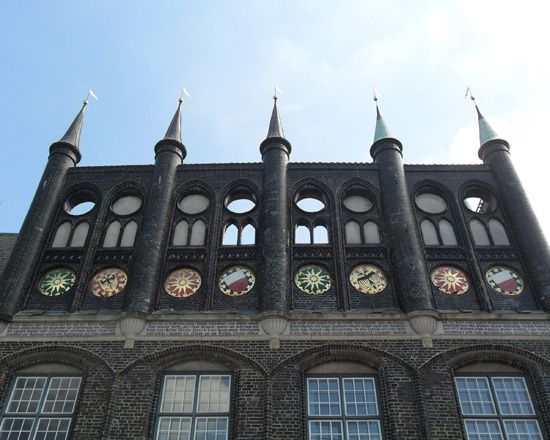
The tour ends with a stroll through the famous streets and the decorated houses around Buddenbrook-Haus. This is also a place where the tour’s literature-friendly angle shows up. The walk follows the footsteps of the Mann brothers, which gives you a friendly human thread if you enjoy that kind of cultural connection.
For you, this ending is smart because it gives time to slow down and look. The earlier parts of the walk are about landmarks and structure. The finale is about wandering with purpose, noticing decorated houses and the texture of the old streets.
If you plan to keep exploring after the tour, this is a good spot to do it from. It is an area that naturally encourages additional walking, and it helps you transition from guided overview to independent discovery.
One note: since the tour is only 90 minutes total, your ending time depends on how your group pace feels. If you want extra time for photos at the finish, consider bringing along a phone battery plan and a little extra patience for short stops.
What the guide does best, based on real naming patterns
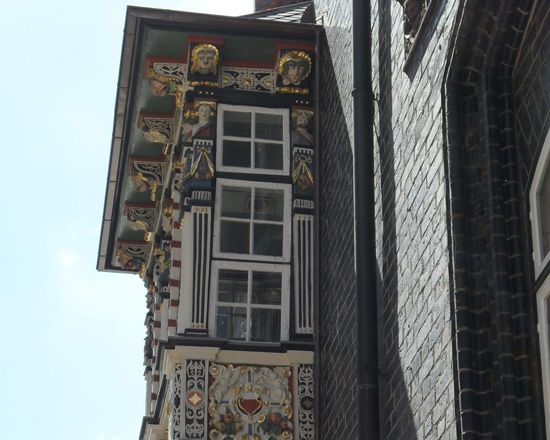
The tour is led by a professional guide in English or German. What stands out in the feedback is not just that guides know the facts, it’s how they handle the group.
Names that come up with praise include Frau Stump, and guides identified as Christel and Crystal. The common thread in those comments is clear communication, friendly group handling, and solid city knowledge. That matters because Lübeck can feel like a “pretty medieval town” at first glance. A good guide turns pretty into understandable.
You will get history stories connected to what you see. You are hearing about the city’s Hanseatic identity, why certain buildings matter, and how Lübeck got recognized internationally as a UNESCO World Heritage Site. For a 90-minute tour, that storytelling is what makes the route stick in your memory.
If you are picky about explanations, this is a good format. It is not endless. It is structured. You get a narrative arc, starting with Holstentor, moving through churches and merchant houses, then finishing with a wander through decorated streets.
Price and value: $259 for up to 6 people
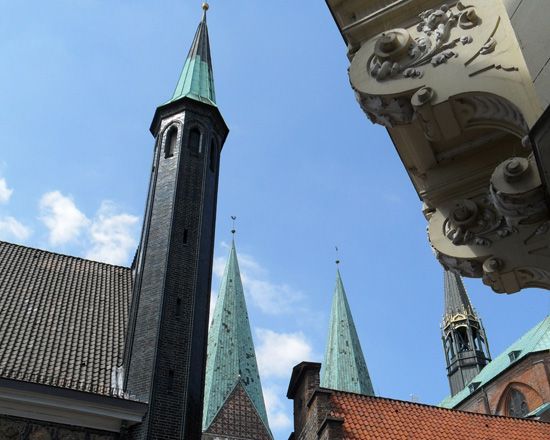
The price is $259 per group for up to 6 people, which is a key value point if you travel in a small circle. For two or three people, it can be quite fair compared with per-person rates on big-city tours. For a group of six, the cost per person drops fast, and you effectively buy yourself a tailored walk with a guide.
The other value lever is time. Ninety minutes is short enough to fit into a busy Lübeck schedule, but long enough to hit the main architectural themes: gate, churches, merchant houses, civic buildings, and the port-side trade story. You are paying for coherence, not for checking off a random list of monuments.
One caution on value: the tour excludes food and drinks, and it does not include transfers. That is normal for a walking city tour, but it means you should plan a separate meal stop. If your day is already tight, factor in where you want to eat after the tour so you do not end up rushing.
Overall, the pricing makes sense if you want guided orientation and a clear route through Lübeck’s old town rather than a long self-guided day.
Who should book this Lübeck walking tour
This tour fits best if you:
- Want a first-time overview of Lübeck’s Hanseatic architecture in a short window
- Like churches, brick merchants’ houses, and civic buildings as a single connected story
- Travel with a small private group and want flexibility in questions and pace
- Enjoy cultural footnotes like the Mann brothers without turning it into a museum day
It might not be your best choice if you:
- Prefer long, slow visits inside buildings
- Want a deep dive into any one museum or church interior
- Have mobility needs that make continuous walking hard
Quick planning tips before you go
- Meet at Holstentor. Arriving on time helps you start with the best context.
- Expect a walking pace. Bring comfortable shoes, and plan for short stops for views and details.
- Bring a camera habit. The tour is built around landmarks, street details, and skyline perspectives.
- Use the tour as your roadmap. After, pick one or two stops to revisit on your own.
FAQ
Where is the meeting point?
The meeting point is right at the Holstentor.
How long is the tour?
The tour lasts 90 minutes.
Is this a private tour?
Yes. It is a private group tour.
What is the price?
It costs $259 per group, up to 6 people.
What languages are offered?
The live tour guide is available in German and English.
What is included in the price?
A professional guide is included.
What is not included?
Transfers, and food and drinks are not included.
What sights are covered on the walk?
You will see the Holsten Gate (Holstentor), the Salzspeicherhäusern, the former industrial heart and Port of Lübeck, the town hall, Teufelchen, St. Mary’s Church, and Buddenbrook-Haus. The route also focuses on the five main churches and traditional Kaufmannshäuser (merchants’ houses).
Is free cancellation available?
Yes. You can cancel up to 24 hours in advance for a full refund.
Is reserve now, pay later available?
Yes. You can reserve your spot and pay later.
Should you book this Lübeck tour?
If you want an efficient, story-led way to understand Lübeck’s Hanseatic city look, this is a strong choice. I think it’s especially worth it when you value context, because the route links the Holstentor, the church skyline, the merchants’ houses, and the port-side trade area into one picture.
Book it if you are short on time but you do not want a shallow “photo only” walk. Skip it if you want deep indoor time or you like to spend hours in one place. For most first visits to Lübeck, though, this 90-minute private walk is a practical way to get oriented and then choose what to explore next.
Newest Lubeck reviews on the site
- Lübeck’s old town by canoe: explore and circumnavigate on your own★ 4.8 · 24 reviews
- Lübeck zwischen Grusel und Geschichte Truecrime zu Halloween★ 4.7 · 50 reviews
- Lübeck: Old Town Highlights Private Walking Tour★ 4.8 · 8 reviews
- Lübeck: The Culinary City Tour – Lübeck Lukullisch★ 4.7 · 26 reviews
- Lübeck Day Pass – Day ticket for Lübeck museums★ 4.0 · 15 reviews
- Lübeck: Private Historical and Architectural Walking Tour★ 4.5 · 6 reviews
- Lübeck: Hanseatic League History Walking Tour★ 4.9 · 57 reviews
- Lübeck: Express Walk with a Local★ 4.9 · 10 reviews
City Tours, compared.
1-Hour City Tour by Boat with Guaranteed Seating
Read our review →
City History Canal Sightseeing Tour on a Motorboat
Read our review →
Browse the lists this tour appears in