
Reviewed · CITY TOURS
Homeless on chic streets: city tour in Berlin from personal experience
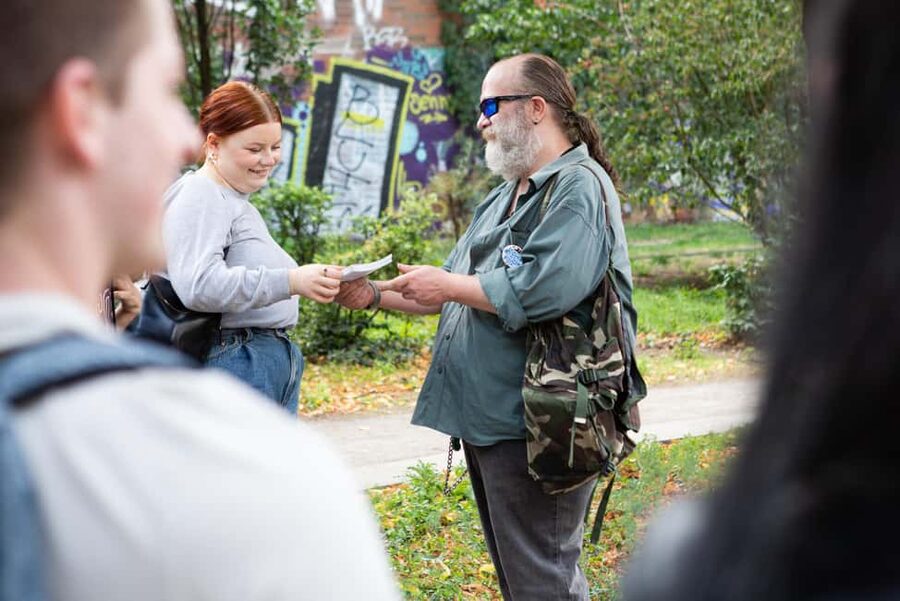
Berlin looks different when you walk as the poor. I love the first-hand stories Dieter Bichler shares, and I love the way the route passes through Charlottenburg where poverty and privilege sit side by side. One thing to consider: if you want lots of step-by-step detail about sleeping spots, you may leave wanting more.
This is a 2-hour city tour with no classic sightseeing detours. You meet at Berlin Zoologischer Garten, then follow the street life along Kantstraße, with space for personal encounters and real talk. The guide speaks German, and the tour is wheelchair accessible, but it is only suitable for kids 16 and up.
In This Review
- Key things I’d clock before you go
- Meeting at Zoo Station, Not a Tourist Corner
- Why Charlottenburg Hits Hard on This Route
- Walking Kantstraße: Food, Warmth, and Finding Sleep
- The Real Value: Dialogue, Not a One-Way Talk
- Hidden Places Through a Different Set of Eyes
- Price and Value: Why $23 Can Feel Like a Bargain
- What to Wear, How to Show Up, and Who This Suits
- Should You Book This Berlin Homelessness Tour?
- FAQ
- Where does the tour start?
- How long is the city tour?
- What does the tour cost?
- What area of Berlin will we visit?
- Is the tour guided in German?
- Is the tour wheelchair accessible?
- Do I need to bring anything?
- What should I wear in summer or winter?
- Is tipping expected?
- Is this tour suitable for children?
Key things I’d clock before you go
- You start at Zoologischer Garten at the stairs of the McDonald’s on Hardenbergpl. 11, 10623 Berlin.
- Dieter Bichler guides with an apartment-loss story that connects Thuringia to Berlin street life.
- You walk along Kantstraße in Charlottenburg, not through postcard Berlin.
- Homelessness isn’t treated like a lecture. You get conversation space and dialogue.
- Expect the mental shift that happens when streets, parks, and train stations become home base.
- No classic sights, so your reward is perspective, not monuments.
Meeting at Zoo Station, Not a Tourist Corner
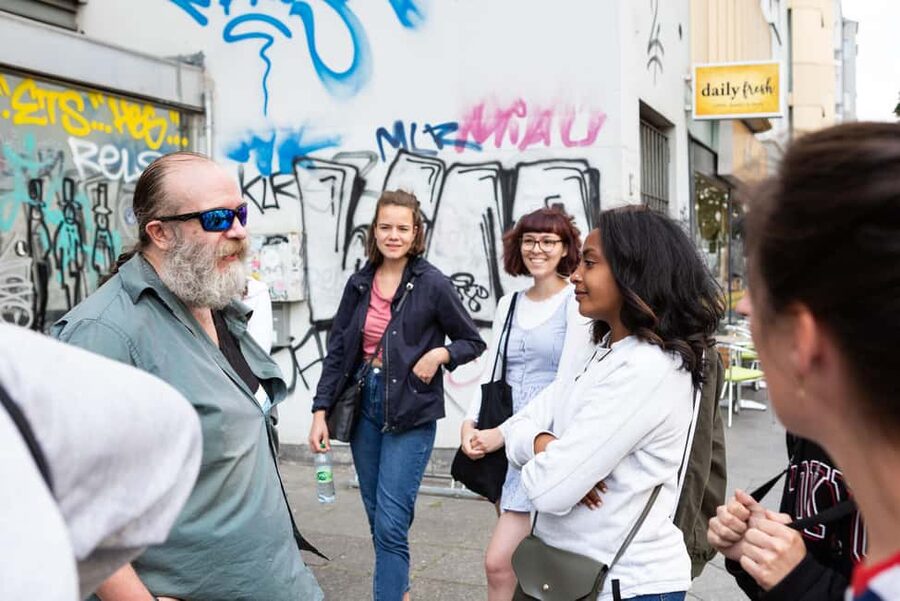
The tour kicks off at Berlin Zoologischer Garten station, right at the stairs of the McDonald’s on Hardenbergpl. 11. It is an easy place to find, and it matters that you begin at a busy transport hub. You get that immediate Berlin feeling, where people are moving through the city, and someone else is trying to survive inside the same flow.
Come ready to walk. Bring comfortable shoes and water, and dress for the weather. In summer, bring a hat. In winter, you’ll want to bundle up, since you’ll be outside for the full 2 hours.
One more practical note: the guide leads in German. If your German is basic, you can still follow the main ideas, but this is not the kind of tour where you can totally rely on translations. Also, it is designed for ages 16 and up, so the tone is adult and direct.
A few more Berlin walks and trips to compare
- Berlin: Reichstag, Dome and Government District Guided Tour
★ 4.7 · 18,288 reviews - Berlin: 1-Hour City Tour by Boat with Guaranteed Seating
★ 4.3 · 16,993 reviews - Berlin: TV Tower Standard Entrance Ticket
★ 4.4 · 15,883 reviews
Why Charlottenburg Hits Hard on This Route
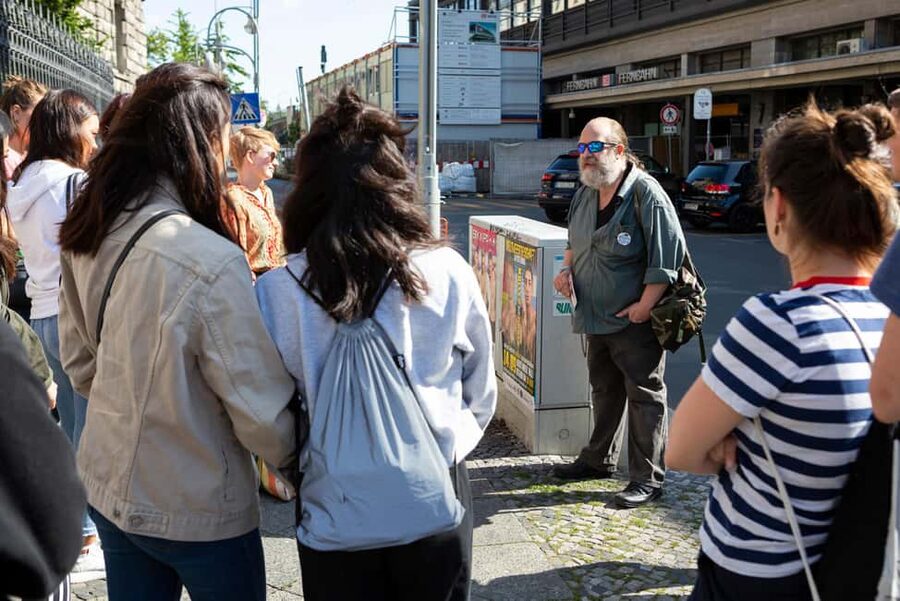
Most Berlin tours send you toward famous facades. This one sends you through an affluent district from a different angle. Charlottenburg is often associated with money and good addresses, so hearing about homelessness in that context does something important: it removes the usual excuse of distance.
You’re learning about daily survival in a place that already looks taken care of. And that contrast is the point. When people talk about homelessness in broad terms, it can feel abstract. Here, you get a more grounded version of what it means when the city’s “public” spaces stop being just places to visit and start being where you live.
The tour also frames a key idea that is easy to say and hard to feel until it lands: life on the streets is public, and nothing is private. You don’t need to agree with everything you hear to understand the logic. Privacy is a luxury when your day depends on visibility, access, and safety.
Walking Kantstraße: Food, Warmth, and Finding Sleep
The route moves from Berlin’s Zoo station along Kantstraße. That street becomes more than a line on a map. It turns into a guide for how street life works day to day.
You’ll hear how Dieter Bichler ended up around the Zoo station in fall 2012 after losing his apartment in Thuringia. From there, he joined other homeless people and moved along Kantstraße to organize food, warm up, and eventually find a suitable place to sleep. Those three themes show up repeatedly, because they are the foundation of survival, not details for a trivia contest.
Here’s what I like about the way the tour handles this: it treats these needs as a system. Food is not just meals. Warmth is not just comfort. Sleep is not just rest. Each one shapes where you can be, who you might meet, and how safe you feel at that moment.
The main trade-off is also clear: while the tour does address sleeping in general terms, one reviewer point you may relate to is wanting more specifics about sleeping places. If you’re coming hoping for a practical guide to shelter locations, this is not that. It’s more about lived experience and perspective than a how-to directory.
The Real Value: Dialogue, Not a One-Way Talk
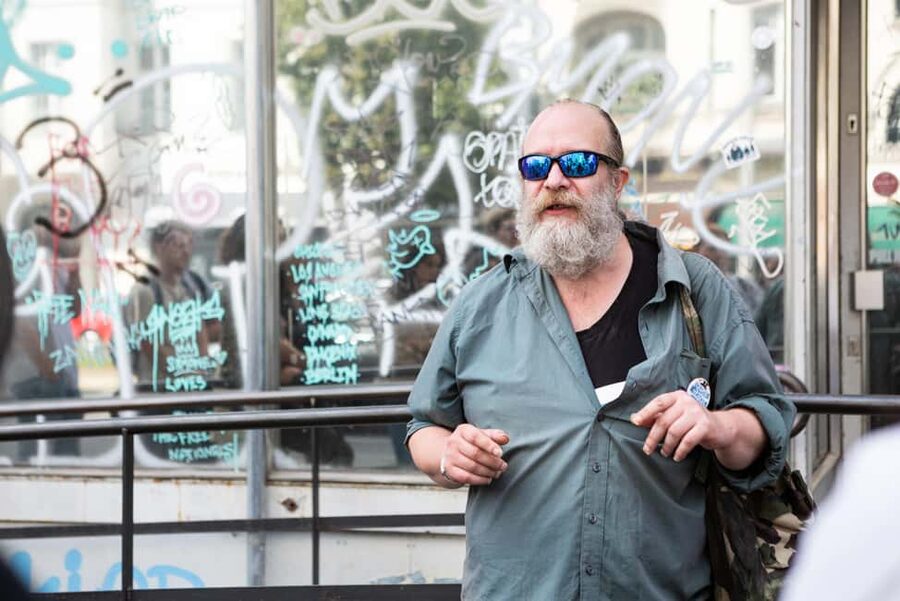
A classic tour can feel like you’re standing in front of a person who knows facts and you’re collecting them. This one gives you something rarer: space for personal encounters and conversations.
The tour is built around individual perspective. People who are often talked about take the floor. That changes the vibe fast. Instead of you being the passive listener, you’re invited to engage, ask questions, and connect the dots between daily life and the city you thought you knew.
And the social part is not just sentiment. On the streets, friendships can be something you build out of necessity. The tour talks about the friendships that can probably only be found on the streets, which is a stark way of saying that survival creates its own networks. You may start by seeing “homelessness” as a condition. You end up seeing it as a web of relationships, rules, and compromises.
A respectful heads-up: this topic can make some people uncomfortable. That discomfort is normal. What matters is how you handle it. Keep your questions grounded and kind. If you want facts, ask for facts. If you want stories, let the guide finish their thought.
Same city, a different way to spend the afternoon:
- Berlin: Boat Tour Along the River Spree
★ 4.4 · 11,252 reviews - Discover Berlin Half-Day Walking Tour
★ 5.0 · 9,624 reviews - Berlin: Government District around the Reichstag Guided Tour
★ 4.7 · 8,447 reviews - Berlin: Reichstag, Plenary Chamber, Cupola & Government Tour
★ 4.6 · 8,422 reviews
Hidden Places Through a Different Set of Eyes
The tour description emphasizes hidden places and real stories, but it’s not about secret landmarks. It’s about using your senses differently. When you think like a tourist, streets are scenery. When the guide frames them as part of daily survival, streets become infrastructure.
You’ll also hear about how your perspective changes when streets, parks, and train stations become the center of life. That line sounds philosophical until you realize what it means in practice. If your “home” moves, everything around you becomes temporary, negotiated, and watchful.
For me, the best part of that shift is how it makes you notice what you usually ignore. Lighting. Foot traffic. Who feels safe in public. Where people can pause without drawing attention. It is Berlin as lived, not Berlin as photographed.
If you love cities for their stories, you’ll get a lot from this. If you want only buildings and viewpoints, you might feel restless. This tour is intentionally not a classic sights crawl.
Price and Value: Why $23 Can Feel Like a Bargain
At $23 per person for about 2 hours, this tour is priced like a lot of standard urban walks. But the value is different. You are paying for first-hand perspective from Dieter Bichler, plus important places in his biography, plus expert framing from querstadtein e.V.
You’re also paying for something that’s hard to manufacture: legitimacy. This is not a performance about homelessness. It is based on the lived experience of someone who lost an apartment and built a new survival routine on the streets. That’s why conversations matter here. It’s not just “information.” It is testimony, with room for dialogue.
You can also tip Dieter if you want. Tipping is optional, but if you feel you got a lot out of the human side of the tour, it’s a simple way to show support.
What to Wear, How to Show Up, and Who This Suits
This is a street-focused tour. That means you need to think about comfort and pacing more than sightseeing stamina. Comfortable shoes are a must. Bring water. Dress for the season, hat in summer, warm layers in winter.
Because the tour is German-led, it suits travelers who can handle a foreign-language experience with curiosity. It also suits people who want Berlin from the inside, not just the skyline. If you’re the kind of traveler who likes to understand how a city really functions socially, you’ll probably enjoy this.
It is not suitable for children under 16. And it may not be ideal for anyone who hates serious conversations or who needs a cheerful, light itinerary.
Should You Book This Berlin Homelessness Tour?
If you want classic sights, skip it. If you want Berlin through a hard, real lens, it’s worth your time.
Book this tour if:
- you like learning from someone with first-hand perspective
- you’re curious about how Charlottenburg can look different from the street
- you can handle direct topics and respectful conversation
- you’re comfortable walking outside for about 2 hours
Skip it if:
- you’re looking for a practical directory of sleeping options
- you want a sightseeing-only route
- you are traveling with anyone under 16
FAQ
Where does the tour start?
You meet at Berlin Zoologischer Garten station, at the stairs of the McDonald’s on Hardenbergpl. 11, 10623 Berlin.
How long is the city tour?
It lasts 2 hours.
What does the tour cost?
It is priced at $23 per person.
What area of Berlin will we visit?
The tour focuses on Berlin-Charlottenburg, with the route following Kantstraße.
Is the tour guided in German?
Yes. The live tour guide speaks German.
Is the tour wheelchair accessible?
Yes, it is wheelchair accessible.
Do I need to bring anything?
Bring comfortable shoes and water, plus weather-appropriate clothing.
What should I wear in summer or winter?
In summer, bring a hat and water. In winter, dress warmly.
Is tipping expected?
You are welcome to tip Dieter, but it is not required.
Is this tour suitable for children?
No. It is not suitable for children under 16.
Newest Berlin reviews on the site
- Jetbike Berlin fun bike beer bike★ 5.0 · 3 reviews
- Karl-Marx-Allee Walking Tour: Berlin’s Socialist History★ 5.0 · 5 reviews
- Berlin: Sachsenhausen Concentration Camp Guided Tour★ 4.9 · 42 reviews
- Historyof the Trans, Queer & Gay communities of Berlin tour★ 4.8 · 17 reviews
- Historic Berlin Pubs & History Tour★ 4.9 · 73 reviews
- Berlin: City Center Walking Tour★ 4.7 · 45 reviews
- Half-Day Berlin Highlights Segway Expedition★ 4.5 · 61 reviews
- Berlin: Cold War History and Berlin Wall Guided Walking Tour★ 5.0 · 33 reviews
City Tours, compared.

1-Hour City Tour by Boat with Guaranteed Seating
Read our review →
City History Canal Sightseeing Tour on a Motorboat
Read our review →
Browse the lists this tour appears in